-
-
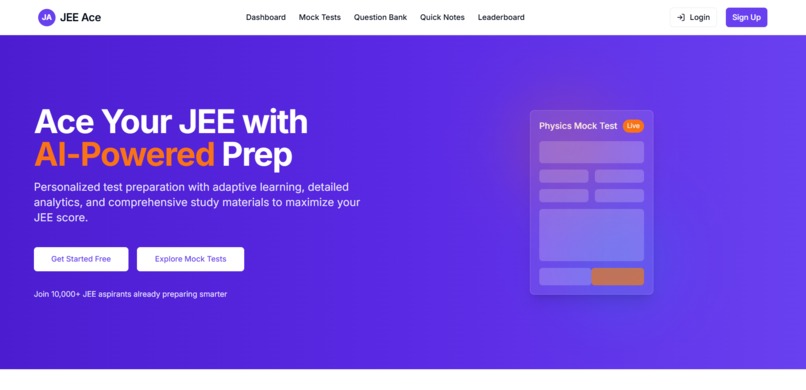
Home Page
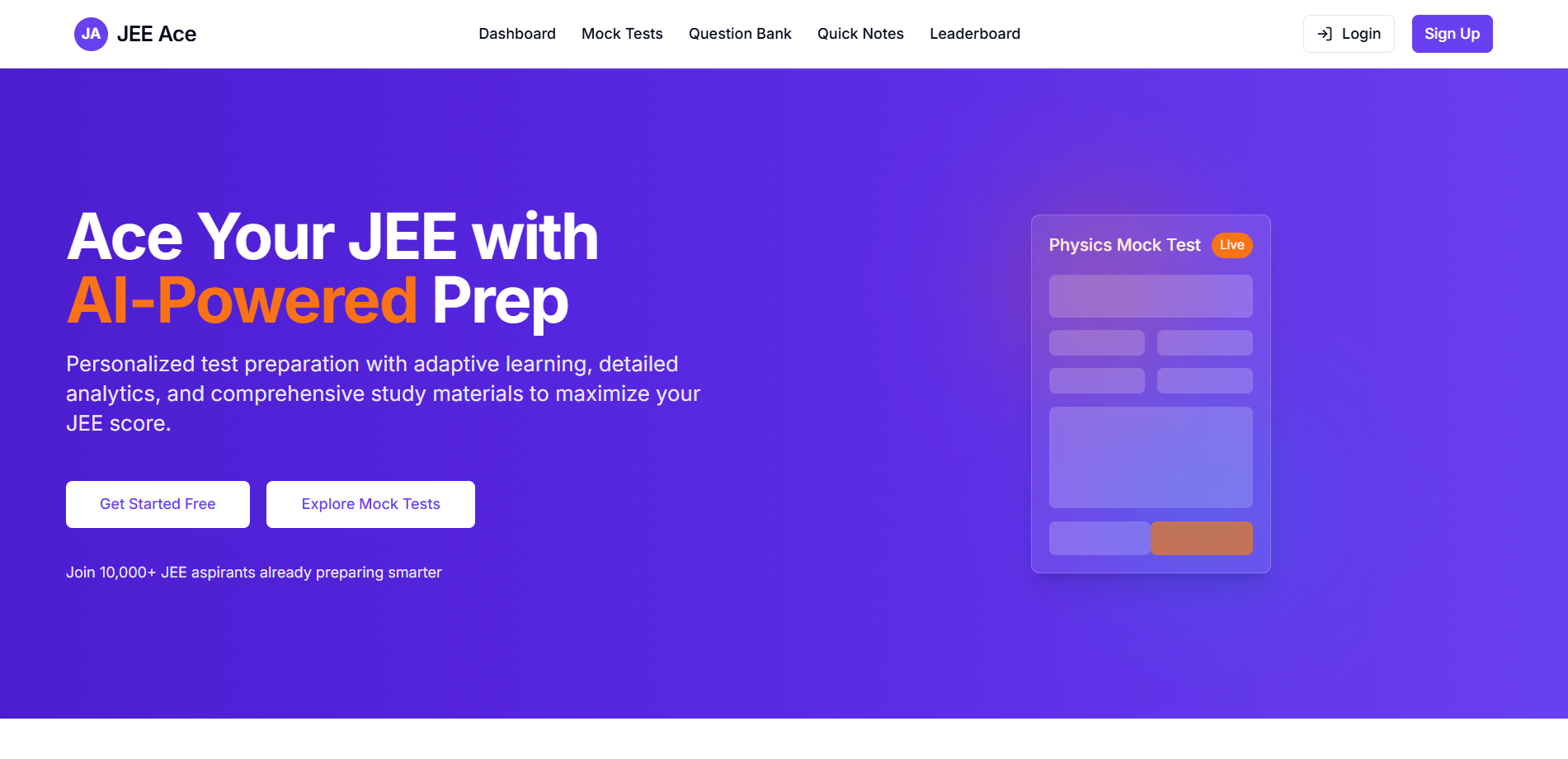
💡 Inspiration
We were inspired by the growing challenge students face in filtering trustworthy study content and preparing for tests efficiently. Most AI-powered tools often hallucinate facts, which is risky for academic learning. We wanted to create a solution that not only generates questions but ensures they're rooted in verified, human-curated material. This led to the idea of combining Large Language Models (LLMs) with Retrieval-Augmented Generation (RAG) to build a reliable and intelligent study companion.
🧠 What it does
The Personal Study Guide and Test Generator is a web-based platform that:
- Allows students to upload study material (PDFs, images, notes)
- Extracts and classifies key concepts and image-caption pairs
- Uses RAG and LLMs to generate context-aware, accurate test questions
- Displays interactive dashboards showing progress and weak areas
- Helps users self-evaluate with reliable, source-backed content
🛠️ How we built it
- Frontend: Built with React, HTML, and Tailwind CSS for responsive design
- Backend: Implemented using Python (FastAPI & Flask) to handle logic and API routes
- Document Processing: Parsed PDFs/images using OCR and structured extraction
- Database: Used MongoDB and PostgreSQL to manage content and user analytics
- LLM Integration: Connected HuggingFace models with a custom RAG pipeline to generate grounded questions
🚧 Challenges we ran into
- Handling various PDF/image formats and extracting clean, structured content
- Preventing hallucination in LLM-generated outputs — required careful tuning of the RAG pipeline
- Managing performance and latency when generating questions from large documents
- Designing a user interface that’s both informative and intuitive for students and educators
🏆 Accomplishments that we're proud of
- Successfully integrated a working RAG pipeline to eliminate hallucinated outputs
- Built a full-stack prototype capable of parsing real educational documents
- Delivered high-quality, relevant MCQs aligned with uploaded study content
- Created a foundation for personalized learning analytics through dashboards
📚 What we learned
- Practical implementation of Retrieval-Augmented Generation in educational tools
- Best practices in OCR and text/image parsing for academic content
- Structuring LLM prompts and embeddings to ensure context relevance
- Full-stack development from frontend UI to backend API and database operations
🔮 What's next for Personal Study Guide and Test Generator
- Add support for handwritten notes and textbook scans via advanced OCR
- Enable collaborative study groups and shared test sets
- Integrate with LMS platforms (e.g., Moodle, Google Classroom)
- Launch mobile support for on-the-go test generation and revision
Built With
- css
- embedding
- fastapi
- flask
- groq
- huggingface
- javascript
- languages-html
- llm
- mongodb
- postgresql
- python
- rag
- react
- restful
- transformer
- typescript
- vite
- webpack


Log in or sign up for Devpost to join the conversation.