-
-
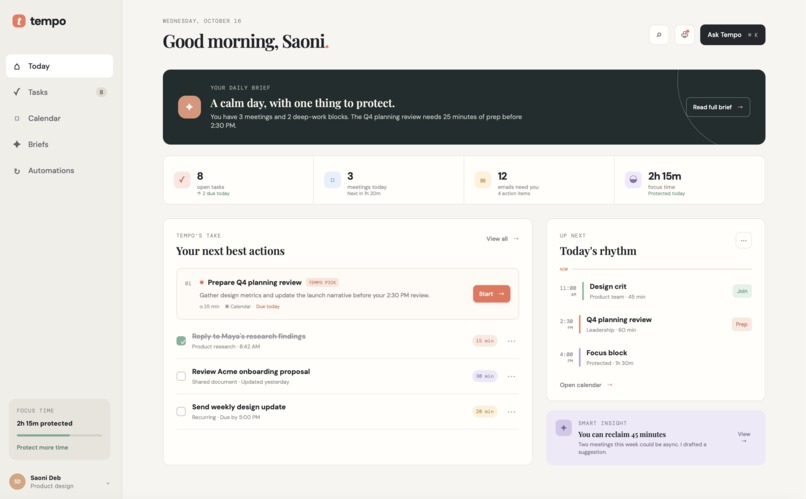
Dashboard
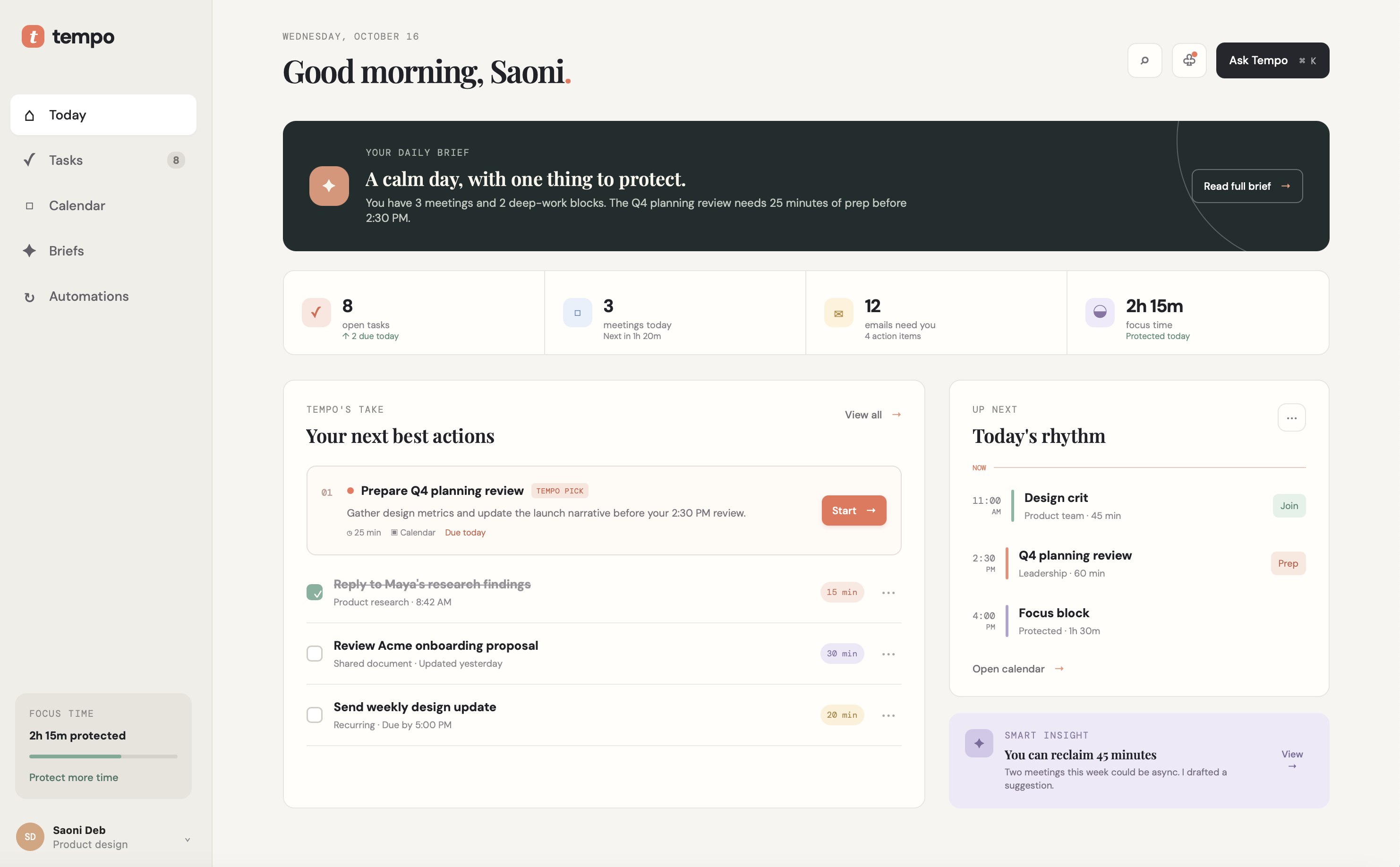
Knowledge workers spend a significant portion of their day switching between emails, calendars, documents, chat applications, and task managers just to determine what needs attention next. This constant context switching reduces productivity and increases cognitive load. Personal Operating System is an AI-powered productivity layer that brings all of these tools together into a single intelligent workspace. Instead of waiting for user prompts, it understands your work context, prioritizes your tasks, and proactively recommends the next best actions.
Inspiration
The inspiration came from a simple observation: we don't need another AI chatbot—we need an AI that understands our work and helps us execute it. Modern professionals use dozens of disconnected applications, yet none of them have a unified understanding of what they're trying to accomplish. Our goal was to build an AI Chief of Staff that coordinates information across tools and helps users focus on meaningful work instead of administrative overhead.
What it does
The Personal Operating System can: 📅 Analyze your calendar and identify scheduling conflicts 📧 Summarize important emails and extract action items ✅ Prioritize tasks based on deadlines and context 📄 Generate meeting briefs from related documents and conversations 🤖 Automate repetitive workflows using AI agents 💡 Recommend the next best action instead of waiting for commands Instead of asking: "What should I work on today?" the system proactively tells you: Your highest-priority tasks Upcoming deadlines Meetings requiring preparation Opportunities to reclaim focus time Routine tasks that can be automated
How we built it
The project is built around Codex as the reasoning and orchestration engine. Our architecture consists of: AI orchestration layer powered by Codex Context aggregation across productivity tools Workflow automation engine Intelligent prioritization and planning Unified dashboard for recommendations and actions The system combines information from multiple sources to maintain a real-time understanding of the user's work context and generate actionable recommendations.
Challenges we ran into
Some of the biggest challenges included: Combining context from multiple disconnected applications Prioritizing tasks without overwhelming the user Designing proactive AI behaviors instead of reactive chat interactions Building workflows that feel helpful while remaining transparent and user-controlled
Accomplishments that we're proud of
- 🚀 Built a proactive AI-powered Personal Operating System that goes beyond traditional chatbots by understanding user context and recommending the next best actions.
- 🧠 Designed an intelligent orchestration layer using Codex to unify emails, calendars, tasks, and documents into a single productivity experience.
- ⚡ Reduced context switching by providing a consolidated daily brief, prioritized tasks, meeting preparation, and workflow recommendations.
- 🔄 Created a scalable architecture that can integrate with multiple productivity tools and enterprise applications, making it extensible for future use cases.
- 🤖 Demonstrated how AI can act as a "Chief of Staff"—not just answering questions, but proactively planning, prioritizing, and automating routine work.
- 💡 Shifted the focus from reactive AI assistants to proactive, context-aware productivity, showcasing a vision for the future of knowledge work.
What we learned
Through this project, we learned that the real value of AI is not generating text—it's orchestrating workflows across applications. By combining reasoning, planning, and automation, AI can evolve from an assistant into a true productivity partner.
What's next for Personal Operating System
Future enhancements include: Multi-agent collaboration for specialized workflows Cross-platform integrations (Slack, Teams, GitHub, Jira, Google Workspace) Personalized learning of work habits Autonomous execution of repetitive tasks with user approval Organization-wide knowledge graph for enterprise productivity


Log in or sign up for Devpost to join the conversation.