-
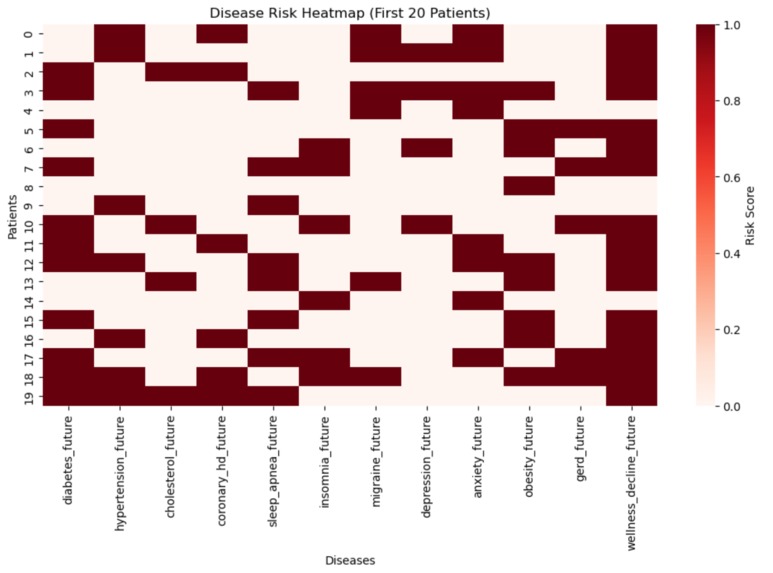
Heat Map for hypothetical data for possible data entries we may have in the future.
-
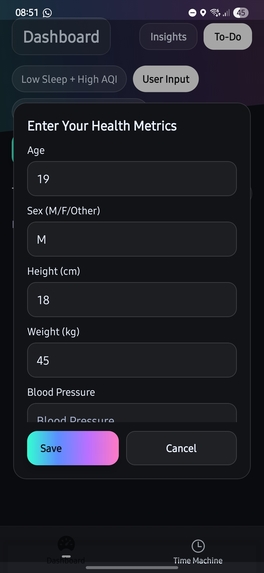
User Input option for personalizing data.
-
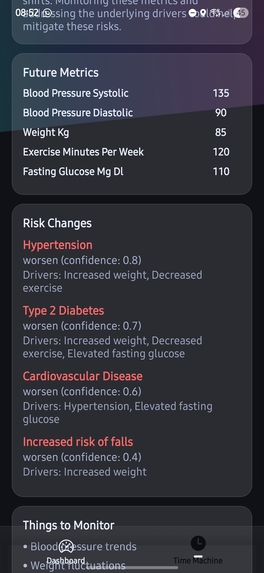
"Time Machine" Future prediction for individual with personalized feedback and suggestions.
-
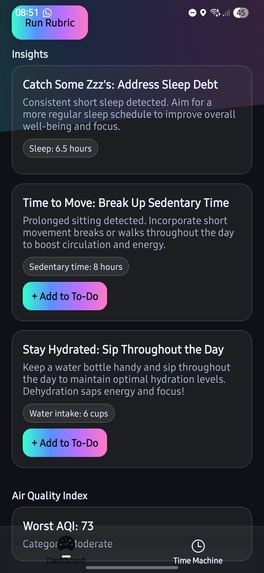
Sample insights with possible to-do list opportunities for the user.
-
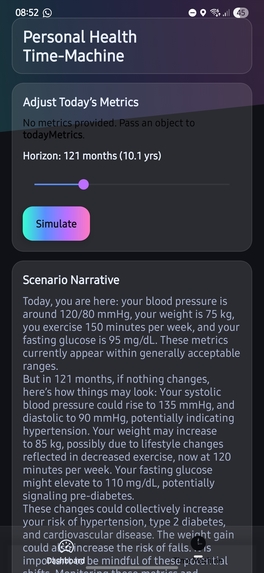
Sample output for age slider on Time Machine tab.


Inspiration
We Wanted to give people a way to see into their future health based on the choices they make today. Too often, insights apps stop at showing numbers, we wanted to go further and help people visualize the consequences of their habits in a way that feels personal and motivating!
What it does
PHTM collects a user's key health metrics and lifestyle factors, identifies negative drivers, and then lets them “time travel” into the future with a simple slider. By projecting how weight, blood pressure, and blood sugar may shift over months, and expanding those numbers into an AI-generated narrative, the app helps people compare their present with their possible future.
How we built it
We built the frontend with React Native + Expo, using a bottom tab navigator for the Dashboard and Time Machine views. A lightweight risk engine simulates simple metric drifts, while Gemini AI turns projections into easy-to-read narratives about risks and what to monitor. We also integrated real-time data like Air Quality Index via the AirNow API to show how environmental factors influence health.
Challenges we ran into
One of our biggest challenges was striking the right balance between keeping the projections simple enough to be transparent while also making them realistic enough to feel useful. Another challenge was working with Gemini AI, which required carefully structured prompts to produce comparison-based narratives instead of simply repeating today’s insights. On the technical side, we had to debug differences between React Native web and mobile styling, especially around shadows and layout. Finally, managing state across insights, to-do items, and projections without duplicating cards required extra attention.
Accomplishments that we're proud of
We are proud of creating a polished, hackathon-ready app with clear navigation and engaging visuals in such a short time. The “time travel” feature stands out because it feels meaningfully different from a standard health dashboard, giving users a new perspective on their habits. We’re also excited that we were able to get Gemini AI to output JSON alongside a consistent narrative, which made the integration smooth. Most of all, we’re proud that we were able to turn complex health data into something approachable and actionable for everyday people.
What we learned
Through this project we learned how to use Gemini effectively with structured prompts to consistently generate safe and helpful health narratives. We also discovered the importance of explicitly comparing the present to the future, rather than just showing risks in isolation. From a technical perspective, we gained practical experience with React Native Expo navigation, styling, and API integration, while also seeing how much small design choices, such as using a slider, card layouts, and disclaimers, can shape the user experience.
What's next for Personal Health Time Machine
Looking forward, we plan to add a positive counterfactual mode that shows users what might happen if they improve their habits rather than staying the course. We also want to connect the app with live data sources like Apple Health and Google Fit to make projections fully personalized. Expanding the risk engine with additional metrics such as cholesterol, hydration, and stress will help cover a wider range of health factors. Beyond that, we envision gamifying the experience so that users feel motivated to “change their timeline” and actively shape a healthier future.


Log in or sign up for Devpost to join the conversation.