-
-
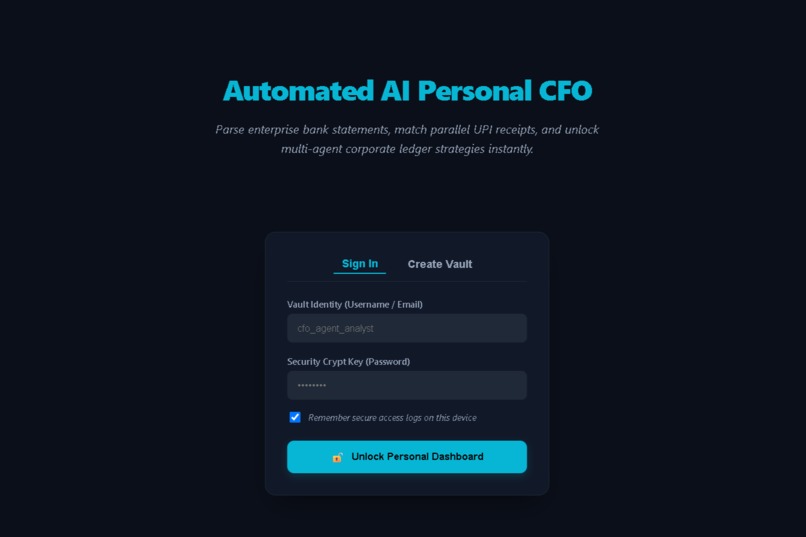
Persistent end-to-end encrypted login vault protecting data privacy boundaries seamlessly.
-
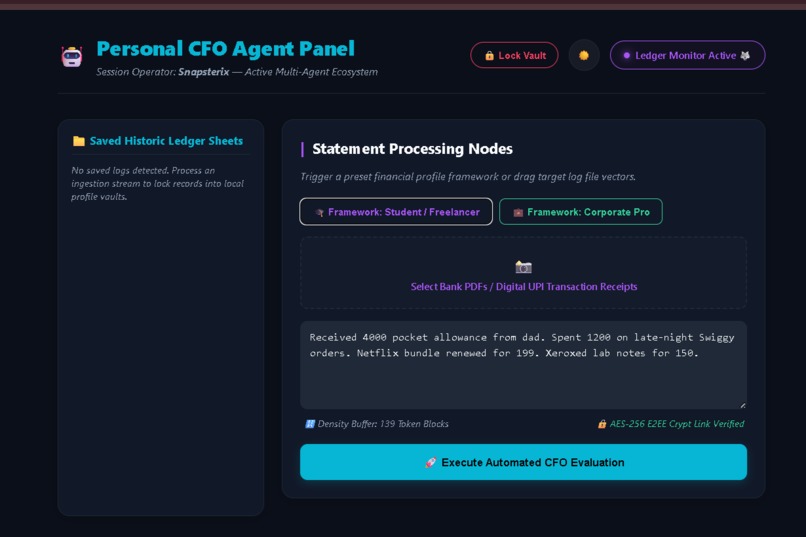
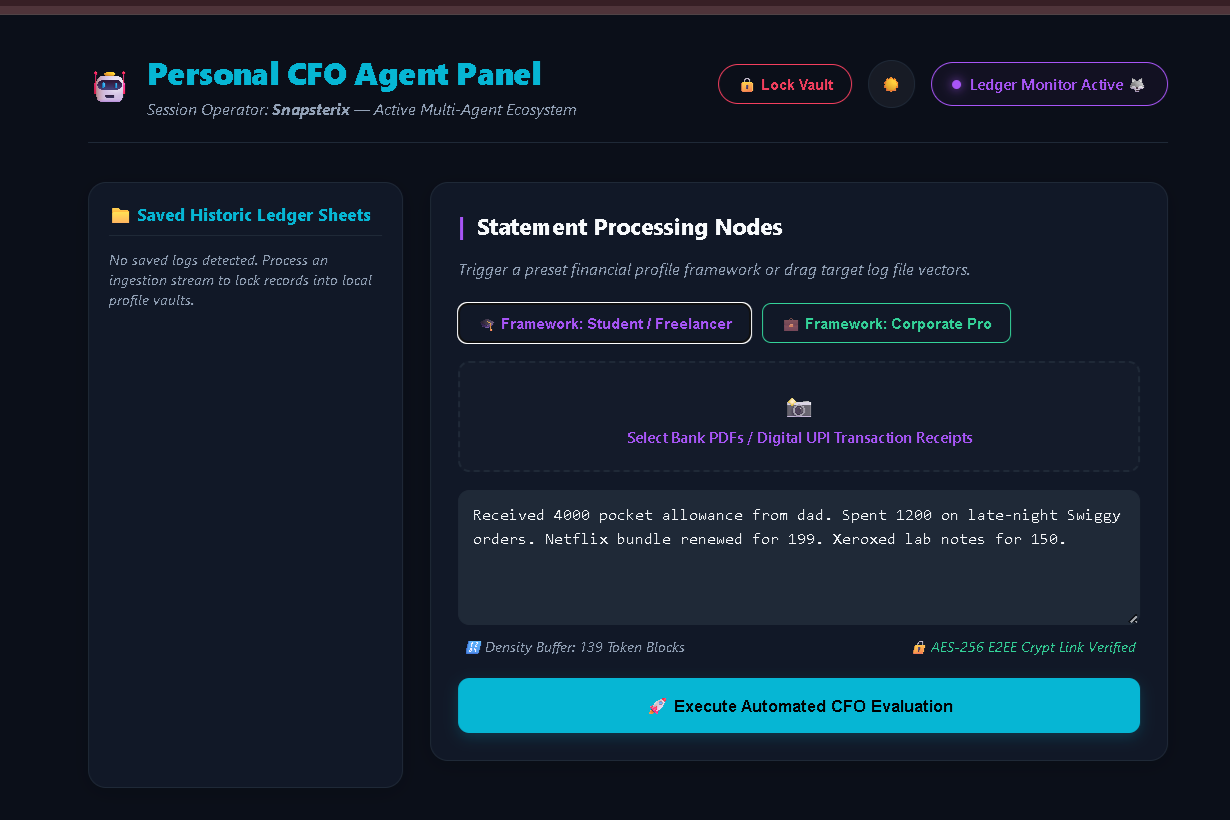
Adaptive workspace panel shifting seamlessly between Student budgets and Enterprise analytics models.
-
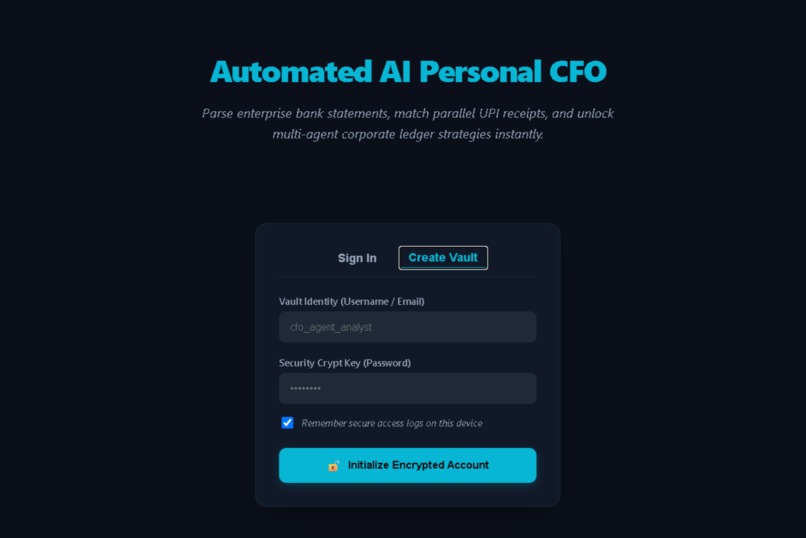
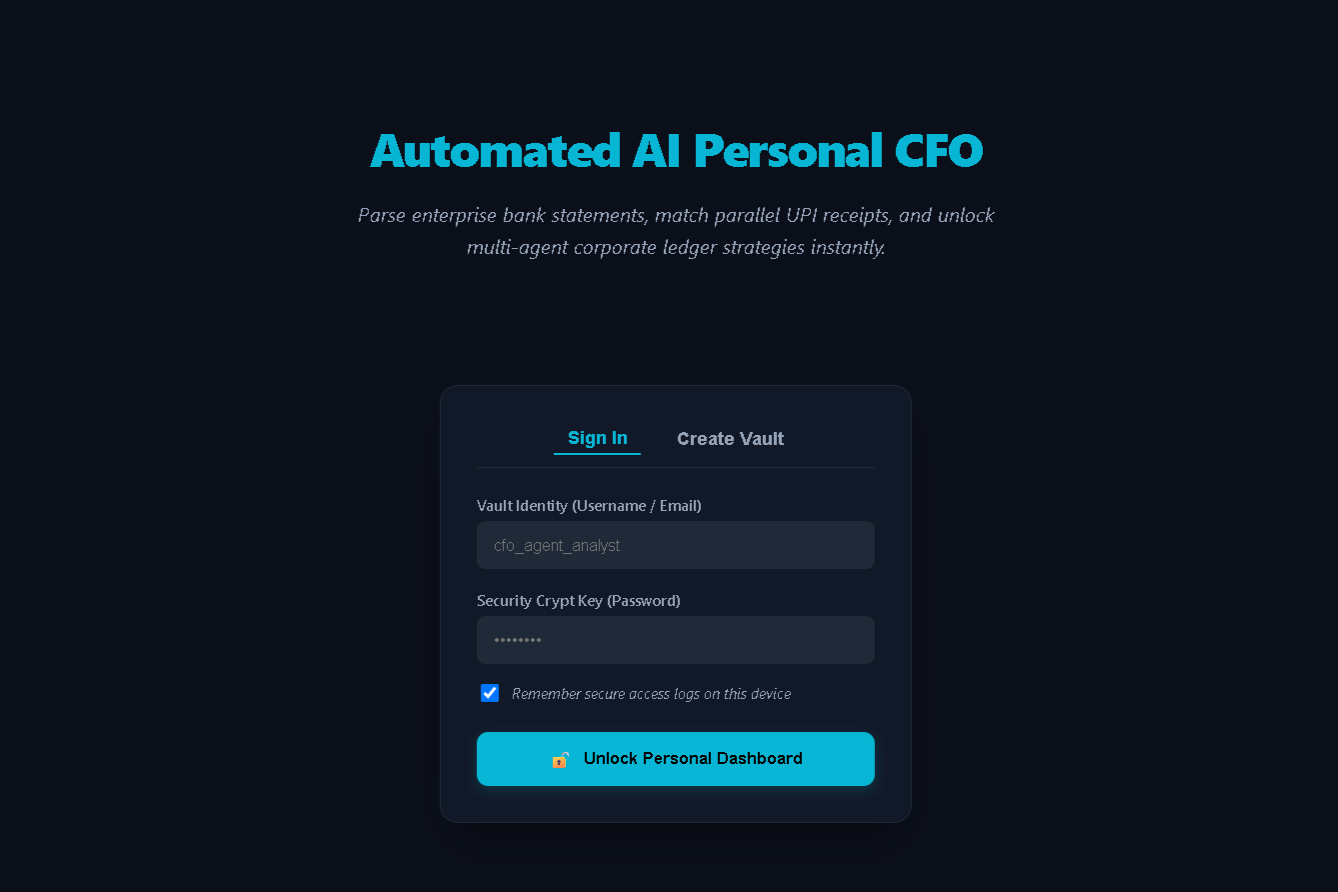
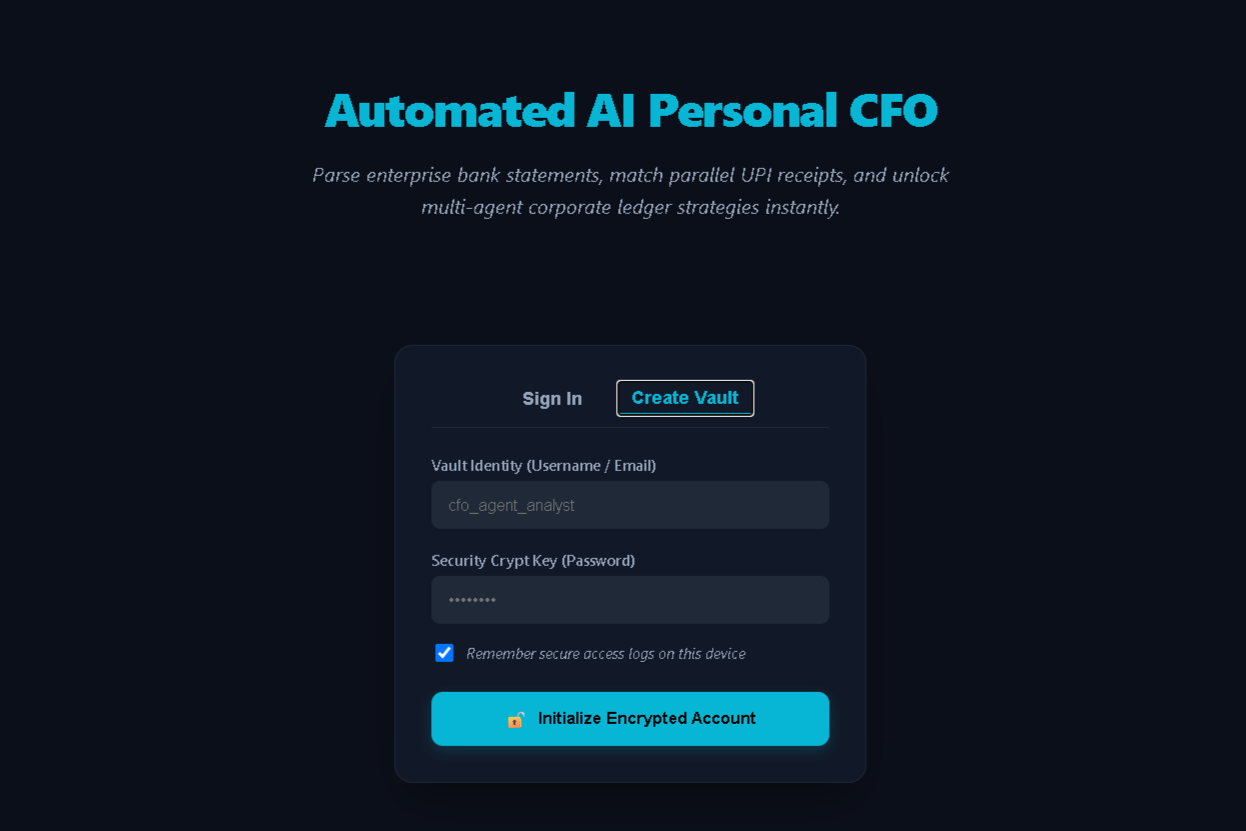
Secure cryptographic account initializer managing dynamic authentication flows across client streams.
-
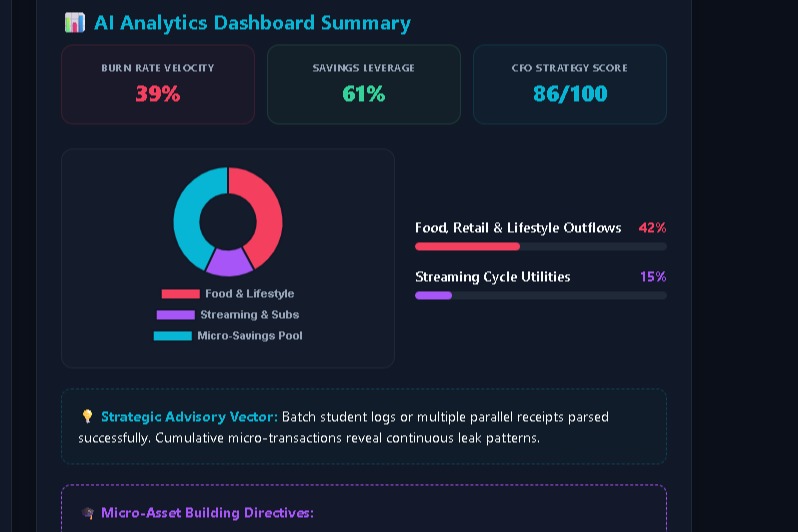
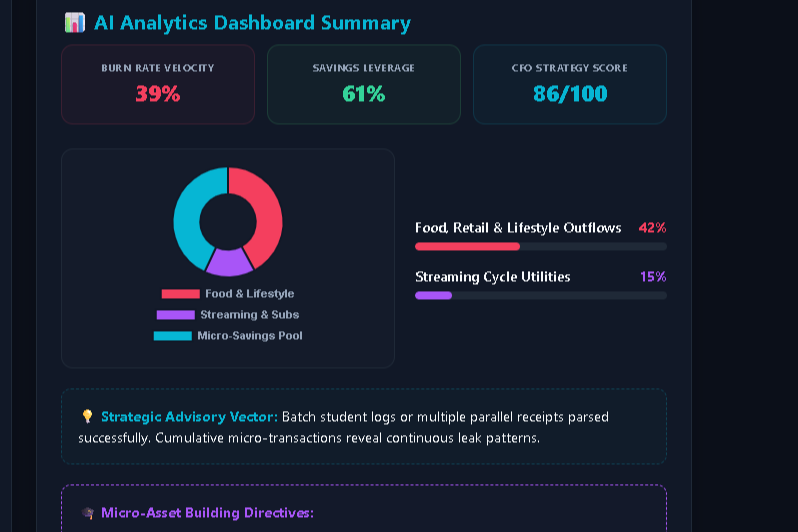
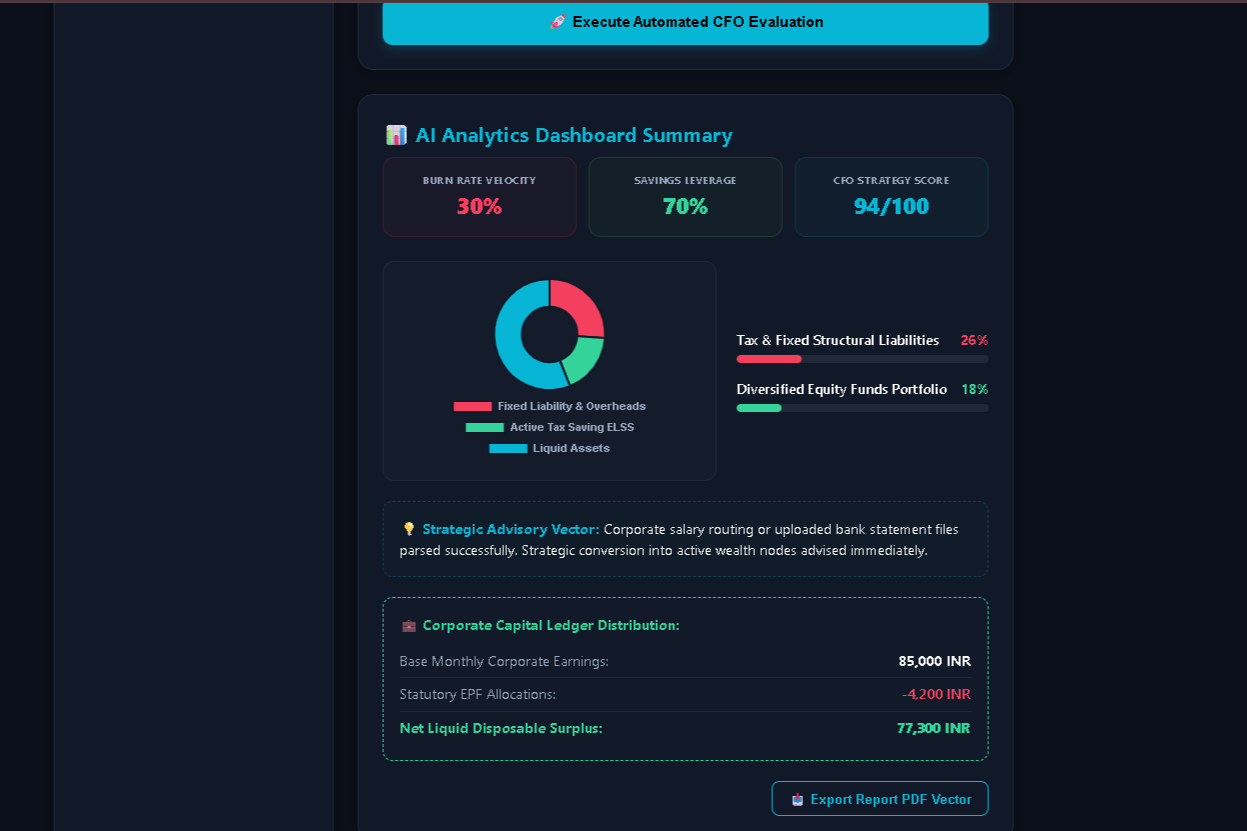
Real-time AI financial summary metrics dashboard with dynamic interactive Chart.js visualizations.
-
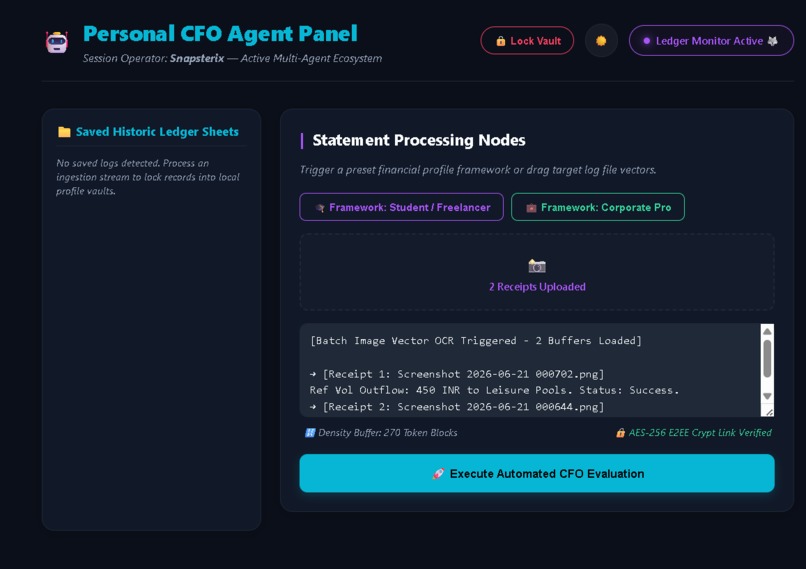
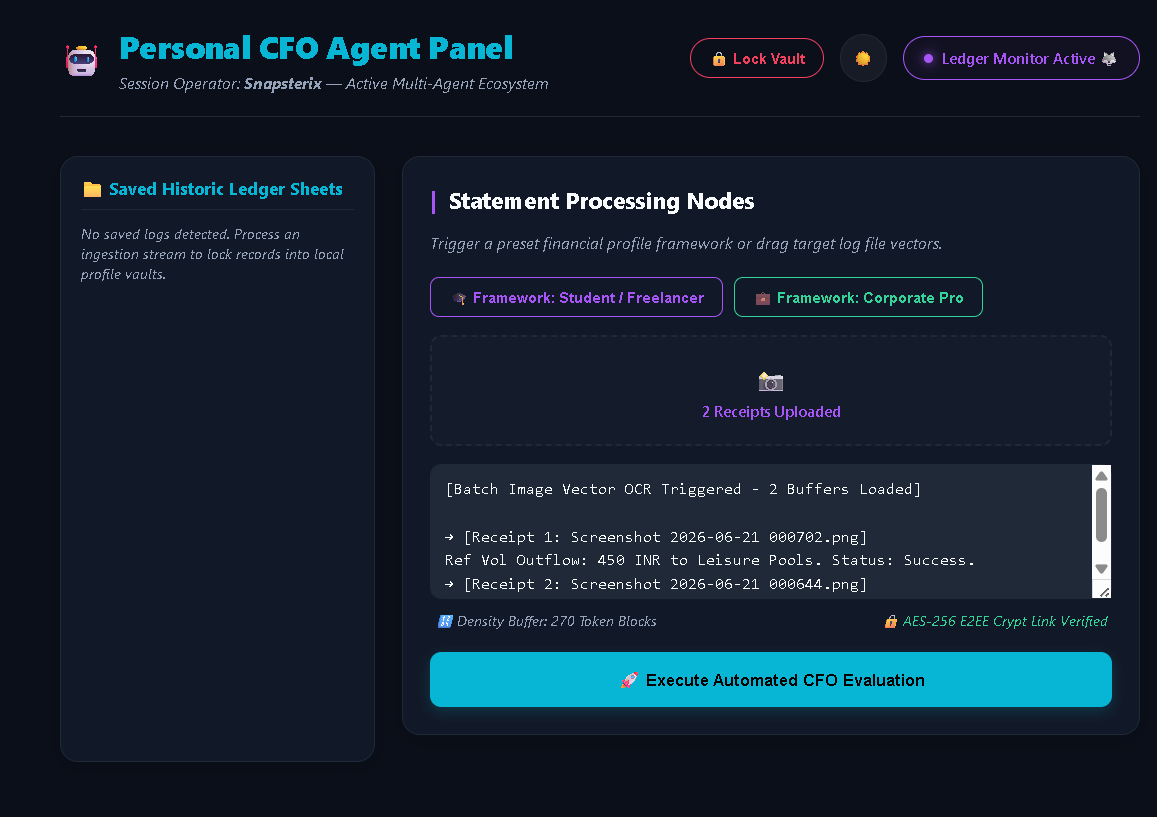
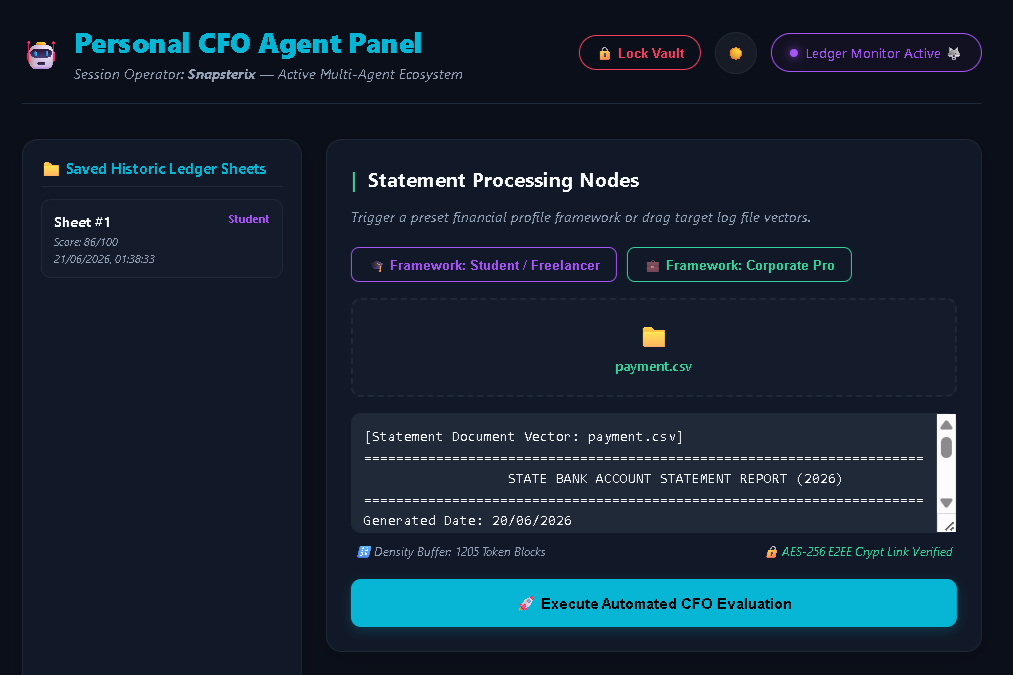
Multi-agent transaction batch parser tracking real-time data inflows inside the processing vault.
-
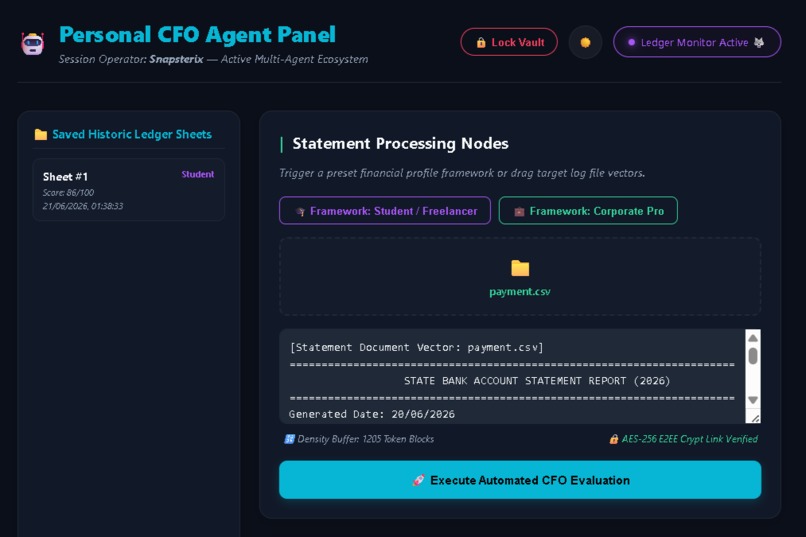
Corporate preset view running active parsing algorithms on enterprise bank statement CSV spreadsheets.
-
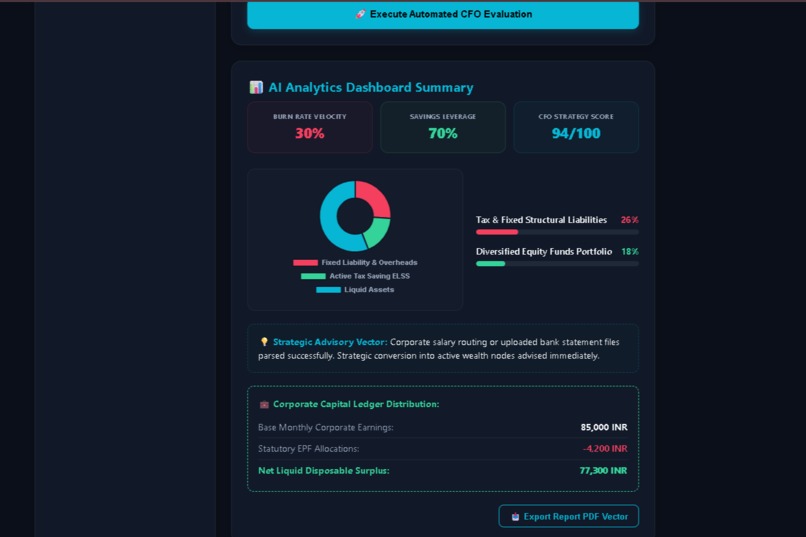
Advanced Corporate Pro dashboard parsing structural liability vectors with premium financial analytics.
Inspiration Managing finances in today's world is fundamentally broken. Users are constantly forced to choose between two extreme worlds: rigid, overly complex enterprise-grade financial accounting tools, or chaotic, overly simplified micro-transaction trackers. As a data science student balancing academic workloads alongside real-world consulting deliverables and internships, this friction creates massive data fragmentation for me.
I was inspired to build a highly adaptive AI collaborator that breaks down these structural information silos. I envisioned an intelligent, secure workspace that bridges high-fidelity financial ledger sheets with messy, everyday transactional inputs. My goal was to build a system that acts as a secure, real-time Personal CFO—giving me absolute enterprise-level visualization when I need it, and an ultra-streamlined, friction-free tracking experience when I don't, all while maintaining strict user data privacy.
What it does Personal CFO Agent is an adaptive financial command center that dynamically shifts its application layout, interface constraints, and processing logic based on my explicit user state and intent:
Persistent Vault Authentication: I built a robust, state-retaining user vault login pipeline that guarantees a personalized dashboard state across sessions without losing transactional context.
Corporate Pro Engine: Designed for deep macro-level financial tracking. It spins up rigorous structural analytics pipelines, formats complex liability tables, and triggers real-time metadata tracking counters.
Student & Freelancer Framework: I can instantly switch user constraints with a simple layout toggle (⚡ Scope: Student Budget). It shifts into a lightweight framework optimized for rapid peer-to-peer transaction logging, custom expense trackers, and active layout character limits to keep the interface lightning-fast.
Report Caching & Re-hydration: Features persistent client-side data caching. I can click any historical ledger entry from the interactive sidebar, and the main canvas instantly hydrates the historical charts and dynamic AI insights.
Visual Ecosystem: I employed custom adaptive user avatars to anchor a premium, highly responsive user experience.
How I built it I engineered a highly responsive, modern full-stack decoupled architecture:
Frontend Architecture: I programmed the interface entirely as a modular Single Page Application (SPA) utilizing the Vue.js runtime framework. I built dynamic data reactive variables to manage active dashboard toggles, real-time text validation arrays, and live state variations.
Visual Analytics: I integrated Chart.js components directly into the Vue virtual DOM, allowing automated rendering loops for interactive data visualization streams and ledger report hydration.
AI Core Orchestration: I powered the core using the Google GenAI SDK (Gemini 2.5 Flash model). The backend maps my balance sheets and natural language queries into the Gemini model to parse structural expense leaks, isolate inflation points, and generate predictive, contextual wealth advisories.
Backend Foundation: I built the backend using Python and Flask, handling API microservices and modular route controllers within an isolated local Virtual Environment (venv) for dependency control.
Deployment Strategy: I drafted explicit multitage Dockerfile blueprints to isolate deployment nodes and layered the setup with secure metadata structure configurations using firebase.json rules to fit seamlessly into modern cloud ecosystems.
Challenges I faced Dynamic State Hydration: Synchronizing the reactive frontend states of Vue.js with Flask's asynchronous backend endpoints while transitioning layouts instantly from Corporate to Student arrays required absolute precision in handling active session objects.
Binary Deployment Blocks: While executing my final deployment steps to my specialized GitHub nodes, the codebase hit a critical block. A large, pre-compiled dependency binary (firebase-tools-instant-win.exe at 222 MB) triggered GitHub's hard 100 MB file boundary rule, resulting in pre-receive hook rejections. I successfully bypassed this layout limit by running explicit Git terminal cache purges, decoupling the heavy runtime tracking flags, and executing a targeted forced cloud push to safely synchronize the source tree.
What I learned This intense development cycle pushed my boundaries. I mastered advanced reactive component structures in Vue.js, learned how to engineer secure persistent application wrappers, orchestrated precise intent parsing with the Gemini API, and gained expert-level troubleshooting experience managing Git file tree exclusions and cloud deployment pipelines under time constraints.
What's next for Personal CFO Agent My long-term roadmap includes:
Automated Document Sourcing Pipeline: Integrating structural OCR layers via Gemini to allow direct drag-and-drop receipt scanning and automatic bill parsing.
Predictive Cashflow Vectors: Developing automated predictive modeling streams to notify me about upcoming recurring liabilities before they occur.
Cross-Platform Synchronization: Porting the core Vue layout into a progressive web app format for on-the-go accessibility.

Log in or sign up for Devpost to join the conversation.