-
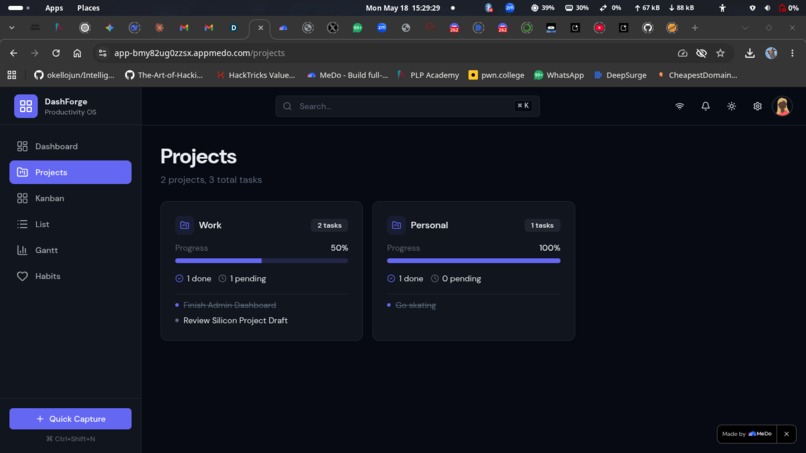
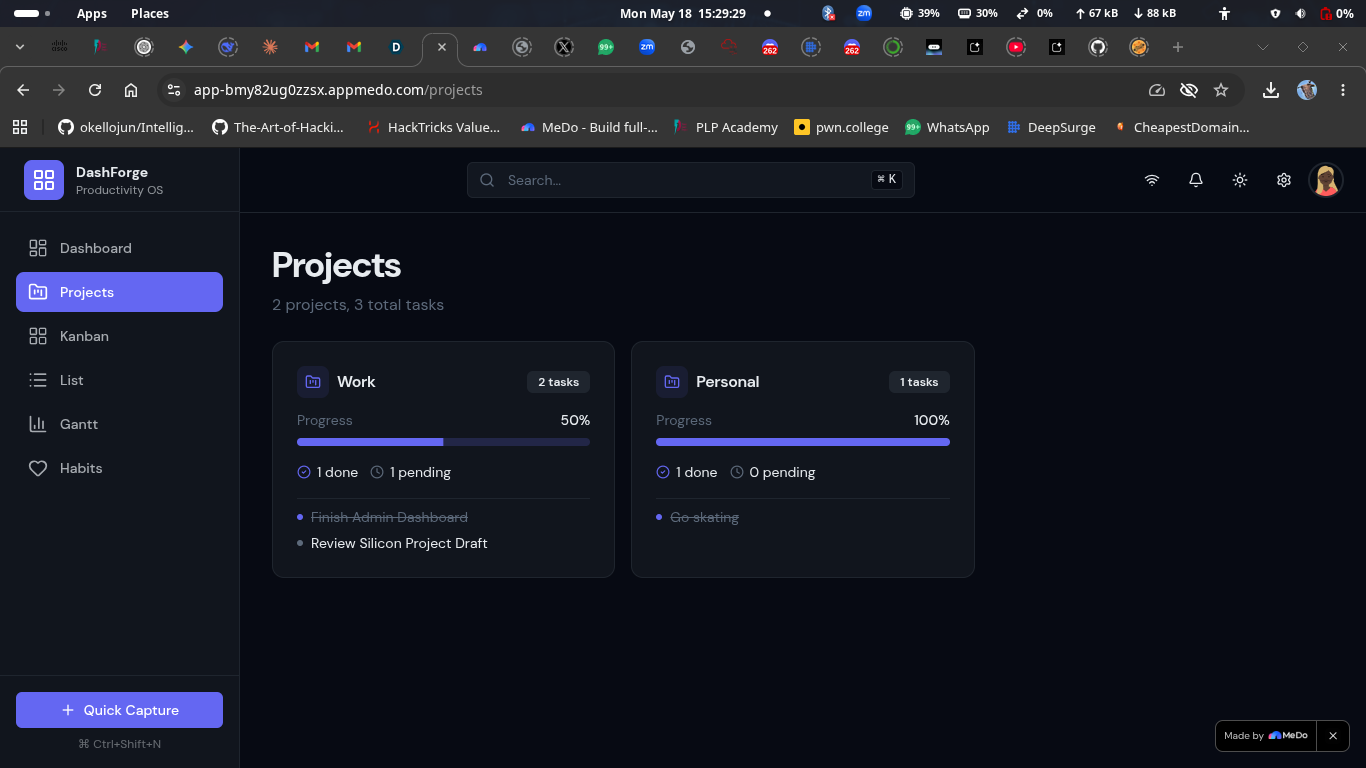
Projects
-
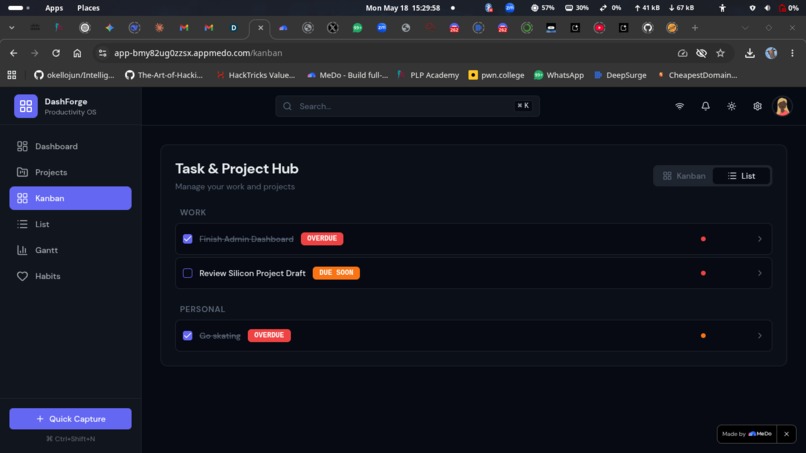
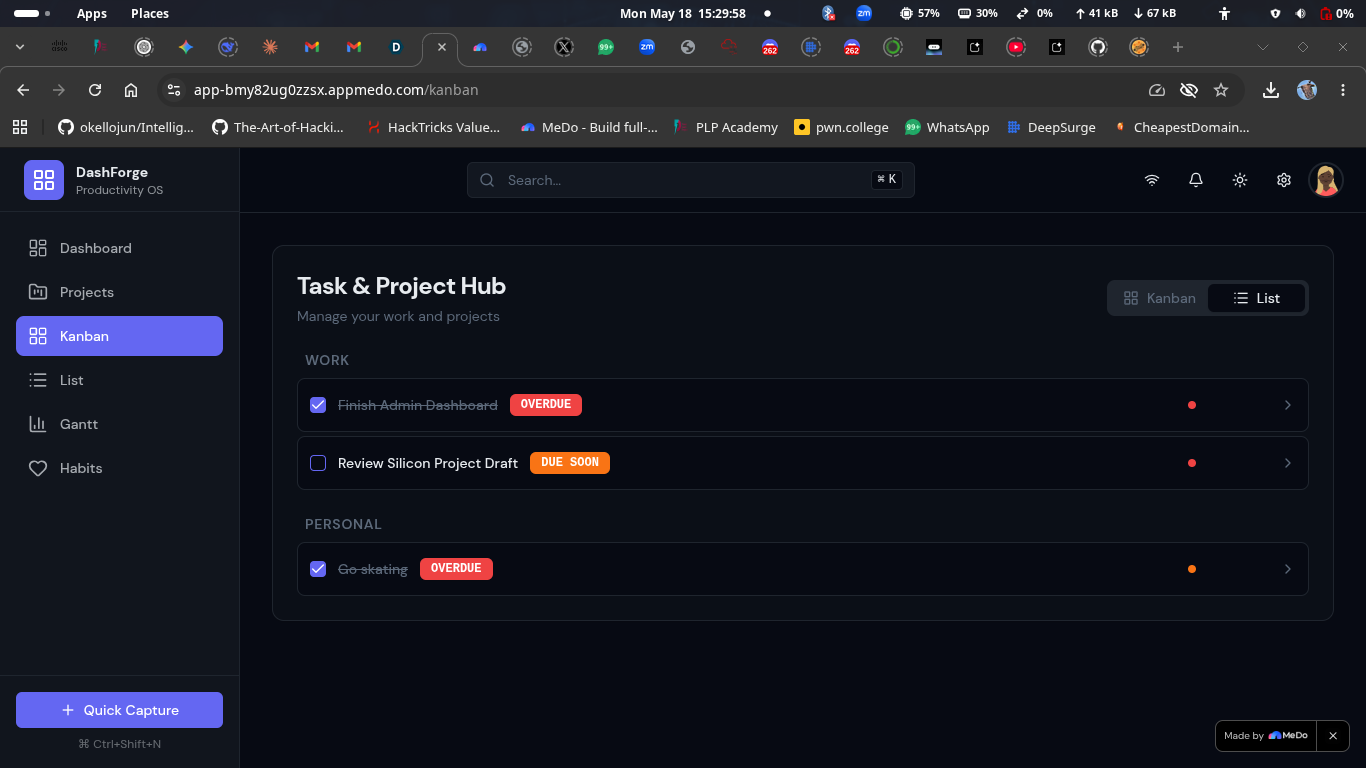
Kanban
-
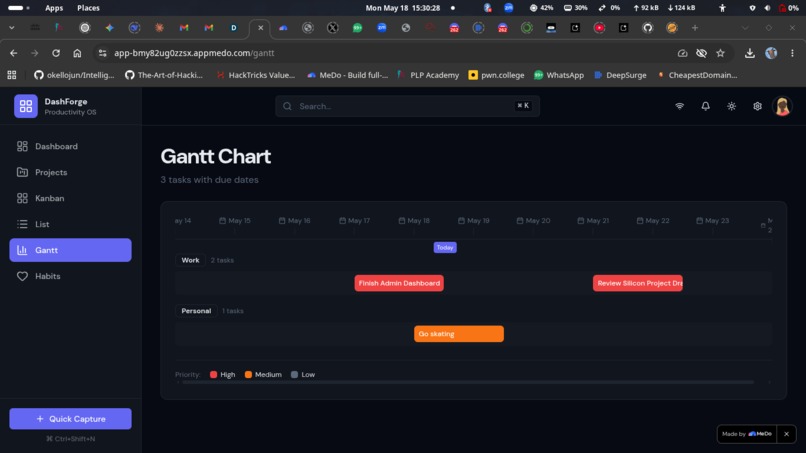
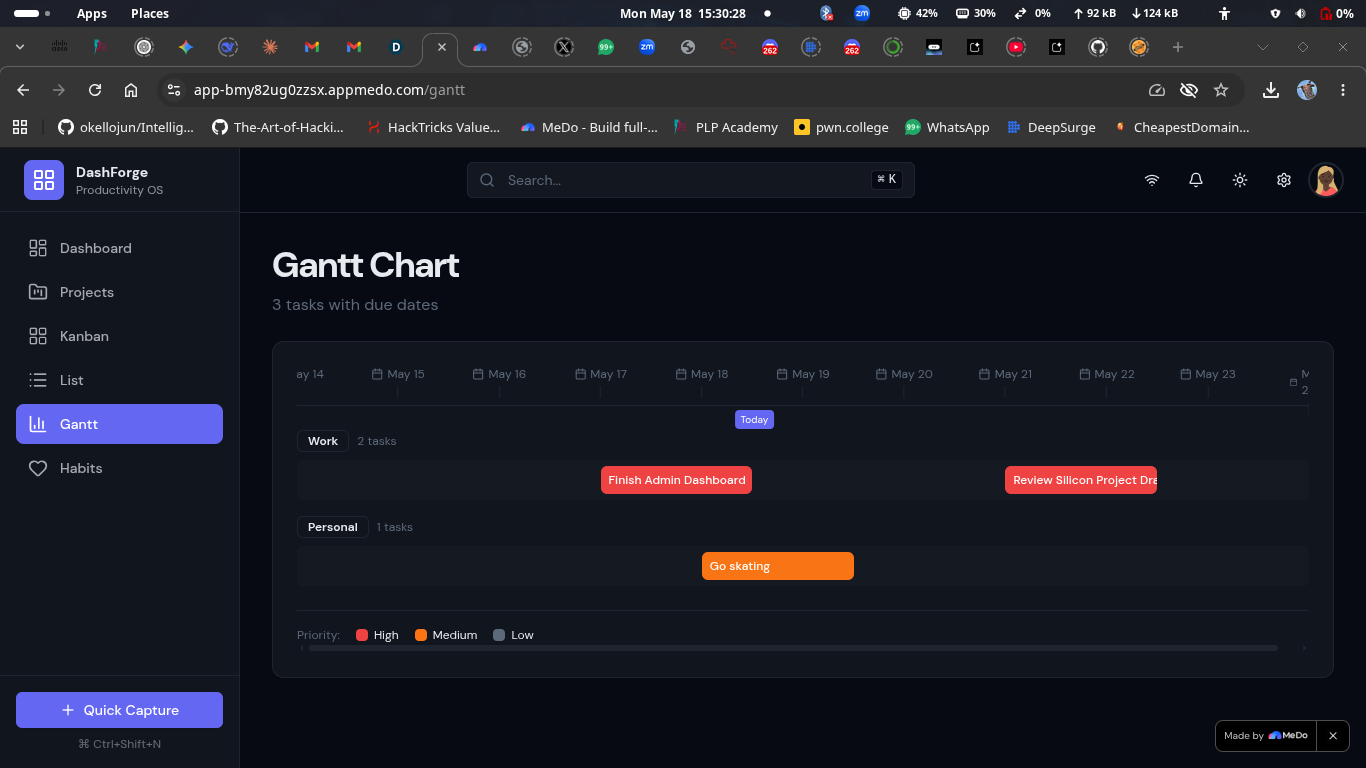
Graphical view of tasks
-
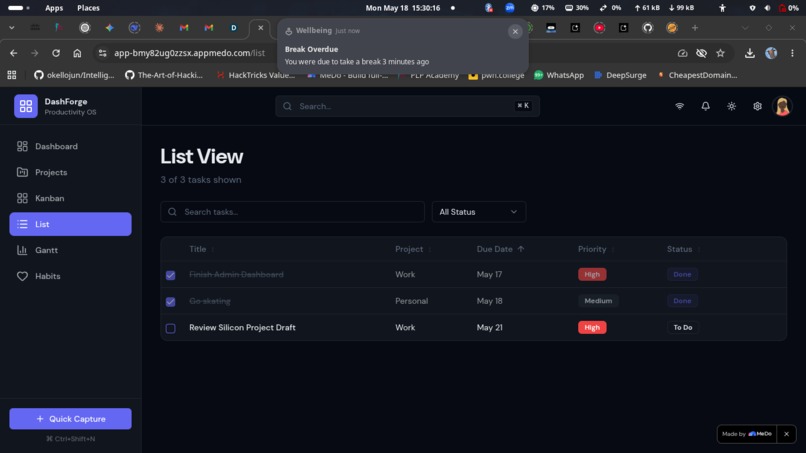
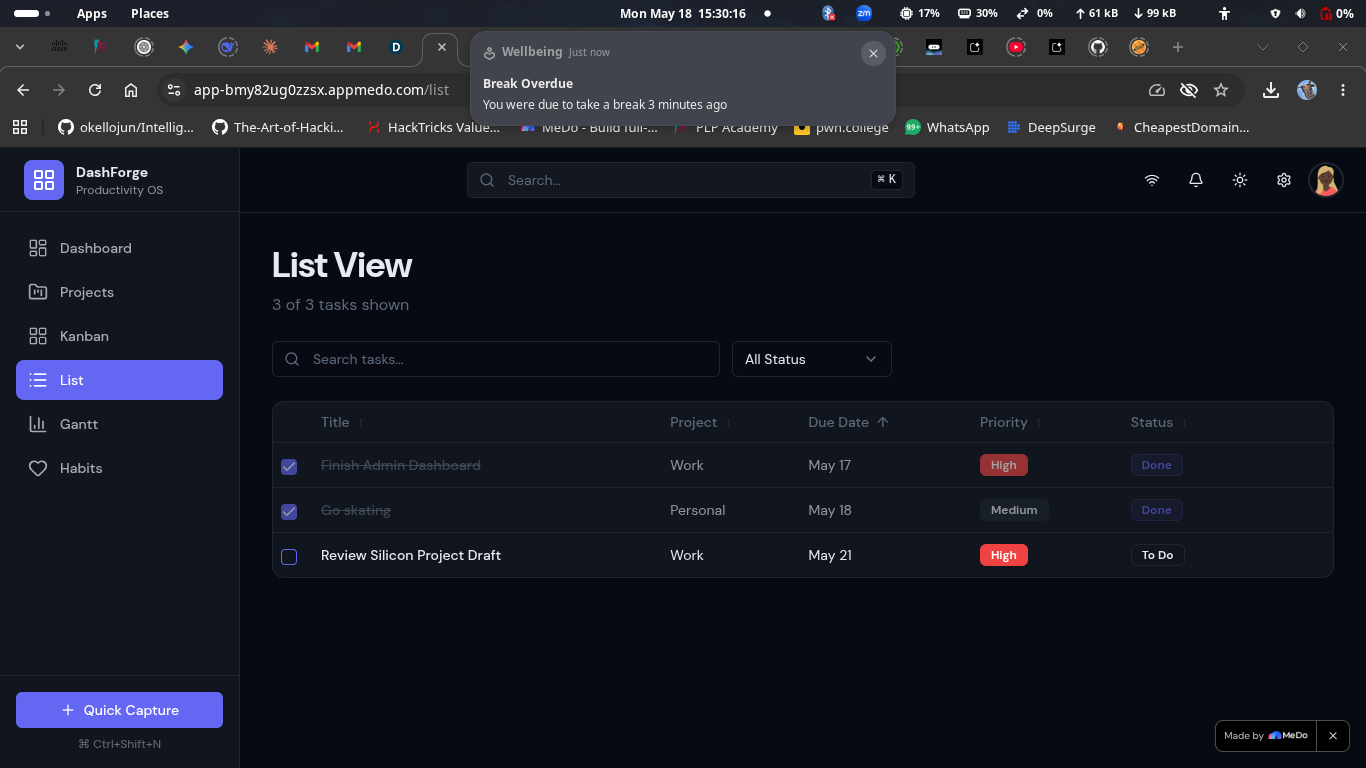
Views for All Tasks
-
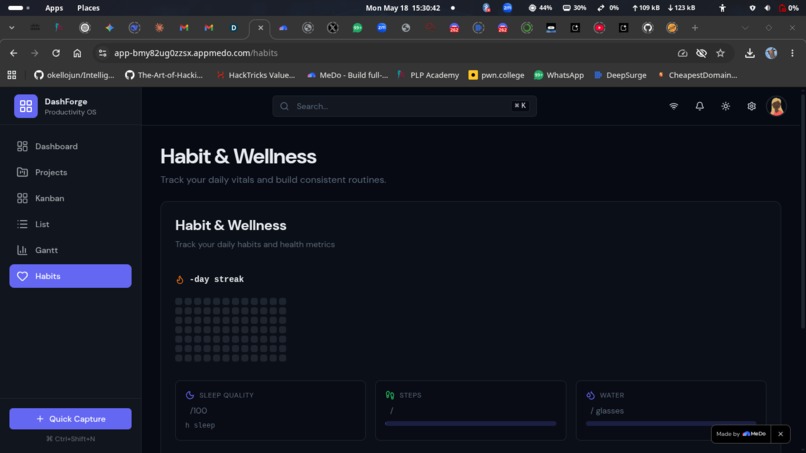
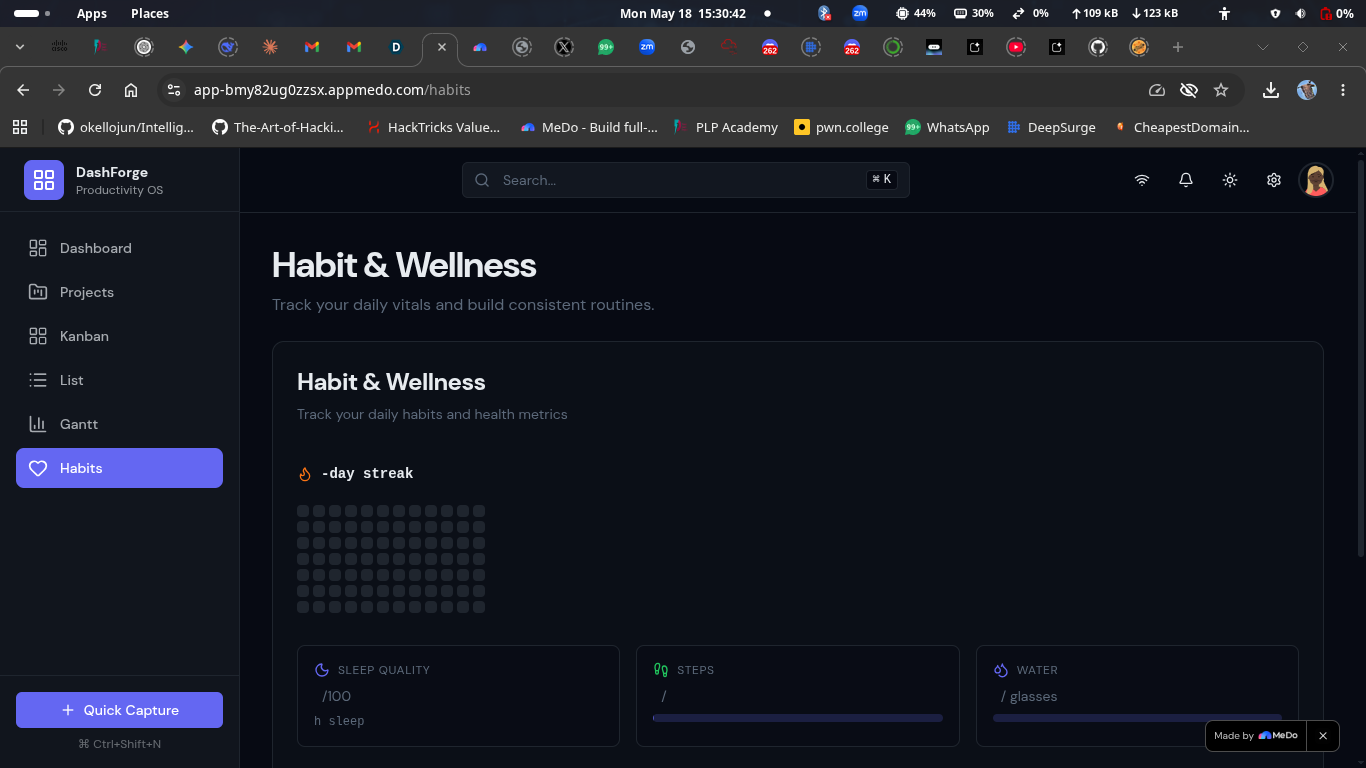
Health and Wellness
-
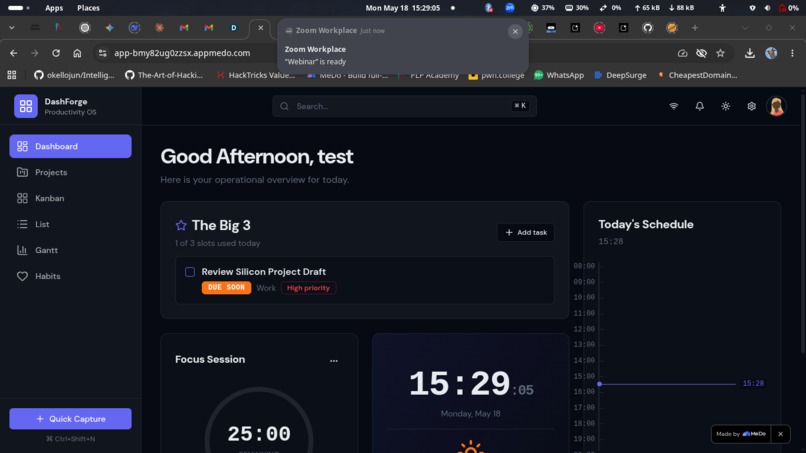
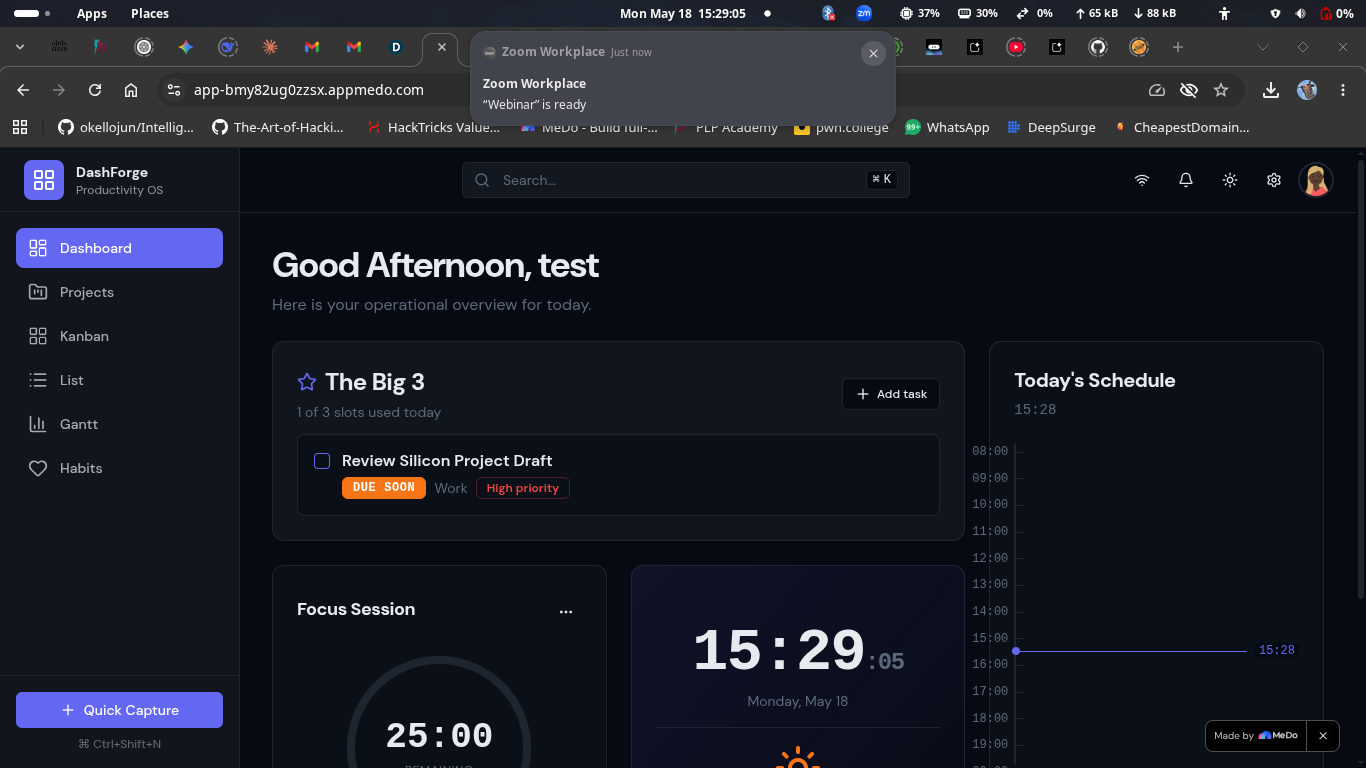
Dashboard
-
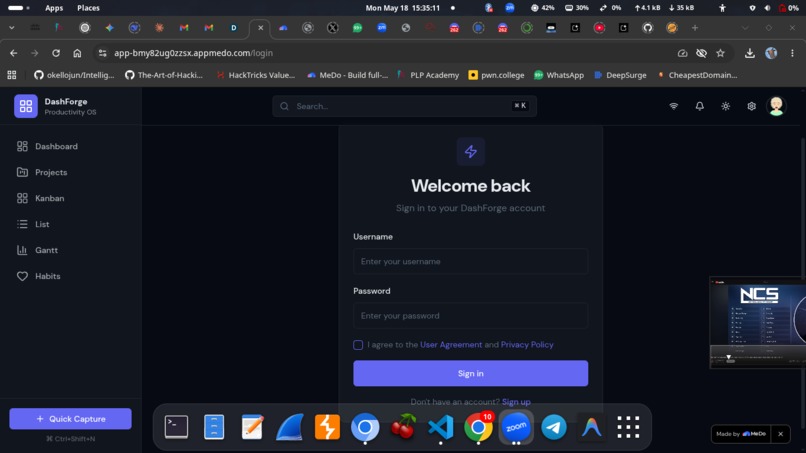
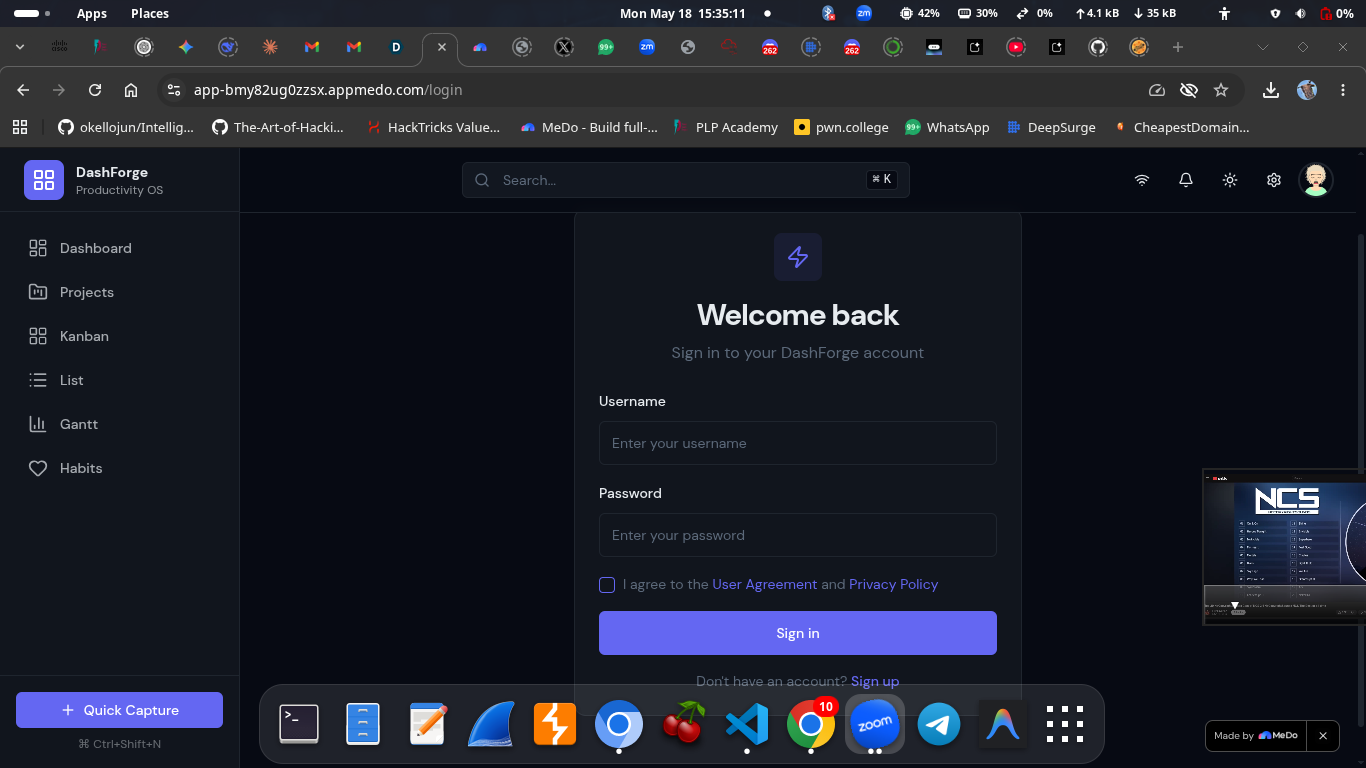
User Login
-
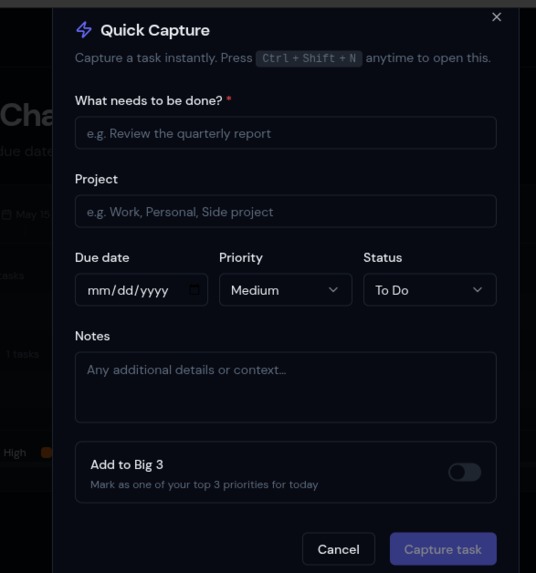
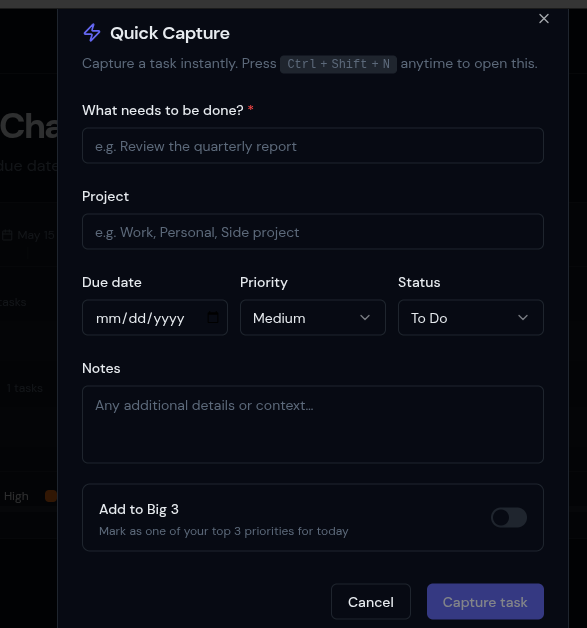
Quick Capture
Inspiration
Like most developers, my browser used to be a graveyard of open tabs—calendars, task managers, habit trackers, and budget spreadsheets, all scattered across different apps. Trying to stay organized meant constantly bouncing back and forth between them, and honestly, that constant context-switching was just exhausting. It felt like I was spending more energy managing my tools than actually getting work done. That friction is exactly what inspired me to build my personal dashboard.
I’ve always been drawn to the idea of using your own data to understand your habits, routines, and productivity rhythms. But I didn't want just another generic to-do list or a flashy, superficial UI. I wanted a unified workspace that could clear the mental clutter, track real patterns over time, and act like a personalized "second brain" built specifically around my daily flow.
Instead of trying to force my habits into rigid, off-the-shelf tools that never quite fit, I decided to build a solution from the ground up using React and Supabase. At the same time, I wanted to see how far I could push AI-assisted development. Teaming up with MeDo.dev AI allowed me to bypass the usual boilerplate friction, prototype features at lightning speed, and keep the entire building process incredibly creative and iterative.
What it does
DashForge is a unified personal productivity dashboard that brings together everything important in one distraction-free interface:
Task Management — create, track, and complete daily tasks Habit Tracking — maintain and monitor daily habits over time Productivity Analytics — visualize performance trends with interactive charts Notes & Quick Captures — jot down ideas without leaving the dashboard Calendar Integration — see upcoming events alongside daily priorities Real-Time Sync — changes reflect instantly across all devices Authentication & User Profiles — secure, personalized access Dark/Light Mode — comfortable viewing in any environment
How we built it
DashForge is built on a modern, responsive stack optimized for rapid development and real-time performance. Frontend React powers the UI through a modular, component-based architecture. The dashboard is organized into distinct widgets —Dashboard, Kanban, Projects, Habit Tracker, and Analytics — each independently rendered and managed. '''jsx function DashboardCard({ title, children }) { return (
{title}
{children} ); } '''Additional frontend tools: React Router for navigation Tailwind CSS for styling Zustand for lightweight state management Recharts for analytics visualizations
Backend & Database Supabase serves as the backend, acting as a powerful open-source Firebase alternative that provided everything needed out of the box: PostgreSQL database User authentication Real-time subscriptions Row-level security Auto-generated client-side SDK '''' jsconst { data, error } = await supabase .from("tasks") .select("*") .eq("completed", false); ''''
AI Pair Programmer — MeDo.dev AI MeDo.dev AI acted as both an architectural sounding board and a hands-on development accelerator — scaffolding components, debugging state issues, and generating production-ready integrations. When wiring React hooks to Supabase's real-time subscriptions, feeding the AI the database schema produced this clean, working result: '''' javascriptimport { useEffect, useState } from 'react'; import { supabase } from '../supabaseClient';
export function useTasks() { const [tasks, setTasks] = useState([]);
useEffect(() => { const fetchTasks = async () => { const { data } = await supabase.from('tasks').select('*'); if (data) setTasks(data); }; fetchTasks();
const channel = supabase
  .channel('schema-db-changes')
  .on(
    'postgres_changes',
    { event: '*', schema: 'public', table: 'tasks' },
    (payload) => {
      if (payload.eventType === 'INSERT') {
        setTasks((prev) => [...prev, payload.new]);
      }
      // Handle UPDATE and DELETE...
    }
  )
  .subscribe();

return () => { supabase.removeChannel(channel); };
}, []);
return tasks; } '''' Instead of spending hours on boilerplate, development time could be directed toward architecture and user experience.
Challenges we ran into
Real-Time State Syncing Syncing local React state with Supabase's real-time PostgreSQL listeners occasionally caused duplicate rendering loops when subscriptions weren't memoized correctly. Careful restructuring of useEffect dependency arrays — with help from MeDo.dev AI — resolved the re-render bottlenecks. ''''js supabase .channel("tasks") .on( "postgres_changes", { event: "", schema: "public", table: "tasks" }, (payload) => { console.log(payload); } ) .subscribe(); '''' **Designing a Clean UI* The temptation to add more widgets and features was constant. Learning to resist that impulse — and instead invest time in refining spacing, typography, and component consistency — was harder than any technical problem. Simplicity turned out to matter more than feature quantity.
Authentication & Row-Level Security Supabase made authentication far simpler than building it from scratch, but correctly authoring row-level security policies required a deeper understanding of how authorization works at the database level: '''sql CREATE POLICY "Users can view their own tasks" ON tasks FOR SELECT USING (auth.uid() = user_id); ''' Complex Data Aggregations Calculating historical productivity trends over variable timeframes required heavy data parsing. Writing efficient SQL for cumulative weekly scores was initially a struggle. The solution was to move that logic into PostgreSQL functions inside Supabase, offloading the heavy lifting from the client entirely — an approach MeDo.dev AI helped architect.
Accomplishments that we're proud of
A UI that feels calm — resisting feature creep and shipping a dashboard that is genuinely pleasant to use every day. AI-accelerated development - that compressed what would have been weeks of boilerplate into focused, productive iteration cycles with MeDo.dev AI. Secure by design — row-level security ensures that every user's data is completely isolated at the database level, not just at the application layer.
What we learned
Prompt engineering for code generation — AI tools produce dramatically better output when given precise schemas, architectural constraints, and clear goals. Vague prompts yield vague results. Power of Supabase — moving from traditional REST APIs to Supabase's auto-generated SDK fundamentally changed the speed at which an MVP can be shipped and iterated on. Performance thinking in real-time apps — rendering complexity in a real-time system can be reasoned about as: T(n)=O(c+s+r)T(n) = O(c + s + r)T(n)=O(c+s+r) Where cc c = component rendering cost, ss s = state update complexity, and r = real-time subscription overhead. This framing made it much clearer where to apply memoization, lazy loading, and state isolation.
Database security — row-level security isn't a backend detail; it's a core part of what makes users trust a product. AI accelerates, but doesn't replace judgment — MeDo.dev AI was invaluable for scaffolding and debugging, but understanding the underlying systems was still essential for every meaningful architectural decision.
What's next for DashForge
DashForge is still evolving, but the vision is much bigger than just a personal productivity dashboard. The goal is to turn it into a platform that genuinely helps people work smarter, stay organized, and better understand their own habits and workflows.
Moving forward, I want to introduce features like AI-powered productivity insights, smarter task prioritization, deeper analytics, and customizable widgets that adapt to different users and work styles. I’m also exploring collaborative features and community-driven templates so people can share dashboard setups, workflows, and productivity systems with others.
More importantly, I hope DashForge can create a positive impact within the developer and productivity community by encouraging intentional work, reducing digital clutter, and helping people build healthier, more focused routines around technology.
At its core, DashForge is about giving people a workspace that feels personal, intelligent, and empowering — not just another app competing for attention.
Built With
- react
- supabase

Log in or sign up for Devpost to join the conversation.