
Inspiration
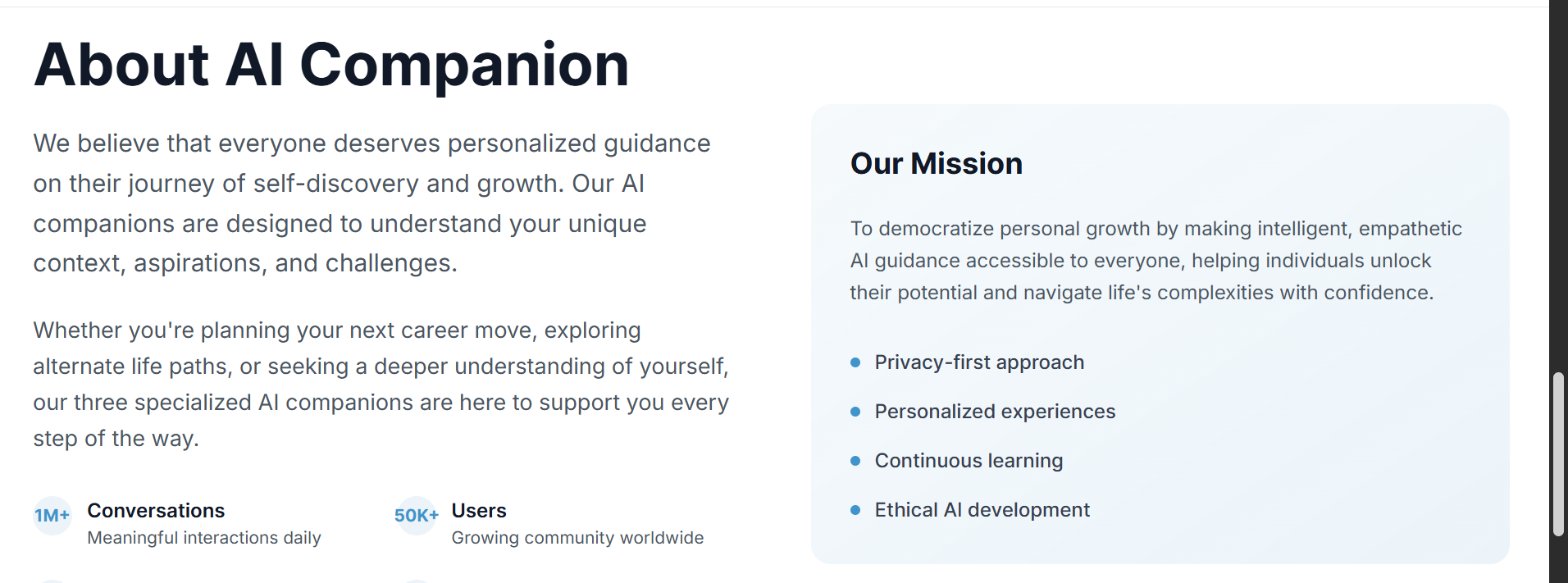
Inspiration We wanted to build more than just another chatbot, we wanted to create something deeply human in how it listens, responds, and supports. In a world full of task-based AI tools, there’s a growing need for technology that not only helps us do more but helps us be more, emotionally balanced, self-aware, and aligned with our goals. That’s where PersonaFlow comes in. Our vision was to build an emotionally intelligent AI that acts as a digital companion, someone you can talk to when you're uncertain, someone who helps you rediscover your purpose, or just checks in with you when no one else does. We drew inspiration from the quiet power of daily journaling, the structure of personal development frameworks like SMART goals, and the emotional care of wellness platforms. These influences guided us to design three distinct AI personas, each one dedicated to a core area of the human experience: goal setting, self-reflection, and emotional support.
With PersonaFlow, we wanted users to feel seen, heard, and supported,not just by an algorithm, but by something that genuinely feels like it understands you.
What it does
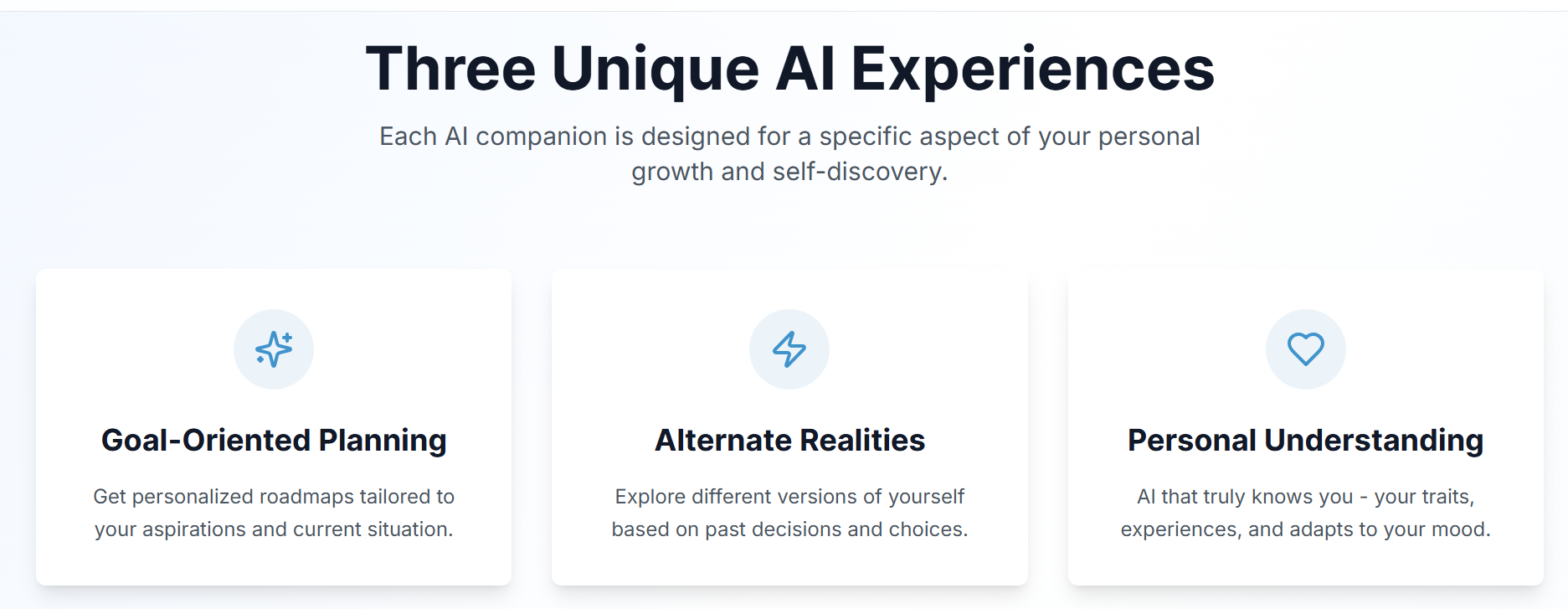
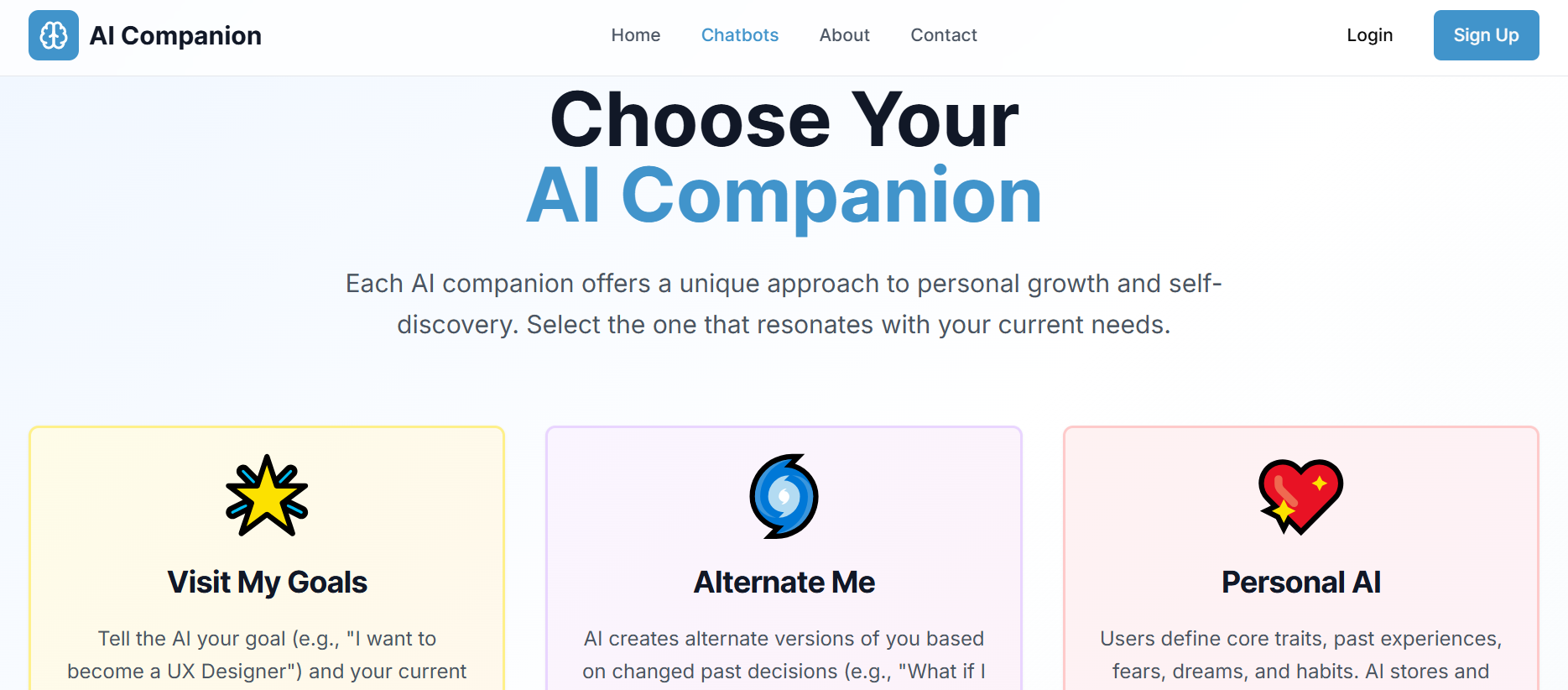
PersonaFlow is a 3-in-1 personalized AI assistant that helps users connect with themselves through conversation:
Visit My Goals: Offers structure and motivation to define and achieve personal goals.
Alternate Me: Encourages deep reflection to understand one’s personality, values, and aspirations.
Personal AI: A safe space for emotional expression, offering empathy, mood-based suggestions, and mental wellness tips.
Each bot responds based on the user's current mood, past reflections, and personal traits, creating a tailored, evolving experience.
How we built it
We used:
- Python as the core programming language.
- Gradio to build a user-friendly conversational interface.
- Hugging Face Transformers (
nateraw/bert-emotion) to classify user emotions. - Google Gemini Pro API for smart, contextual conversations.
- Google Colab for hosting and prototyping.
- JSON to store and retrieve user profile data for personalized conversations.
- Next.js, TailwindCSS, Formspree(to receive data on email)
- *Nodejs, Expressjs, Typescript, Mongodb. Vercel *for deployment
Each chatbot has its own conversational flow and intent, connected through shared profile memory and real-time mood detection.
Challenges we ran into
- Integrating multiple AI models while maintaining fast response time in a Colab environment.
- Creating meaningful and distinct conversational flows for each bot while keeping the UX simple.
- Ensuring emotion detection remained contextually accurate across different types of inputs.
- Designing a modular system that could grow with future features without overwhelming first-time users.
Accomplishments that we're proud of
- Developed a fully working 3-bot system in one cohesive experience.
- Created a unique journaling-inspired feature: “Motivational Memories,” where users can save powerful moments for future motivation.
- Built a complete, beginner-friendly UI using Gradio without sacrificing personality or depth.
What we learned
- Emotionally intelligent AI requires not just NLP but careful design around tone, intent, and timing.
- Personalization makes even simple interactions feel profound.
- Simplicity in UI/UX can make emotionally complex ideas more accessible.
- Working with multiple APIs and ML models taught us how to balance performance with personalization.
What's next for PersonaFlow
- Voice Mode: Integrate Whisper for voice-based interaction and responses.
- Memory Persistence: Add long-term journaling and mood tracking.
- Mobile-friendly deployment via Hugging Face Spaces or Streamlit Cloud.
- Custom Avatar & Personality Settings to reflect user preferences visually.
- AI Coach Add-On: Introduce a fourth bot focused on daily productivity and habit tracking.
checkout our github repo
Built With
- javascript
- llms
- python

Log in or sign up for Devpost to join the conversation.