-
-
-
-
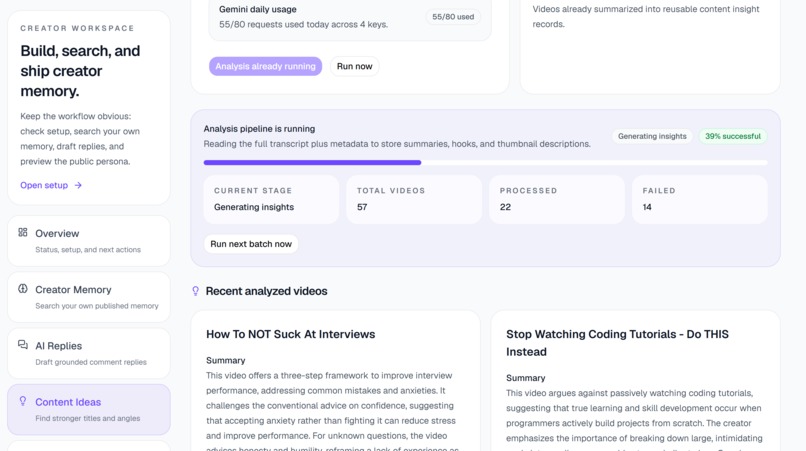
Running Pipeline
-
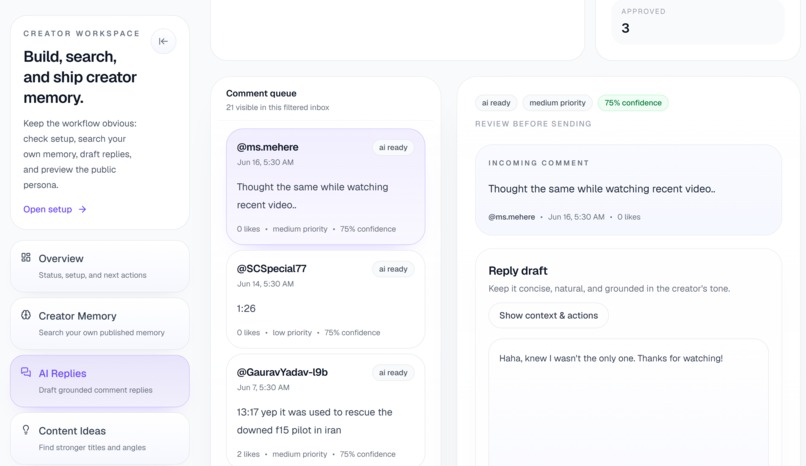
AI based Comment Reply
-
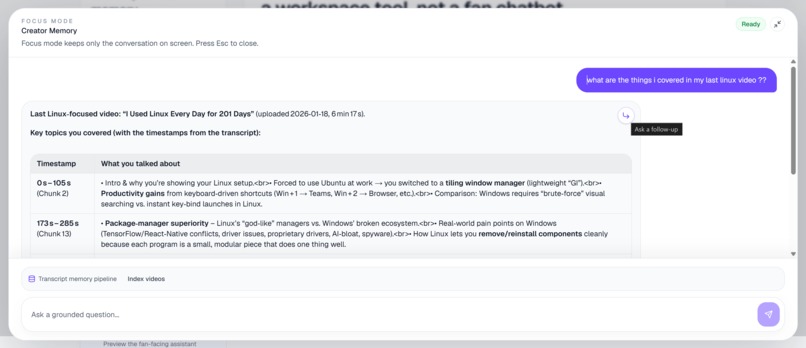
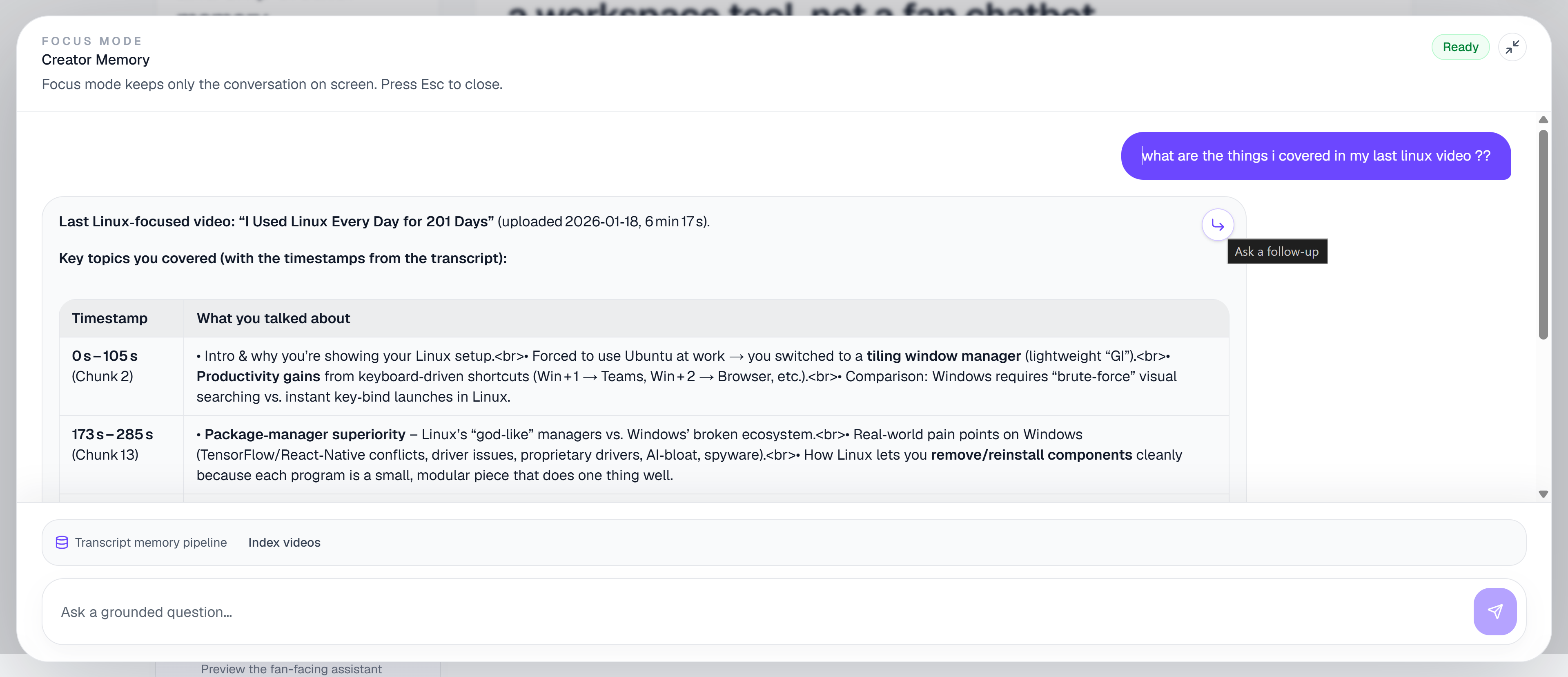
Creator Memory
-
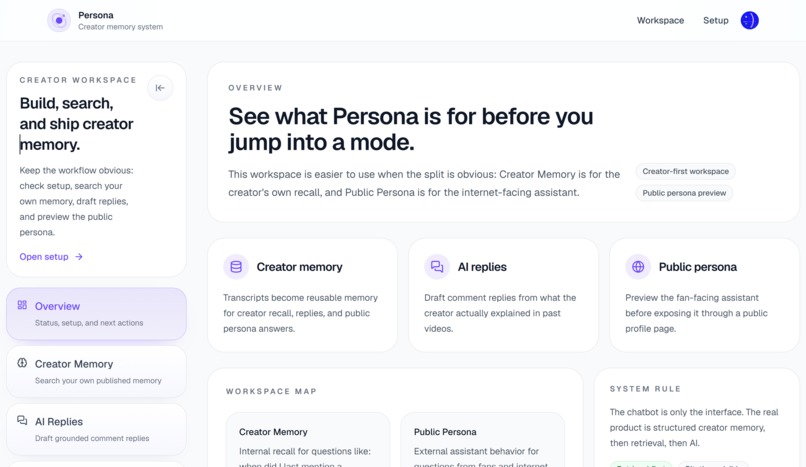
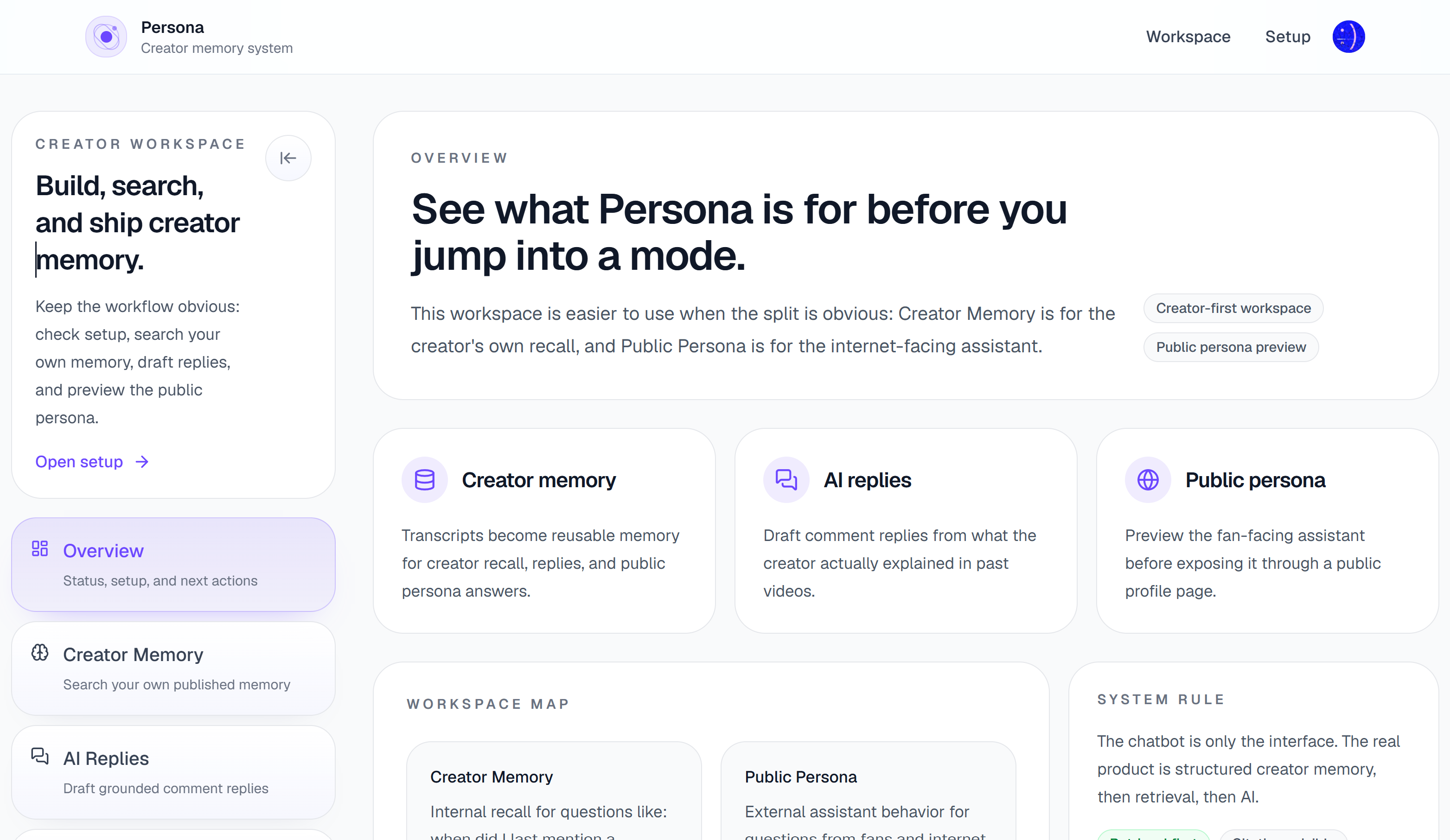
Overview
-
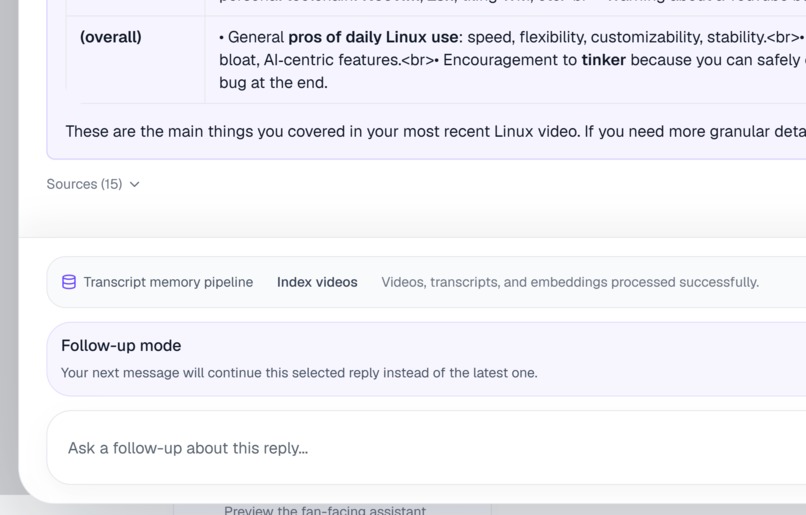
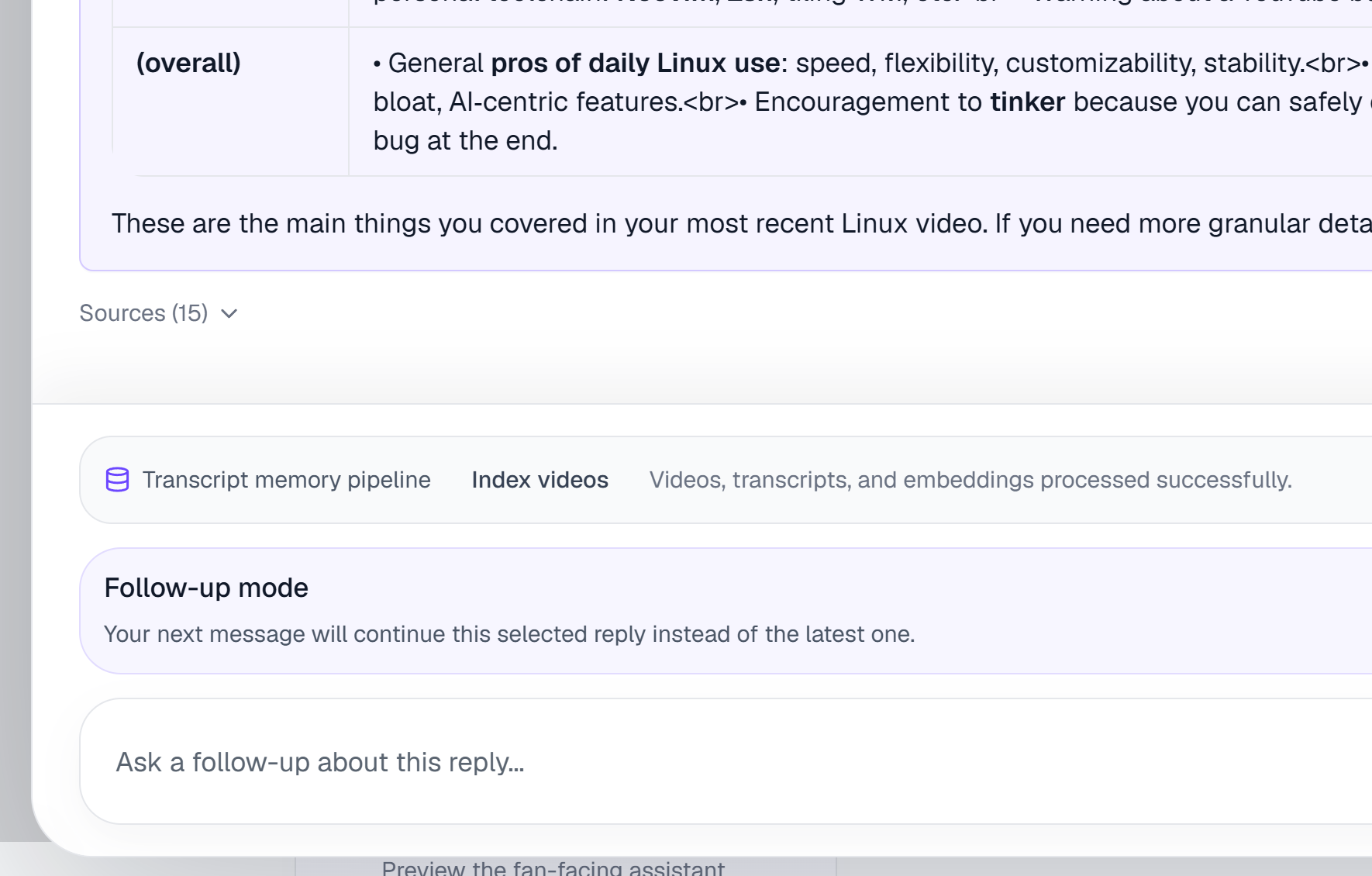
Follow Up Mode
-
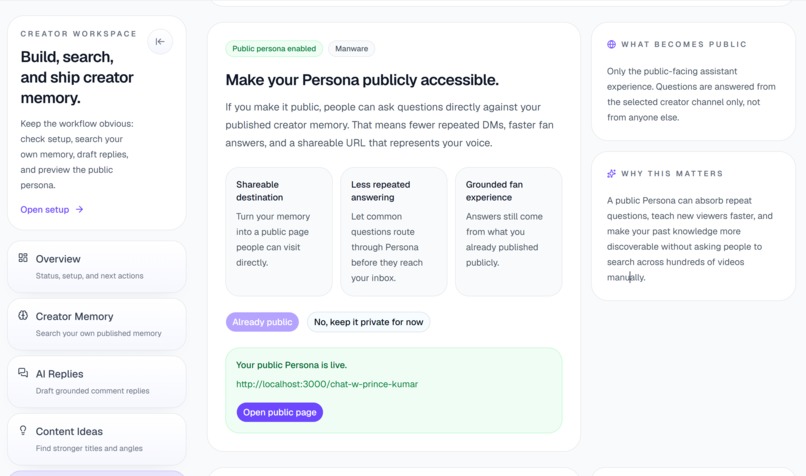
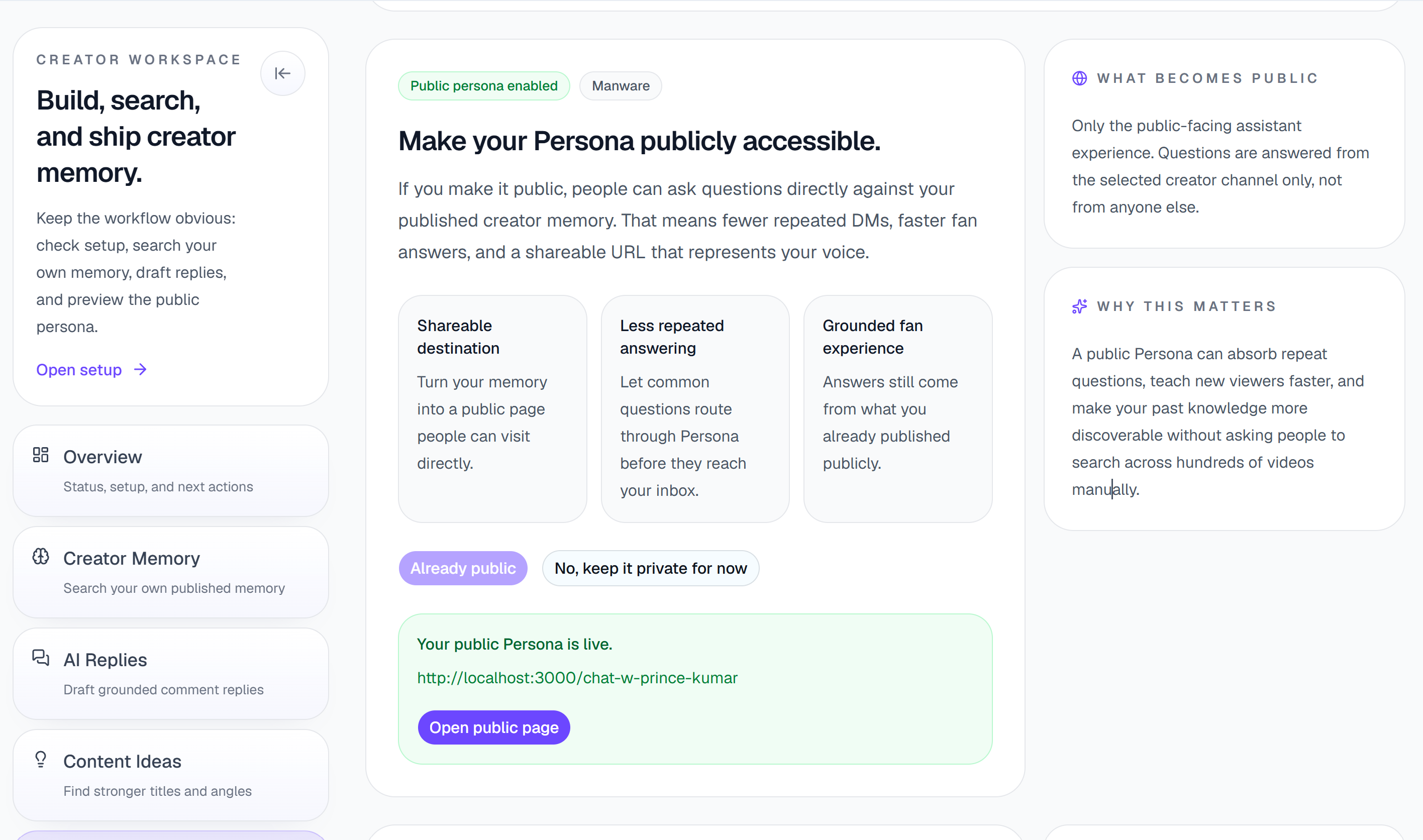
Make your Persona Publically Accessible.
Inspiration
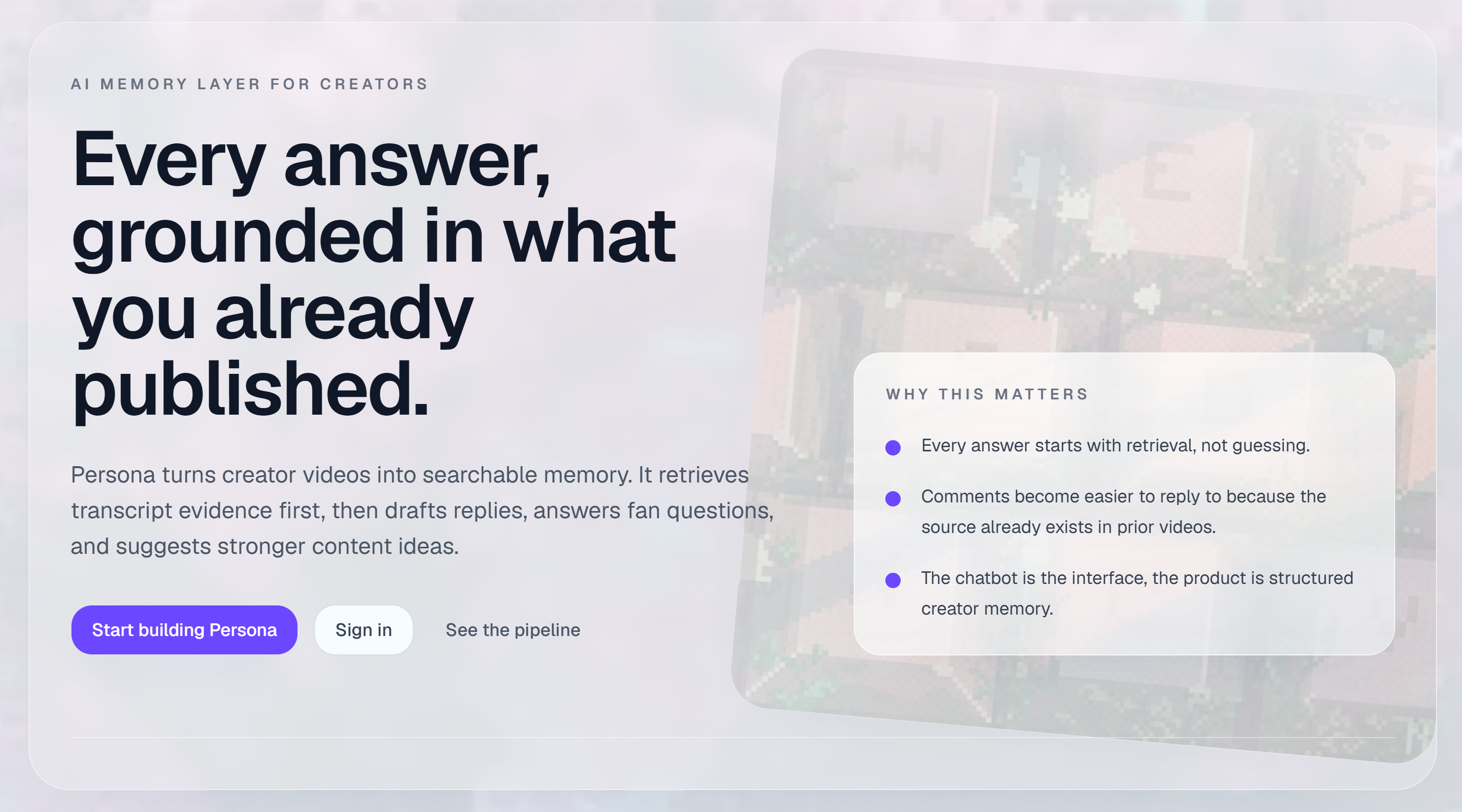
I was inspired by a simple problem: creators repeat themselves constantly. Important answers about tools, workflows, giveaways, opinions, and strategies are already buried across dozens or hundreds of videos, but fans still ask the same questions again and again. At the same time, creators lose time answering things they have already explained publicly.
I wanted to build something that does not just sound smart, but actually remembers what the creator has already said. Instead of treating AI like a generic chatbot, I treated the creator’s published content as a memory system. That idea became Persona.
What it does
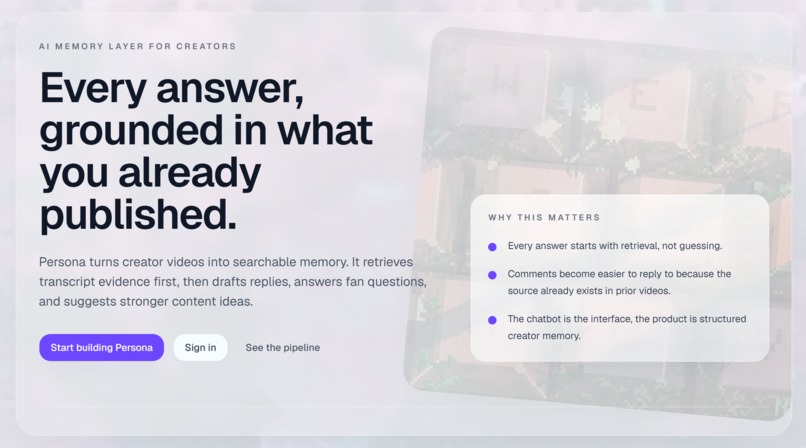
Persona turns a creator’s existing videos into searchable memory.
It ingests videos, pulls transcripts and metadata, structures them into reusable knowledge, and then uses that memory across multiple creator-facing workflows:
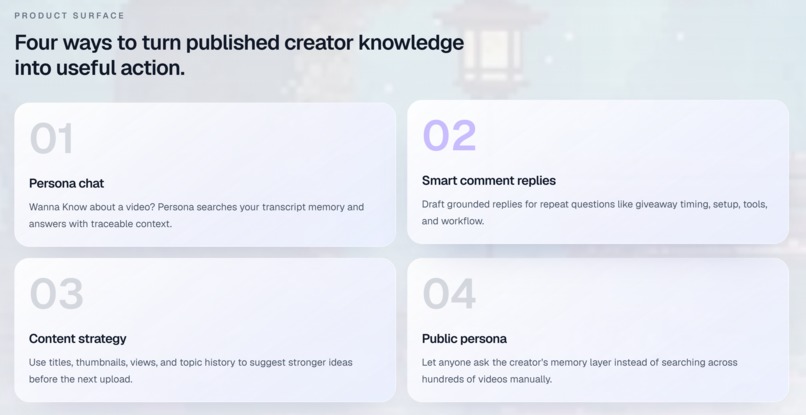
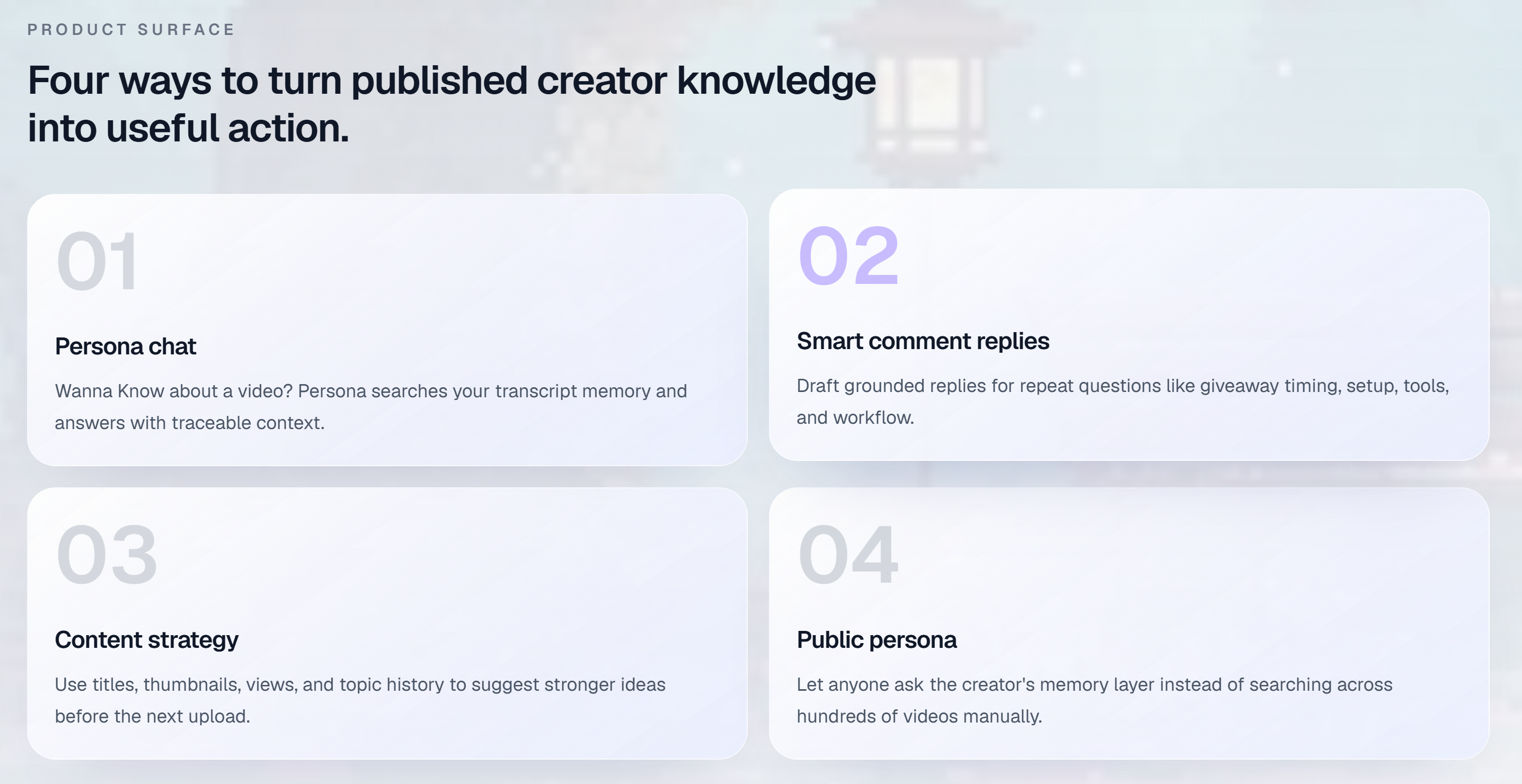
- answering creator or fan questions with grounded context
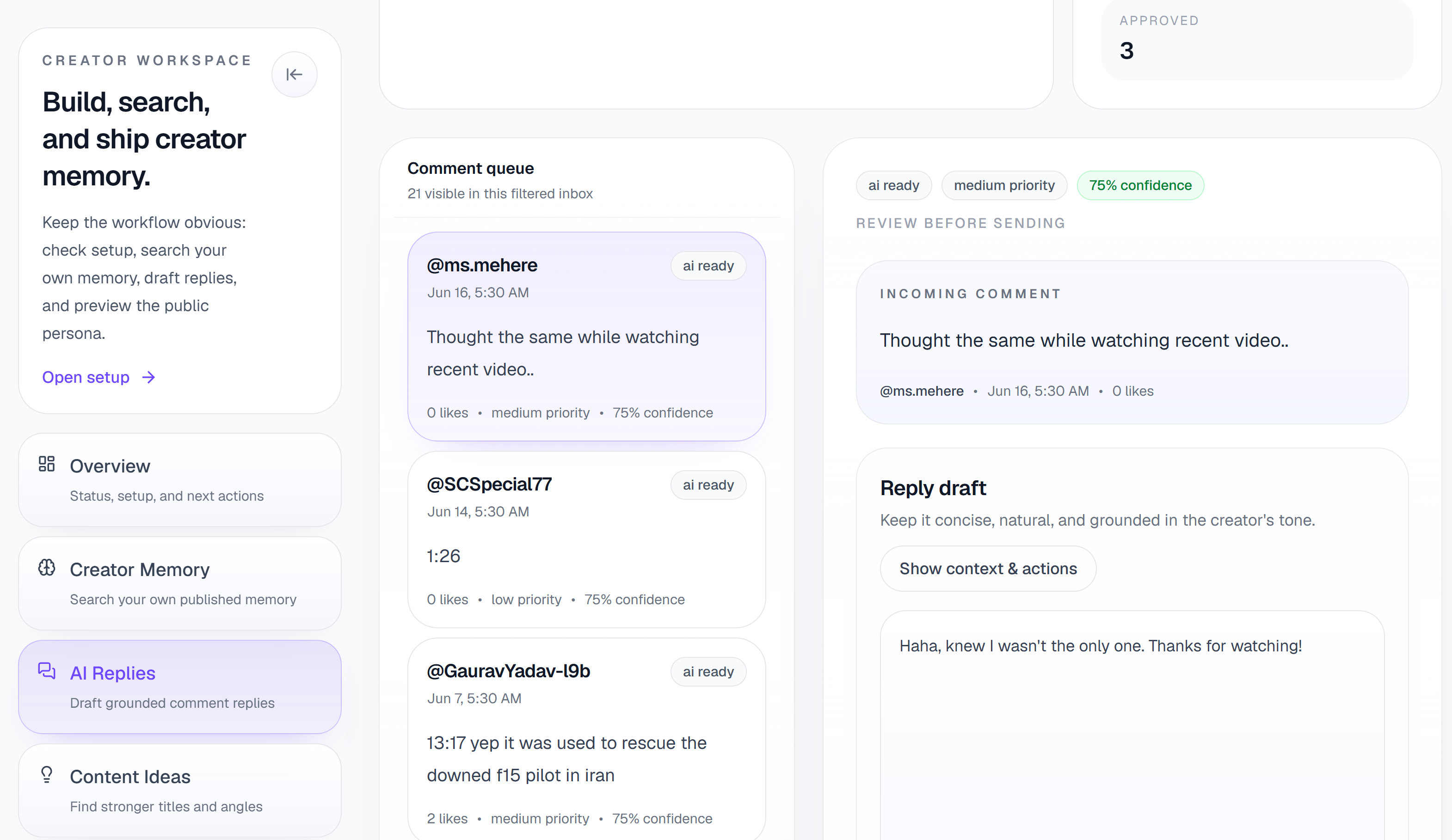
- drafting smarter YouTube comment replies
- helping creators recall what they already said in past videos
- suggesting stronger content ideas based on prior titles, topics, thumbnails, and performance context
- enabling a public persona page where users can ask questions grounded in the creator’s published content
The key difference is that Persona is retrieval-first. It does not try to guess from scratch. It first finds relevant creator context, then generates output from that evidence.
How we built it
I built Persona as a full-stack web app focused on turning creator content into reusable memory.
Persona's stack includes:
- Next.js for the app framework and frontend/backend routes
- React + Tailwind CSS for the interface
- Clerk for authentication
- Supabase / vector-backed storage patterns for storing creator data and searchable memory
- LLM integrations for generation and reasoning over retrieved context
- YouTube ingestion flows for importing channel videos, comments, and transcript-related data
- YT-DLP for fetching multiple things about the creator from youtube like a speicifc video's heatmap etc.
The system works roughly like this:
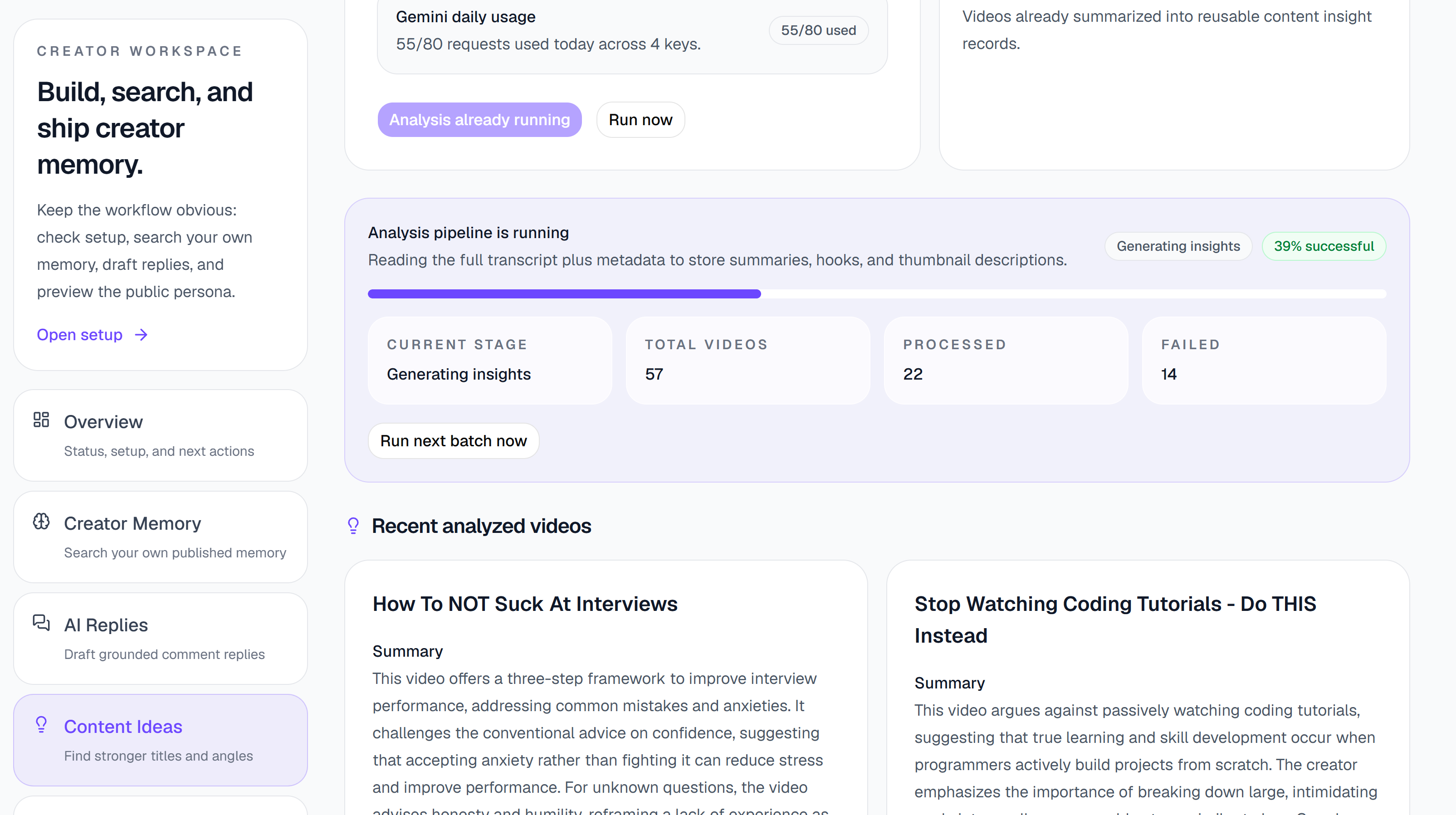
- Connect your YouTube account
- Import the video catalog
- Process transcripts and related metadata
- Chunks the transcript into searchable units
- Generate embeddings for those chunks
- Store them for retrieval
- Use retrieval + generation to power chat, replies, recall, and strategy features
On top of that backend pipeline, we designed multiple product surfaces:
- a creator memory workspace
- an AI replies inbox
- a content ideas workspace
- a public persona interface
That let us prove the same memory layer could support several useful workflows instead of just one chatbot demo.
Challenges I ran into
One of my biggest challenges was making the product feel grounded instead of gimmicky. It is easy to make an AI app that produces text, but much harder to make one that feels trustworthy. I had to constantly think about how to ensure outputs were tied to what the creator had actually said before.
I also ran into product-design challenges:
- separating “creator memory” from “public persona” clearly enough for users
- making the comment review workflow intuitive
- reducing clutter in the dashboard so the important actions stayed obvious
- making retrieval-powered features feel fast and understandable
On the technical side, I dealt with:
- transcript ingestion and data flow complexity
- structuring memory in a way that could support several different use cases
- keeping UX polished while iterating quickly
- debugging integration and runtime issues while continuously reshaping the product
Accomplishments that I am proud of
I am proud that Persona is more than a single AI prompt wrapped in a UI. I built a reusable memory layer and demonstrated how it can power multiple creator workflows.
Some accomplishments I am especially proud of:
- building a retrieval-first system instead of a generic AI wrapper
- turning creator videos into reusable, searchable memory
- creating multiple connected surfaces: recall, replies, strategy, and public persona
- designing a cleaner, more polished interface that feels like a real product
- showing how creators can scale communication without losing authenticity
I am also proud that the product direction is clear: the chatbot is not the product by itself—the structured creator memory is.
What I learned
I learned that good AI products are not just about generation quality. The real value comes from structure, retrieval, and trust.
I also learned:
- product clarity matters as much as technical capability
- UI decisions strongly shape whether AI feels useful or confusing
- grounding responses in real creator context makes the experience dramatically better
- one strong backend memory pipeline can unlock many downstream features
- shipping quickly still requires discipline around user experience and scope
Most importantly, I learned that creators do not need “more AI noise.” They need systems that help them reuse what they have already said in a trustworthy and scalable way.
What's next for Persona
Next, I want to make Persona even more useful and production-ready.
Persona's roadmap includes:
- stronger citation and traceability in every response
- better transcript and metadata ingestion coverage
- deeper YouTube analytics integration
- higher-quality public persona experiences for fans
- improved comment reply automation and approval workflows
- more personalized content strategy suggestions based on creator history
- faster retrieval and better memory ranking
- team and collaboration features for creator workflows
Long term, we see Persona becoming the operating memory layer for creators—a system that helps them answer, recall, respond, and create using knowledge they have already published.
Built With
- javascript
- nextjs
- rag
- supabase
- tailwind
- youtube-apis
- yt-dlp


Log in or sign up for Devpost to join the conversation.