-
-
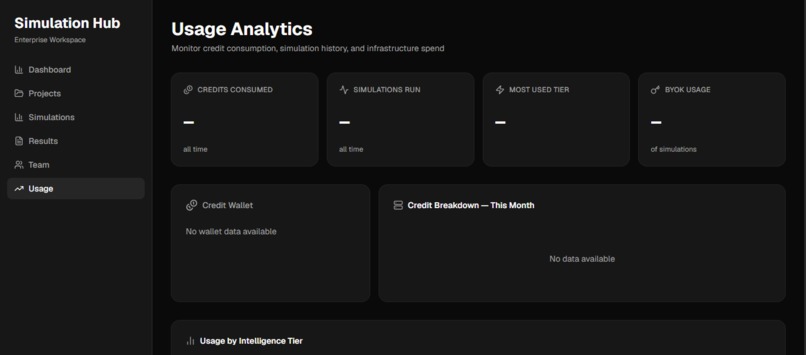
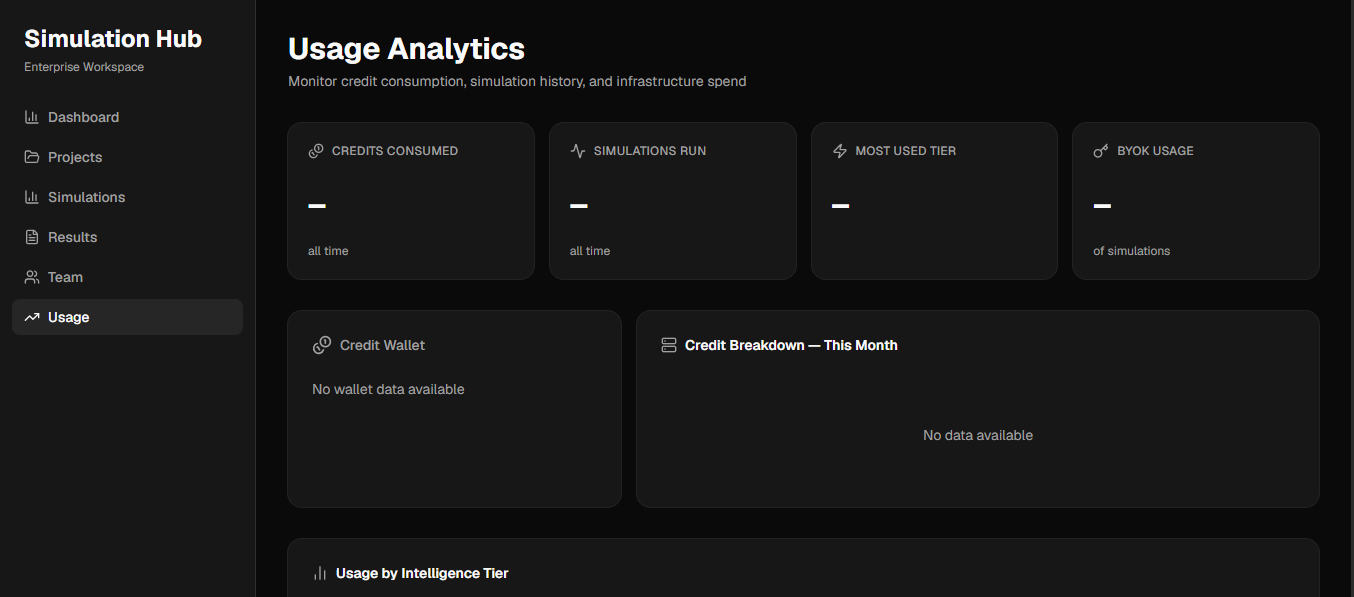
usage analystics page
-
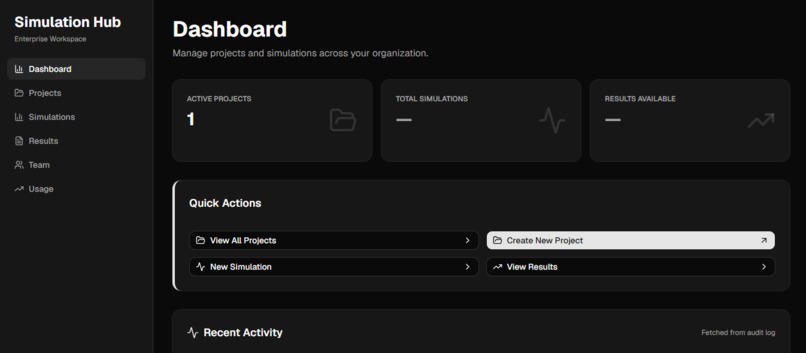
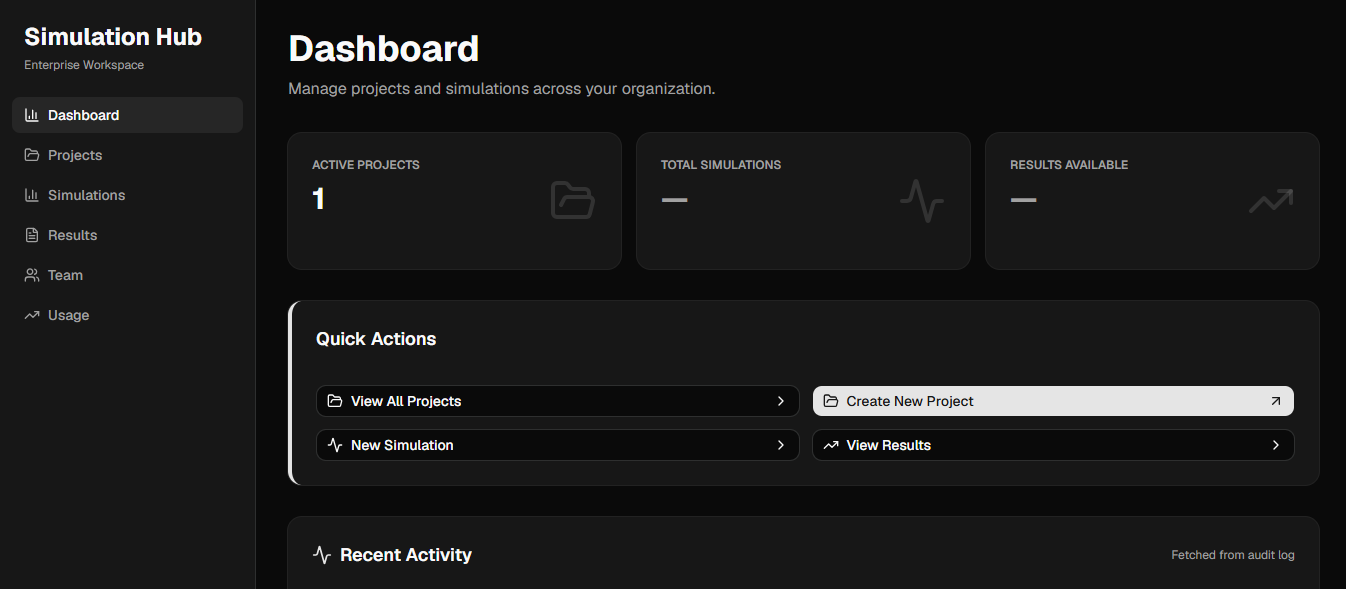
main dashboard
-
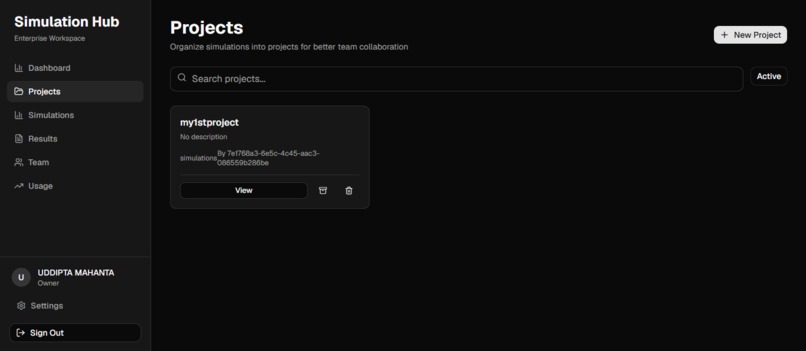
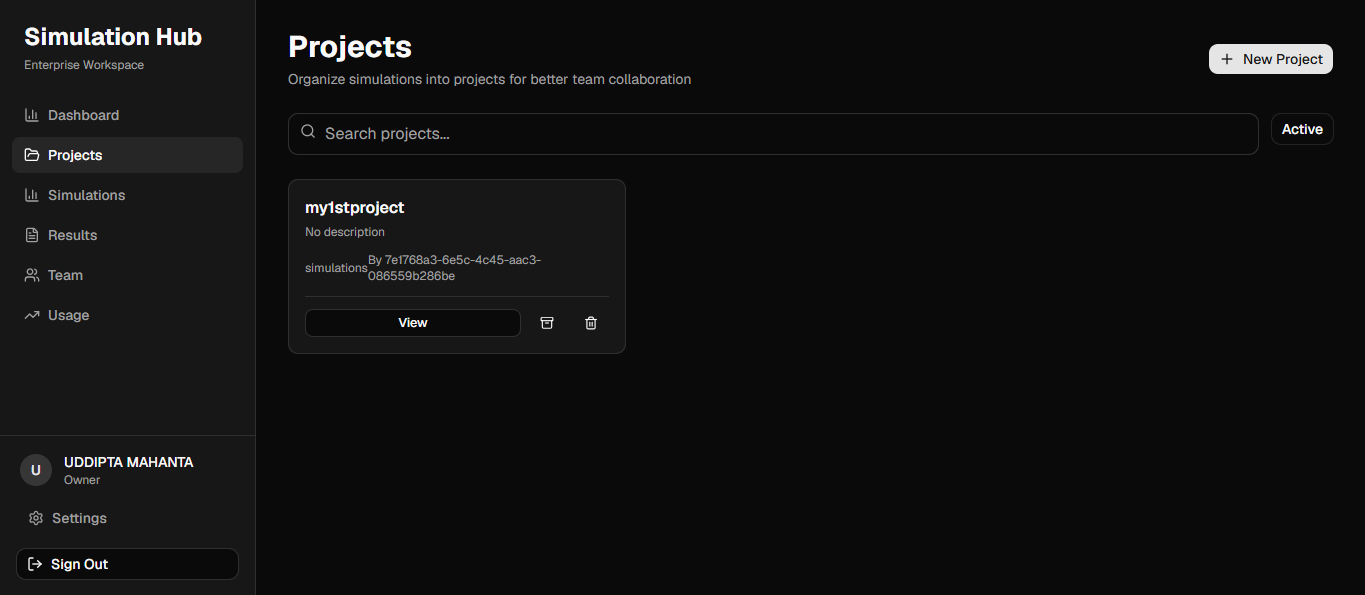
project page to track all of your projects
Inspiration
As AI agents and modern software become more capable, one problem keeps appearing: we only know whether they truly work after they are deployed. Developers manually test a few scenarios, companies run small beta programs, and products are launched with many unknowns. Real users often become the testers. While building AI agents and software ourselves, we repeatedly encountered this problem. There was no practical way to simulate thousands of realistic users, test edge cases, evaluate AI behavior, or predict how different people would interact with a system before deployment. That inspired us to build PersonaForge a platform that makes simulation a standard part of software development, just as automated testing is today.
What it does
PersonaForge is an AI-powered simulation platform that helps organizations test products, software, AI agents, and business workflows before deploying them in the real world. Instead of relying on a handful of manual tests or waiting for customer feedback after launch, PersonaForge creates realistic AI-driven virtual users that interact with systems at scale.
The platform can simulate:
- Customer reactions to products and pricing
- User behavior on software and websites
- AI agent interactions under realistic and adversarial scenarios
- Business workflow execution
- Large-scale behavioral simulations
During each simulation, PersonaForge collects detailed telemetry, analyzes decisions, measures outcomes, and generates actionable insights that help teams identify weaknesses before they impact real users.
How we built it
PersonaForge is built as a cloud-native, multi-tenant SaaS platform.
Frontend
- Next.js
- React
- TypeScript
- Tailwind CSS
- shadcn/ui
- React Query
- Zustand
The frontend provides project management, simulation configuration, dashboards, billing, BYOK management, analytics, and real-time telemetry visualization.
Backend
The backend is built entirely on AWS.
Core services include:
- Amazon Cognito for authentication
- Aurora PostgreSQL for business data
- DynamoDB for telemetry events
- Amazon SQS for asynchronous simulation execution
- AWS Lambda for serverless compute
- Amazon Bedrock for AI model execution
- Amazon S3 for simulation result storage
- API Gateway for secure APIs
- AWS Secrets Manager for securely storing BYOK credentials
We designed the system around an event-driven architecture where simulations execute asynchronously, telemetry streams in real time, and results are aggregated for analytics.
The platform also includes:
- Multi-tenant organization management
- Credit-based billing
- AI intelligence tiers
- BYOK (Bring Your Own Key) support
- Role-based access control
- Audit logging
Challenges we ran into
Building PersonaForge required solving challenges across multiple areas rather than just writing application code.
Some of the biggest challenges included:
- Designing a scalable event-driven simulation architecture.
- Building secure multi-tenant isolation across organizations.
- Integrating AWS Cognito with Aurora PostgreSQL.
- Implementing asynchronous simulation orchestration using SQS and Lambda.
- Managing AI provider abstraction so users interact with simple intelligence tiers while the backend dynamically routes requests to different Bedrock models.
- Designing a flexible credit-based billing system that supports both managed AI usage and BYOK.
- Debugging deployment issues involving Prisma, Lambda packaging, API contracts, and frontend-backend integration.
These challenges pushed us to think like platform engineers rather than application developers.
Accomplishments that we're proud of
We're proud that PersonaForge evolved from a simple product-testing concept into a much broader AI simulation platform.
Some highlights include:
- Building a production-style cloud architecture on AWS.
- Creating a modular simulation engine that can support multiple simulation domains.
- Designing a complete multi-tenant SaaS platform with authentication, billing, and organization management.
- Implementing AI model abstraction through intelligence tiers.
- Supporting BYOK while maintaining platform-level billing and analytics.
- Successfully integrating frontend and backend services into a unified platform.
Most importantly, we now have a foundation that can grow into many different types of simulation products without changing the core architecture.
What we learned
This project taught us that building AI infrastructure is very different from building AI applications.
We gained practical experience with:
- Cloud-native architecture
- Distributed systems
- Event-driven design
- Multi-tenant SaaS development
- AI orchestration
- Serverless computing
- Enterprise security
- API design
- Frontend-backend integration
We also learned that good simulation requires more than powerful AI models, it requires thoughtful system design, scalable infrastructure, and meaningful analytics.
What's next for PersonaForge
Our current MVP focuses on synthetic consumer simulation, but this is only the first module of a much larger platform.
Our roadmap includes:
- AI Agent Validation Lab for testing autonomous agents before production.
- UX/UI Simulation to evaluate user journeys and accessibility.
- Software Readiness Assessment with architecture, security, and maintainability analysis.
- Workflow Simulation for enterprise process validation.
- Advanced synthetic population generation and behavioral modeling.
- Expanded analytics and benchmarking capabilities.
- Team collaboration and enterprise deployment features.
Our long-term vision is for PersonaForge to become the standard simulation environment for the AI era, a platform where organizations can safely validate products, software, AI agents, and workflows before they reach real users.
Built With
- amazon-bedrock
- amazon-cognito
- amazon-sqs
- amazon-web-services
- api-gateway
- aurora-postgresql
- aws-lambda
- aws-secrets-manager
- css
- dynamodb
- next.js
- shadcn/ui
- tailwind
- typescript

Log in or sign up for Devpost to join the conversation.