-
-
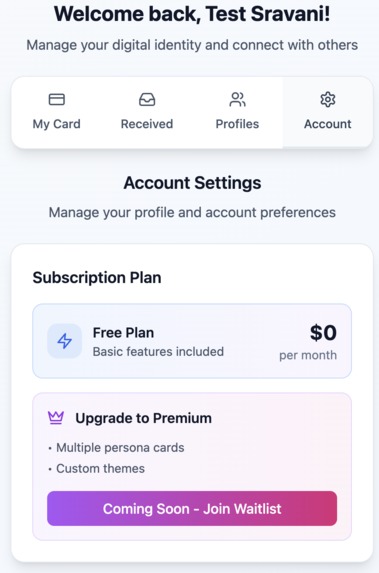
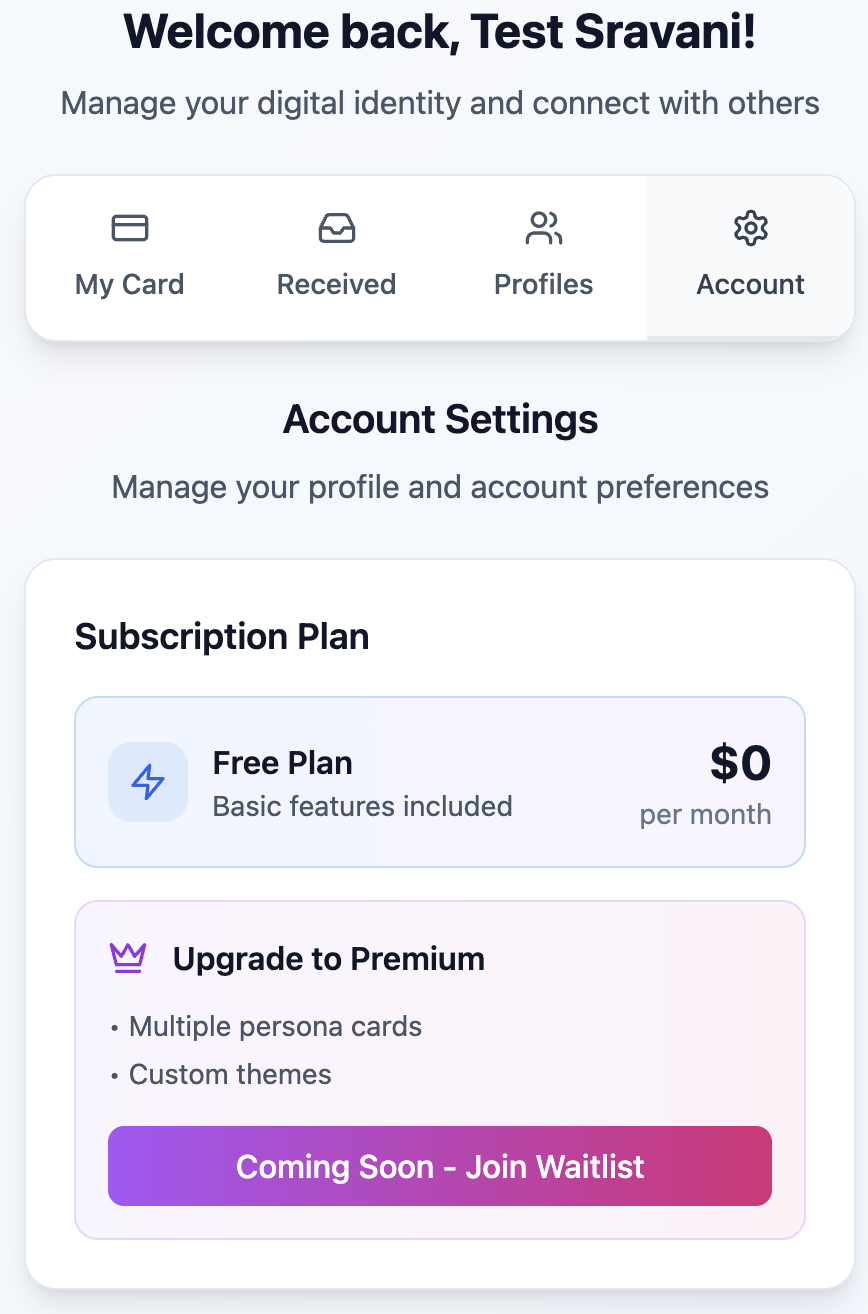
Premium Upgrade - Join Waitlist
-
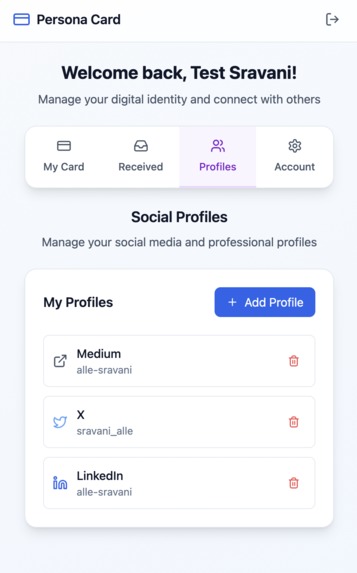
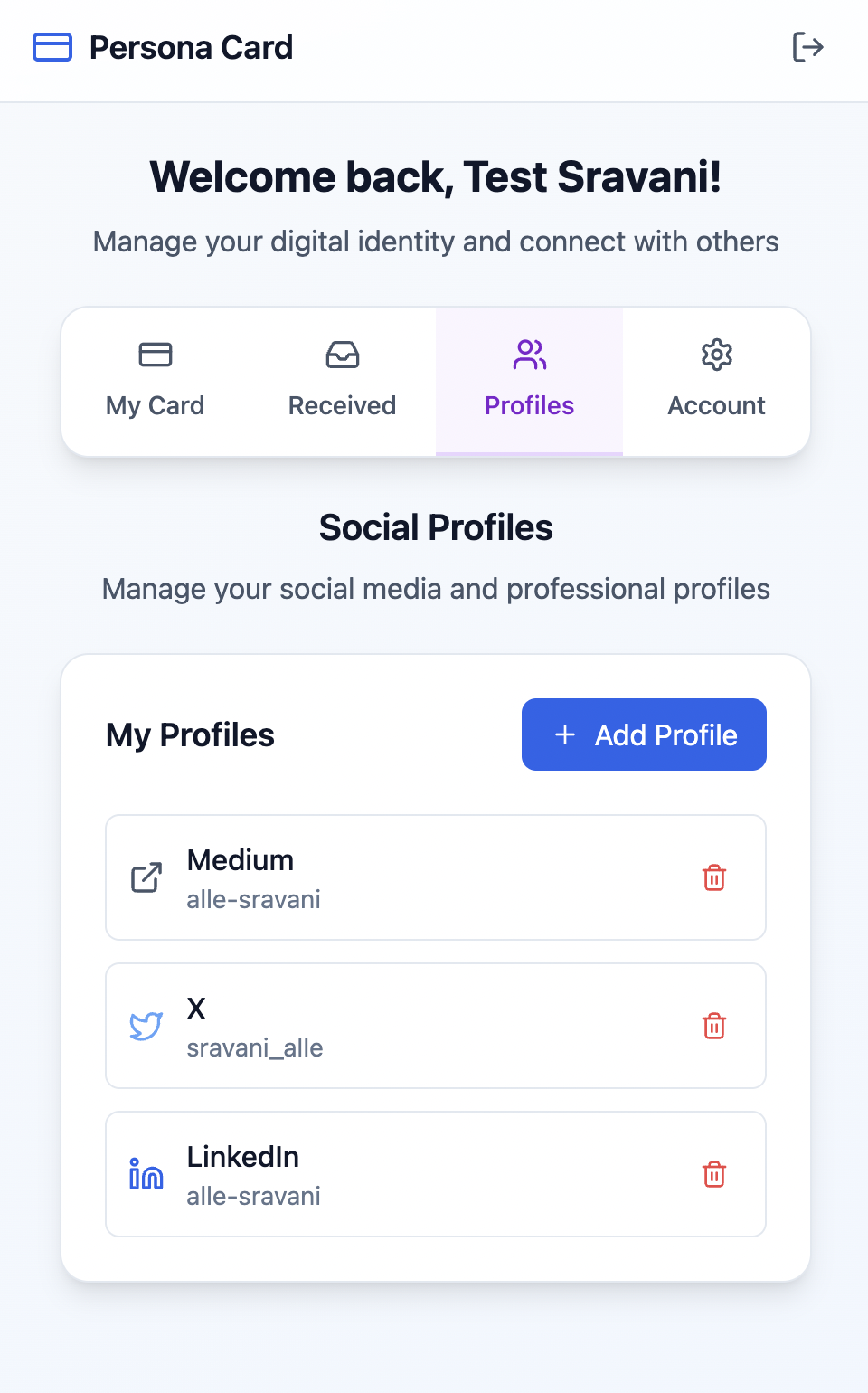
All Profiles View
-
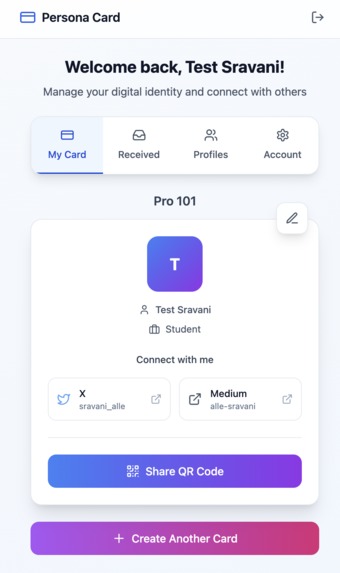
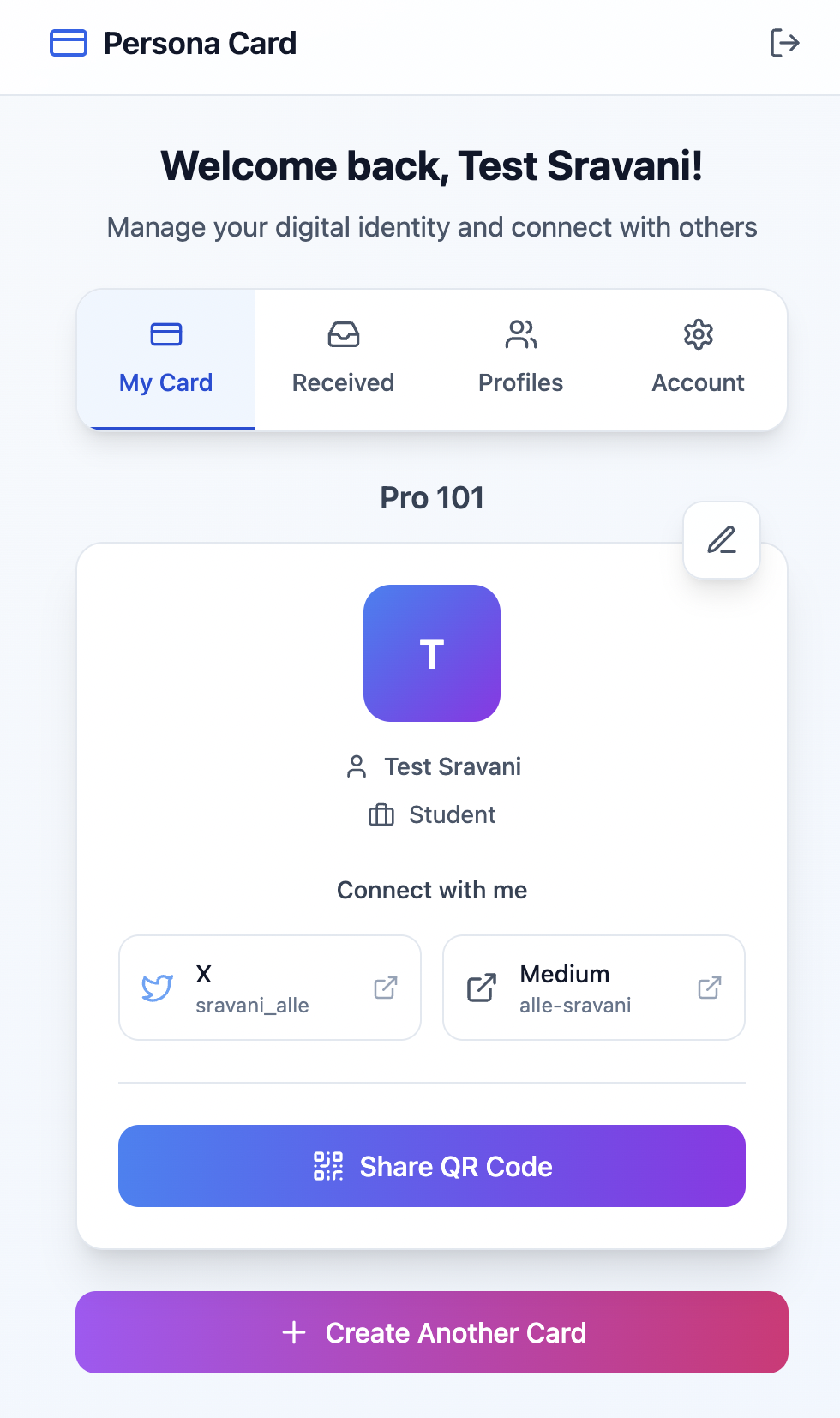
Home Page View of Card
-
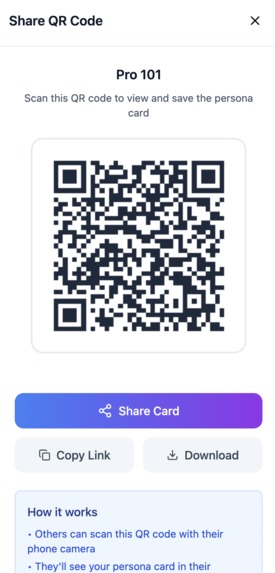
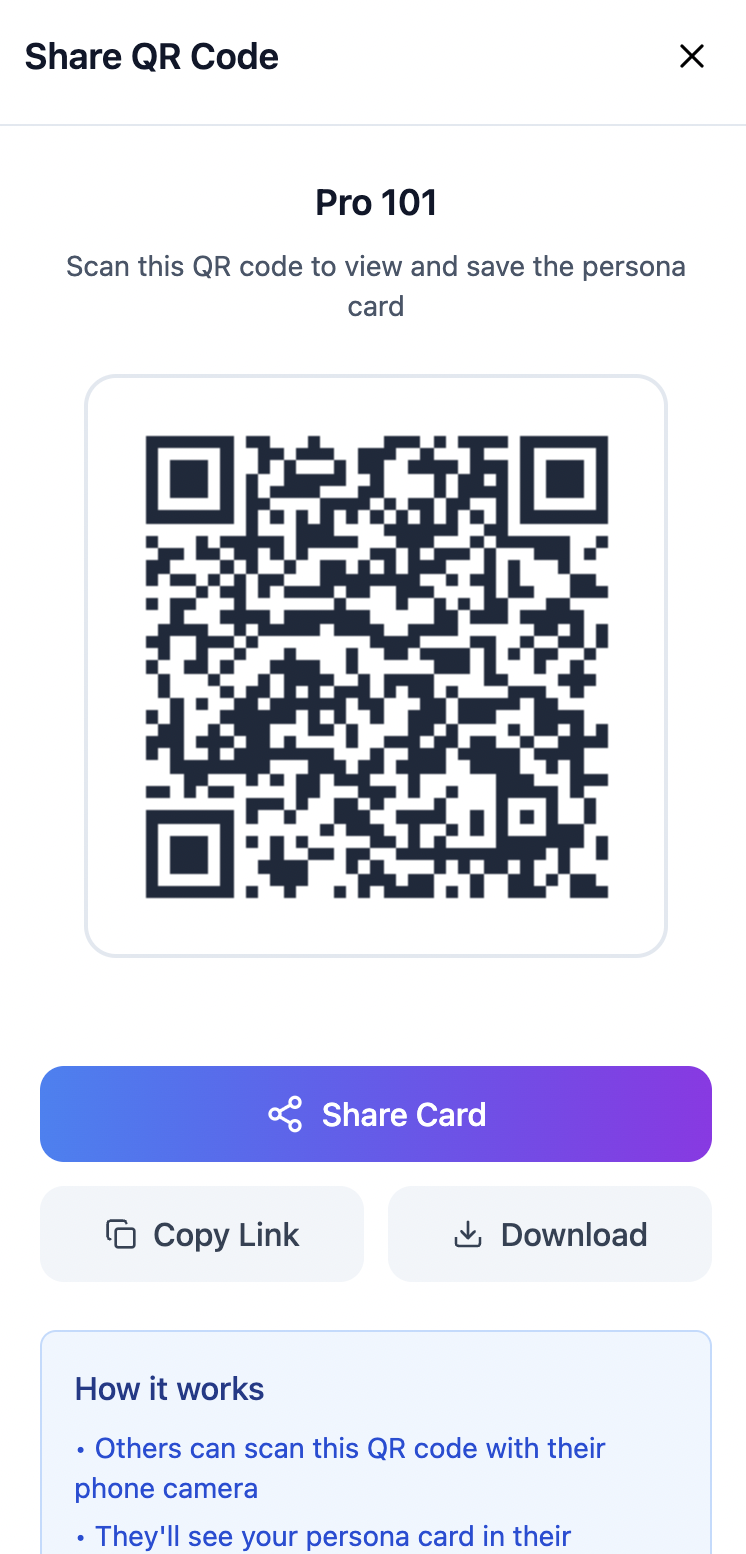
QR code for sharing Persona Cards
Inspiration
It all started with a handshake back in 2023. I was attending a Women in Tech Conference, chatting with someone genuinely interested in my work. When we reached the point of exchanging contacts, we both fumbled: unable to spell names, find the right profile, and awkwardly exchange phones to type in information ourselves. Connecting on LinkedIn itself had hiccups, so we dared not to start connecting on other platforms. Later in the conference after a couple more awkward exchanges, a stranger taught me how I could scan a QR code and it will take me straight to a user's LinkedIn profile. That got me thinking: How great it would be if I could easily share multiple profiles with someone with one click? I could have links to my LinkedIn, X, Github, and Medium profiles so one could look into my work. It's not just in professional settings, even when I meet someone in my personal life, I never get to connect with them on my social profiles like Facebook, or TikTok. Exchanging phone numbers to chat on WhatsApp itself becomes a great deal. I had this idea of Persona Card for a long time now: a frictionless, minimalistic way to configure and share your digital identity in real life. No awkward typing. No forgotten handles. Just one click.
What it does
Persona Card is the ultimate digital networking card. ✅ Create one free digital Persona (your card) 🔗 Add links to any number of social and professional profiles (LinkedIn, Instagram, X, GitHub, TikTok, etc.) 💾 Profiles are reusable — store them once, use them across any card 📍 Share your card with people nearby using a QR code scan 💎 Watch your network and followers grow with genuine connections 🎯 With a premium version (join the waiting list ), create multiple Persona's to share your profile depending on context.
How I built it
I built Persona Card in just two hours using Bolt.new. I wanted to fix a problem I'd felt firsthand at countless networking events. So I sat down with one goal — create a product that lets anyone build and share a clean, modern digital card effortlessly.
The process was refreshingly fast. I used React with TypeScript for a snappy, mobile-first frontend, styled it with Tailwind CSS, and powered everything with Supabase — which gave me instant auth, real-time sync, and rock-solid row-level security out of the box. Users can sign up with just an email, add all their social and professional profiles, and instantly generate a shareable QR code that works even if the other person doesn’t have the app. It's seamless, intuitive, and ridiculously fast.
What I ended up with was more than a prototype — it was a working product that felt good to use. Whether you're at a conference, a meetup, or just running into someone interesting, Persona Card turns that moment into a lasting connection. It’s the kind of tool I wish I had all along — now it’s real.
Challenges I ran into
Building Persona Card in just a couple of hours was exhilarating, but not without hiccups. One of the trickiest parts was designing the database — I needed users to manage multiple cards, and cards to link with various social profiles. With Supabase, I used row-level security (RLS) to ensure that users could only access their own data, while still letting public viewers see shared cards via QR codes. Balancing private control with public visibility was harder than it sounds, but once I nailed the RLS policies, it all clicked.
There were smaller snags too — like making sure QR codes generated during development actually worked in production, or managing the dashboard UI with multiple tabs and edit states. Clean component structure and clear state management kept it all sane.
Accomplishments that I'm proud of
I set out to solve a real-world problem with simplicity and elegance — and I’m proud to say I did just that. In just a few hours, I turned a long-standing idea into a fully functional product that people instantly understand and enjoy using.
I built a seamless onboarding flow that takes a user from signup to a shareable digital card in under two minutes — no friction, no confusion. I architected a secure backend using row-level security to strike the perfect balance between privacy and public sharing. I also designed a clean, mobile-first interface that feels intuitive from the first tap.
What I learnt
Building Persona Card taught me that simplicity is often the hardest — and most valuable — thing to achieve. Every decision, from the database design to the user interface, was a lesson in balancing power with clarity. I learned how vital it is to prioritize user flow over feature count, and how real innovation often lies in removing friction, not adding complexity.
I also deepened my understanding of Supabase's row-level security, and saw firsthand how powerful real-time features can feel when done right. Managing public visibility while maintaining airtight privacy gave me a new level of respect for thoughtful backend architecture.
What's next for Persona Card
The next chapter for Persona Card is all about unlocking personalization and creative expression. I’m working on premium features that will allow users to create and manage multiple Personas — one for every context, from professional to personal. I’m also introducing custom themes, giving users the freedom to style their cards and make their digital identity truly their own. The goal is to make Persona Card not just functional, but a canvas for individuality — because how you connect should reflect who you are.
Built With
- bolt
- chatgpt
- netlify
- supabase


Log in or sign up for Devpost to join the conversation.