-
-
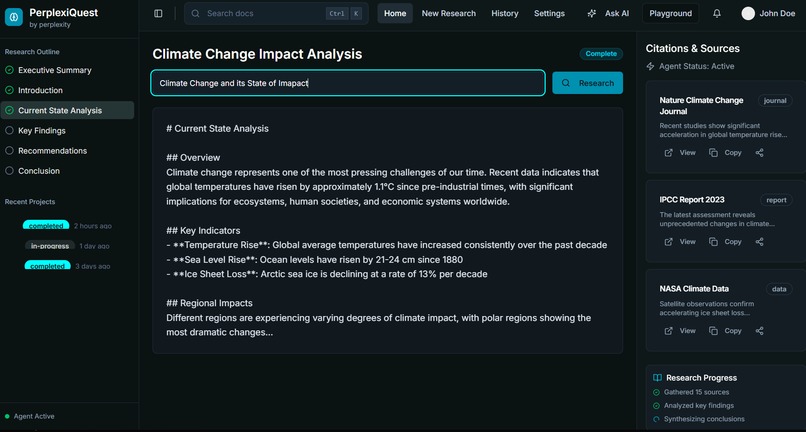
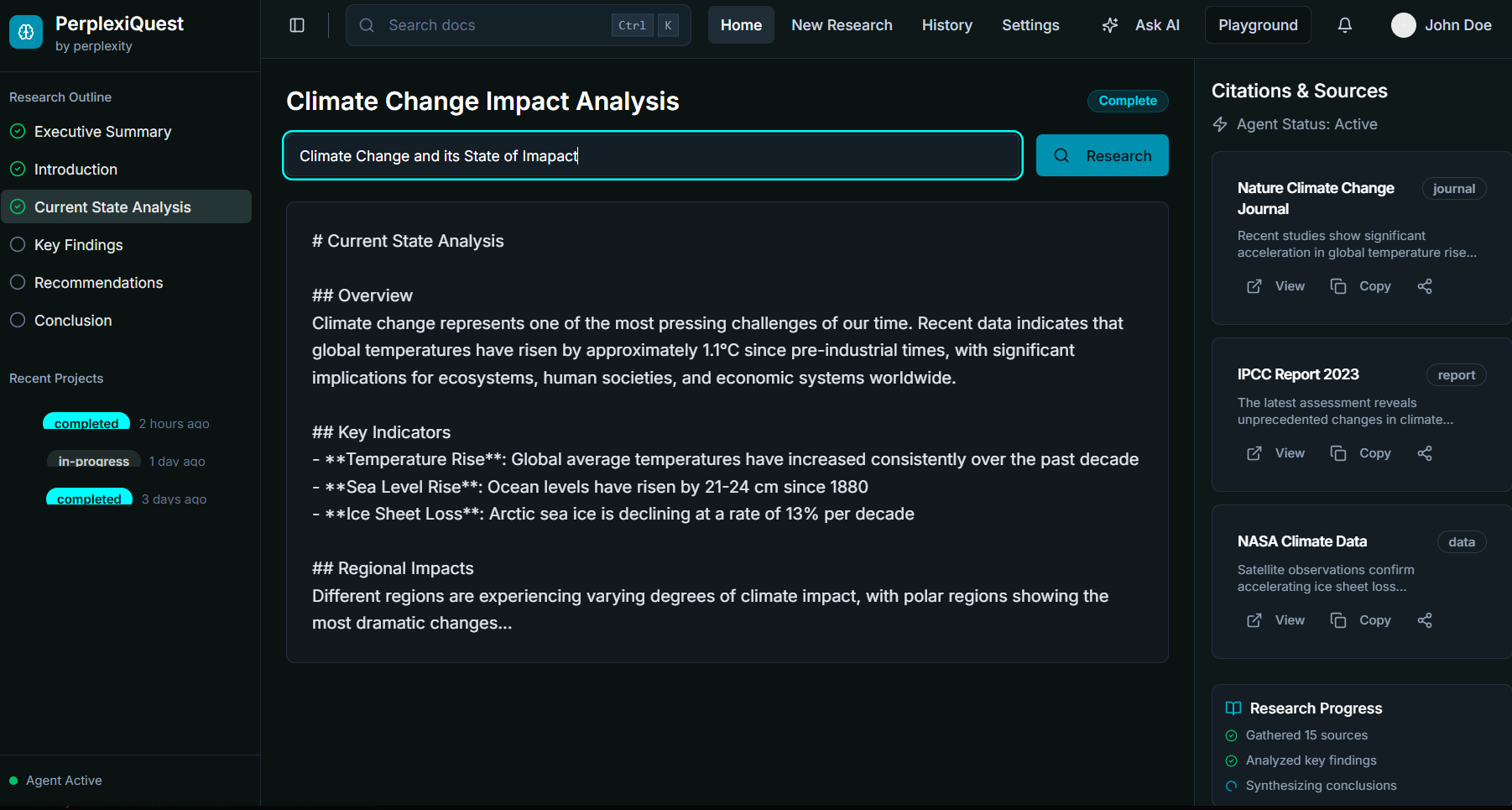
Collaboration Page
-
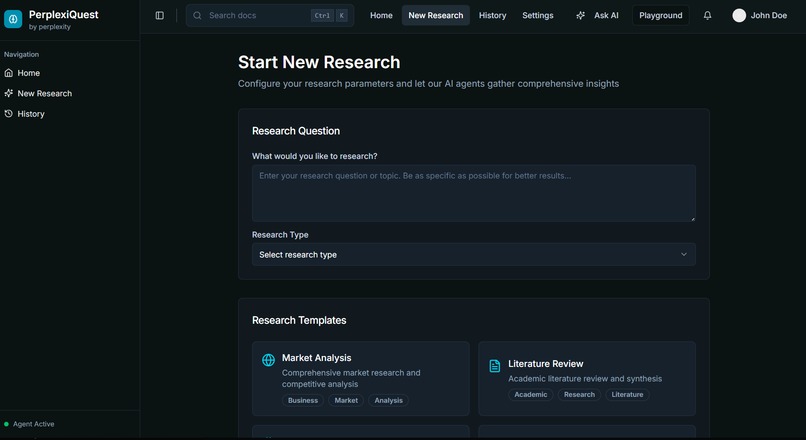
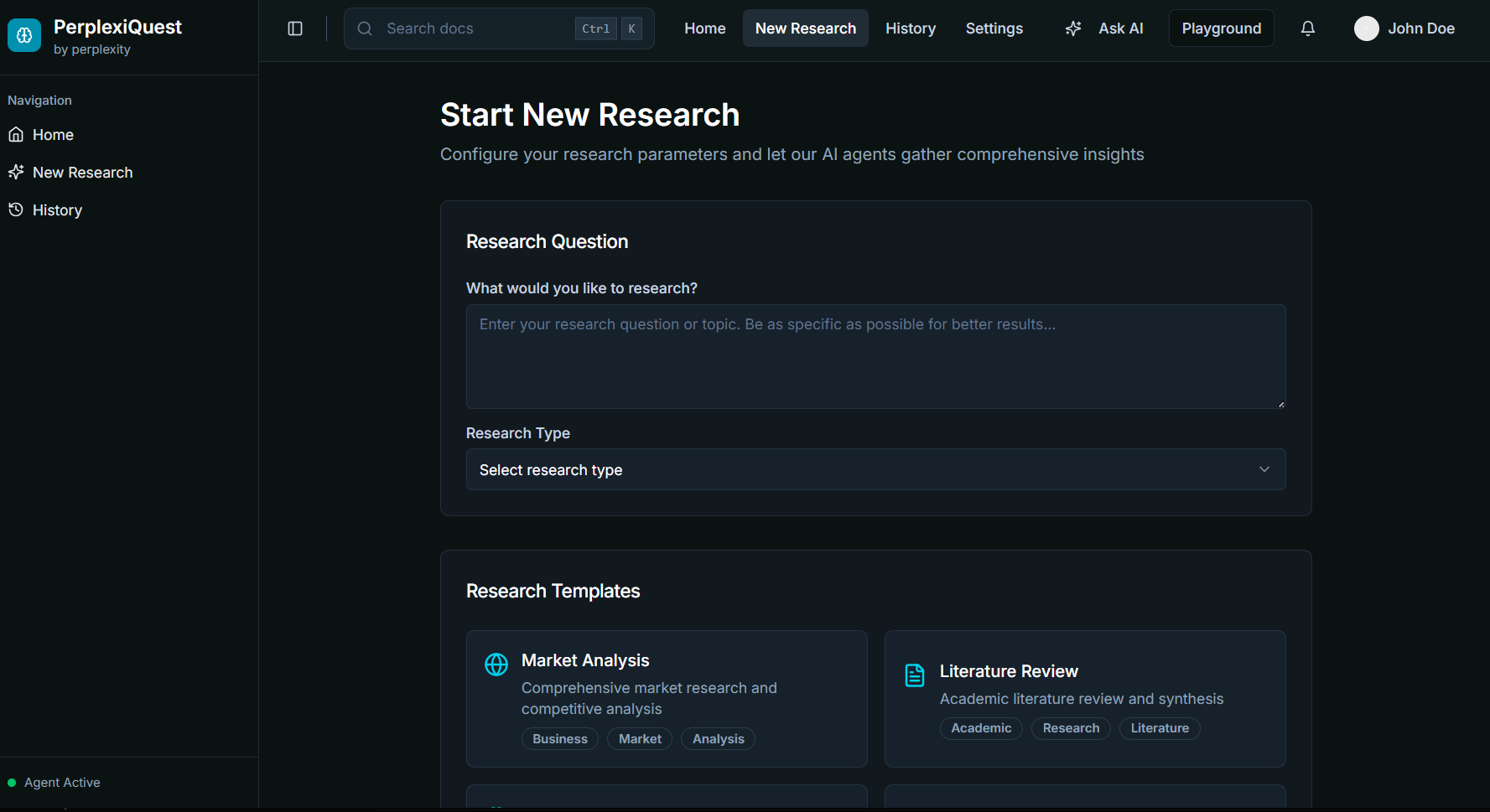
New Research Page
-
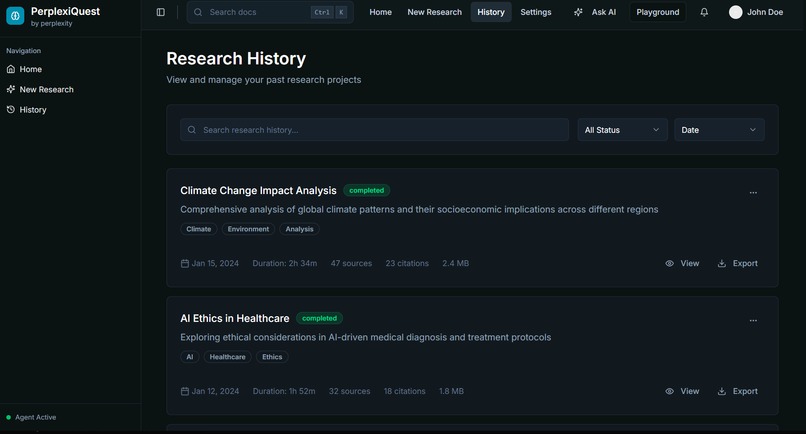
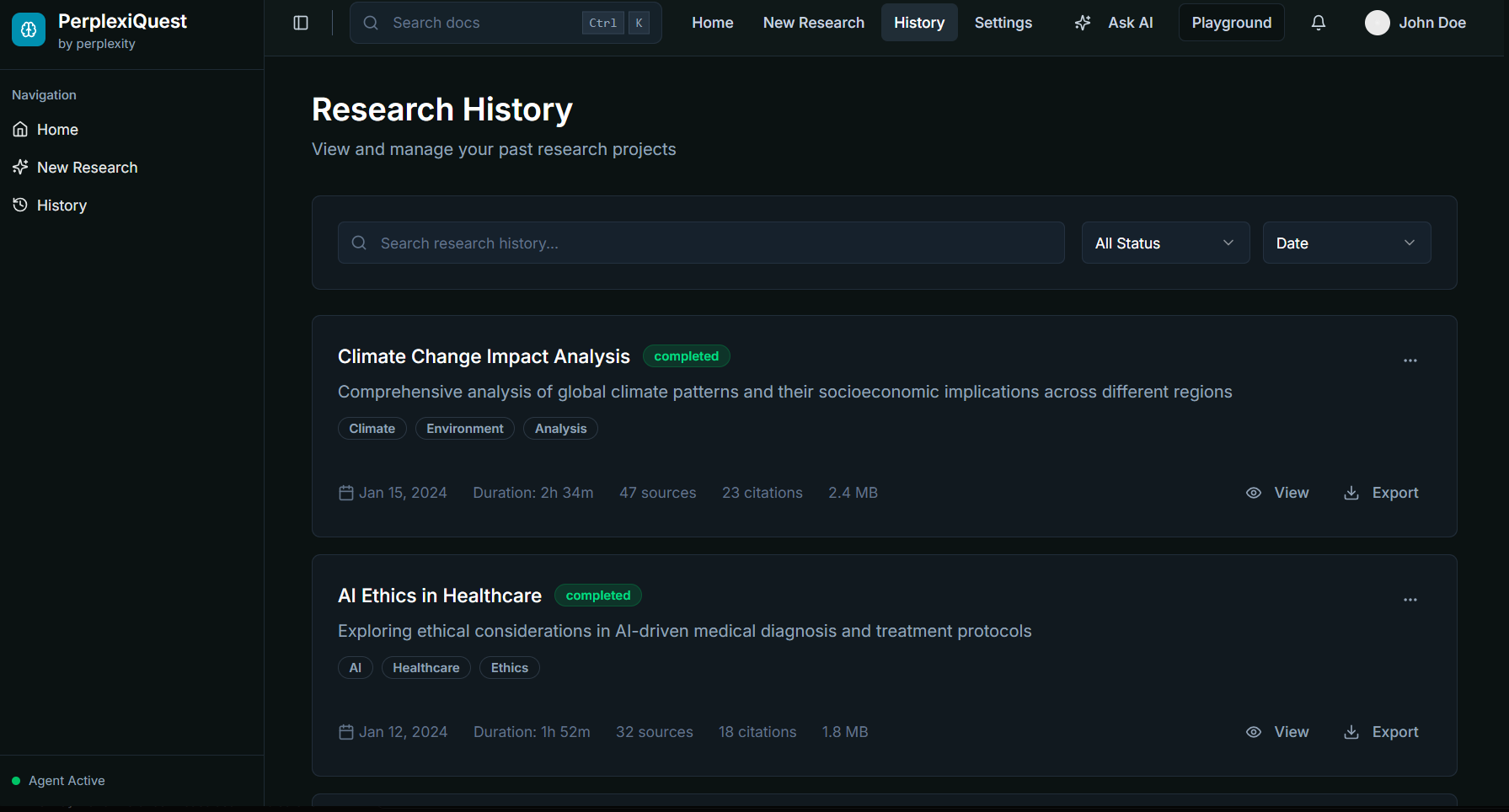
History Page - Demo Data
-
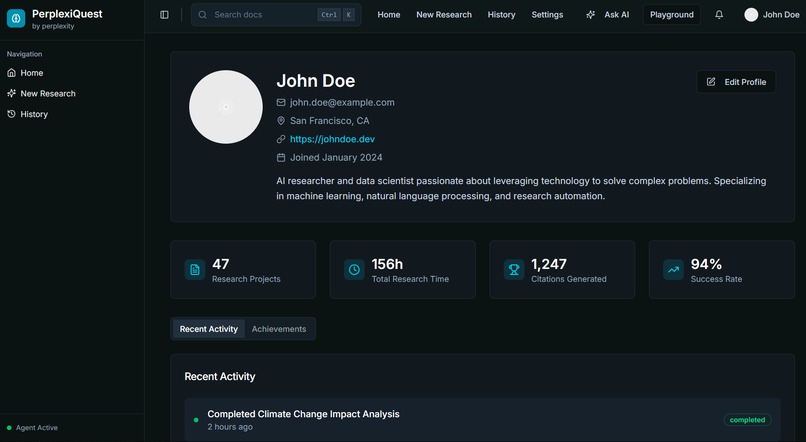
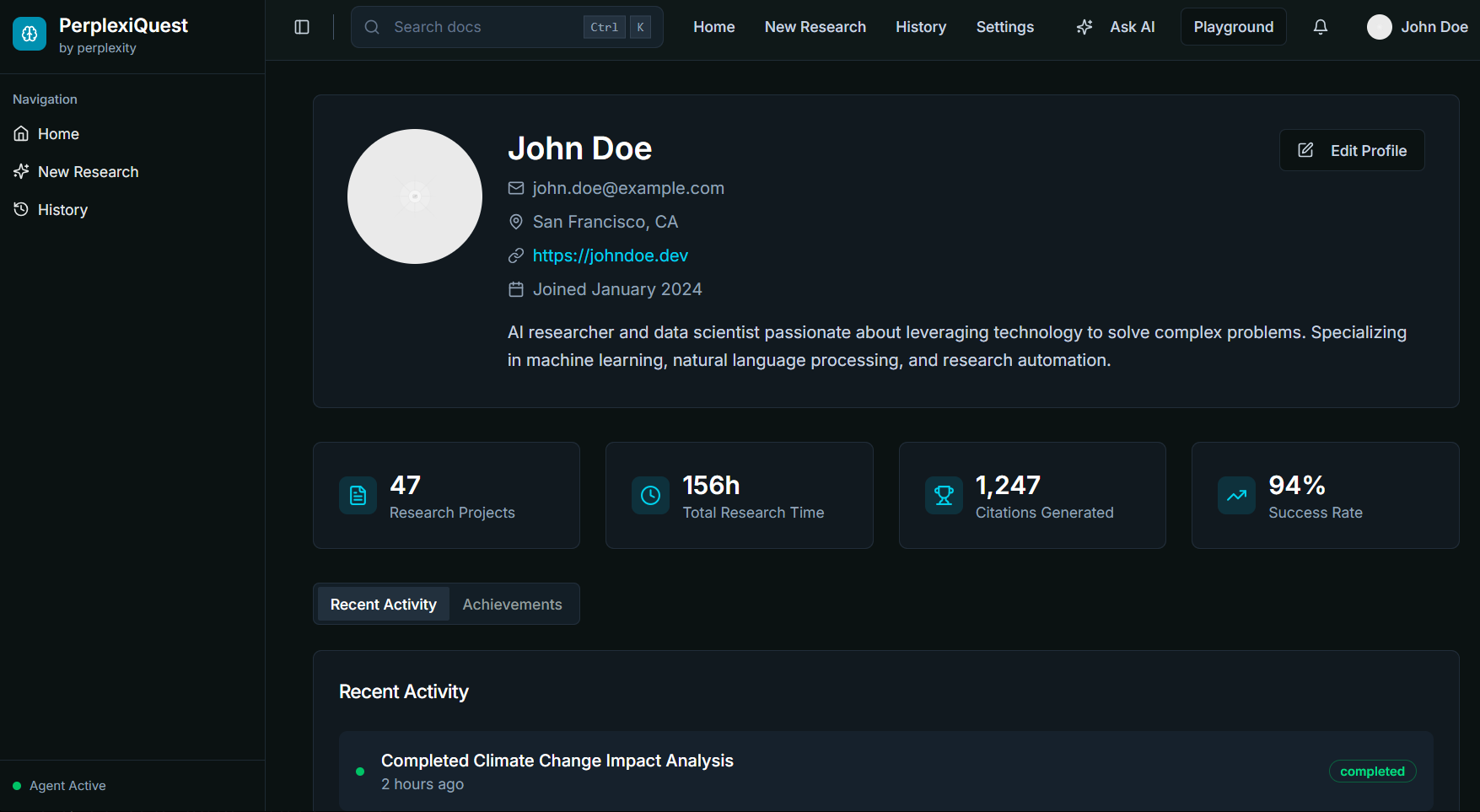
Profile Page
Inspiration
As a researcher, I was frustrated by the fragmented nature of online research - jumping between multiple tabs, manually cross-referencing sources, and struggling to maintain citation accuracy. I envisioned "Perplexity for Complex Research Projects" where multiple AI agents could collaborate like a research team, each specializing in different aspects: planning, investigation, validation, and synthesis. The goal was to transform solo research into an orchestrated, intelligent process that maintains academic rigor while dramatically improving efficiency.
What it does
PerplexiQuest is an AI-powered multi-agent research platform that orchestrates four specialized agents using Perplexity's Sonar API:
- Planning Agent (Sonar Reasoning): Creates sophisticated research strategies and breaks complex queries into targeted sub-investigations
- Research Agent (Sonar Deep Research): Executes parallel research across multiple sources with real-time streaming
- Validation Agent (Sonar Reasoning Pro): Cross-references findings, fact-checks claims, and assesses source credibility
- Summarization Agent: Synthesizes results into publication-ready reports with proper citations
Users can watch AI agents "think" in real-time, collaborate with teammates on live research sessions, and export results to 10+ formats including academic platforms like Zotero and Overleaf.
How we built it
Backend: FastAPI with LangGraph for multi-agent orchestration, using async generators for clean real-time streaming. PostgreSQL for persistence, Redis for caching, and WebSocket for live collaboration.
AI Architecture: Custom multi-agent framework leveraging different Sonar models strategically - Reasoning for planning, Deep Research for investigation, Reasoning Pro for validation. Implemented chain-of-thought transparency and follow-up question integration.
Frontend: Next.js 14 with TypeScript, real-time WebSocket connections, and responsive design for research dashboards.
Key Innovation: Clean async streaming pattern that reduced code complexity by 70% while maintaining sophisticated multi-agent coordination and real-time user experience.
Challenges we ran into
Multi-Agent Coordination: Initially, agents were stepping on each other's work. Solved by implementing a sophisticated state management system with LangGraph and careful prompt engineering for agent specialization.
Streaming Complexity: Early implementation had 200+ lines of streaming logic per agent. Redesigned using async generators and context managers, reducing to 50-80 lines per agent.
Citation Accuracy: Automatic citation extraction from diverse sources was inconsistent. Built a robust parsing system with multiple fallback strategies and validation against academic databases.
Real-time Performance: Balancing comprehensive research depth with responsive streaming. Optimized with intelligent model selection, parallel processing, and progressive result delivery.
Accomplishments that we're proud of
- First Multi-Agent Research Platform built on Sonar API with sophisticated agent specialization
- Real-time AI Transparency: Users can watch agents think and reason through problems live
- 95%+ Citation Accuracy with automatic extraction from any URL/DOI and formatting in 7 academic styles
- Clean Architecture: Reduced streaming code complexity by 70% with elegant async patterns
- Comprehensive Integration: Export to Notion, Obsidian, Zotero, Google Docs, and more
- Live Collaboration: Multiple researchers can join sessions and guide AI agents in real-time
- Advanced Sonar Integration: Strategic use of all Sonar models for optimal research outcomes
What we learned
AI Agent Orchestration: Different AI models excel at different tasks - using Sonar Reasoning for planning, Deep Research for investigation, and Reasoning Pro for validation creates much better results than using one model for everything.
Streaming UX Design: Real-time AI transparency dramatically improves user trust and engagement. Users love seeing the "thinking process" rather than just final results.
Academic Research Workflows: Researchers need seamless integration with existing tools. Building 10+ export formats and platform integrations was crucial for adoption.
Async Python Patterns: Clean streaming architecture using async generators and context managers is far superior to callback-heavy approaches for maintainability and performance.
What's next for PerplexiQuest
Q3 2025: Voice research interface with natural language commands, mobile app for on-the-go research, and enterprise API for white-label integration.
Q4 2025: Academic marketplace where researchers can share methodologies and templates, advanced plagiarism detection with AI-powered originality scoring.
2026: Integration with academic databases (PubMed, arXiv, JSTOR), collaborative review workflows for peer review processes, and AI-powered hypothesis generation based on research gaps.
Long-term Vision: Democratize high-quality research by making sophisticated multi-agent AI accessible to researchers worldwide, potentially transforming how academic and professional research is conducted.
Built With
- fastapi
- javascript
- langchain
- next.js
- python
- socket.io
- tailwindcss
- websockets

Log in or sign up for Devpost to join the conversation.