-
-
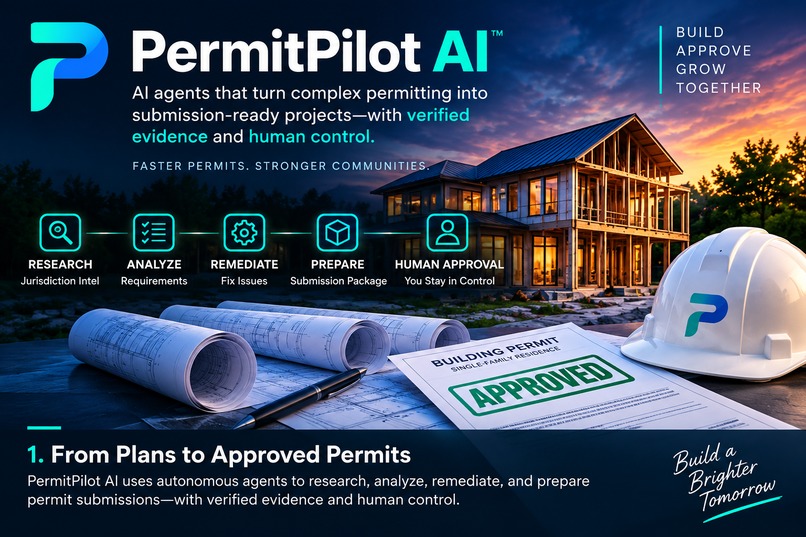
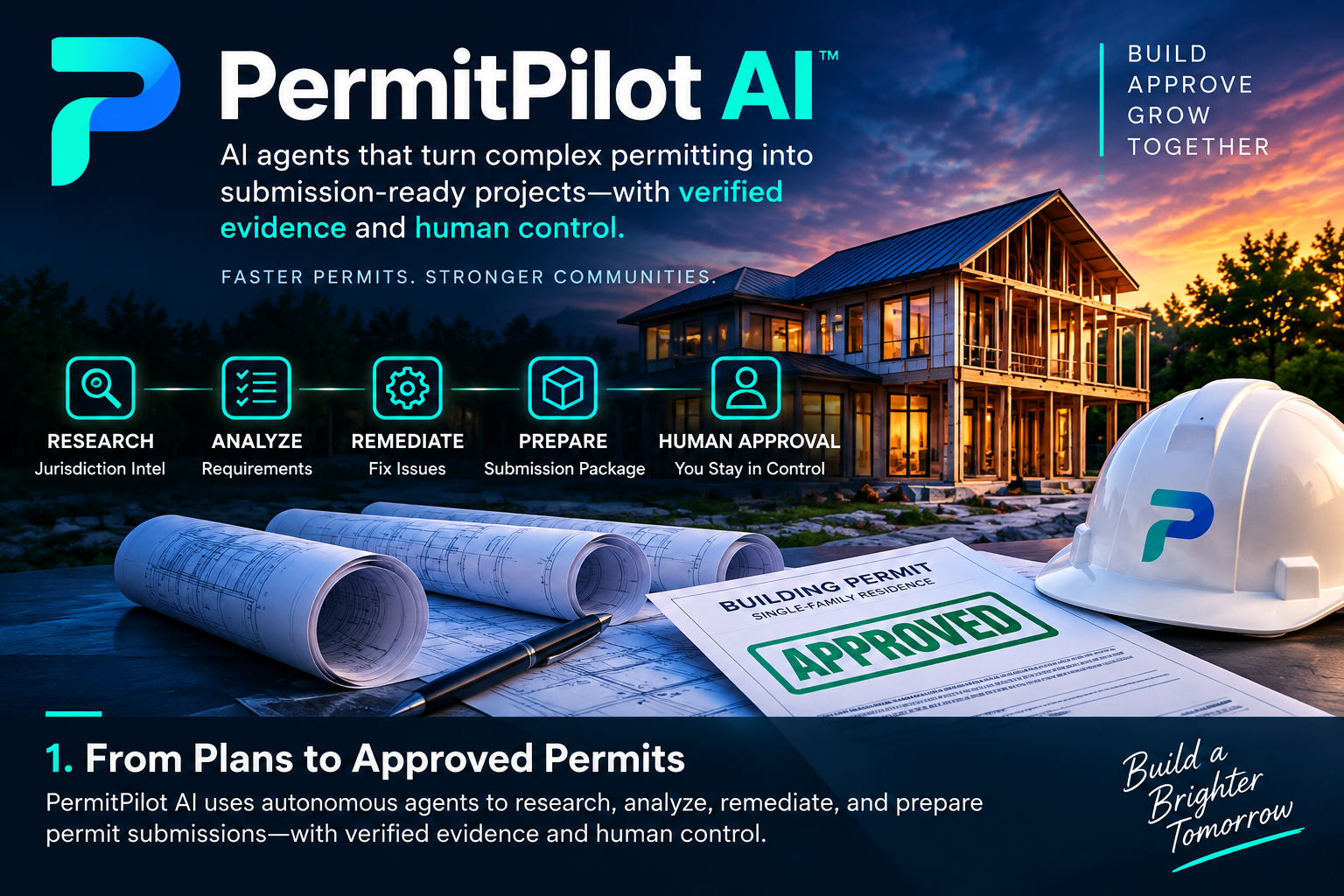
From Plans to Approved Permits — AI-powered permitting with verified evidence and human control.
-
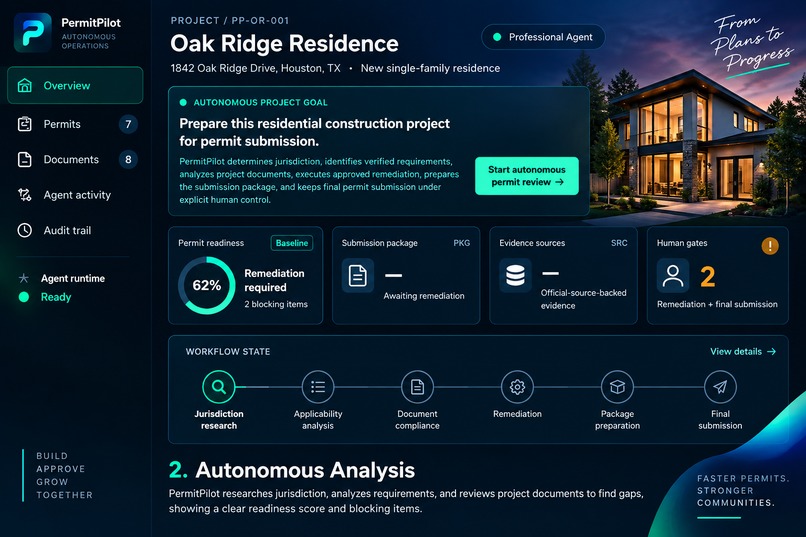
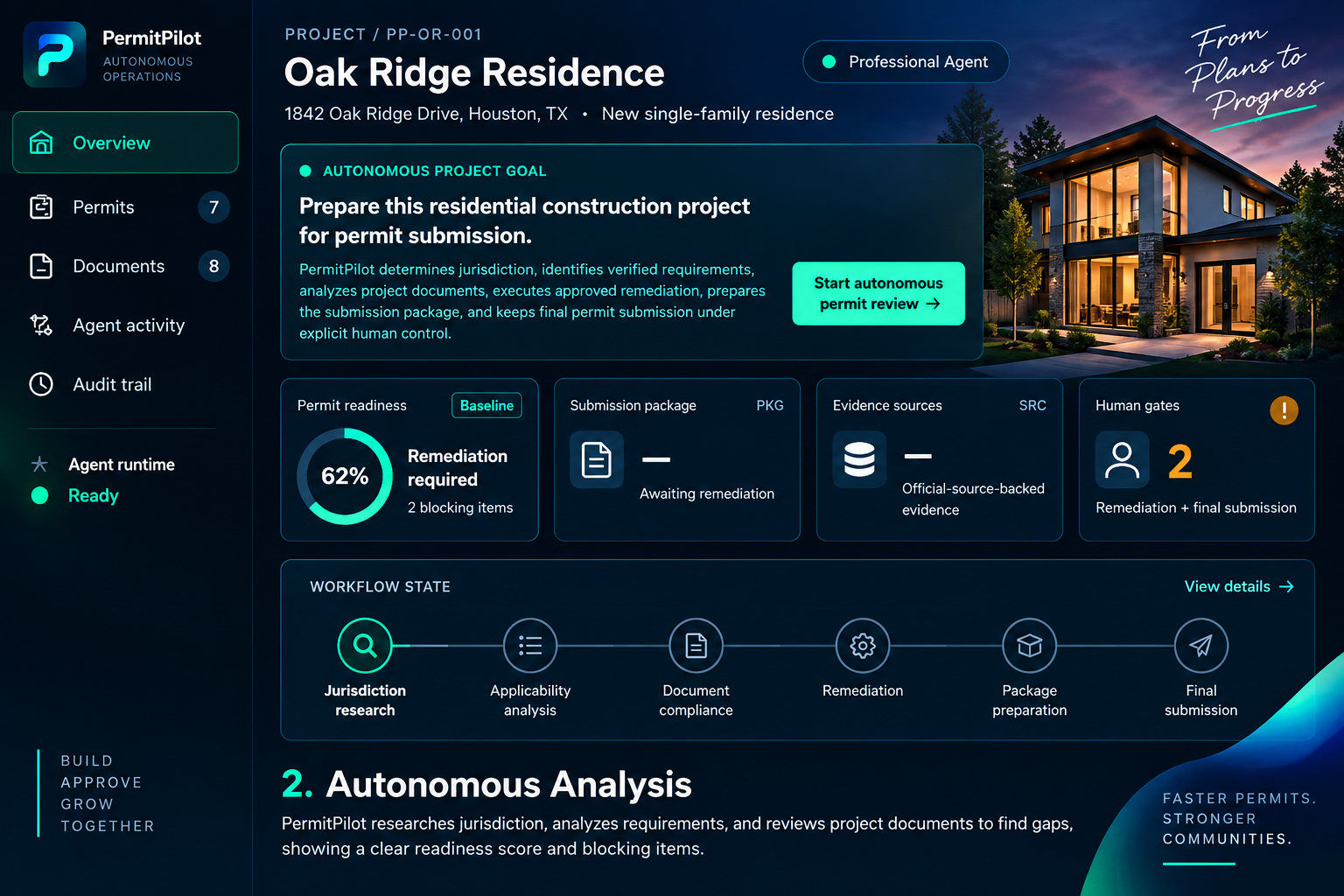
Autonomous Permit Analysis — AI agents research requirements, review documents, and identify compliance gaps.
-
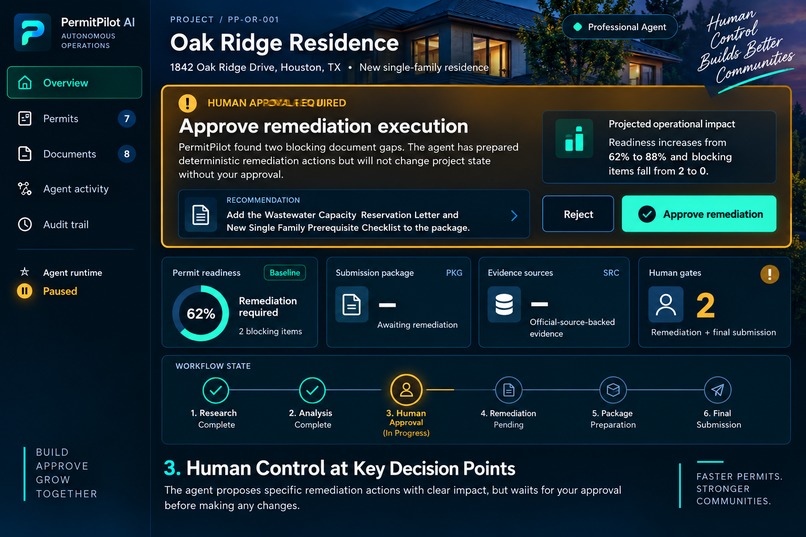
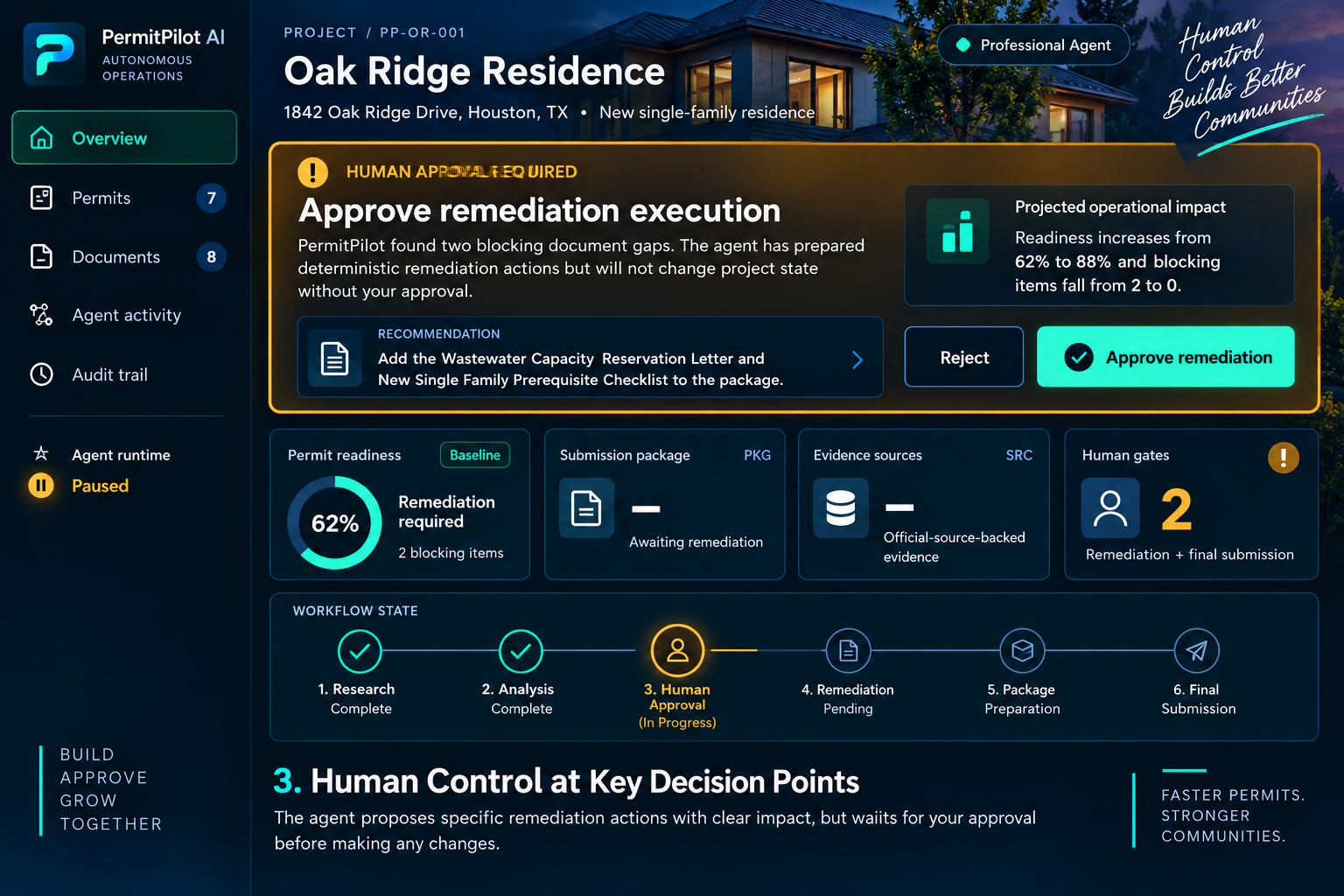
Human Control — PermitPilot recommends fixes, while critical changes require human approval.
-
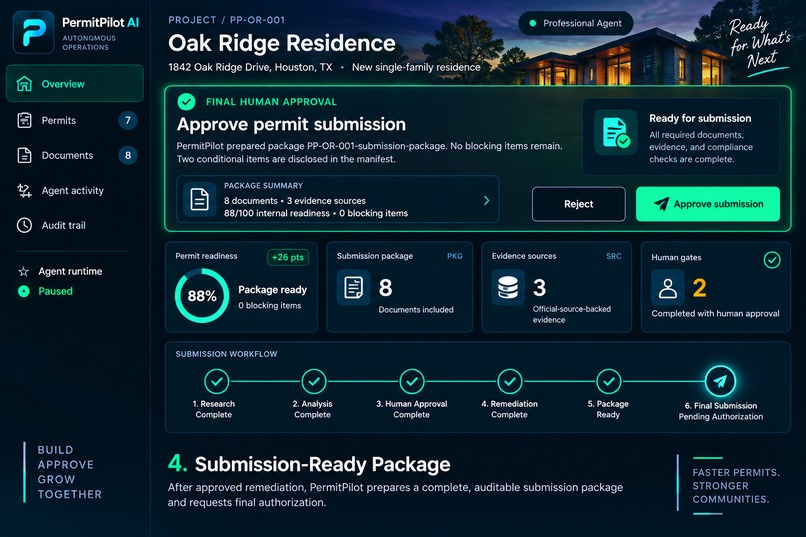
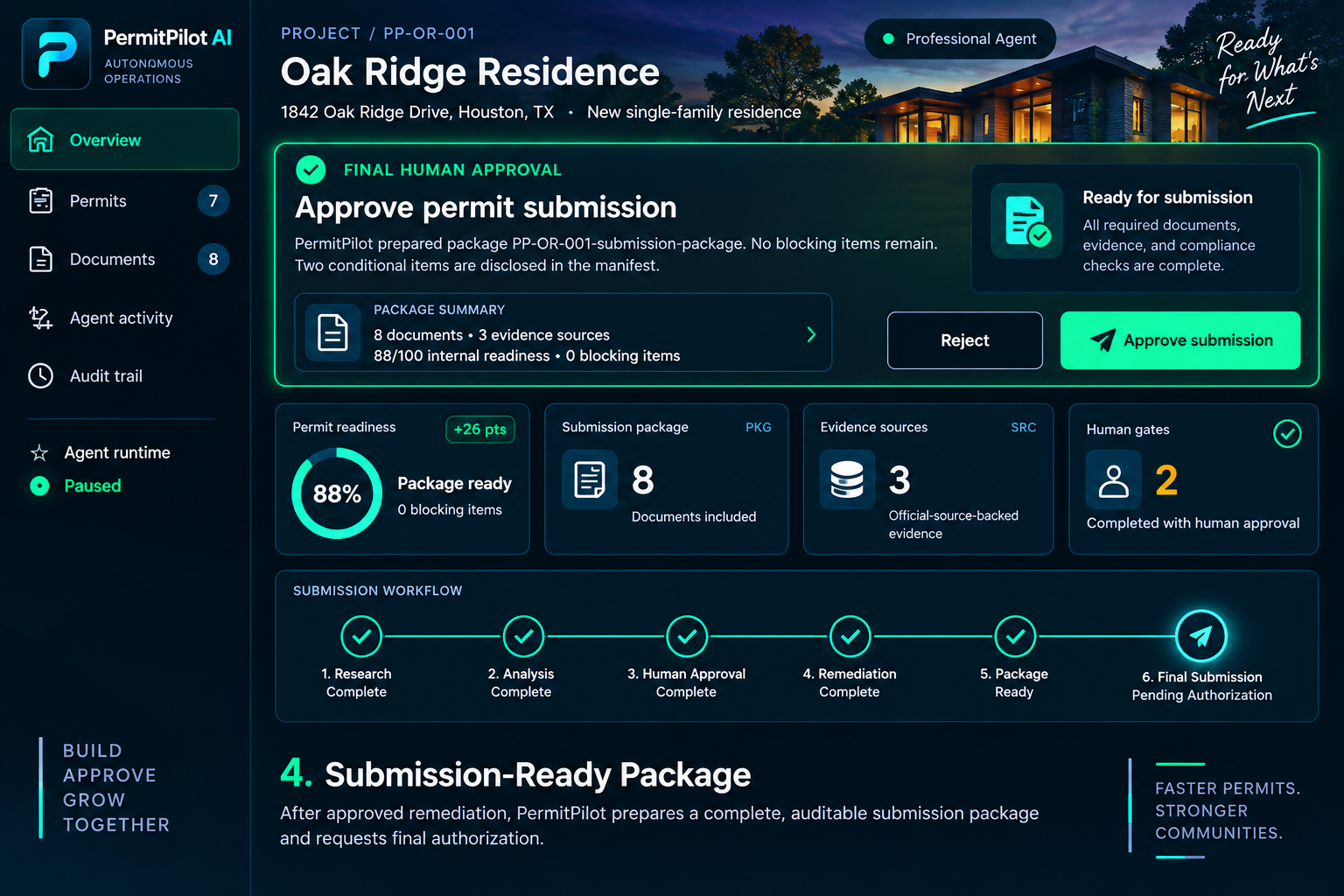
Submission-Ready Package — PermitPilot prepares an auditable permit package for final approval.
-
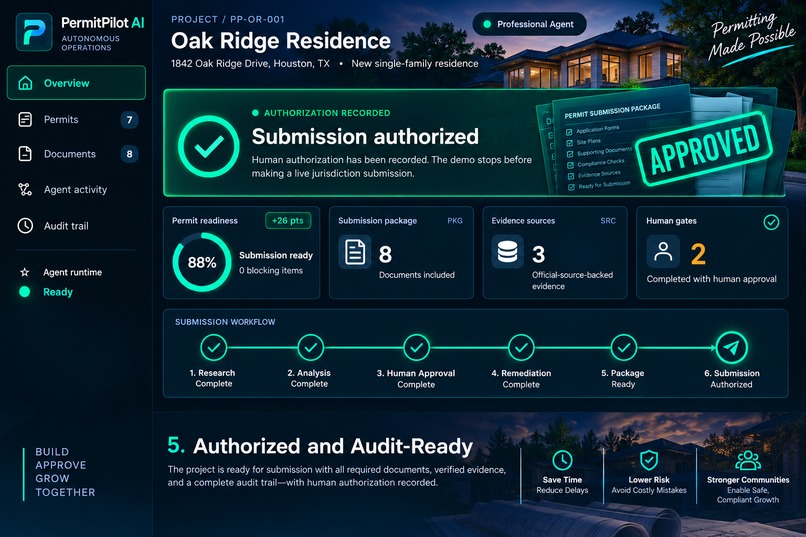
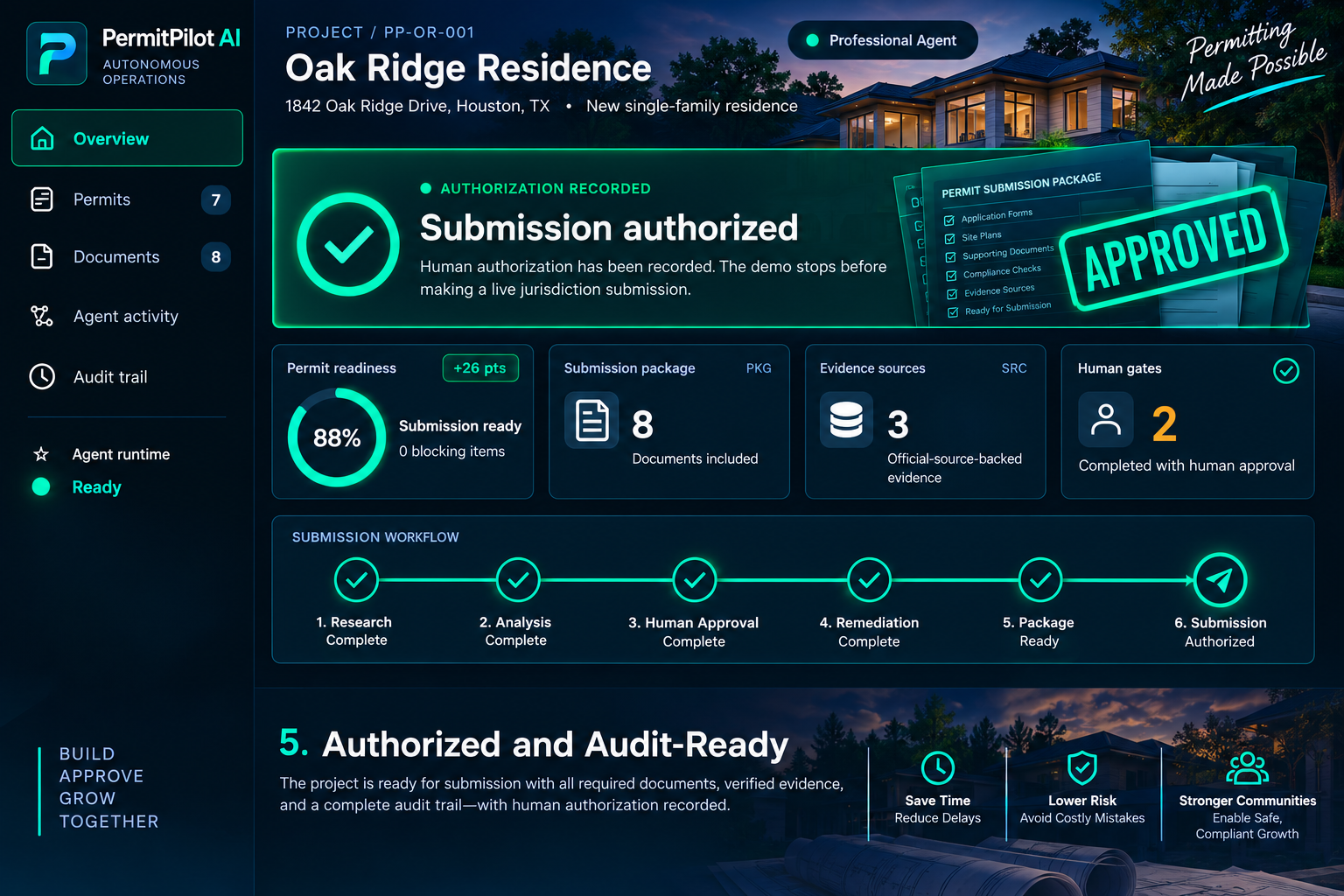
Authorized and Audit-Ready — Human approval is recorded with a complete audit trail.
-
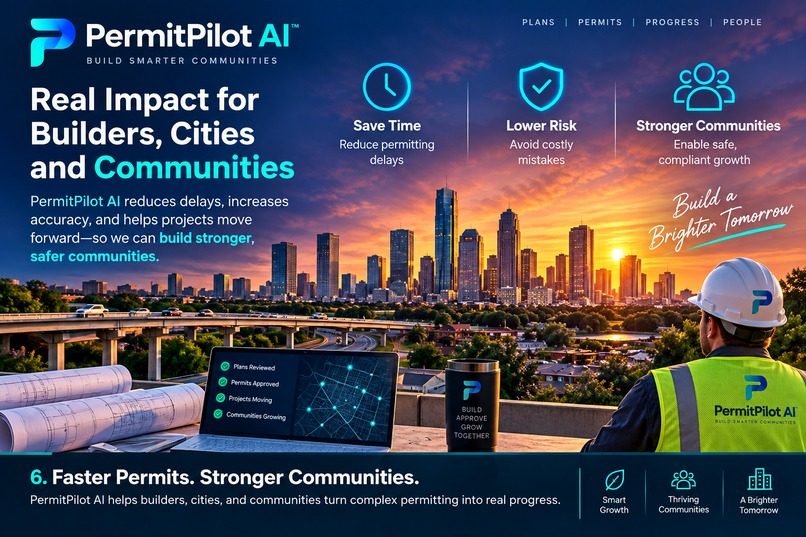
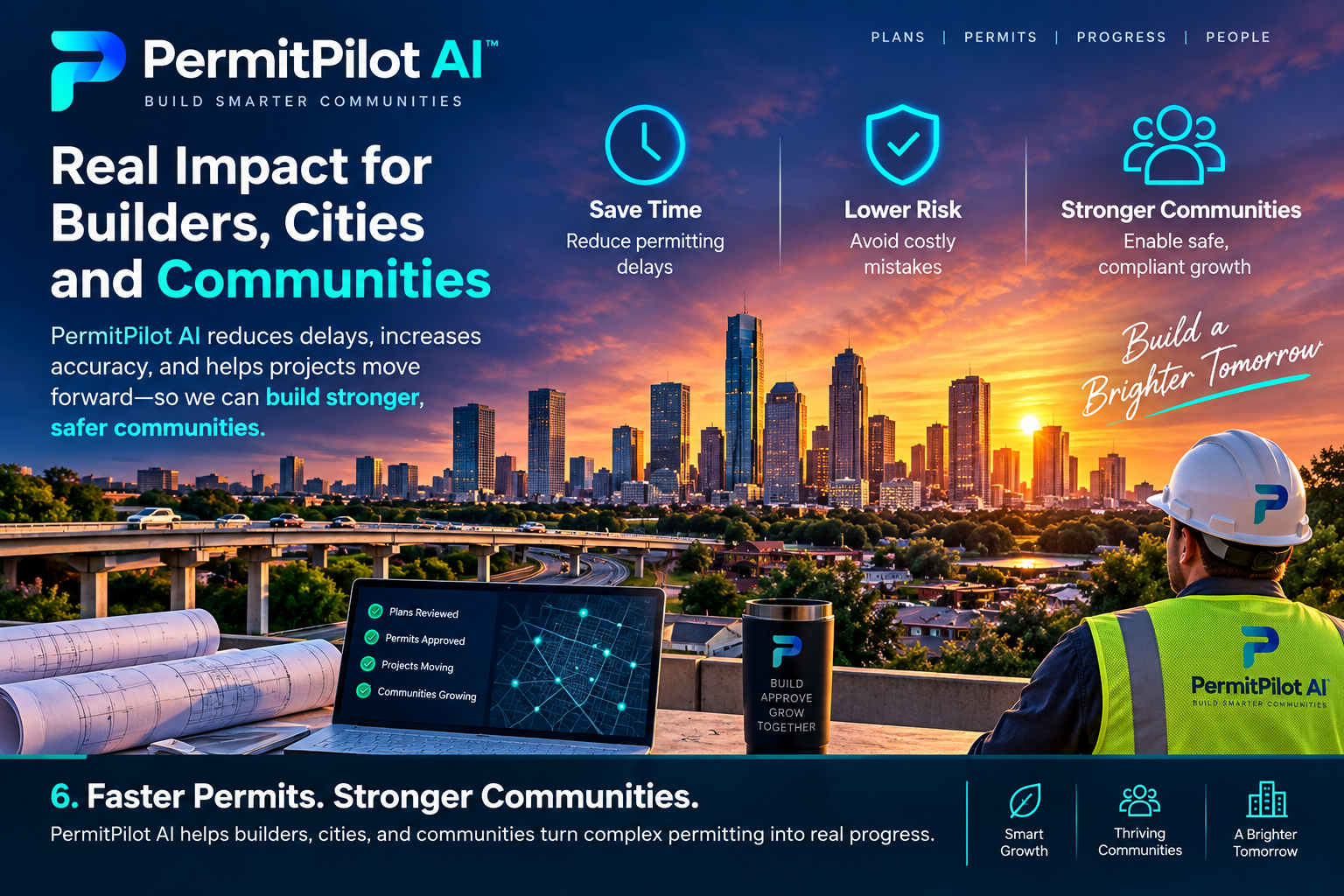
Faster Permits. Stronger Communities. — Reduce delays, lower risk, and move projects forward faster.
Inspiration
Construction permitting is one of those processes that looks simple from the outside but becomes complicated quickly. Requirements vary by jurisdiction, important documents can be missed, project teams spend hours interpreting requirements, and a missing item can create costly delays.
We built PermitPilot AI to show how autonomous AI agents can handle the repetitive and research-heavy parts of permitting while keeping people in control of consequential decisions.
What it does
PermitPilot AI is an autonomous permit-preparation agent that takes a construction project from intake toward a submission-ready permit package.
For our demo project, Oak Ridge Residence, PermitPilot:
- Identifies the permitting jurisdiction.
- Researches verified jurisdiction evidence.
- Determines which permit requirements apply to the project.
- Analyzes project documents for compliance.
- Detects missing or incomplete requirements.
- Calculates submission readiness and prioritizes remediation.
- Requests explicit human approval before making remediation changes.
- Executes only approved remediation actions.
- Recalculates project readiness.
- Prepares an auditable submission package.
- Stops again for final human authorization before any external submission.
The demo improves permit readiness from 62% to 88% and reduces 2 blocking issues to 0 while maintaining two explicit human-control gates.
How we built it
PermitPilot uses a governed agent architecture built with Python and Strands Agents, with a Next.js, React, and TypeScript command center.
Instead of allowing an AI model to freely invent permitting requirements, PermitPilot separates deterministic workflow logic, verified jurisdiction evidence, agent tools, structured project data, and human approvals.
Specialized tools handle project inspection, jurisdiction research, permit applicability, document compliance, submission readiness, approved remediation execution, and submission-package preparation.
Every important recommendation includes evidence, rationale, confidence or deterministic status where appropriate, projected impact, and an auditable workflow state.
Human control
Human control is a core part of PermitPilot's architecture.
The agent can research, analyze, recommend, calculate impact, and prepare work autonomously. However, consequential actions stop at explicit approval gates.
In the demo, PermitPilot detects remediation work and asks the user to approve it before changing project state. After remediation is completed and the package is prepared, the system stops again for final submission authorization.
The demo deliberately stops after authorization rather than making a live jurisdiction submission.
Challenges we ran into
One of the biggest challenges was balancing autonomy with reliability. Permit requirements can have real financial and scheduling consequences, so we did not want the agent to treat uncertain information as authoritative.
We addressed this by separating verified evidence from applicability decisions, preserving source information through the workflow, using deterministic logic where AI reasoning was unnecessary, and escalating ambiguous decisions to human review.
We also designed the workflow so autonomous execution never bypasses human approval for consequential actions.
Accomplishments that we're proud of
We're especially proud that PermitPilot is more than a chatbot or permit-document search interface.
It demonstrates an end-to-end governed agent workflow:
Research → Analyze → Detect → Recommend → Quantify → Human Approval → Execute → Prepare → Final Human Approval
The system maintains an audit trail and shows measurable operational impact while keeping the human responsible for the final decision.
What we learned
We learned that effective AI agents are not simply models with more tools. Reliable agent systems need clear boundaries between evidence, reasoning, deterministic computation, autonomous execution, and human authority.
That approach made PermitPilot safer, easier to audit, and much easier to demonstrate.
What's next for PermitPilot AI
Next, we want to expand PermitPilot from the Houston demonstration into a multi-jurisdiction permitting intelligence platform.
Future development includes live jurisdiction-source ingestion, additional permit types, document extraction, jurisdiction-specific workflows, project-management integrations, permit-status tracking, and secure submission integrations.
Our long-term goal is simple:
Make permitting dramatically faster without removing people from the decisions that matter.
Built With
- amazon-bedrock
- amazon-web-services
- next.js
- python
- react
- strands-agents
- tailwind
- typescript


Log in or sign up for Devpost to join the conversation.