-
-
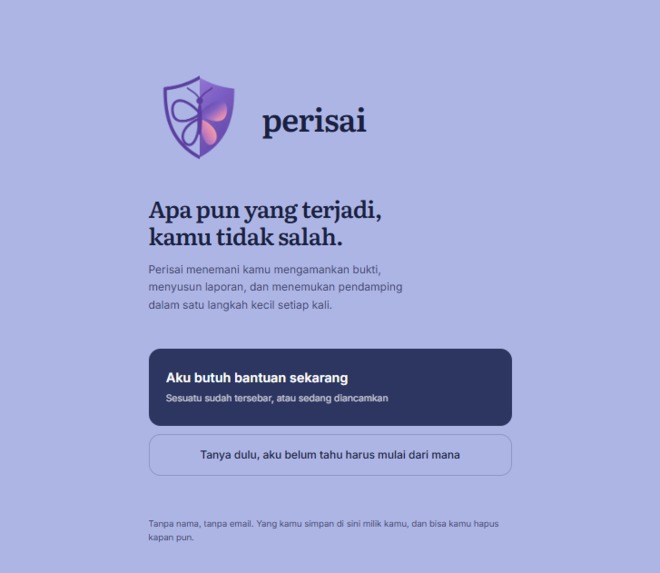
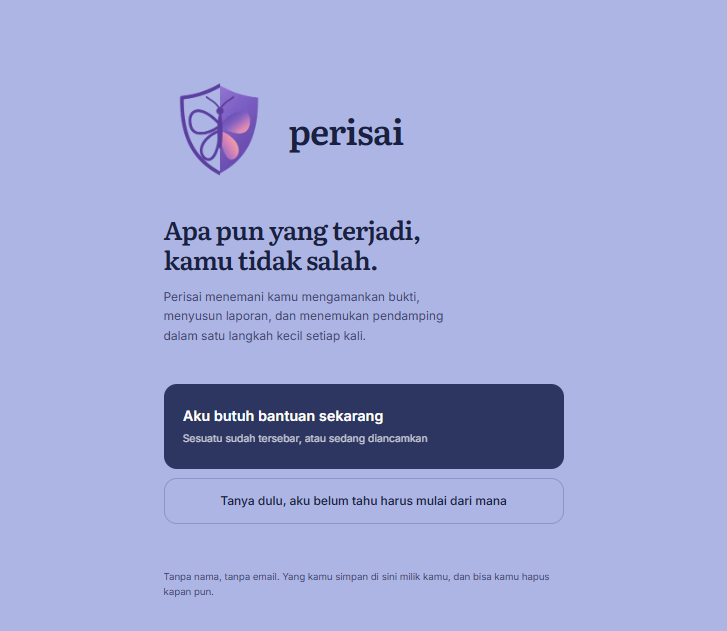
Halaman utama perisai
-
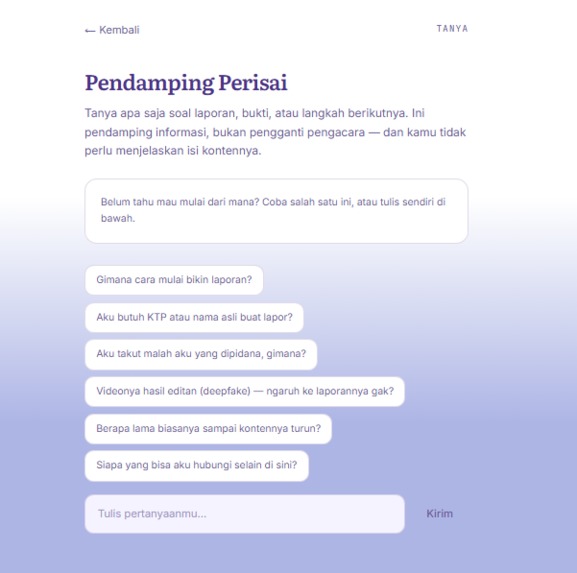
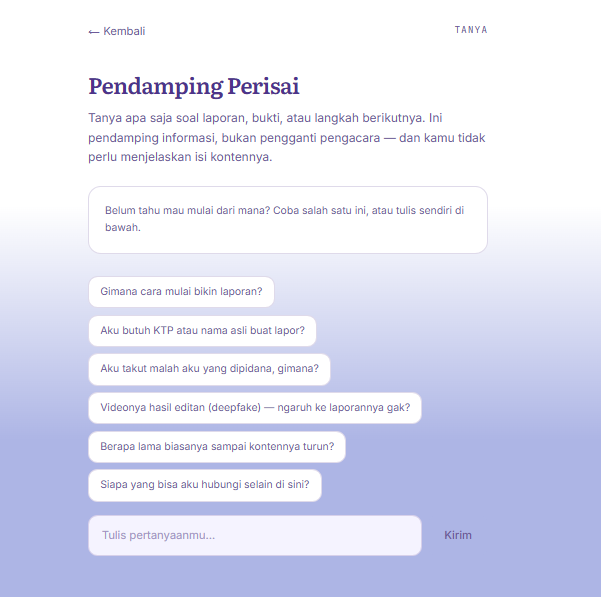
Chatbot untuk membantu user jika belum tau harus mulai dari mana, ada beberapa saran pertanyaan
-
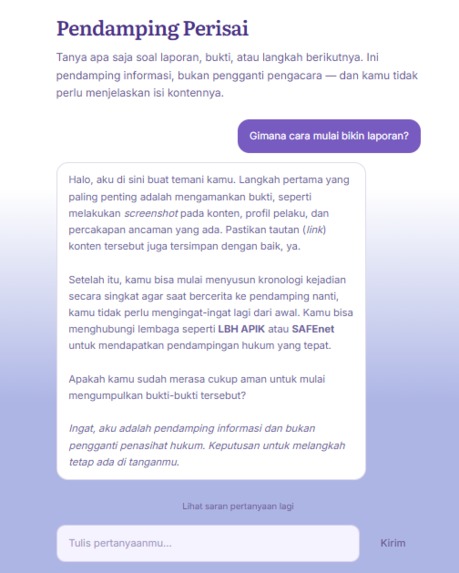
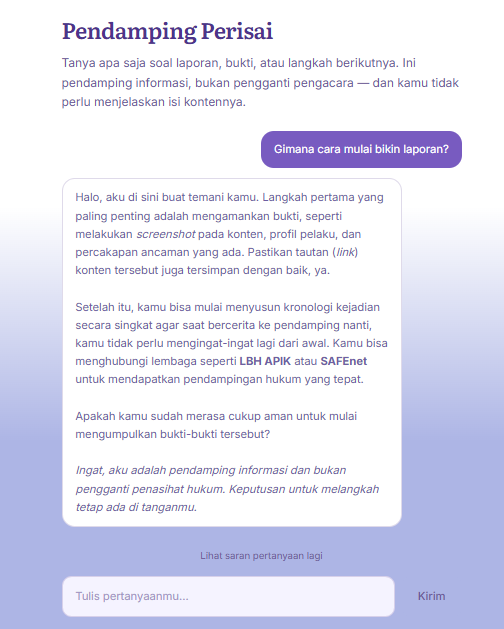
Jawaban dari Chatbot
-
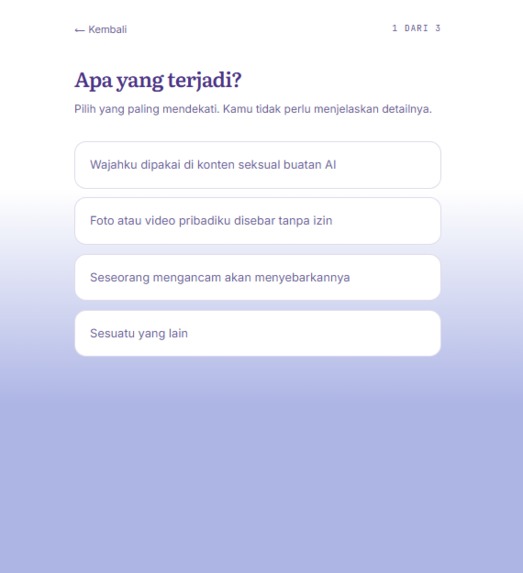
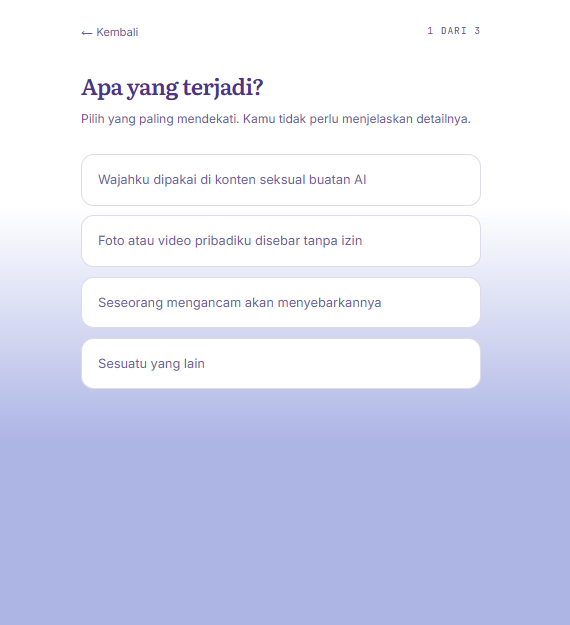
Halaman jika user butuh bantuan sekarang, user dapat memilih apa yang sedang terjadi padanya
-
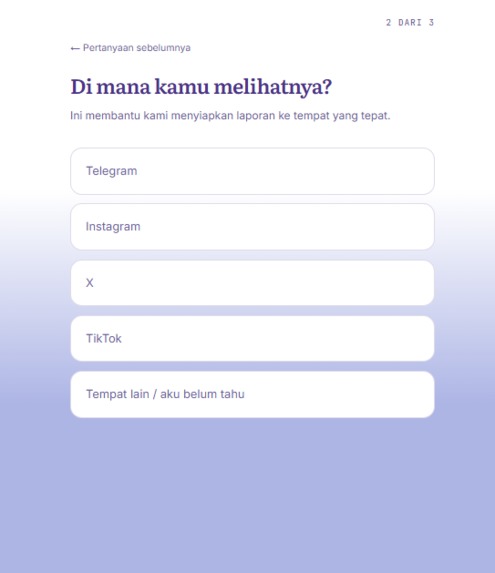
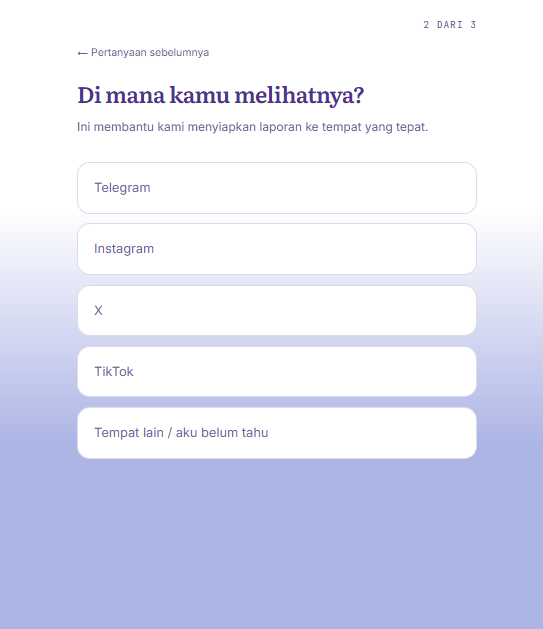
Jika user melihat wajahnya, user dapat melapor pada platform tersebut melalui perisai
-
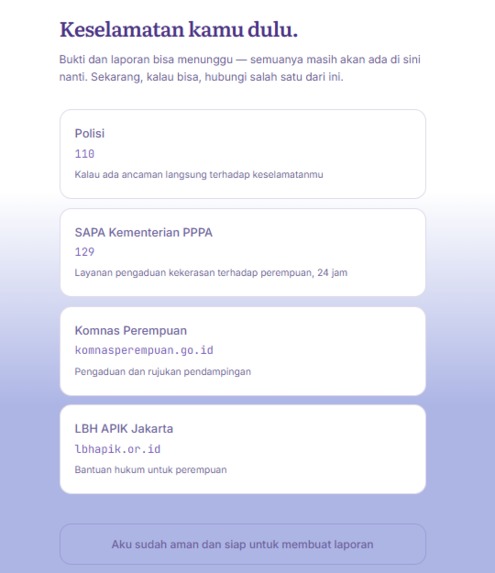
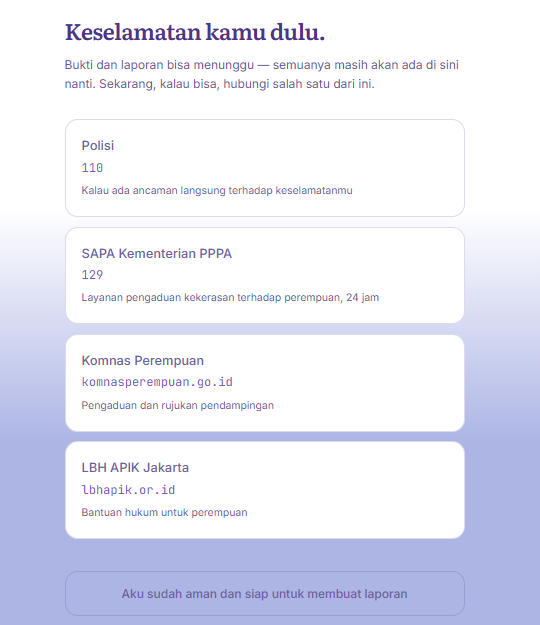
user dapat menghubungi pihak berwajib jika merasa tidak aman secara fisik
-
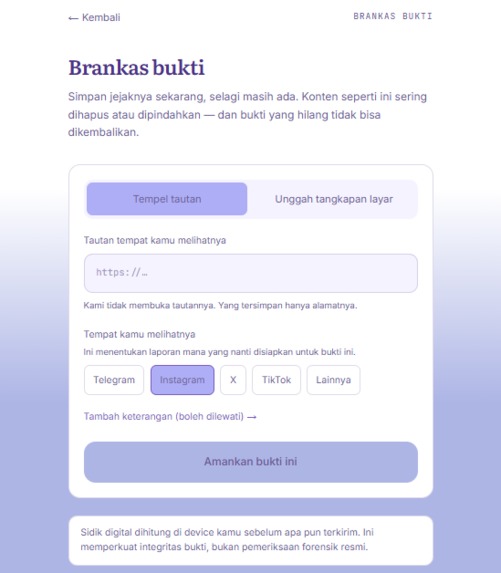
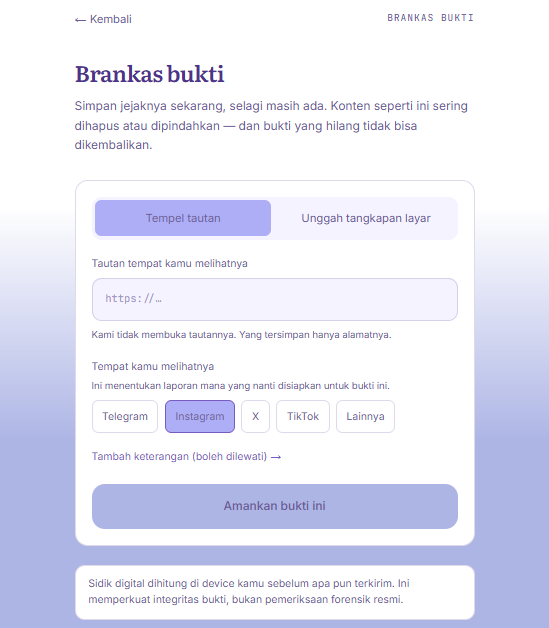
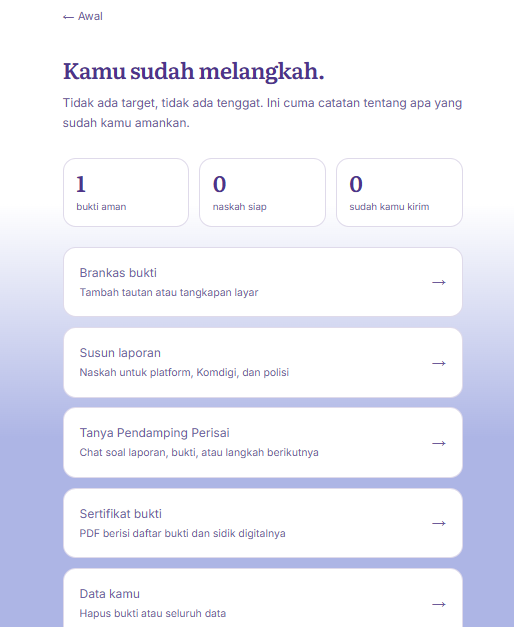
user dapat menyimpan bukti berupa tangkapan layar atau tautan dari konten deepfake
-
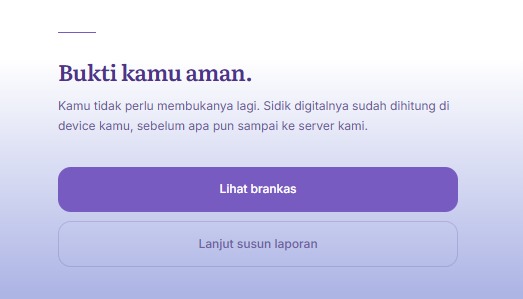
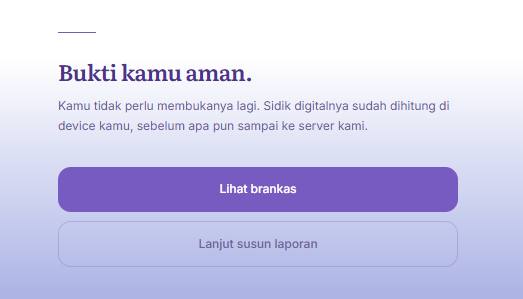
bukti sudah diamankan, user boleh tidak melihat bukti yang traumatis tersebut bila tidak siap karena bukti akan di blur
-
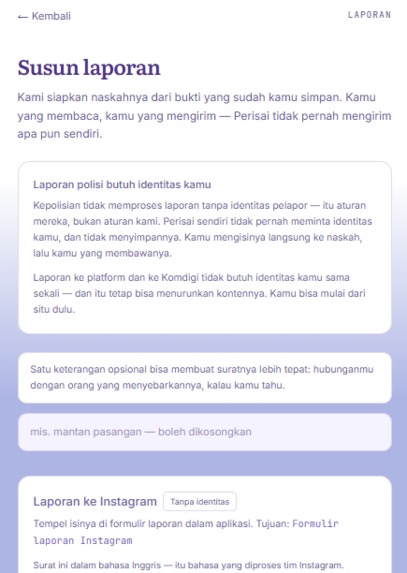
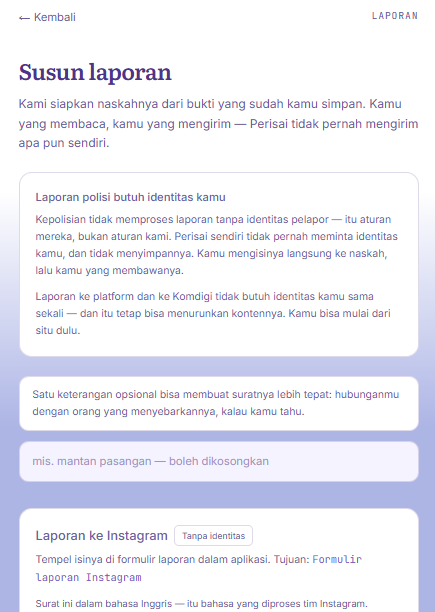
user dapat men-generate laporan untuk dikirim ke platform digital, kepolisian, dan komdigi
-
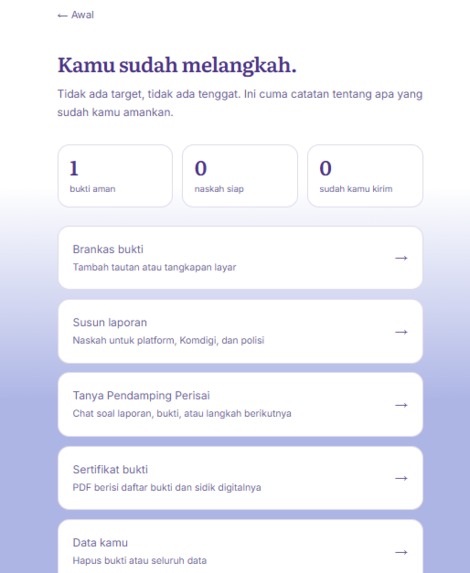
-
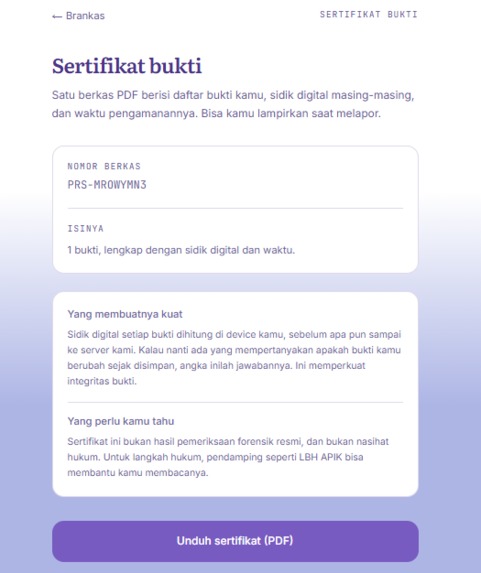
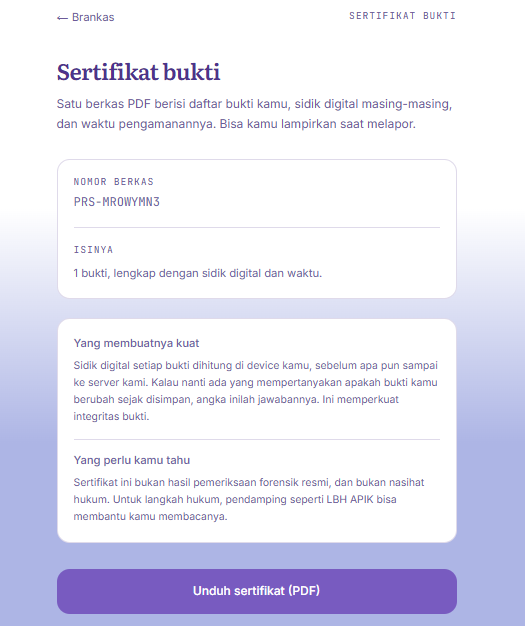
user dapat mendownload sertifikat bukti dapat bentuk PDF
-
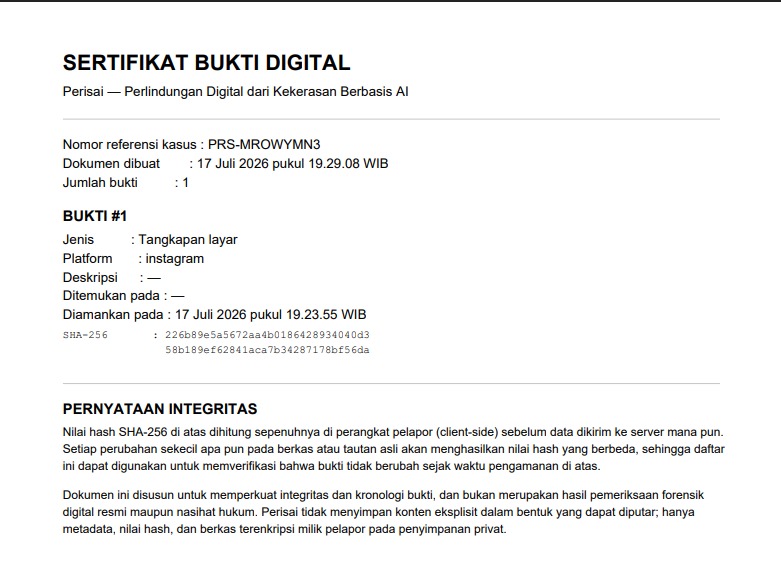
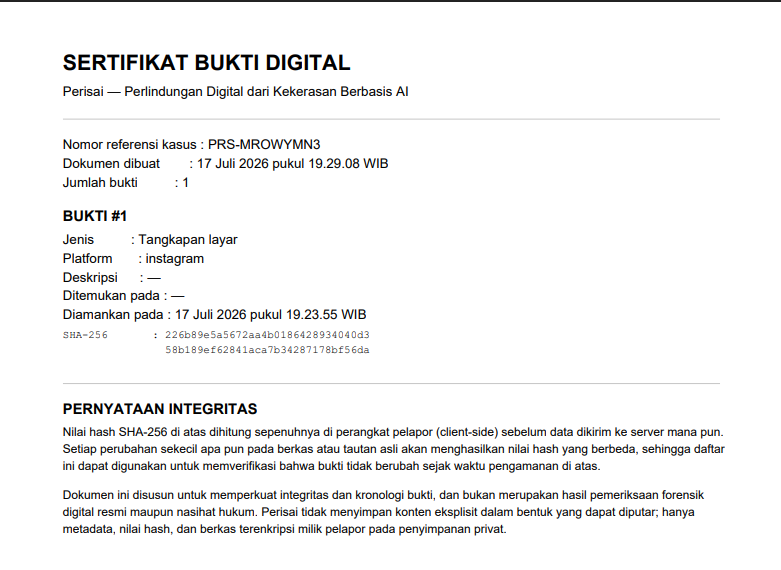
contoh sertifikat bukti yang di-generate oleh perisai
Inspiration
In January 2026, Indonesia blocked access to a major AI service over deepfake pornography. But blocking one app doesn't help the women whose faces are already circulating.
Today a deepfake takes under 25 minutes to make, for free, from a single clear photo. In Indonesia, reported cases of online gender-based violence (KBGO) grew +40.8% in a single year, the fastest-rising form of violence against women (Komnas Perempuan, CATAHU 2025). 99 to 100% of the people targeted in sexual deepfakes are women, most concentrated at ages 18 to 24, our own demographic.
We kept coming back to one question: when it happens to a woman, what does she actually do in the next two hours? The answer is brutal. She has to become four people at once: an investigator securing evidence before it disappears, a bureaucrat learning a different takedown procedure for every platform, a lawyer decoding her rights, and a survivor holding her own trauma together. There is no single tool for any of it, and reporting itself often becomes the second harm. She gathers her own proof and retells the story to an agency, the police, and a psychologist in turn.
Perisai is the tool we wished existed for her.
What it does
Perisai guides a victim through the entire response in one trauma-informed flow, in minutes instead of days.
- Evidence Vault. She pastes a link or uploads screenshots. Everything is SHA-256 hashed on her own device, before a single byte reaches our server, and blurred by default. It generates a PDF Sertifikat Bukti listing evidence, hashes, and timestamps, strengthening the integrity of her evidence without her ever having to hold the content itself.
- Takedown Wizard. From her evidence, it drafts three ready-to-send documents in seconds: a takedown letter for the platform, a complaint for Komdigi, and a chronology for a police report, each written in the right language for its destination.
- Pendamping Perisai. A trauma-informed chat that explains her rights under UU TPKS in human language, and routes her to real support: LBH APIK, SAFEnet, and Komnas Perempuan.
The whole thesis lives in one detail. In our demo, the evidence attached to Maya's takedown letter includes a screenshot of her friend's warning and the group's member list, but no screenshot of the abusive content itself. She never had to capture the thing that hurt her. The hash, the timestamp, and the URL do the identifying.
Privacy is the architecture, not a policy
Every decision in Perisai starts from the same place: she has already lost control of her own image once, and we are not going to be the second thing that takes it from her.
Her evidence never leaves her device. Not encrypted on our server. Not on our server at all. Screenshots, links, hashes, timestamps, and drafted letters all live in her own browser, in local storage we never touch. We do not have a database of victims because we do not have a database. There is nothing for us to leak, nothing for us to hand over, and nothing for us to sell.
The proof is computed before we could see it anyway. The SHA-256 fingerprint that shows her evidence is intact is calculated in her browser with the Web Crypto API. That is why the certificate can make its integrity claim honestly rather than as marketing. The PDF itself is generated on her device too.
She never tells us who she is. No name, no email, no phone number, no account. There is no login trail and no notification that reveals what the app is for.
Nothing is ever published, and nothing is ever sent on her behalf. Perisai drafts her reports, but she reads them, she fills in her own details, and she presses send. Every time. That is also why Perisai cannot become an automated abuse vector.
The only thing that ever leaves her device is what the drafting itself requires. To write her letters, our language layer receives platform names, dates, hashes, and placeholders. Never images, never her name, never a description of what happened. The system prompt forbids describing the content at all. Even our LLM never sees it, by design, not by luck.
The certificate deliberately contains no images. Embedding her screenshots would hand her back a file full of the content she was trying not to hold, which would contradict the entire product.
Her data is hers, including the right to destroy it. She can delete any single item, or purge everything permanently: files, evidence, reports. No trash bin, no undo, no recovery. A bin that holds her evidence for 30 days is the opposite of the point.
How we built it
Perisai is a Next.js + TypeScript web app deployed on Vercel, with Dexie (IndexedDB) holding her vault entirely in her own browser, Gemini for language generation, and jsPDF for the evidence certificate, generated on her device.
We started this build on a hosted database with anonymous accounts and row-level security. It worked. But it meant we held her evidence, and every privacy claim we could make depended on us being trustworthy custodians of it. So we moved the whole vault into the browser instead. The best way to protect her data from us was to never have it.
Every AI feature also has a hand-written fallback, tested by deliberately breaking the model to confirm it fires. Venue wifi does not get to decide whether a victim receives her letter.
Challenges we ran into
The hardest call we made was to cut a feature, not build one.
We scoped a fourth feature, browser-side "cloaking" to protect photos from deepfake models, and ran a feasibility probe before committing. We hit two walls. We couldn't reproduce the library's own face descriptor through its pipeline (0.27 drift, larger than the gap between two different people), and the browser returned exactly zero gradients, which real cloaking needs. Even if it had worked, we'd only have degraded one 2017-era model in a browser, while real deepfake pipelines use a different encoder entirely. That is a demo number we couldn't honestly defend.
So we cut it at hour 11 and spent the time making the three real features correct instead. We'd rather show three things that work than four things where one is a magic trick.
Accomplishments that we're proud of
We red-teamed our own AI, and it made us safer.
When we asked our Legal Navigator about suicidal feelings, it invented crisis hotlines every time. Different phone numbers and organisations on each run, even though its system prompt explicitly forbade making up numbers.
That finding shaped our core principle: the safety-critical path in our safety app does not run on AI. A deterministic check screens every message before the model is called. If it detects danger or self-harm, it returns verified emergency contacts (110, SAPA 129) and the AI is never invoked. Our logs literally print model never called.
We're proudest that we caught our own product being dangerous before a victim ever could.
What we learned
We read every document the AI generated, as if we were Maya, and three times it was confidently wrong in ways that would have hurt her.
- It volunteered UU 44/2008 (Pornografi) as a legal basis, a statute with a documented history of being turned back on NCII victims to charge them. We now forbid it and anchor only on UU TPKS Pasal 14 and UU ITE.
- It described a deepfake as content "belonging to the victim," surrendering the strongest thing she can say: that isn't me. We now require deepfakes to be described as fabrication using her face.
- It mislabelled her evidence, guessing what screenshots showed. That is the worst possible failure for a product built on evidence integrity. We now pass real descriptions through and forbid guessing.
The lesson: for a product like this, prompting an LLM and shipping it isn't enough. You have to read what it produces as the most vulnerable person who will ever use it.
What's next for Perisai
A disguise mode so the app is invisible to an abuser who has her phone. Verified static contacts for LBH APIK, SAFEnet, and Komnas Perempuan built into the Navigator. And a self-hosted language layer so no third party ever touches even the metadata. Sustainability comes through institutional partnership with Komnas Perempuan, universities, and CSR, never by monetising victims.
We're a team of women who built the shield we wished existed. Perisai, because no one should face this alone.
Built With
- ai-sdk
- dexie
- gemini
- jspdf
- next.js
- postgresql
- pwa
- react
- tailwindcss
- typescript
- vercel
- web-crypto-api

Log in or sign up for Devpost to join the conversation.