-
dendritic full
-
dendritic compressed
-
dendritic full PAI
-
dendritic compressed PAI
Inspiration
In real-world medical imaging workflows, teams are often forced to choose between accuracy and deployability. Large 3D segmentation models deliver strong results but are costly to train and deploy, while compressed models degrade performance and risk clinical usability. This project explores whether dendritic optimization can break this tradeoff by reallocating model capacity only where it is needed.
What it does
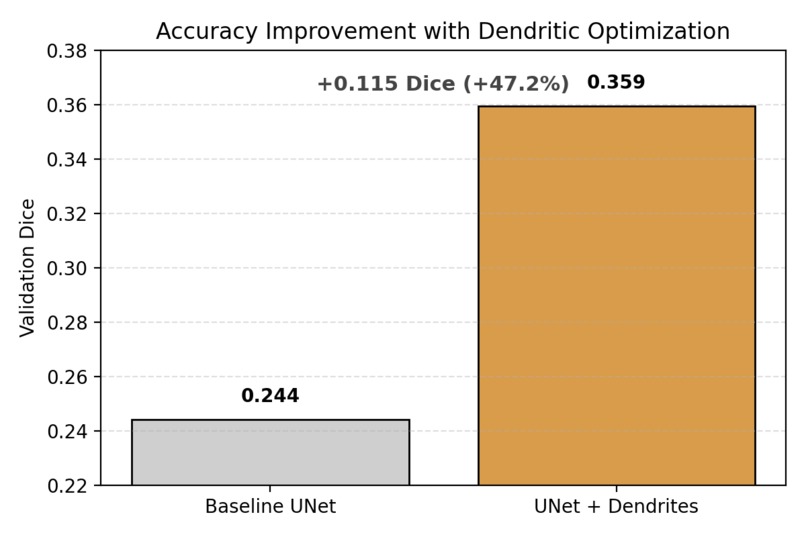
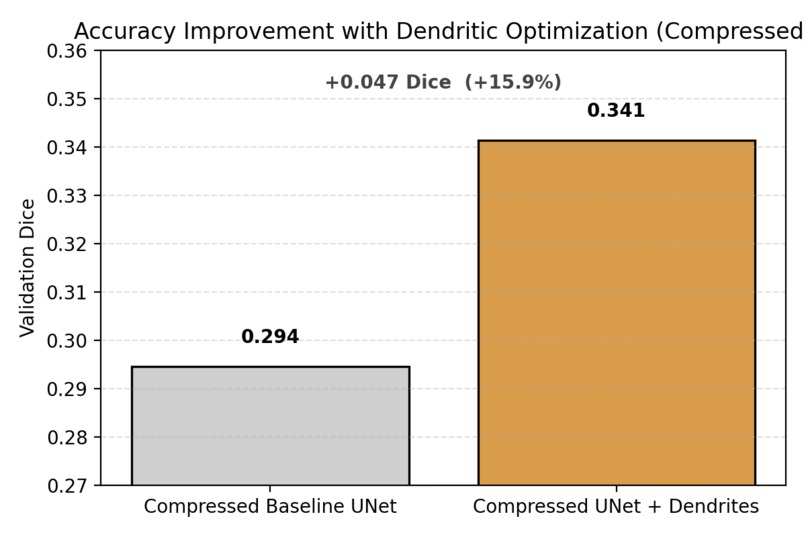
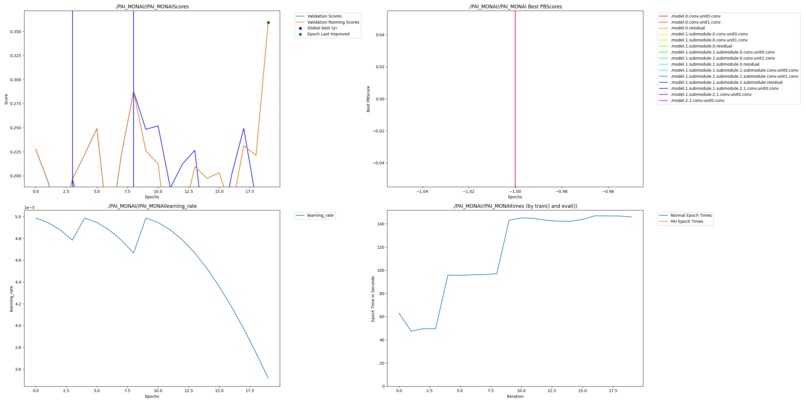
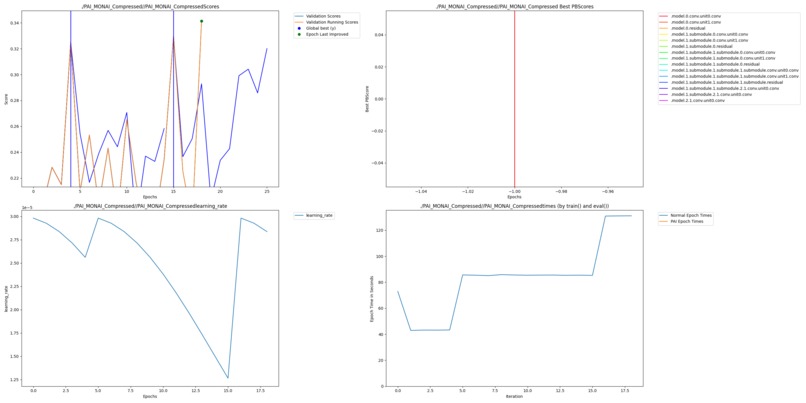
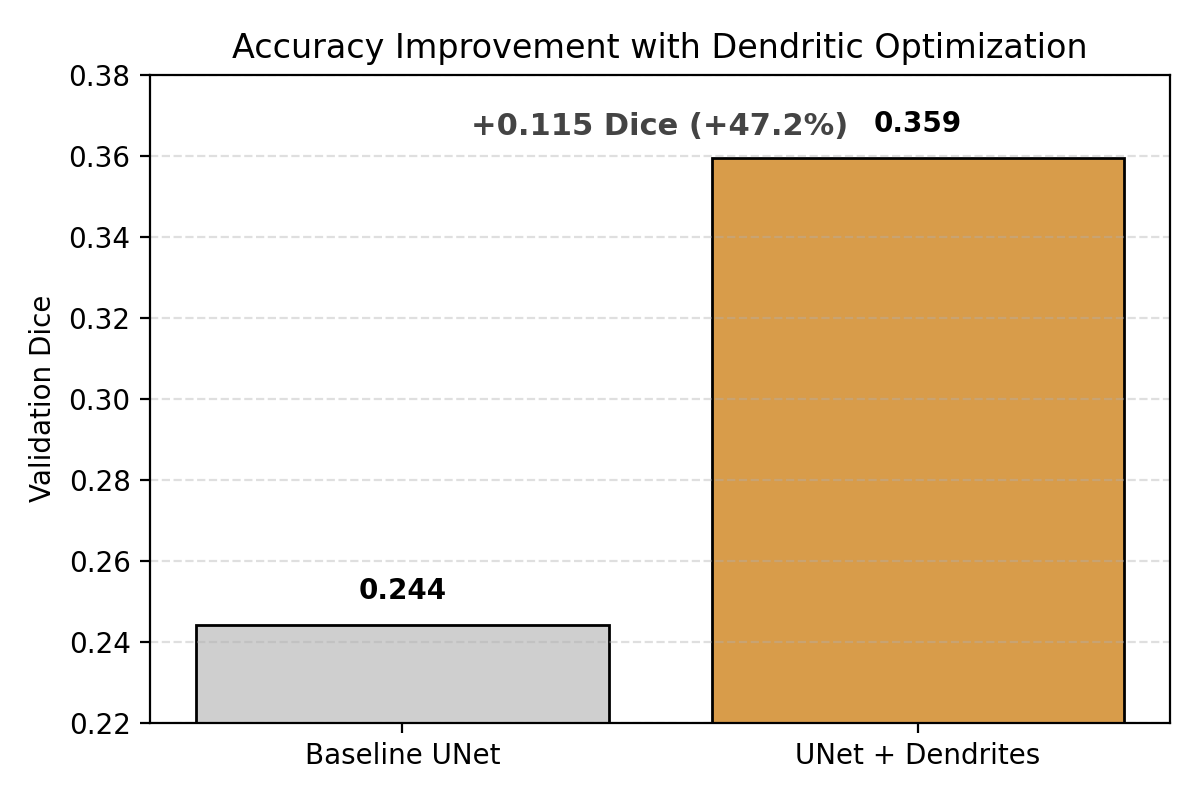
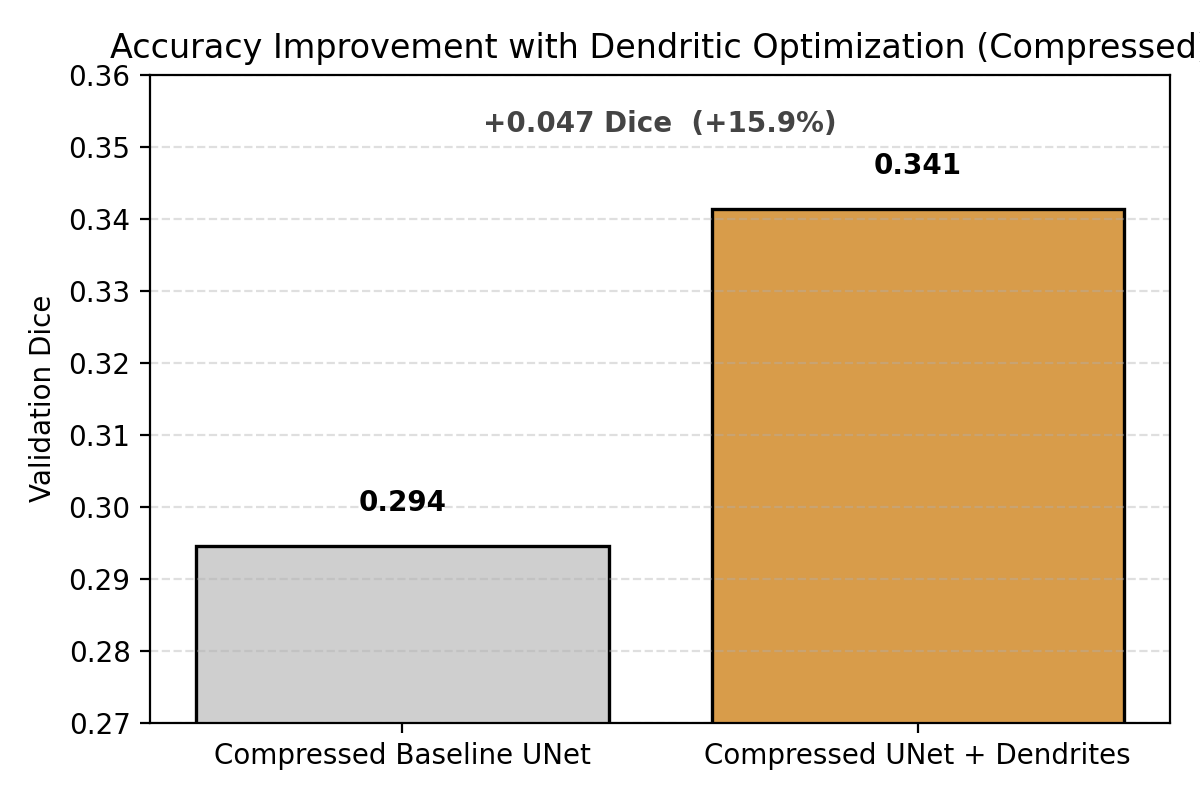
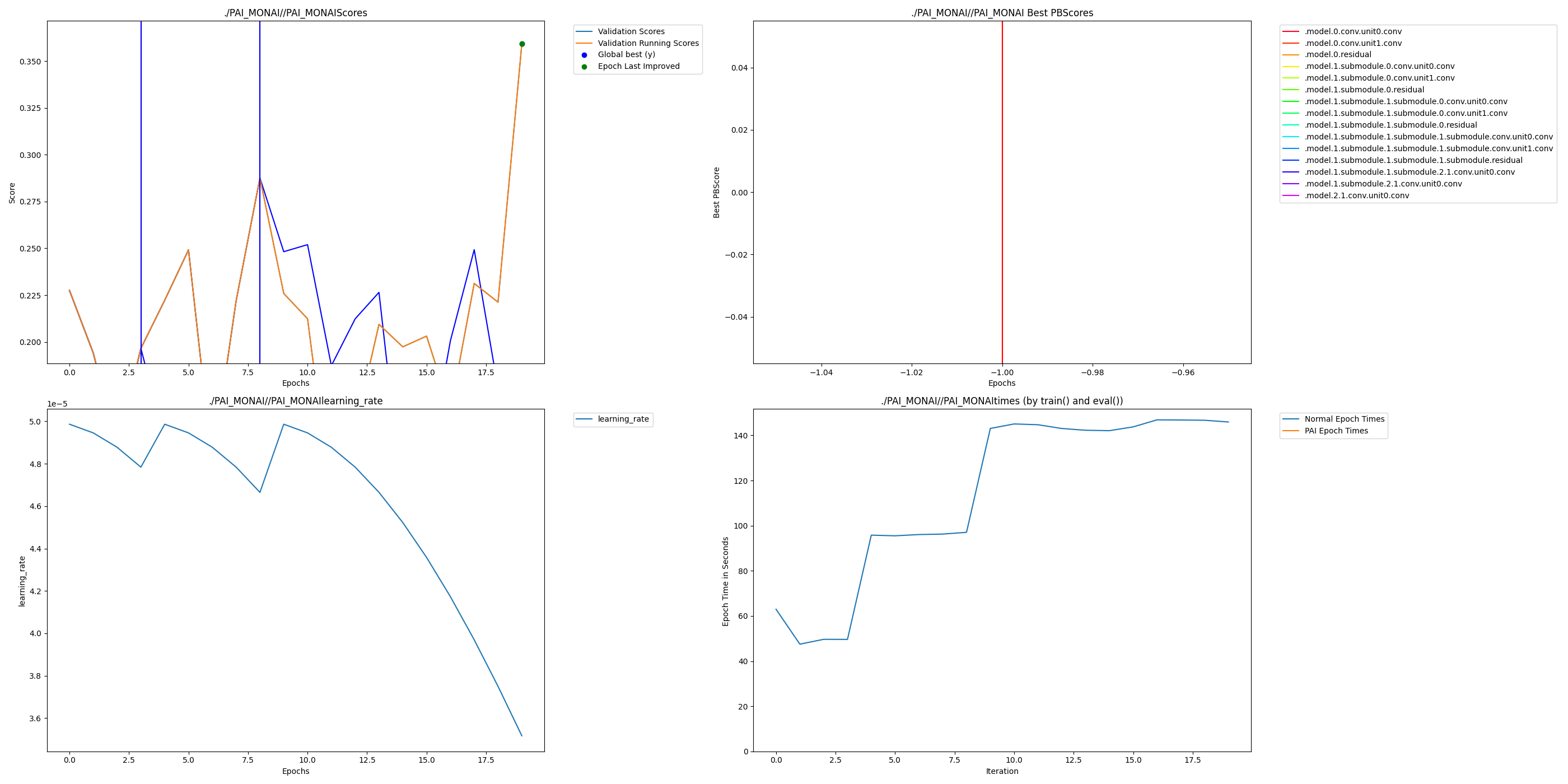
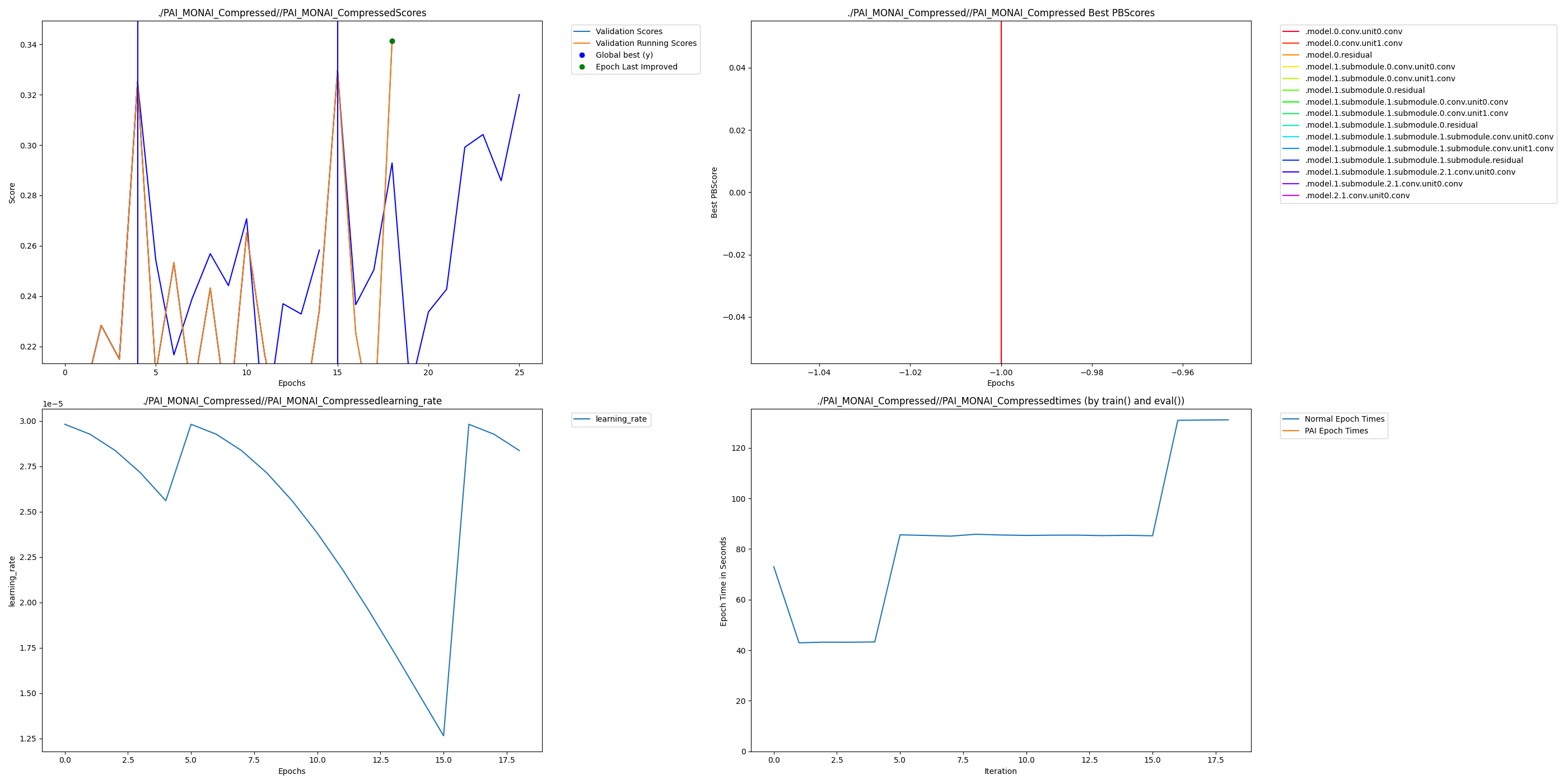
We evaluate Perforated AI’s dendritic optimization on a 3D UNet-based medical image segmentation task using MONAI. Our experiments demonstrate that dendritic optimization improves segmentation accuracy in both full-capacity and compressed models by automatically reallocating representational capacity where beneficial. We show that dendrites activate without manual intervention and consistently improve validation Dice scores across training regimes.
How we built it
3D medical image segmentation models such as UNet require significant representational capacity to capture complex spatial patterns. Reducing model size or training budget typically leads to degraded accuracy, while simply increasing model size is computationally expensive. This project investigates whether dendritic optimization can: • Improve accuracy in already strong models • Recover accuracy lost due to architectural compression • Automatically adapt without manual tuning
Challenges we ran into
Sometimes backpropagation keys license issues
Accomplishments that we're proud of
• Full-capacity UNet: +29% relative Dice improvement with no increase in base parameters • Compressed UNet: +19% relative Dice improvement, recovering performance lost due to architectural compression • Structural change: Dendrites added dynamically (~2 per model) only when validation trends justified it
What we learned
These results demonstrate that dendritic optimization: • Improves accuracy across model scales • Adapts dynamically to architectural constraints • Requires minimal integration effort • Complements existing MONAI workflows For practitioners, this means better accuracy without increasing base model size, and improved robustness under resource limitations.
What's next for Perforated-MONAI: Dendritic Optimization
definitely turn this into a more rigorous tests, Generate Sweep reports nexts and evaluate parameters for seeing how we can give the model dendritic optimisation
REPORT: https://drive.google.com/file/d/1yNNVP_GXVdvllDNr930zqQrGqhsZRd2O/view?usp=sharing
CODE: https://drive.google.com/file/d/1S9tODm5lnCGyUM_-QK2ljcfkMyrkxAUI/view?usp=sharing
Built With
- cuda
- pytho
- torch

Log in or sign up for Devpost to join the conversation.