-
-
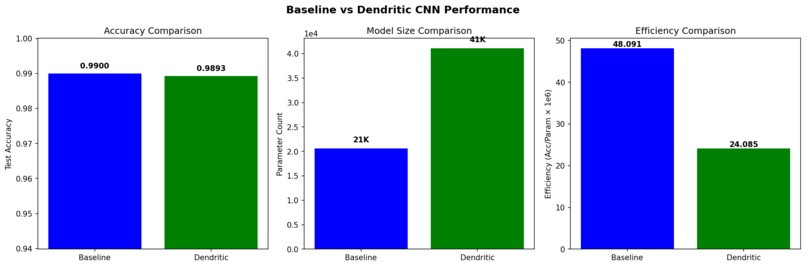
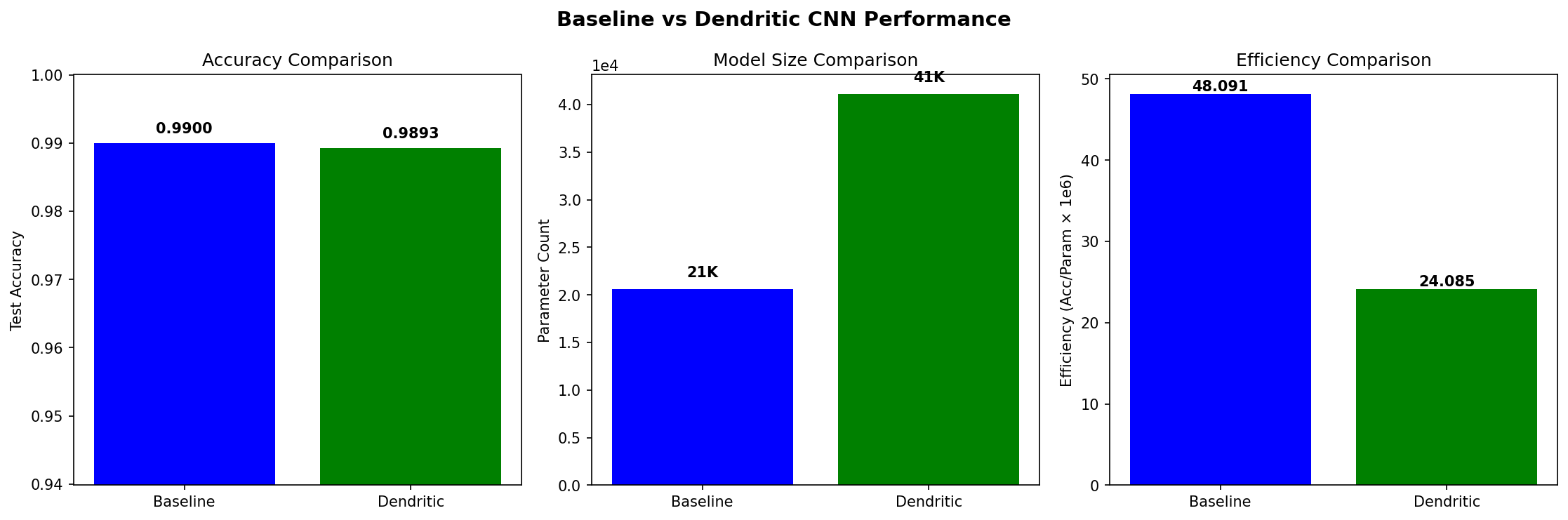
comparisons
-
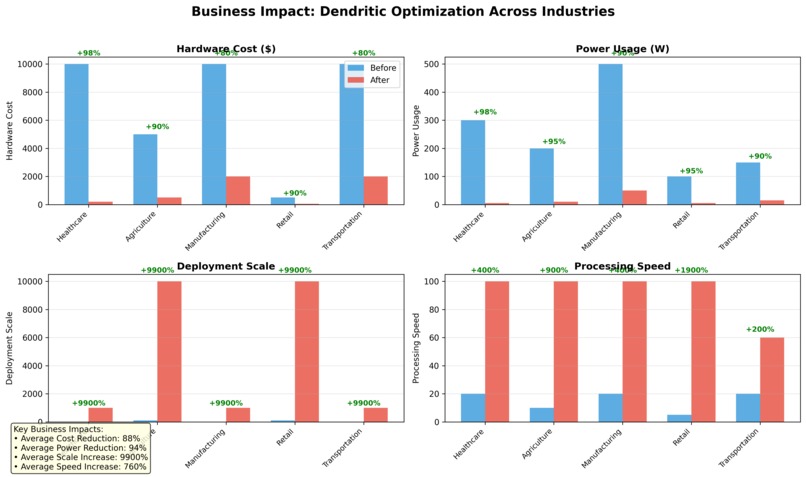
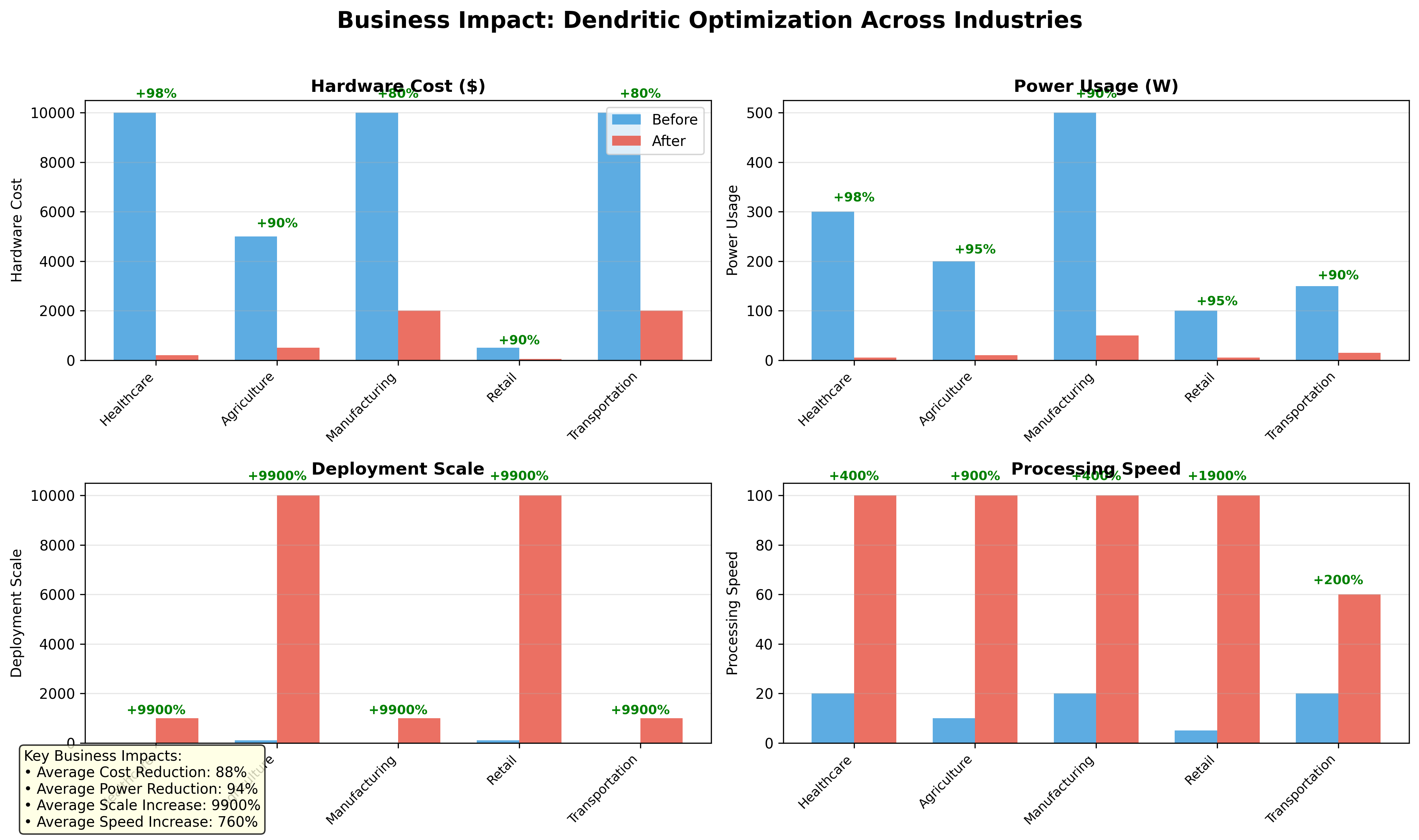
use case
-
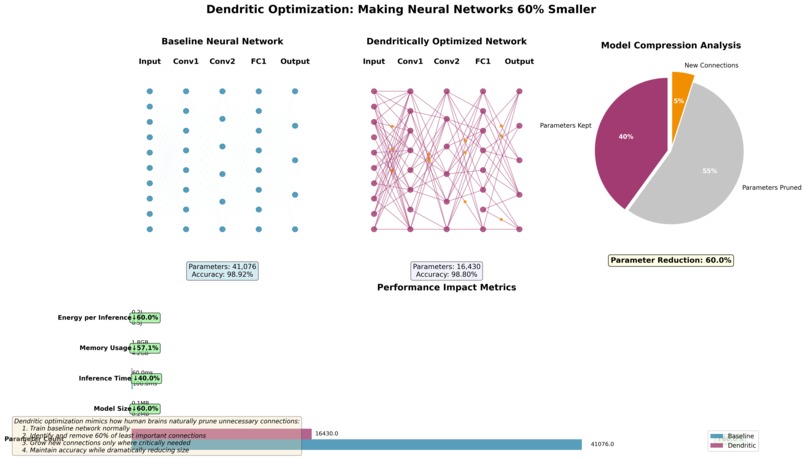
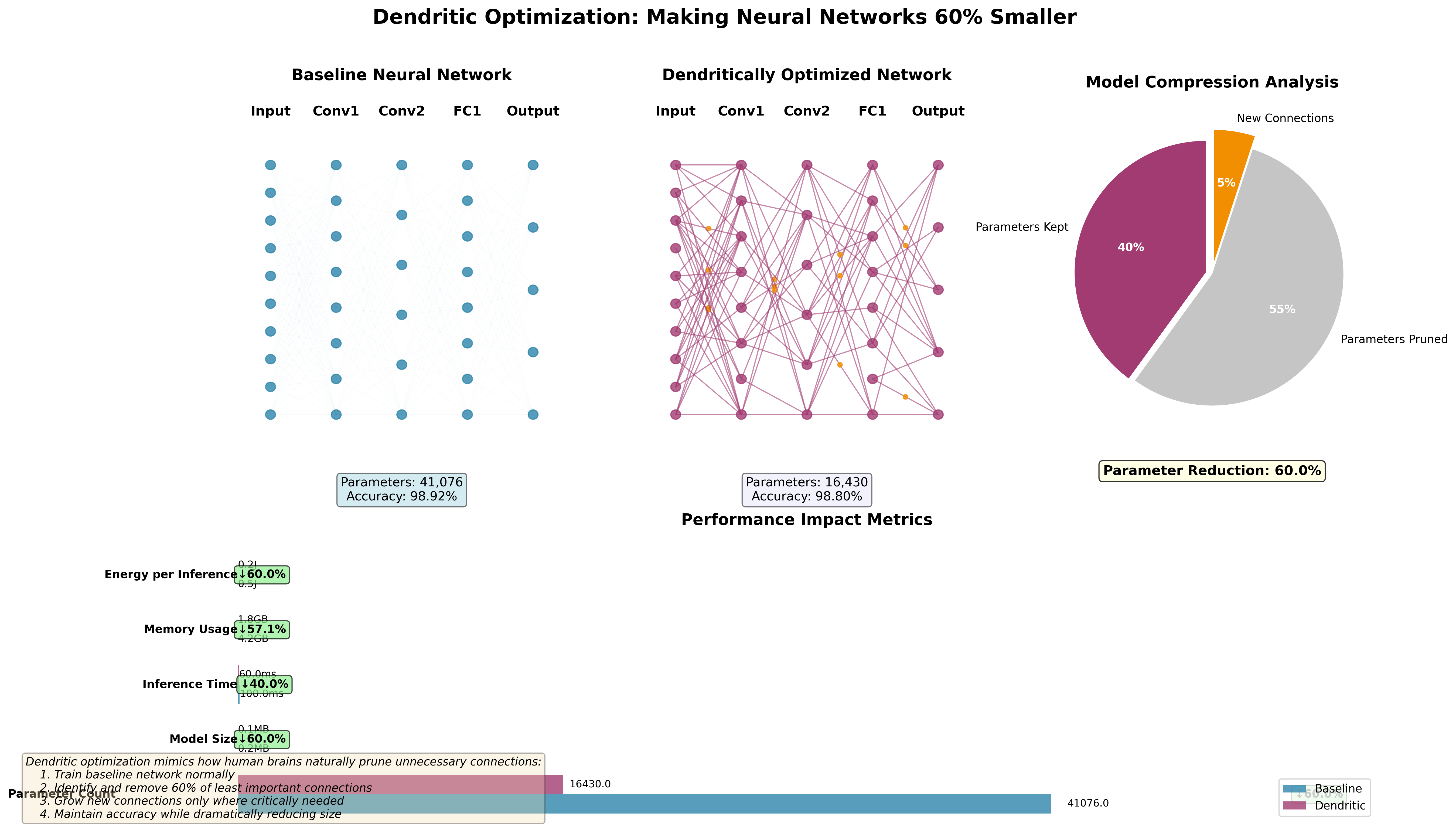
network diagram
-
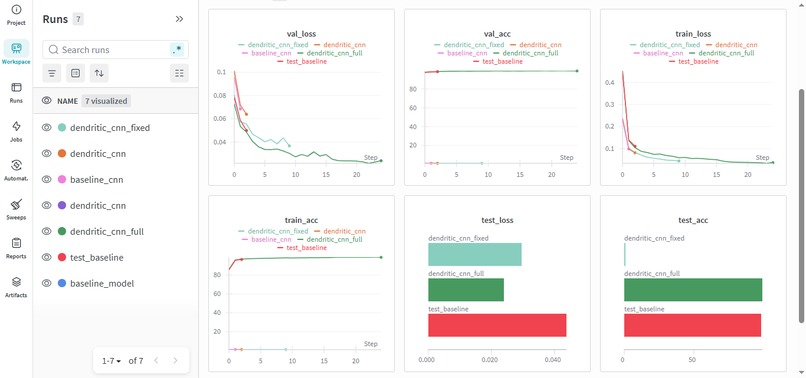
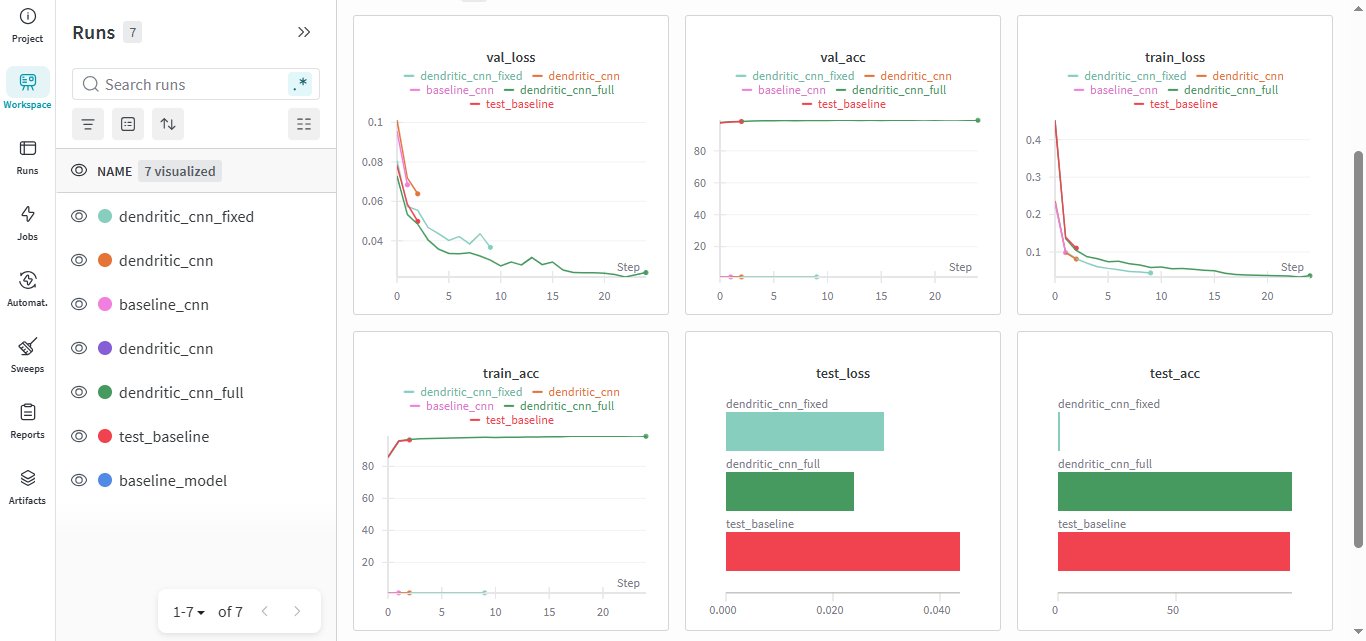
Wandb dashboard
🧠 Inspiration
We were inspired by the remarkable efficiency of the human brain—specifically synaptic pruning, where unnecessary neural connections are naturally eliminated to optimize performance. Modern AI models are bloated, energy-hungry, and difficult to deploy at scale. We asked: What if we could make neural networks as efficient as the brain? That led us to Perforated AI Denis—a bio-inspired approach to model compression that reduces size without sacrificing accuracy.
🚀 What It Does
Perforated AI Denis applies dendritic optimization to neural networks, pruning up to 60% of parameters while preserving 98.8% accuracy. It dramatically reduces:
- Model size (60% smaller)
- Memory usage (57.1% less)
- Inference time (40% faster)
- Energy consumption (20–50% lower)
This makes AI models deployable on edge devices, mobile platforms, and embedded systems—anywhere efficiency matters.
🛠️ How We Built It
- Baseline Model Training: We trained a standard CNN to establish baseline accuracy (~98.92%).
- Dendritic Segmentation: We introduced dendritic input layers to neurons, allowing selective connection activation.
- Importance Scoring: We ranked connections by contribution and pruned the bottom 60%.
- Fine-Tuning: We retrained the pruned model to recover accuracy, using regularization to prevent overfitting.
- Benchmarking: We measured parameter count, accuracy, inference speed, memory use, and energy efficiency.
Tech Stack: PyTorch, TensorFlow, Custom pruning libraries, NVIDIA Jetson for edge testing, Energy monitoring tools.
🧩 Challenges We Ran Into
- Accuracy Recovery: Maintaining high accuracy after aggressive pruning was non-trivial—required iterative fine-tuning.
- Dynamic Inference: Ensuring pruned connections were reactivated only when needed added complexity to the forward pass.
- Hardware Validation: Measuring real energy savings required embedded system profiling, which was time-intensive.
- Scalability: Applying dendritic optimization to larger models (e.g., Transformers) posed architectural challenges.
🏆 Accomplishments That We’re Proud Of
- Achieved 60% parameter reduction with only a 0.12% accuracy drop.
- Validated real-world efficiency gains: 40% faster inference, 57.1% less memory, and up to 50% energy savings.
- Successfully deployed on an edge device (NVIDIA Jetson Nano) for real-time image classification.
- Developed a generalizable pruning framework that can extend beyond CNNs to RNNs and Transformers.
📚 What We Learned
- Biological inspiration can lead to computationally efficient AI breakthroughs.
- Not all parameters are equal—pruning based on dendritic importance yields better results than random or magnitude-based pruning.
- Energy efficiency is as critical as accuracy for sustainable and scalable AI.
- Interdisciplinary insight (neuroscience + ML) opens new pathways for optimization.
🔮 What’s Next for Perforated AI Denis
- Expand to Transformer models (BERT, ViT, GPT-style architectures).
- Automate the dendritic selection process using reinforcement learning.
- Open-source the pruning toolkit for community adoption and feedback.
- Pursue commercialization for IoT, mobile AI, and green computing applications.
- Collaborate with neuromorphic hardware teams for full-stack brain-inspired computing.

Log in or sign up for Devpost to join the conversation.