Inspiration
As a frequent podcast listener and someone who’s connected with both hosts and experts, I saw a gap: experts struggled to find relevant shows, and hosts wasted hours sourcing qualified guests. The idea was simple—build a platform that turns this fragmented process into a seamless, data-driven experience, with polished design and intuitive workflows at its core.
What it does
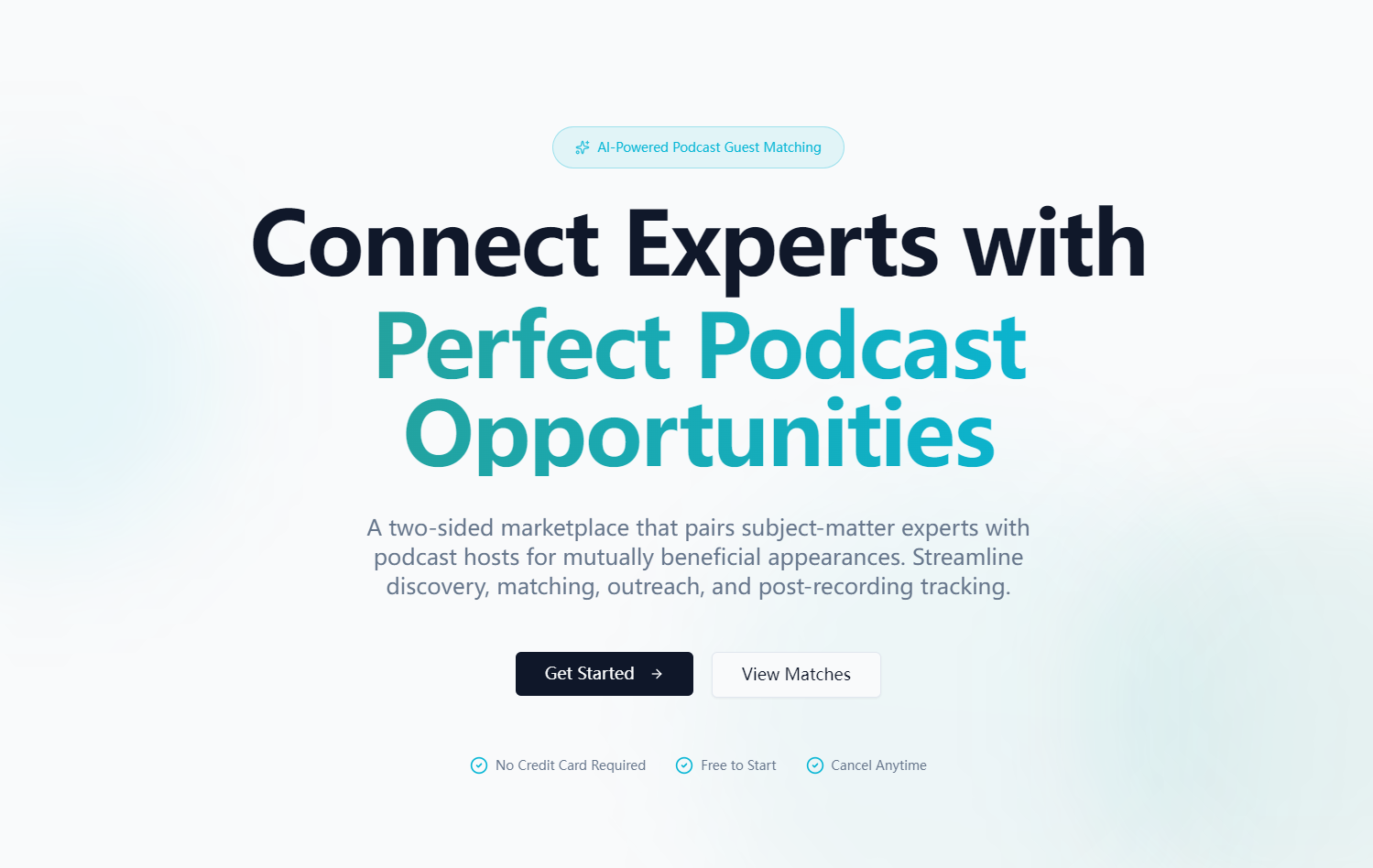
PodcastGuest Finder is a two-sided marketplace that uses AI to match subject-matter experts with podcast hosts. It streamlines discovery, booking pipeline management, one-sheet creation, and post-episode analytics—all with dynamic animations and user-centric design for both free and premium tiers.
How we built it
We started with mapping user flows for experts and hosts, then built the frontend with React (focused on smooth animations and responsive design) and backend with Node.js/Express. MongoDB stored user profiles and pipeline data; AWS hosted the platform. We integrated OpenAI’s API for match algorithms, Chart.js for analytics, and PDFKit for one-sheet generation. Every UI element (parallax scrolling, drag-and-drop pipelines) was built with CSS3 animations and accessibility in mind.
Challenges we ran into
The biggest hurdle was refining the AI matching algorithm to balance relevance and personalization—we iterated dozens of times to get topic alignment and audience overlap right. We also had to optimize animations for low-end devices (implementing reduced motion modes) without sacrificing the premium feel for high-end users. Free/premium tier access control also required careful logic to avoid feature leaks.
Accomplishments that we're proud of
We created a fully functional platform where experts and hosts can go from discovery to published episodes with minimal friction. The animated UI elements (3D card flips, scroll-triggered reveals) elevate the experience without hurting performance, and the AI matching consistently delivers relevant suggestions. We’re especially proud of the one-sheet generator—users can create professional PDFs in one click, auto-populated from their profiles.
What we learned
Building for two distinct user types (experts/hosts) taught us to prioritize flexible, scalable UI/UX. We also learned the importance of accessibility—reduced motion modes weren’t an afterthought but a core design choice. Integrating multiple APIs taught us to handle edge cases (e.g., missing analytics data) with clear, user-friendly feedback.
What's next for this project
We plan to add real-time messaging between experts and hosts, integrate external calendar tools for scheduling, and expand analytics to include deeper audience demographic insights. We’re also exploring payment processing for premium subscriptions and mobile-responsive optimizations to make the platform fully usable on handheld devices.
Built With
- amazon-web-services
- chart.js
- mongodb
- node.js
- openai
- pdfkit

Log in or sign up for Devpost to join the conversation.