-
-
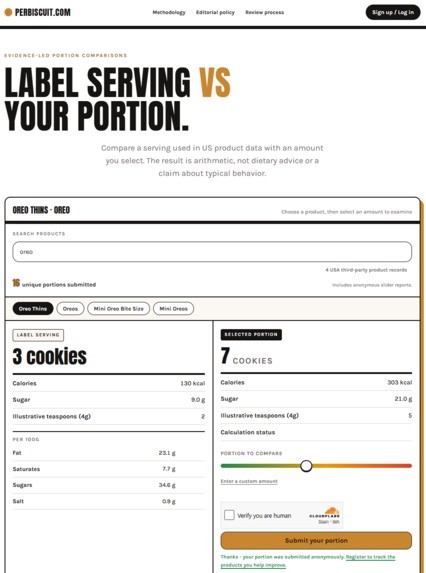
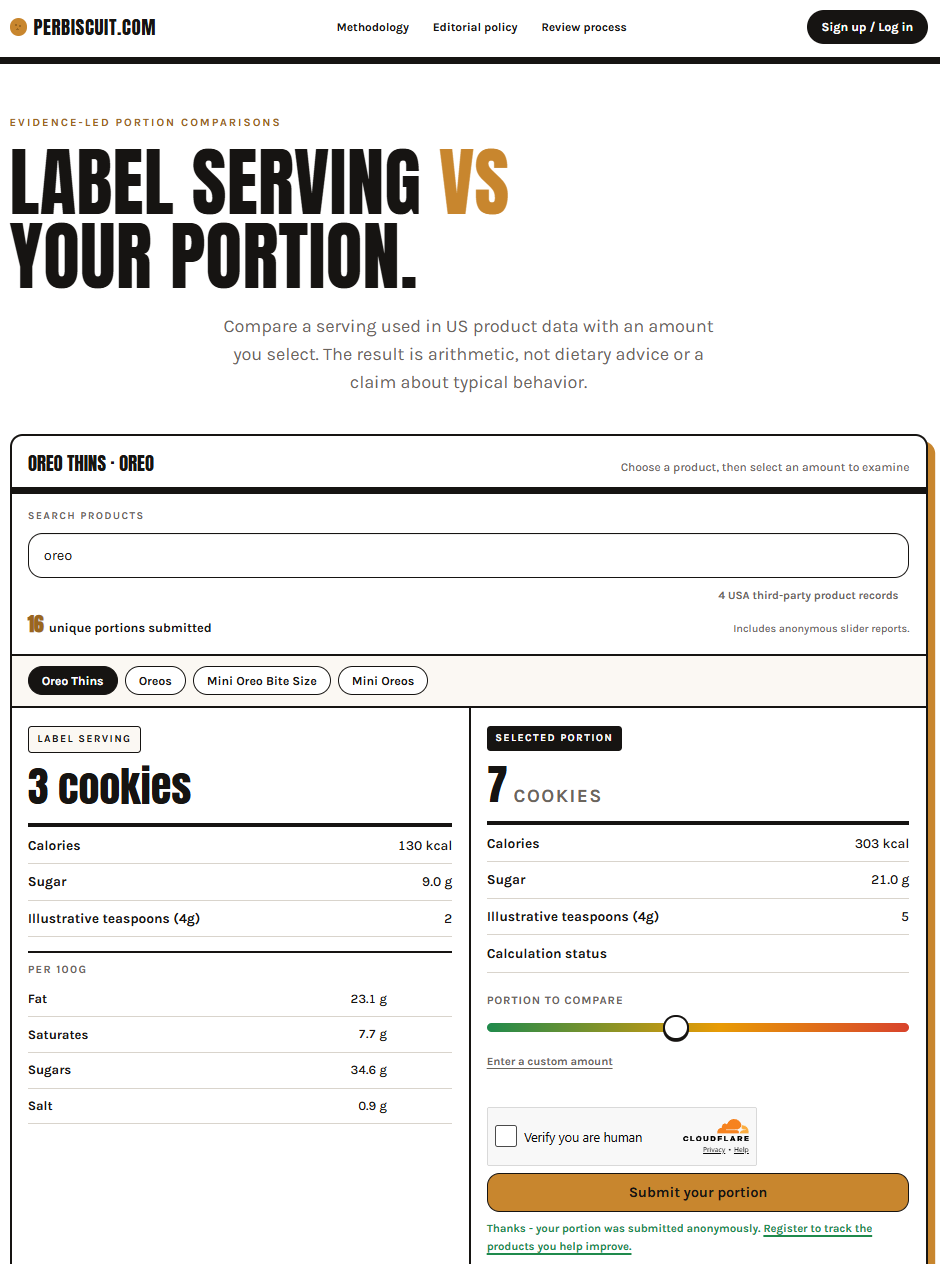
It immediately shows the working product, label serving vs selected portion, recalculated nutrition and a successful anonymous submission.
-
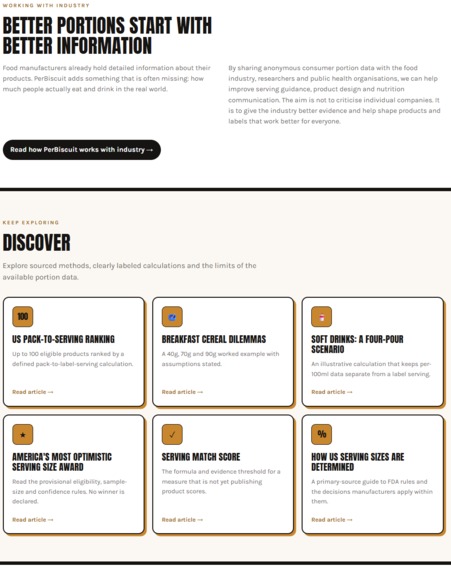
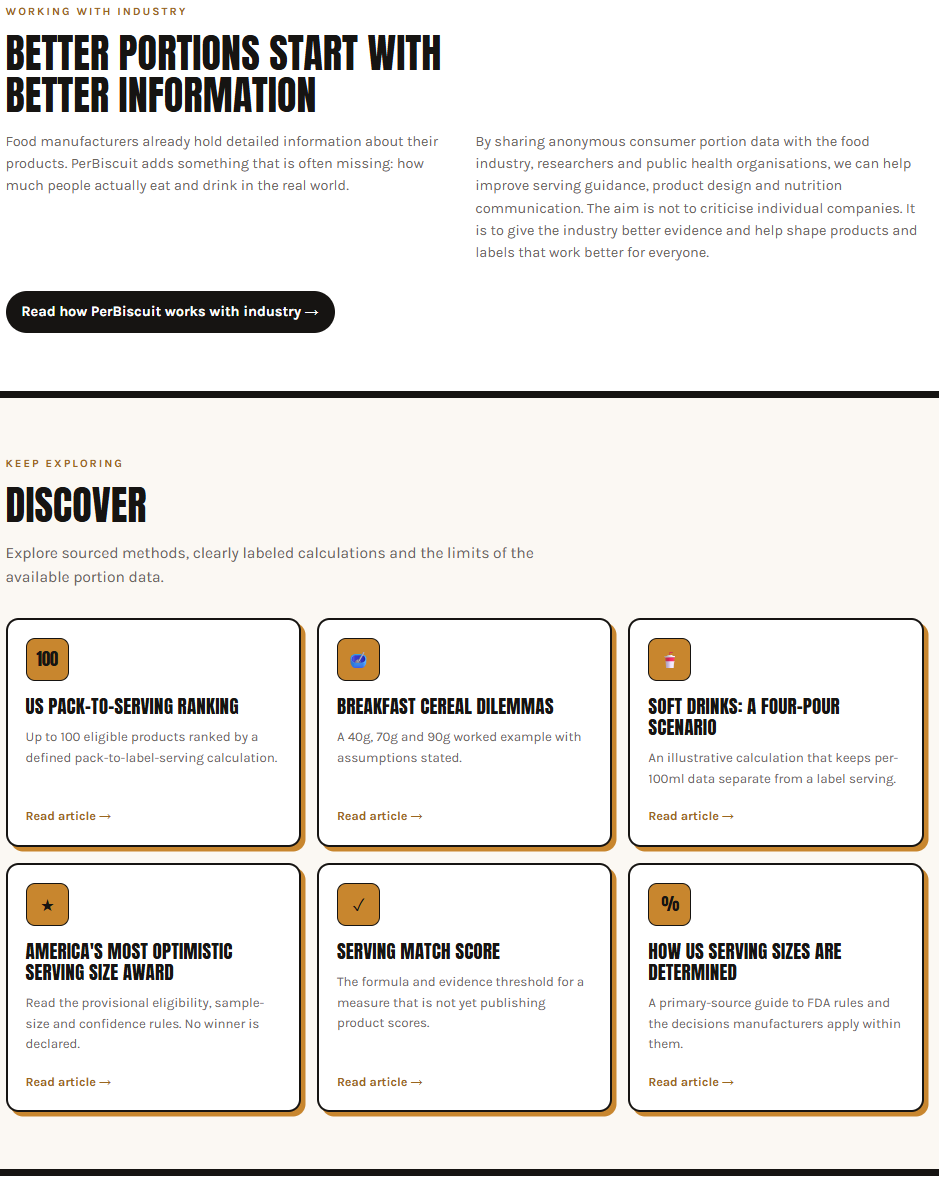
It demonstrates that PerBiscuit also covers industry collaboration, methodology and editorial analysis.
Inspiration
PerBiscuit started when I was munching through a pack of biscuits with a cup of tea, idly reading the information on the packet when I laughed out loud at the recommended portion size of 1 or as they had written it 'Per Biscuit'.
The label was technically correct, but it raised a wider question: how large is the gap between recommended serving sizes and real portion sizes across everyday food and drinks?
What it does
PerBiscuit lets people search for a food or drink and compare the manufacturer’s serving size with the portion they would actually consume.
As the user adjusts their portion, PerBiscuit recalculates calories, sugar, salt and other nutrition information in real time. Users can anonymously submit their portion, helping build community averages for individual products.
The aim is not to judge people or recommend diets. It is to make existing nutrition information more useful and easier to understand.
How we built it
PerBiscuit was built as a responsive web application using HTML, CSS and JavaScript, with Supabase handling product and community data. Cloudflare is used for hosting, security and protected submission endpoints.
Codex was used throughout development as an engineering partner. It helped turn the original concept into working interfaces, connect product data, create nutrition calculations, diagnose deployment problems, improve mobile layouts and develop supporting editorial pages.
The project combines structured product information with anonymous user-submitted portions to show both the official serving and real-world behaviour.
Challenges we ran into
Food data is inconsistent. Serving sizes can use grams, millilitres, pieces, cups or product-specific descriptions. Products may also contain incomplete nutrition information or use different formats between countries.
The calculations must remain accurate while still being understandable to someone who does not normally study nutrition labels.
The largest long-term challenge is collecting enough genuine portion submissions to produce useful community averages. We also had to prevent automated submissions without making the process frustrating for real users.
Accomplishments that we're proud of
We turned a simple observation about biscuits into a working public product.
PerBiscuit now supports live product search, adjustable portions, instant nutrition recalculation and anonymous community submissions. It presents the label portion and the user’s portion side by side without turning the result into dietary advice.
We are also proud that the project has developed beyond a single calculator. It now includes original articles, analysis of unrealistic serving sizes and a plan for sharing anonymised findings with researchers and the food industry.
What we learned
A nutrition label can be factually accurate while still giving people an incomplete impression of what they consume.
We learned that portion data is harder to standardise than it first appears. Reliable comparisons require careful handling of units, pack sizes, nutrition values and regional differences.
We also learned how effective Codex can be for a solo founder. It allowed one person to build and deploy features that would normally require several different technical roles.
What's next for PerBiscuit
The immediate goal is to attract more users and build meaningful community averages for individual products and categories.
Next, we plan to add barcode scanning, improve product coverage, expand beyond the United States and develop mobile apps. We also want to publish anonymised portion trends that can help manufacturers, researchers and public-health organisations understand how packaged food is consumed in practice.
The longer-term aim is to make realistic portion information a normal part of understanding food—not a figure people have to calculate for themselves.
Built With
- api
- cloudflare
- codex
- css3
- github
- html5
- javascript
- openai
- postgresql
- supabase


Log in or sign up for Devpost to join the conversation.