-
-
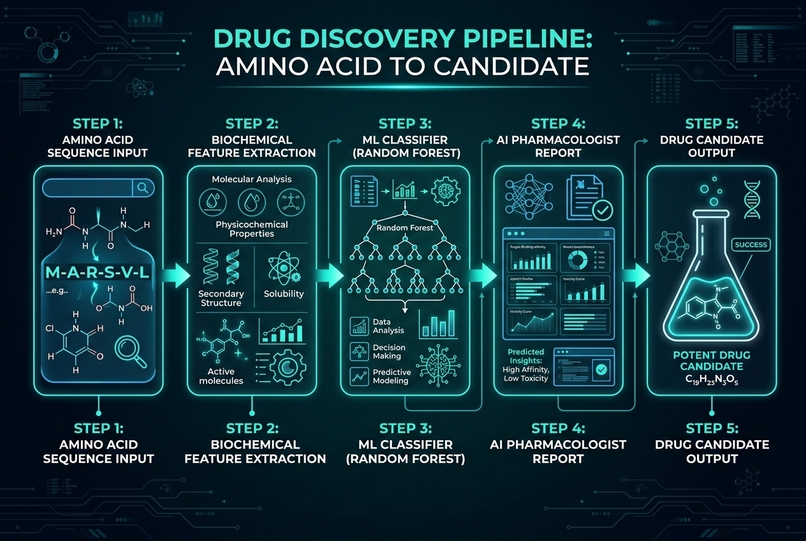
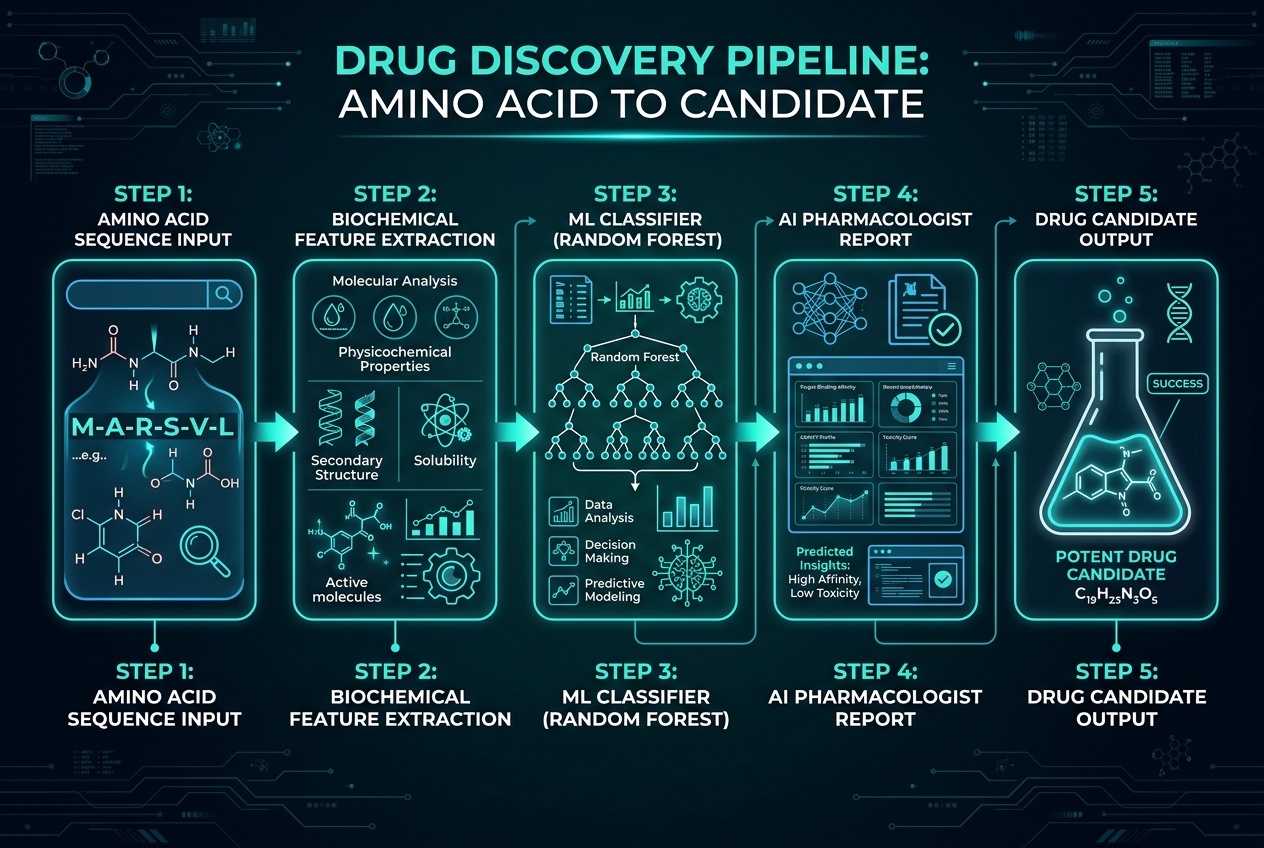
End-to-end pipeline: sequence input, biochemical feature extraction, ML classification, and AI pharmacological evaluation.
-
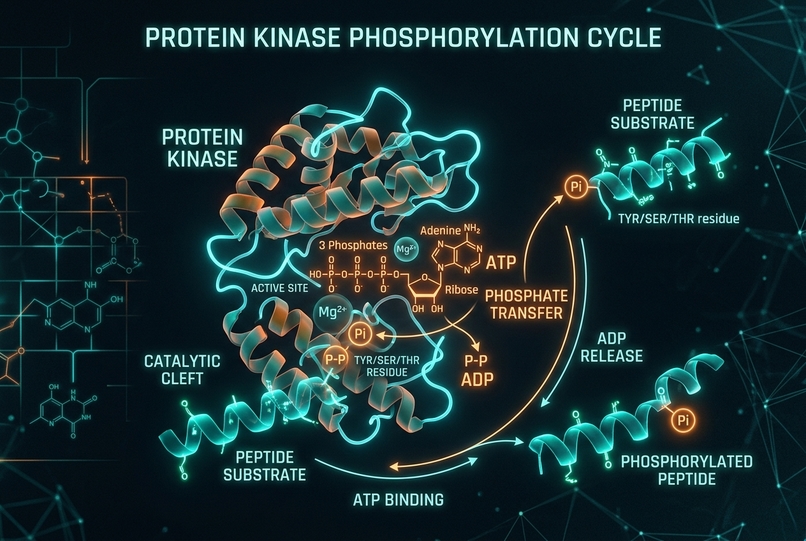
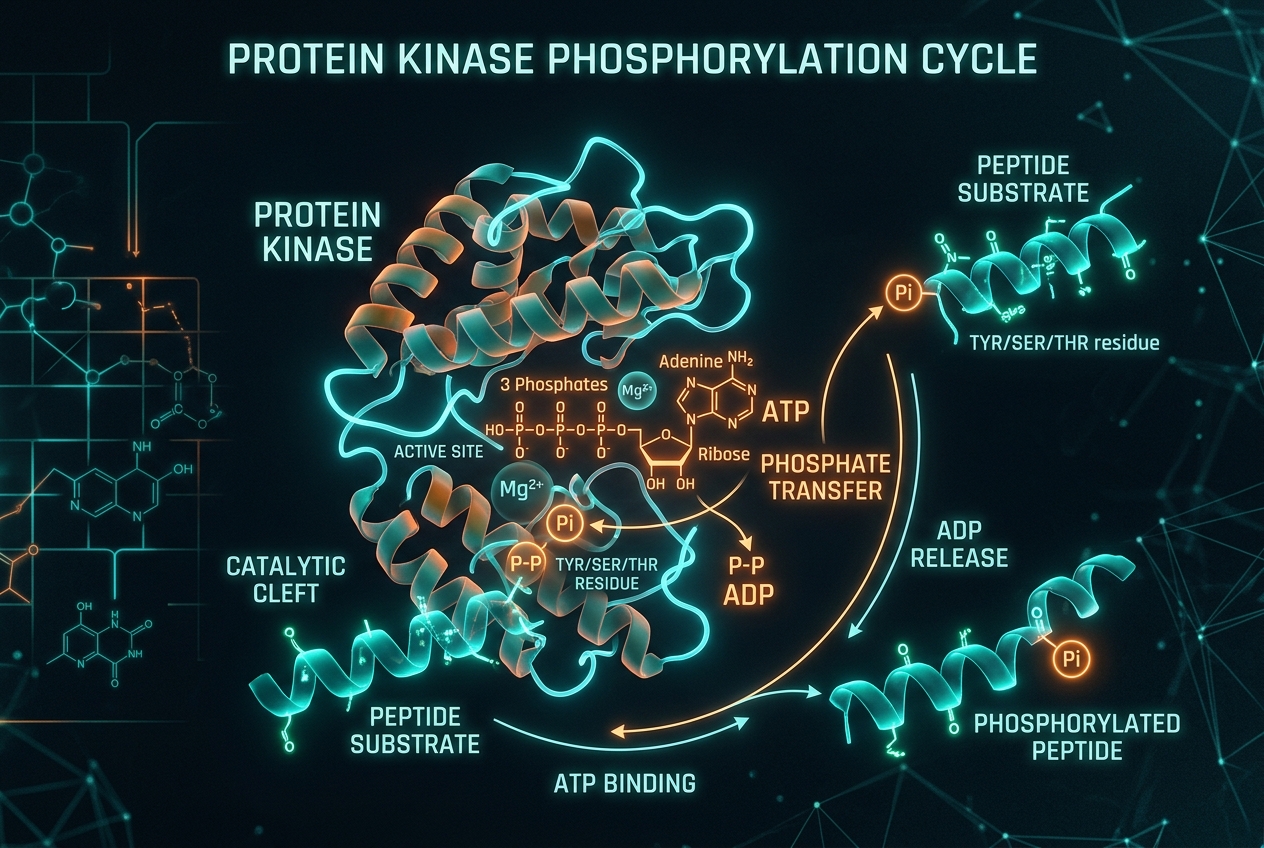
Protein kinase phosphorylation: an enzyme transfers a phosphate group from ATP to a target peptide substrate.
-
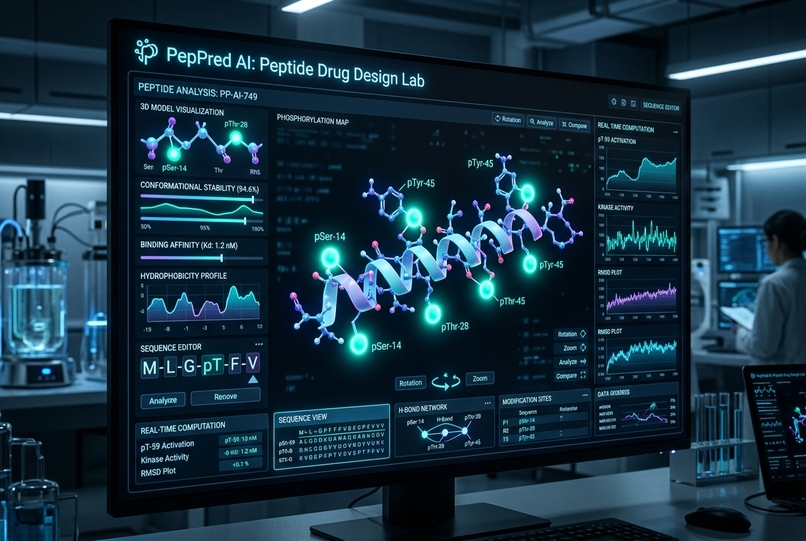
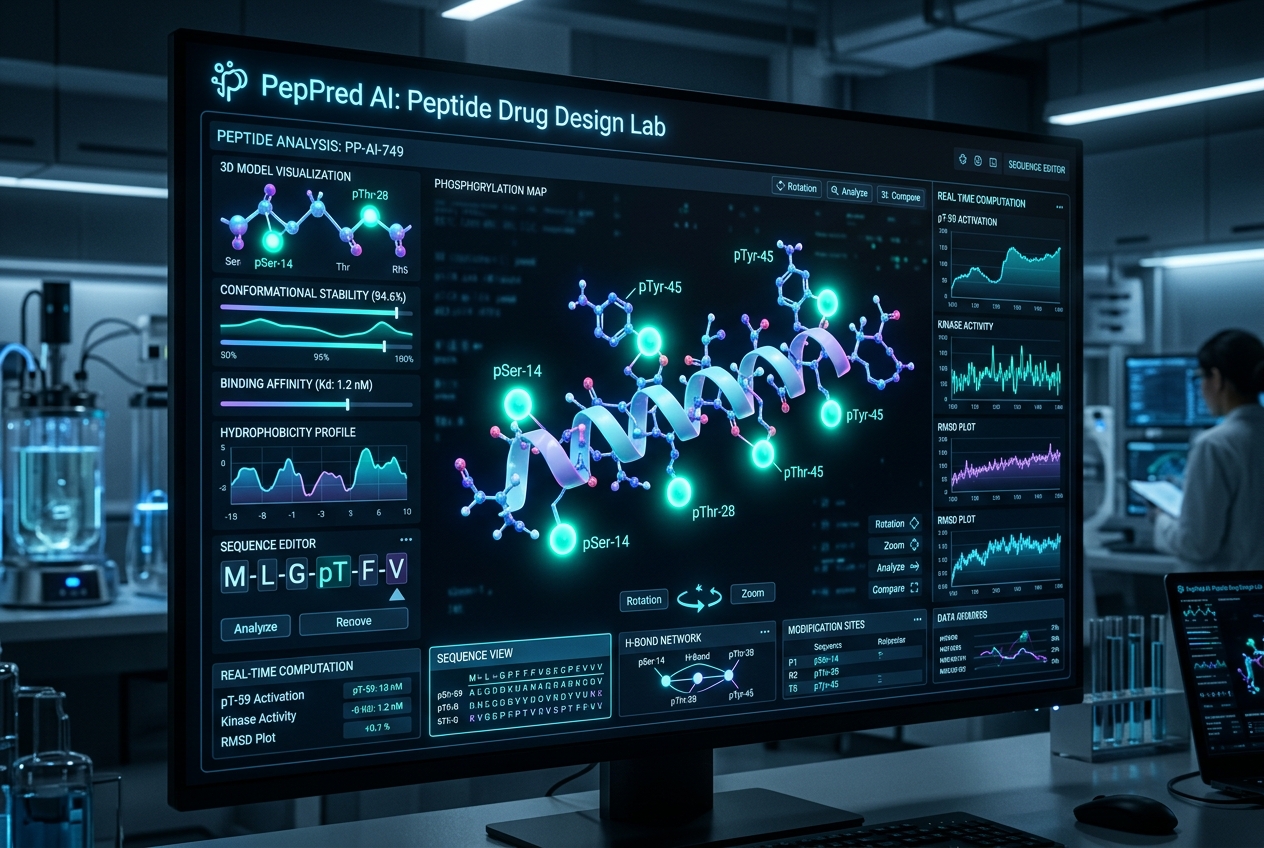
PepPred AI — an interactive peptide drug design lab predicting kinase phosphorylation targets from raw amino acid sequences.
-
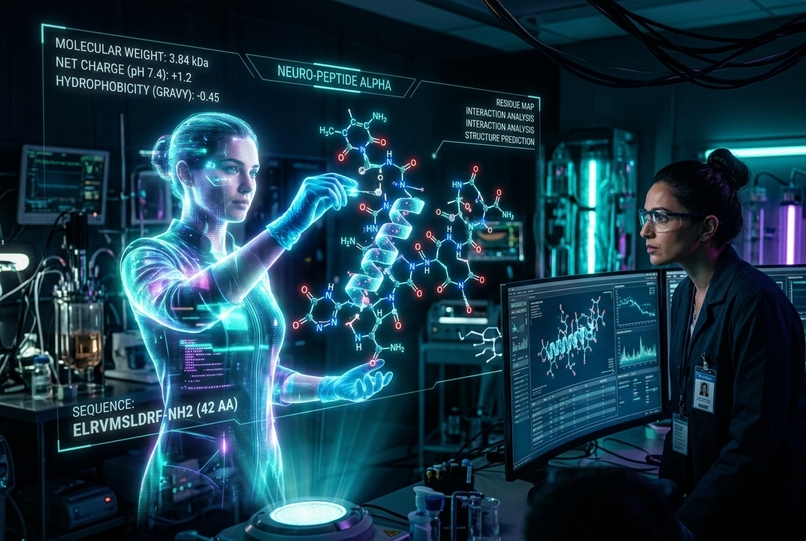
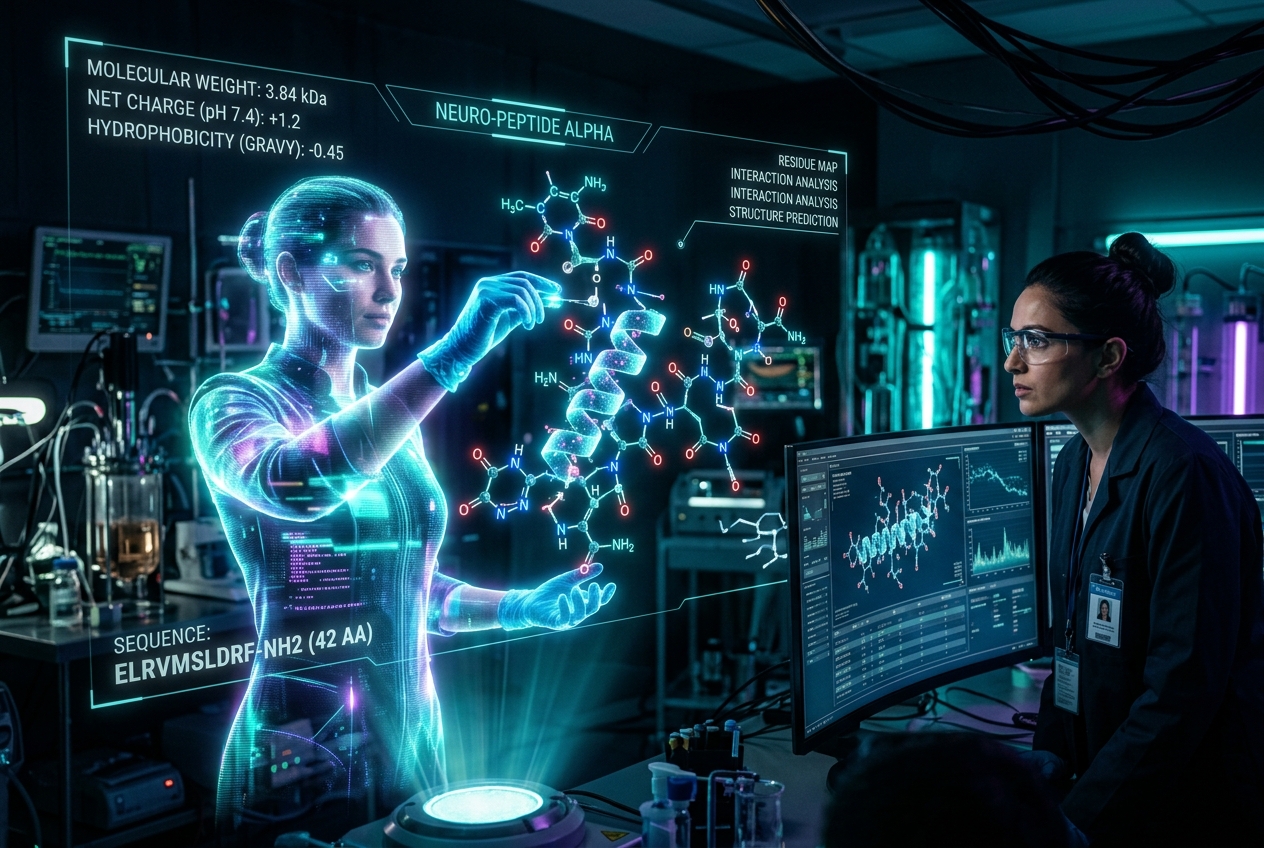
Dr. Qwen AI Pharmacologist analyzing peptide molecular properties and generating clinical drug design reports.
Inspiration
Protein kinases are among the most important drug targets in modern medicine — over 50 FDA-approved cancer drugs target kinase activity. However, identifying which peptide sequences are genuine kinase substrates traditionally requires costly in vitro phosphorylation assays. We wanted to build a tool that bridges data science and clinical pharmacology, making peptide drug screening accessible to anyone with an internet connection.
How We Built It
PepPred AI runs entirely on free CPU resources in Google Colab. The pipeline has four stages:
Peptide Dataset Simulation: We generated 200 synthetic 9-mer peptide sequences encoding real kinase consensus motifs — PKA (
[R/K]-[R/K]-X-[S/T]), PKC, and Protein Tyrosine Kinase patterns.Biochemical Feature Engineering: Each raw amino acid string is converted into 12 numerical features using established biophysical scales:
$$ H_{avg} = \frac{1}{n} \sum_{i=1}^{n} H_{KD}(a_i) $$
where \( H_{KD} \) is the Kyte-Doolittle hydrophobicity index for each residue. We also compute molecular weight, net charge at physiological pH, and polar/basic/acidic residue ratios.
- Machine Learning Classification: A Random Forest classifier trained on these features achieves 97.5% accuracy and an ROC-AUC of 0.999, with kinase motif flags ranking as the most predictive features.
# Extract features and predict phosphorylation
features = extract_biochemical_features("RRRASFFAA")
prediction = model.predict(pd.DataFrame([features]))
Built With
- bioinformatics
- biomarkers
- cancer-research
- google-colab
- gradio
- huggingface-api
- llm
- machine-learning
- matplotlib
- numpy
- pandas
- python
- qwen-2.5
- scikit-learn
- scipy
- seaborn
- sikit-learn
- statistics

Log in or sign up for Devpost to join the conversation.