

Inspiration
We originally wanted to use quantum computing to find the best combination of existing peptides. But as we worked on it, we realized that choosing from a small list was something classical computers could already do really well. It felt like we were adding quantum computing just for the sake of it. That pushed us toward a more interesting question: what if we used quantum optimization to design the peptide sequences themselves instead of just choosing between existing ones?
What it does
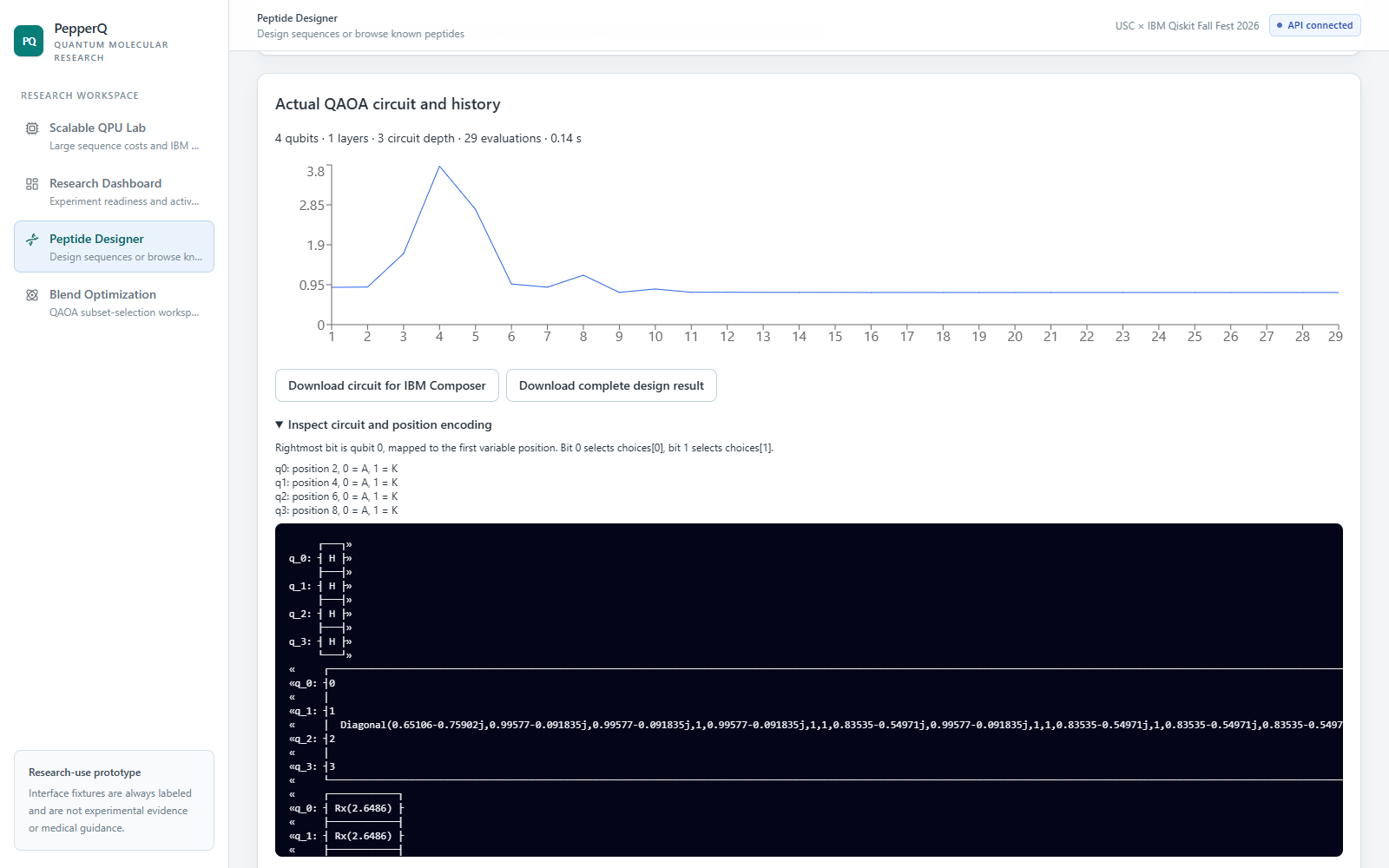
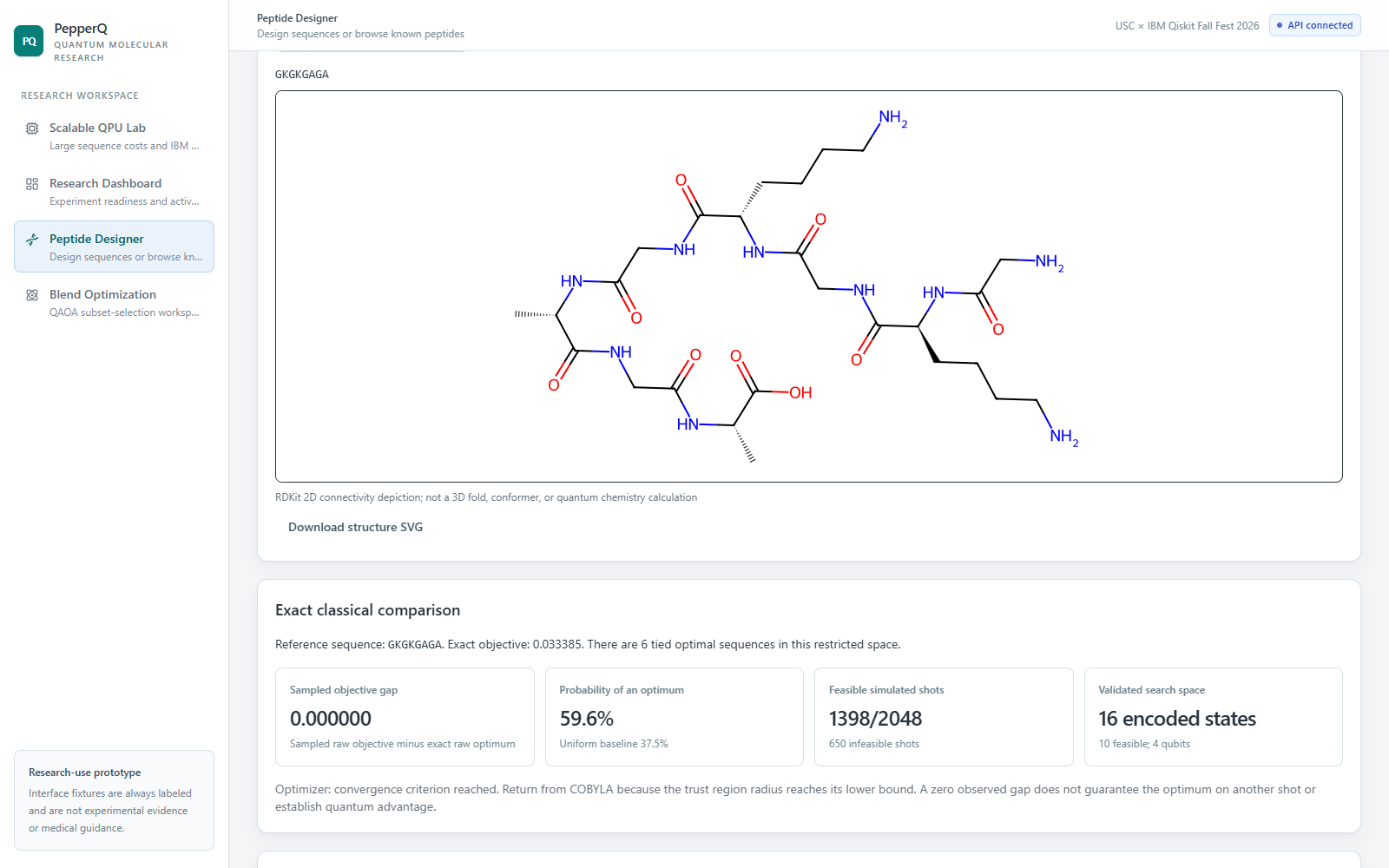
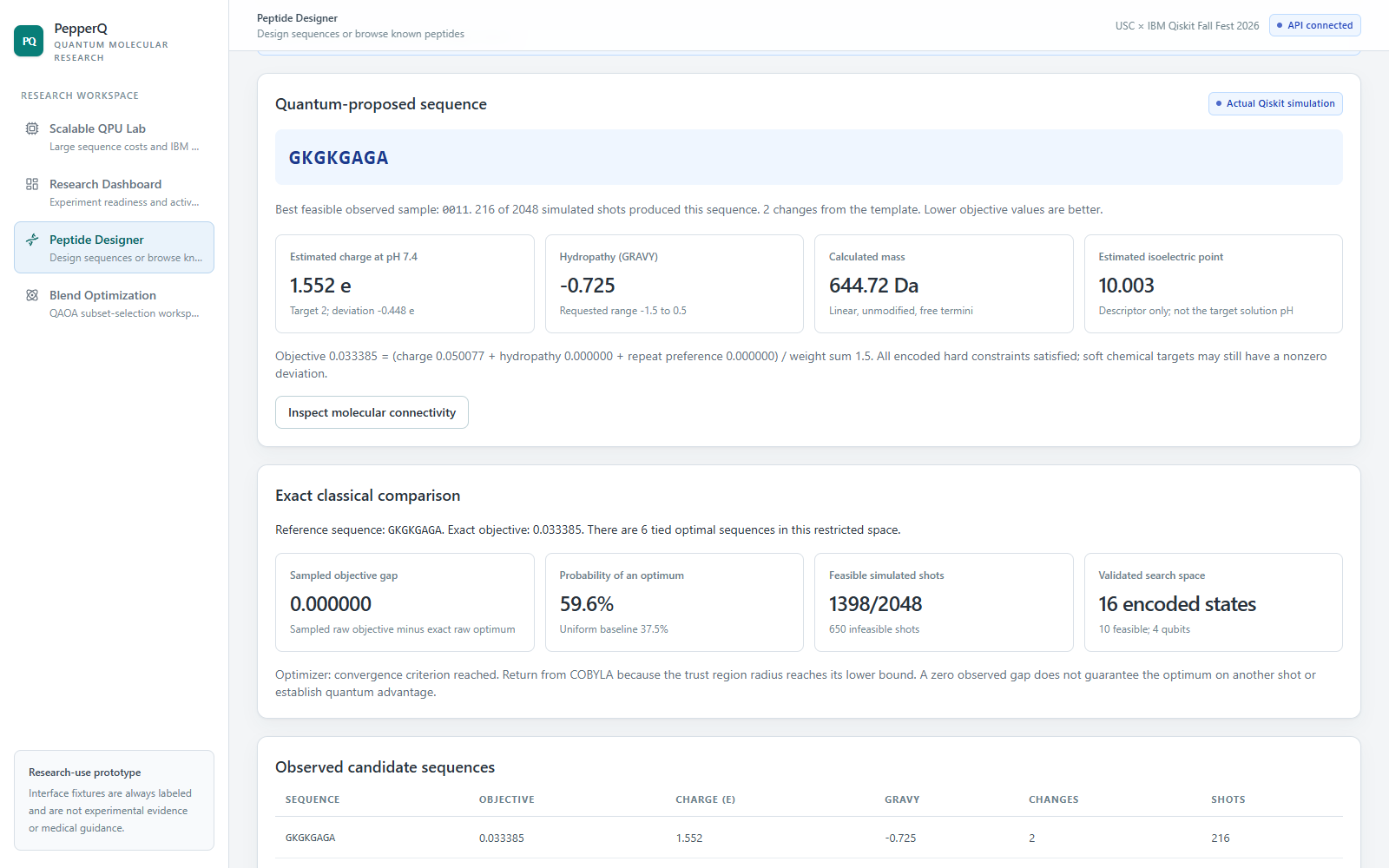
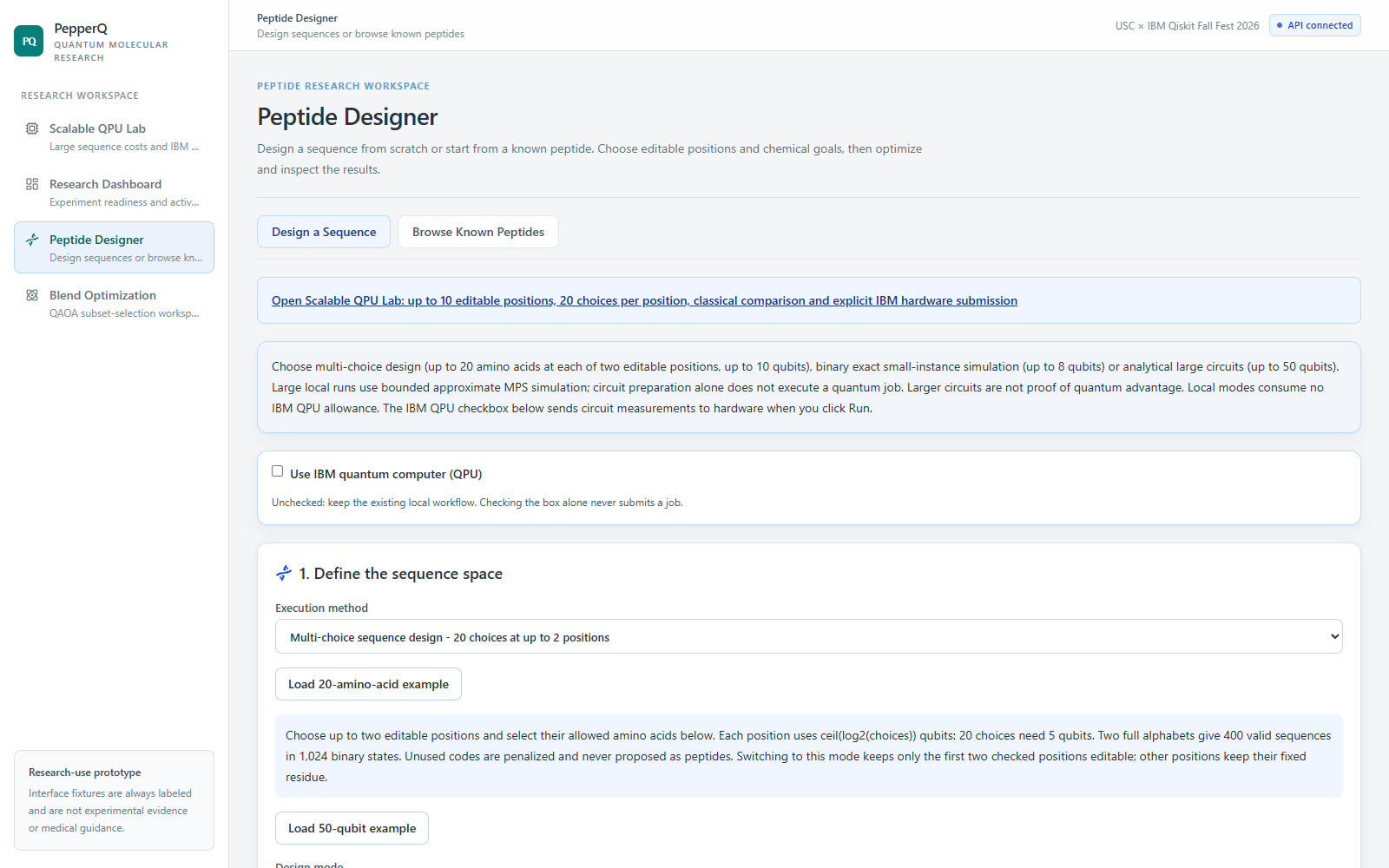
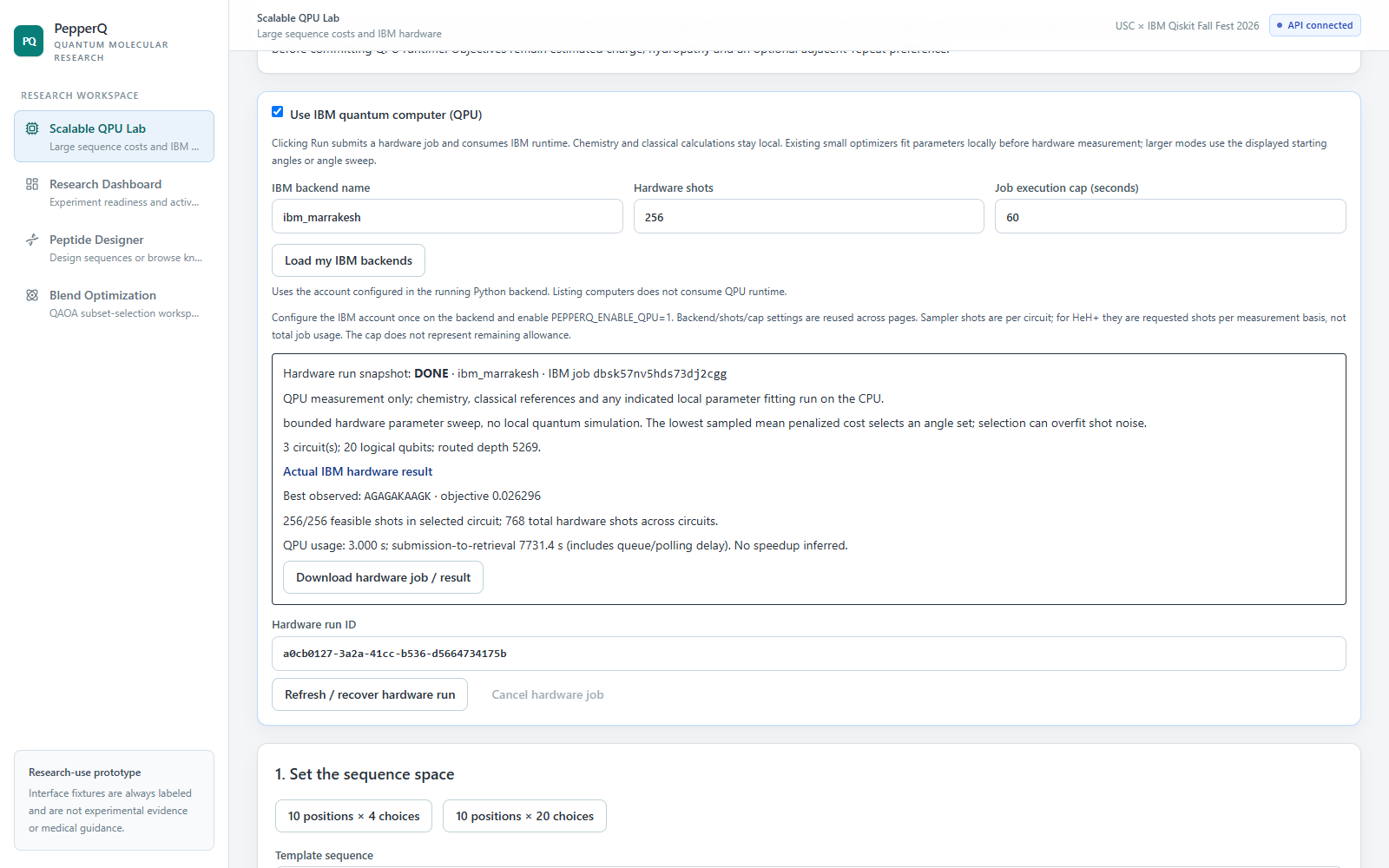
PepperQ helps researchers explore new peptide sequences using quantum optimization. Users can choose amino acids, set constraints, and target properties like charge and hydrophobicity. The platform uses QAOA to search for promising sequences and compares its results against classical optimization. It also lets users explore the generated sequences, their chemical properties, and the quantum circuits behind the process.
How we built it
We built the frontend with React and TypeScript and the backend with Python. We used Qiskit to implement QAOA and created mathematical scoring functions based on peptide properties. We started with smaller problems that we could verify using exact classical calculations, then expanded toward larger sequence spaces with more amino-acid choices. We also built classical benchmarks so we could actually measure how well our quantum approach performed instead of just assuming it was better.
Challenges we ran into
Our biggest challenge was figuring out where quantum computing actually made sense. Our original peptide-blending idea was too easy for classical optimization, so we ended up changing a major part of the project. Turning chemical properties and amino-acid constraints into something a quantum circuit could optimize was also harder than we expected. As we scaled up, simulation time and circuit complexity became real issues. We also found that classical methods sometimes performed better than QAOA, which forced us to rethink how we evaluated our results. We learned that building a quantum algorithm is one thing, but proving that it's useful is a completely different challenge.
Accomplishments that we're proud of
We came into this hackathon with little knowledge of quantum computing. We can confidently say we learnt A LOT. Although we didn't master it by any means, we leveraged AI to increase our understanding and build a strong basis for future participation in the field of quantum computing. We built a frontend and backend, combining knowledge we already had and recently learnt.
What we learned
We learned what quantum computing is, especially regarding differences from regular computers. A supercomputer thinks linearly, exploring each option individually. On the other hand, a supercomputer almost mimics physics. It's like pouring water into a maze and seeing where it comes out. With this in mind, we learnt that a quantum computer is not simply better due to the speed of calculations for any given question. Our original idea revealed that a quantum computer worked slower than a regular computer, and that led us down a path exploring why and how we could alter our exploration so a quantum computer could excel.
What's next for PepperQ Quantum Chemistry
As the field of peptides grows, we hope to accelerate research within this field. This would allow many current peptides, but also future ones, to become approved as a result of increased understanding.

