
Inspiration
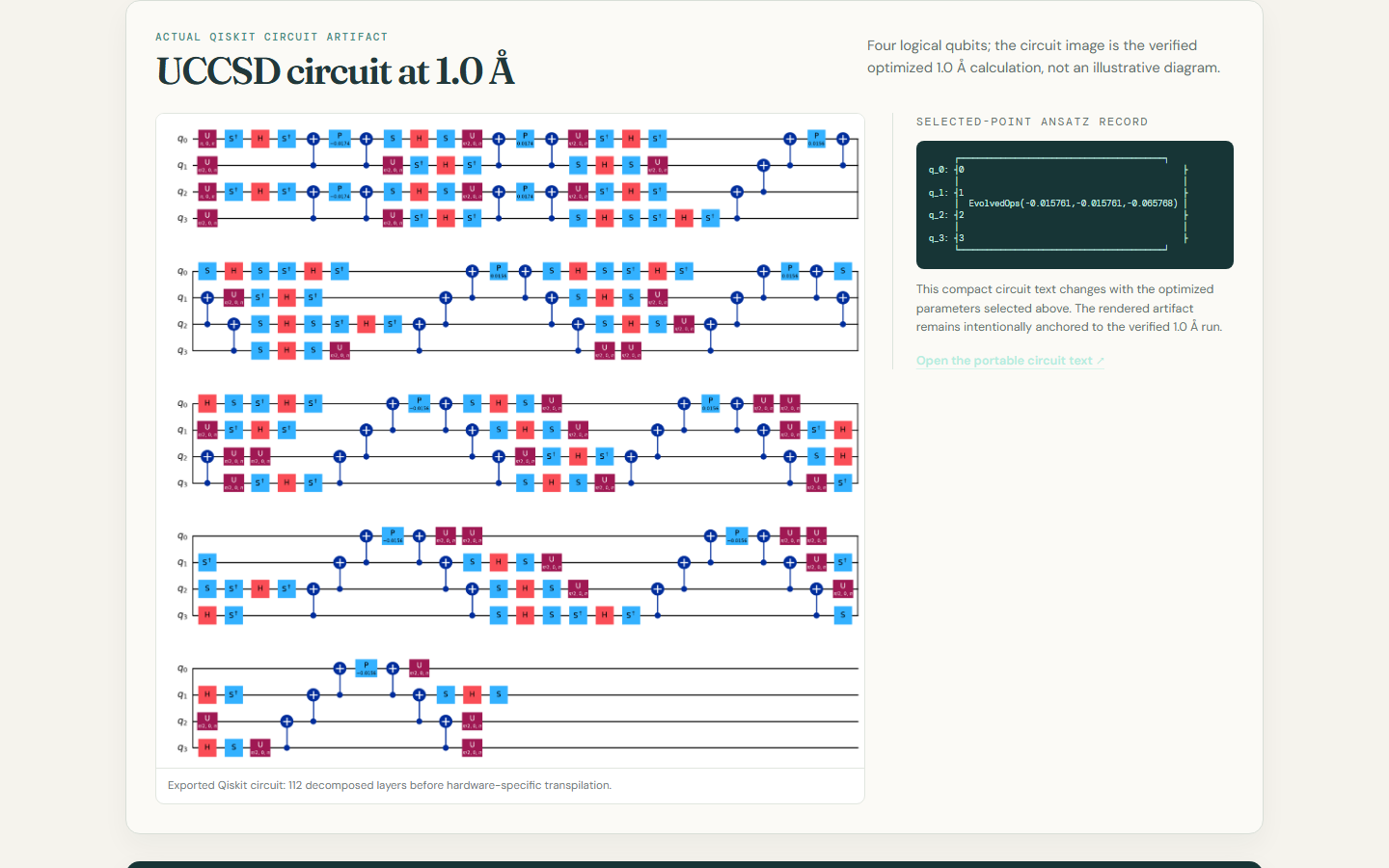
Sure, a number could be significant, especially in determining a molecule's energy. But this is often static and tells only part of the story. We wanted to connect the circuit to a molecule and an energy curve, allowing us to actually understand how changing the bond distance affects energy.
What it does
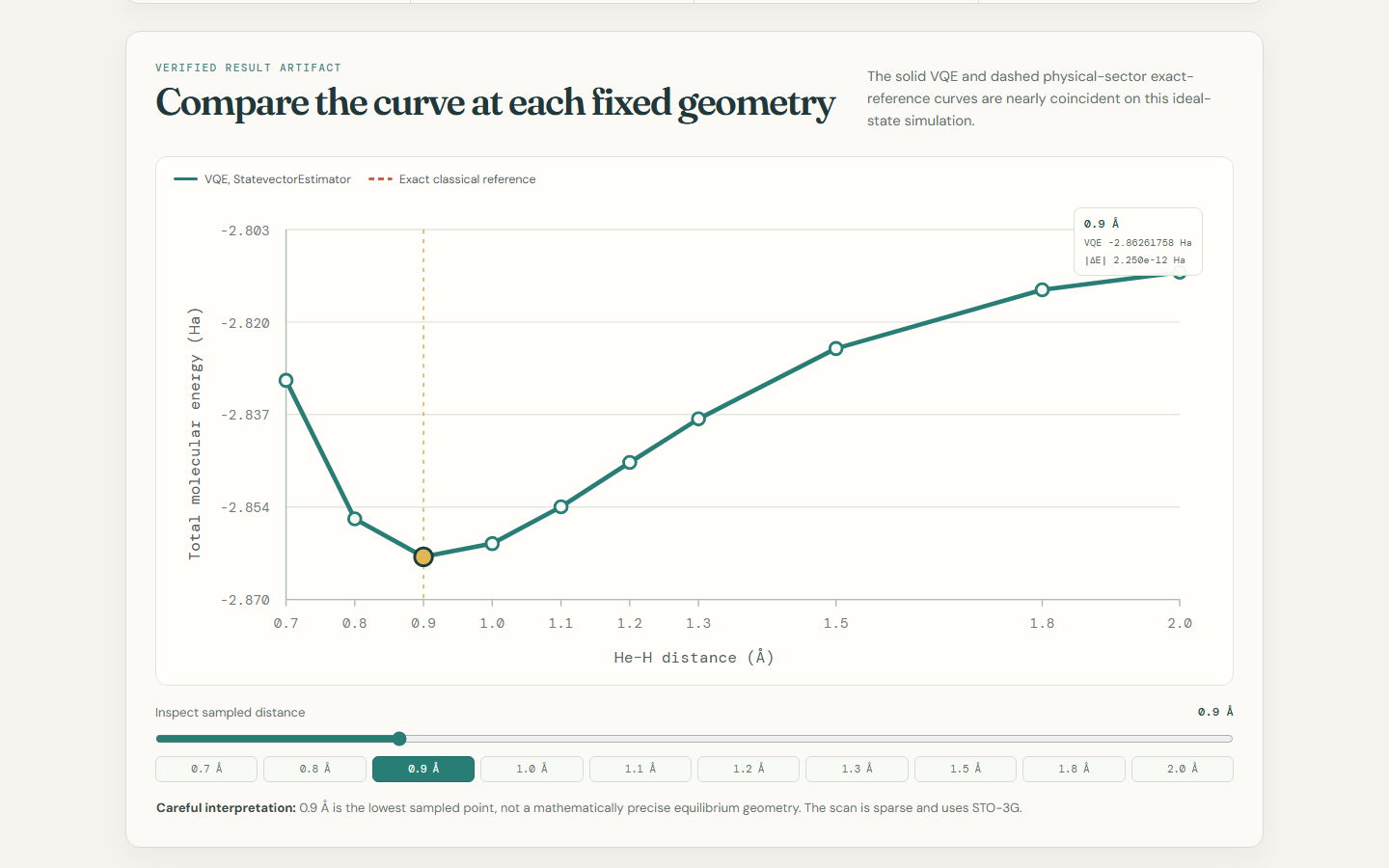
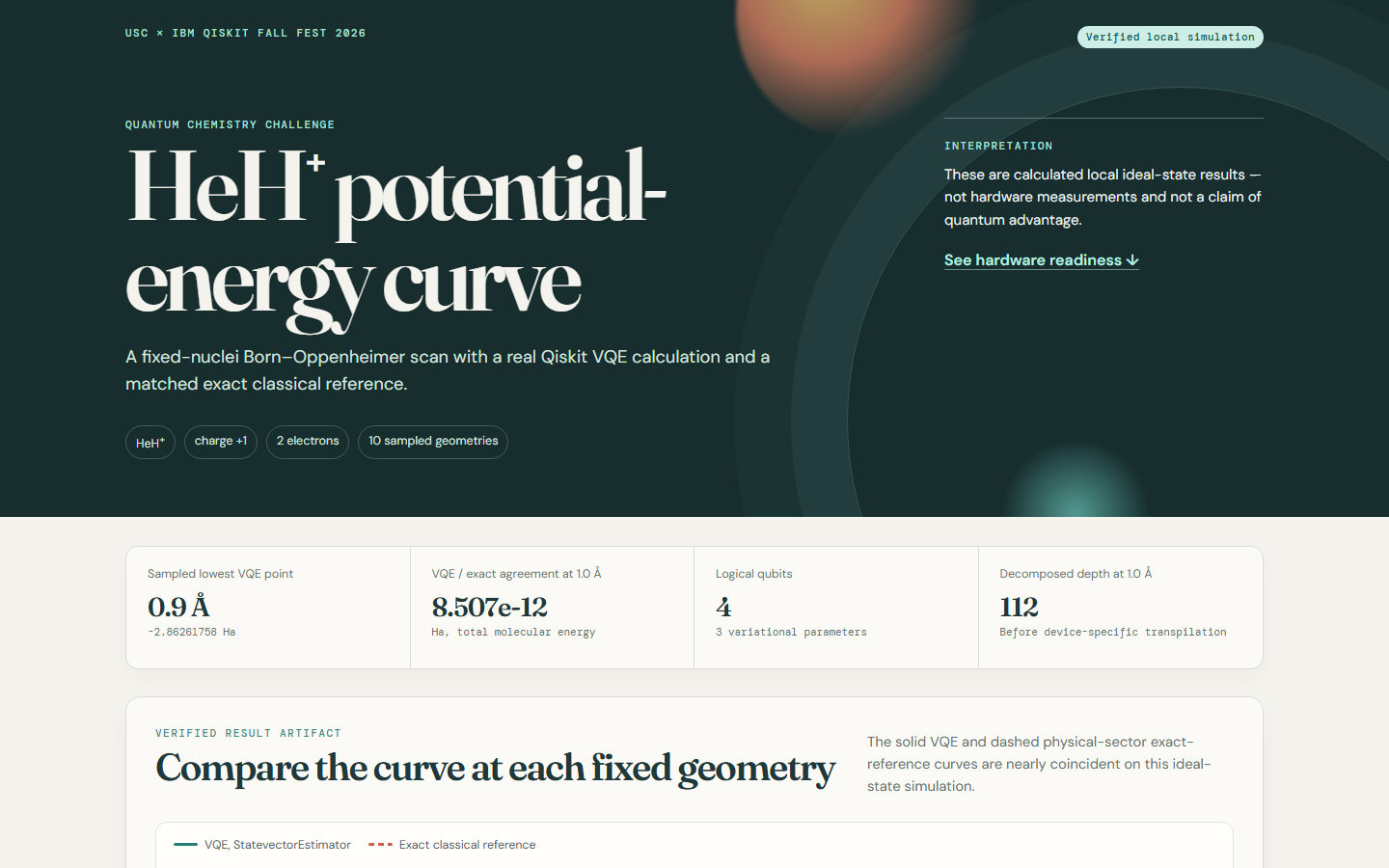
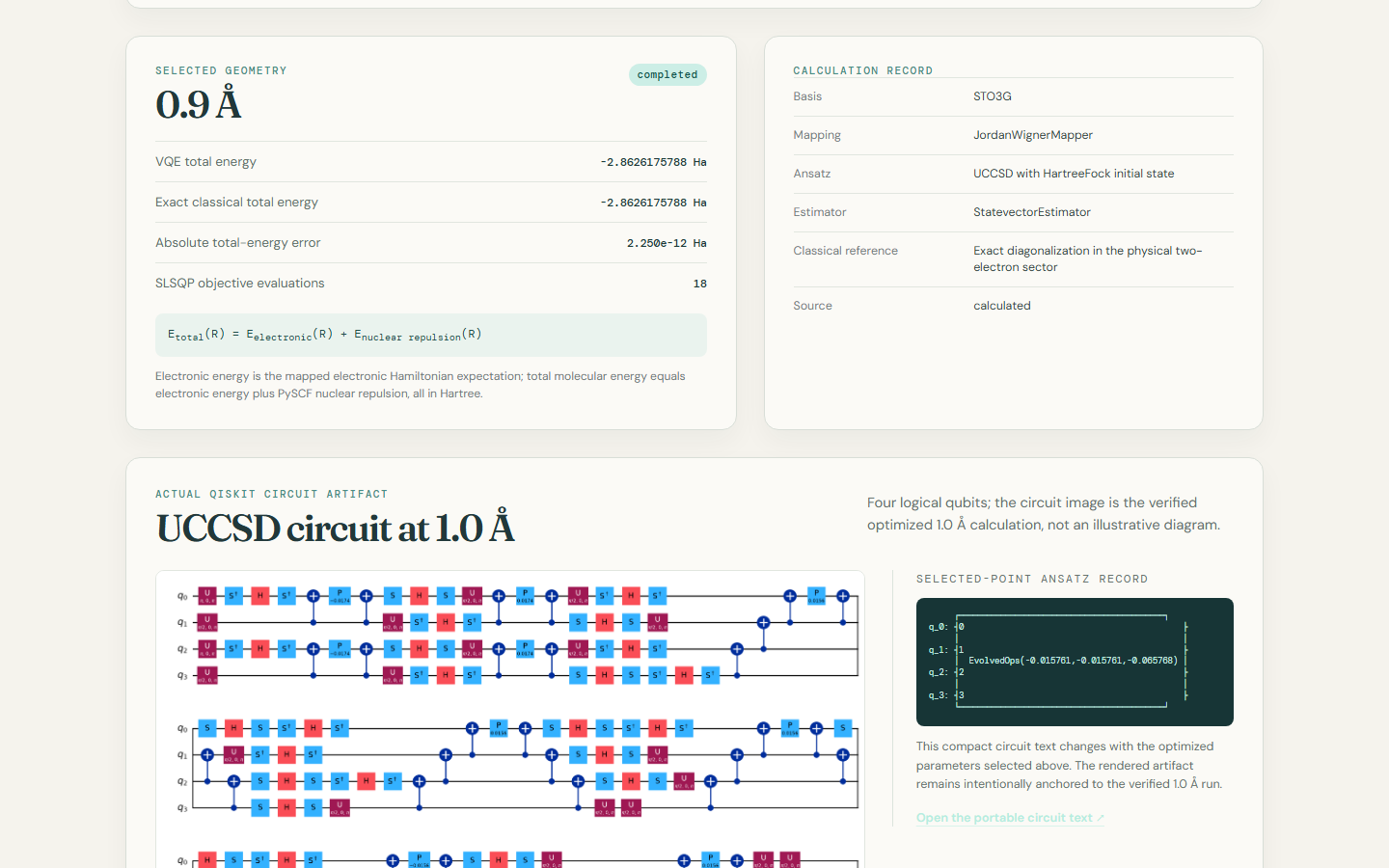
PepperQ’s Quantum Chemistry page displays a ten-point potential-energy curve for helium hydride. It compares Variational Quantum Eigensolver (VQE) simulation results with an exact classical reference and shows the circuit and calculation methods. A separate sequence-design section uses QAOA to propose peptide sequences under researcher-defined chemical and positional constraints.
How we built it
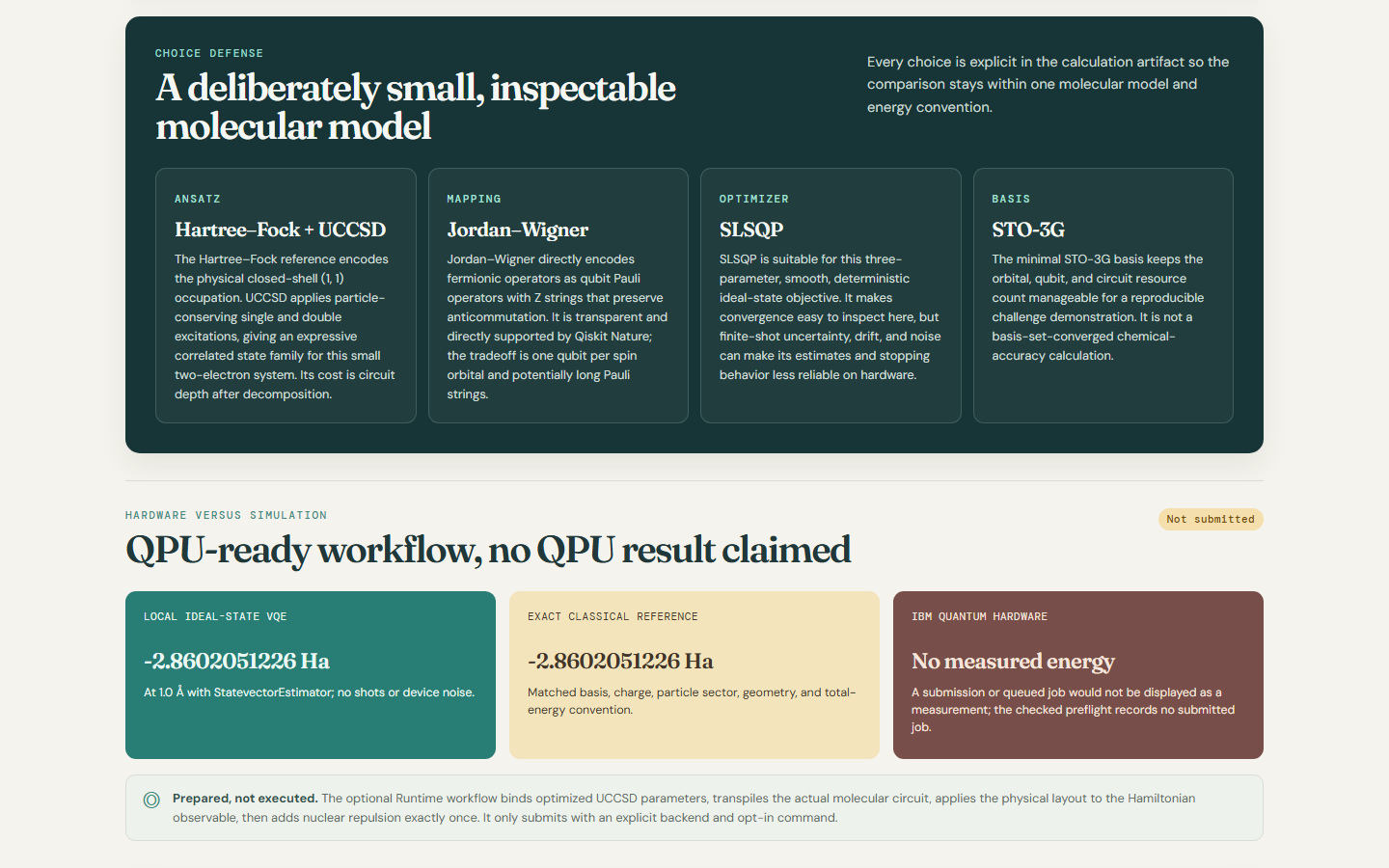
We built our project using Python, Qiskit, and Qiskit Nature to simulate the HeH⁺ molecule on a quantum computer. First, we used PySCF to model the molecule and calculate its Hamiltonian. Then we used the Jordan-Wigner mapping to turn it into something a quantum circuit could work with. We used the VQE algorithm with a UCCSD circuit and the SLSQP optimizer to estimate the molecule's energy at different bond lengths. We compared those results with exact classical calculations to check our accuracy. Finally, we plotted the energy curve and built a separate dashboard to display the results and explain our choices.
Challenges we ran into
The hardest part for us was figuring out how to turn the HeH molecule into something we could actually run in a quantum circuit. Also, we had to make sure energy calculations were correct, just because we got a result doesn't mean that it's accurate. Another big challenge that we faced was figuring out how our simulation would work with a real IBM quantum computer. Especially with the noise and circuit limitations.
Accomplishments that we're proud of
We came into this hackathon with little knowledge of quantum computing. We can confidently say we learnt A LOT. Although we didn't master it by any means, we leveraged AI to increase our understanding and build a strong basis for future participation in the field of quantum computing. We built a frontend and backend, combining knowledge we already had and recently learnt.
What we learned
We learned what quantum computing is, especially regarding differences from regular computers. A supercomputer thinks linearly, exploring each option individually. On the other hand, a supercomputer almost mimics physics. It's like pouring water into a maze and seeing where it comes out. With this in mind, we learnt that a quantum computer is not simply better due to the speed of calculations for any given question. Our original idea revealed that a quantum computer worked slower than a regular computer, and that led us down a path exploring why and how we could alter our exploration so a quantum computer could excel.
What's next for PepperQ Quantum Chemistry
As the field of peptides grows, we hope to accelerate research within this field. This would allow many current peptides, but also future ones, to become approved as a result of increased understanding.
