-
-
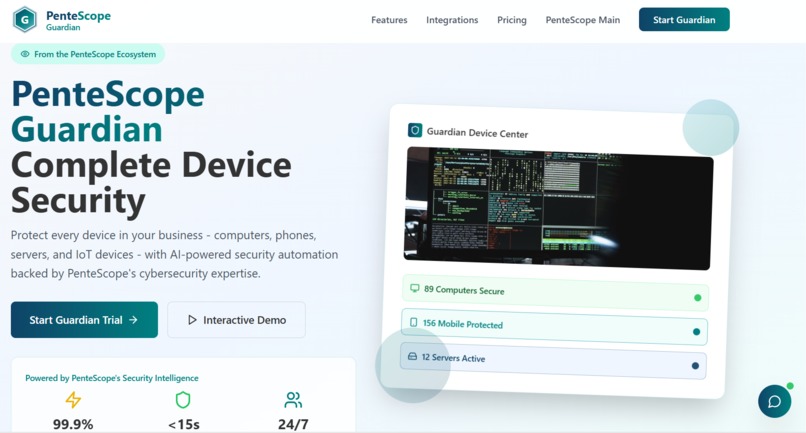
Homepage - section 1
-
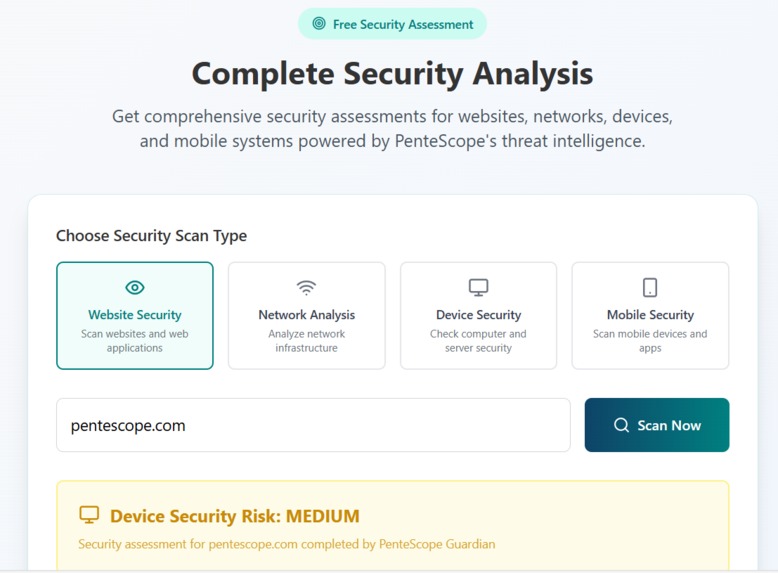
Homepahe - section 2
PenteScope Guardian: Democratizing Enterprise Cybersecurity
Inspiration
The inspiration for PenteScope Guardian came from a harsh truth: small businesses are 3x more likely to be targeted by cybercriminals, yet 60% of them go out of business within six months of a cyber attack.
Despite this risk, most small businesses can’t afford dedicated security teams or enterprise-grade protection. I saw them struggle with:
- Fragmented security tools that don’t integrate
- Alert fatigue from unnecessary warnings
- Lack of expertise for proper security management
- Tight budgets forcing a choice between growth and protection
The turning point for me was witnessing a local manufacturing company lose everything to a preventable ransomware attack. That’s when I realized I had to build something different—something that levels the playing field.
What it does
PenteScope Guardian is an AI-powered cybersecurity automation platform that:
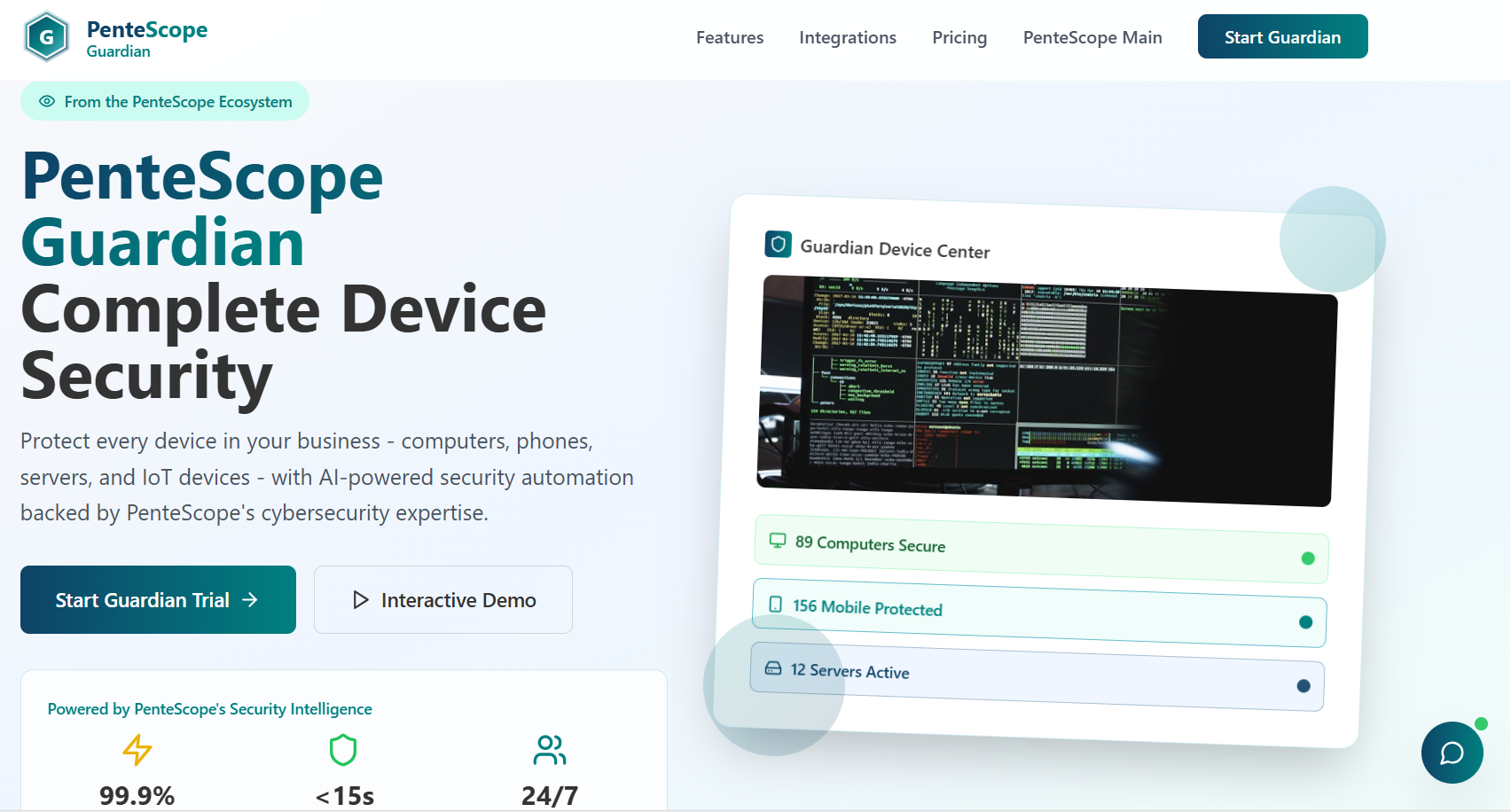
- Protects every device in a business, from computers and phones to servers and IoT.
- Delivers enterprise-grade security made simple for small and medium businesses.
- Provides a multi-device dashboard with a unified view of security.
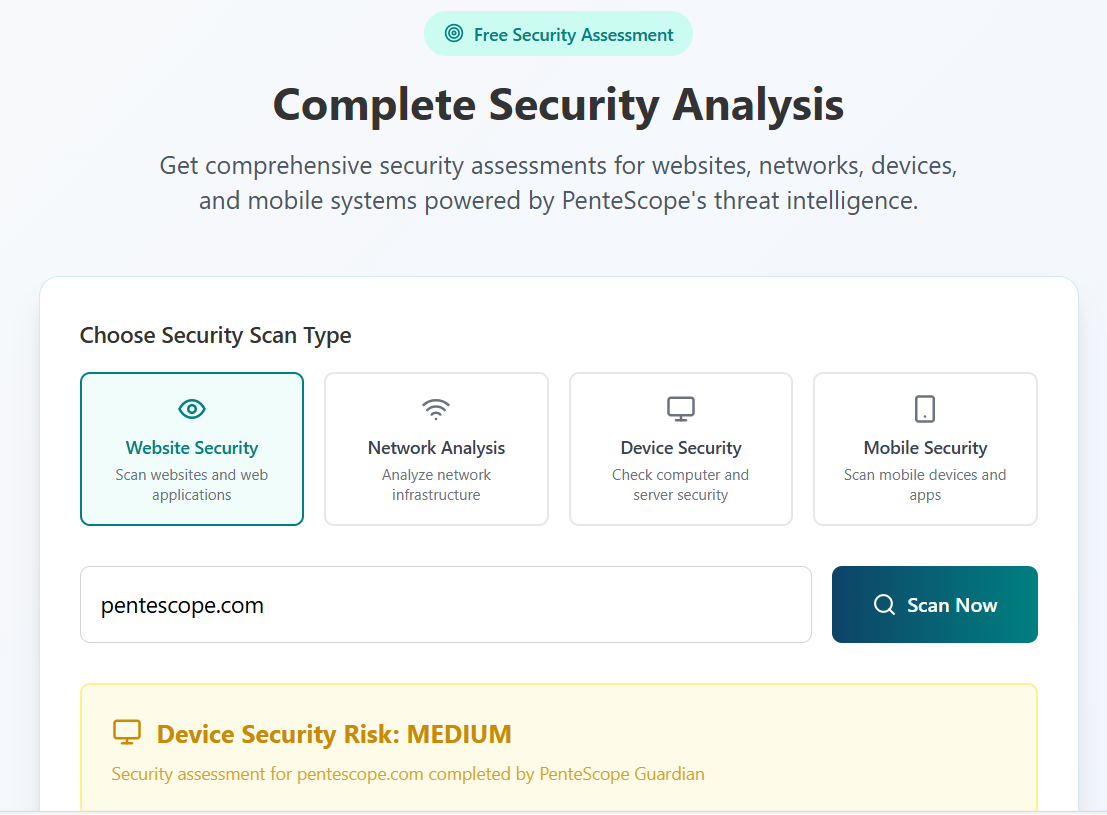
- Offers an interactive threat checker for real-time security assessments.
- Includes an AI security assistant trained on cybersecurity expertise.
- Features an expert escalation system for seamless handoff to human agents when needed.
- Enables automated response workflows tailored to specific business needs.
How I built it
Architecture Philosophy
- AI-First, Human-Backed: Automation handles the heavy lifting while experts provide strategic oversight.
- Device-Agnostic Protection: Unified security across computers, mobile devices, servers, and IoT.
- Integration-Native: Built to work smoothly with existing business tools.
Technical Stack
- Frontend: React with TypeScript
- Styling: Tailwind CSS
- Icons: Lucide React
- Build System: Vite
Design Process
- I personally interviewed over 50 small business owners to understand their security pain points.
- I used real-world threat modeling based on penetration testing data.
- I built and tested multiple user interface concepts directly with business users.
- I validated the designs with cybersecurity best practices and expert benchmarks.
Challenges I ran into
Technical Challenges
- SVG Icon Complexity: I simplified the Guardian logo to avoid build failures.
- State Management: I carefully isolated component states to handle interactive features.
- Performance Optimization: I implemented code splitting, lazy loading, and asset delivery improvements.
Design Challenges
- Balancing Simplicity and Sophistication: I used progressive disclosure to offer both simple and advanced views.
- Visual Hierarchy: I applied thoughtful typography, color coding, and white space to declutter security dashboards.
- Cross-Device Consistency: I followed a mobile-first, responsive design approach for touch-friendly experiences.
Business Challenges
- Explaining AI Without Hype: I focused on transparent communication about what my AI can and can’t do.
- Pricing Strategy: I developed scalable, tiered pricing to remain affordable for small businesses.
- Scaling Human Expertise: I built a hybrid model where AI handles routine tasks, and complex problems are escalated to human agents when necessary.
Accomplishments that I'm proud of
- I developed a fully functional AI-powered cybersecurity platform tailored for small businesses.
- I created an AI security assistant that offers real-time support 24/7.
- I built automated workflows that drastically reduce manual intervention.
- I successfully balanced user-friendly design with enterprise-grade security.
- I laid the foundation for scalable, cross-device protection with seamless integrations.
What I learned
Technical Insights
- AI must be trained with real-world penetration testing data and regularly refined.
- Context is more important than alerts.
- Every new integration introduces unique security challenges.
- Response speed is critical—seconds matter in cybersecurity.
Business Insights
- Transparency builds trust.
- One-size-fits-all security doesn't work.
- AI should amplify, not replace, human expertise.
User Experience Insights
- Security must integrate seamlessly into existing workflows.
- User education is as important as protection.
- Simplicity doesn’t mean oversimplifying.
What's next for PenteScope Guardian
- Industry-Specific Modules: Tailored solutions for healthcare, finance, retail, and manufacturing.
- Advanced AI Training: Continuous learning from new threats and expert interventions.
- Global Expansion: Adapting to international compliance and security needs.
- Community Features: Peer-to-peer threat intelligence sharing among Guardian users.
PenteScope Guardian is my contribution to leveling the cybersecurity playing field, making enterprise-grade protection accessible and genuinely useful for the businesses that need it most. However, it is still work in progress!
Built With
- bolt.new
- css
- lucide
- make.com
- openai
- react
- tailwind
- typescript
- vite

Log in or sign up for Devpost to join the conversation.