-
-
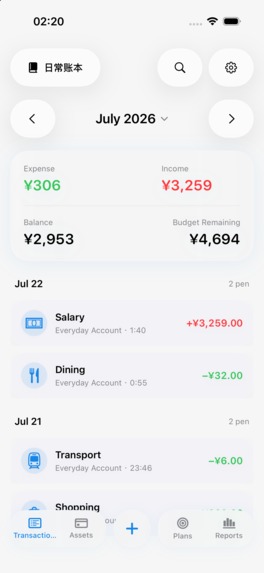
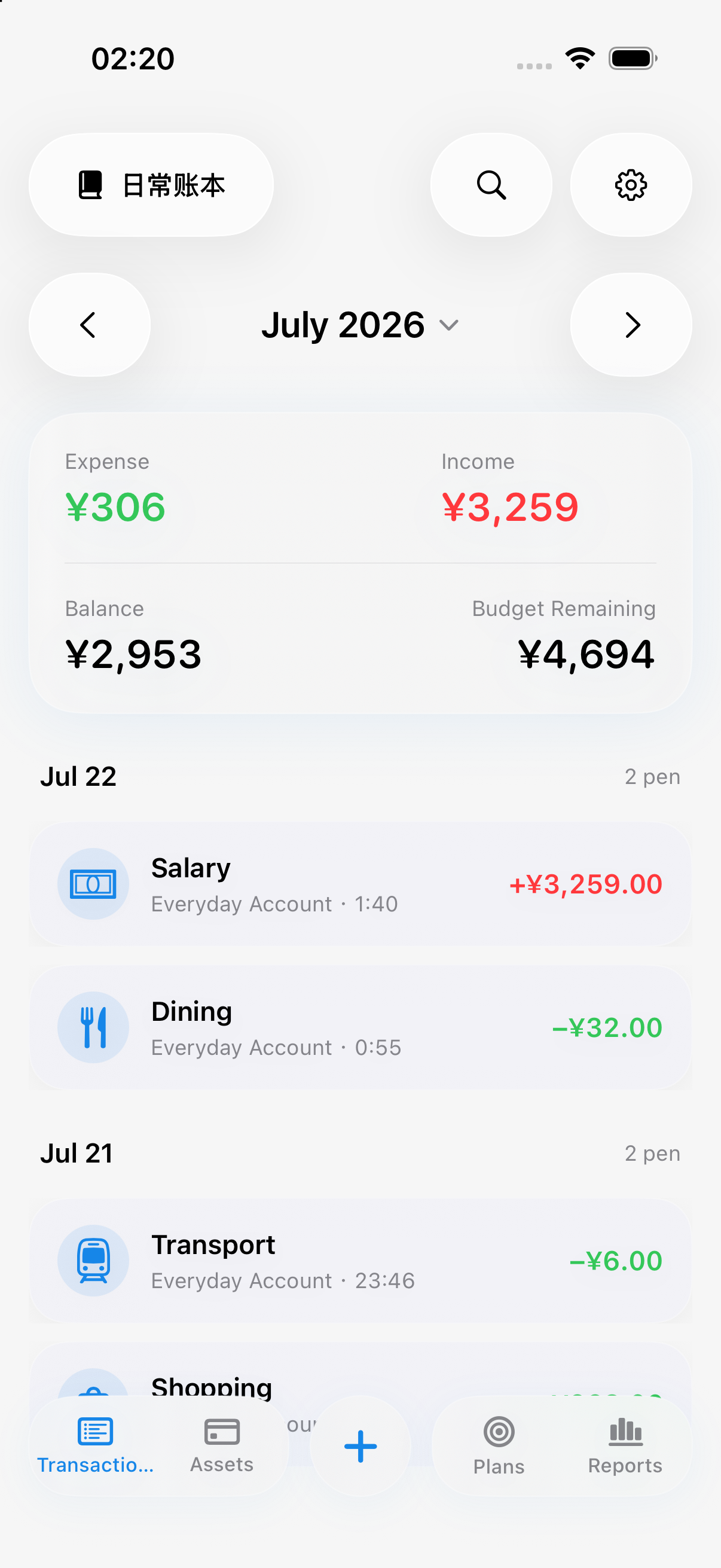
Transactions Home
-
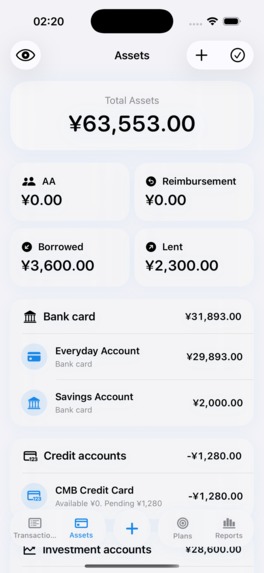
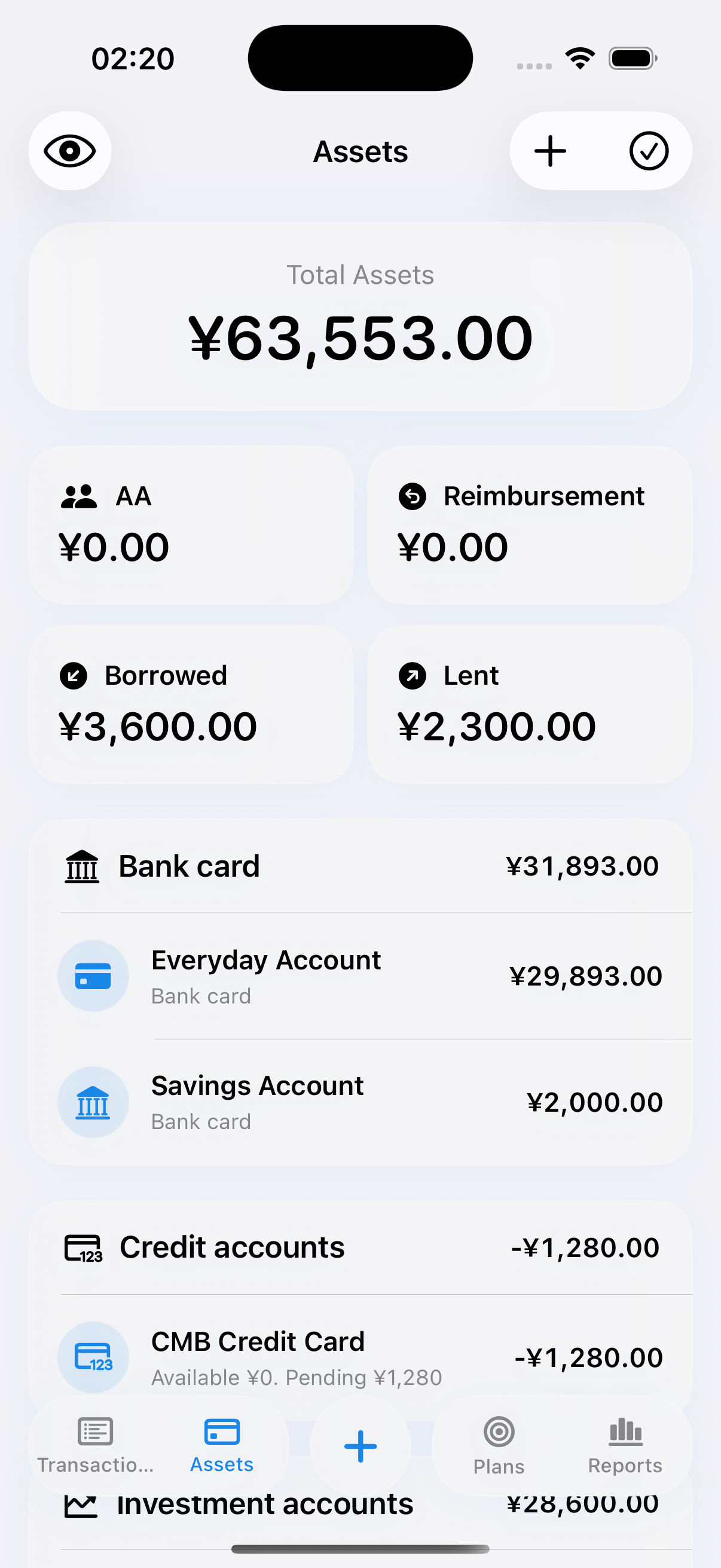
Assets Overview
-
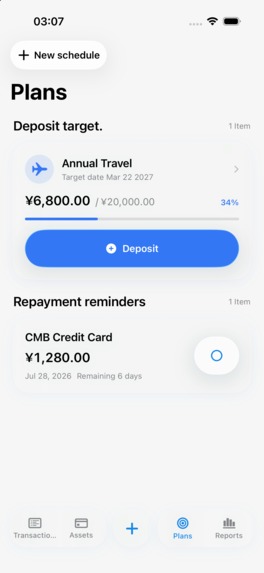
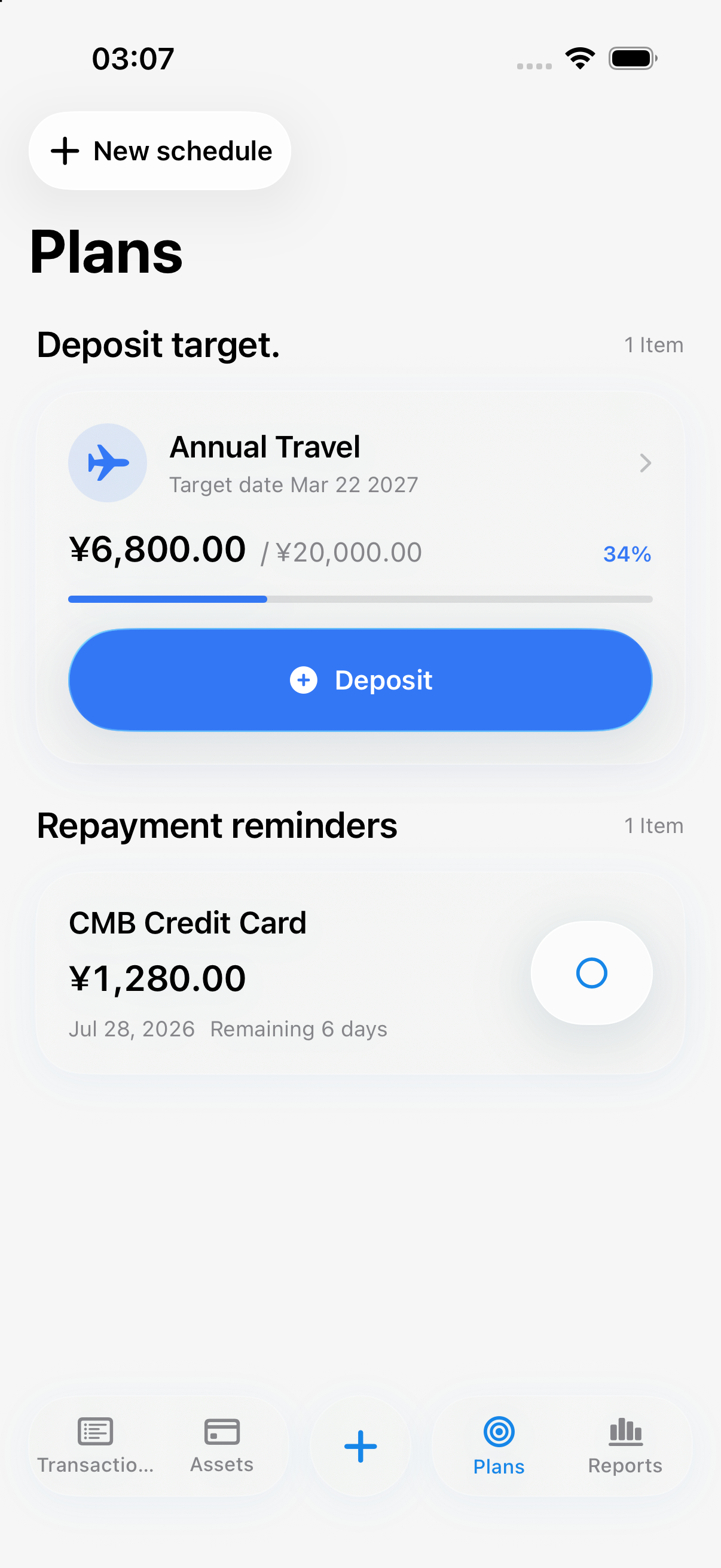
Savings Goals and Replacement Reminders
-
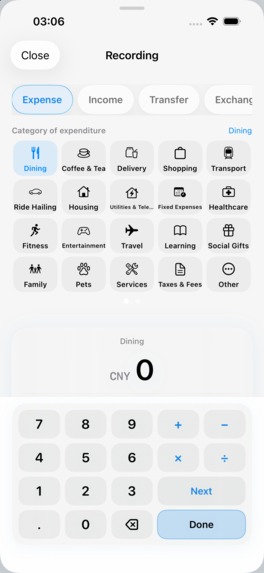
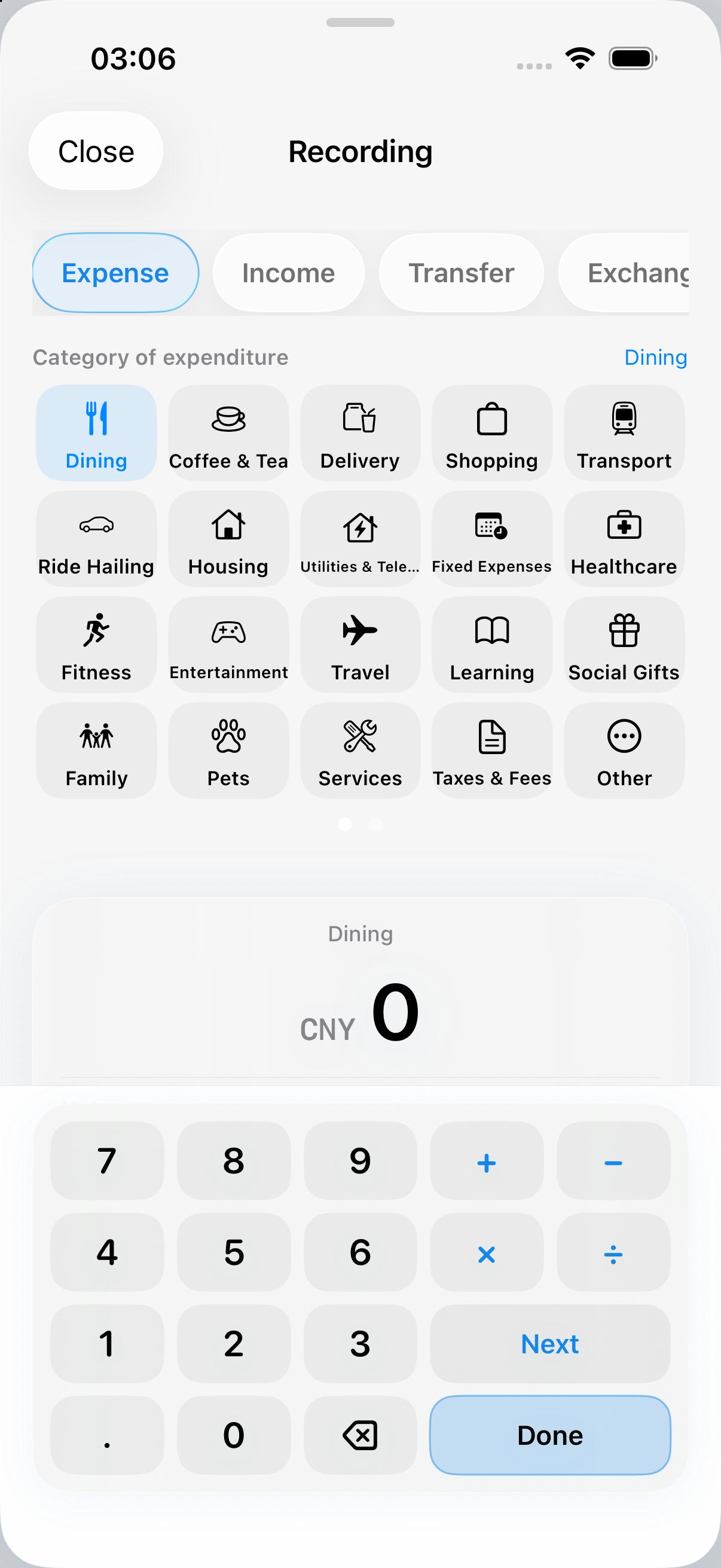
Expense Recording
-
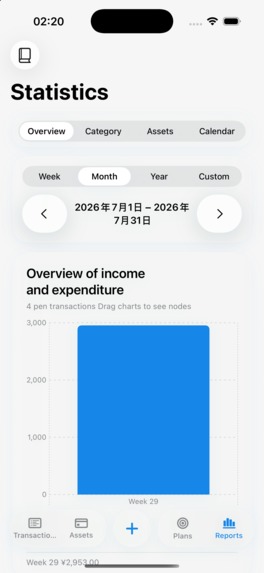
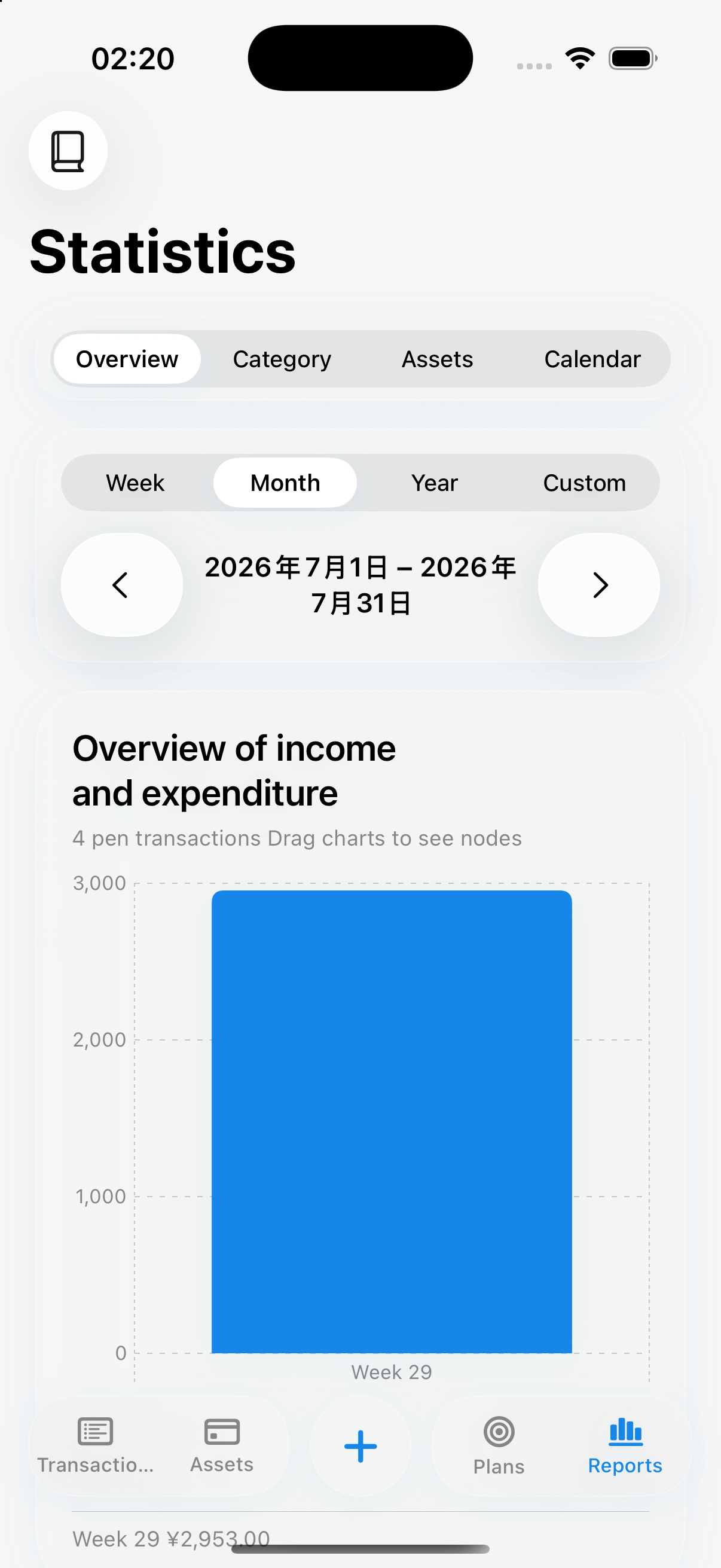
Statistics and Reports
Inspiration
The inspiration for Pensona came from my long-standing habit of tracking my daily finances. I started recording my income and expenses in high school and continued doing so throughout university and for two years after graduation. This habit has now been part of my life for nearly ten years.
Over that period, I used three different personal finance apps, but I was never able to find one that fully matched my needs. For example, the app I currently use does not allow multiple currency balances to be managed under the same bank account. For users who travel, live internationally, or hold assets in different currencies, this creates a gap between their real financial structure and the information recorded in the app.
After conducting further research with GPT-5.6, I still could not find an existing product that fully supported this use case. That encouraged me to develop my own personal finance app: Pensona.
What it does
Pensona is an iOS app designed for personal expense tracking and asset management. It allows users to record daily income and expenses while also providing a clearer overview of their accounts, liabilities, budgets, and financial activity.
Its core features include:
- Daily income and expense tracking
- Cash and bank account management
- Credit account and liability management
- Monthly budget planning
- Financial statistics and data visualization
- Multi-currency balances within a single bank account
Unlike many traditional budgeting apps, Pensona is designed to support multiple currencies under the same account. For example, one bank account may contain balances in Chinese yuan, Australian dollars, US dollars, or other currencies without requiring the user to create several duplicate accounts.
Pensona also structures asset calculations around the fundamental accounting equation:
$$ \text{Assets} = \text{Liabilities} + \text{Owner's Equity} $$
This calculation is handled in the background so that users can view their total assets, liabilities, and net financial position without needing to understand the underlying accounting process.
How we built it
Although Pensona is an independently led project, the word “we” in this story refers to the collaboration between me and GPT throughout the development process.
I was fortunate to use the latest 5.6 Sol model during this stage of development, which saved me a significant amount of time and changed the way I worked with AI-assisted development tools.
Previously, I often needed to invoke different skills manually, especially workflow-oriented tools such as the Superpower skill. With 5.6 Sol, I instead asked the model to guide the project through a structured question-and-answer process.
Through approximately 110 rounds of conversation, we clarified the product requirements, account structure, page logic, technical decisions, and core architecture of Pensona. This allowed the project to develop gradually rather than relying on one extremely long and complex prompt.
For the interface, I initially attempted to design each screen entirely through written prompts. Later, I created the layouts and visual direction in Figma before providing the designs and implementation requirements to Codex. Codex then translated those ideas into working application code, while I reviewed the results and continued refining them through additional prompts.
Challenges we ran into
The greatest challenge we encountered during the development of Pensona was UI design.
Compared with defining the application’s functionality, UI design depends much more heavily on visual judgment, aesthetic consistency, and attention to detail. A feature can work correctly while still feeling visually unbalanced or difficult to use.
To help Codex understand the intended design, I needed to write highly detailed prompts describing elements such as:
- Page structure
- Component dimensions
- Typography hierarchy
- Spacing and alignment
- Colors and visual states
- Interaction behaviour
- Relationships between interface elements
When these instructions were not precise enough, the generated interface could differ significantly from what I had imagined.
We experimented with several design workflows. At first, the interface was generated mainly from text prompts. Later, I designed the screens in Figma and asked Codex to implement them. This gave me greater control over the visual direction, but it also required more time to resolve differences between the design, interaction logic, and final code.
As a result, UI design and repeated visual refinement became the most time-consuming and demanding parts of the project.
Accomplishments that we're proud of
The accomplishment we are most proud of is turning a problem from my own daily life into a functioning iOS application.
Pensona was not created simply to reproduce the features of existing budgeting apps. It was designed around problems I had personally experienced after nearly ten years of tracking my finances. One of its most important concepts is the ability to manage multiple currency balances under the same bank account, allowing the digital account structure to reflect a user’s real financial situation more accurately.
We also completed the main stages of the product development process, including:
- Product ideation
- Requirement definition
- Data and account architecture
- UI and interaction design
- Core feature implementation
- Repeated testing and refinement
Through around 110 rounds of structured conversation, we established the project’s foundational architecture and developed the core systems for expense tracking, asset accounts, credit accounts, and budget management.
Another important accomplishment was converting Figma designs into functional application interfaces. Although the process required many revisions, it demonstrated that a single independent developer can use AI-assisted tools to turn a relatively complete product concept into a working application.
What we learned
Building Pensona taught us that effective AI-assisted development is not simply about writing one large prompt and waiting for a finished product.
Complex projects need to be divided into clear, manageable tasks. Each task should include specific requirements, constraints, and goals that can be reviewed and verified. The quality of the context given to the model directly affects the quality of the result.
I also learned how to use Figma to plan interface structures and communicate visual ideas more precisely. During this process, I developed a deeper understanding of:
- Component hierarchy
- Layout spacing
- Alignment systems
- Interaction feedback
- Information priority
- Consistency across different screens
Most importantly, we learned how to transform a broad personal need into a structured product feature. The original idea—managing several currencies under one bank account—required decisions about account architecture, data storage, calculations, interface presentation, and user experience.
Pensona showed me that product development is not limited to writing code. It also requires research, product judgment, visual design, testing, and continuous iteration.
What's next for Pensona
The next stage of Pensona will focus on improving its multi-currency asset management system and refining how different currencies are displayed and calculated.
We plan to introduce exchange-rate conversion so that users can preserve balances in their original currencies while also viewing their total assets in a selected base currency. In the future, automatic exchange-rate updates could further reduce the need for manual data maintenance.
Data synchronization and backup will also be important development priorities. A reliable storage and recovery system will help users retain their accounts and transaction history when changing devices or reinstalling the app.
Once the core features become stable, we will continue improving the UI and interaction experience before distributing the app through TestFlight for user testing. Feedback from testers will be used to identify problems, refine workflows, and evaluate which features provide the greatest practical value.
The long-term goal is to complete a stable public version of Pensona and release it on the App Store.

Log in or sign up for Devpost to join the conversation.