Inspiration
The modern job market looks generous on the surface—thousands of listings, endless courses, countless “career guides.” Yet for students and early-career professionals, clarity is still painfully rare.
We noticed a recurring pattern: people weren’t failing because they lacked motivation or talent—they were failing because they didn’t know what to learn, in what order, and for which role. Existing platforms simply aggregate opportunities. None explain how to cross the gap between where you are and where a job expects you to be.
Penguin was inspired by the metaphor of a penguin crossing a mountain—not the fastest creature, not the strongest, but one that survives by taking deliberate, informed steps. We wanted to build that same kind of guide for careers.
What it does
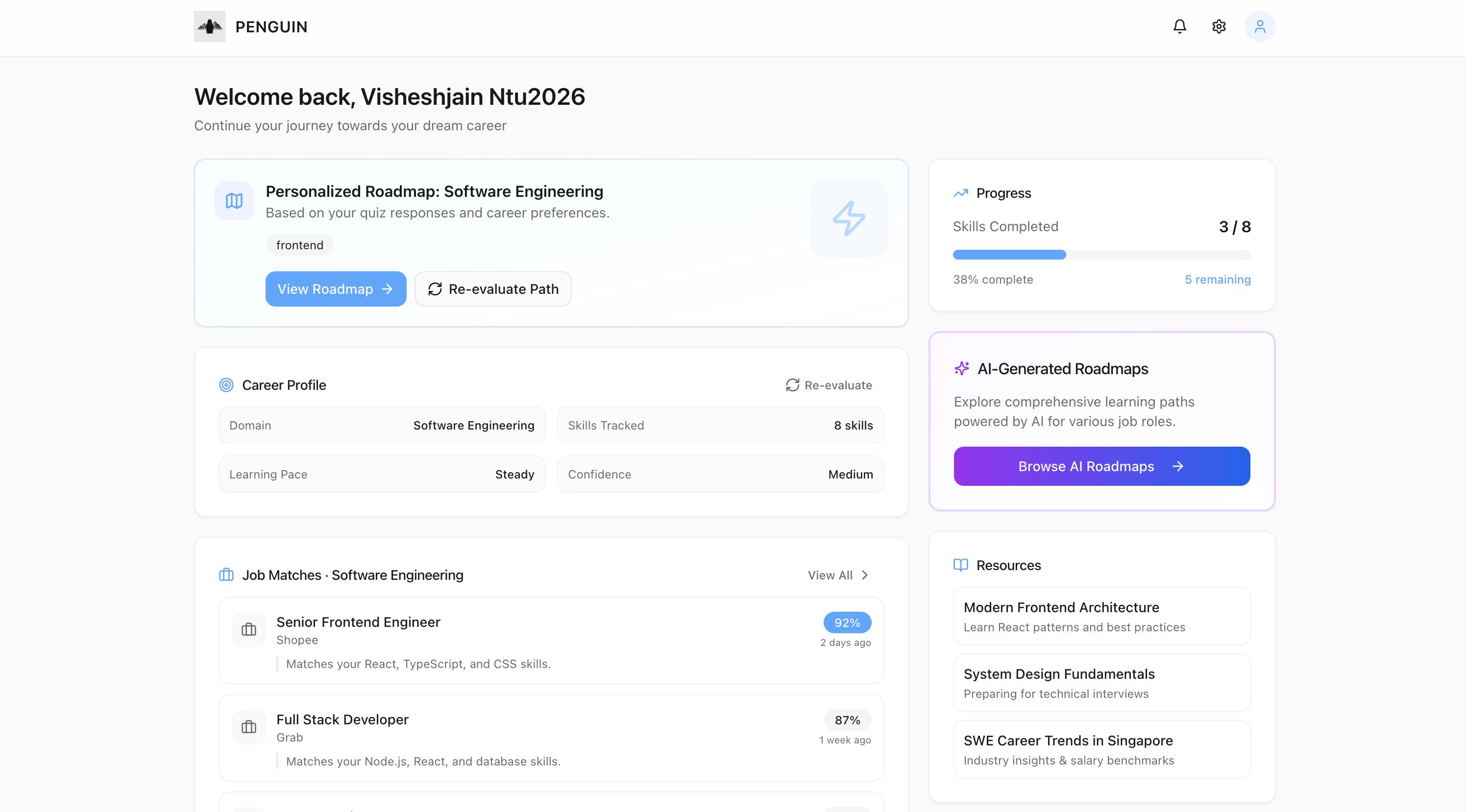
Penguin is a personalized career navigation platform that turns fragmented career data into clear, actionable roadmaps.
It helps users:
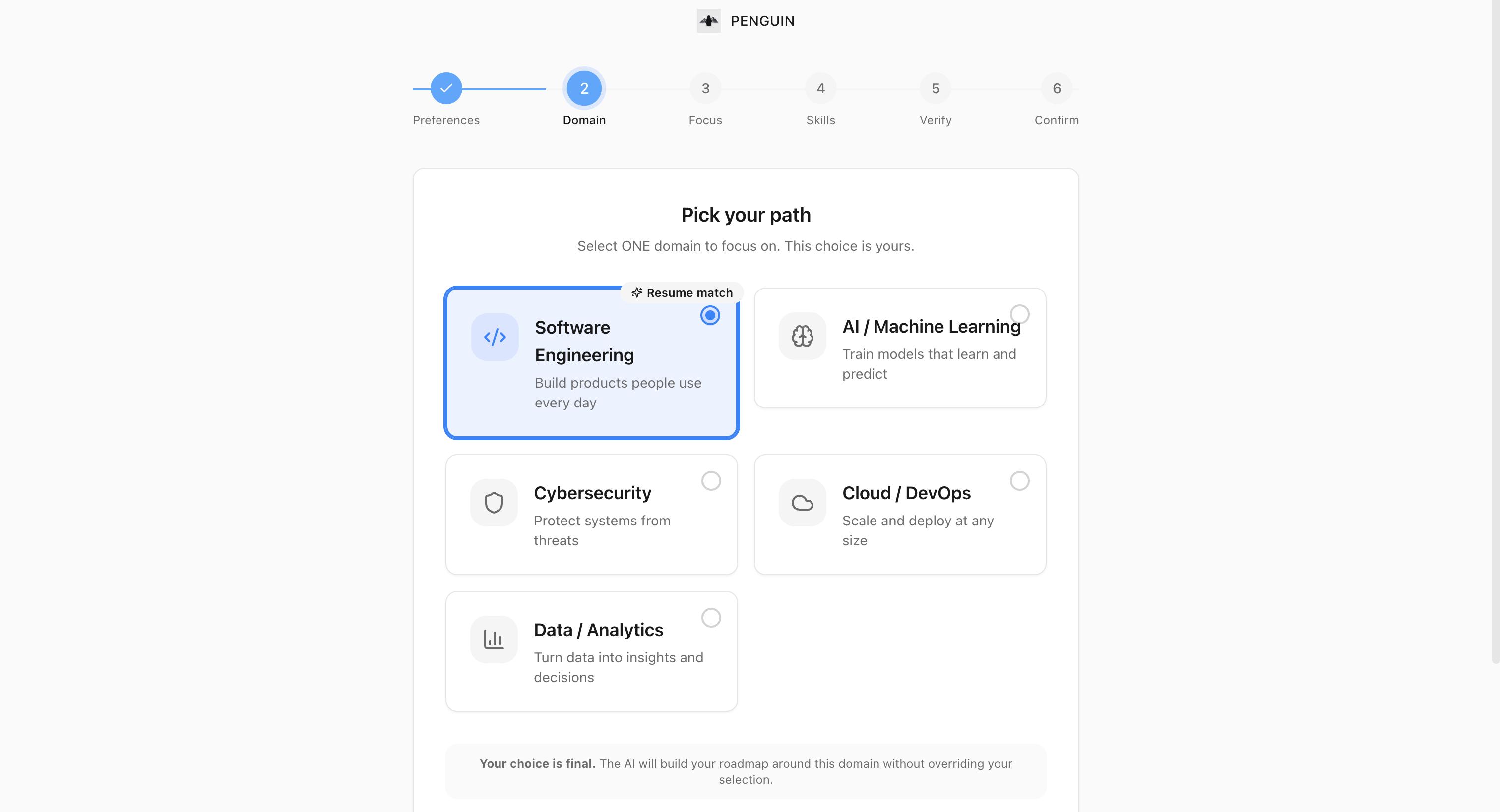
Understand which roles actually fit their background
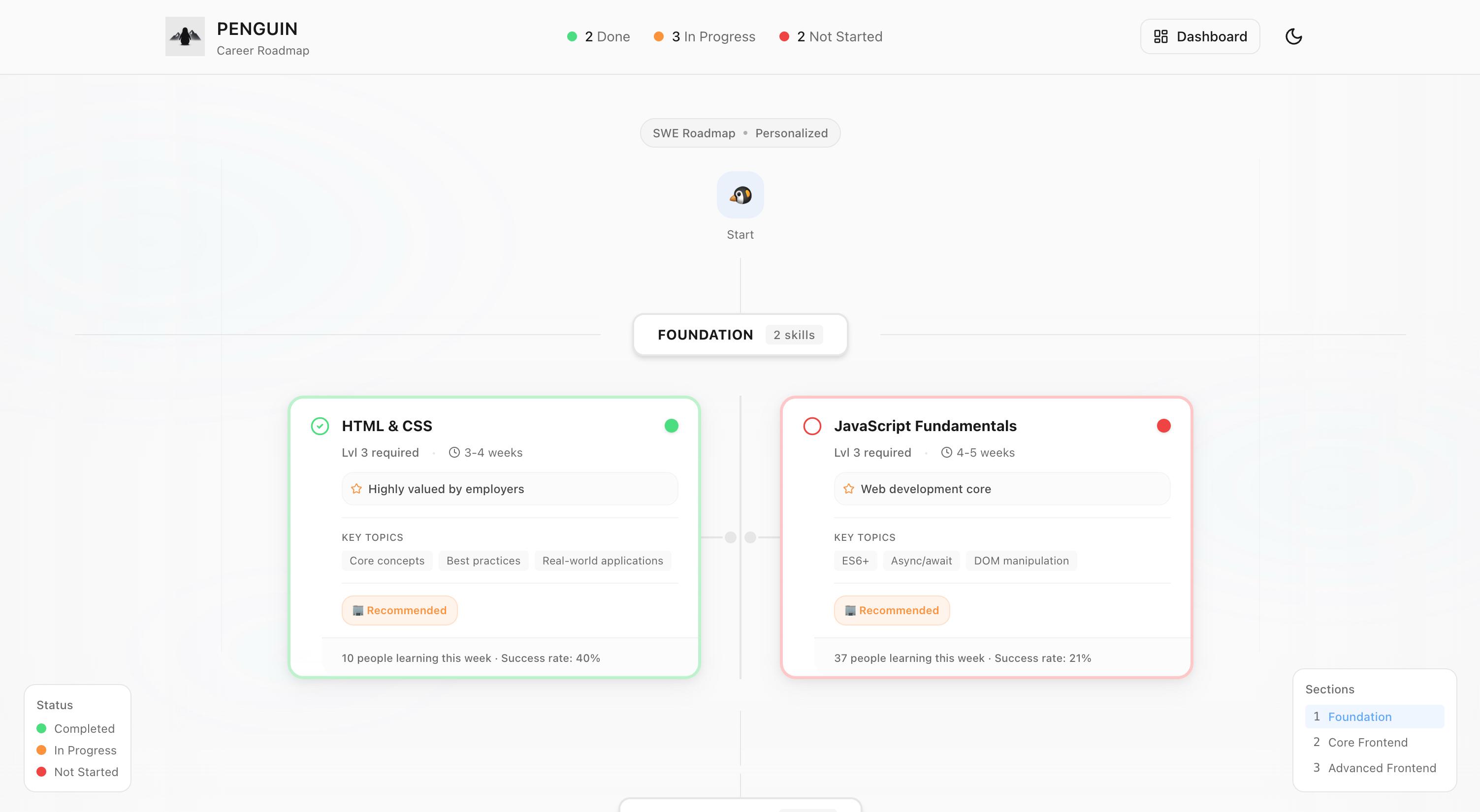
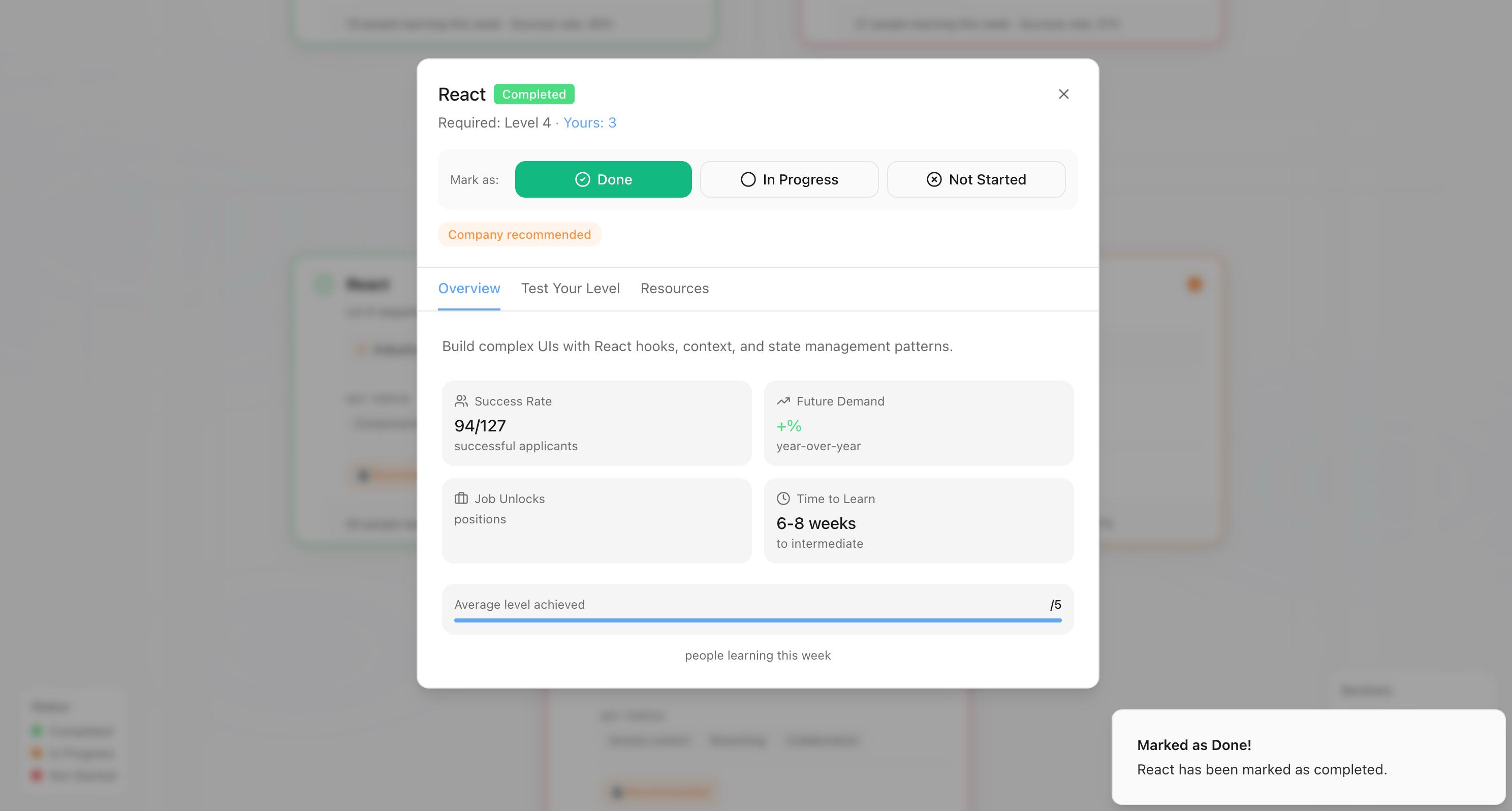
Learn exactly which skills to acquire—and in what sequence
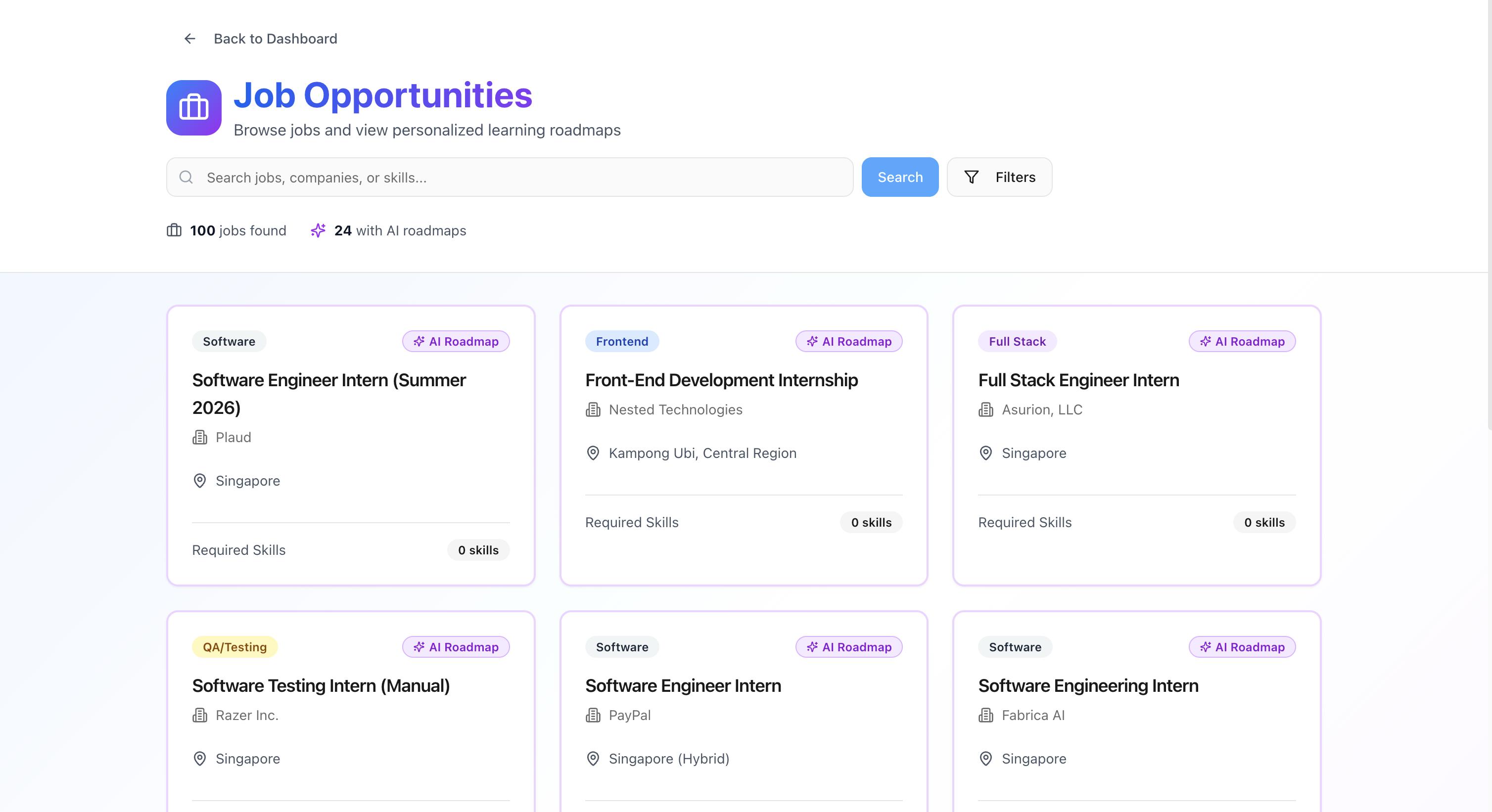
Discover jobs linked directly to preparation roadmaps
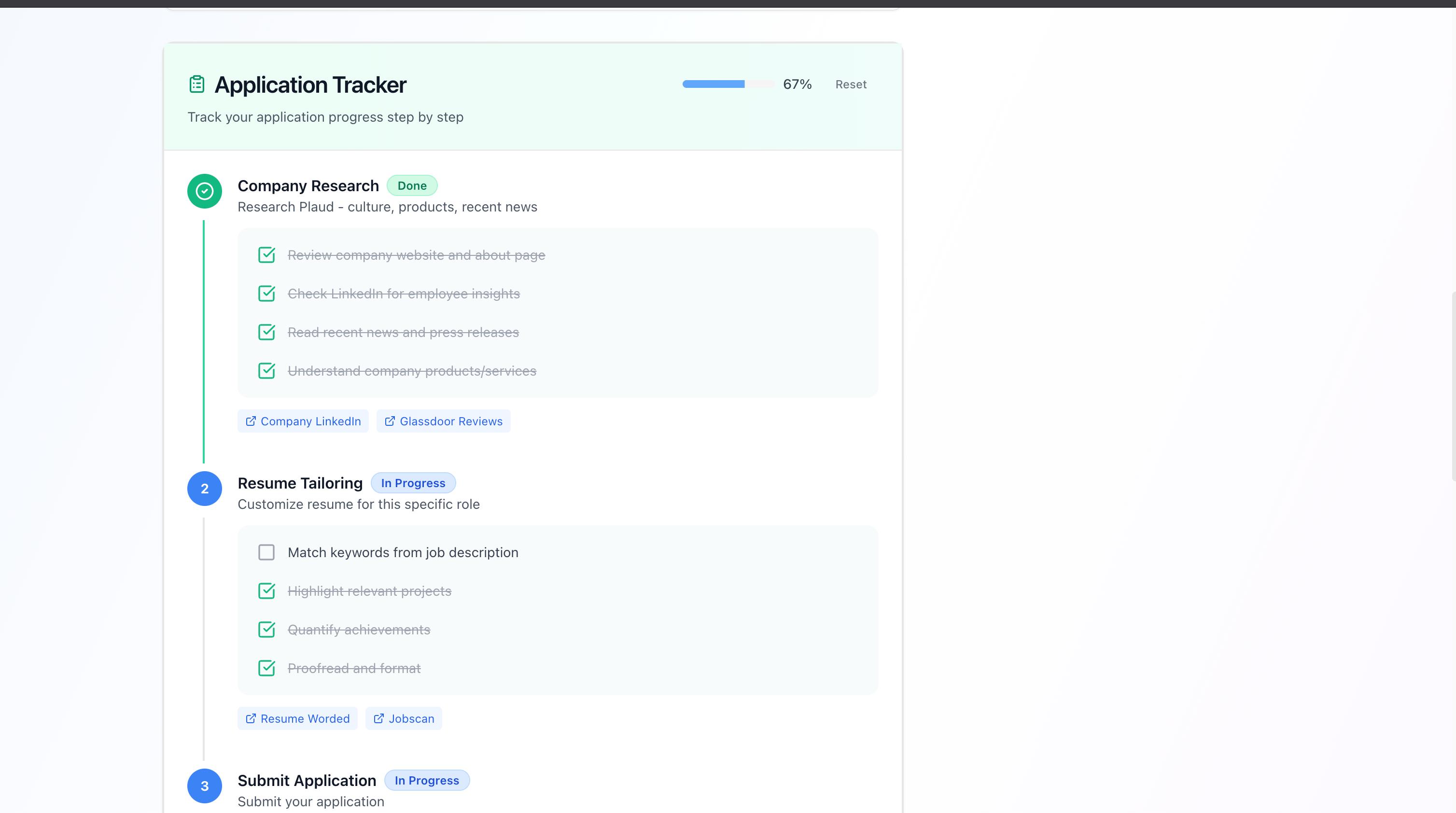
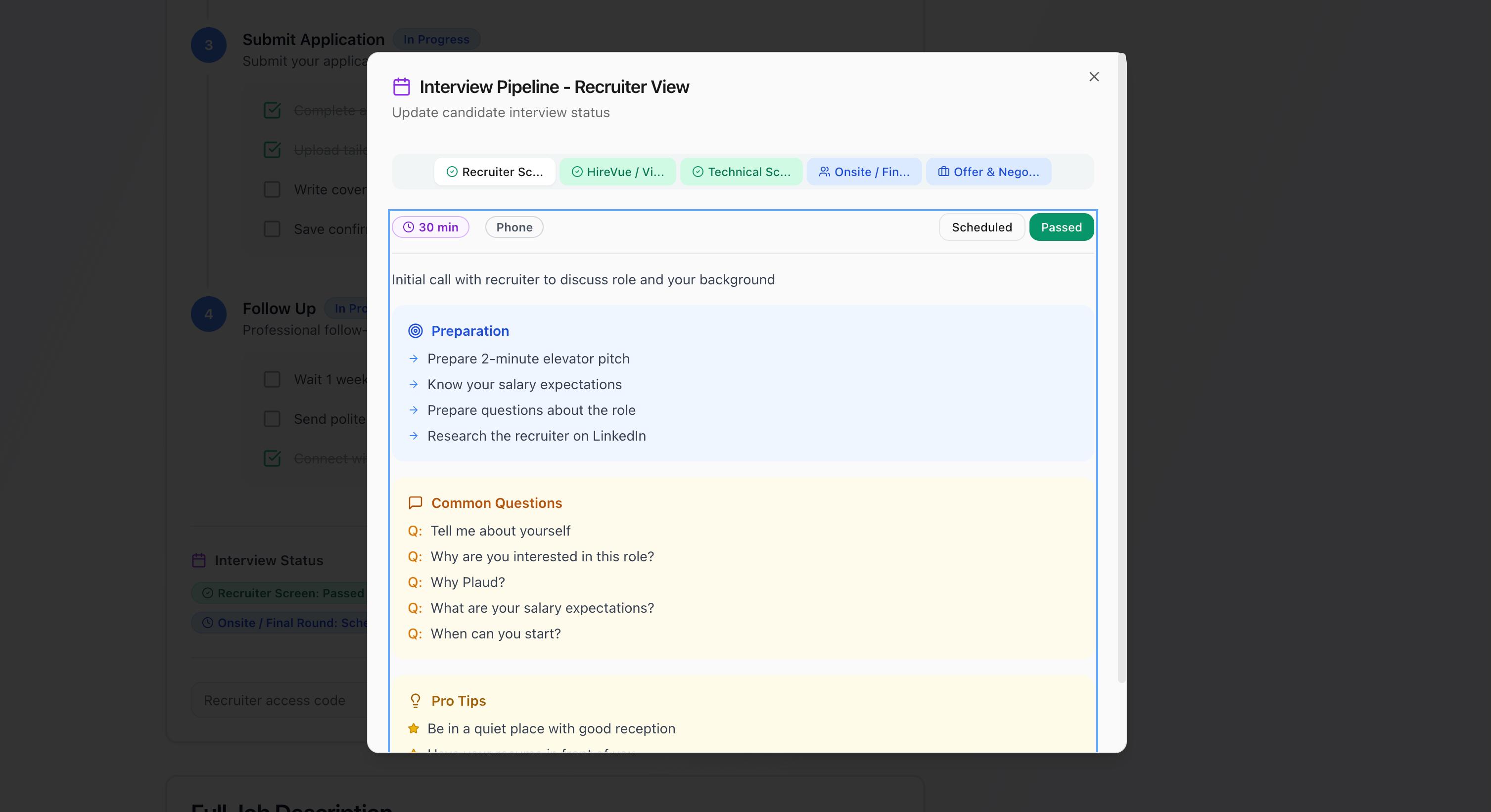
Track applications and interviews in one place
For recruiters, Penguin:
Generates role-specific preparation roadmaps automatically
Improves candidate-role alignment
Reduces screening noise and application mismatch
In short: Penguin doesn’t just show you jobs—it shows you how to qualify for them.
How we built it
Penguin is built on a modern, modular, AI-first architecture designed for clarity, scalability, and fast iteration.
Frontend
React 18 + TypeScript + Vite
Tailwind CSS with shadcn/ui (Radix primitives)
Framer Motion for subtle, meaningful animations
TanStack React Query for data orchestration
React Router v6 for navigation
Backend
Flask (Python) for core APIs
FastAPI microservices for AI job ingestion and analysis
Firebase Firestore for user profiles and roadmap storage
CSV + JSON pipelines for flexible job data ingestion
AI & Data
OpenAI (GPT-4o-mini) and Anthropic Claude for:
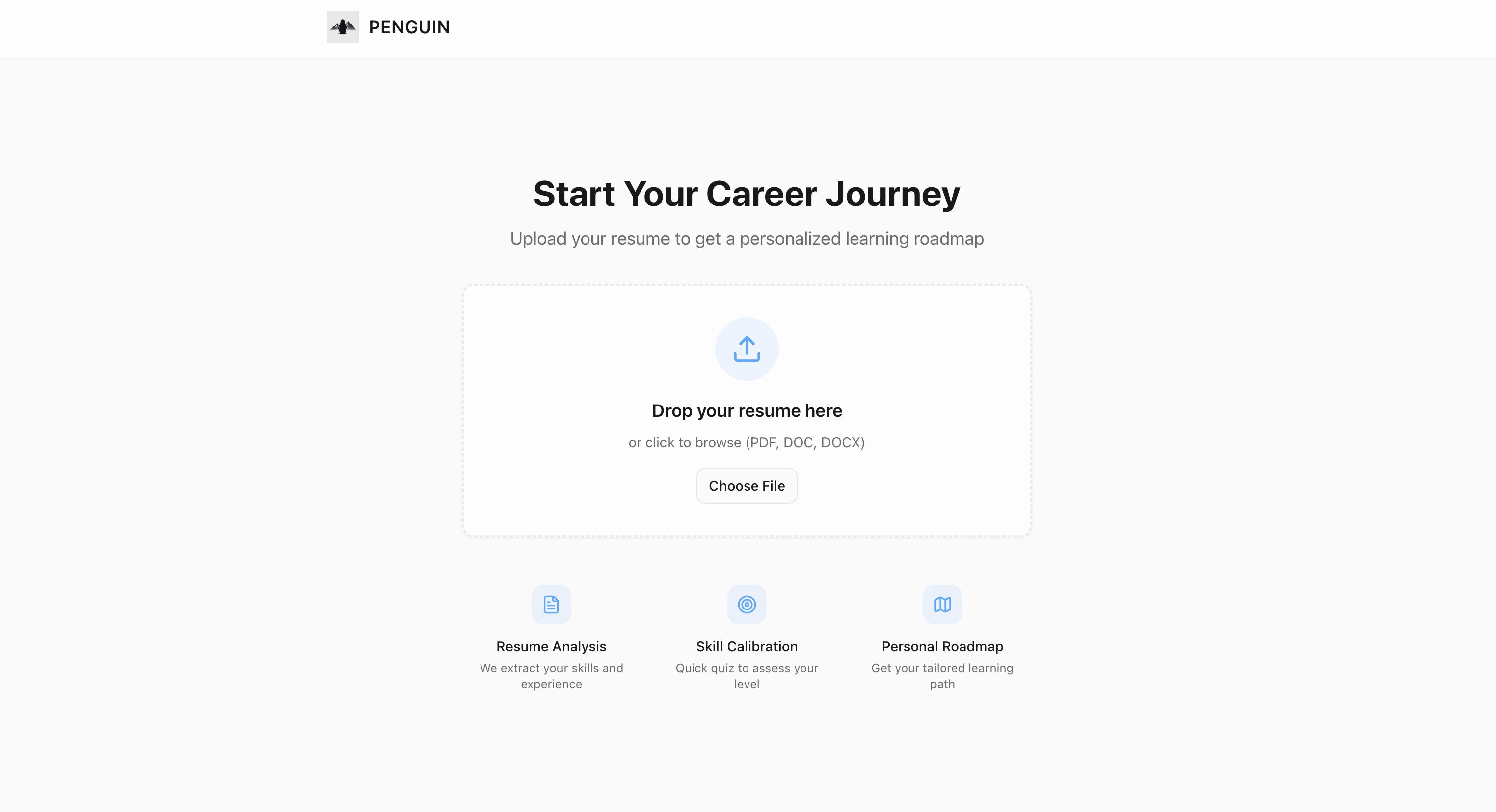
Resume parsing
Job understanding
Skill dependency analysis
Roadmap generation
Job data normalized from:
eFinancialCareers
Glassdoor
JobStreet
MyCareersFuture
Indeed
Every job, skill, and roadmap is generated from centralized, structured data, not isolated heuristics.
Challenges we ran into
Fragmented data: Job listings across platforms used wildly inconsistent formats and terminology.
Skill dependency modeling: Determining which skills must come before others required careful AI prompting and validation.
UI complexity: Representing multi-stage roadmaps visually without overwhelming users was non-trivial.
Balancing AI autonomy and trust: We designed AI outputs to be transparent and interpretable—not black boxes.
Accomplishments we’re proud of
Built a fully integrated pipeline from resume → roadmap → job → application → interview
Designed role-specific learning paths instead of generic skill lists
Created a recruiter-side workflow that benefits both candidates and hiring teams
Unified jobs, learning, and application tracking into one coherent system
Delivered a polished, production-quality UI within a hackathon timeline
What we learned
Career clarity matters more than content volume
Good AI products are opinionated but explainable
Visual structure dramatically impacts user confidence
Data normalization is as important as model intelligence
The hardest problems aren’t technical—they’re about alignment and trust
What’s next for Penguin
Real-time skill readiness scoring
Resume-to-roadmap auto-updates
Recruiter analytics on candidate preparedness
Collaborative learning paths for cohorts
Deeper feedback loops from hiring outcomes
Penguin started as a way to cross the career mountain. Next, we want to make sure no one has to climb it alone.
Built With
- firebase
- flask
- framer
- python
- react
- typescript
- vite

Log in or sign up for Devpost to join the conversation.