-
-
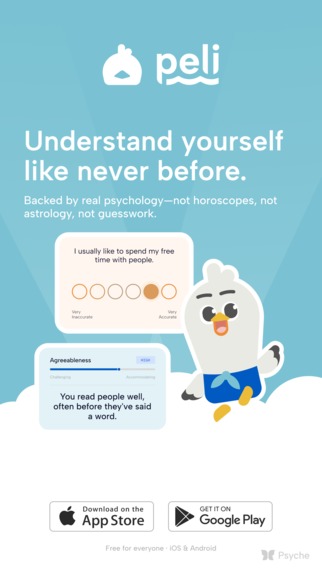
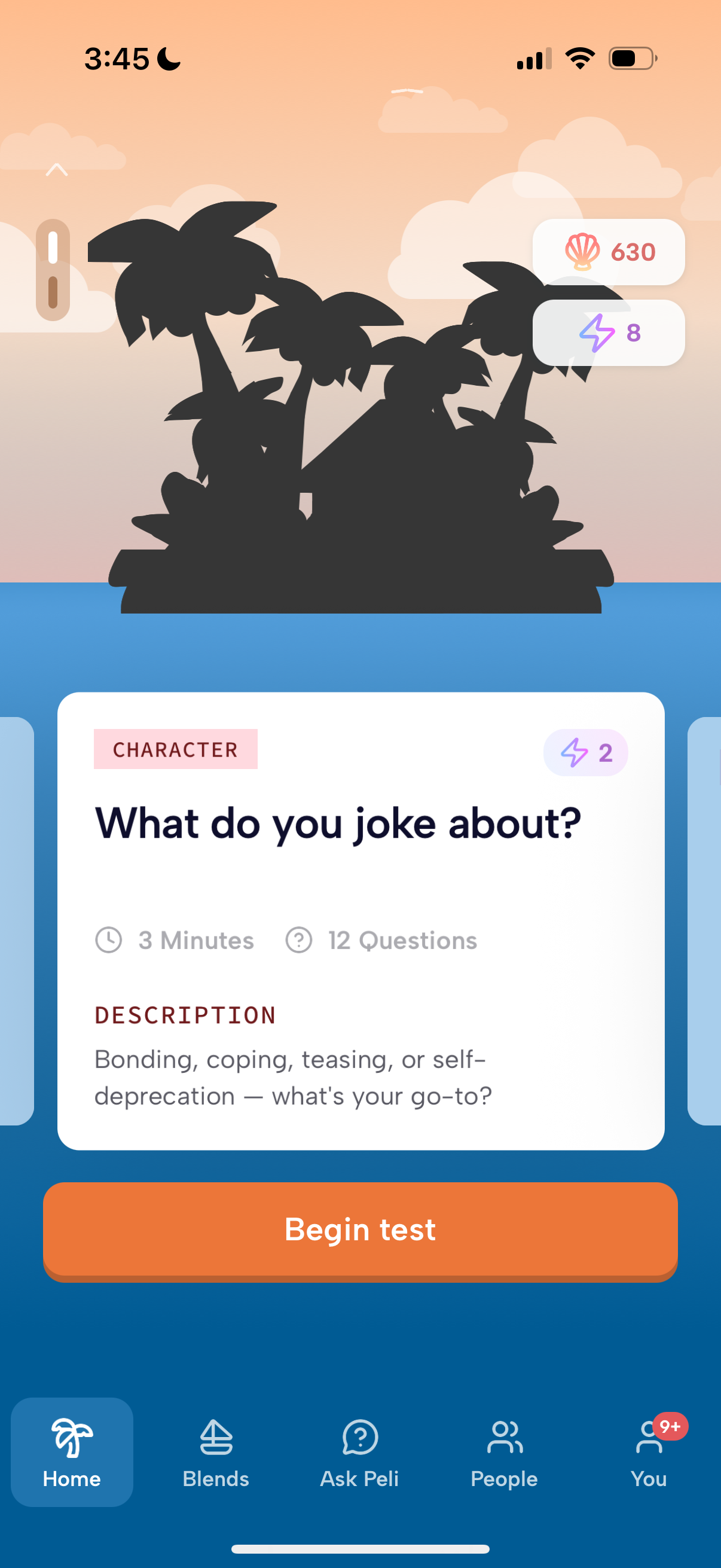
Peli is equipped with more than 30 different surveys to explore a different angle of you!
-
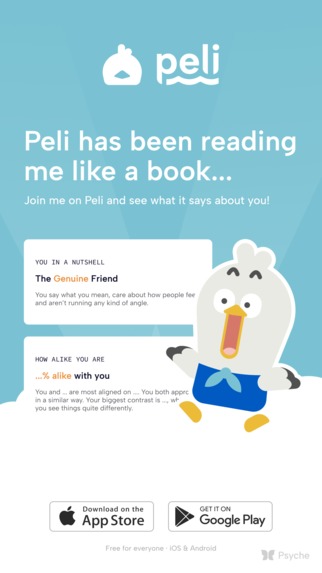
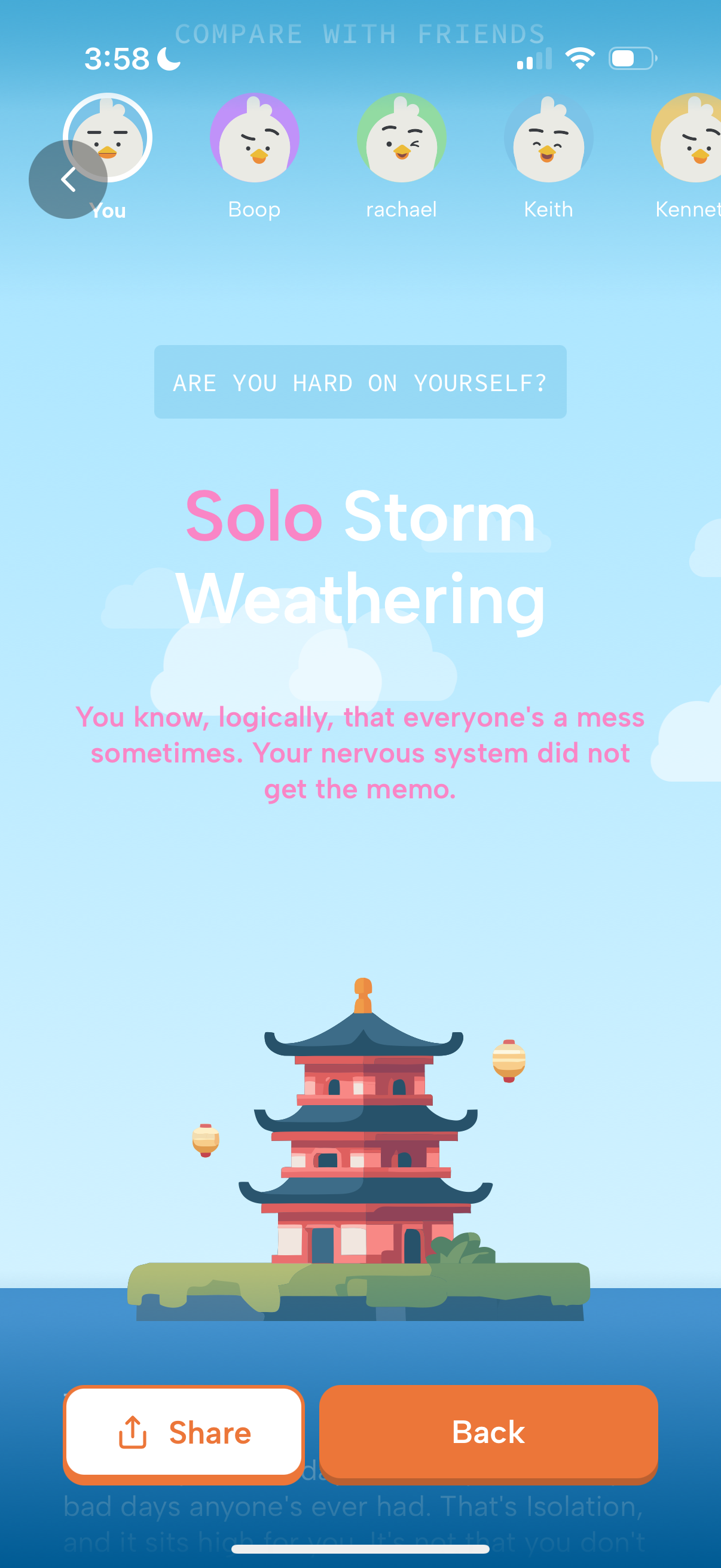
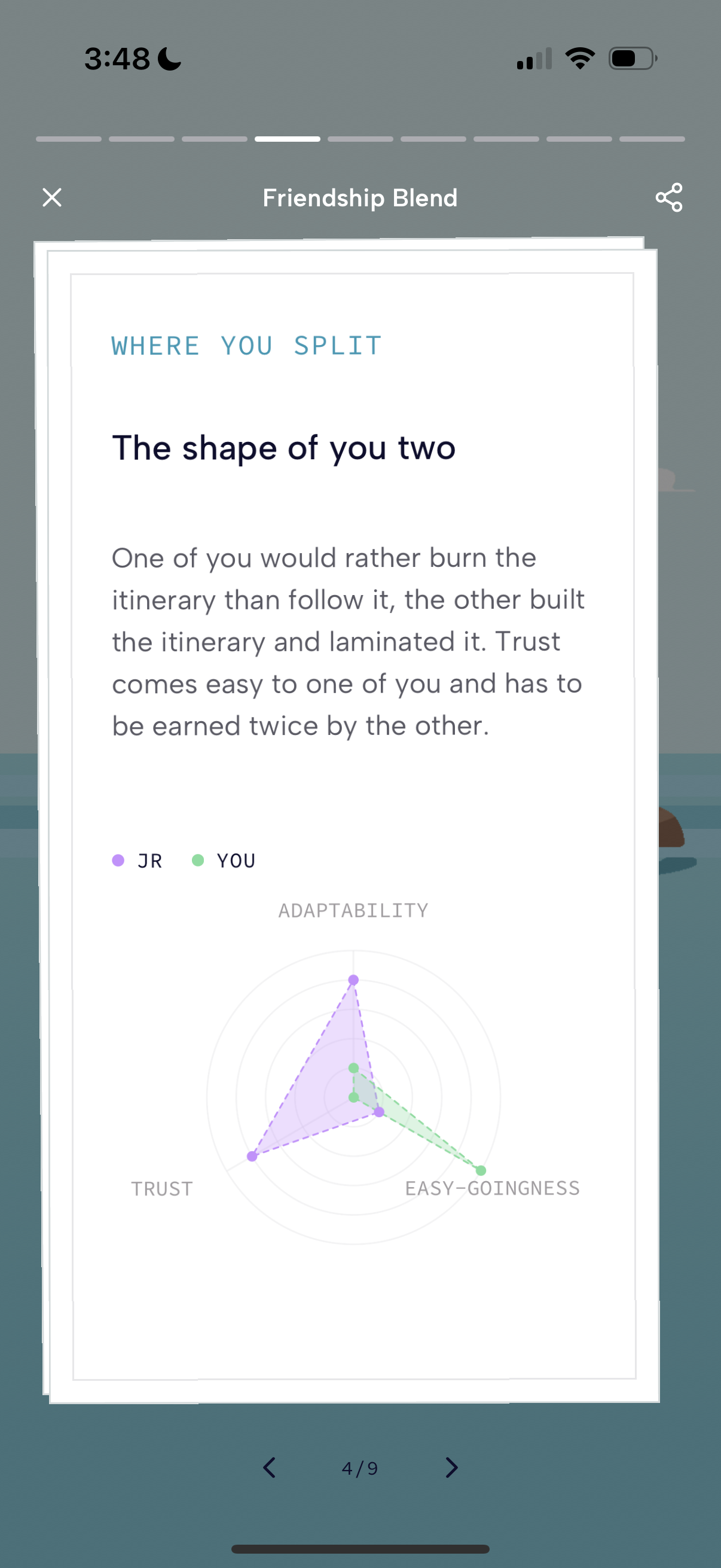
Compare with your friends to see how similar you are to them!
-
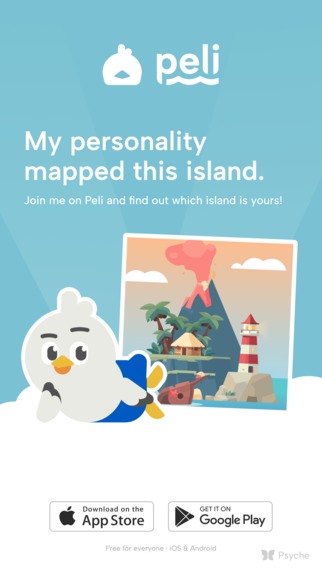
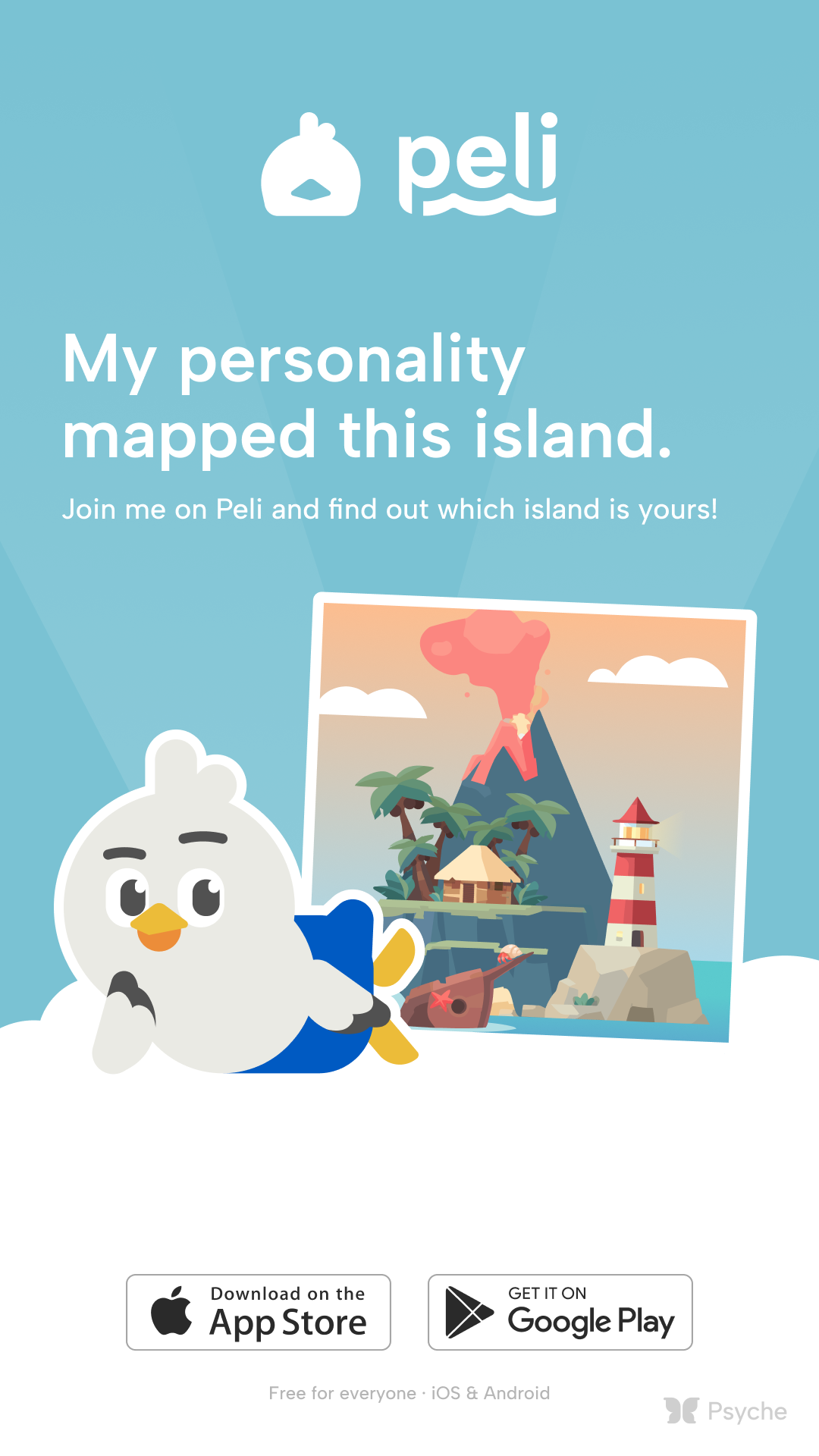
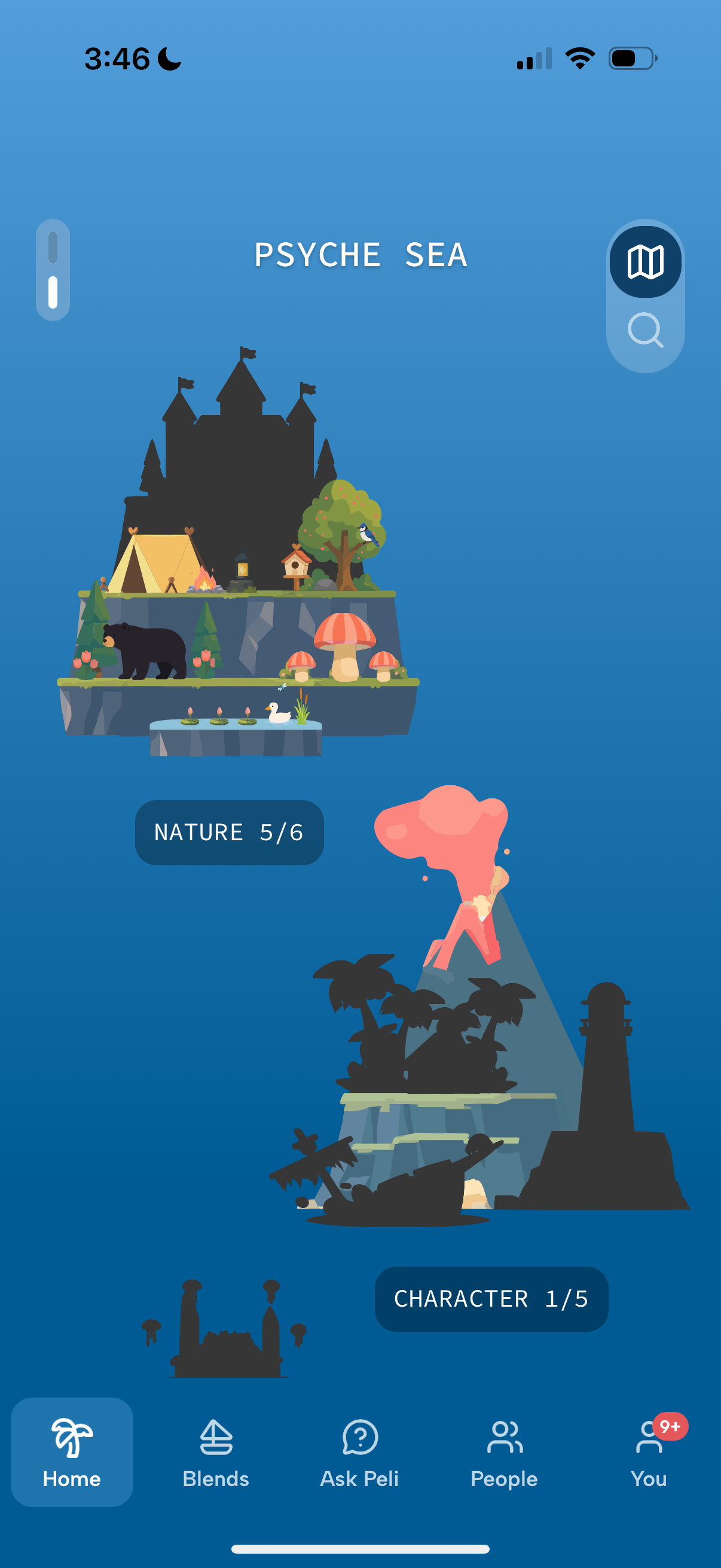
Each person's islands look different because every one IS different! Each survey that you take shapes your island into YOU!
-
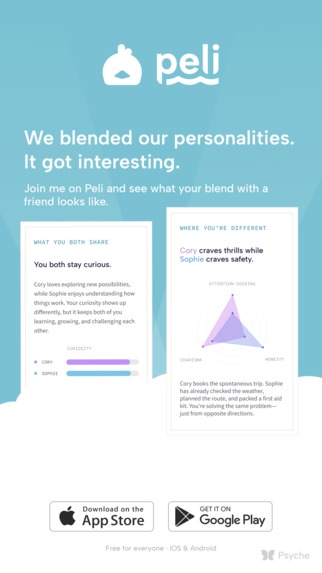
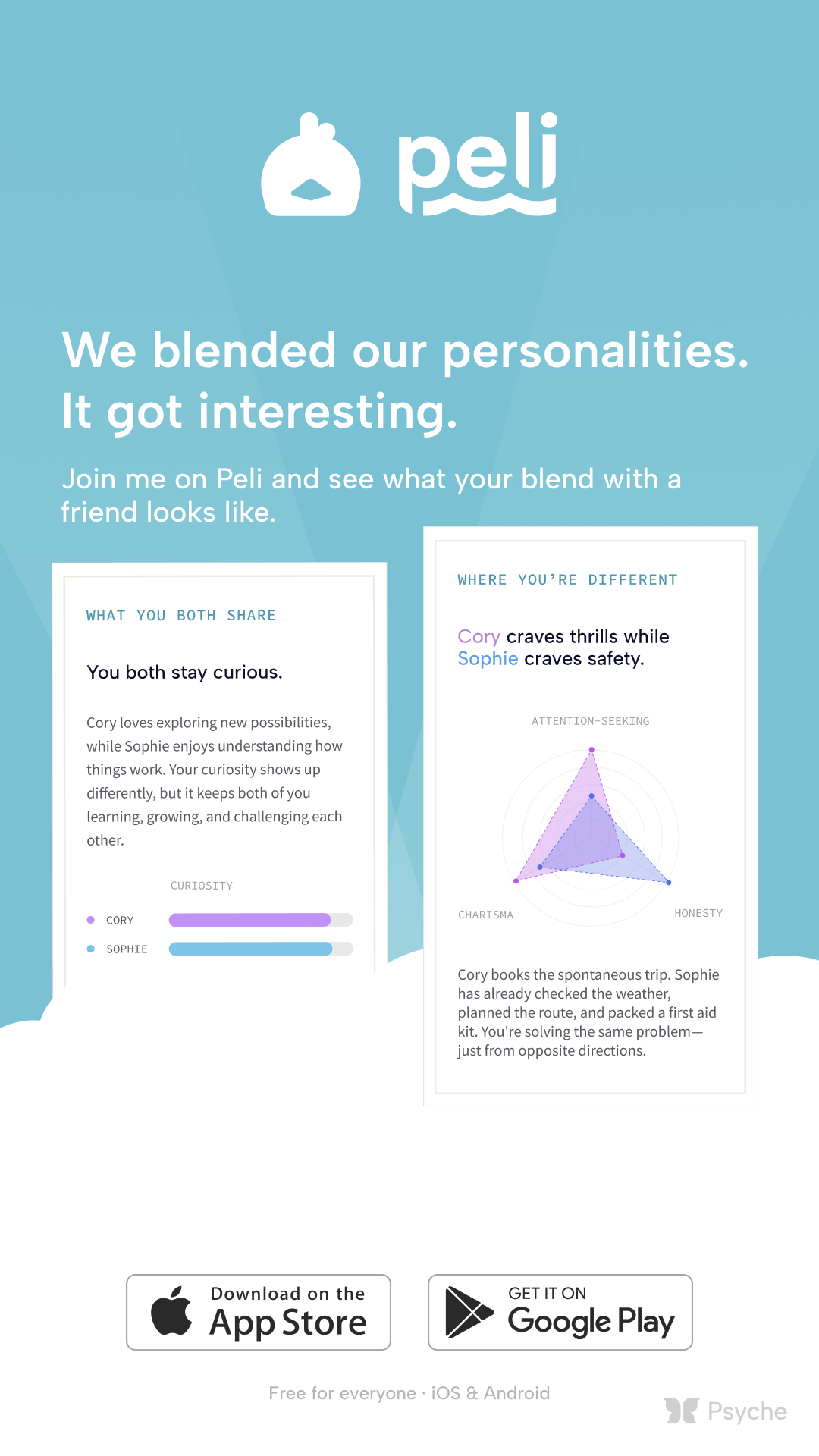
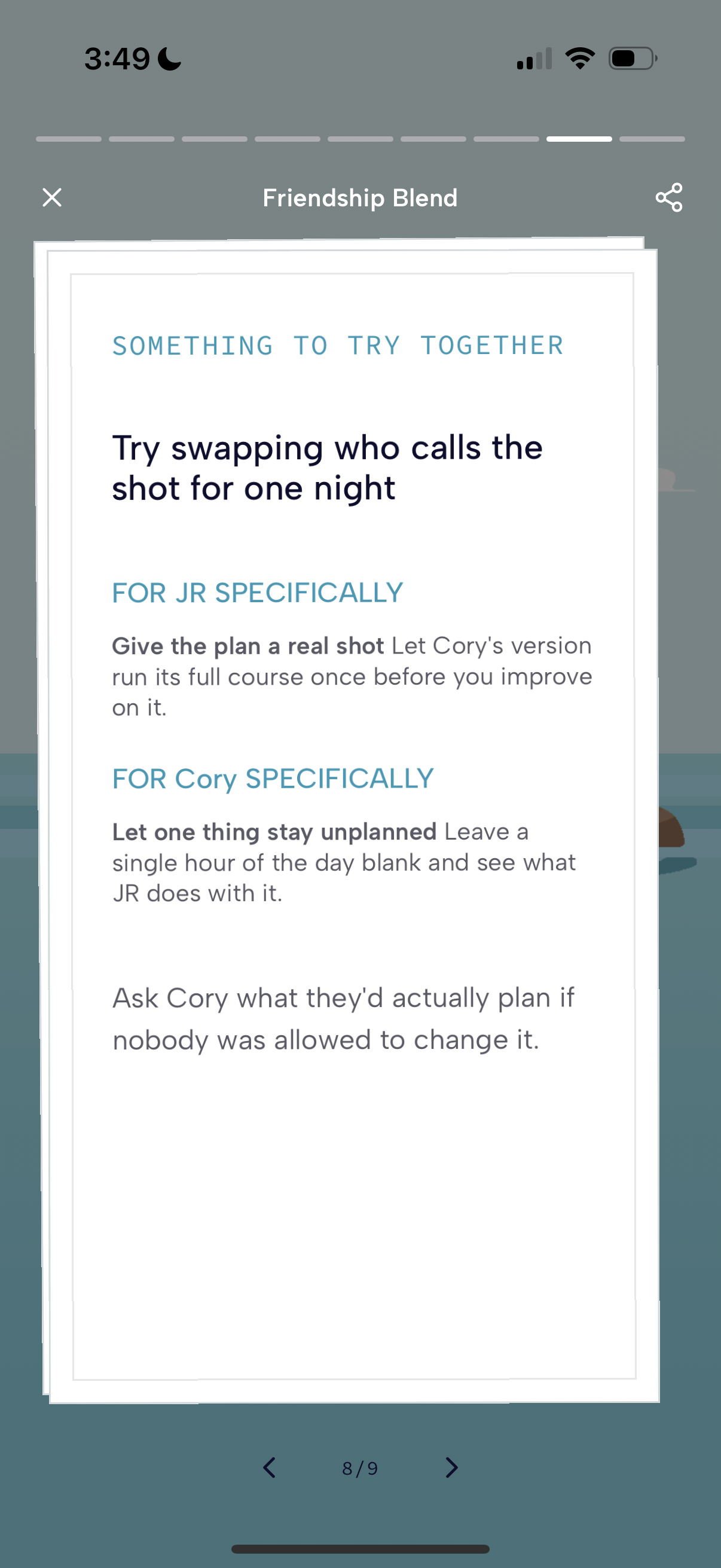
Complete blends with friends to see where you align and crash!
-
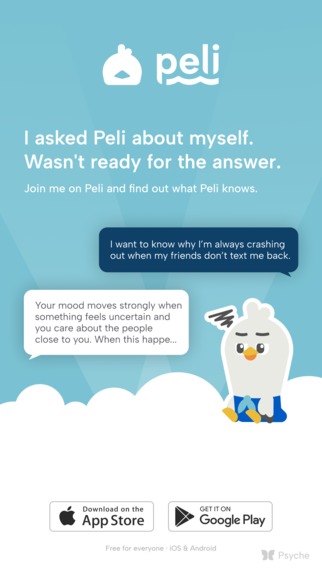
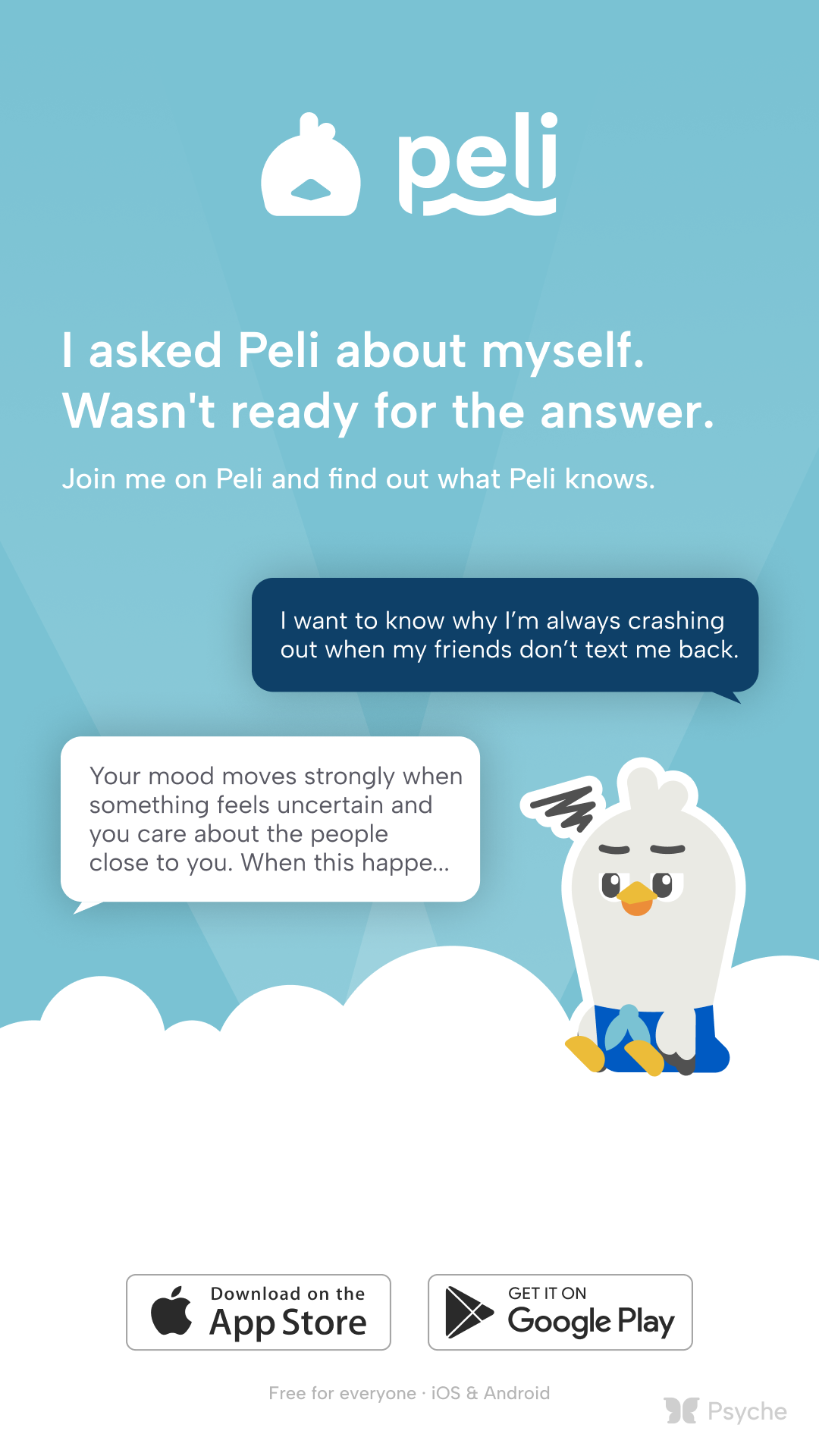
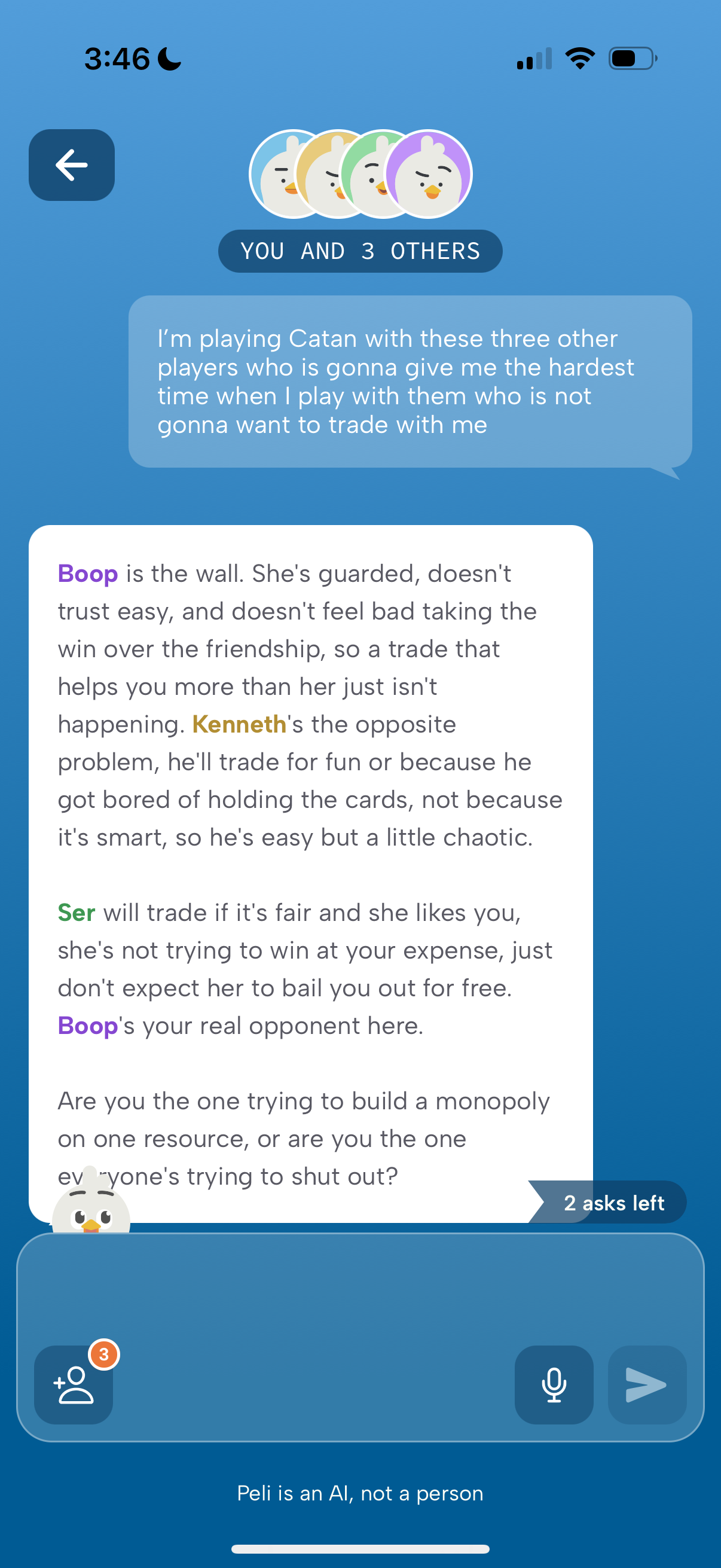
Ask Peli anything! It actually understands you and your personality!
-

Peli App Icon
-
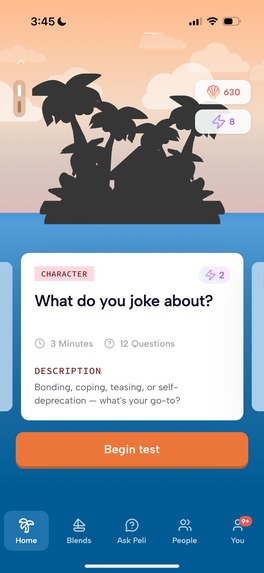
Unlock islands by taking surveys about yourself.
-
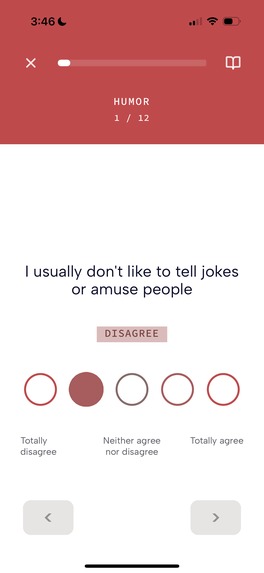
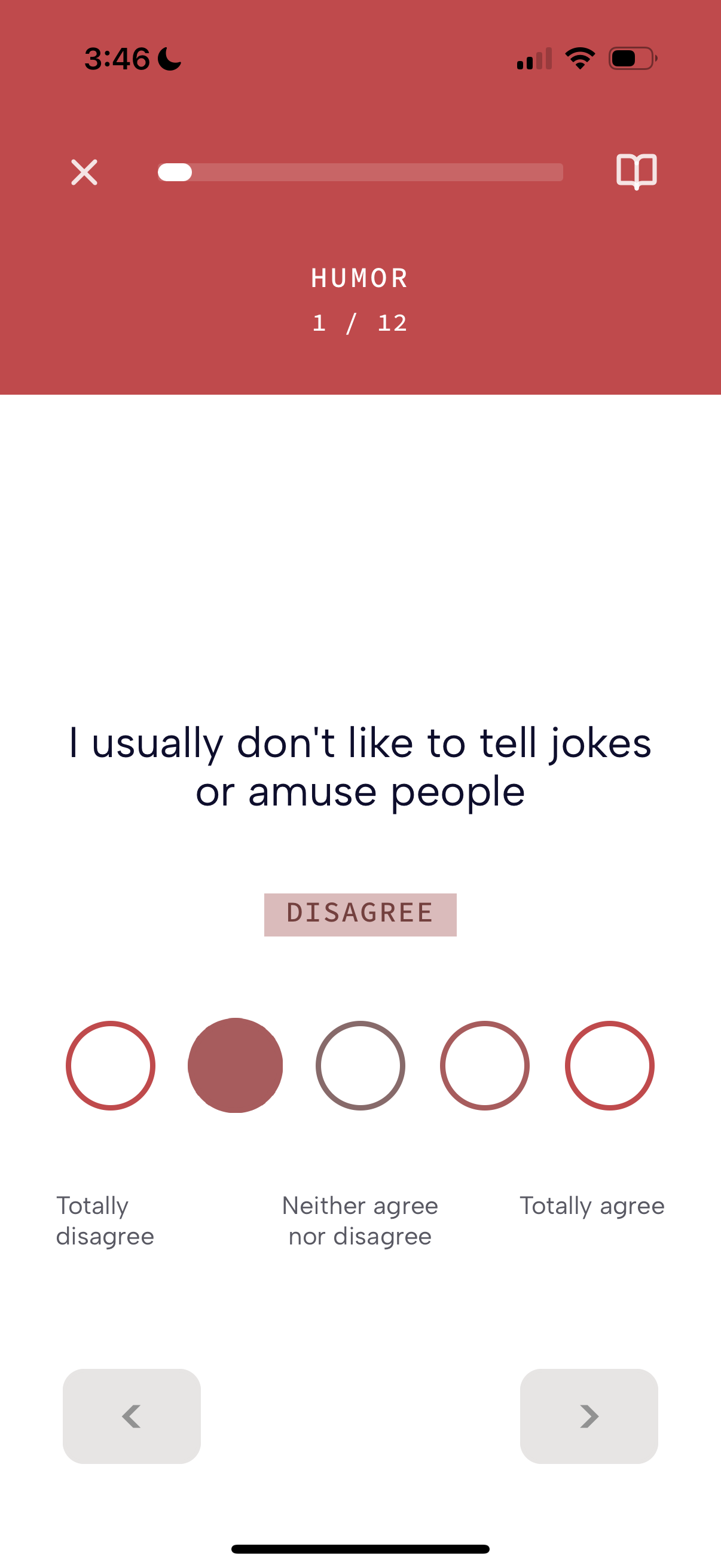
Answer questions in surveys.
-
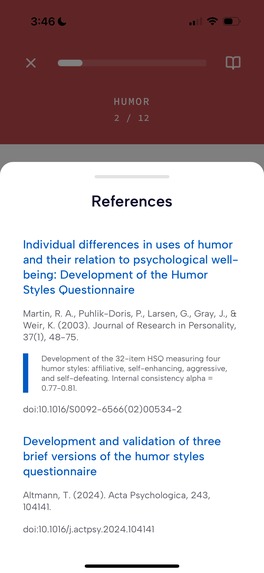
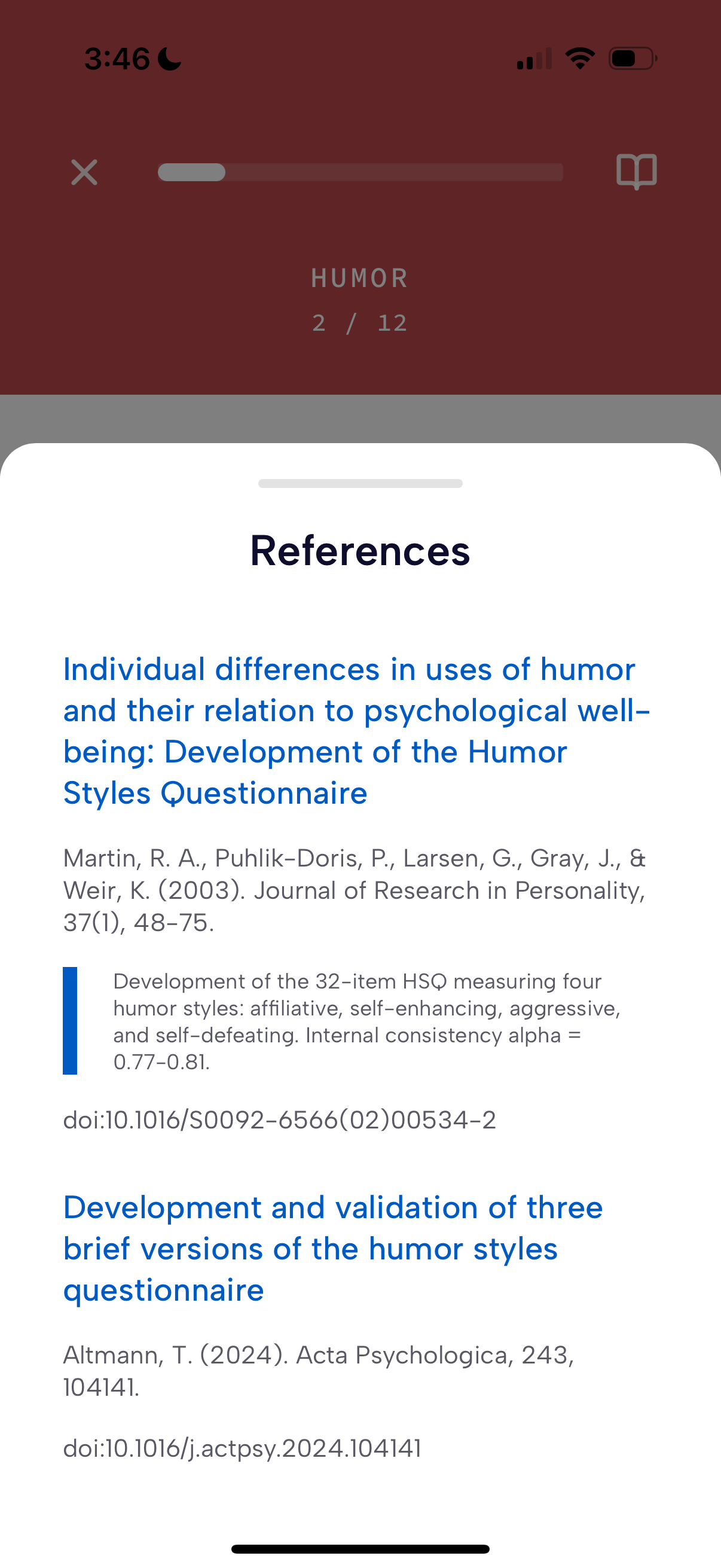
View the scientific writings backing the surveys you are taking.
-
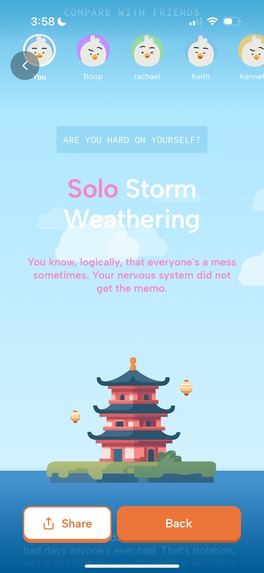
Collect islands and view your overviews and tendencies.
-
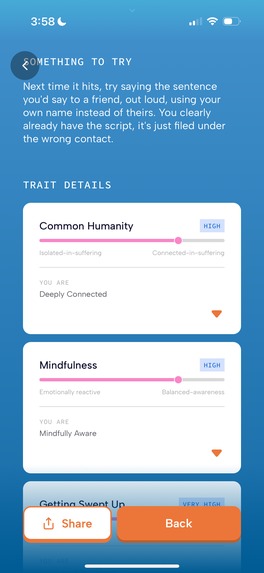
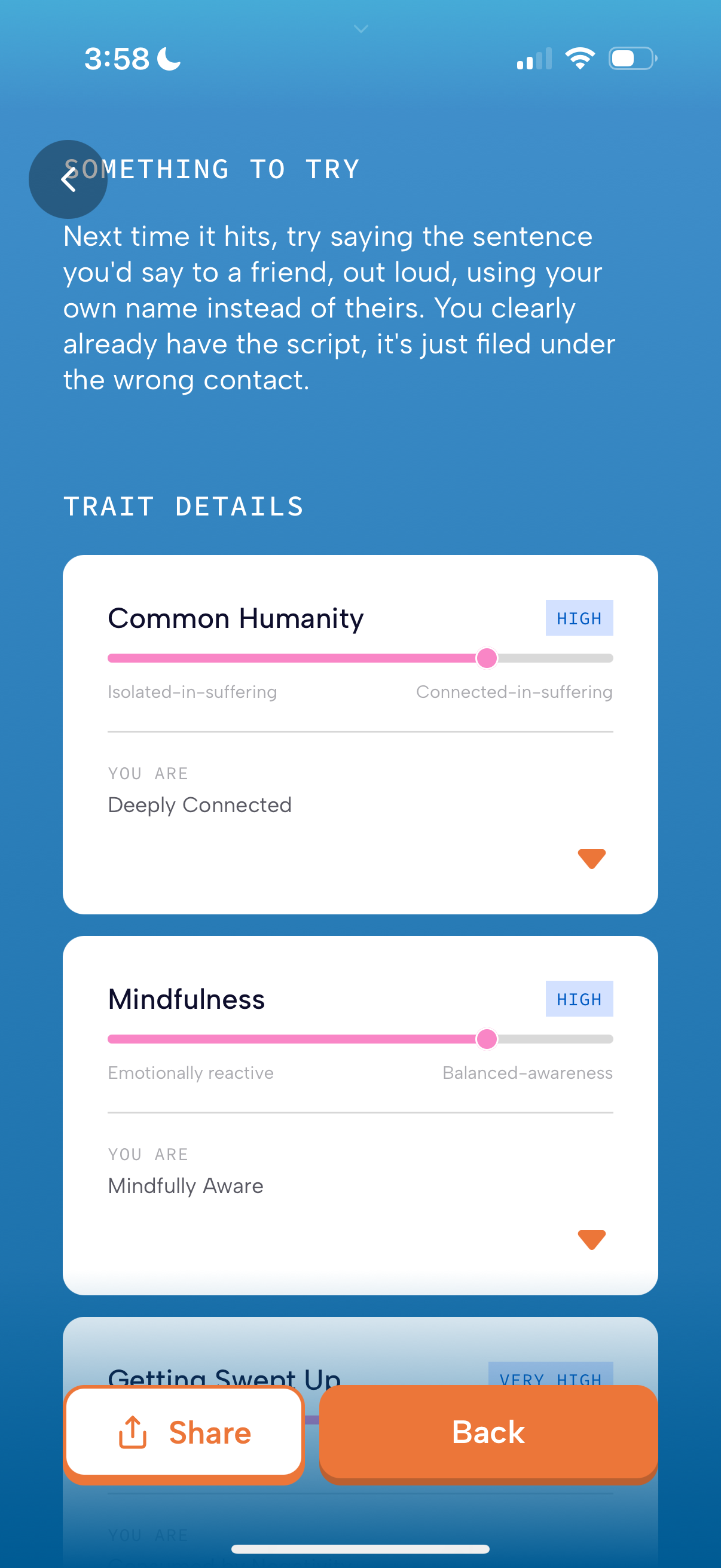
Receive tips and your trait tendencies.
-
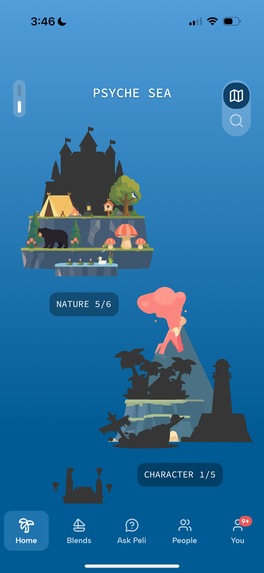
View your world of personality as a map of islands.
-
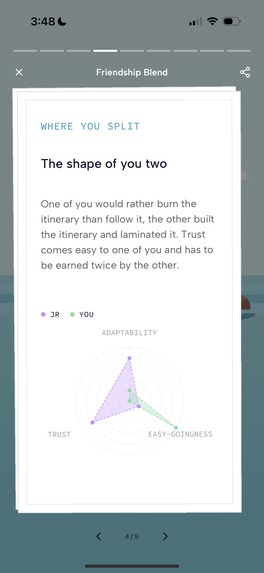
Blend with your friends to see how similar or different you are.
-
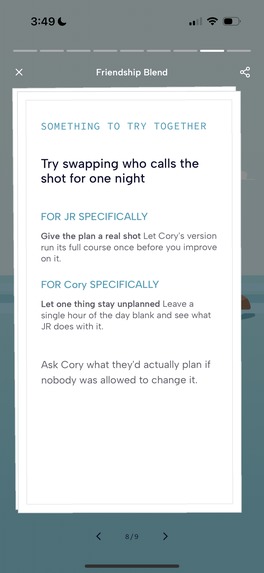
Get tips on how to approach your friendships.
-
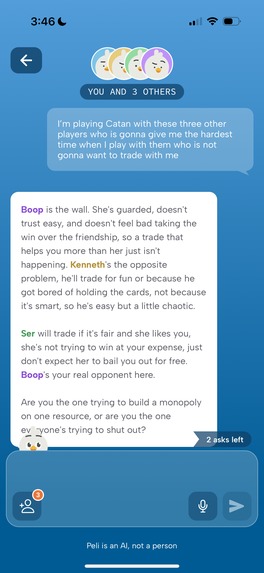
Ask Peli anything and it actually understands your personality and tendencies.

TL;DR: Peli turns validated psychological assessments, the kind usually locked in labs and clinics, into an island world you build and share with friends. Since launching in September on iOS, Android, and web, 95% of new signups have finished a validated assessment, 68% have connected with a friend, and 82% of people who open a friend's shared assessment finish it. Built by a team of six.
Inspiration and Problem
Over a billion personality tests like 16Personalities and MBTI are taken every year, and most rest on a theory from the 1920s. Far better instruments exist, with published validation studies and real population norms, but they're stuck in journals, university labs, and $200 clinical intakes. Right now, people can either get rigorous science they can't reach, or fun quizzes that cite nothing.
That gap matters beyond self-discovery. Relationship scientists can already explain about half of what makes people satisfied in their relationships (Joel et al., 2020, PNAS). But predicting who will actually work well together is still out of reach. As Dr. Amie Gordon, a relationship psychologist at the University of Michigan, puts it, making those predictions "for particular groups of people or even specific couples, with a meaningful degree of accuracy, remains challenging."
The bottleneck is data. According to Eastwick and Joel in the 2025 Annual Review of Psychology, fewer than 20 studies in the history of the field have captured two people meeting and a relationship forming, and only three followed the pair forward in time. The blueprint for fixing this has existed since 2017, when Joel, Eastwick, and Finkel laid it out: measure people deeply before they meet, match them, then keep measuring the couple over time. Nobody has been able to run it, because it takes a lot of surveys from a lot of people, repeated over years. Paying participants doesn't scale, and quiz apps collect data too shallow to use.
So we built the version people actually want: the real instruments, free, in a form someone will happily finish on a bus, with the source paper one tap away. If people enjoy it enough to keep coming back and bring their friends, that blueprint finally becomes possible.
What it does
You take an assessment, and a piece of your world appears.
- Six islands: nature, emotion, drive, people, mind, and character. Each finished assessment builds part of the matching island, and the art reflects your actual scores. How kind you are to yourself sets the tiers on a pagoda, and how you use humor decides how many trees grow around a hut. 18 themes, 180 pieces.
- 34 live instruments, each with its citation attached, covering 242 traits and 197 facets.
- Results come as a card deck: one idea per card, written at a sixth-grade reading level, with no compatibility percentages or invented archetype names.
- Blends compare your profile with someone in your life and show where you actually differ.
- Ask Peli answers questions using your full history.
How we built it
- One Expo/React Native codebase for iOS, Android, and web, with a shared island renderer.
- NestJS API, Postgres, and Supabase auth. Scores are computed server-side and versioned, so a scoring update never rewrites someone's past results.
- Names and answers live in separate tables, enforced by a database constraint. That separation is what makes opt-in research contribution possible.
- RevenueCat handles payments: one
plusentitlement across iOS, Android, and Stripe web checkout, so monthly, annual, and gifting all run through a single code path. - CI checks our copy for clinical language, so staying non-clinical is enforced automatically.
Challenges we ran into
- Making a 60-item scale work on a phone. We kept every instrument intact and redesigned everything around it: one question at a time, an island growing behind you, and a reason to come back.
- Writing results that are honest and warm. Every number has to hold up for someone who knows the literature, and every sentence has to be readable for everyone else. We cut a lot of copy we liked.
- Keeping three platforms consistent. A purchase on Android has to mean exactly what it means on the web. RevenueCat made that one handler instead of three.
Accomplishments that we're proud of
Our scientific advisory board. Two leading measurement experts joined because they believe in what this data can do. Dr. Steven Reise, chair of Quantitative Psychology at UCLA, co-wrote Item Response Theory for Psychologists, the standard textbook on how psychological tests are built, and his work has been cited over 50,000 times. Dr. Anthony Rodriguez, a UCLA PhD psychometrician, co-wrote two papers with Reise that established the statistical indices researchers use to evaluate trait-and-facet measures, cited more than 3,000 times combined.

People go deep.
- 500+ accounts in 3 weeks since launch, no marketing spend
- 5.4 assessments per person on average (median 3), and 73 people have done 10 or more
- 3,800 assessments and 100,000 questions answered, about 200 per person
Then they bring someone.
- Median number of connections is 2 per connected user
- 117 connections
- 86% of connections happen within a day of signup, typically around the 7-minute mark
- 253 of 310 people who opened a shared assessment finished it (82%)
The data holds up as science. Full results are public at peli.you/research.
- We re-ran nine published effects on our users and matched the field. Neuroticism and life satisfaction: field −.35, ours −.34 (n=219). Conscientiousness and employment: field .22, ours .21 (n=147).
- Three findings diverge from the literature. Thrill-seeking tracks lower life satisfaction (−.20, field ≈.02), avoidant attachment reads as unexpressive rather than cold (−.59), and deference to authority runs against callousness (−.27).
- 27 facets across 7 trait families (n=289) cluster the way they should: average r of .22 to .35 within a family, .00 to .06 across families.
- In 115 friend pairs, friends match on sociability (.26), politics (.23), and extraversion (.22), but not on work ethic (−.11) or humor (−.12).
- We threw out our own best-looking result after finding that a 30 July item-pool change was inflating correlations. Everything above comes after that fix. We publish nulls too: no trait predicts retention (n=280).
And it's a business.
- 7 subscribers in the 2 weeks after payments opened on 6 Sep
- 2.4% of monthly users pay, against a 2.1% free-tier average
- $0.66 a month to serve a user paying $9.99, roughly 15×
- Users in 36 countries, median age 23, 52% women
What we learned
- Depth drives retention. The strongest predictor of someone coming back is how many assessments they take on day one, more than any streak mechanic.
- The social hook fires fast or not at all. Most connections happen within minutes of signup, so inviting a friend has to be part of onboarding.
- People will do real work if it's worth it. 200 questions each, unpaid.
What's next for Peli: Self-Discovery, Shared
- More instruments.
- Matchmaking grounded in real psychology. Our long-term goal is to run that 2017 blueprint at scale: deep measurement before people meet, then follow-up after. We'll start with a readable account of where two people differ and what that tends to mean, then grow toward matching for love, work, and co-founders. Our friend-pair data is an early preview: friends match on sociability, politics, and extraversion, but not on work ethic or humor.
- Research contribution at scale. Opt-in and de-identified, giving researchers the kind of large, real-world dataset the field has never had, instead of relying on undergraduates earning course credit.
- UGC at scale. Cory Poon, our creative lead, has 200k+ followers and over 100 million views across platforms, and built a business in high school to $160k+ in revenue. With the product validated and users returning daily, we're training a group of UGC creators to bring Peli to a much wider audience.
Thank you!
Thanks for reading to the end. Everything here came out of research and a lot of back-and-forth with users, and we wanted to share that journey with you.
Built With
- ably
- anthropic
- baml
- claude
- expo.io
- nest.js
- next.js
- node.js
- postgresql
- posthog
- prisma
- railway
- react
- react-native
- revenuecat
- sentry
- stripe
- supabase
- typescript
- vercel

Log in or sign up for Devpost to join the conversation.