-
-
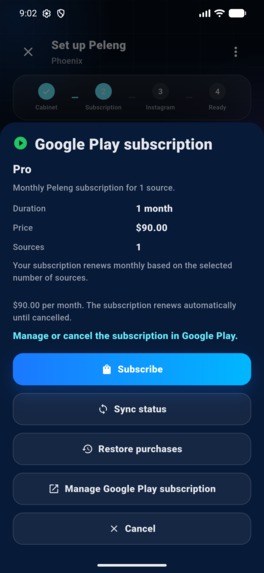
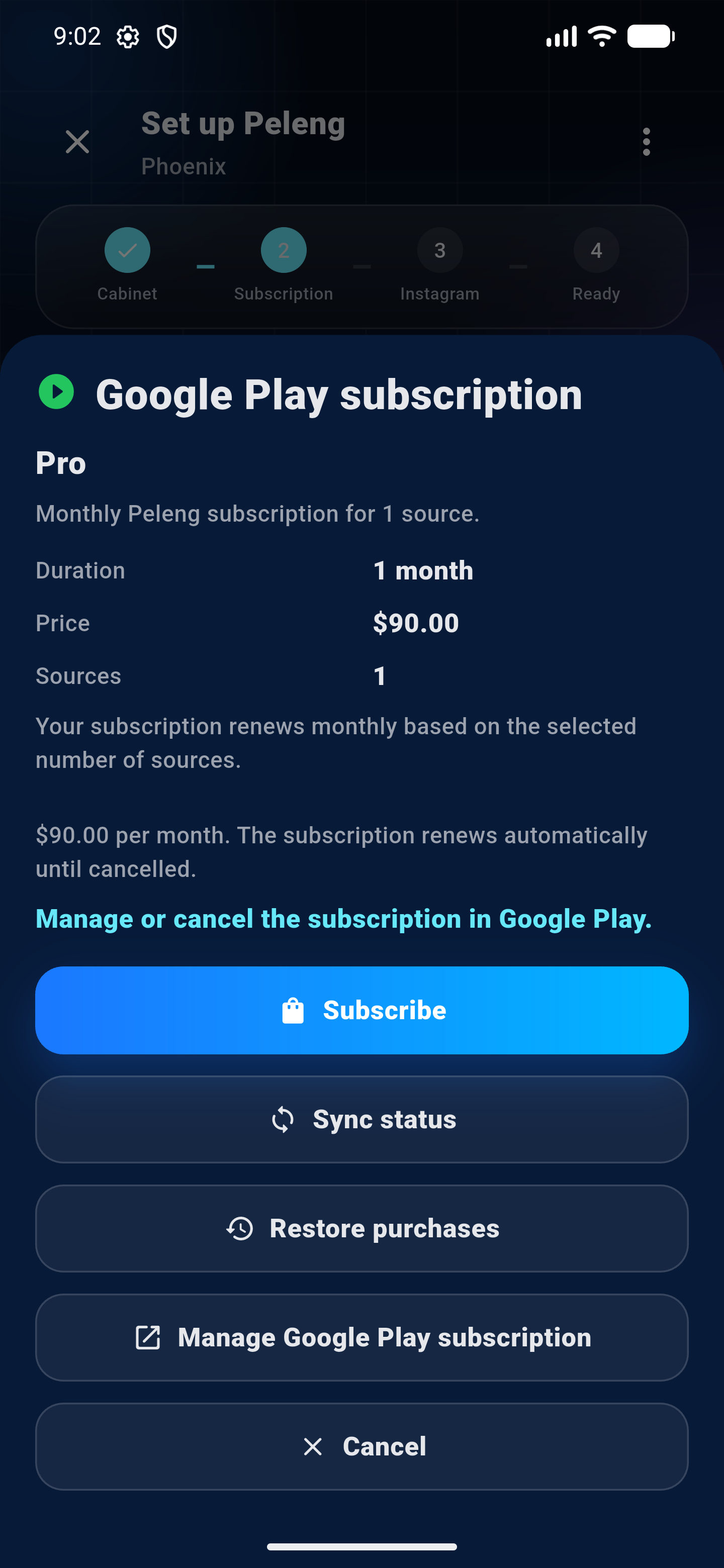
Earlier paywall screen; current pricing is USD 90 per cabinet/month, including three channels and up to five managers plus owner.
-
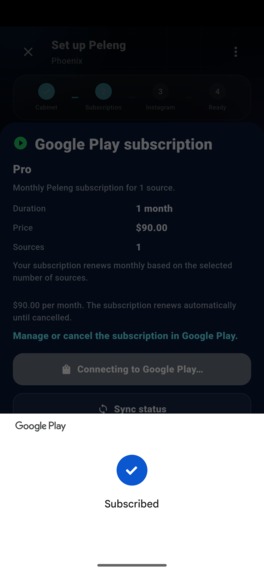
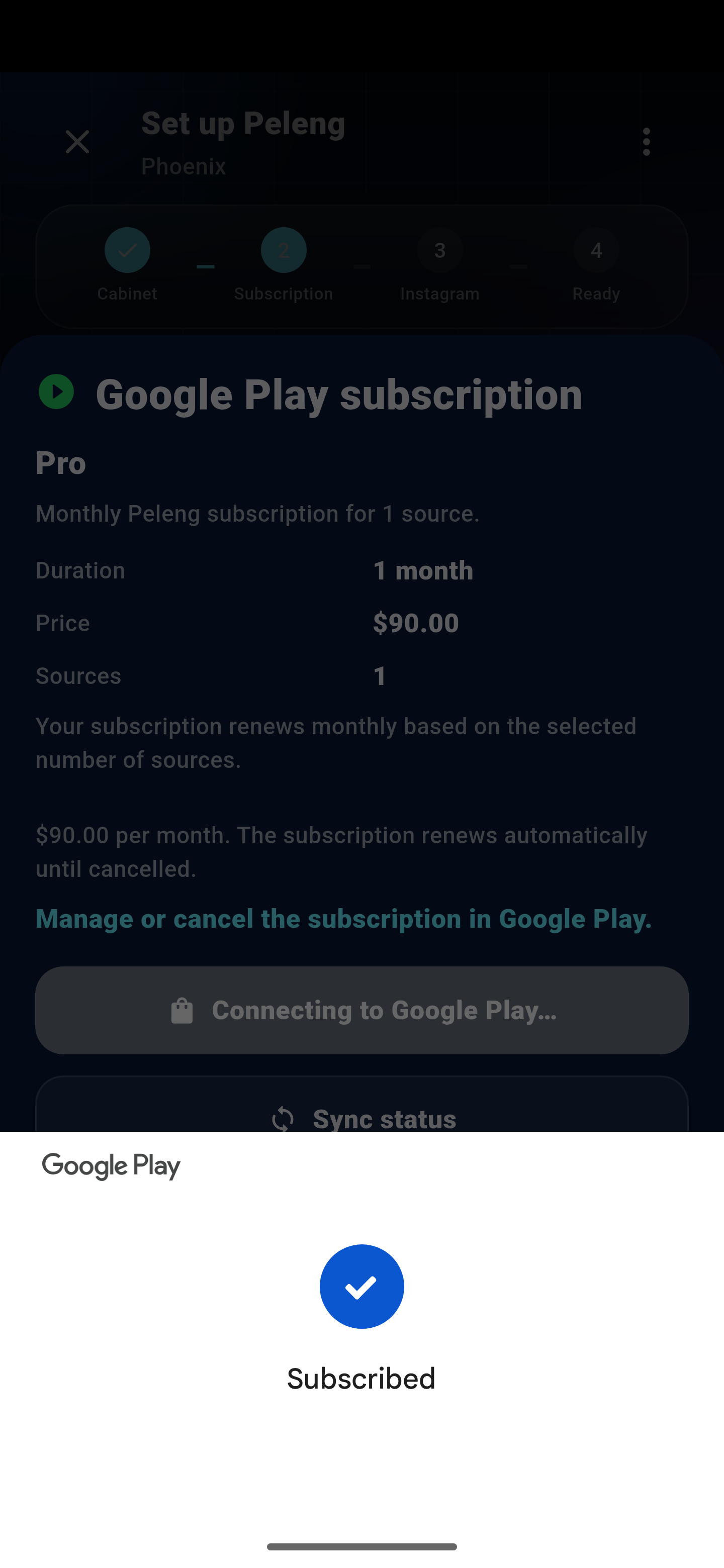
Secure Google Play subscription confirmed and synchronized with Peleng.
-
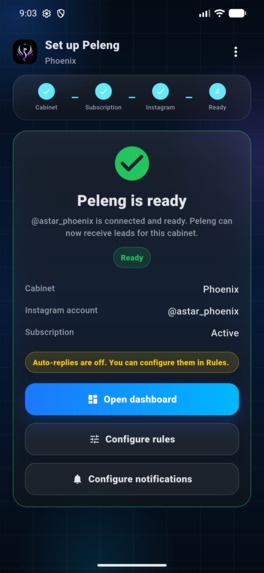
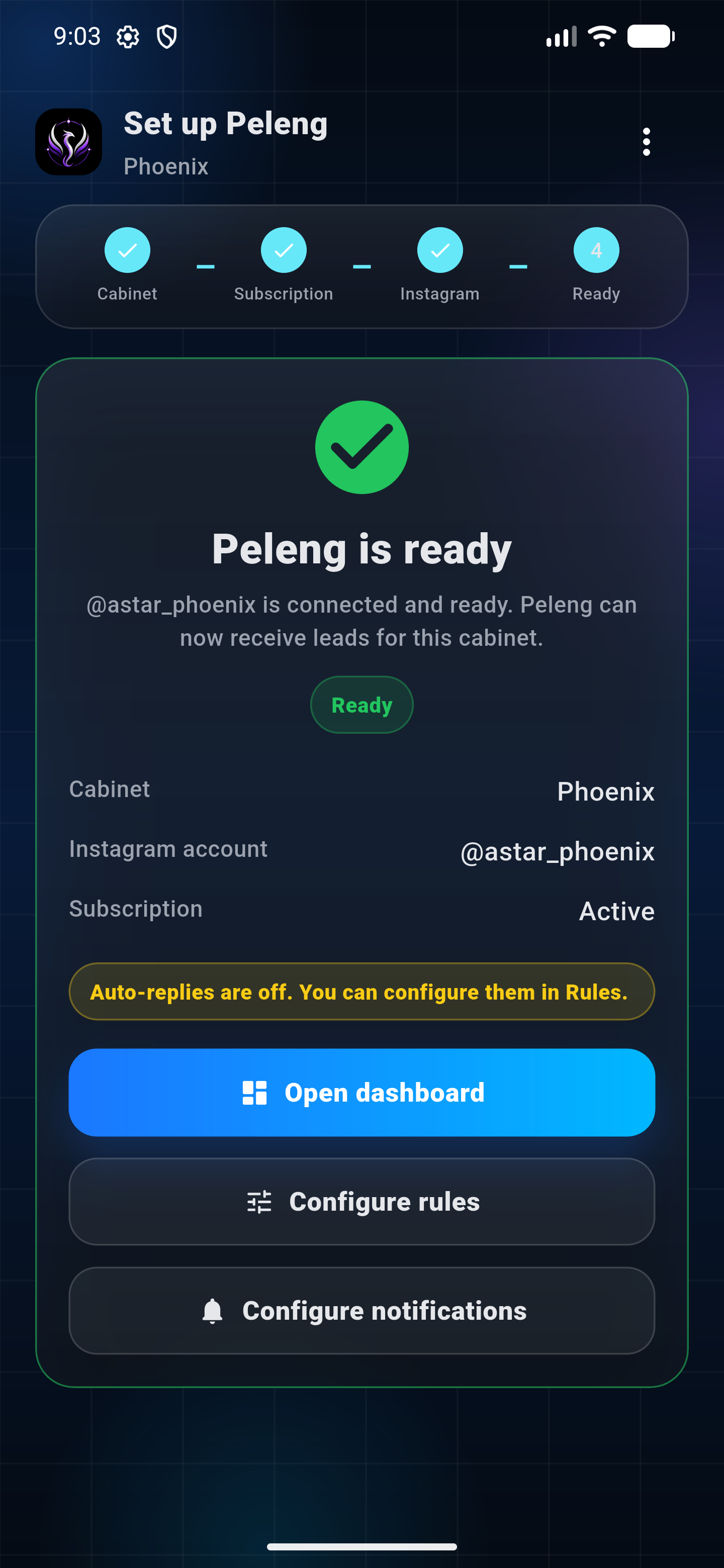
Owner setup: cabinet access, subscription, and the Instagram connection shown in this onboarding screen.
-
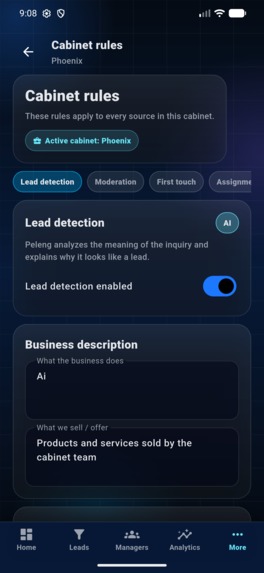
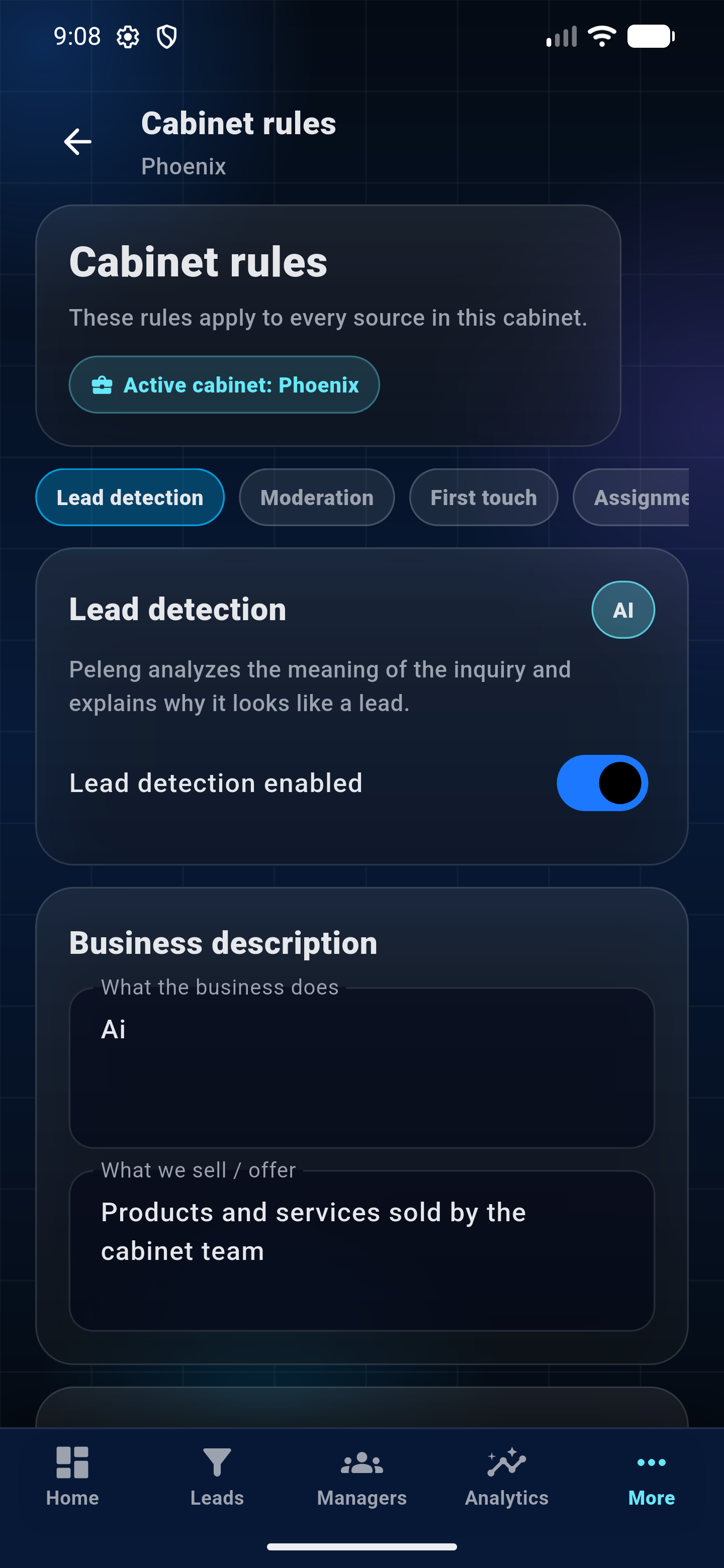
Owner-defined lead detection and configurable business rules for each secure cabinet.
-
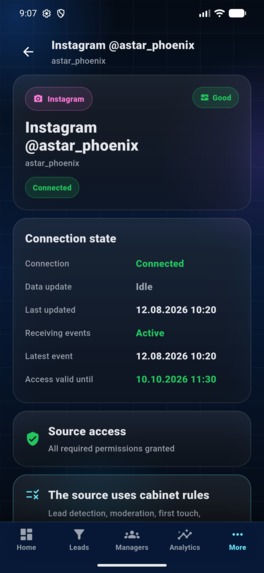
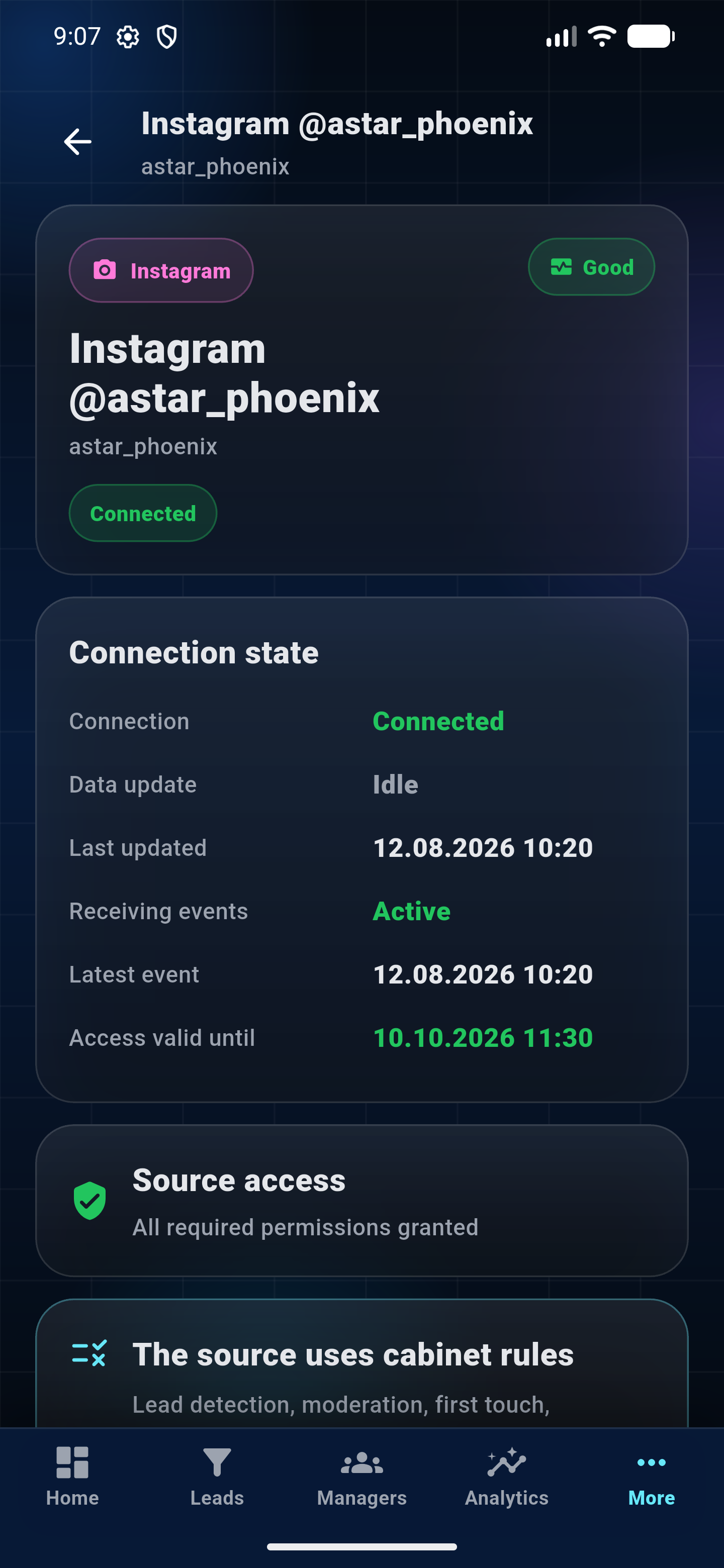
Live Instagram connection status, permissions, event reception, and access validity.
-
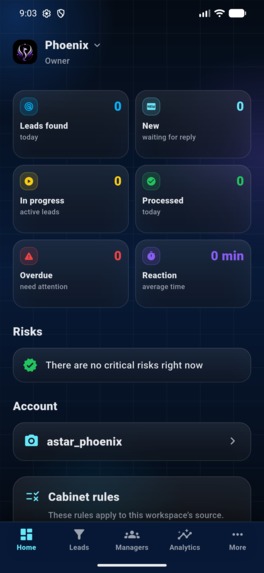
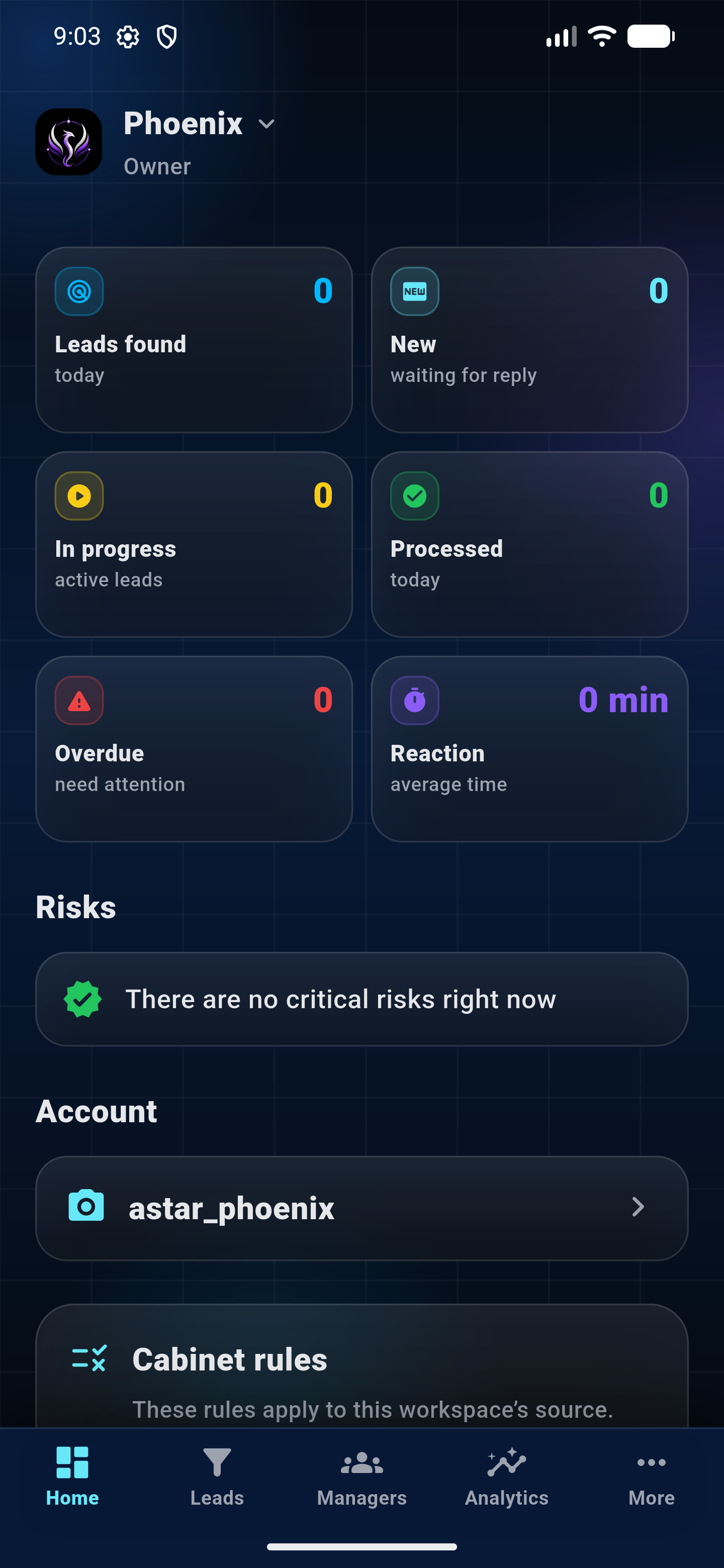
Owner dashboard with real-time lead status, response metrics, and account overview.
-
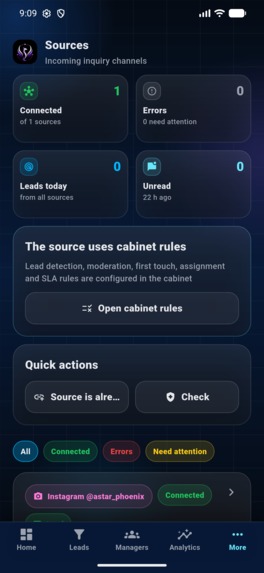
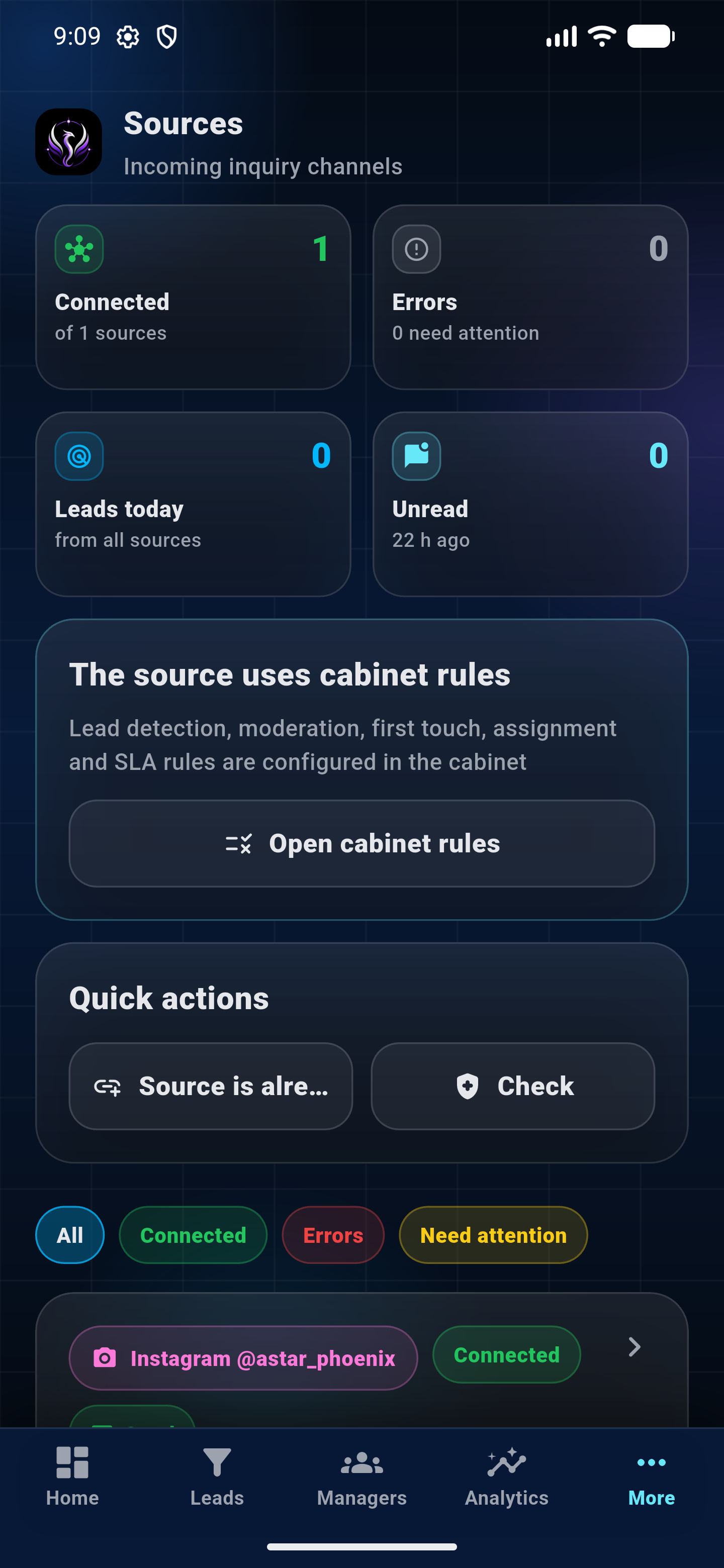
Instagram source center with health checks, event monitoring, and cabinet rules.
-
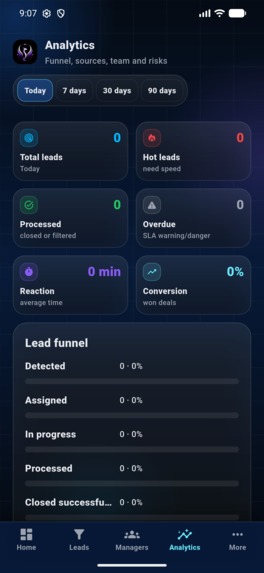
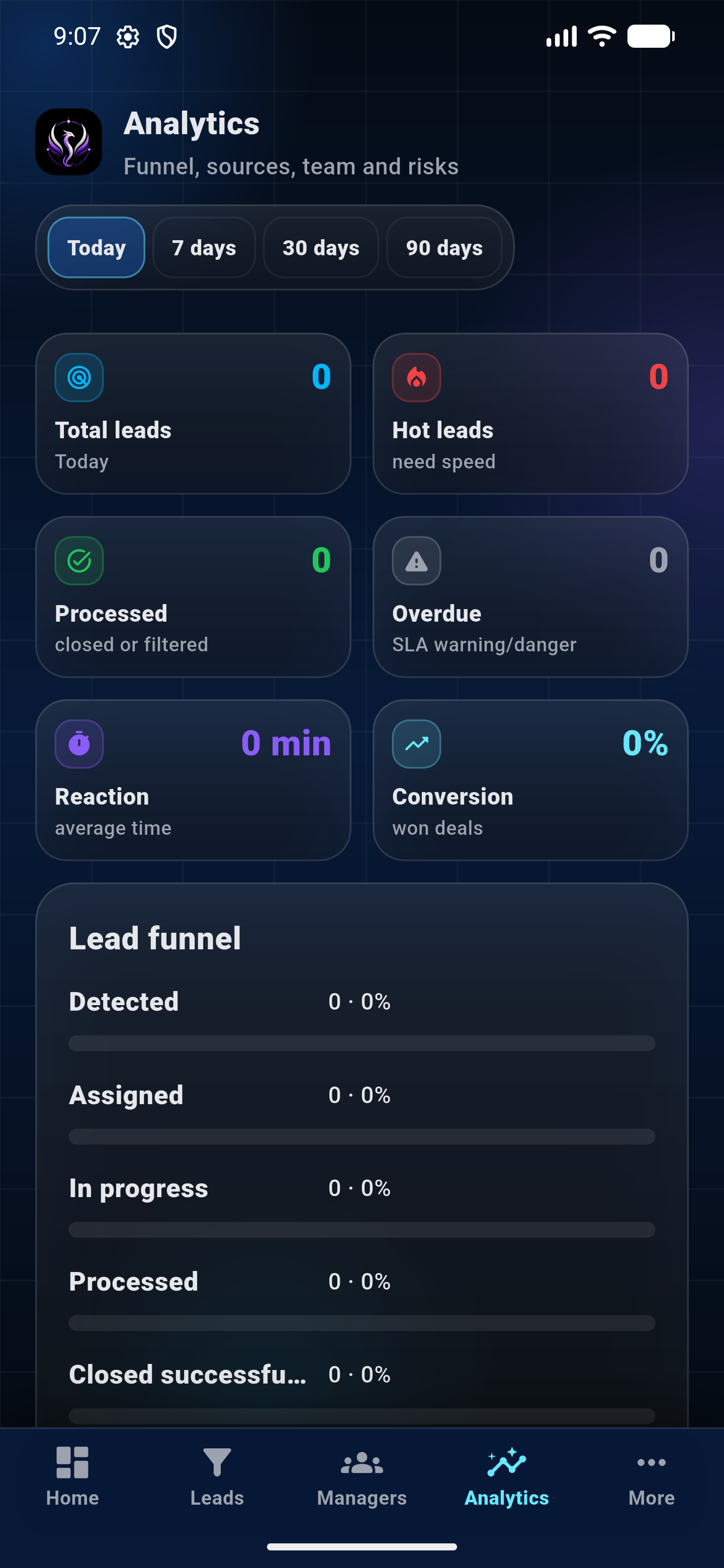
Lead analytics for volume, response time, conversion, and funnel performance.
-

App Icon

Peleng: a secure sales office for Instagram, WhatsApp and Telegram
Turn customer conversations into accountable sales while keeping channel access and customer contacts under the owner's control.
Inspiration
For a small business, Instagram, WhatsApp and Telegram often become the storefront, inbox, customer database, and sales desk. As the team grows, owners need faster replies and clear responsibility without distributing account credentials or unrestricted access to customer contacts.
Peleng brings that daily work into one cabinet: an isolated business workspace with its own team, connected channels, operating rules, subscription, and analytics. Owners control the operation; managers handle their assigned conversations in the Android app or web workspace.
What it does
One workspace, three connected channels. Peleng detects buying intent in Instagram comments and DMs using the owner's business context and rules. WhatsApp and Telegram conversations reach the team in the same sales workspace. Customers stay in their existing messenger and do not need to install Peleng. Each conversation stays tied to its original connection, and replies return through that channel. Customer identities are not automatically merged across channels.
From first contact to repeat sale. Eligible leads can receive a configured automatic first contact, subject to channel rules, and are assigned to an available team member. Managers reply, add internal notes, use owner-defined saved replies, and record either a sale with amount and currency or a “Not a lead” outcome. A new customer message can reopen a completed conversation; the earlier sale remains in its history and sales reporting.
A team that includes the owner. One cabinet supports up to five managers, plus the owner. The owner can participate in round-robin or least-load assignment on the same basis as managers, or opt out. New owners participate by default. Work status and participation determine eligibility; Peleng no longer imposes a numerical cap on a team member's active leads.
Protect the account and customer base
Only the owner connects business channels. Managers work inside Peleng without receiving channel passwords or provider access tokens.
When Client Base Protection is enabled, customer identities are replaced with protected aliases, and detected phone numbers, email addresses, links, and messenger handles are masked. This includes the customer phone number shown for WhatsApp conversations. Protection also checks supported attachments and contact-bearing content such as filenames, QR codes, vCards, and images. Outgoing contact-sharing attempts can be blocked, while owner-approved company contacts remain usable.
A manager can request access for a specific lead. The owner can approve, reject, or revoke access, and temporary grants expire automatically. Approval is scoped to the relevant request and permissions; it does not permanently disable protection for the whole customer base. Owners can review protection events and access decisions in the security journal.
These controls reduce unnecessary exposure while letting the team keep serving customers.
Sell across languages
Incoming text and lead previews can be translated into the user's interface language, with the original available in the conversation under the same access rules. Managers can write in their own language, and Peleng prepares the customer-facing reply. A reply already written in the customer's language does not need an unnecessary translation.
The latest client also lets a user retry translation for any incoming text message. Peleng re-detects the language and translates again without changing the original or sending anything to the customer. Conversation history loads in pages, and reading older messages no longer jumps back to the bottom when new messages arrive.
Make daily work visible
The owner dashboard and manager workspace distinguish confirmed leads, messages waiting for a reply, conversations waiting for the customer, completed sales, and overdue work. Weekly views follow the cabinet's time zone, and a previous sale remains visible when its conversation becomes active again.
Owners can review workload, response-time metrics, first-response SLA, conversion, and recorded sales. SLA can respect the cabinet's working schedule. Dashboard counters load independently of the full lead history, so the daily overview does not need to wait for every conversation.
For Instagram comments, the owner can configure Off or Auto-hide moderation and review moderation events. Auto-hide is reversible; Peleng does not use comment deletion as its moderation action.
RevenueCat and the business model
Peleng uses a B2B subscription with a base price of USD 90 per cabinet per month, with a five-day trial for eligible first-time subscribers. Store-localized prices and eligibility apply.
A paid cabinet includes up to five managers plus its owner and supports Instagram, WhatsApp and Telegram connections. Connecting additional supported channels inside that cabinet does not require another Peleng subscription. Separate business cabinets require additional paid capacity; the supported subscription tiers cover one to five cabinets. Meta's own channel requirements and charges remain separate.
We charge for the business workspace because that is where team accountability, rules, protection, and commercial results live. Owners can grow the team within the included allowance and add a supported channel without another channel fee.
On Android, RevenueCat connects Google Play Billing to Peleng's backend entitlement system. We use account-level customer identity, purchase restoration, webhook-driven subscription updates, and server reconciliation. The backend translates subscription capacity into access to paid cabinets, so switching channels does not consume another paid cabinet slot. The web workspace has a separate OCTO payment path; Android purchases remain with Google Play and RevenueCat.
How we built it
The Android and web clients use Flutter and Dart. The backend uses Python, FastAPI, PostgreSQL, SQLAlchemy, and Alembic, deployed with Docker behind Traefik. Background workers process durable incoming events and outgoing delivery jobs. OpenAI supports classification, moderation, and translation tasks; Firebase Cloud Messaging delivers operational notifications.
The major architectural change is a shared channel kernel. Channel integrations handle provider authorization, event normalization, delivery rules, and transport. Lead assignment, working hours, SLA, contact protection, translation, billing, and analytics stay at cabinet level. This keeps the sales workflow consistent while respecting each channel's capabilities.
Challenges and lessons
The difficult work was preserving trust across asynchronous systems: preventing webhook retries from duplicating work, handling uncertain send results, keeping customer data isolated between cabinets, expiring temporary access safely, and calculating response obligations around business hours.
Multichannel work also taught us to distinguish a green connection status from verified message delivery. Real incoming messages, replies, and delivery/read receipts are stronger evidence than configuration alone. Language detection needed the same discipline: Cyrillic text is not necessarily Russian, and users need a way to correct a stale translation.
What we accomplished during Shipaton
We shipped an Android app on Google Play, a production backend, a web workspace, and a working RevenueCat entitlement path. Peleng has evolved from an Instagram sales office into a shared Instagram, WhatsApp and Telegram workspace, with cabinet-based billing, owner participation, repeat-sale history, protected conversations, and a simpler daily interface.
Two-way WhatsApp messaging and delivery/read receipts have been verified on the connected business account. Meta App Review for WhatsApp has been completed. Businesses can connect WhatsApp through owner-managed onboarding, subject to Meta’s applicable business requirements. Instagram, WhatsApp and Telegram are all connected and available in Peleng.
Usage remains early and substantially test-driven. We do not present test installations as validated market traction or claim unverified conversion or revenue results.
What's next
Run guided pilots with independent businesses and measure the path from signup to an activated cabinet, first customer conversation, first recorded sale, trial-to-paid conversion, and repeat usage. Recent Android releases add opt-in Meta install/open measurement to support acquisition testing; attribution and campaign performance still need validation.
The goal is practical: give a small business one place to run its sales team, protect customer relationships, and understand whether conversations are turning into sales.
Built With
- ai
- alembic
- android
- dart
- docker
- fastapi
- firebase-cloud-messaging
- flutter
- google-play-billing
- google-sign-in
- machine-learning
- meta-graph-api
- openai
- pgvector
- postgresql
- python
- rest-api
- revenuecat
- sqlalchemy
- telegram
- traefik

Log in or sign up for Devpost to join the conversation.