-
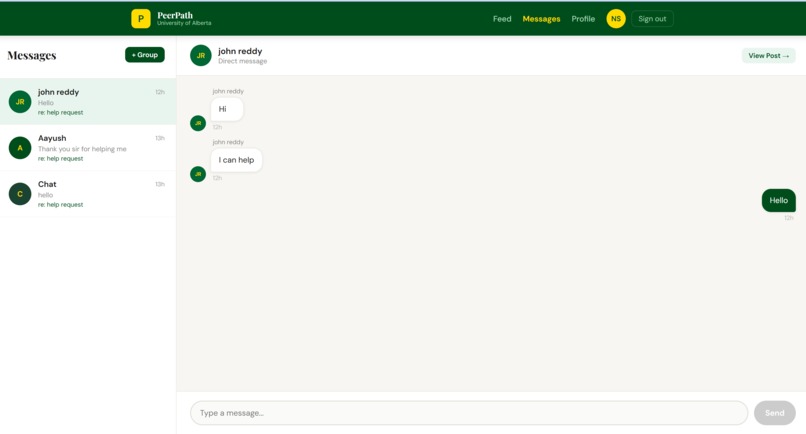
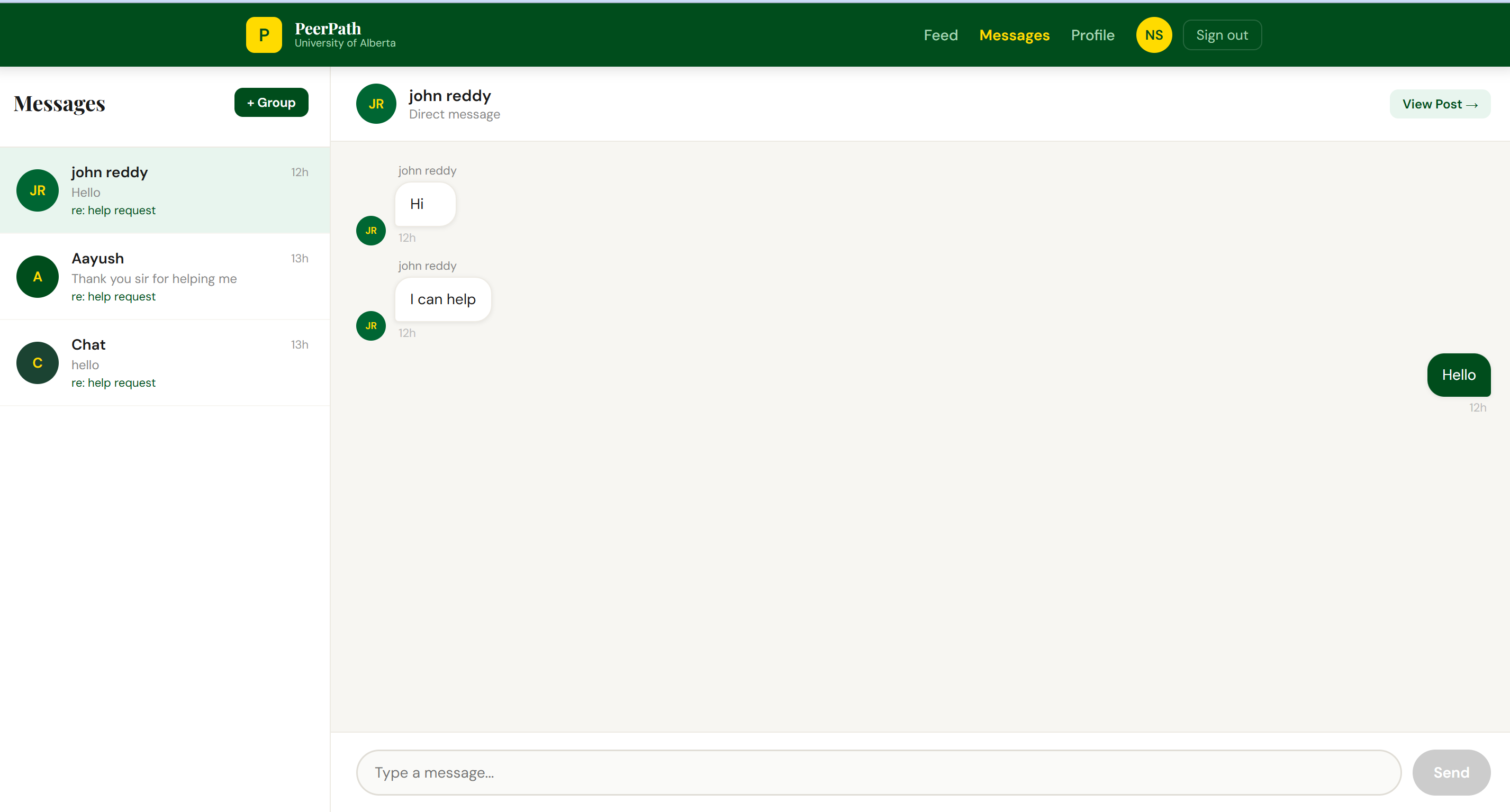
Real-time messaging — when someone volunteers to help, a private chat opens between them instantly.
-
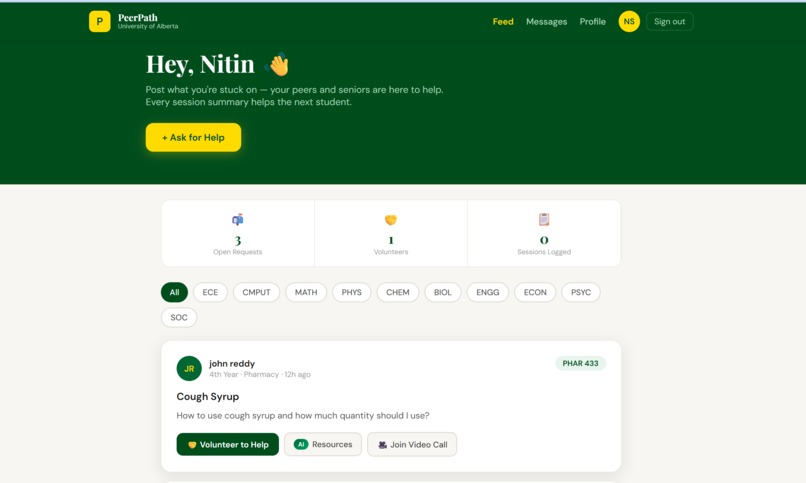
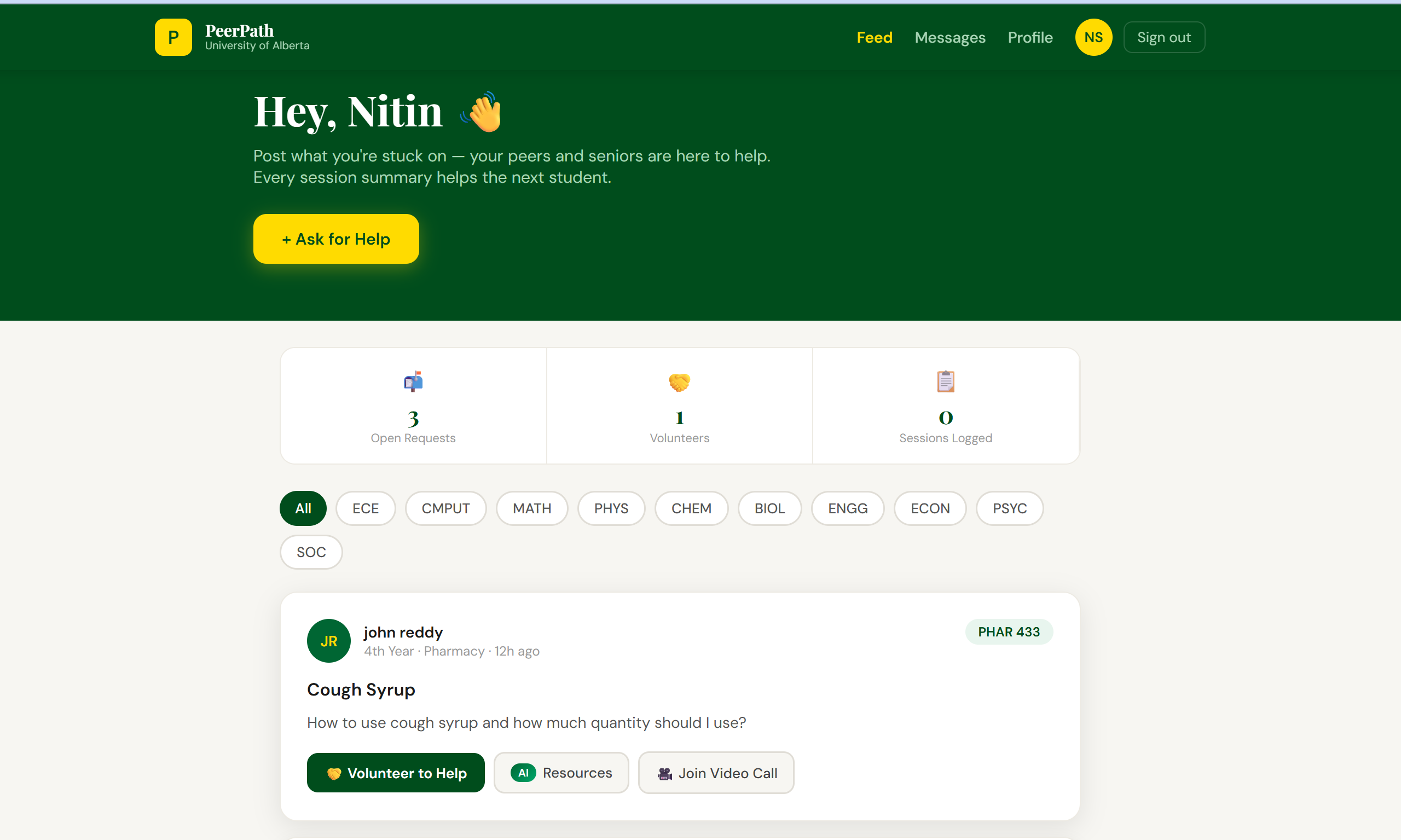
The main feed — students post what they're stuck on, filtered by department, with AI resources and video call built right in.
Inspiration
Last semester I had a deferred exam and I was really stressed trying to catch up. I emailed my professor asking for help — no reply. So I went to the UAlberta tutoring website thinking I'd find some help there, but the rates were honestly way too expensive, like I'm already a broke student you know?
And I just kept thinking — there has to be someone on campus who took this course, who gets this stuff, and who wouldn't mind helping me out. A senior, a peer, anyone. But there was no way to reach them. No platform, no space for that kind of casual academic help.
So I built one.
What it does
PeerPath is a platform where UAlberta students can post what they're struggling with — the course, the topic, exactly what isn't clicking — and other students can volunteer to help for free. No hourly rates, no booking forms, just people helping people.
The moment someone volunteers, a private chat opens between you two automatically. You can message back and forth, hop on a video call right on the platform, and it also pulls up AI-generated resource suggestions and YouTube videos specific to your exact question. After the session the tutor writes quick notes and AI turns them into a clean public summary — so the next student with the same problem benefits too.
The whole idea is that it's not just about getting help — it's about building real connections on campus. The person who helps you with ECE 202 today might become your study partner, your friend, or even a future colleague.
How we built it
I used React and Vite for the frontend, with all the backend logic running as serverless functions on Vercel. For the database and real-time chat I used Supabase, AI features run on Google Gemini, YouTube API handles video search, and video calls use Jitsi Meet embedded directly in the page.
I was really intentional about keeping the whole stack free — no paid APIs, no credit cards. Because the whole point of this app is to make academic help accessible and free, the platform itself should cost nothing to run.
Challenges we ran into
Real-time chat was the hardest part. Since Vercel serverless functions are stateless, I couldn't use traditional websockets. I ended up using Supabase Realtime where the frontend subscribes directly to database changes — messages appear instantly without even going through the API. Once it clicked it felt really elegant.
I also had some painful "works on localhost, breaks in production" moments with nested API routes on Vercel silently failing. Took a while to debug but got there.
Accomplishments that we're proud of
Honestly just shipping something real that actually works and is live today.
I'm proud that the entire stack is 100% free — Supabase, Gemini, YouTube, Jitsi, Vercel — all free tiers. For an app about making academic help affordable, that felt important.
I'm also proud that the AI features are genuinely useful, not just added for the sake of it. It reads the actual post and suggests specific resources for that exact topic.
And building real-time chat for the first time was a big personal win. Never done it before, figured it out, and it works.
What we learned
This was honestly a massive learning experience. First time building and deploying a full-stack app live. I learned how serverless functions work, how to handle real-time features, and how to write AI prompts that give actually useful and specific answers.
But honestly the biggest thing I learned was just — if something bothers you enough, build the solution. I was frustrated by an expensive tutoring website and a professor who didn't reply, and that frustration turned into something real.
I also want to be transparent — I used Claude AI to help me through a lot of the technical parts I didn't know yet. I'd never built a full-stack app before, so things like setting up serverless functions, Supabase Realtime, and the API architecture were all new to me. Claude helped me understand what I was building and why, not just copy-paste code. I learned by asking questions, breaking things, and figuring out what went wrong.
Honestly using AI as a learning tool while building felt very on-brand for a platform that's all about getting help from others when you're stuck.
What's next for Peerpath
I want to add UAlberta email verification so it stays a trusted campus community, a reputation system so good tutors get recognized, and notifications so you know instantly when someone volunteers on your post. Long term I'd love to bring PeerPath to other universities too — because every campus has this same problem.

Log in or sign up for Devpost to join the conversation.