Inspiration
Imagine yourself forming a study group with your friends. You have to jump between apps like When2Meet, Google Calendar, Canvas, and Messages or Instagram to organize a study group. When you're a busy student juggling so many classes, this is a kind of inconvenience that makes it harder for you to quickly form study groups. With this in mind, we built Peerlink to make it easier to make study groups by bringing together these fragmented features into one centralized, convenient app.
We recognized that study groups aren't only about academics, engaging in study groups is very social too. Most studying apps like Quizlet and Duolingo help you in studying, but no app helps you find people to study with. With Peerlink, we don't interfere with student studying methods—instead, we help make study planning and cooperation easier, combining academics with social media.
What it does
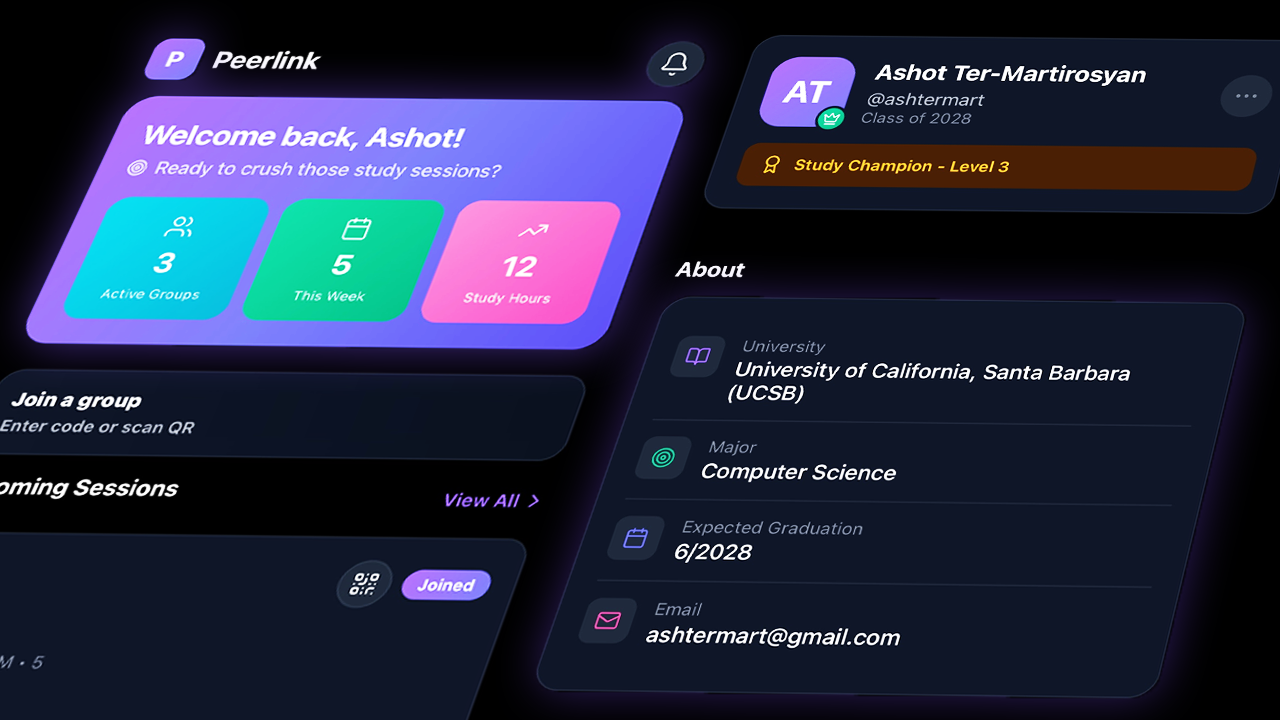
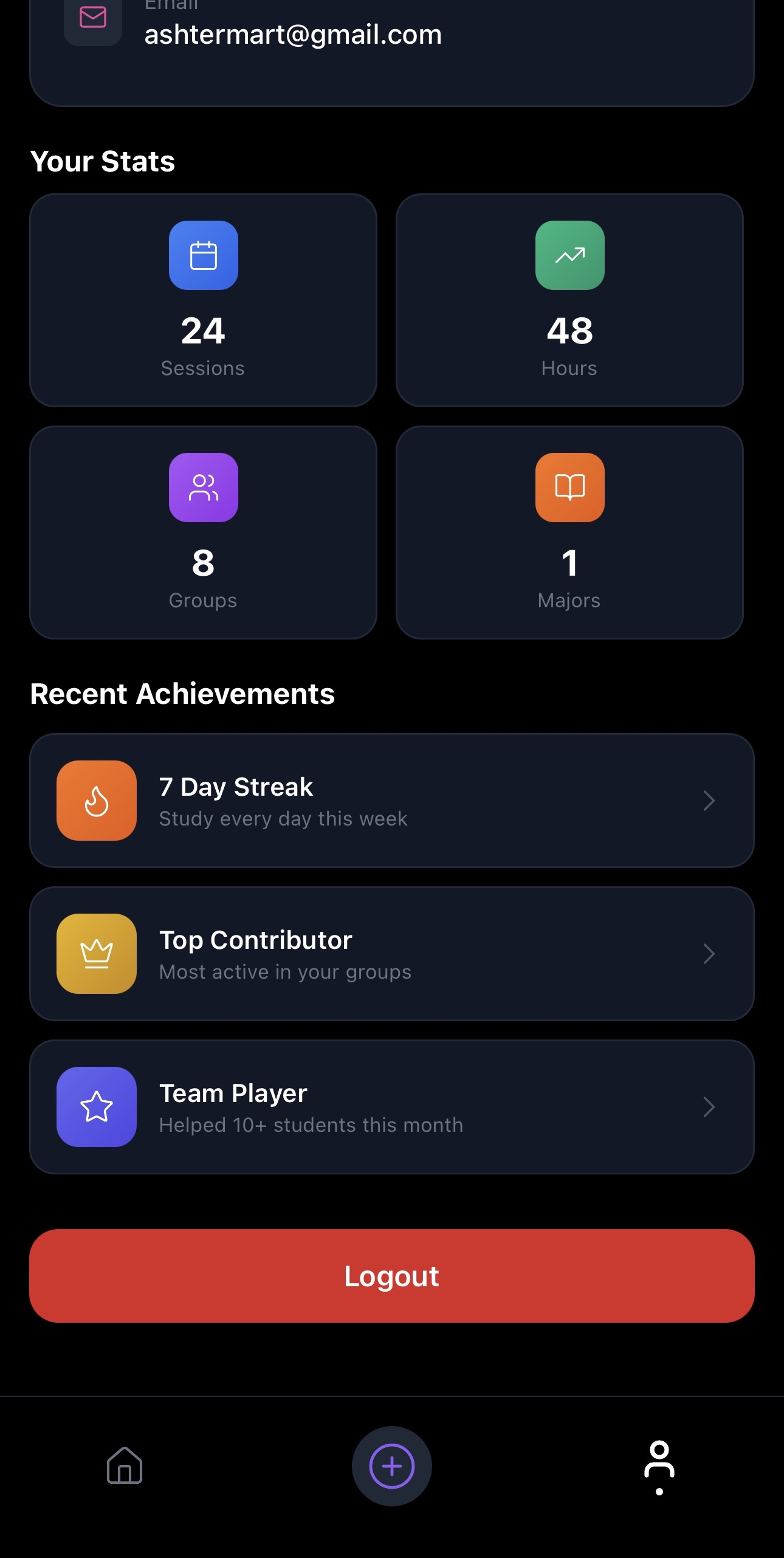
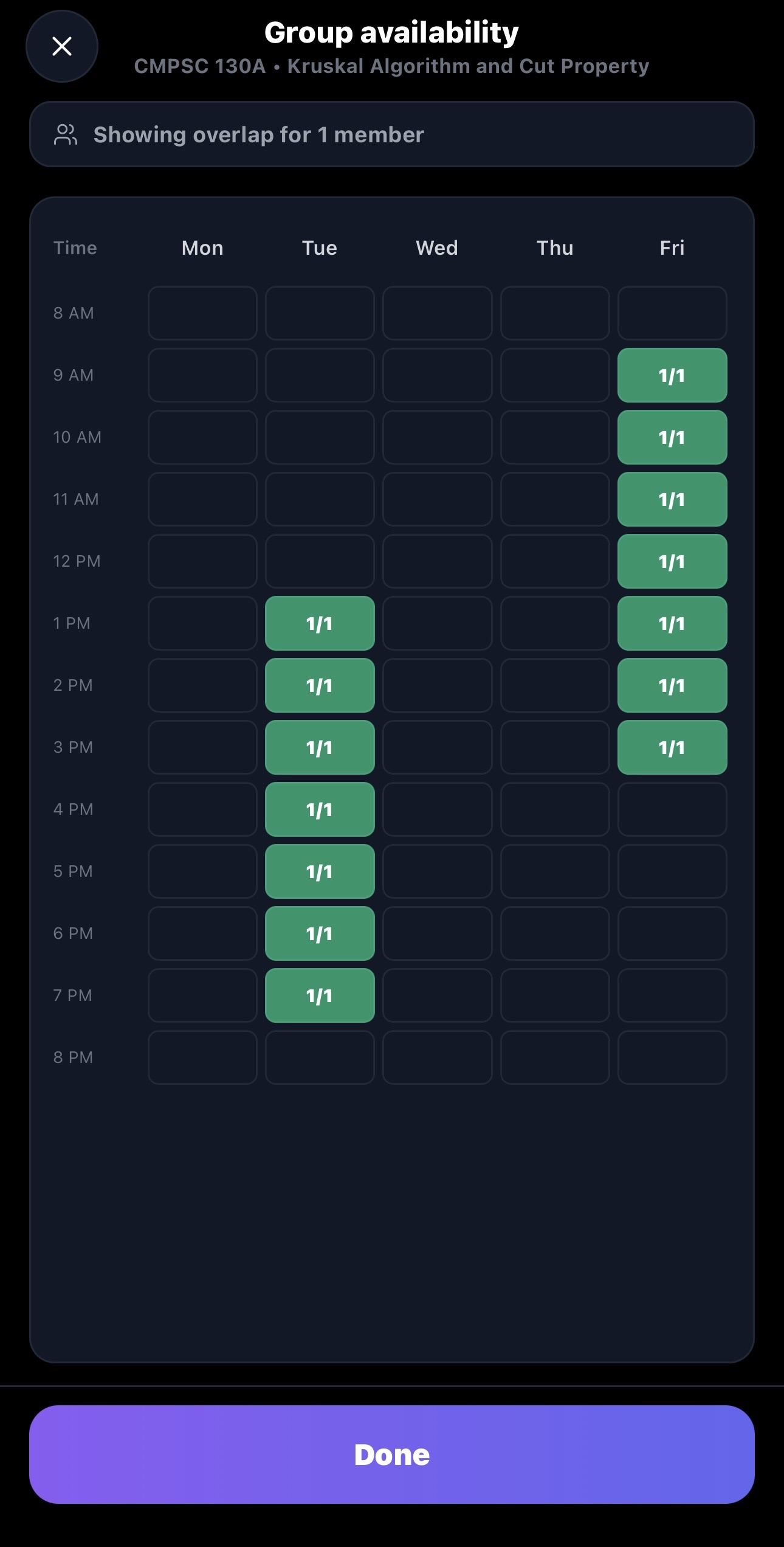
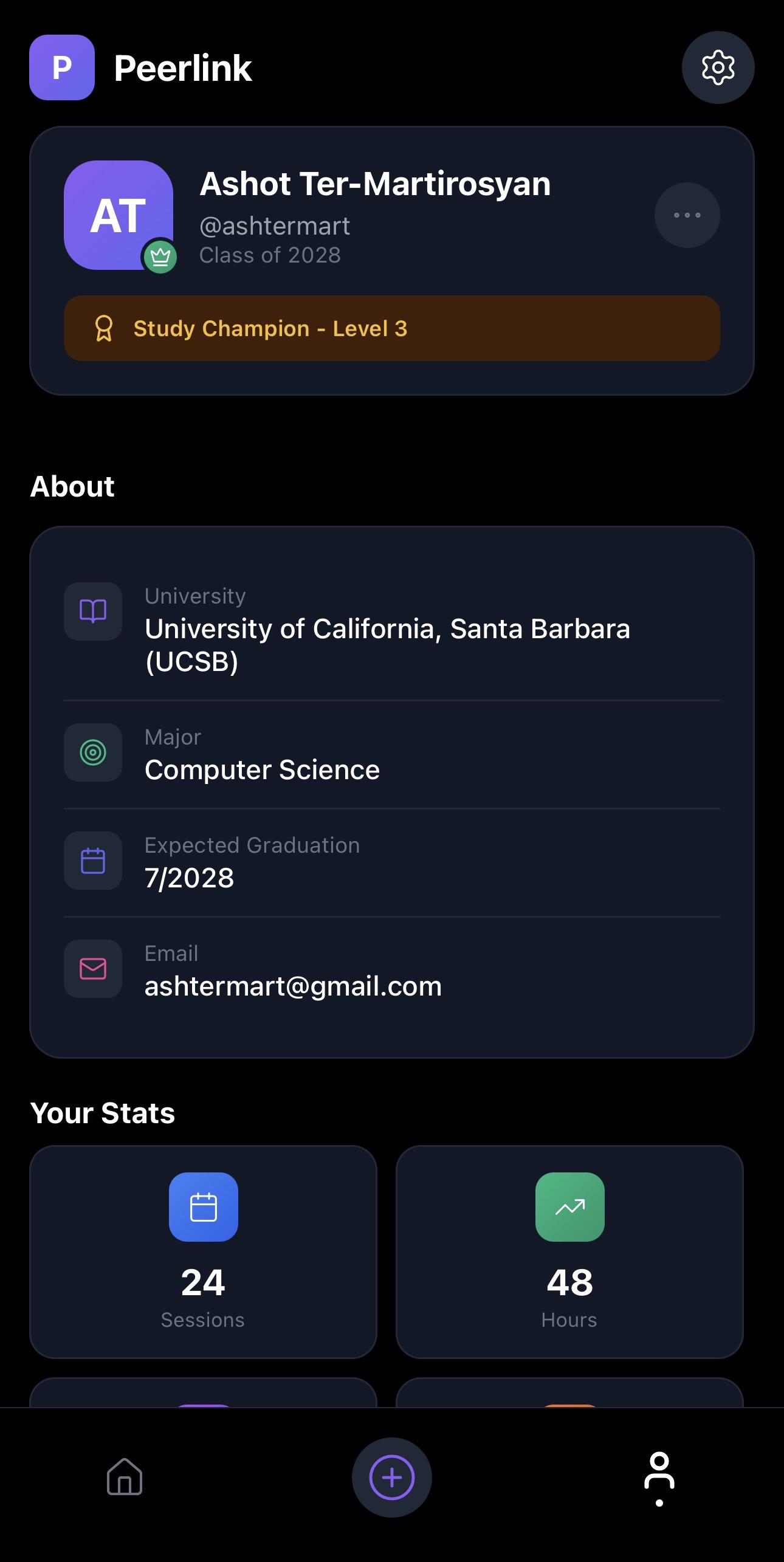
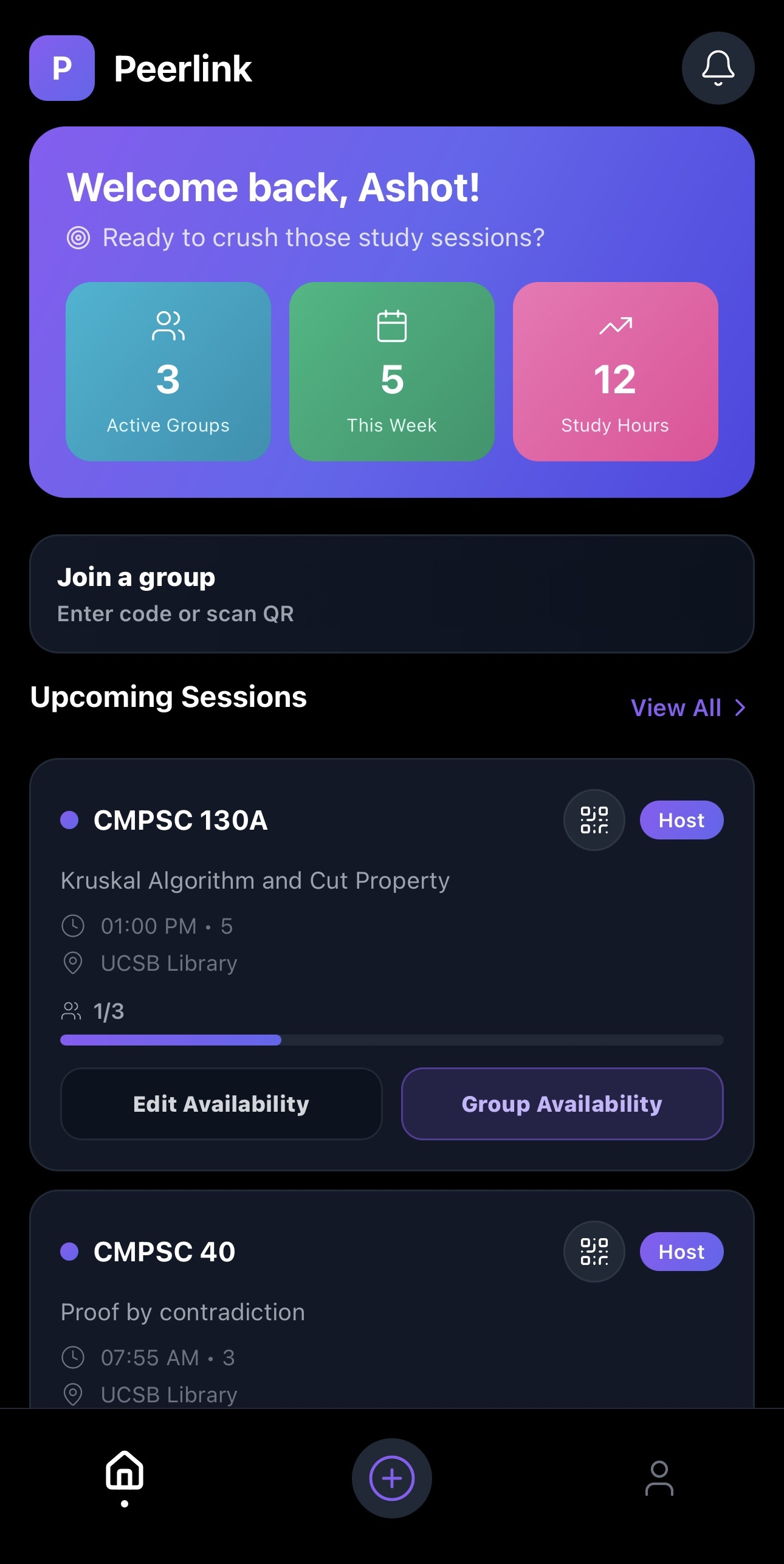
Peerlink is a mobile app that allows students to create study groups, make and share user profiles, and track study progress with occasional achievements. Students can register their accounts using their student emails, and afterwards they may create study groups for inputted classes. Then, they can share a QR or text-based code to invite friends into the group. Users can set their availability times for other students in the same study group to see.
How we built it
We employed the react-native library for our frontend and Firebase for our backend to build Peerlink. We built both ends of our stack using TypeScript, employing its type safety features to catch issues in our program. To make mobile development more efficient, we used Expo for rapid testing and implementation. We also used the lucide-react-native library to import icons.
Challenges we ran into
We wanted to push ourselves to perfect the way the website felt, ranging from animations to colors and interface. This kind of meticulous design meant taking on the responsibility for improving app visuals while making it easy to expand upon the app's current functionality.
Accomplishments that we're proud of
For our team's first hackathon and first mobile app, we're really proud to have created a mobile app that our team personally finds really useful. We're really proud of being able to set up the mobile development environment and that we picked up on this environment very quickly with little to no experience in that domain.
What we learned
Although we were familiar with React, we've never developed a mobile application before, so this is actually our very first mobile app! We had to pick up on the (subtle) differences between React for web development and React for mobile devices, and we quickly noticed that what would've worked in vanilla React would not work in React Native. This presented a surprising learning curve as we were working on our project. We learned what it took to build a full stack app for mobile devices.
What's next for Peerlink
We're looking to expand our audience beyond students: we'd like to integrate official campus organization accounts into Peerlink and expand the app's social features. We're also interested in creating a group chat feature for study groups and integrations with Google Calendar. We also want to work on more achievements for user profiles to incentivize continuous studying.


Log in or sign up for Devpost to join the conversation.