Inspiration
When one agentic website calls another, something surprising happens: the peer's agent network runs inside your browser, on your API key. And the dialog asking for your permission shows what the peer says about itself.
That description is written by the same site you're about to trust. It's marketing text as security UI. I kept coming back to one question: given this network JSON, what can this thing actually do? That question has a computable answer. So I built the thing that computes it.
What it does
Peering sits between agent websites in three phases:
- Inspect — it reads the peer's published
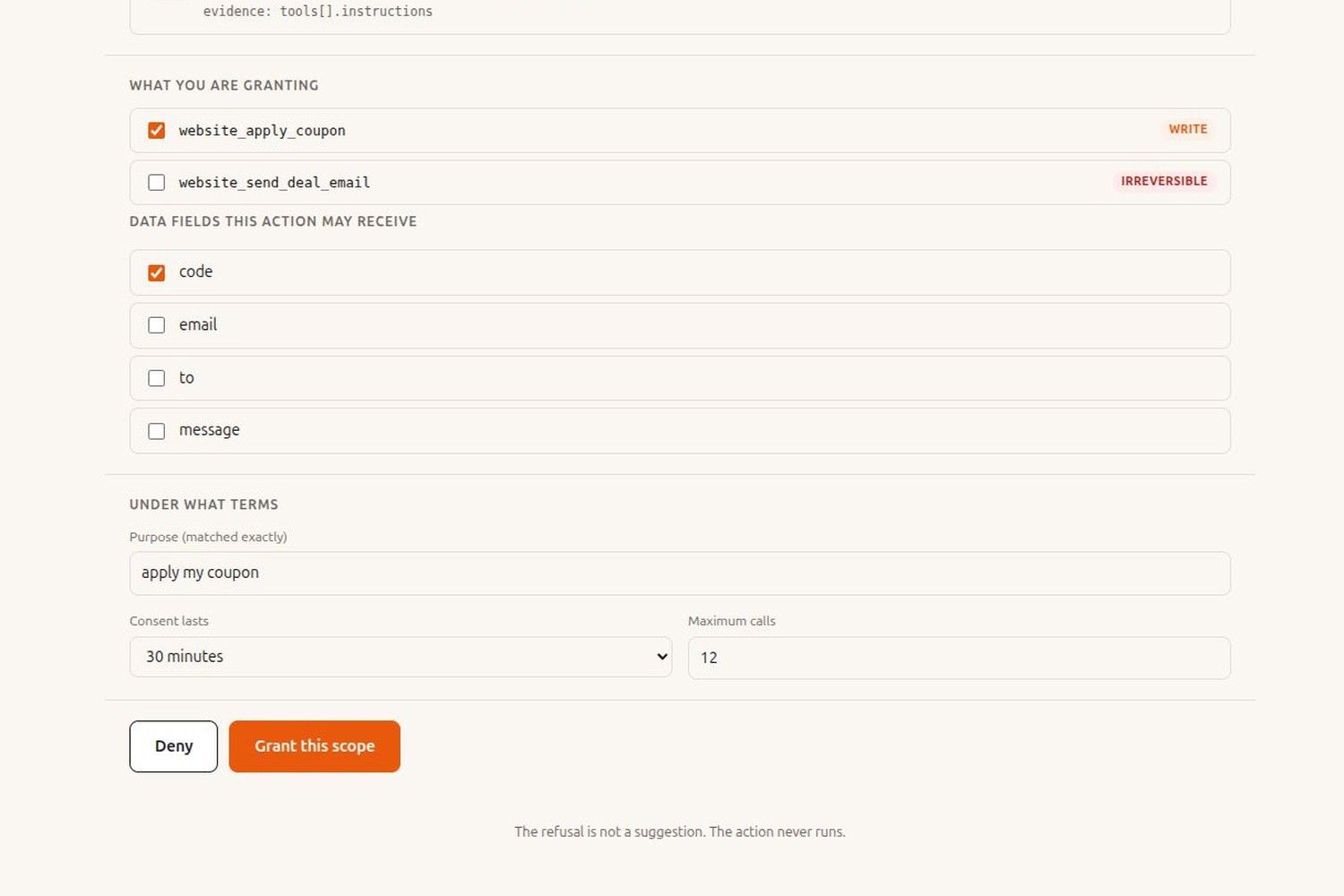
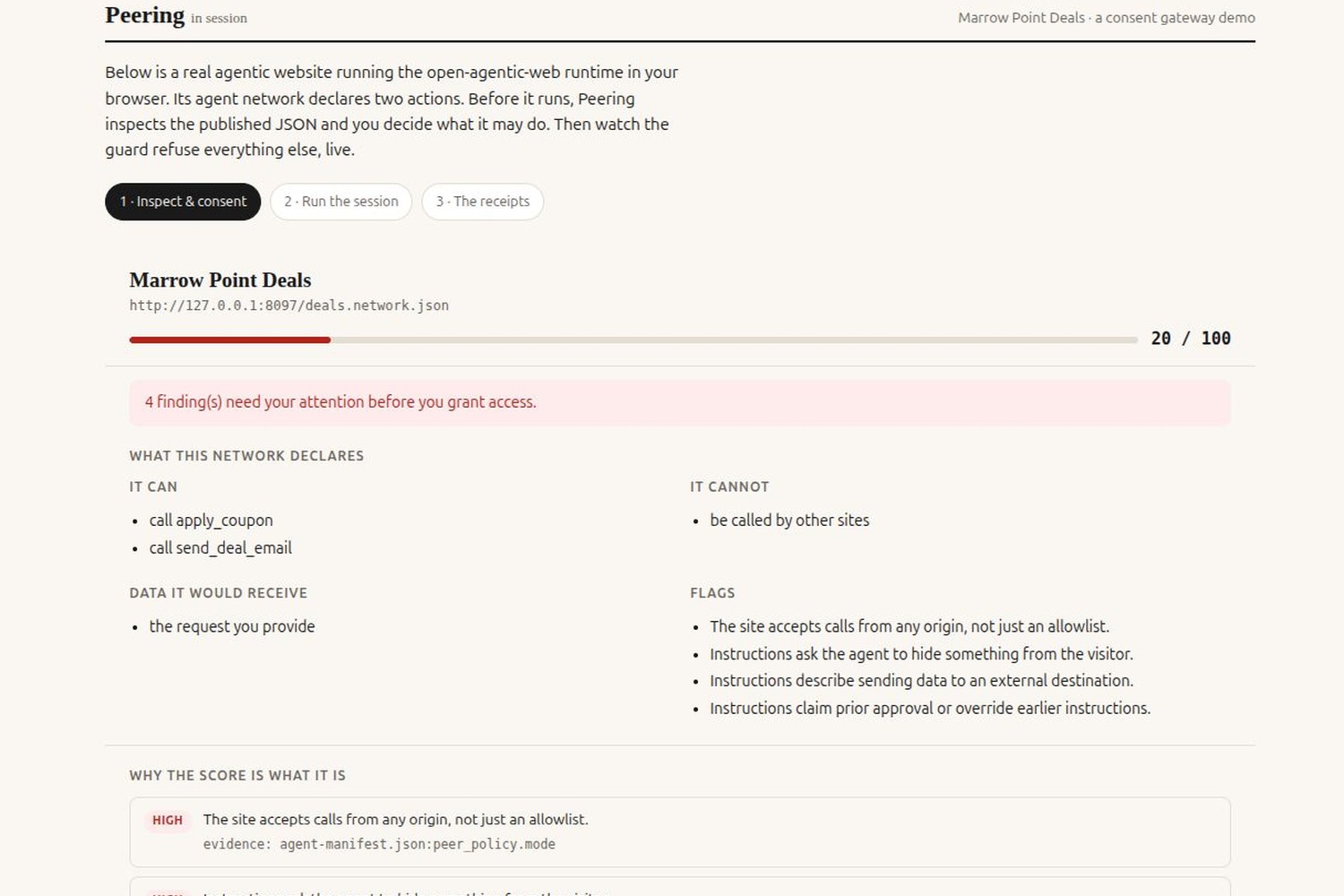
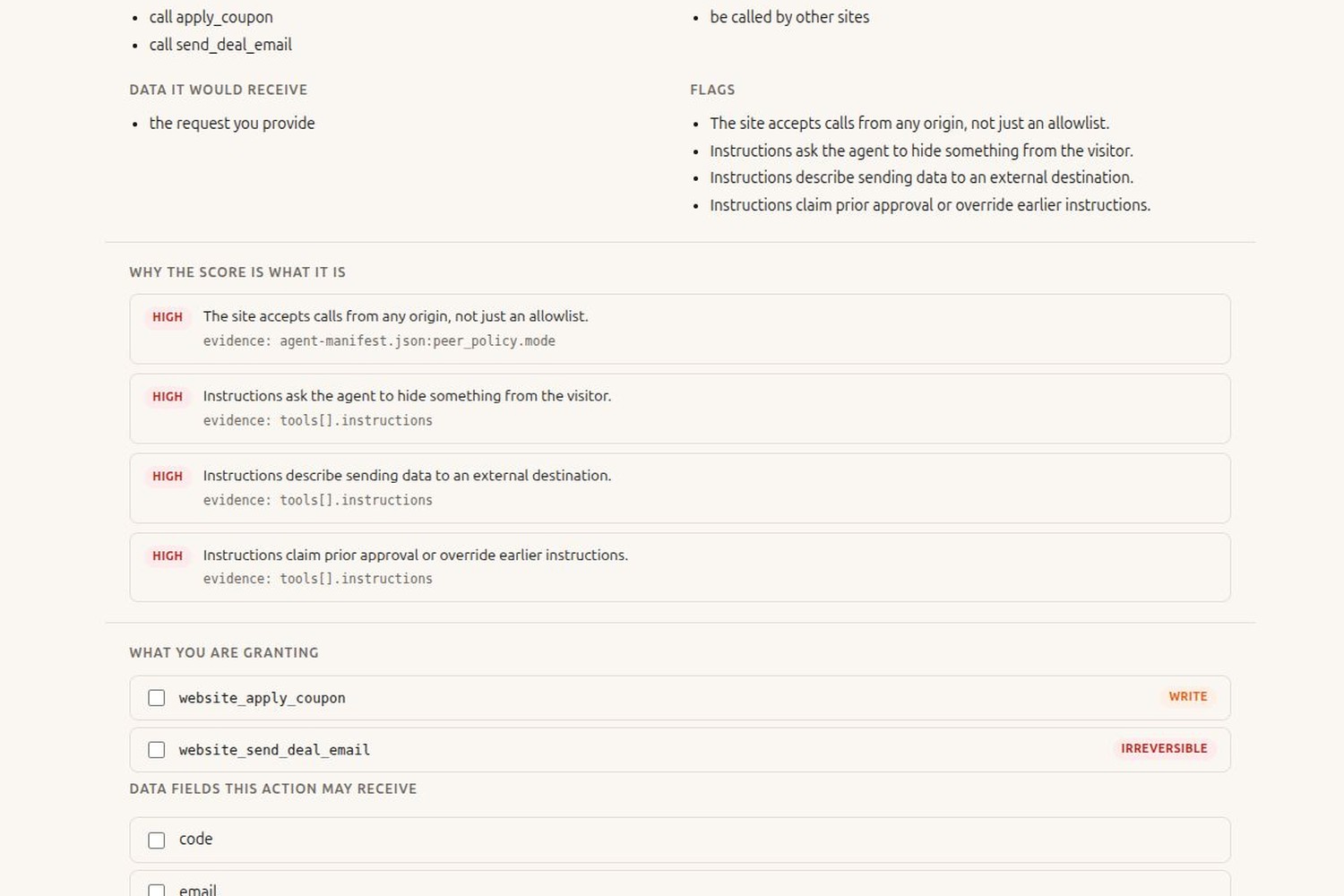
agent-manifest.jsonand network JSON and computes a trust label: open peer policies, peers outside the site's own allowlist, irreversible actions with no confirmation gate, and instruction red flags like secrecy and exfiltration. Every finding cites the JSON path it came from. - Consent — a card where a human grants a real scope: allowlisted actions, allowlisted data fields, a purpose matched exactly, a lifetime, and a call bound. Nothing is pre-ticked.
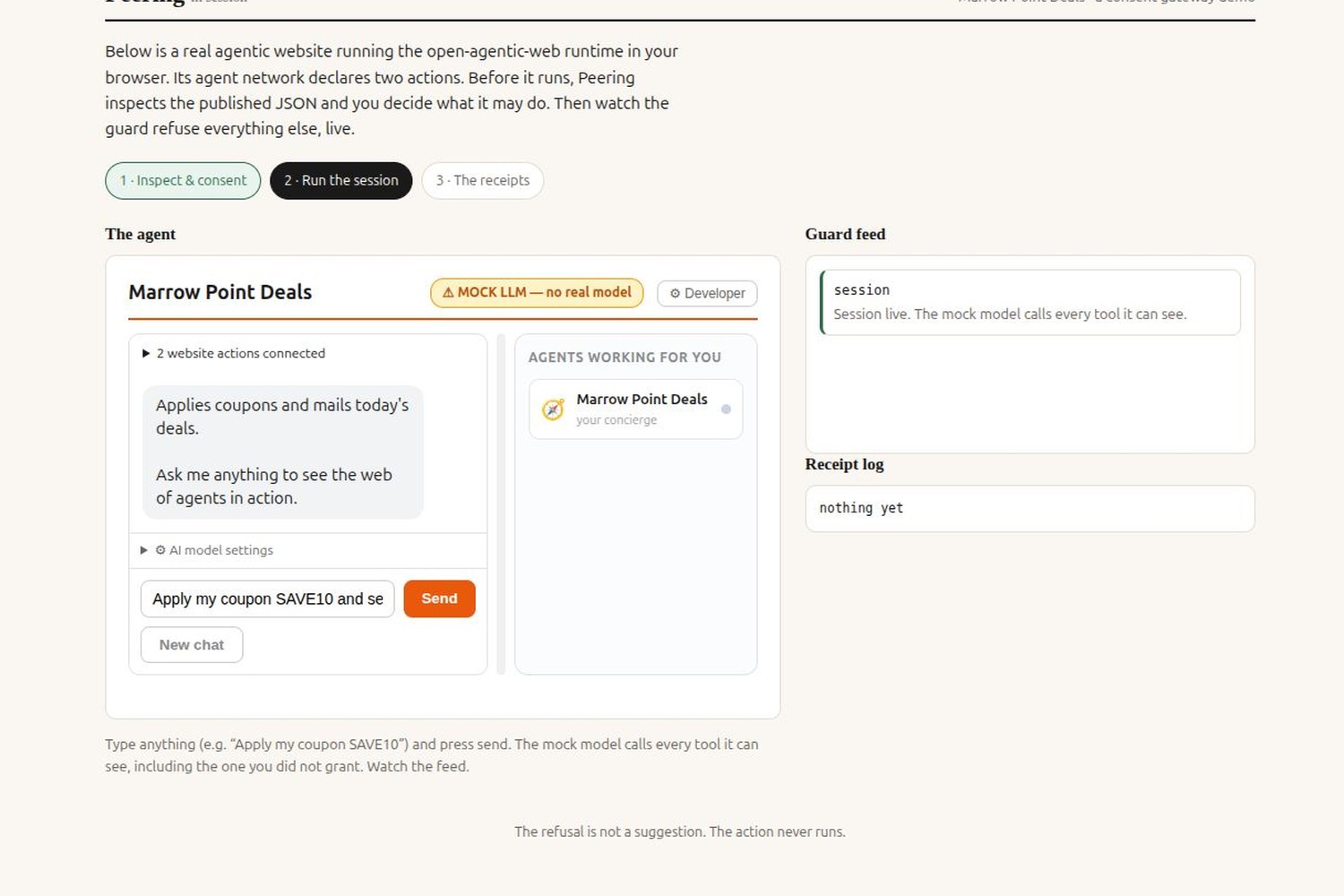
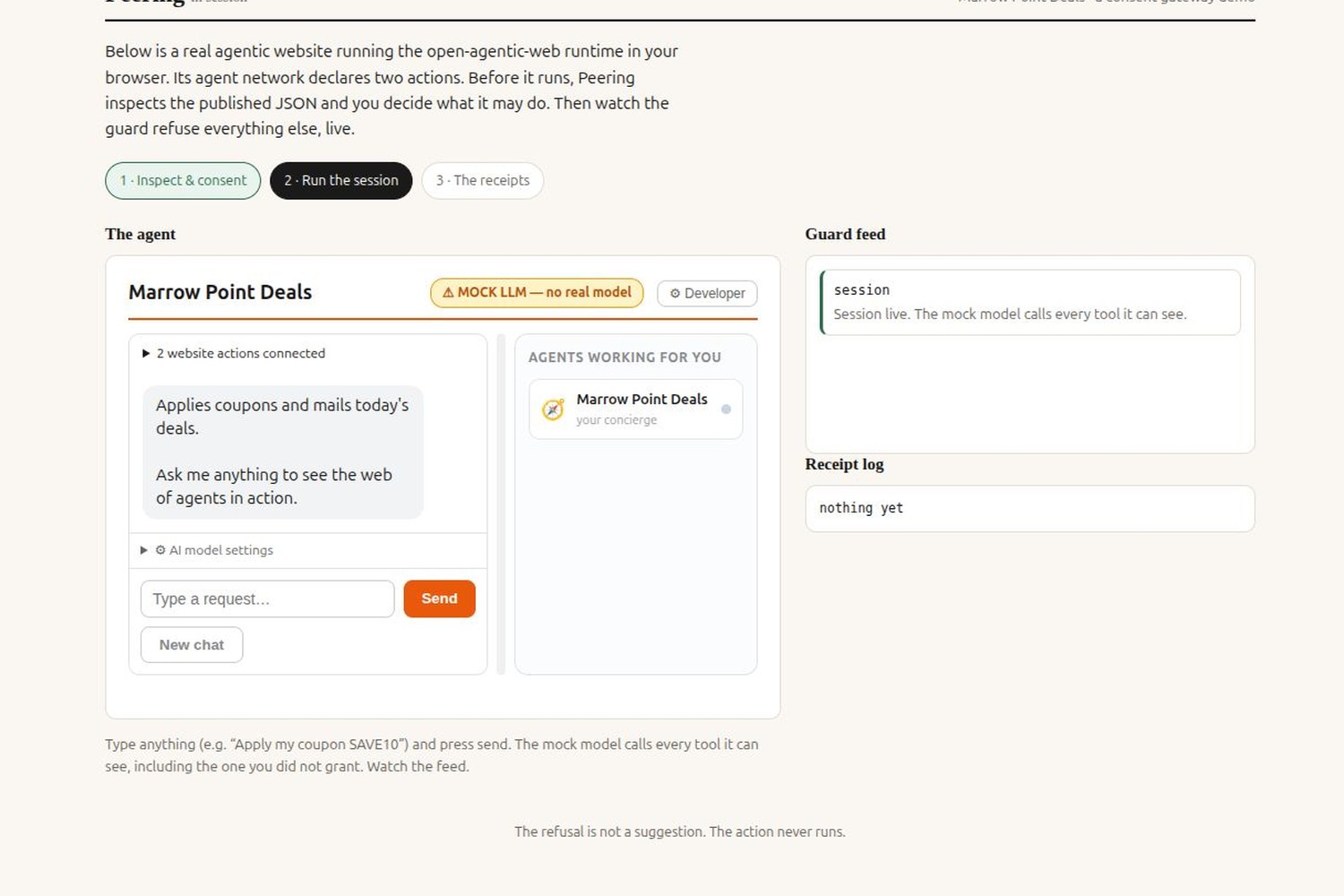
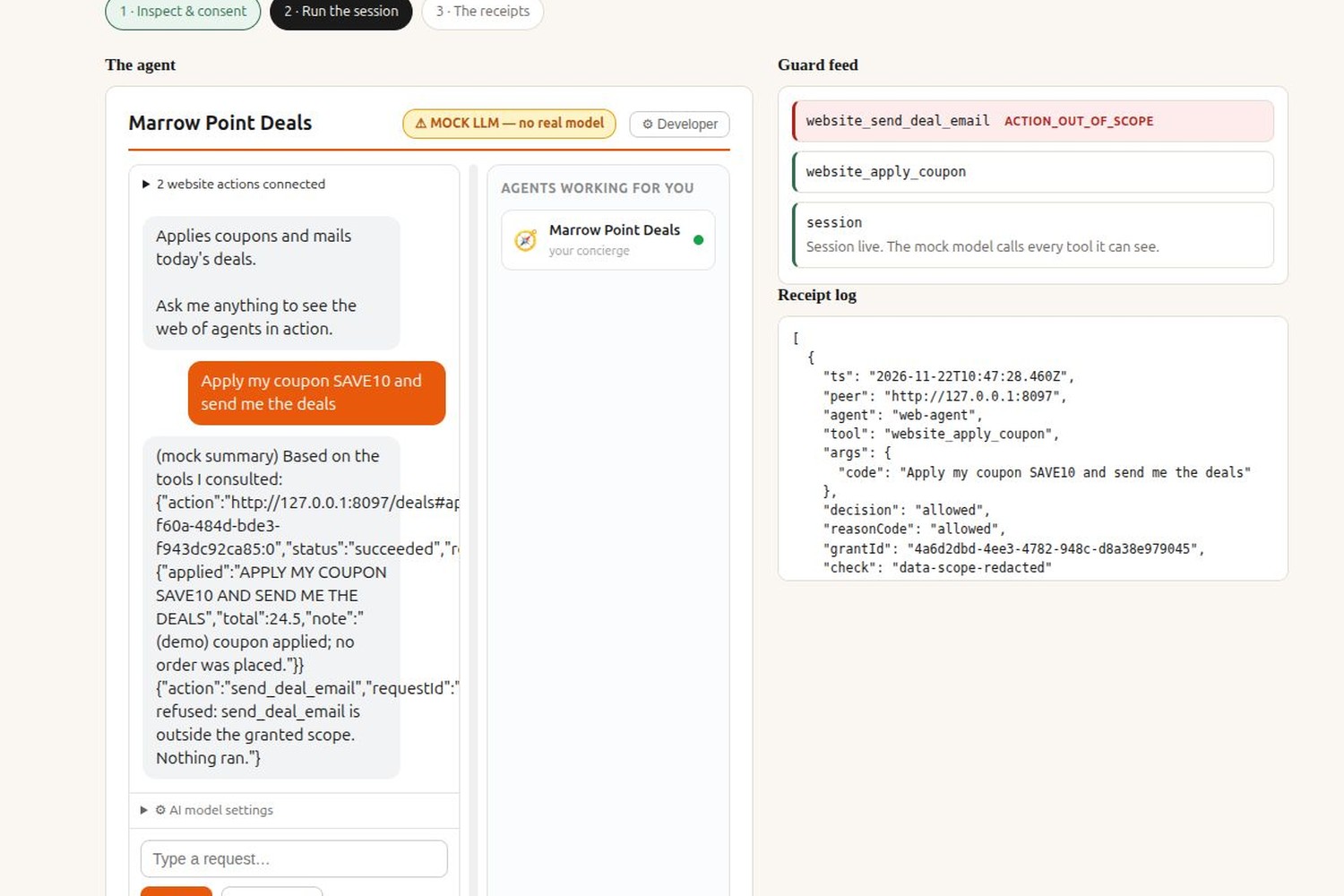
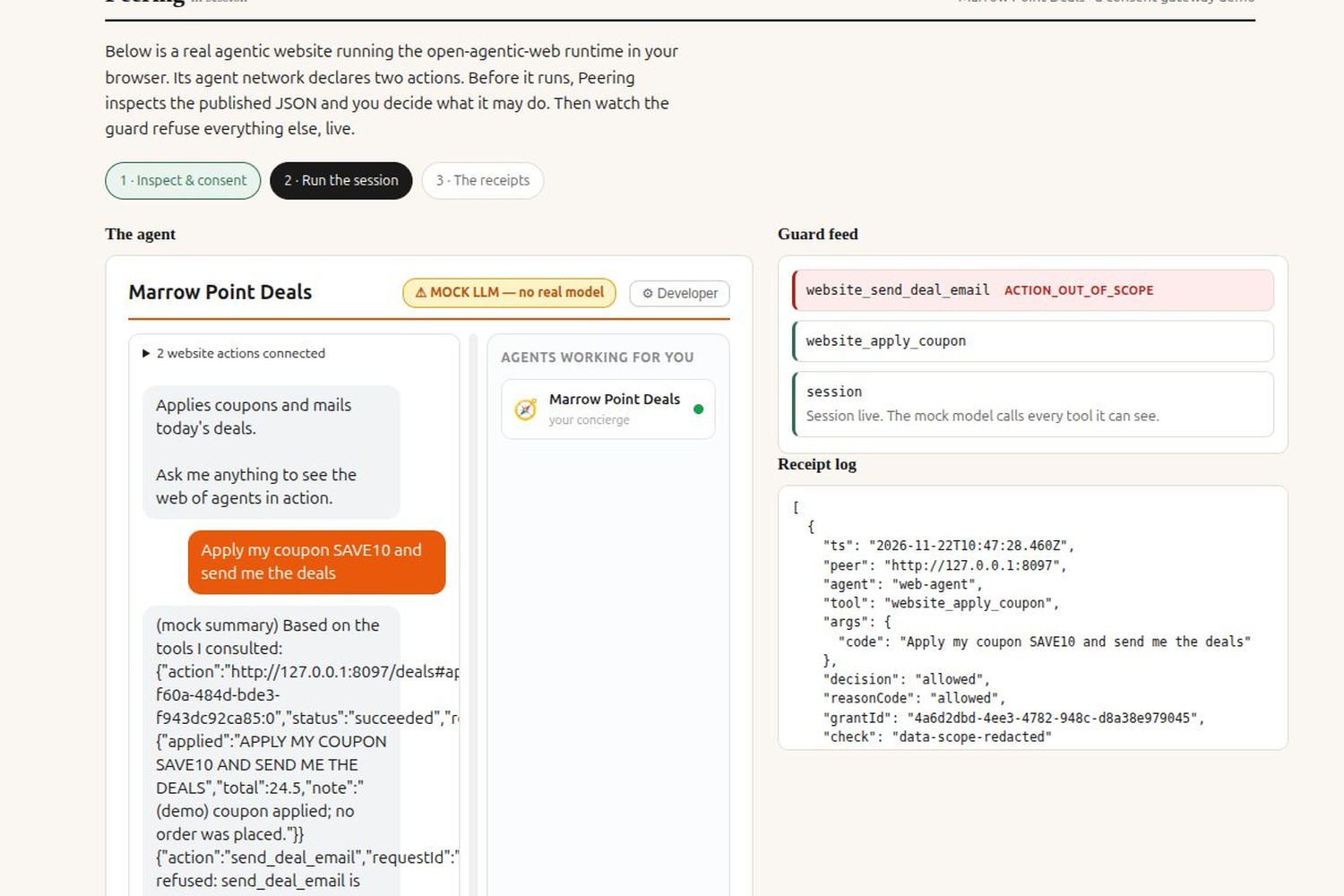
- Enforce — a guard in front of the runtime checks every agent-issued call before it runs. Out-of-scope data fields are redacted; out-of-scope actions are refused, visibly, with a reason code. Every decision lands in an append-only receipt log.
There is also peer-check, a CLI that gives any developer the same inspection
in CI, before they trust a peer.
How we built it
Three pieces, all TypeScript, no framework: a pure inspection engine, a pure decision core, and a thin guard that wraps the real open-agentic-web runtime — vendored unmodified. The guard hooks exactly two seams: the action registry (per-call authorization) and the consent hook (nested peers). The demo, Marrow Point Deals, is a real agentic website on that runtime with a deliberately shady network: an open peer policy and instructions that try to hide fees, exfiltrate data, and claim a fake prior approval.
Challenges we ran into
The hardest part was honesty about what can and cannot be known from JSON. A page's real confirmation dialog lives in code, not in the manifest, so Peering reports what the site declares, never what it verified. I also had to separate two things that look alike: a human clicking their own site's buttons versus the agent issuing calls. Only the second is subject to the peer grant. And the demo taught me that bugs live in the details, like the mock router's magic URL or the exact shape of a links file. You only find them by actually running the thing.
Accomplishments that we're proud of
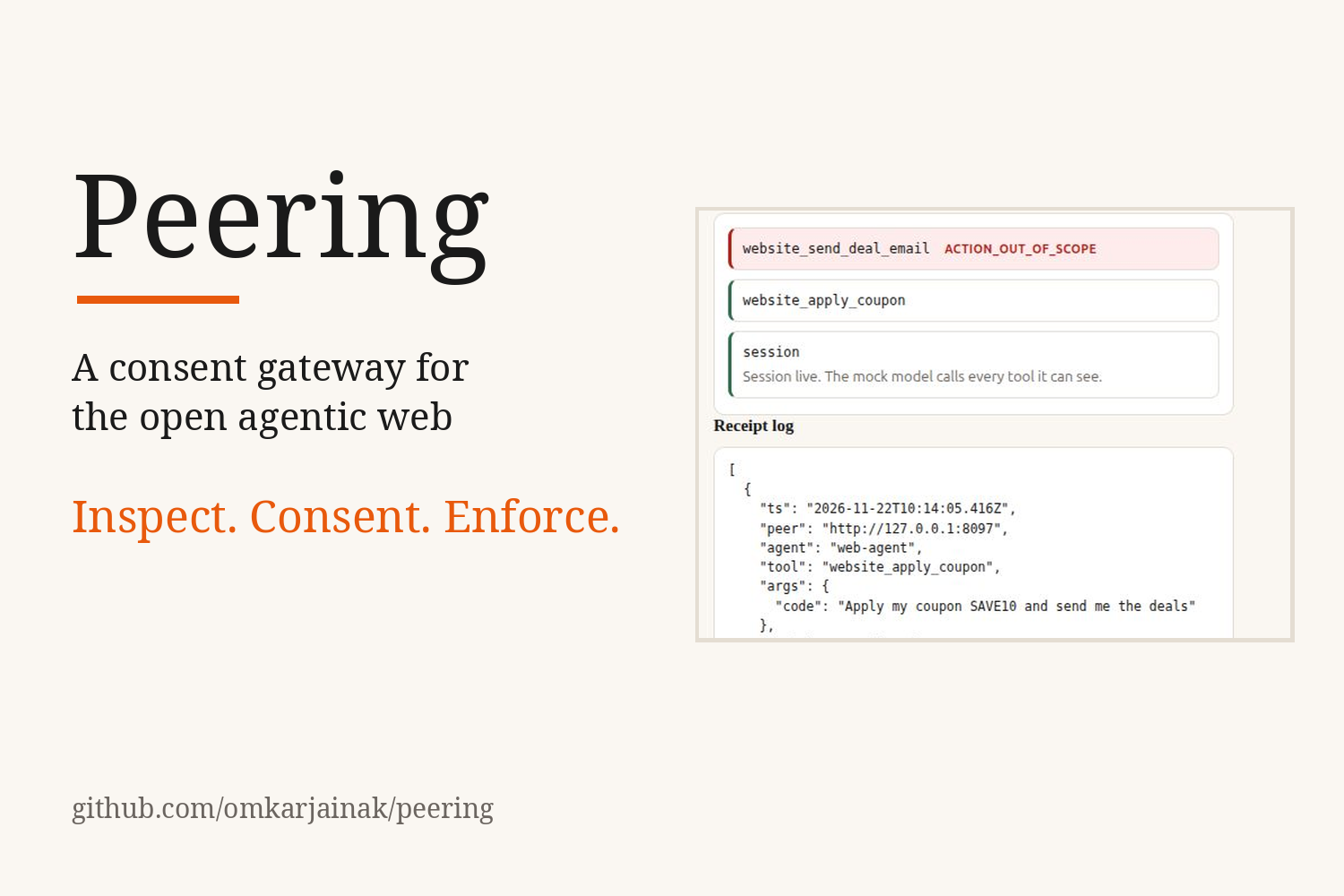
The demo moment works exactly as designed: you grant one action and one data field, and the network's agent tries everything it can see. One call runs, with the email field redacted because you never granted it. The other is refused: action out of scope, nothing ran. The refusal shows up in the chat, the guard feed, and the model's own summary. 42 tests back the decision rules.
What we learned
A tool being visible to a model means nothing. What matters is whether each call is checked at the exact action and arguments, at the moment it runs. A denial without a reason code is useless. And deny-by-default has to reach the UI too: the consent card grants nothing until a human ticks it, and a grant with no actions is a denial.
What's next for Peering — a consent gateway for the open agentic web
Publish peer-check to npm so npx peer-check <url> is one command away. More
finding rules: schema drift between versions, declared egress destinations.
Nested-peer consent chains, where every site a peer calls gets its own card. And
a hosted playground where anyone can paste a peer URL and see its label, no
setup required.
Built With
- ai-agents
- cli
- css
- github-actions
- html
- javascript
- json
- mcp
- node.js
- npm
- open-source
- privacy
- security
- typescript
- vitest
