



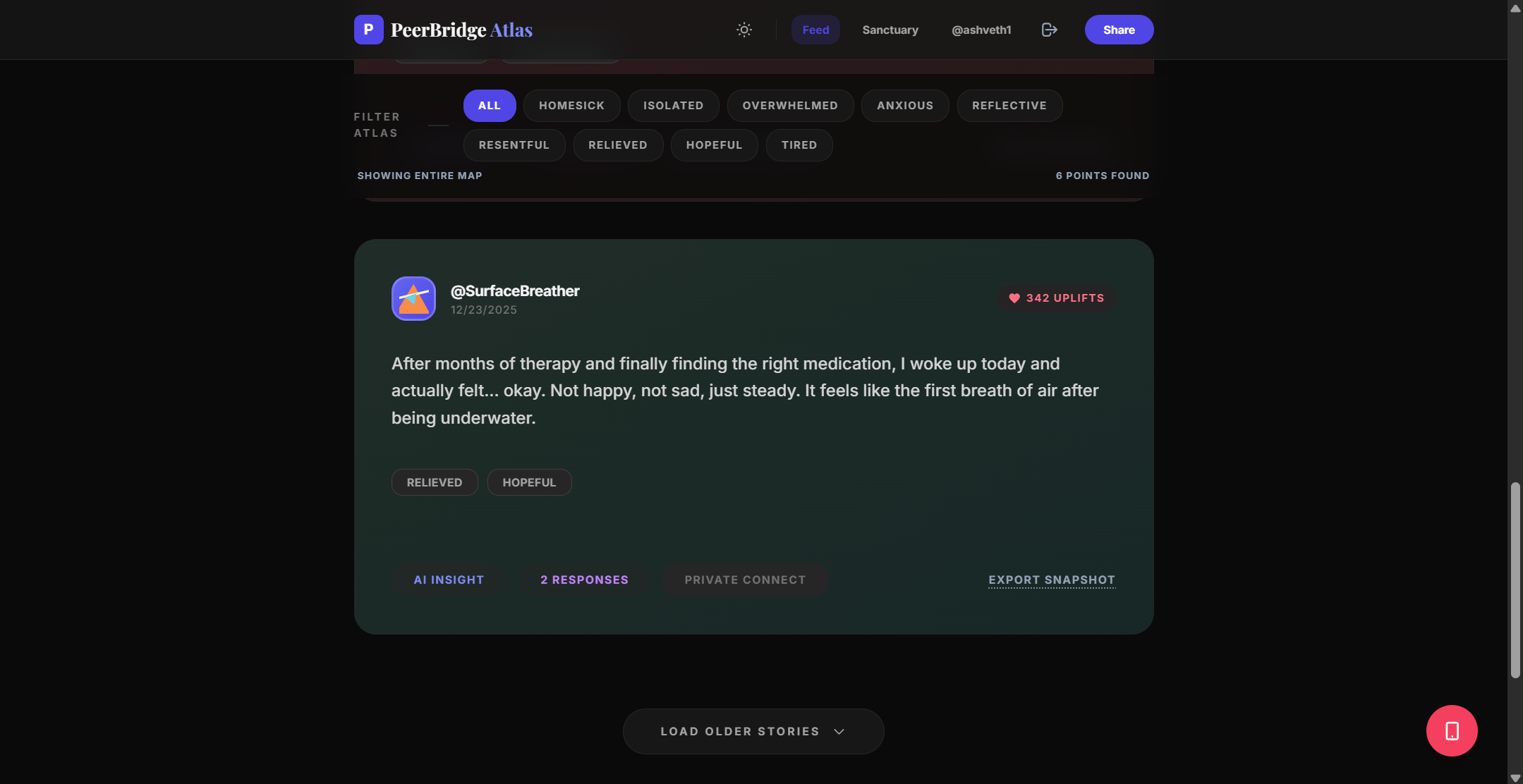
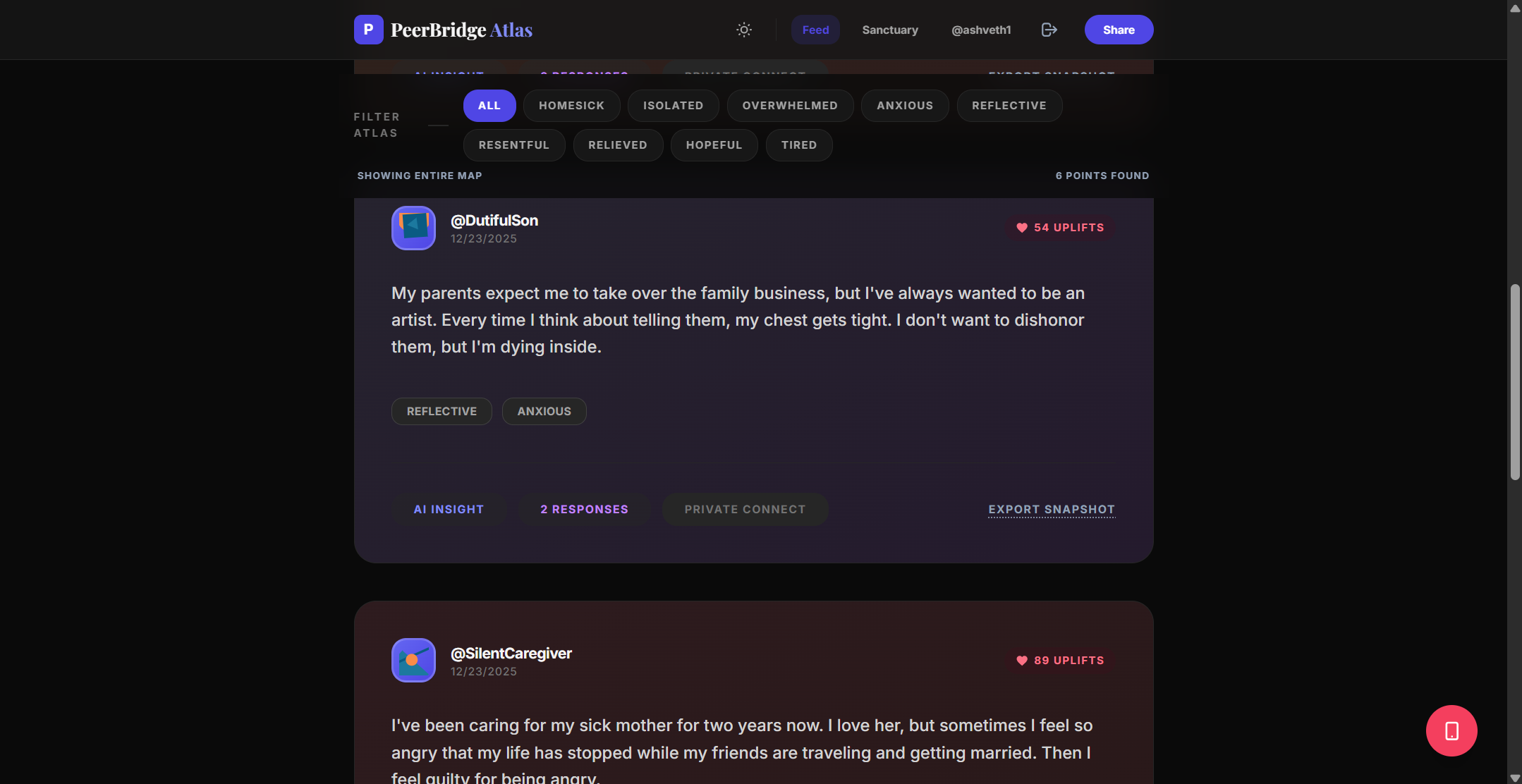
Inspiration :- Mental health support often feels either too clinical or too public. Many people want to share how they feel, but not in a space driven by likes, followers, or pressure to perform. We were inspired by the idea that listening itself can be healing, especially when it happens across cultures and lived experiences. PeerBridge Atlas was born from the belief that people don’t always need answers—they need to be heard, understood, and reminded they’re not alone.
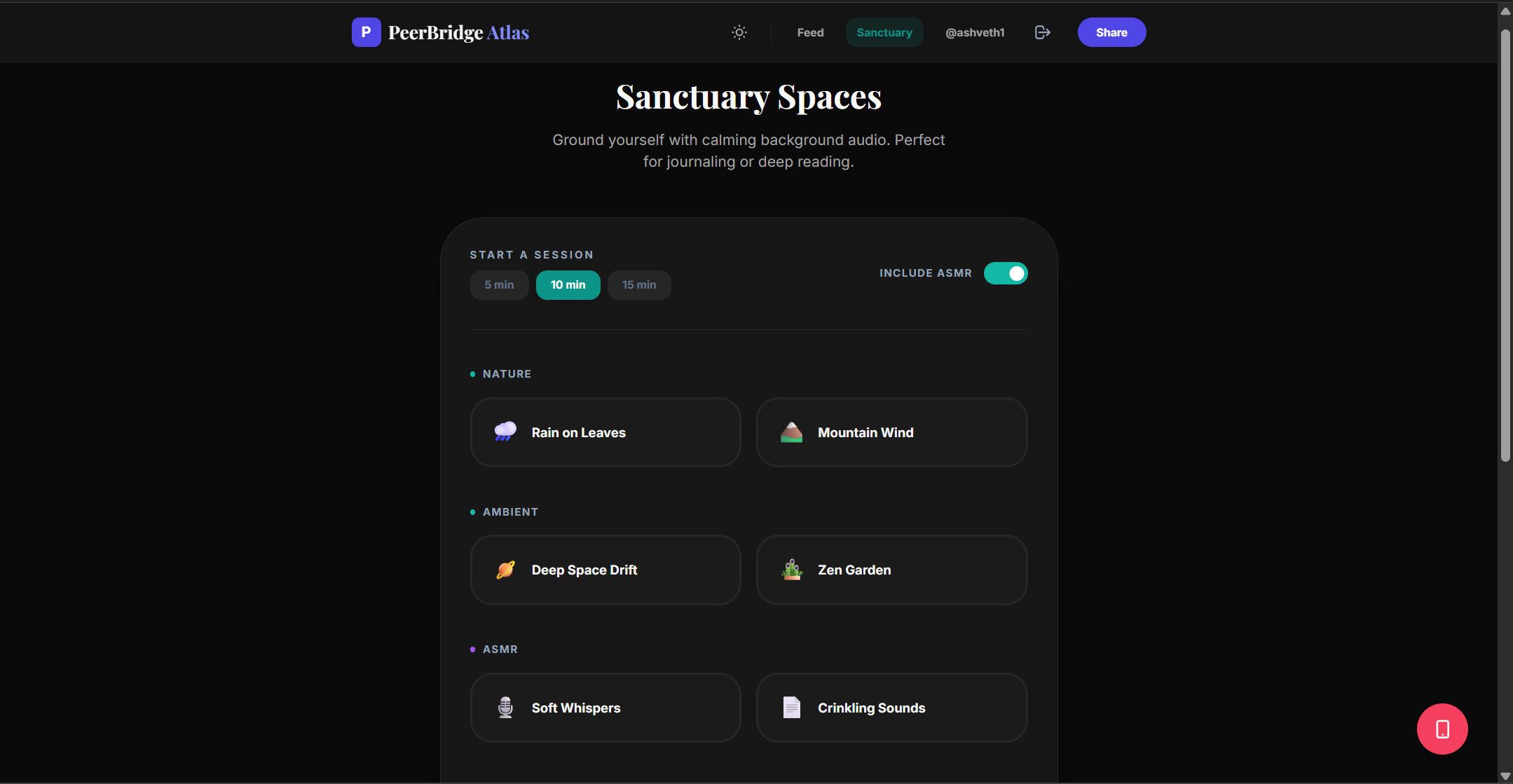
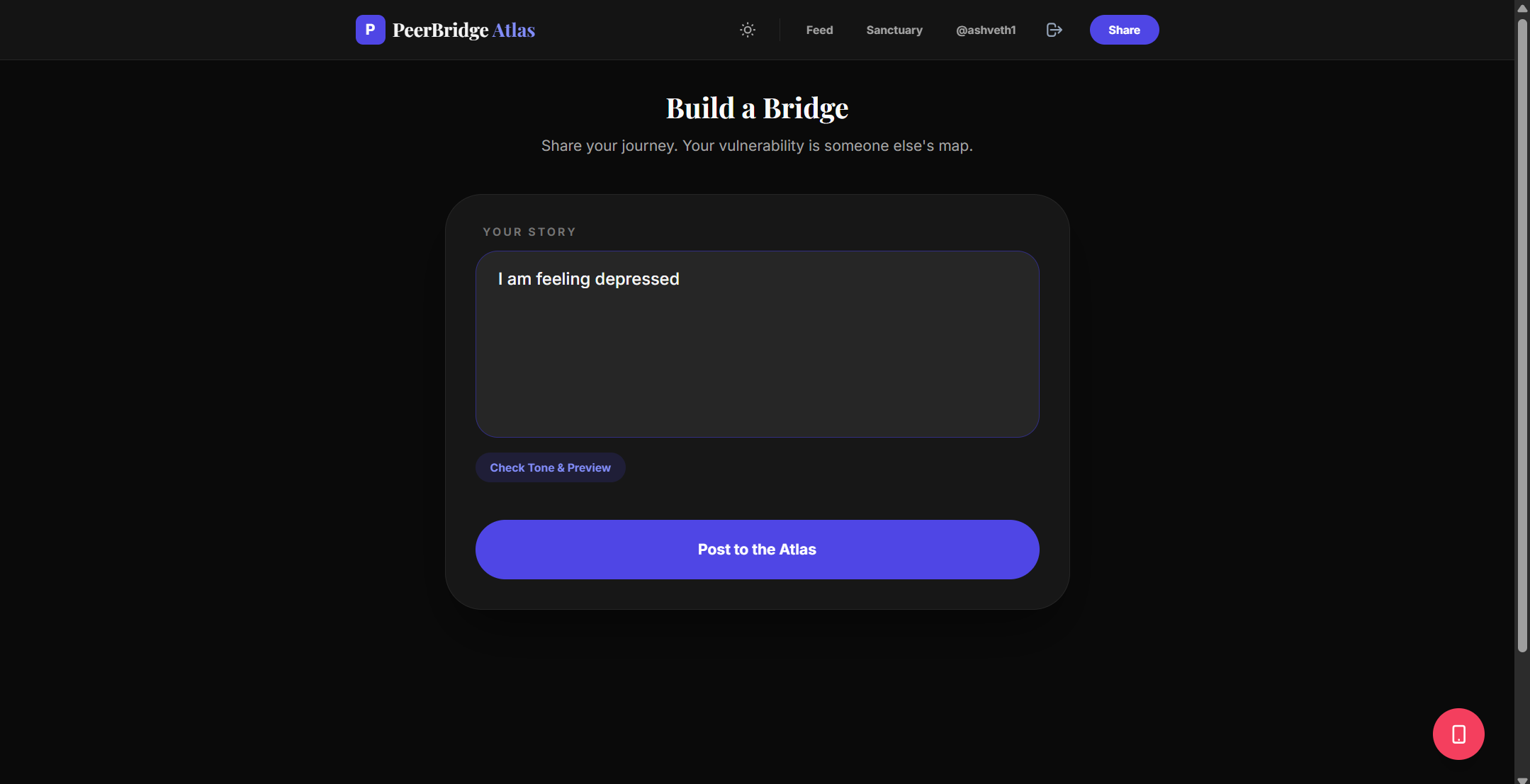
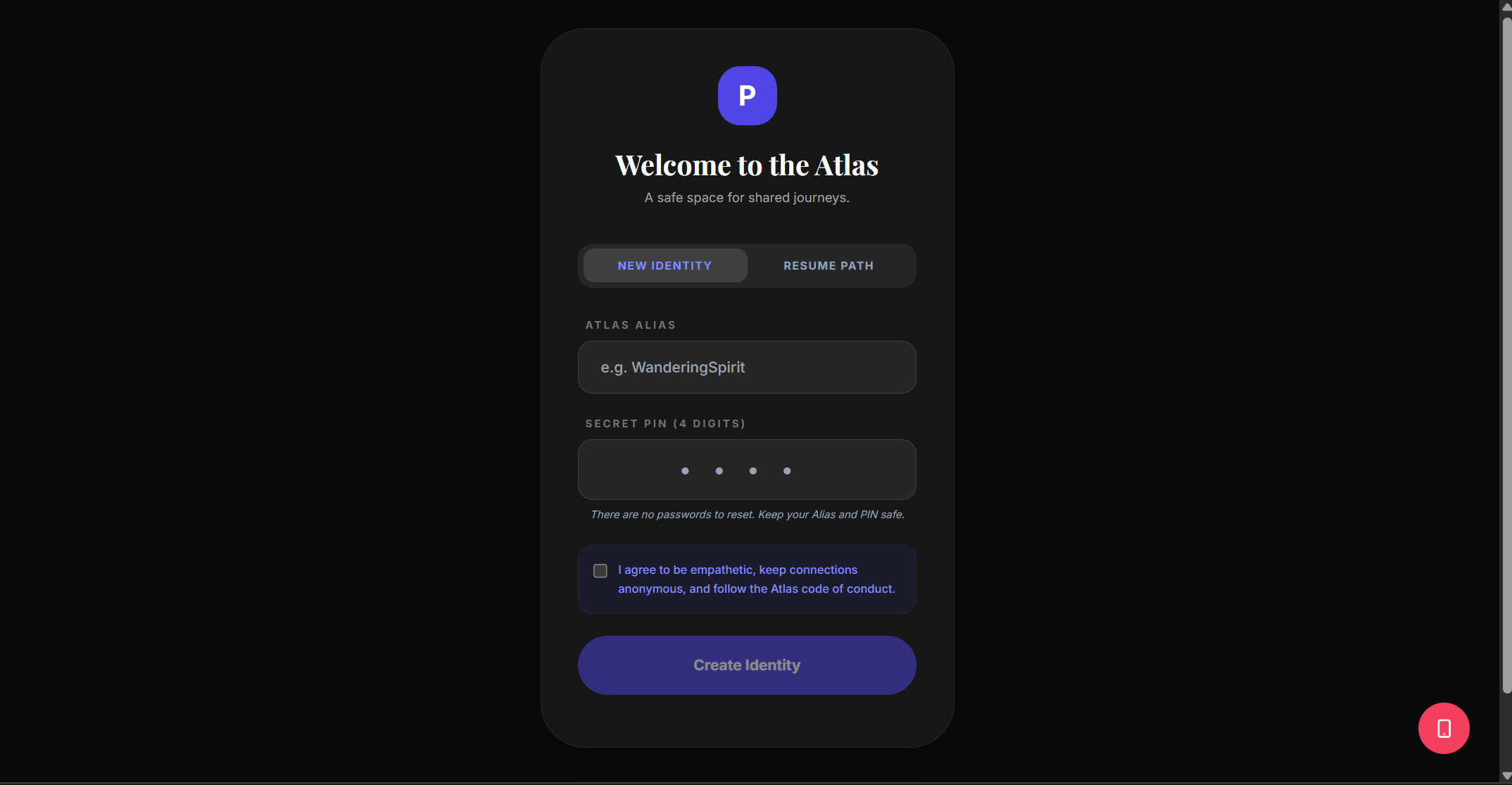
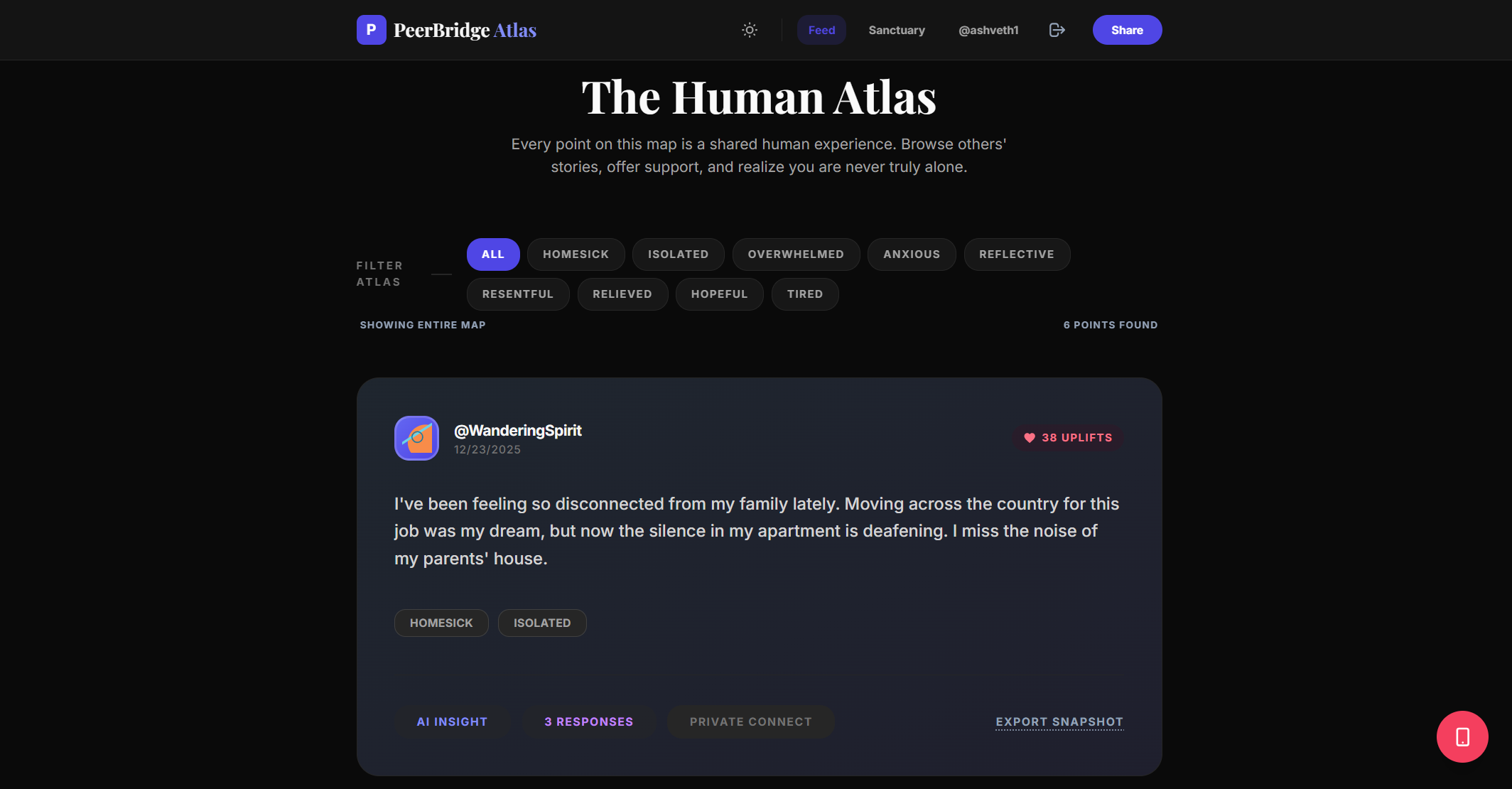
What it does :- PeerBridge Atlas is a peer-support platform that allows people to share personal experiences anonymously, respond with empathy, and connect in safe, consent-based ways. Users can join text-based Listening Rooms to share or simply listen, explore calming audio spaces for relaxation, and reflect privately through journaling. AI is used carefully to support emotional reflection, highlight patterns, and provide educational coping insights—without offering diagnosis or medical advice.
How we built it :- We designed PeerBridge Atlas as a lightweight web-based application focused on clarity, safety, and inclusivity. The frontend handles anonymous posting, real-time-style interactions, Listening Rooms, and audio playback. AI components assist with emotion tagging, reflection summaries, and cultural context cues while following strict safety boundaries. Mock data and frontend logic were used to keep the project hackathon-feasible while still demonstrating real-world potential.
Challenges we ran into :- Designing for mental health comes with responsibility. One of our biggest challenges was balancing meaningful interaction with safety and ethics. We had to carefully define what AI should and should not do, avoid anything that felt like diagnosis, and design social features that encourage support without comparison or pressure. Creating a calm, non-overwhelming user experience was also a constant focus.
Accomplishments that we're proud of :- We’re proud of building a platform that prioritizes empathy over engagement metrics. Features like text-only Listening Rooms, consent-based peer connections, and Calm Audio Spaces reflect thoughtful design choices centered on user wellbeing. Most importantly, we created something that feels safe, respectful, and genuinely human—while still being technically solid and demo-ready.
What we learned :- We learned that mental health technology isn’t about adding more features—it’s about making the right ones feel gentle and trustworthy. Small decisions in language, UI, and flow can have a big emotional impact. We also learned how important it is to design AI with clear boundaries, especially in sensitive spaces.
Built With
- css
- dicebear
- gemini
- react
- tailwand
- typescript
- webaudio

Log in or sign up for Devpost to join the conversation.