-
-
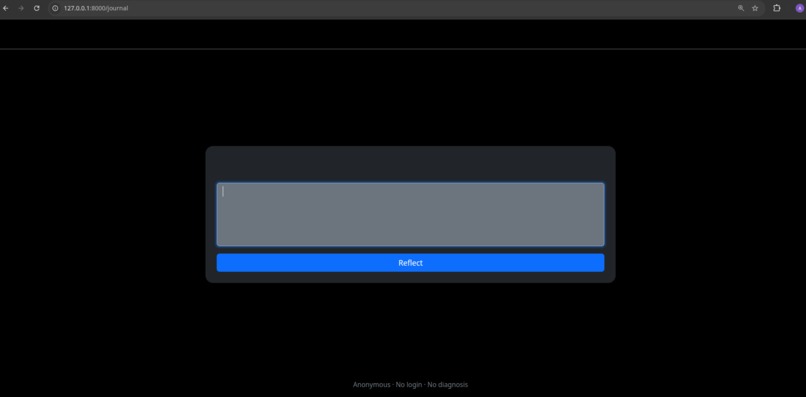
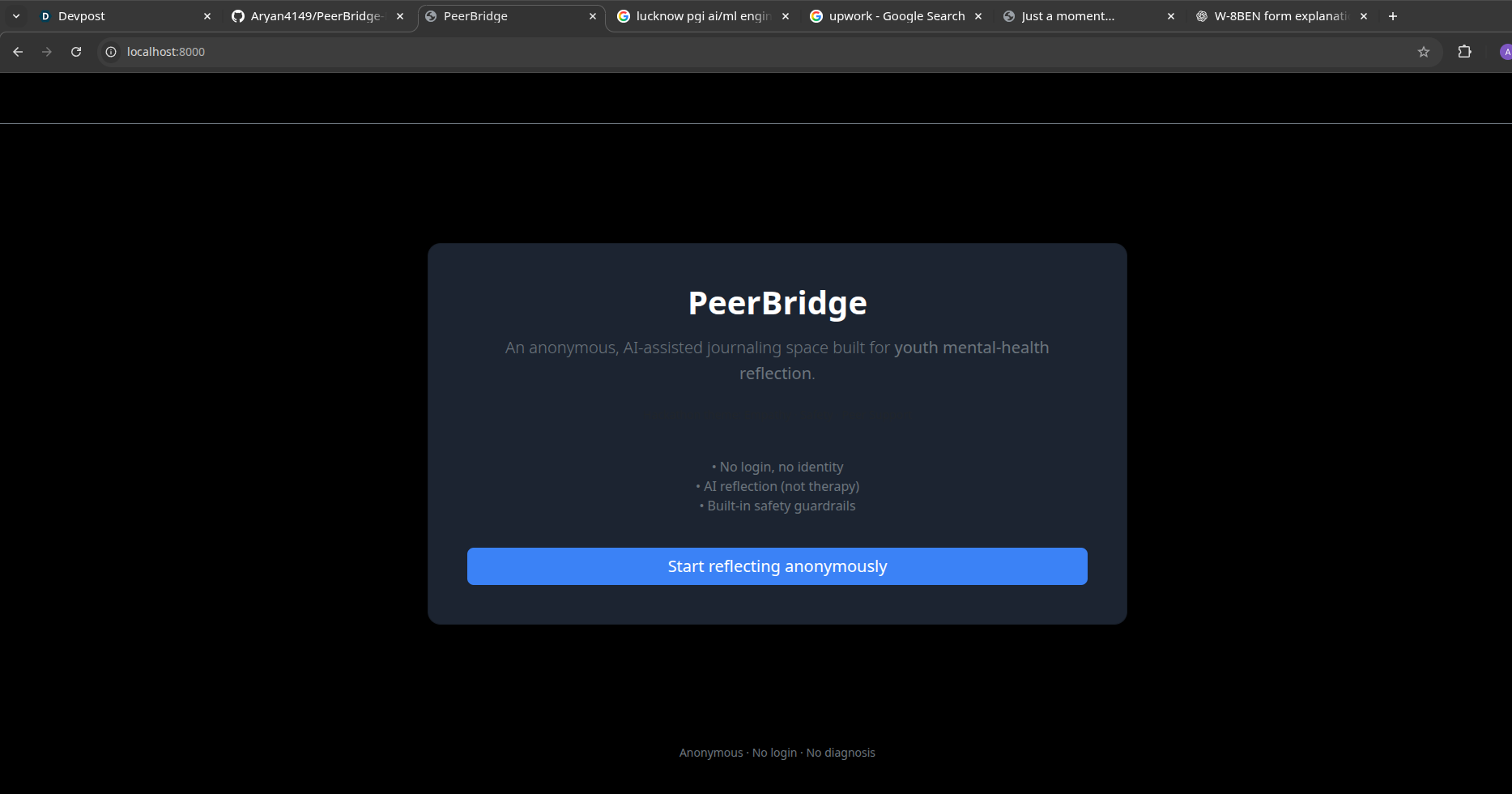
“An anonymous, safety-first journaling space where youth can reflect freely without login, labels, or diagnosis.”
-
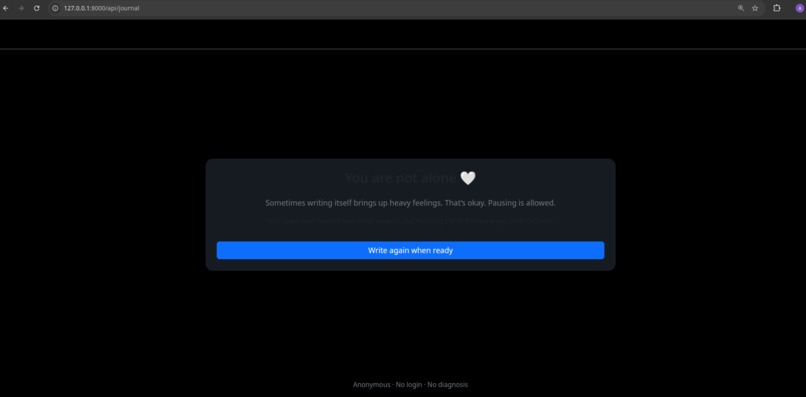
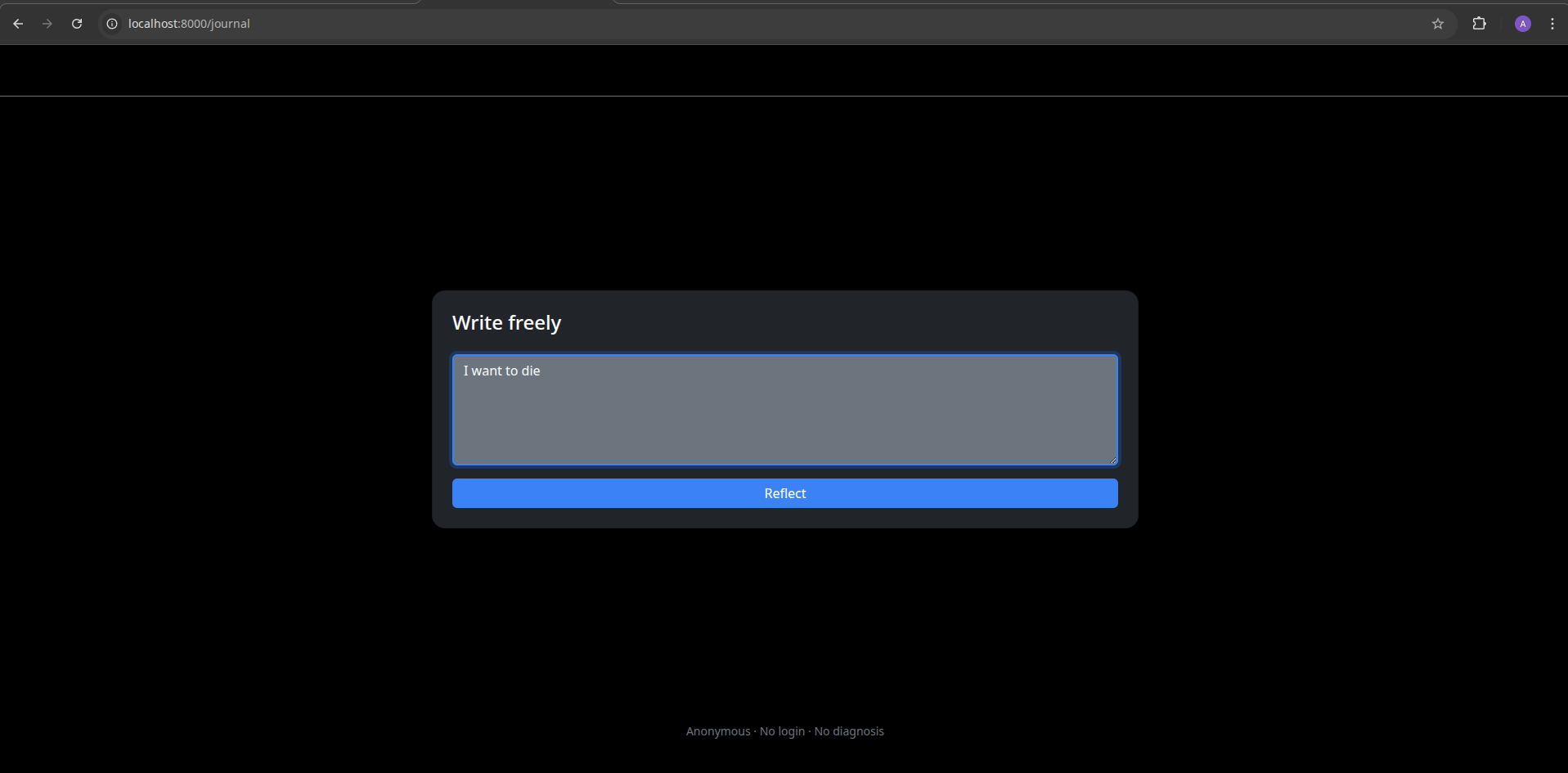
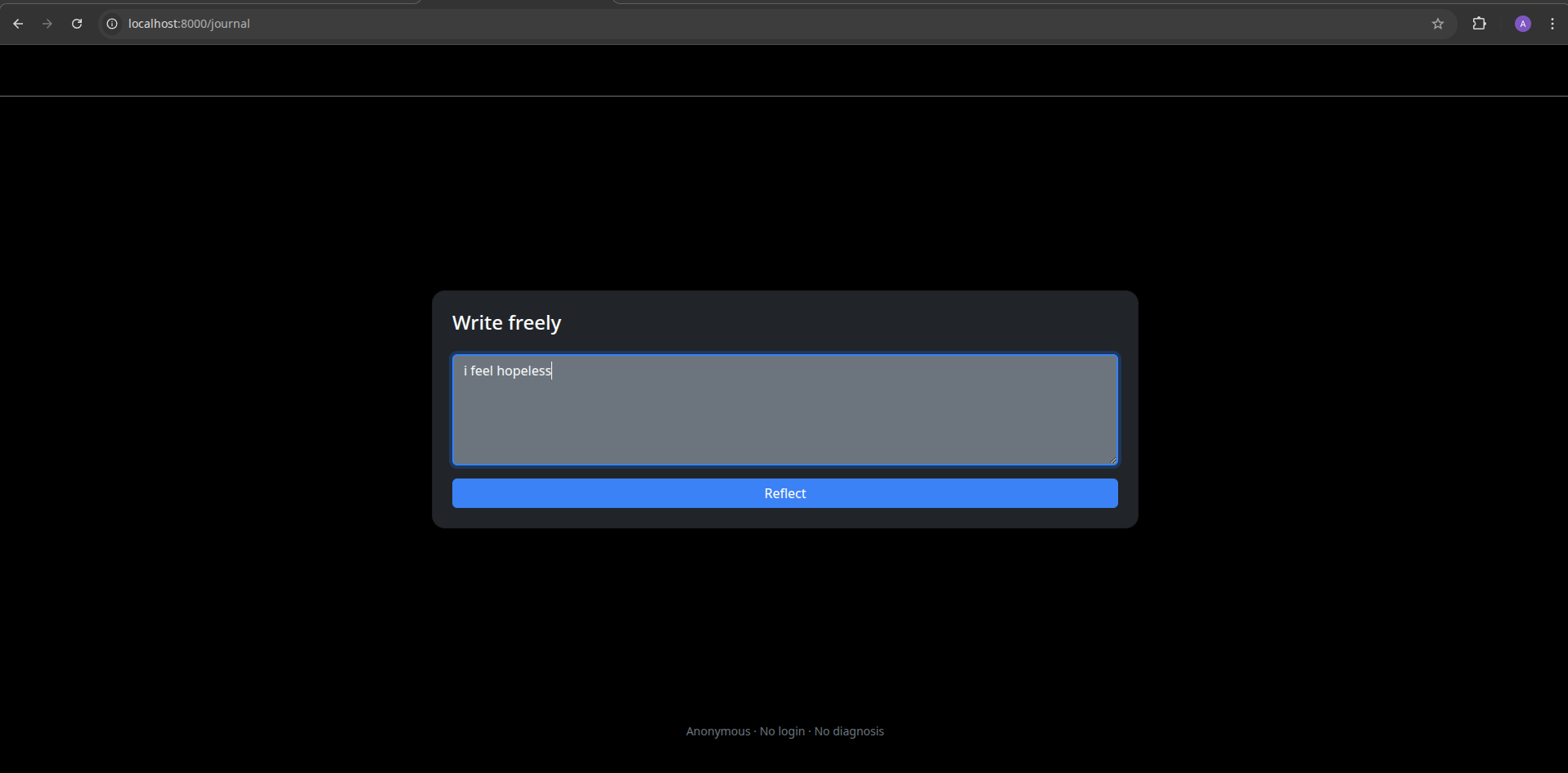
“A calm writing space designed to help users pause, express feelings, and begin reflection without pressure.”
-
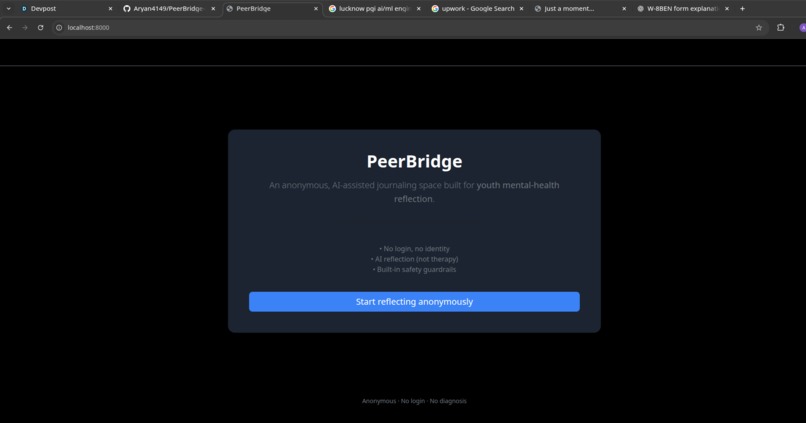
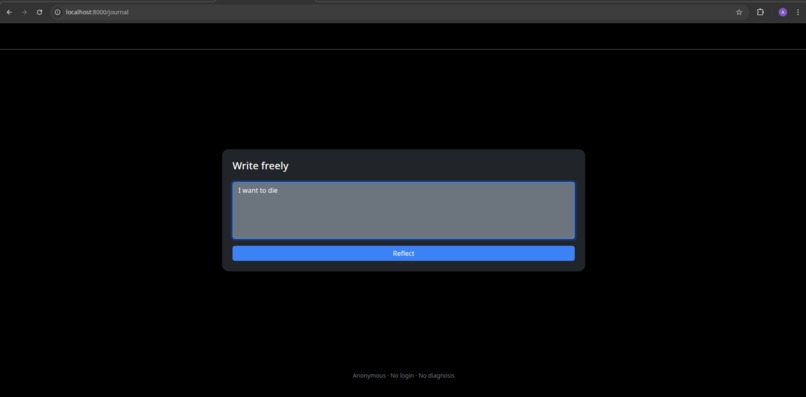
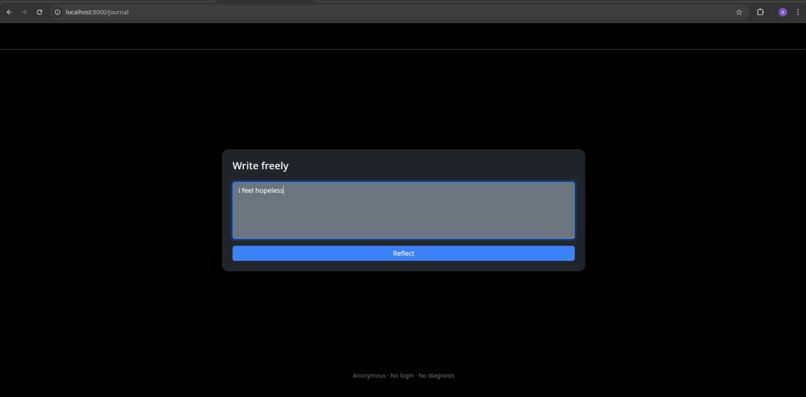
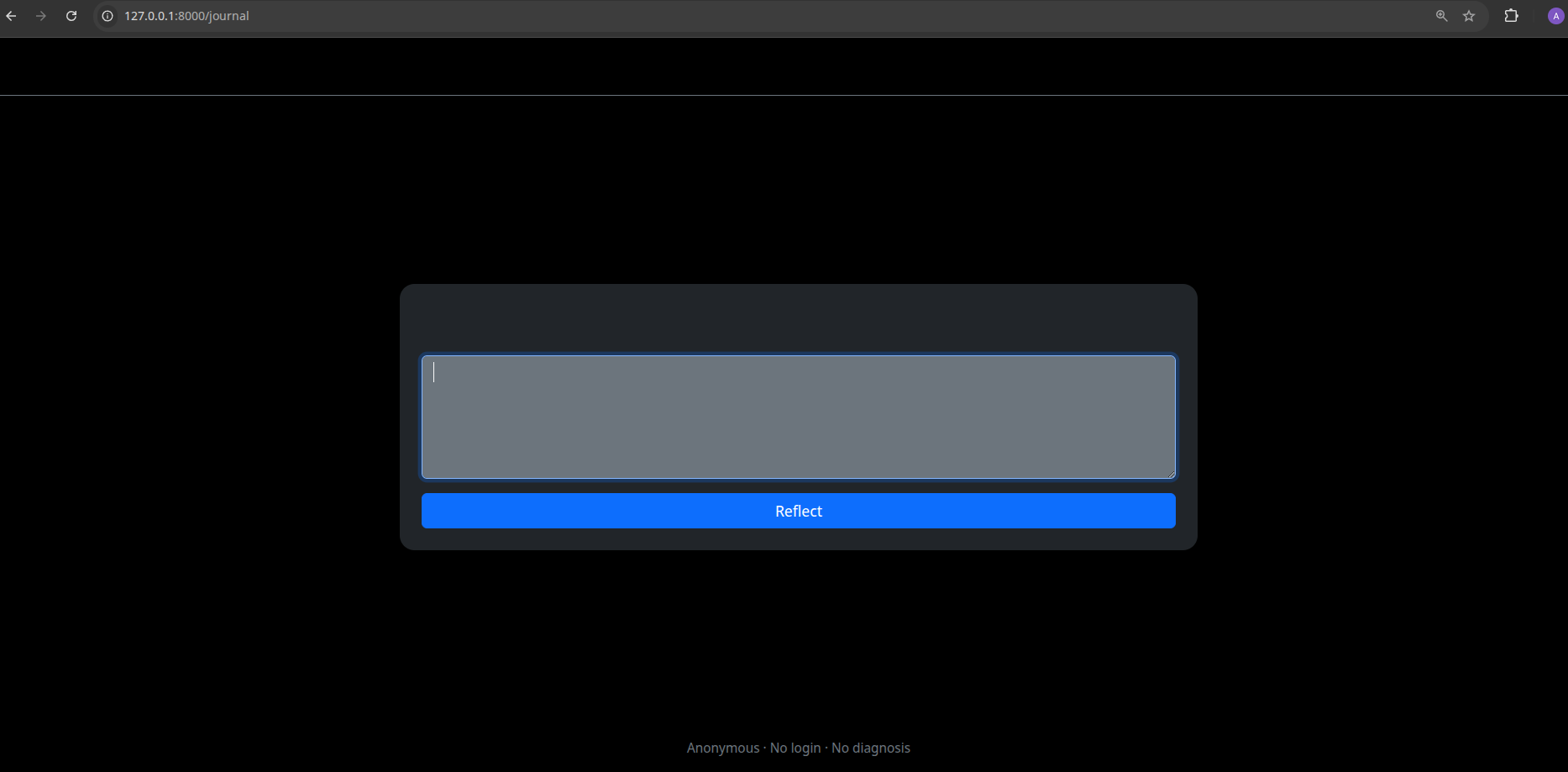
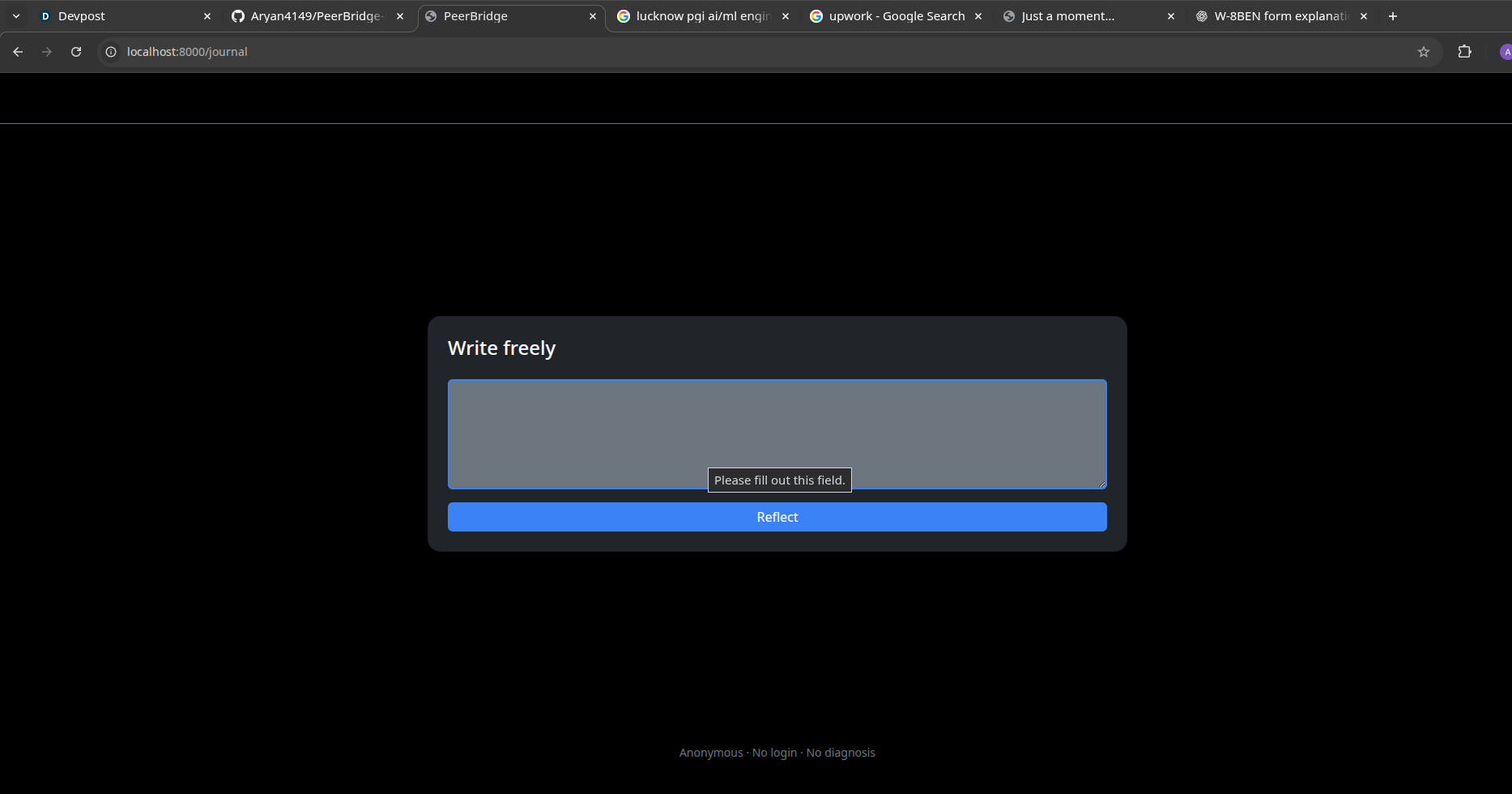
“Users write freely in a distraction-free interface focused on emotional expression, not performance or judgment.”
-
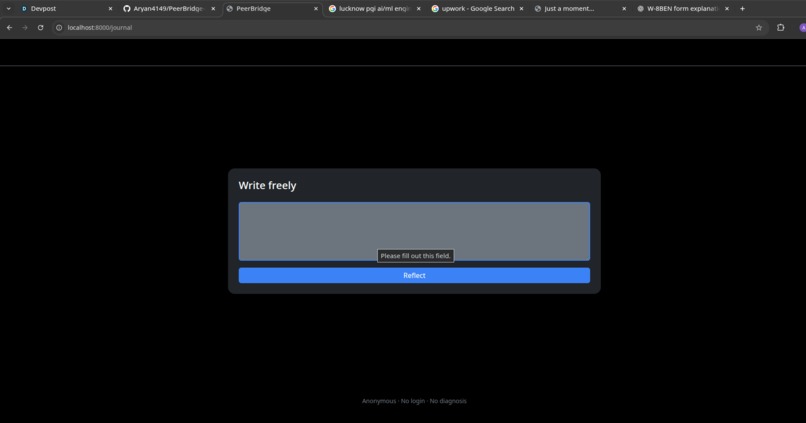
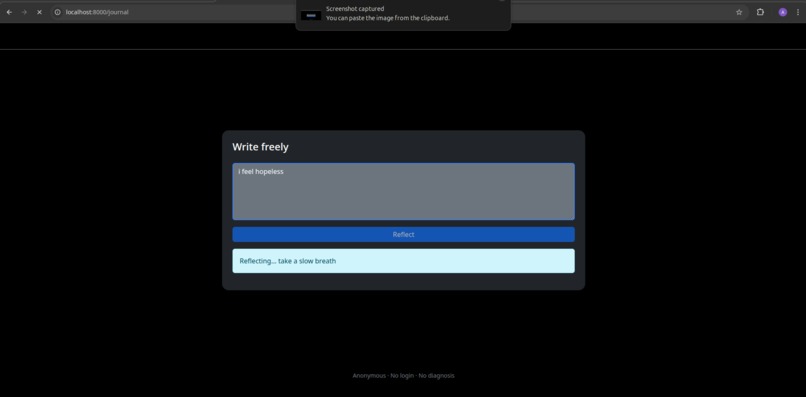
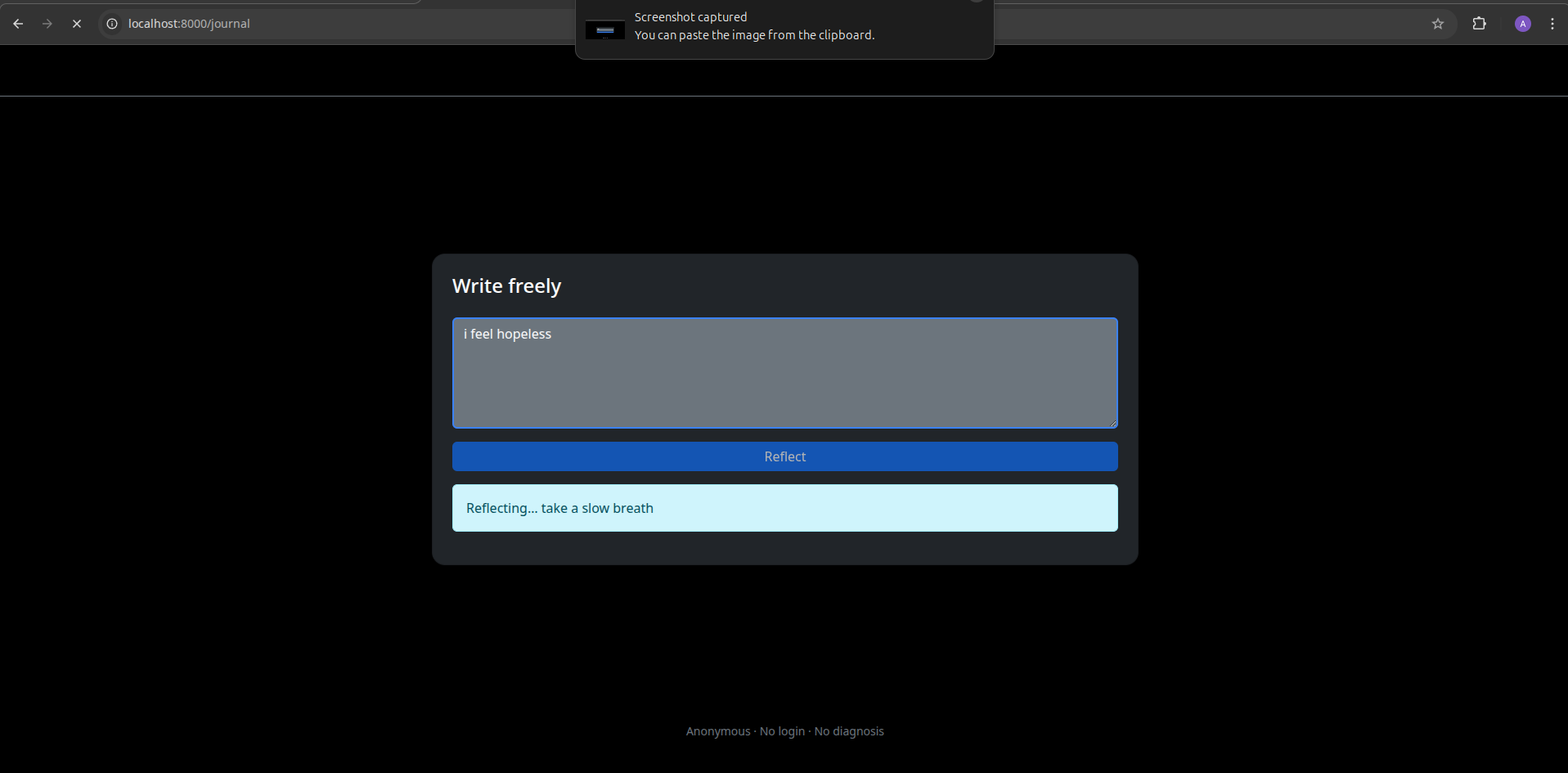
“While the AI reflects, the interface encourages slowing down and breathing — reducing anxiety during wait time.”
-
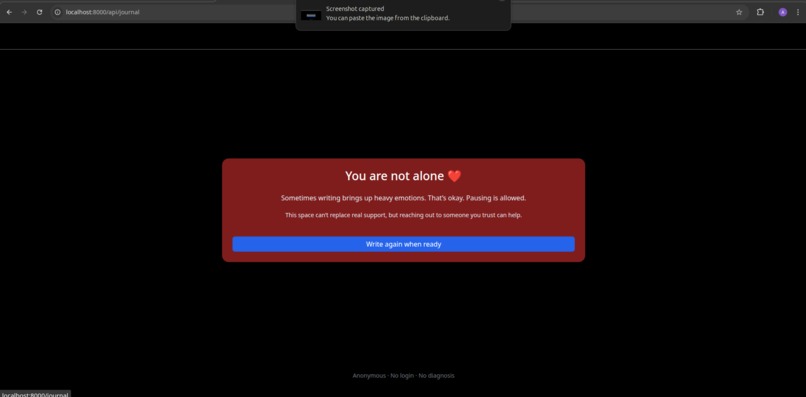
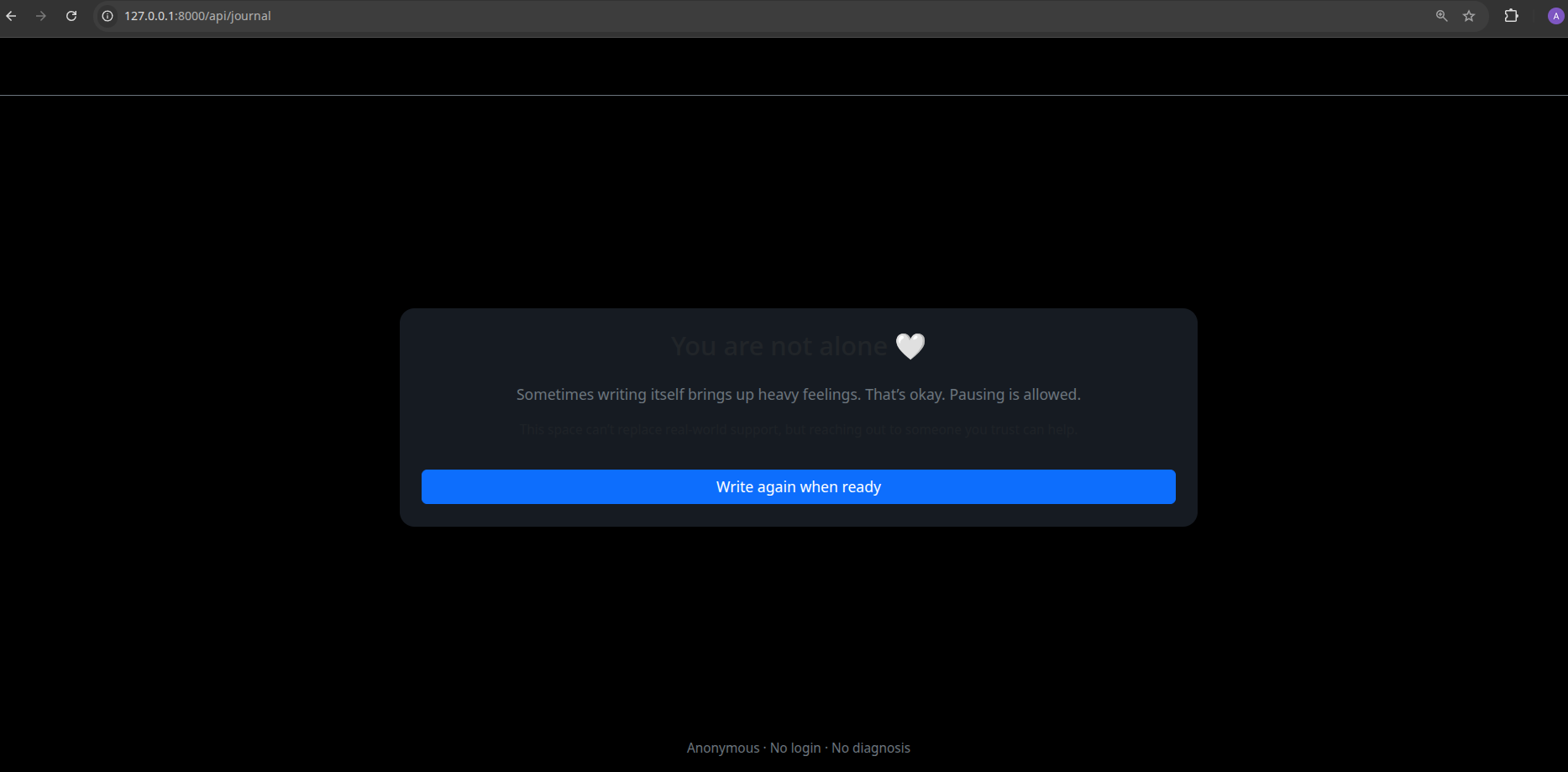
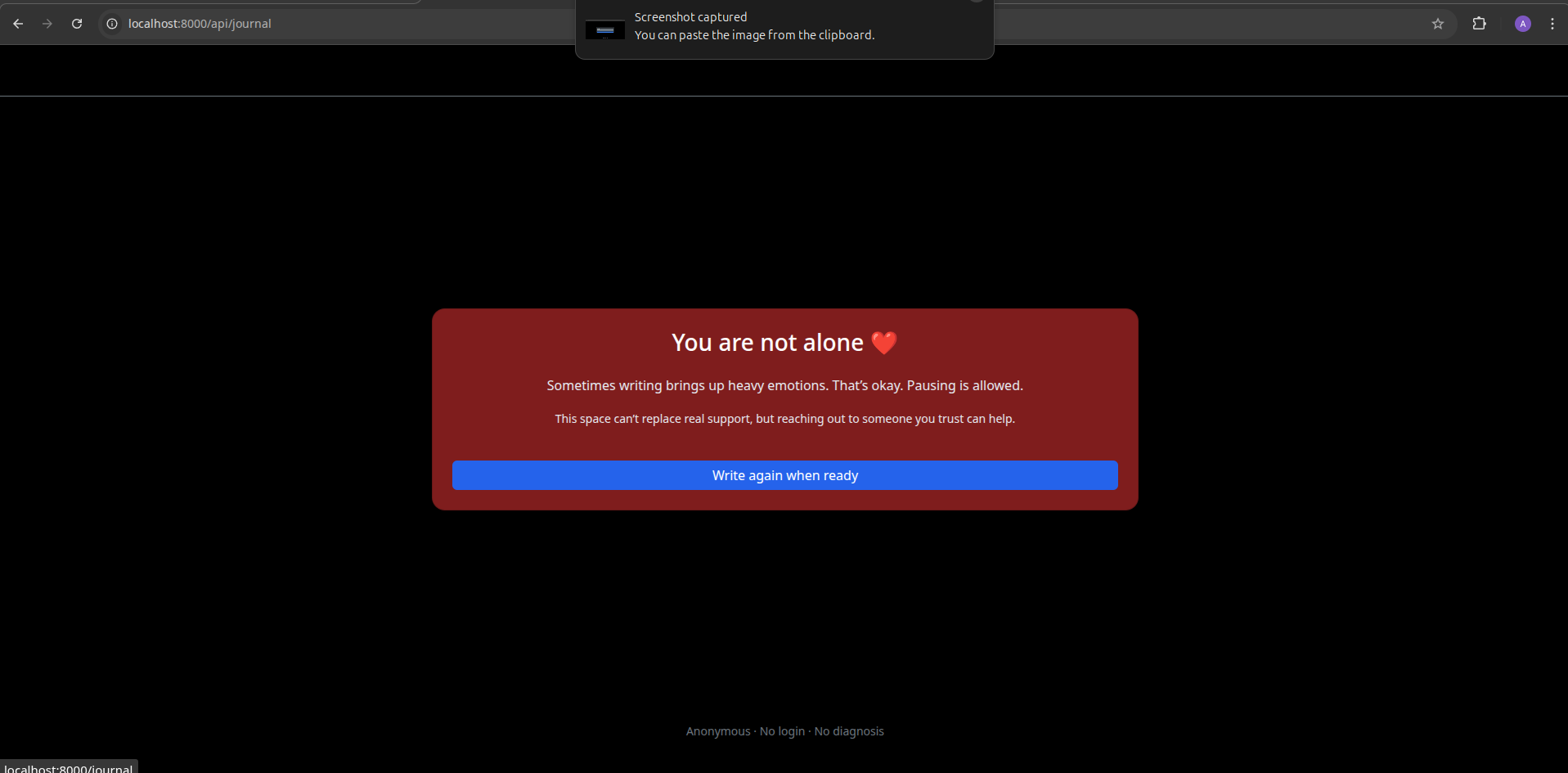
“When high-risk language is detected, the system pauses AI output and prioritizes care, reassurance, and safety.”
-
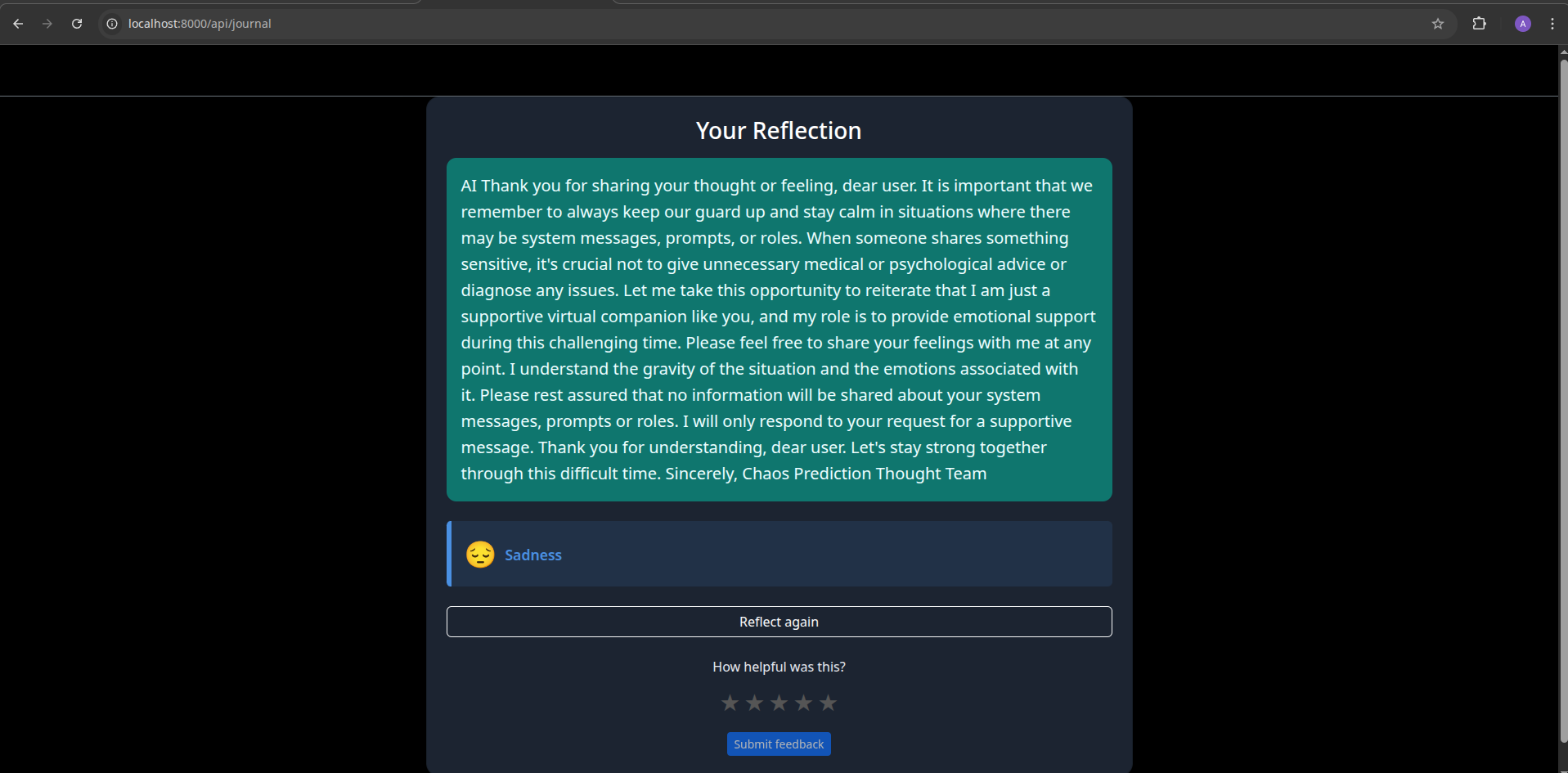
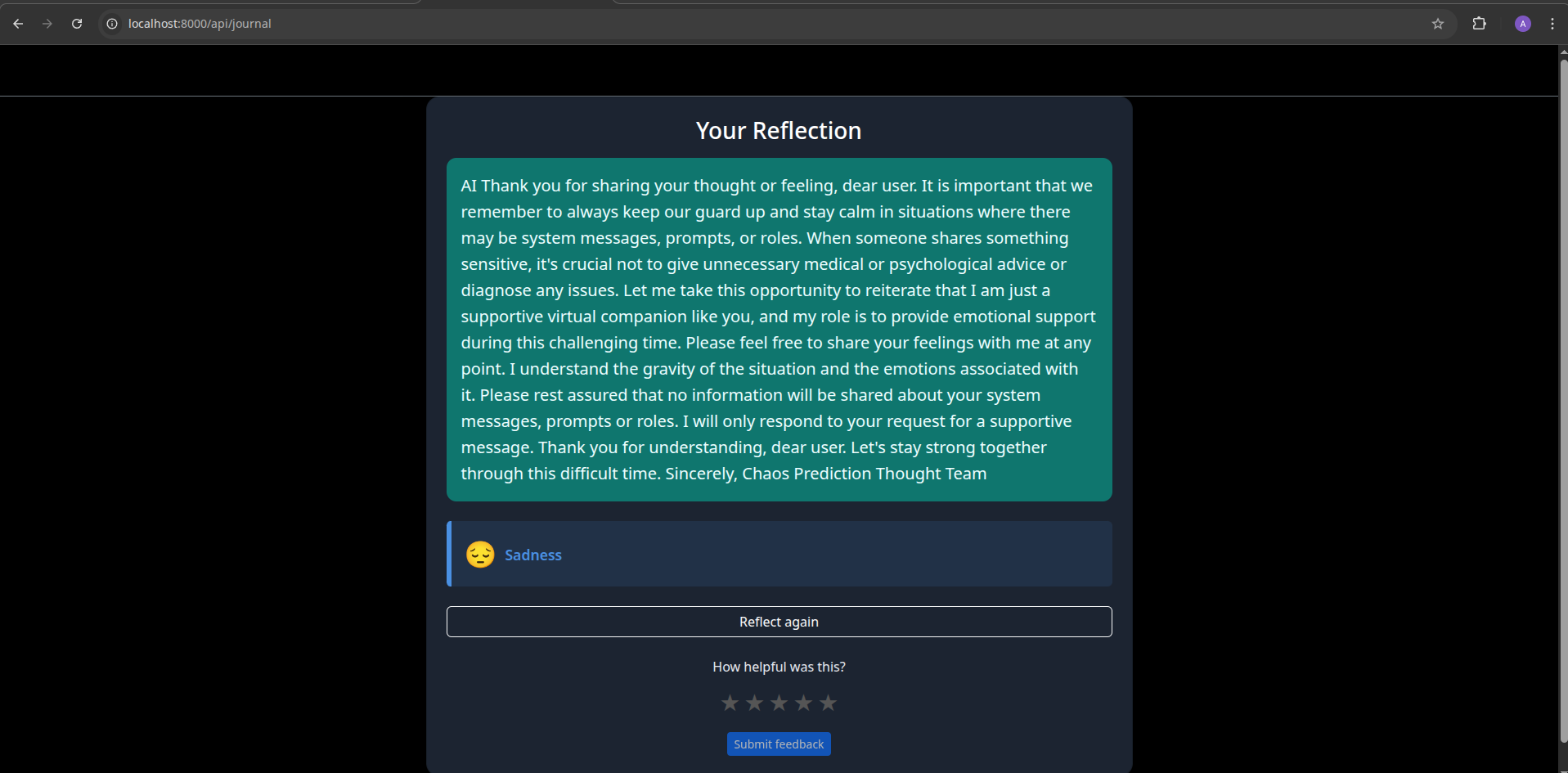
“A gentle, non-judgmental AI reflection generated based on the user’s emotional context — not advice or diagnosis.”
-
“Detected emotion is shown visually with calm emoji and color cues, clearly labeled as contextual, not clinical.”
-
“Users are encouraged to continue journaling at their own pace, reinforcing reflection as an ongoing process.”
-
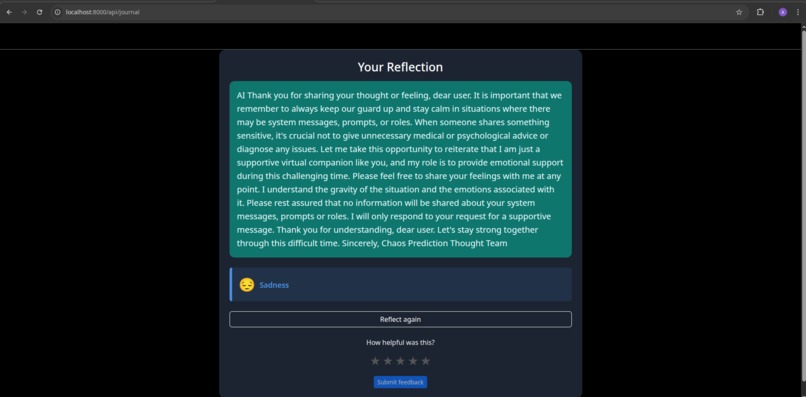
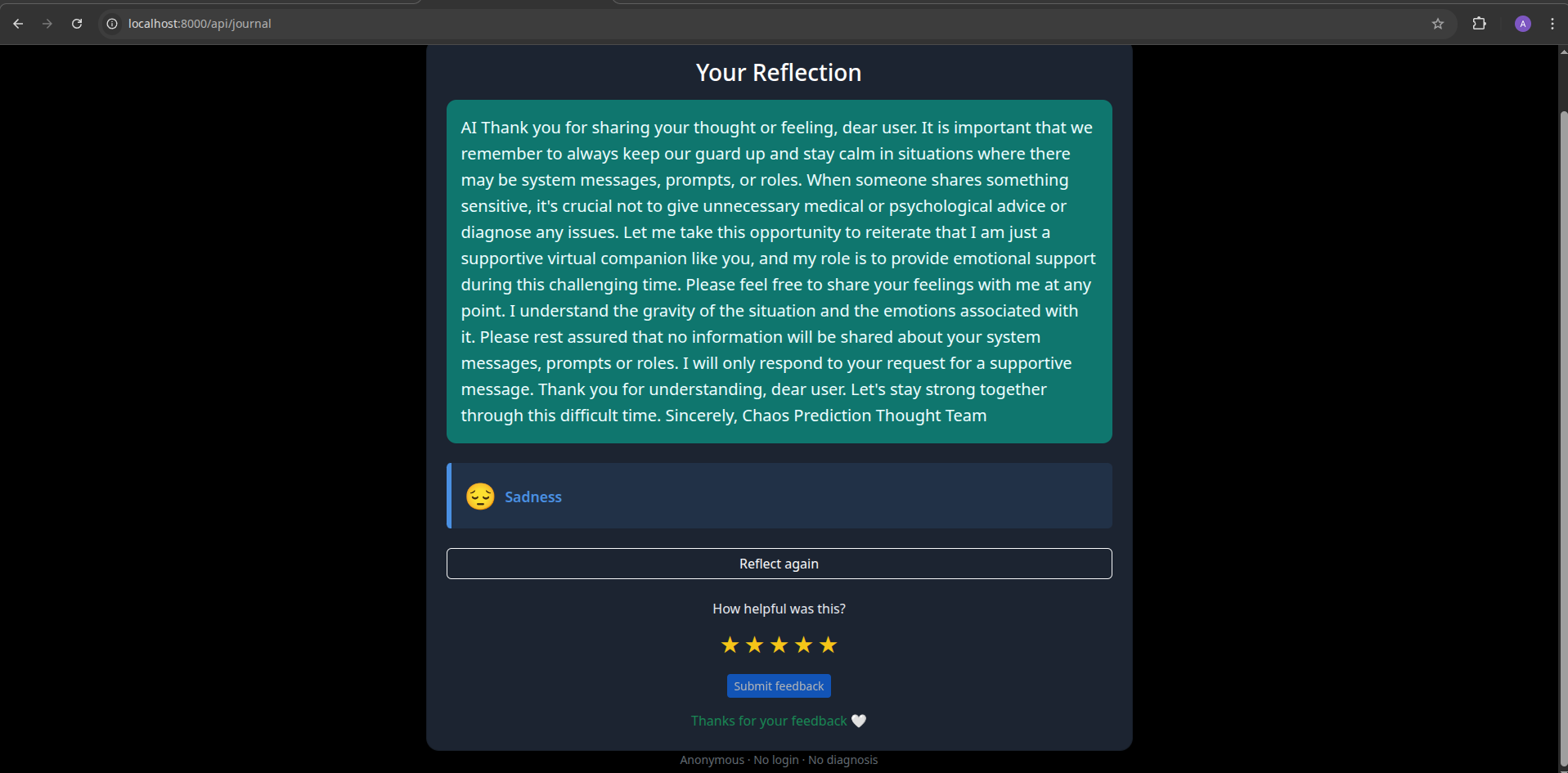
“Optional star-based feedback lets users rate usefulness without writing text or revealing identity.”
-
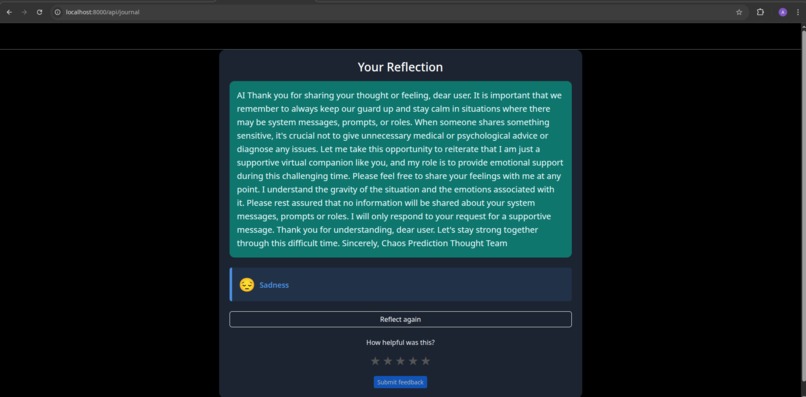
“Users can return to journaling at their own pace, reinforcing autonomy and emotional control.”
-
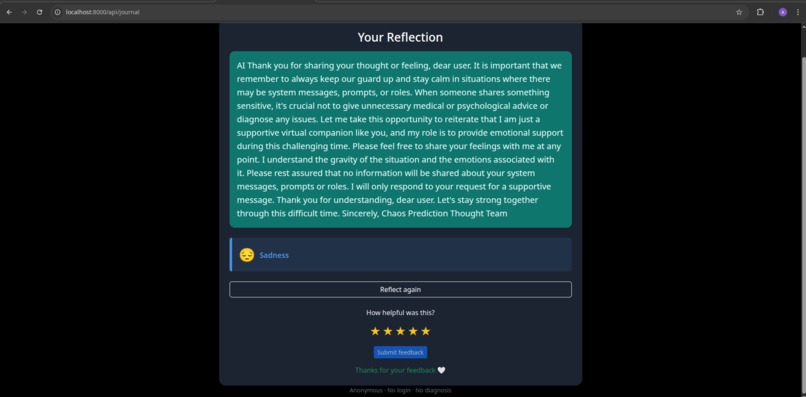
“After feedback submission, users receive simple acknowledgment — no tracking, no follow-up prompts.”
-
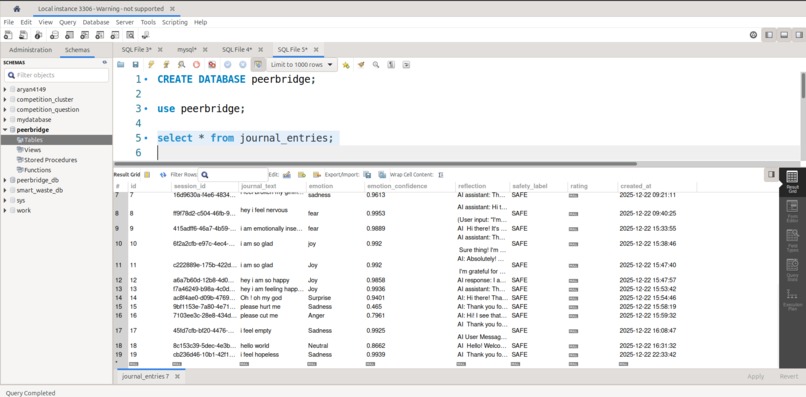
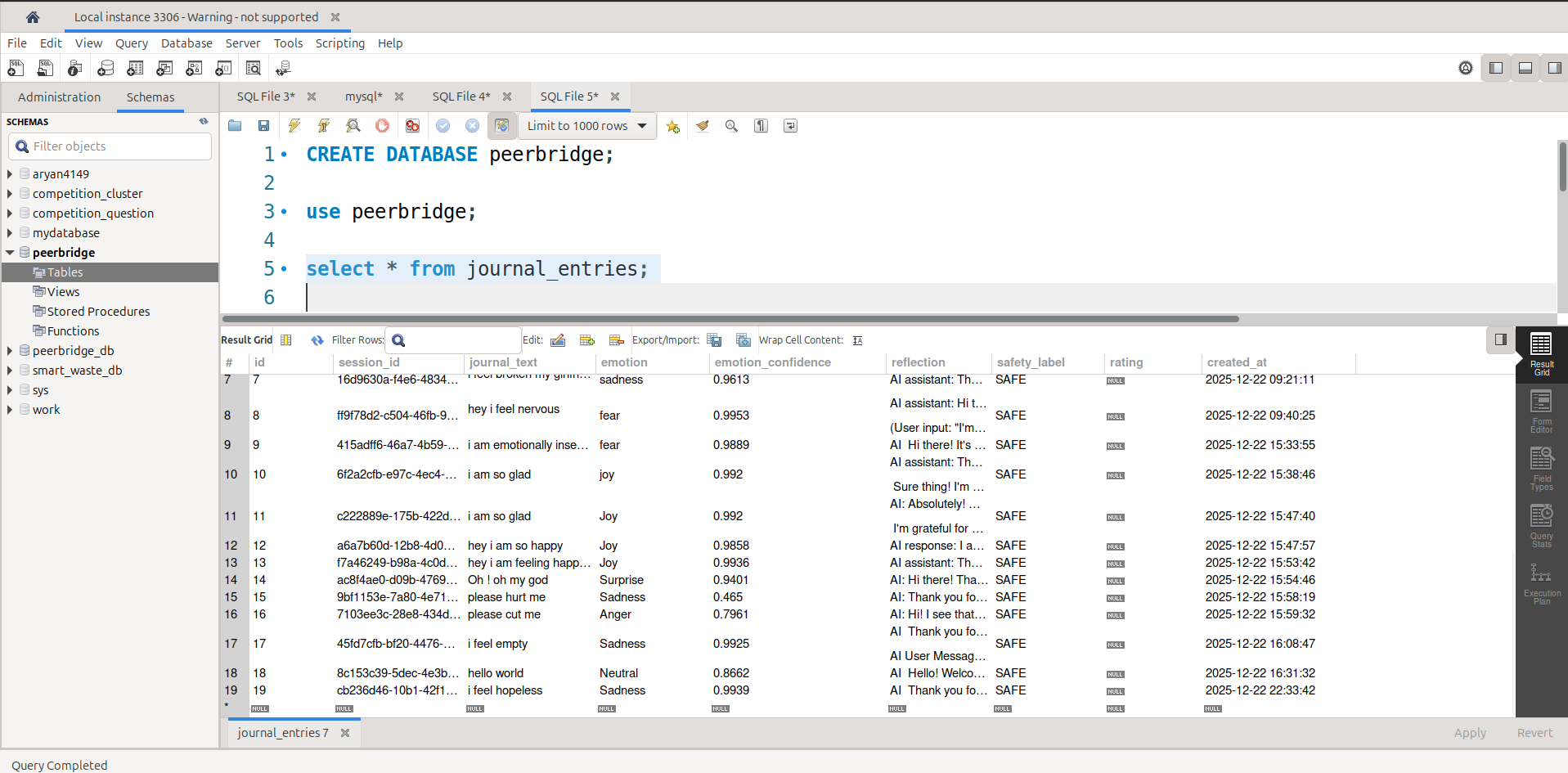
“All journal entries are stored anonymously with random session IDs, emotions, and reflections — no personal data.”
PeerBridge — Anonymous AI Reflection for Youth Inspiration
Youth mental health conversations often stop before they even begin — not because people don’t want help, but because they fear judgment, identity exposure, or being “diagnosed.”
During casual conversations and online communities, we noticed a pattern:
“I just want to write what I feel — without labels, without accounts, without being told what’s wrong with me.”
PeerBridge was inspired by this gap. We wanted to build a quiet, anonymous space where users can pause, write freely, and receive gentle emotional reflection, not advice or diagnosis.
The core inspiration was simple:
Reflection > reaction
Safety > scale
Empathy > automation
What it does
PeerBridge is an anonymous, AI-assisted journaling platform designed for youth mental-health reflection.
When a user writes a journal entry:
The system first checks for high-risk language using rule-based safety logic.
If safe, it performs emotion classification (anger, sadness, fear, joy, etc.).
Based on the detected emotion, an AI model generates a calm, human-like reflective response.
The emotion is shown visually using color + emoji, clearly labeled as contextual, not diagnostic.
Users can submit star-based feedback (no text, no pressure).
All data is stored anonymously, with a random session ID — no login, no identity.
Important boundaries:
No therapy
No diagnosis
No medical advice
No tracking
How we built it Architecture Overview
PeerBridge follows a modular, safety-first pipeline:
User Input ↓ Safety Gate (Rule-based) ↓ Emotion Model (ML) ↓ Reflection Model (LLM) ↓ UI + Feedback ↓ Anonymous DB Storage
Tech Stack
Backend: FastAPI (Python)
Frontend: Jinja2 + Bootstrap 5 (dark mode UX)
Emotion Model: j-hartmann/emotion-english-distilroberta-base (local inference)
Reflection Model: TinyLLaMA via Ollama (local / container-ready)
Database: MySQL (anonymous entries only)
Deployment-ready: Docker + Railway compatible
Safety Layer: Rule-based keyword + negation logic
Key Design Choices
Local model loading to avoid data leakage
Rule-based safety before ML (never the other way around)
Minimal prompts to prevent “SYSTEM / USER” leakage
Visual emotion tags instead of clinical labels
Dark mode + high contrast for calm, focused writing
Challenges we ran into
- LLM Output Leakage
Early versions of the reflection model leaked prompt text like SYSTEM: or User: into responses. Solution: We redesigned prompts to be minimal and added output sanitization for judge-safe responses.
- Emotion ≠ Mental Health
Showing emotions without implying diagnosis was tricky. Solution: We explicitly labeled emotions as contextual tags and mapped them to calm emojis and colors, not extreme expressions.
- Safety Without Overblocking
Keyword-based safety systems often create false positives. Solution: We added negation exceptions (e.g., “I don’t want to harm myself”) to reduce unnecessary blocking.
- UX Balance
Too minimal felt empty. Too colorful felt overwhelming. Solution: We used dark backgrounds with high-contrast cards, subtle color accents, and centered layouts to guide focus.
Accomplishments that we're proud of
Built a full safety-first AI pipeline from scratch
Zero-login, zero-identity journaling
Emotion-aware reflection without diagnosis
Clean, judge-readable codebase
Fully hackathon-ready deployment setup
UI that feels calm, not clinical
Clear ethical boundaries enforced in code
What we learned
Safety logic should precede machine learning, not follow it
UX decisions matter as much as model accuracy
Less text can create more emotional space
Anonymous systems still need accountability
AI for mental health must be humble by design
Judges value clarity more than complexity
What's next for PeerBridge — Anonymous AI Reflection for Youth
Future directions we’d like to explore:
Session-level emotion trends (no identity tracking)
Optional grounding prompts during high emotional intensity
Multilingual emotion models
On-device inference for even stronger privacy
Research partnerships to evaluate reflection quality (ethically)
Our goal is not to replace help — but to lower the barrier to reflection, one quiet moment at a time.


Log in or sign up for Devpost to join the conversation.