-
-
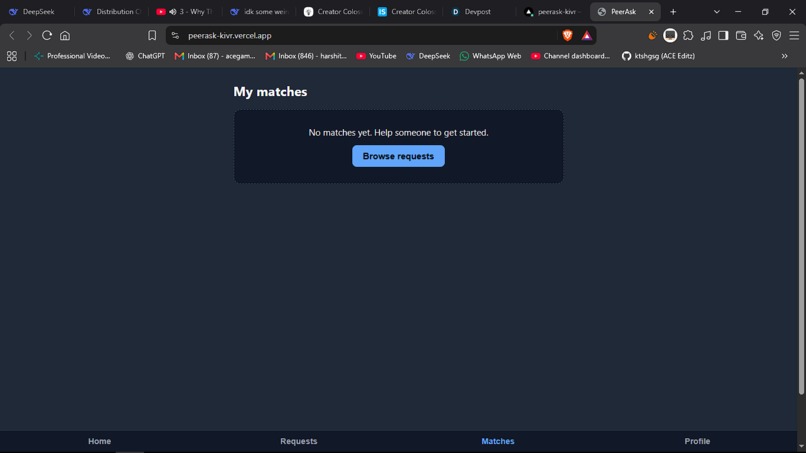
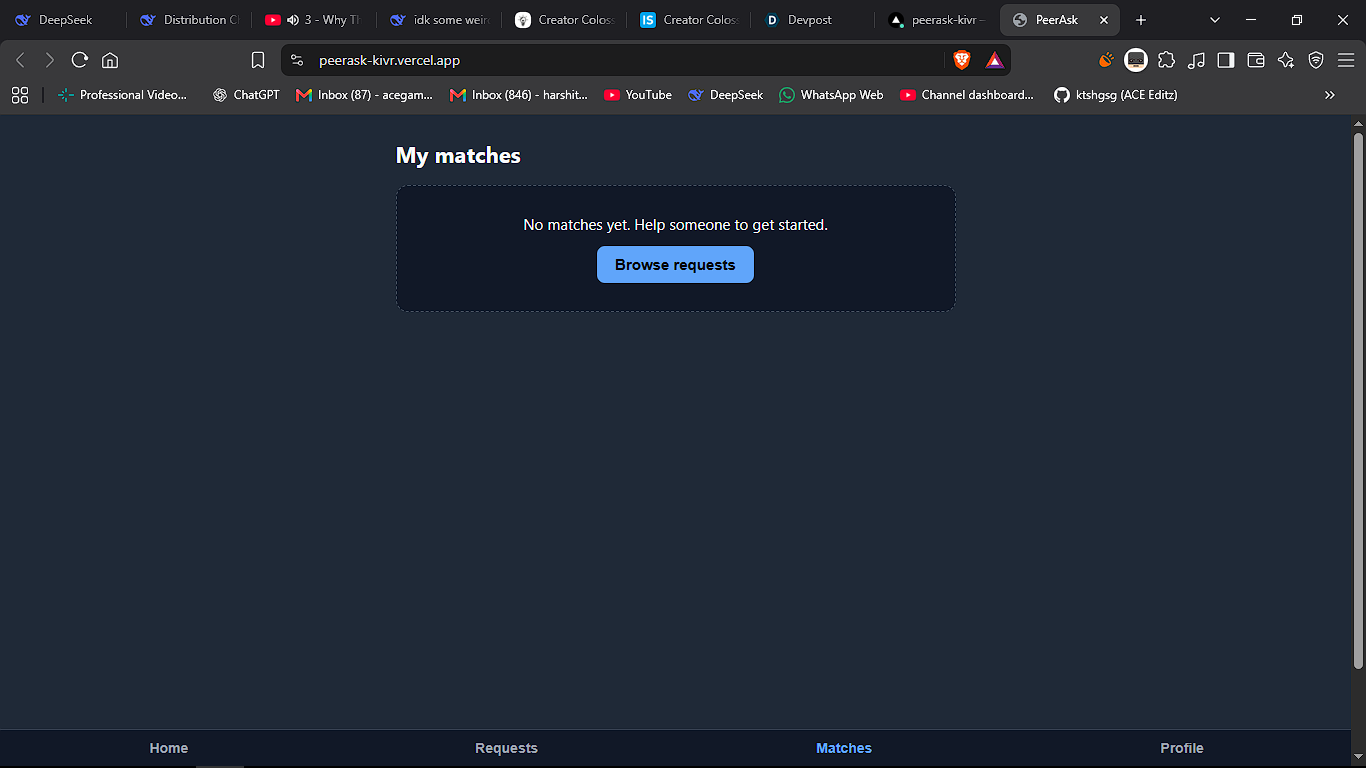
matches page
-
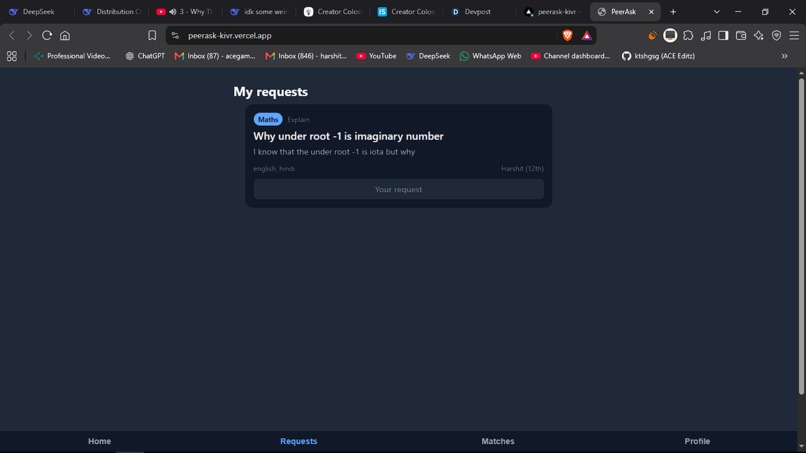
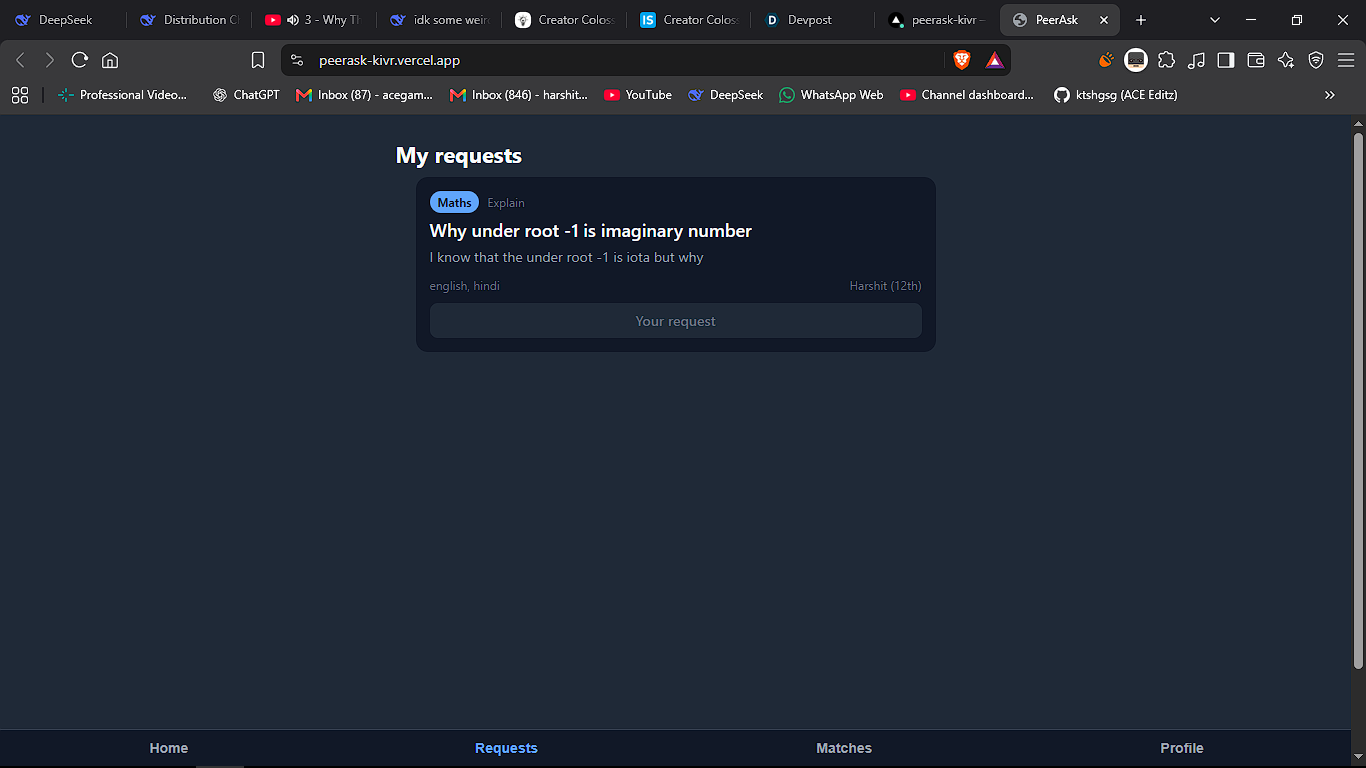
request page
-
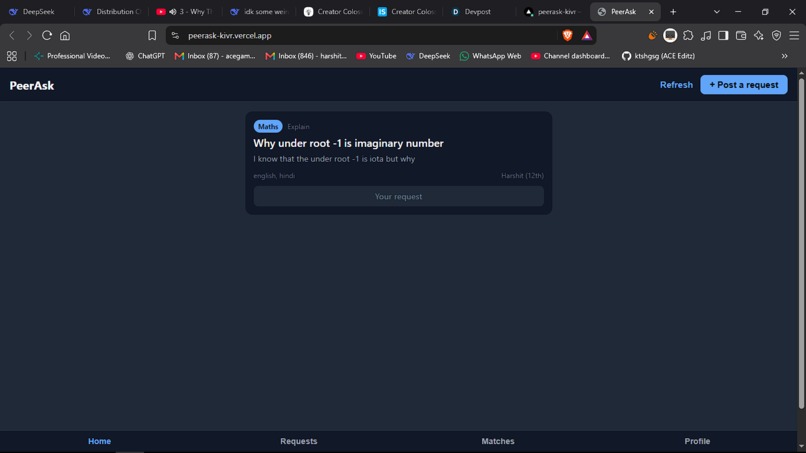
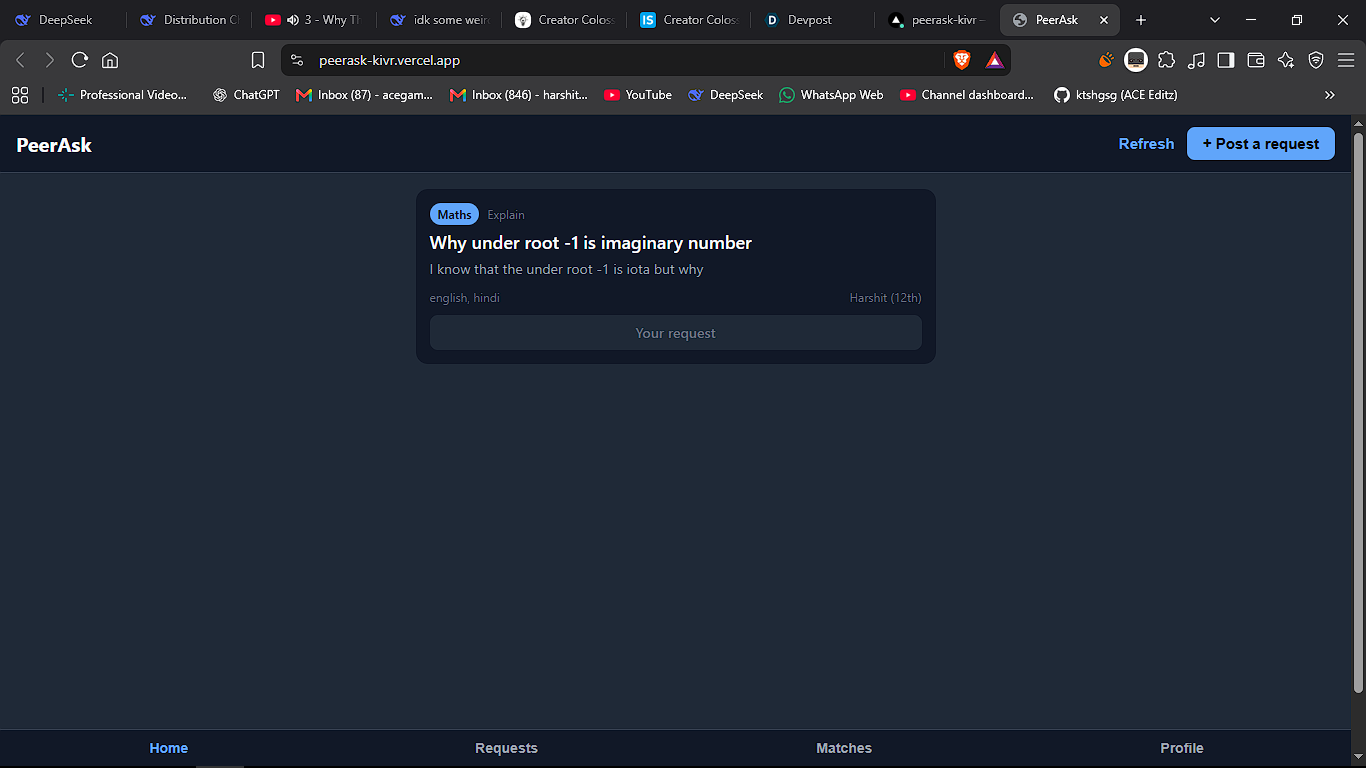
homepage
-
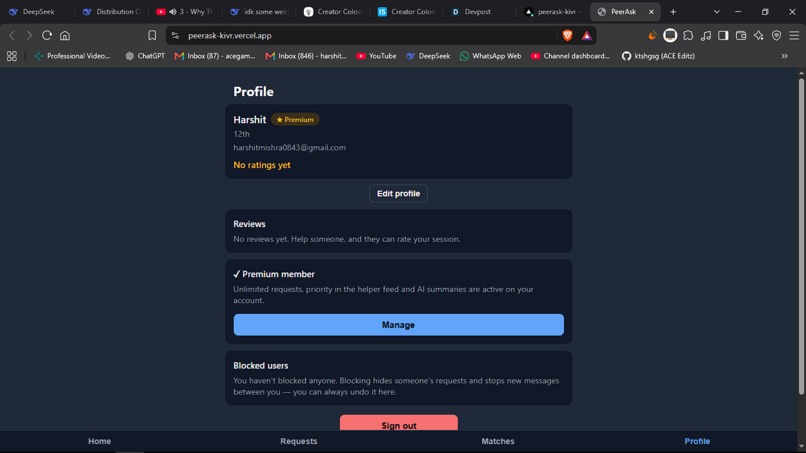
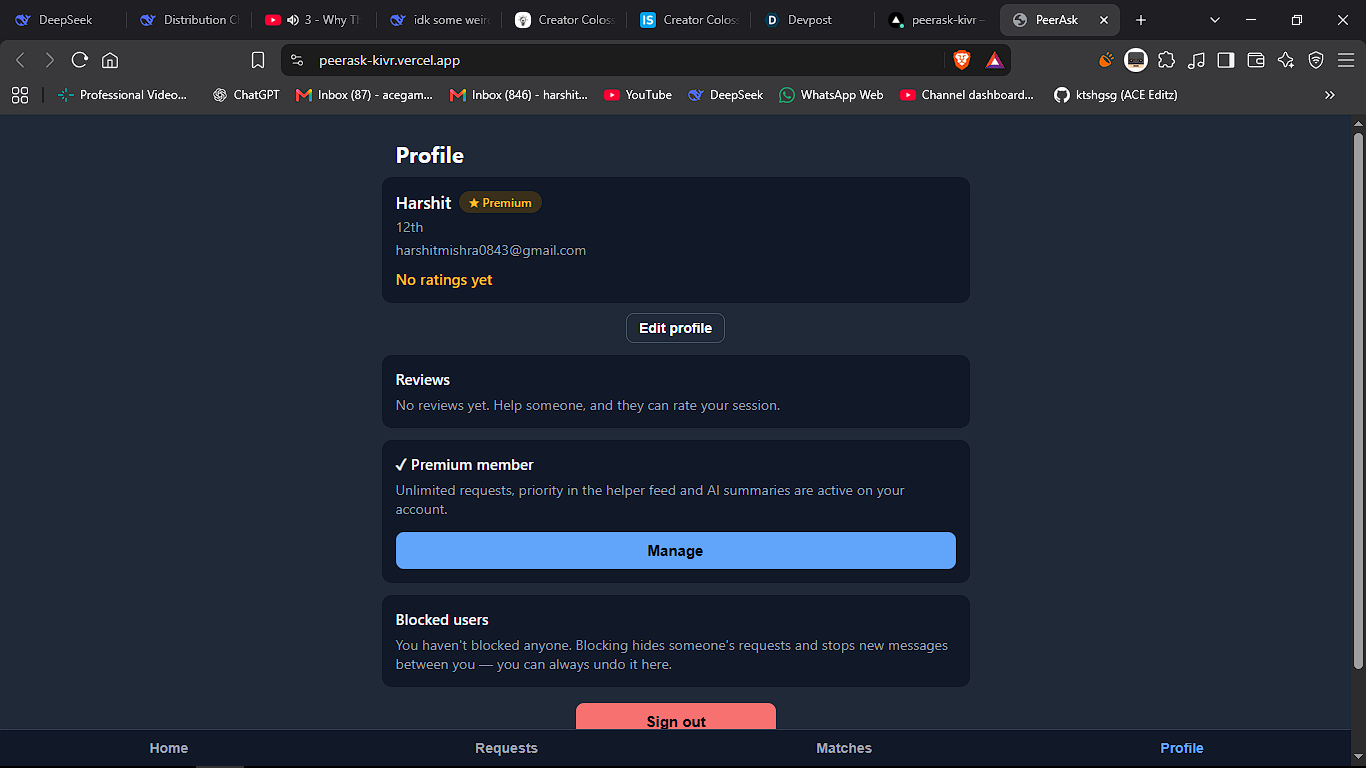
profile page
-
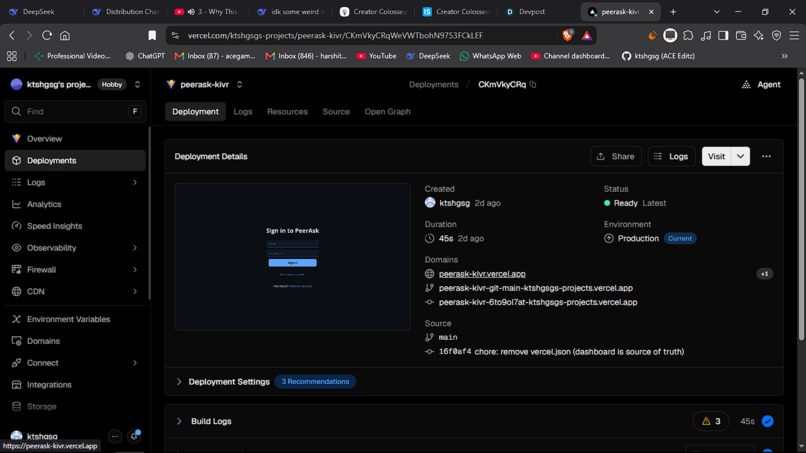
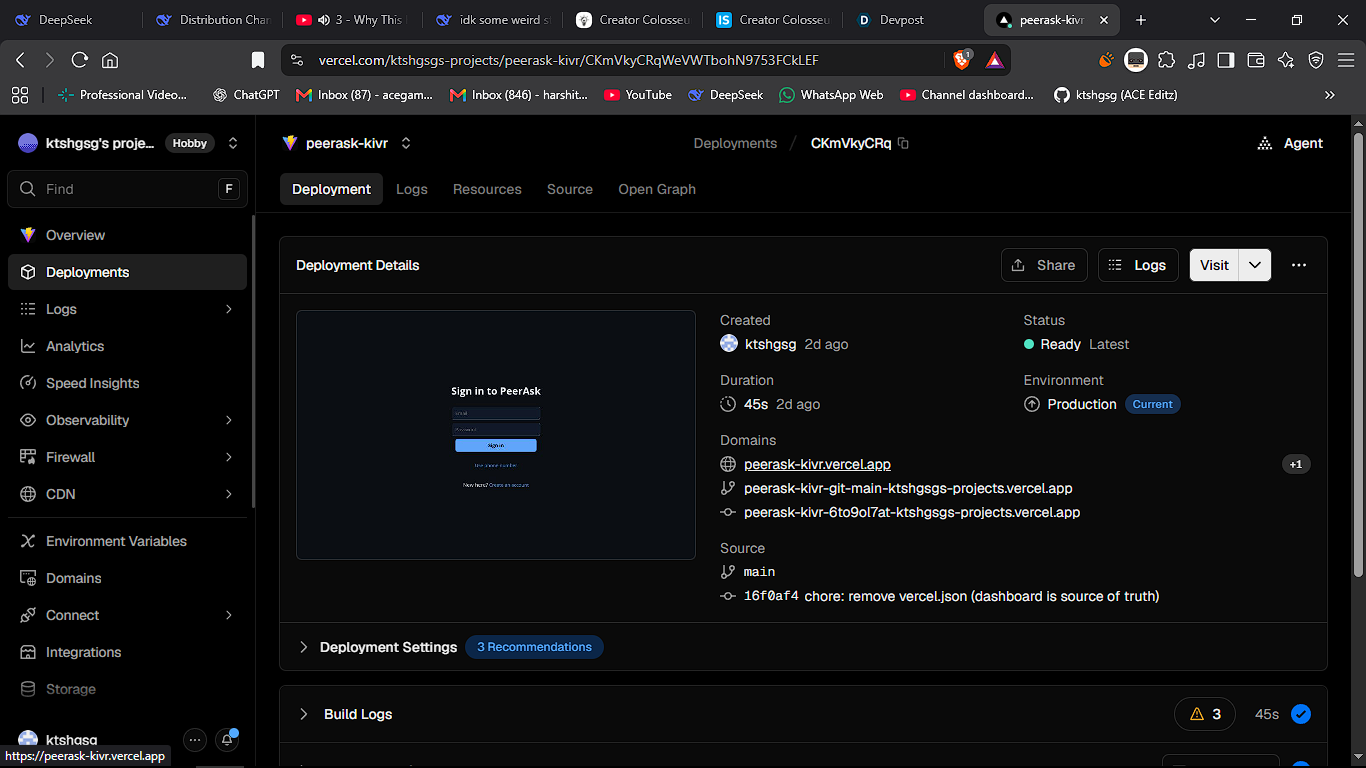
vercel deployment page
PeerAsk: Peer-to-Peer Academic Help, Reimagined for the Next Generation The Problem
Every student has been there. It's 10 PM, you're stuck on a physics problem, and you have no one to ask. Your teacher is asleep. Your parents don't remember how to solve it. You turn to the internet, and you get Brainly—a platform where the "Top Answer" for a simple LCM question reads "Hi dost, this is ur answer" followed by a string of broken emojis and a confidently wrong answer. Or you get a public forum where strangers can DM you, spam you, or worse. The options for genuine, real-time academic help are broken, unsafe, or unreliable.
This is the problem I set out to solve. My name is Ambuj, I'm 16 years old, and I built PeerAsk.
What is PeerAsk?
PeerAsk is a mobile and web platform that connects students who are stuck on a problem with other students who have already mastered that topic. Think of it as a senior helping a junior—but for anything. Subjects, exam preparation, stream selection after boards, or just understanding a concept that didn't click in class.
It is not a chat app. It is not social media. It is a focused, request-based utility designed specifically for academic help.
How It Works
The flow is simple and intentional:
Post a Request. A student who needs help posts a request describing their problem and the subject area.
Get Matched. The system matches them with a peer who has the relevant knowledge or has already studied that topic.
Accept & Connect. The helper receives the request and accepts it. Only then does a private, one-on-one chat open. No one can message you unless you've accepted their request.
Have a Session. The two students work through the problem together in a real-time chat.
Rate the Interaction. After the session, the requester rates how useful the help was. This feedback improves future matching and builds a reputation system for helpers.
This consent-based structure is the core of PeerAsk. It eliminates the random, unsolicited messaging that makes other platforms unsafe. You are never exposed to strangers unless you choose to be.
Safety by Design
I built PeerAsk with student safety as a foundational requirement, not an afterthought. Here are the specific measures in place:
No Photos, No Profiles to Browse: You cannot browse through users. You cannot see anyone's photos or personal details. The only information shared is a name, class, subject interest, and the problem they're posting about.
No Direct Messages: You cannot DM another user. All conversations happen within the context of an accepted request. If someone misuses this, they can be reported and banned.
Automatic Filtering: The chat system automatically detects and blocks phone numbers, social media handles, and external links. This prevents users from taking conversations off-platform and ensures all interactions stay within the safe, moderated environment.
Report & Block: Every session has a report and block button. Users can immediately flag inappropriate behavior.
Verified Access: Users sign up with email verification. For school-based deployments, the platform is designed to work with school email addresses, ensuring only verified students from a specific institution can join that school's network.
The Technical Architecture
PeerAsk is a full-stack application built with a modern, production-grade tech stack:
Frontend: React Native with Expo for the mobile app, and a responsive web version.
Backend: Node.js and Express for the API layer.
Database & Auth: Firebase Authentication and Firestore for real-time data sync.
Real-Time Communication: A request-based chat system with peer-to-peer testing for local network operations.
The project spans over 100 files and includes a modular architecture separating API layers, authentication screens, navigation, reusable components, and custom hooks. I used AI-assisted development to build efficiently, but I architected the system, tested the flows, debugged the errors, and made every critical decision.
What's Next: The Premium Tier
PeerAsk's core features are and will remain free for students. However, to sustain and grow the platform, I am developing a premium tier called PeerAsk Pro. This will include:
AI-Powered Study Tools: Summarize long chat sessions into key takeaways, generate practice quizzes from conversations, and help students formulate better questions.
Priority Matching: Pro users get their requests pushed to the top of the queue for faster responses.
Ad-Free Experience: A clean, distraction-free interface for focused studying.
Verified Tutor Badges: Users can earn badges by passing subject-specific quizzes, showcasing their expertise.
Why This Matters
I built PeerAsk because I know what it's like to feel stuck and have nowhere to turn. I know what it's like to ask for help and get ignored or, worse, get a wrong answer from someone who doesn't care. I also know that students learn best from other students—people who remember what it was like to struggle with the same concept.
PeerAsk isn't just an app. It's a solution to a real problem that millions of students face every day. It's built by a student, for students.
This is my submission for the Creator Colosseum Startup Showdown. I believe PeerAsk has the potential to change how students help each other, and I'm just getting started.
"Note on the GitHub repo: The PeerAsk codebase is currently closed-source as I move toward launching this as a real product. I've provided the live web link and a video demo instead. I'm happy to do a live technical walkthrough of the architecture (React Native, Firebase, Node.js, custom P2P testing) for the judges if requested."


Log in or sign up for Devpost to join the conversation.