-
-
Peer2Panel logo
-
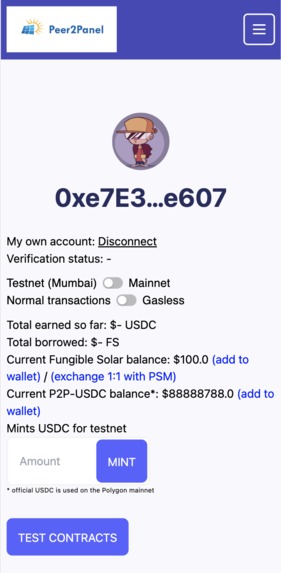
Account details
-
-
-
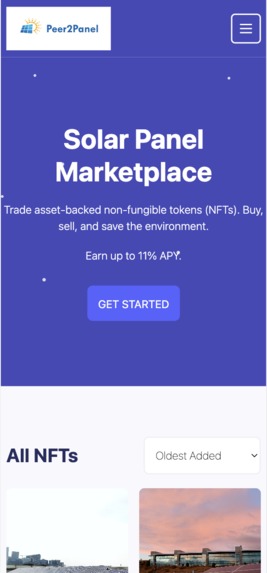
Marketplace
Inspiration
Renewable energy is at the heart of the United Nation’s transition to net-zero emissions by 2050. Unfortunately, there are several challenges associated with these investments, such as the low exit liquidity and the risks of going through centralized agencies. Investments in renewable energy are thus currently mostly limited to governments, big corporations, and wealthy individuals.
What it does
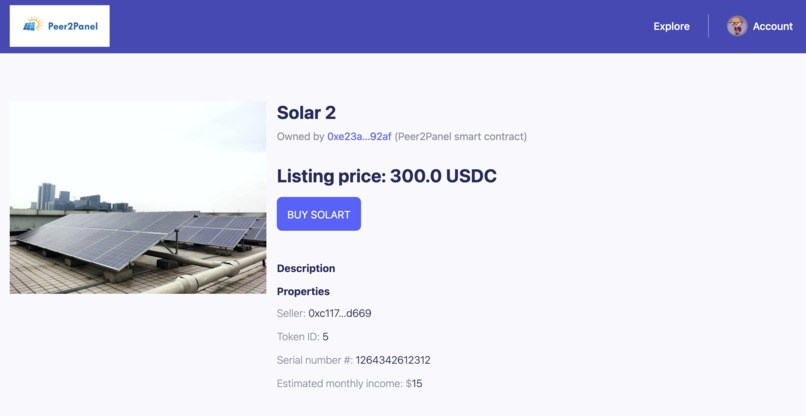
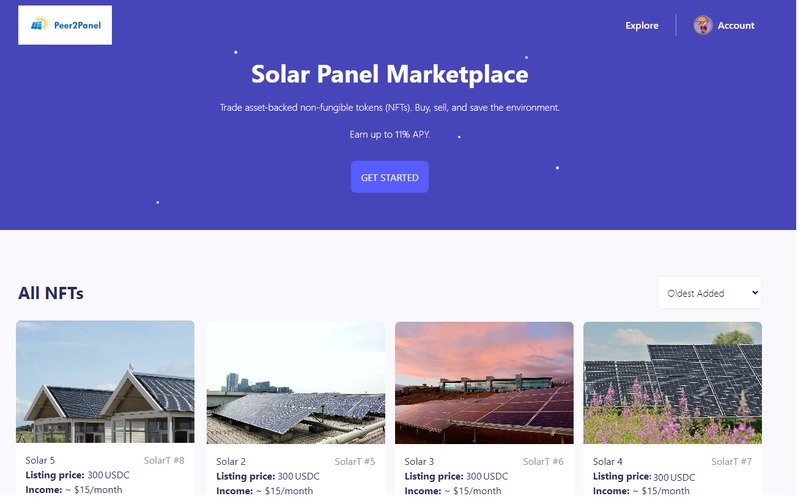
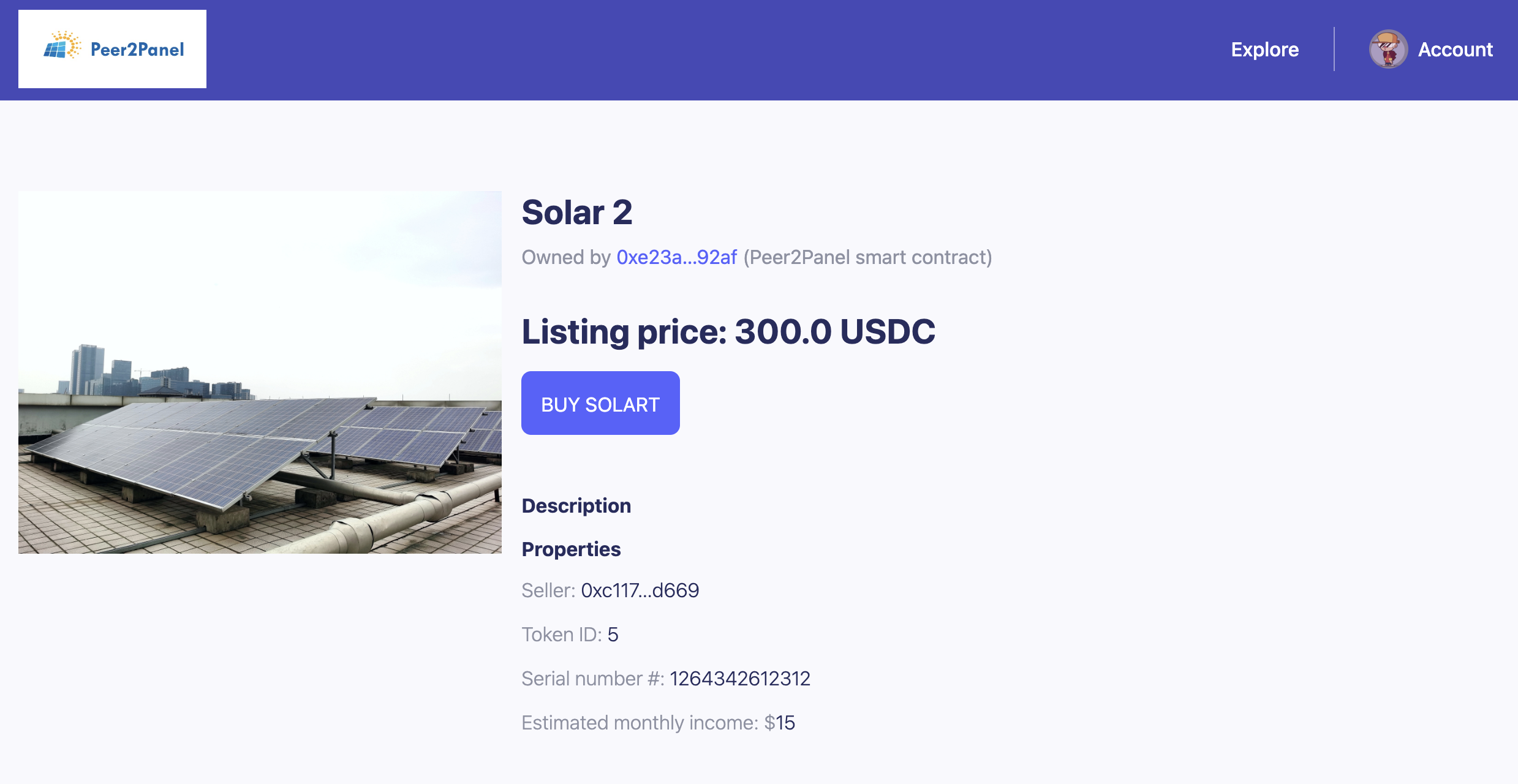
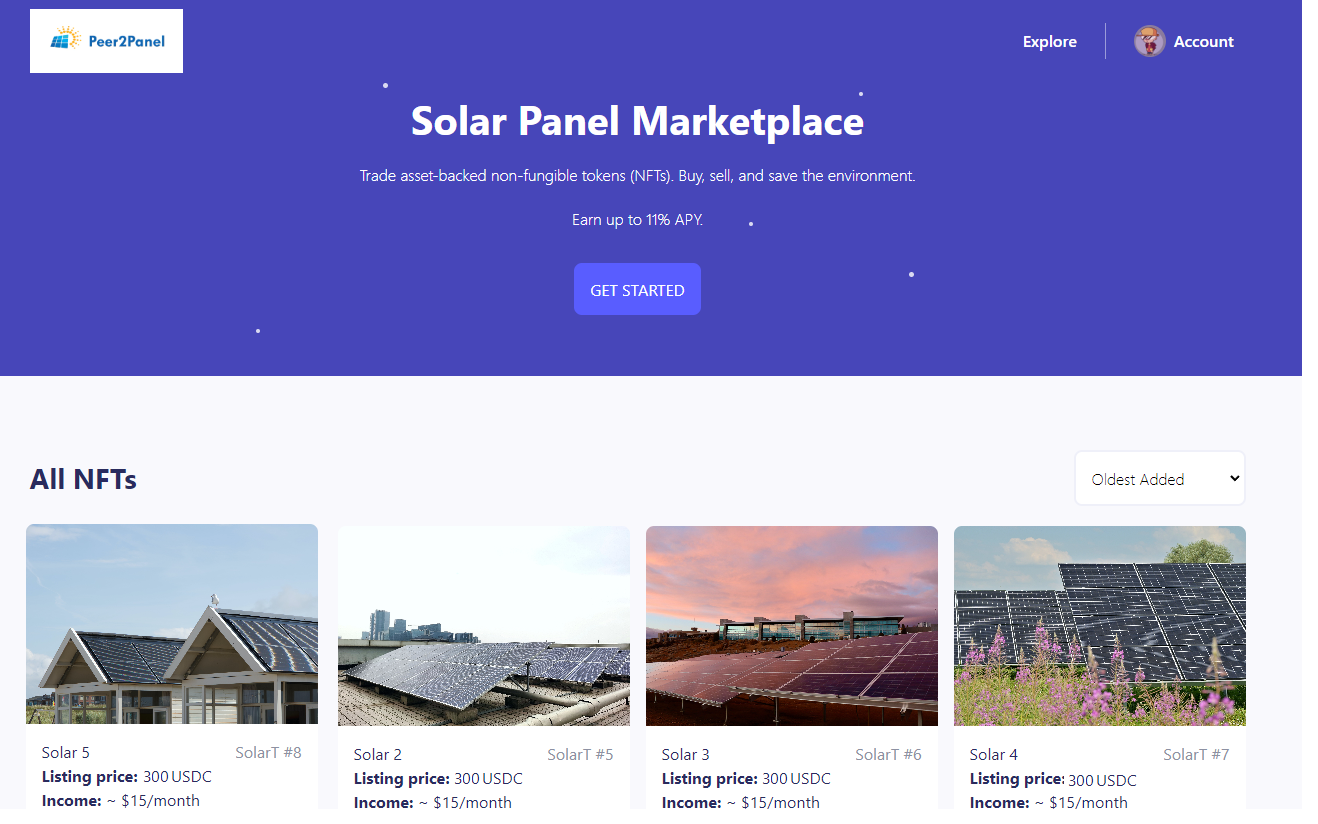
At Peer2Panel (P2P), we address these issues by tokenizing solar panels into unique SolarT NFTs on the Polygon blockchain, where we function as an intermediary between a token-owning individual and a physical solar panel. Our role is to distribute the profits from the generated energy to the SolarT holders, thus making investments in renewable energy transparent, democratic, and efficient. We also provide a SolarT token marketplace that allows users to trade their tokens, providing them liquidity. In addition they can stake their tokens to get instant loans.
How we built it
We built our SolarT marketplace using React on the frontend and NodeJS on the backend, with the JavaScript framework MeteorJS. We use Infura for our IPFS gateway, and Biconomy for our gasless transactions. We used Hardhat for our smart contract development. We deployed our application on a virtual machine running on AWS.
Challenges we ran into
There were challenges with uploading the solar panel images for our SolarT to IPFS, since we wanted to have our backend as light and efficient as possible. Thus we wanted to avoid uploading and storing image files on our server. Due to a recent API change of Infura it was impossible to securely upload images directly from the browser to their IPFS gateway. Our solution was to send the image as Base64 encoded string, and then decode it on our server for the upload to IPFS. With this it is possible to upload with simple POST requests. We are planning to make a blog post about our experiences soon. We also had some struggles to make gasless transactions to work due to sparse documentation and recent changes to the Biconomy API. In the end we managed to enable gasless transactions for all our smart contracts. This makes onboarding users much easier.
Accomplishments that we're proud of
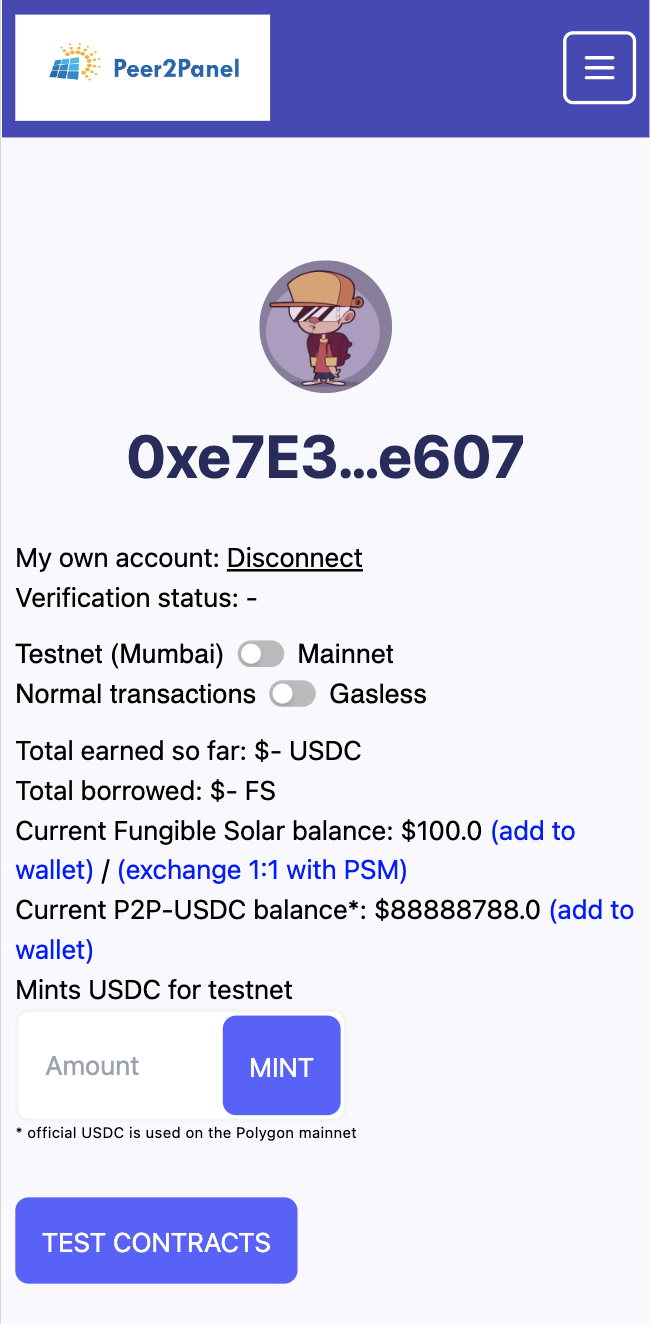
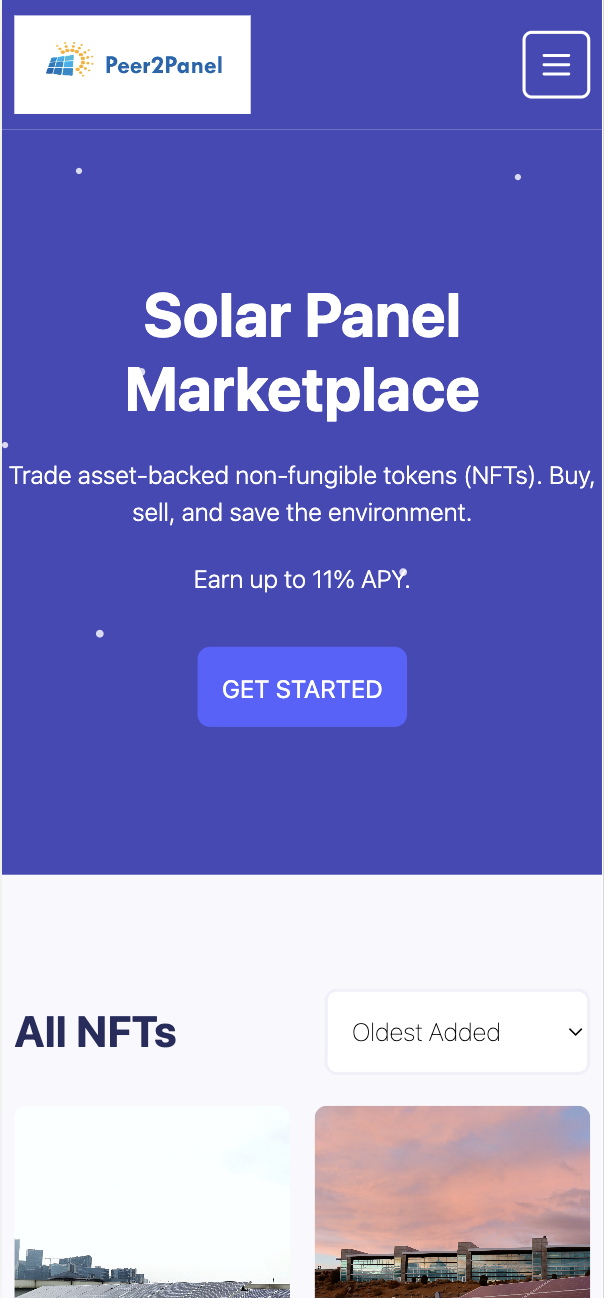
We are proud of having achieved a working application, deployed both to the Mumbai Testnet and the Polygon Mainnet. We are also proud that it is optimised both for mobile and for desktop, allowing login via Metamask and WalletConnect. Gasless transactions make our application accessible to the largest possible audience. All the users need to do is to withdraw some USDC on the Polygon blockchain and they can get started.
What we learned
We learned how to work together as a team, in particular how to coordinate frontend, backend and smart contract development. We also learned a lot about responsive design, in particular for mobile devices, where we had so far limited experience. We also gained a deeper knowledge of the available tools and APIs in the Polygon ecosystem.
What's next for Peer2Panel solar panel NFT marketplace
We have been in contact with several potential partners in the energy industry, which are now in the process of signing contracts for our pilots. After our validation, we are planning to raise seed funding around September/October. If you would to keep up to date on our public launch, please follow us on LinkedIn or Twitter and join our official Discord server (link on website)!


Log in or sign up for Devpost to join the conversation.