-
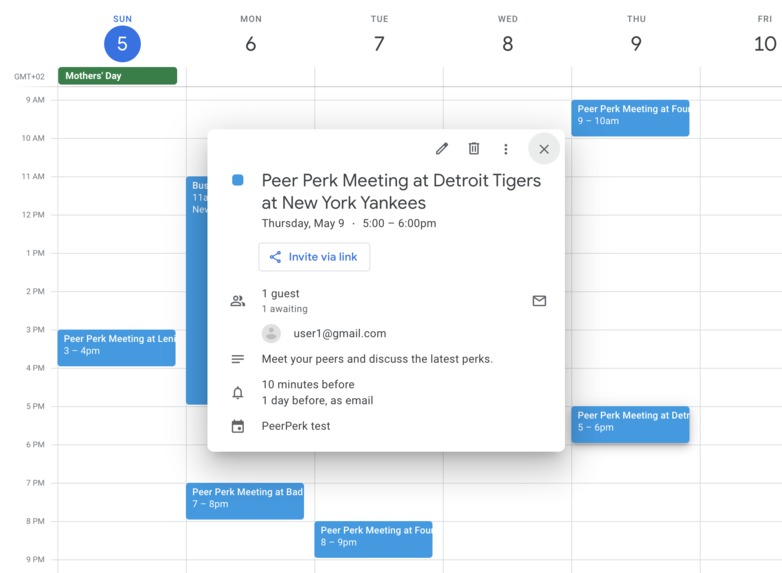
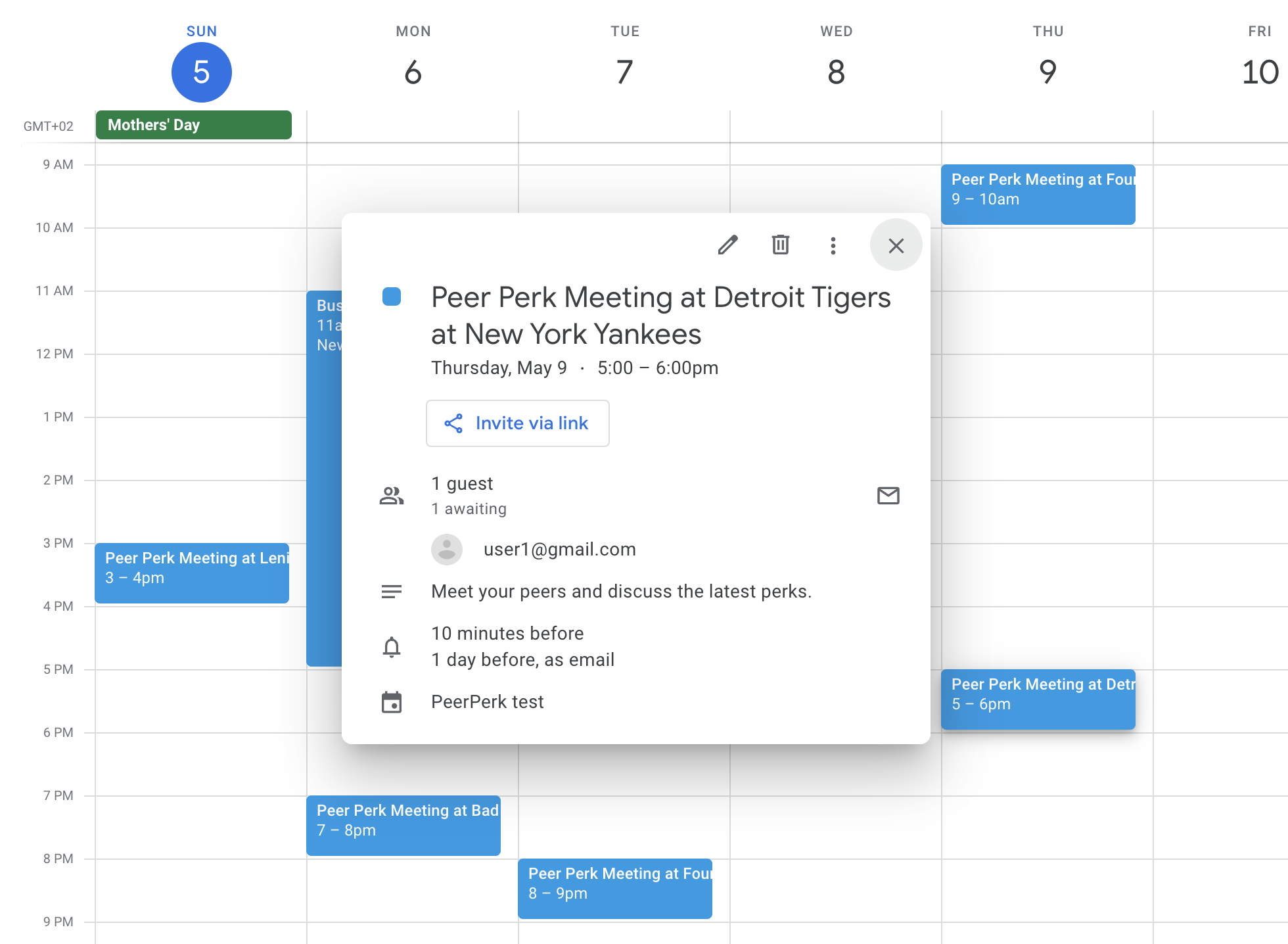
Example of Peer Perk Meeting suggestion details in Google Calendar.
-
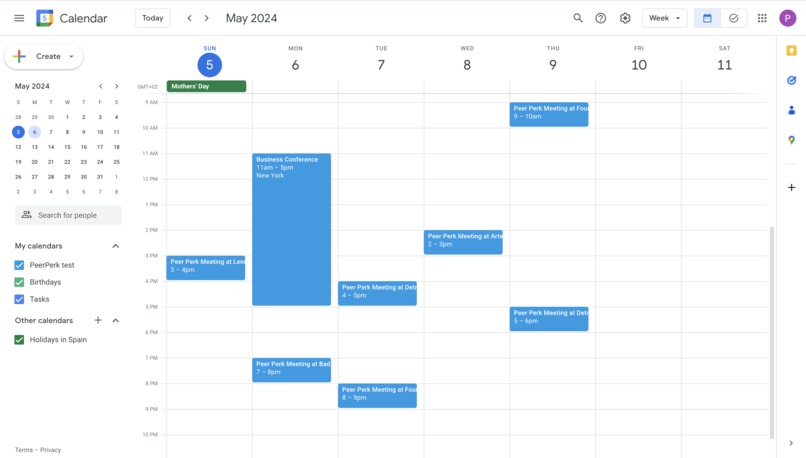
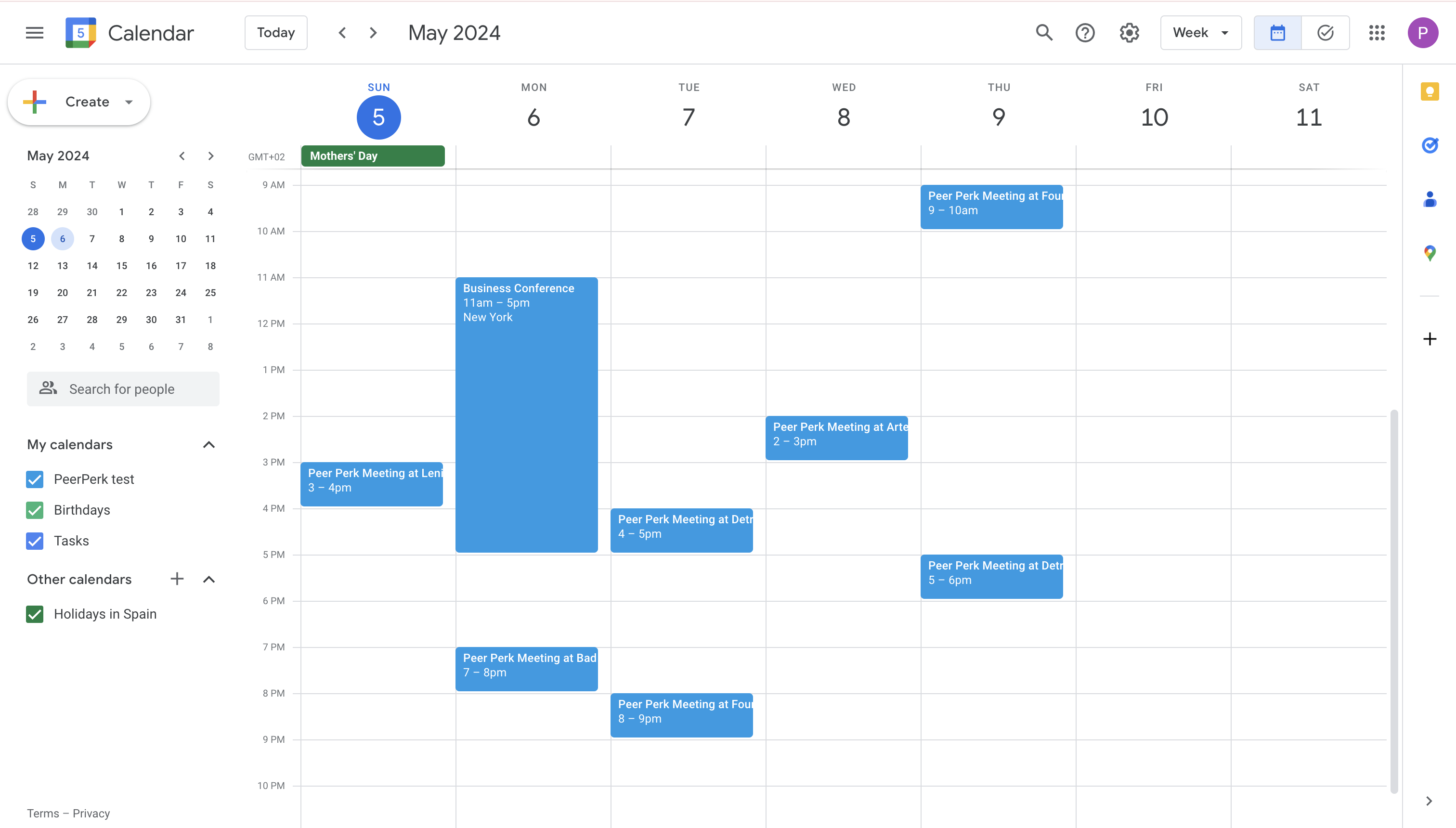
Google Calendar with added Peer Perk Meeting suggestions.
-
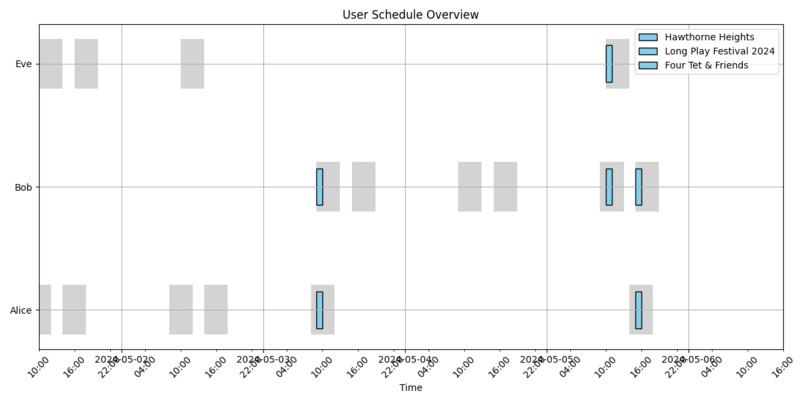
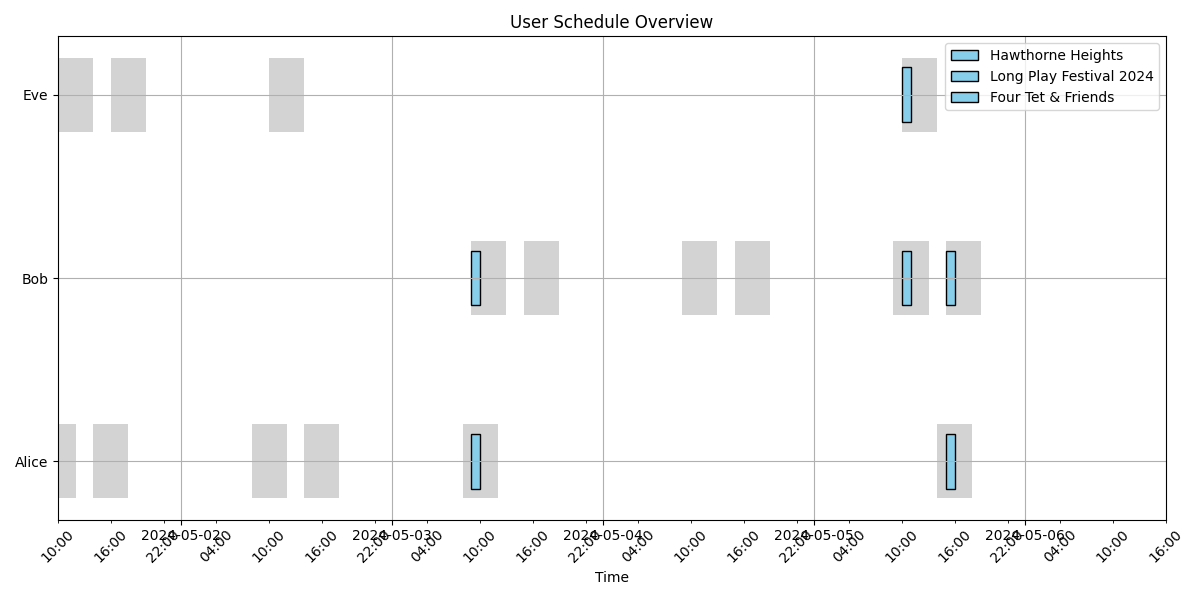
Free slots matching Gantt chart. Gray slots are considered free time, and painted slots are assigned events.
Inspiration
In today's fast-paced world, business travel often represents a significant investment of time and resources, but the opportunities for meaningful personal interaction and team bonding are frequently missed. Inspired by the potential to transform these solitary hours into valuable networking and team-building sessions, Peer Perk was conceived to connect traveling colleagues through shared interests and local events.
What it does
Peer Perk is a vibrant web application that transforms business trips into networking adventures! It skillfully coordinates schedules between traveling employees and their local coworkers by leveraging sophisticated linear programming algorithms. This intelligent matchmaking opens a gateway to a curated selection of group activities designed explicitly to connect people.
With a quick OAuth login, users gain access to an intuitive platform that integrates seamlessly with Google Calendar, ensuring all suggested meetups fit perfectly into their existing itineraries. Whether exploring local cuisines, embarking on cultural tours, or attending exciting local events, Peer Perk makes every business trip an opportunity to create lasting bonds with your teammates.
You can start sparking meaningful connections from this link.
How we built it
Peer Perk was developed using a robust tech stack:
- Front-end: React for a responsive web user interface, ensuring a seamless experience on desktop and mobile browsers.
- Backend: FastAPI for a high-performance API to receive and send data from or to the front-end.
- Data Science: Python's PuLP library to implement linear programming solutions that optimize event matches based on user availability and preferences.
- Integration: Google Calendar API will sync with users' existing schedules.
Development followed agile methodologies, with continuous integration/continuous deployment (CI/CD) practices to streamline updates and ensure robust application performance.
Challenges we ran into
One significant challenge was ensuring real-time synchronization with Google Calendar and OAuth, given the differences in API behavior when calling it from Python vs. Javascript. Handling time zone conversions accurately was also a complex issue that required thoughtful solutions.
However, the biggest challenge we had to overcome (as a team of data scientists) was developing a full-stack web app where we had close-to-zero experience.
Accomplishments that we're proud of
We are particularly proud of:
- Developing an algorithm that matches schedules and aligns user interests for more meaningful engagements.
- Achieving seamless integration with Google Calendar, making the app intuitive and immediately useful for business professionals.
- Creating a user-friendly web interface simplifies the complexity of backend processes.
What we learned
Throughout the development of Peer Perk, our team gained invaluable insights into advanced scheduling algorithms, the nuances of API integrations, and the development of front-end & back-end applications.
What's next for Peer Perk
- Explore machine learning techniques to refine our matching algorithms further based on user feedback and interaction patterns.
- Expand Peer Perk to connect business travelers and coworkers local to the flight destiny area, sparking even more meaningful connections.

Log in or sign up for Devpost to join the conversation.