-
-
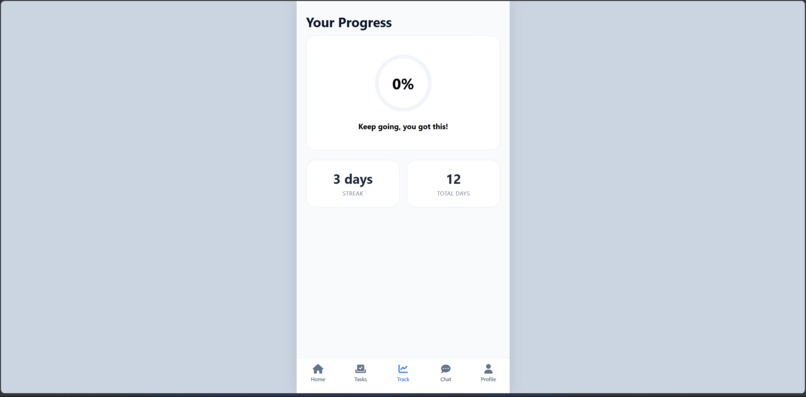
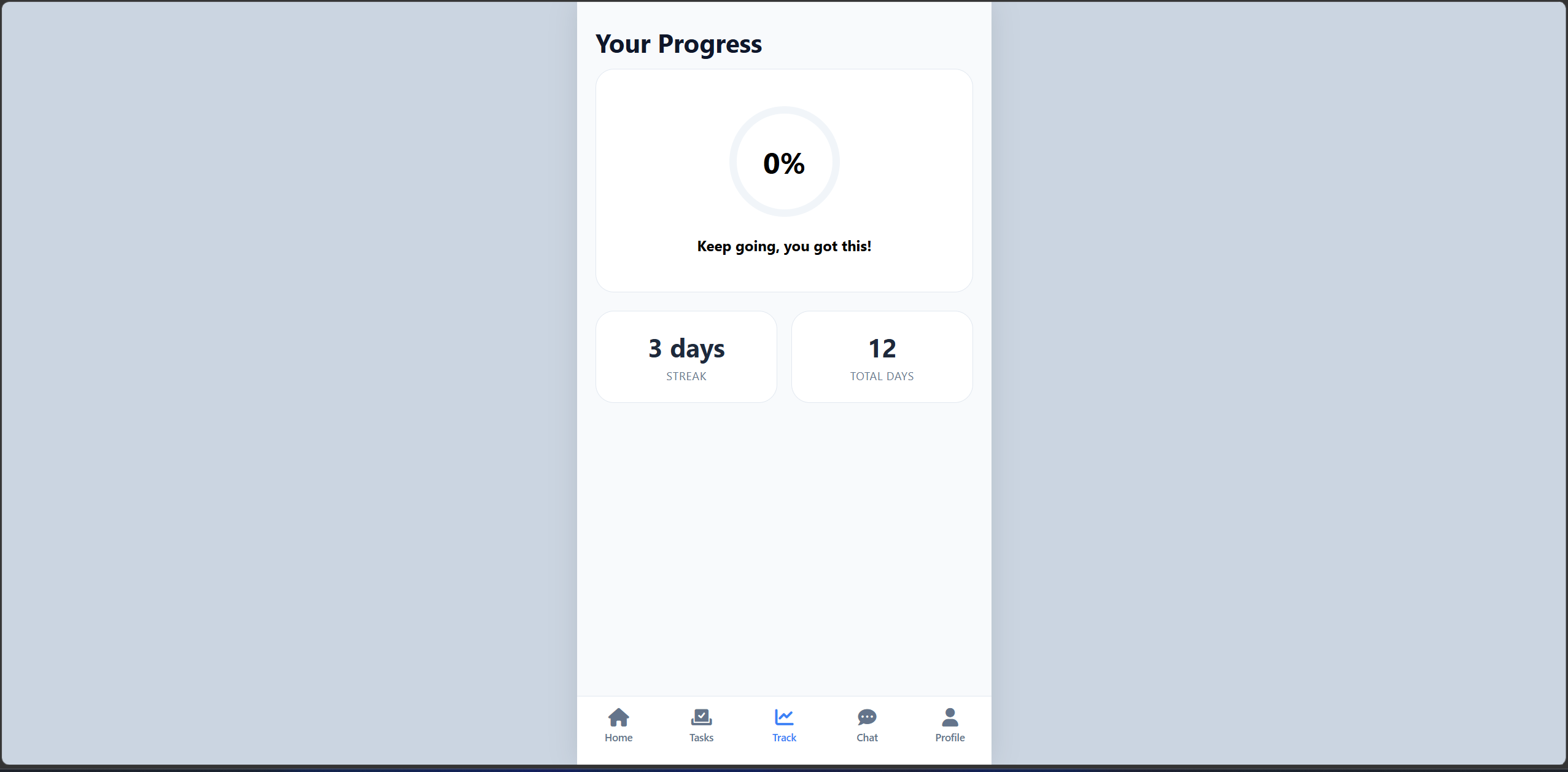
Progress Dashboard: A unified tracking layout displaying task completion percentages alongside active streak milestones
-
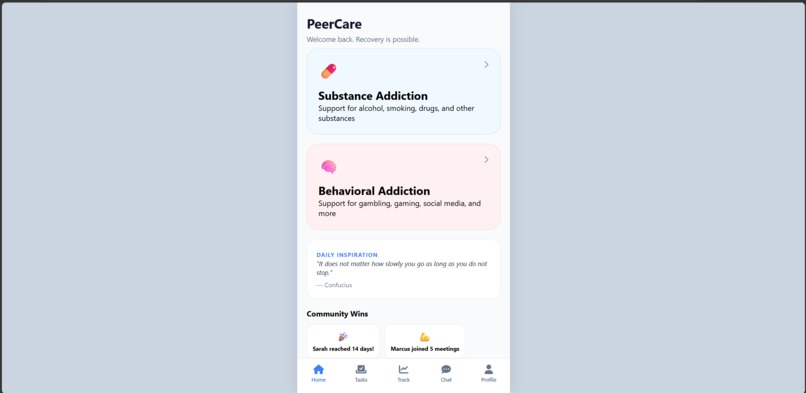
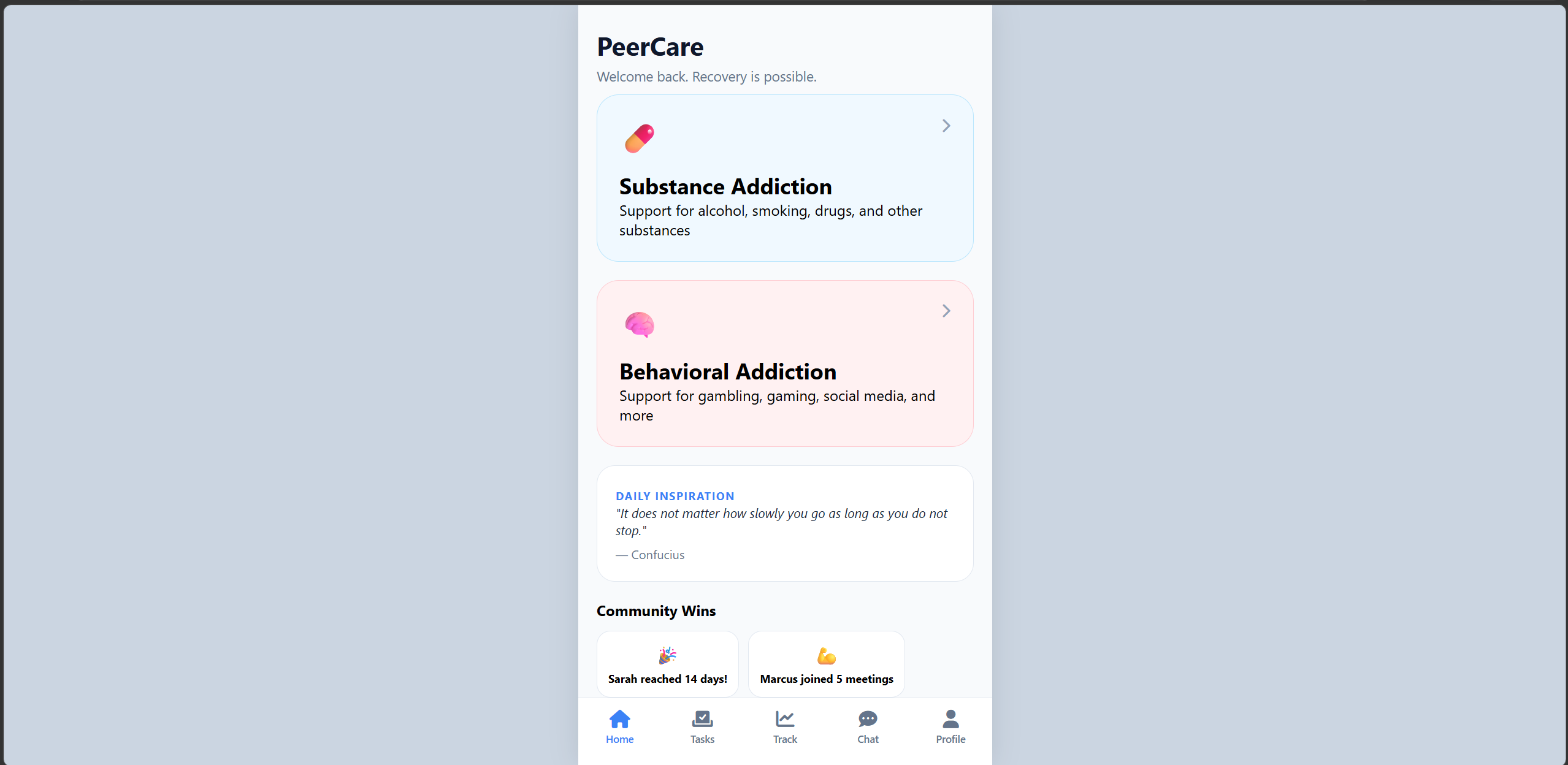
The PeerCare Main Hub, offering clear navigation pipelines across substance use and behavioral wellness sectors.
-
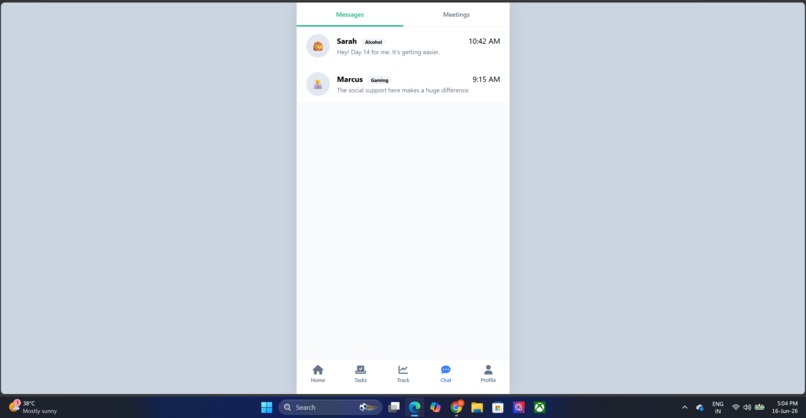
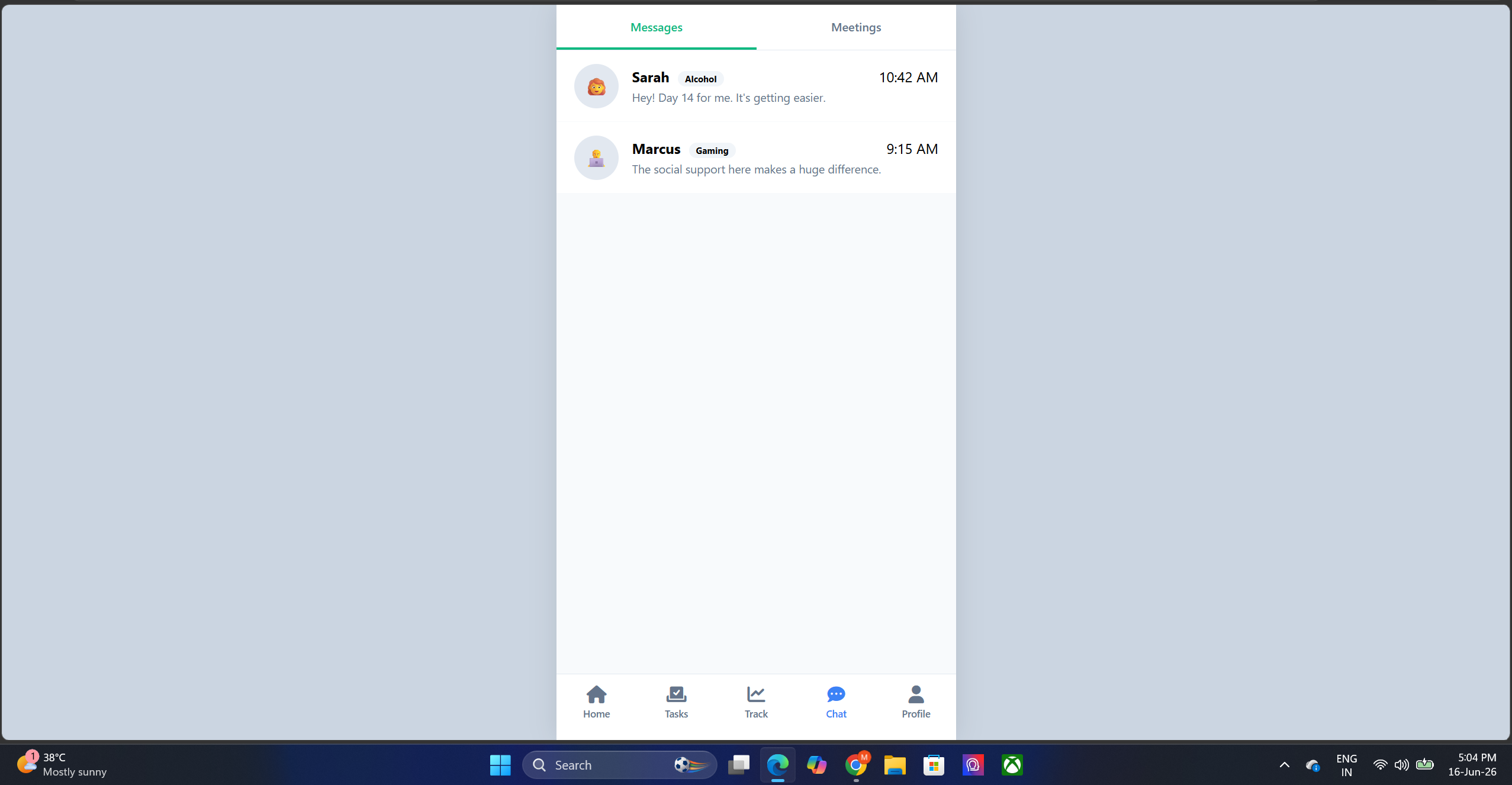
Real-Time Peer Chat Room: An intuitive communication layout enabling anonymous buddies to sync progress and share support
-
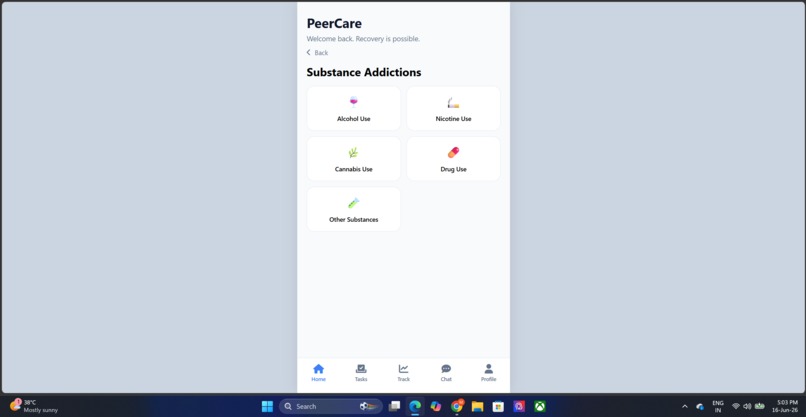
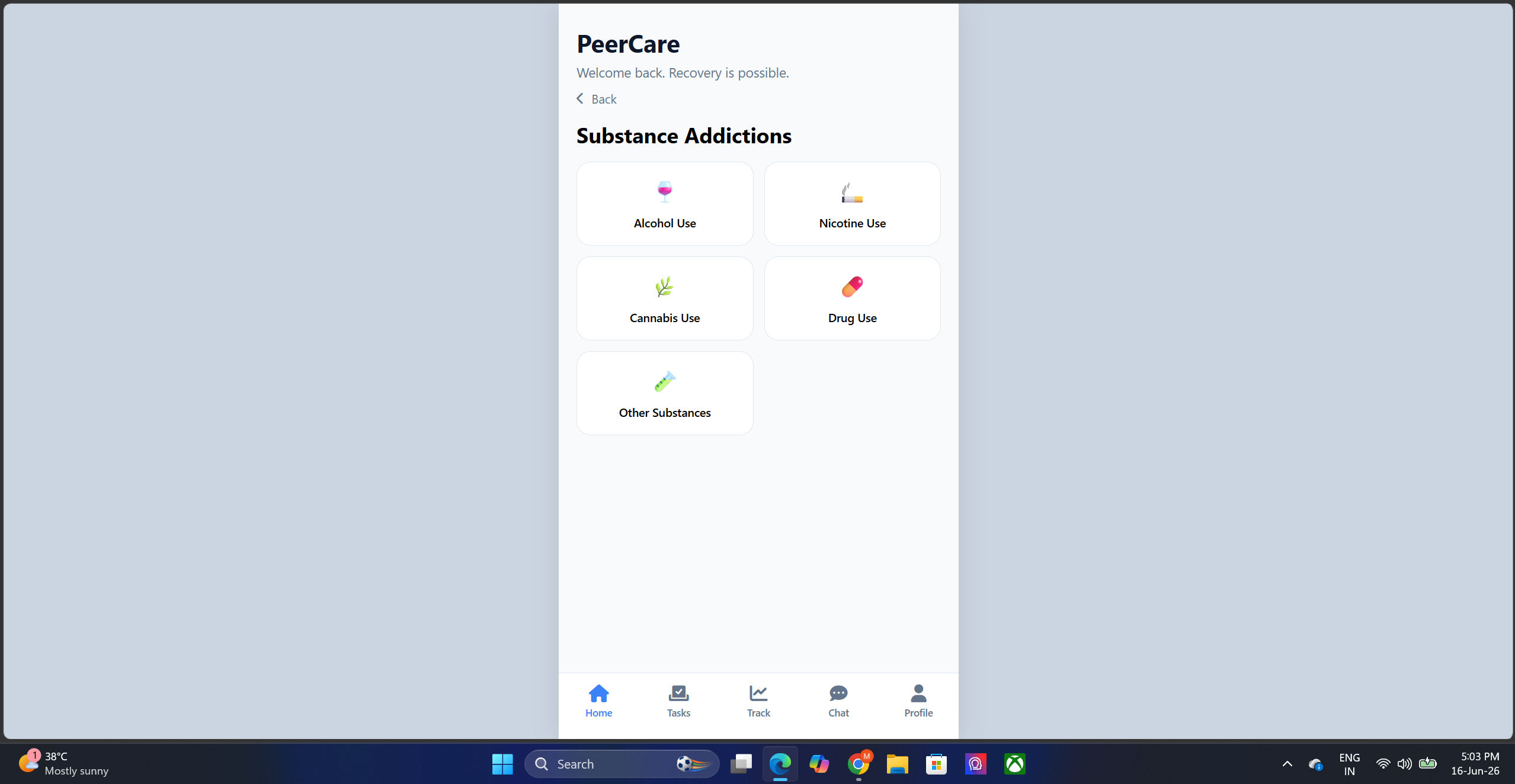
Substance Addictions Portal: Clean layouts organizing specific tracking areas like nicotine, alcohol, and cannabis.
-
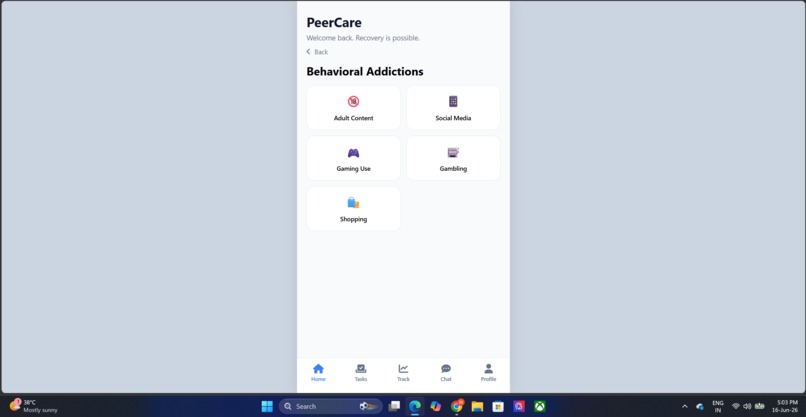
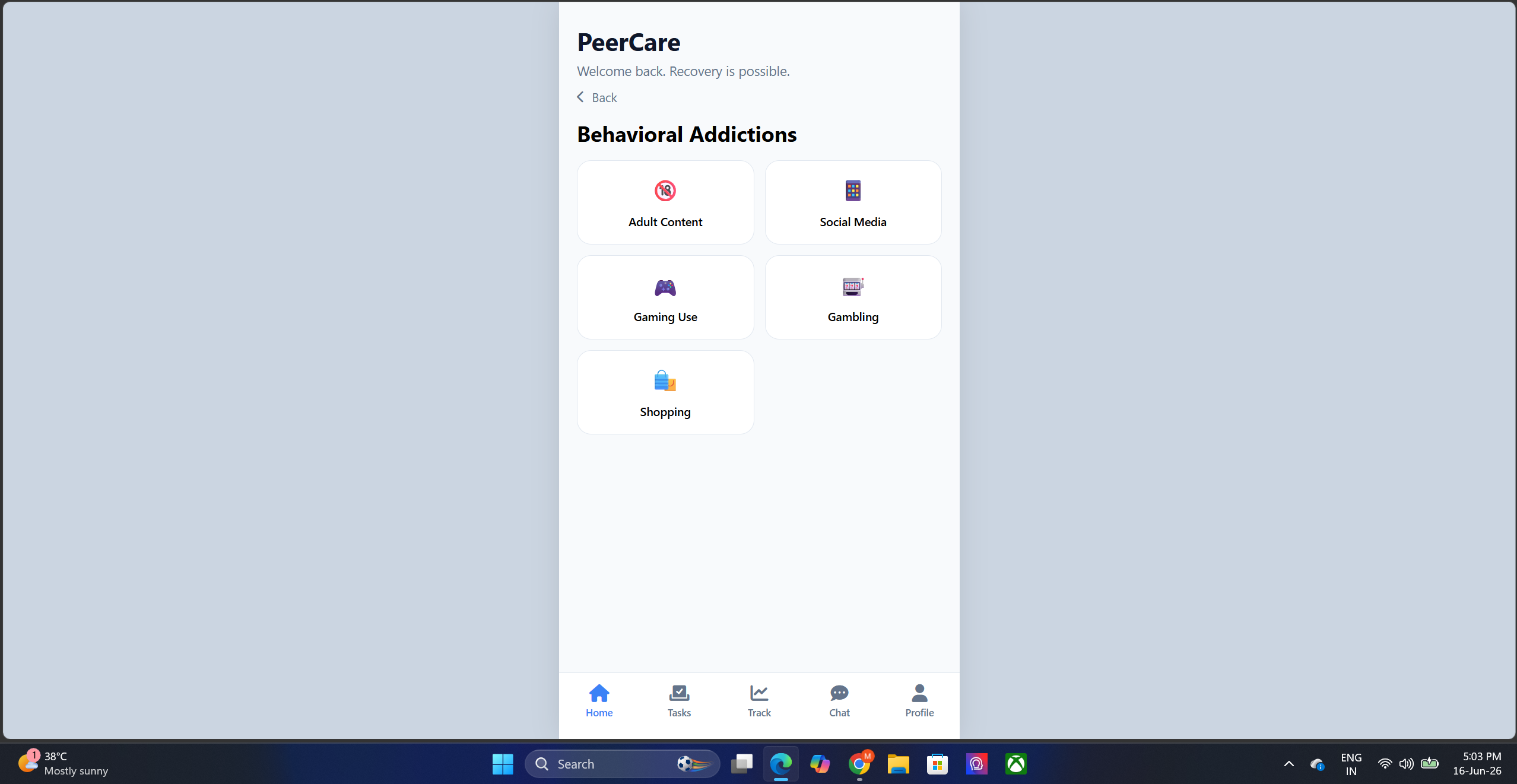
Behavioral Addictions Portal: Specialized environments covering modern challenges like social media, gaming, and gambling
-
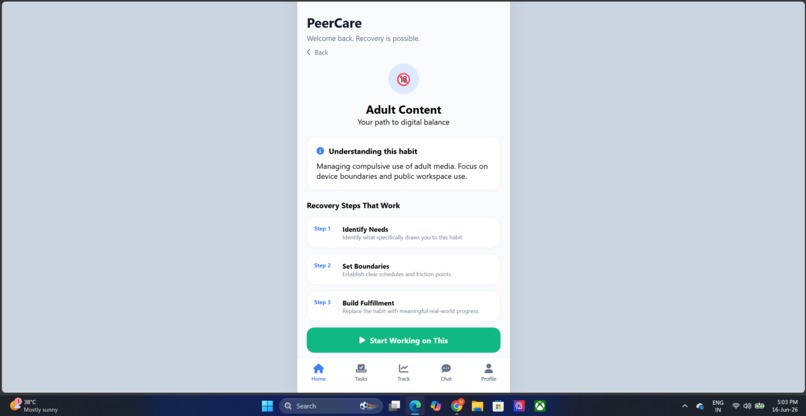
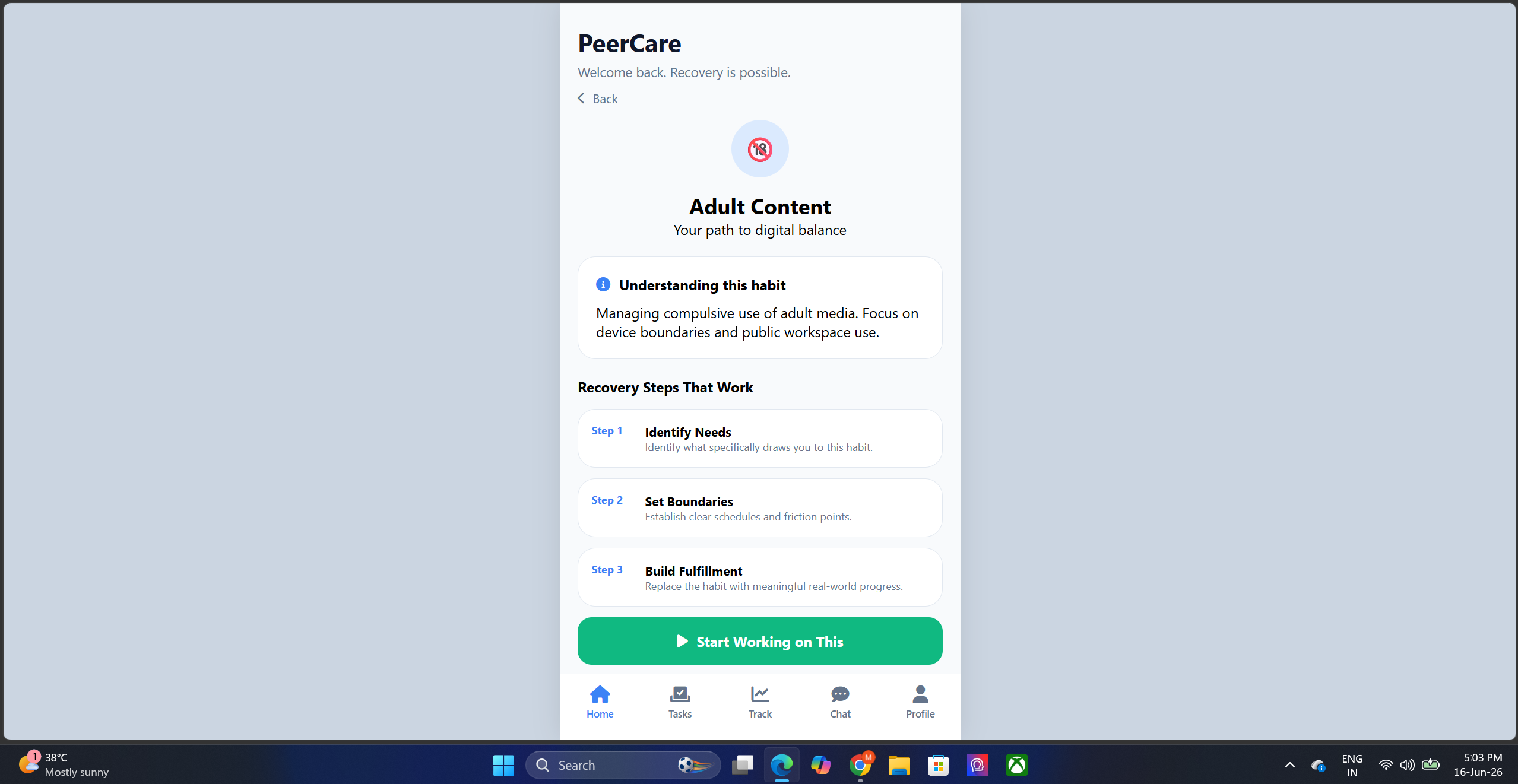
Actionable Roadmaps: Selecting a focus area unlocks a clear, step-by-step psychological framework to build boundaries.
-
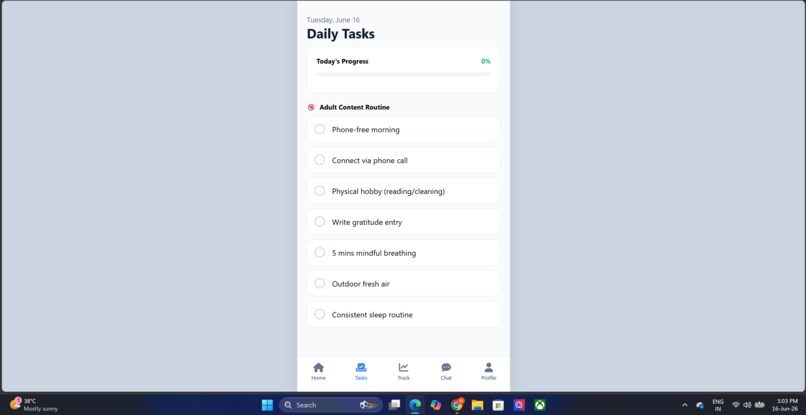
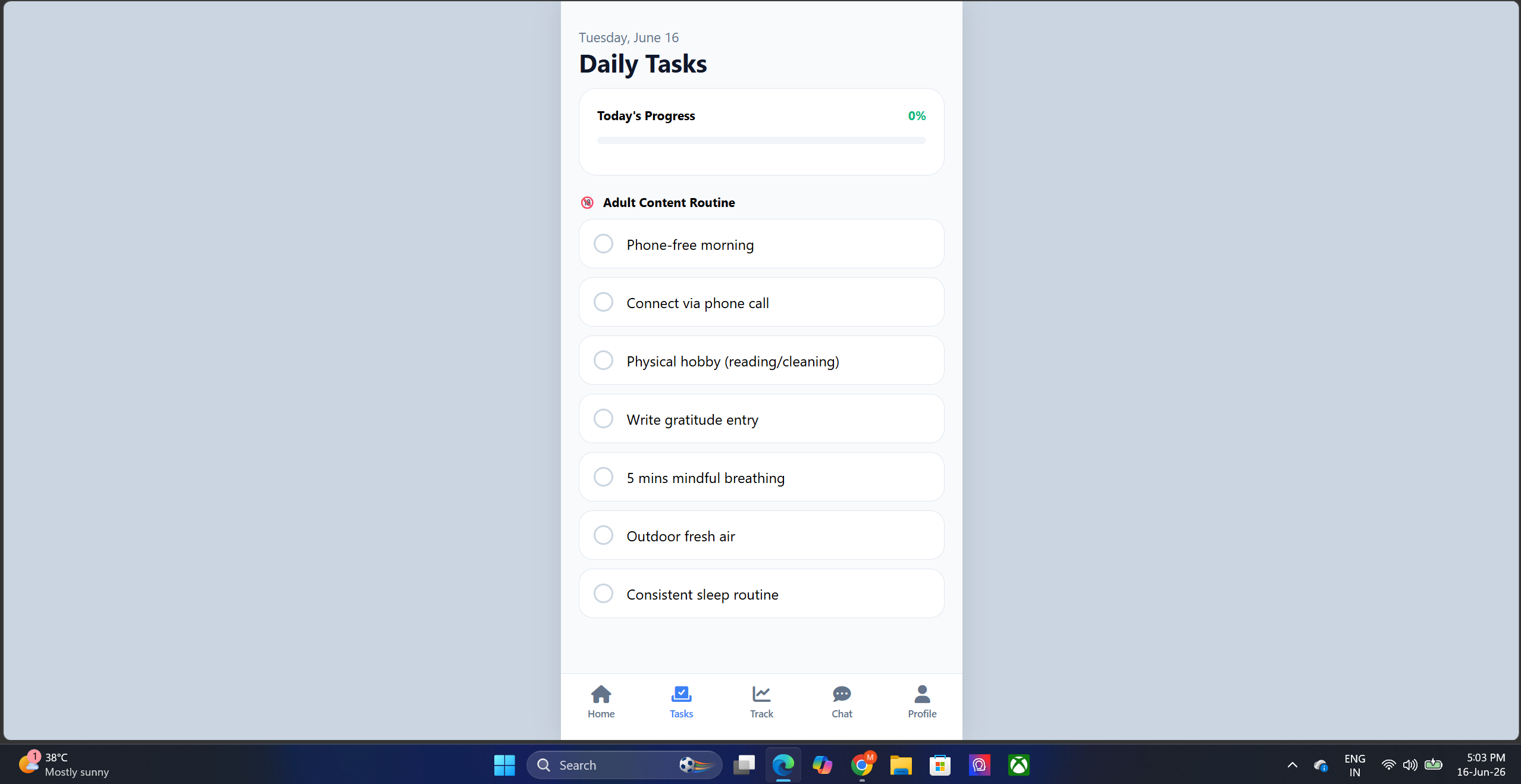
Interactive Daily Checklist: A distraction-free task workspace where users mark off real-world micro-habits consistently.
-
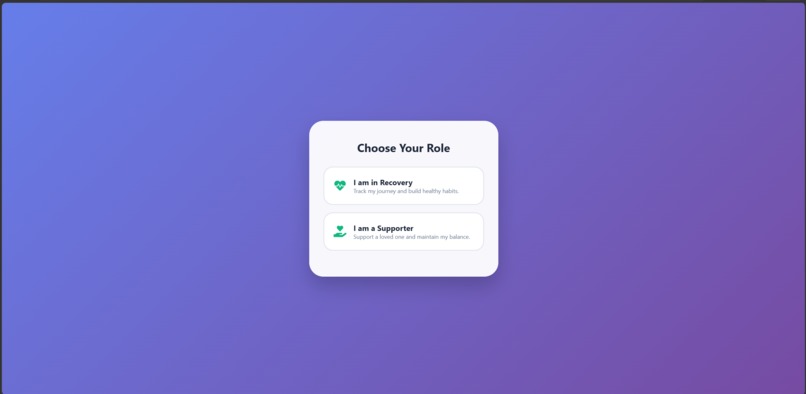
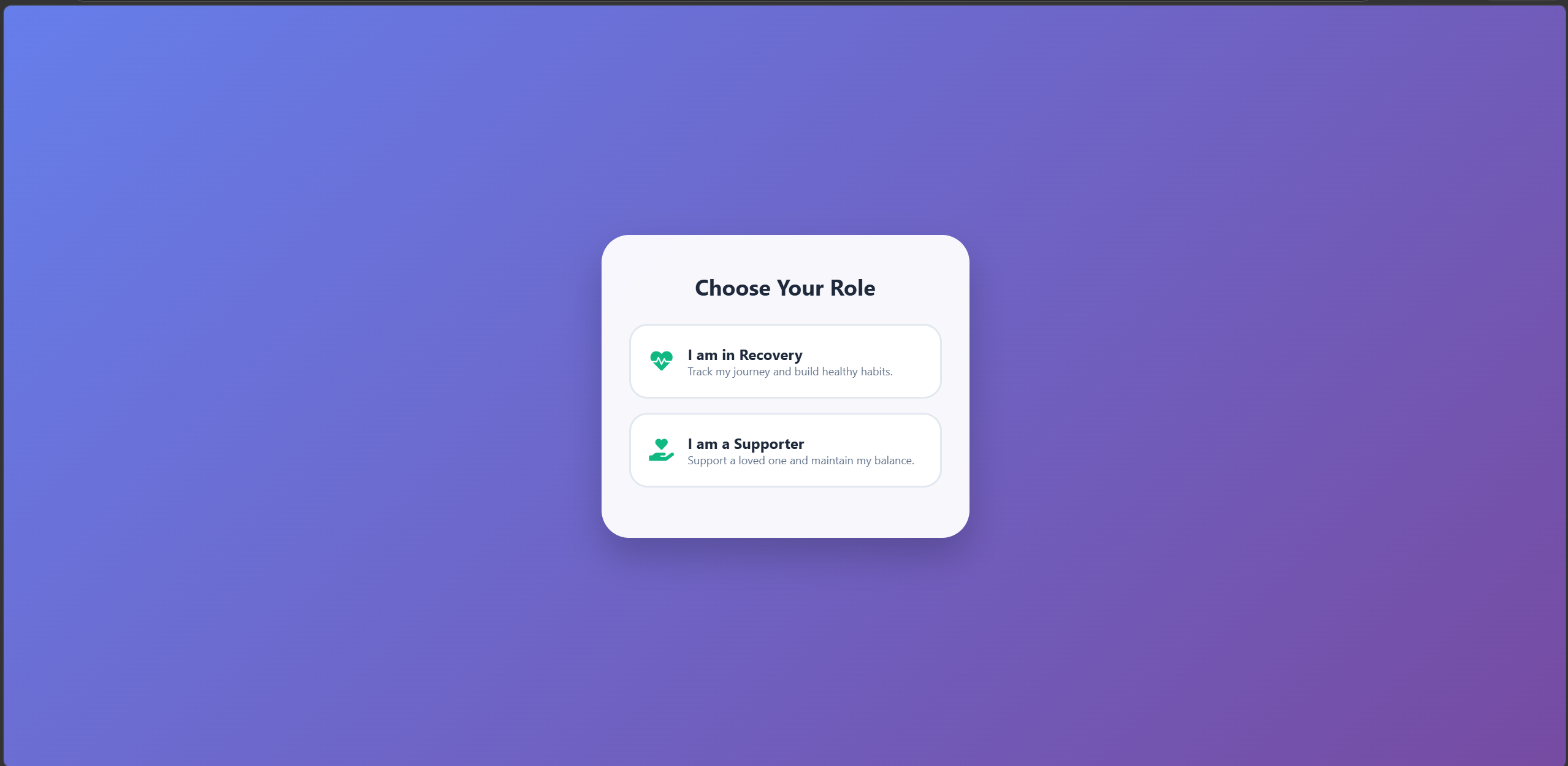
Role Selection Screen: Users can opt to customize a personal recovery tracker or register explicitly as a supportive buddy.
-
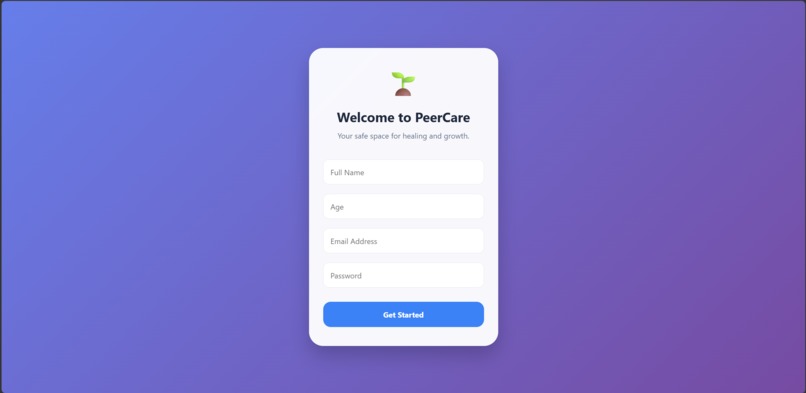
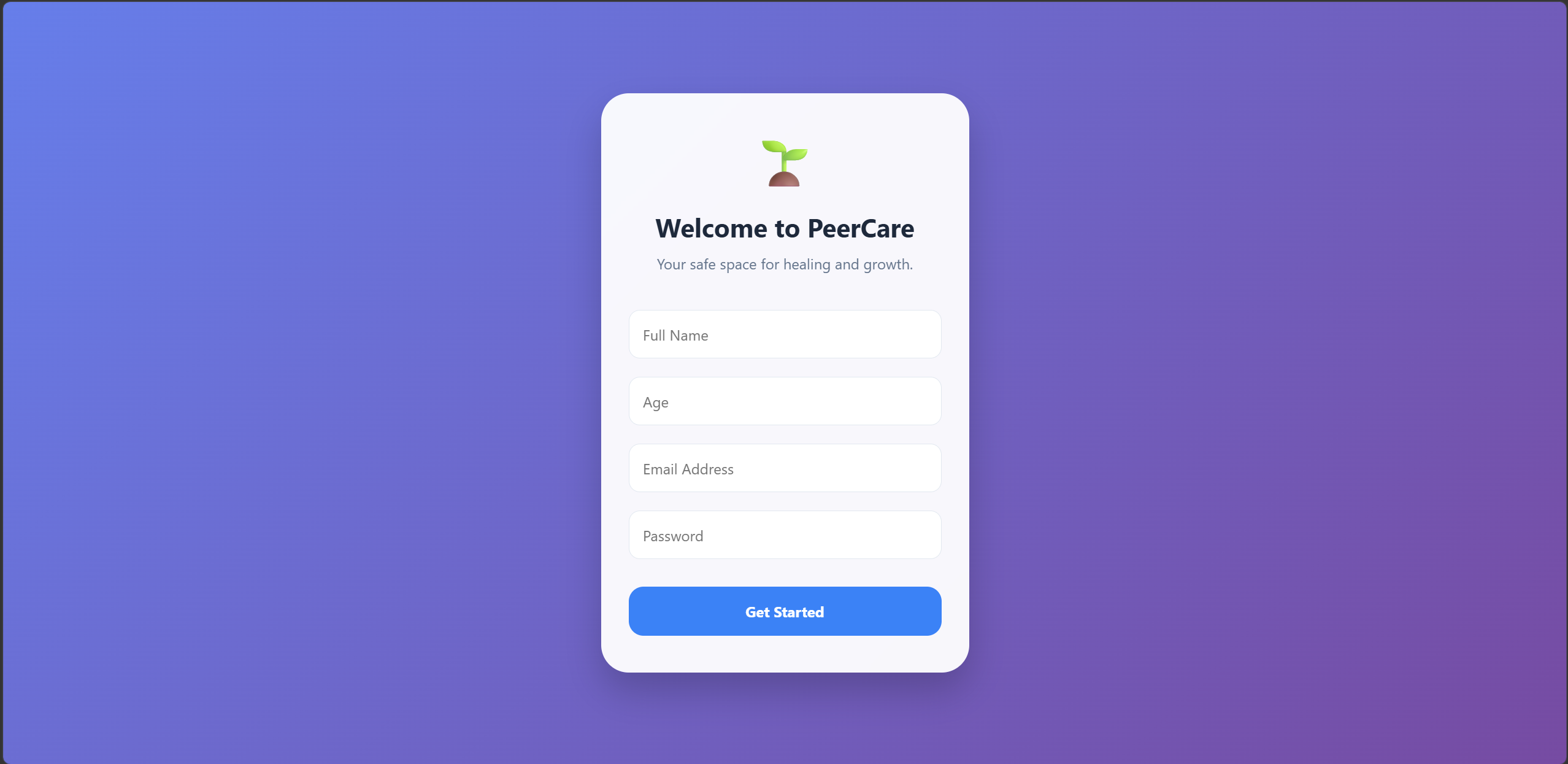
The PeerCare entry interface, featuring a minimalist onboarding workflow designed to protect identity and welcome users
-
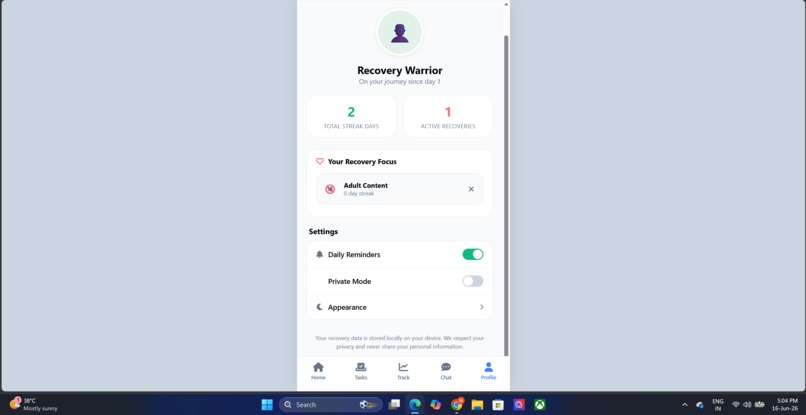
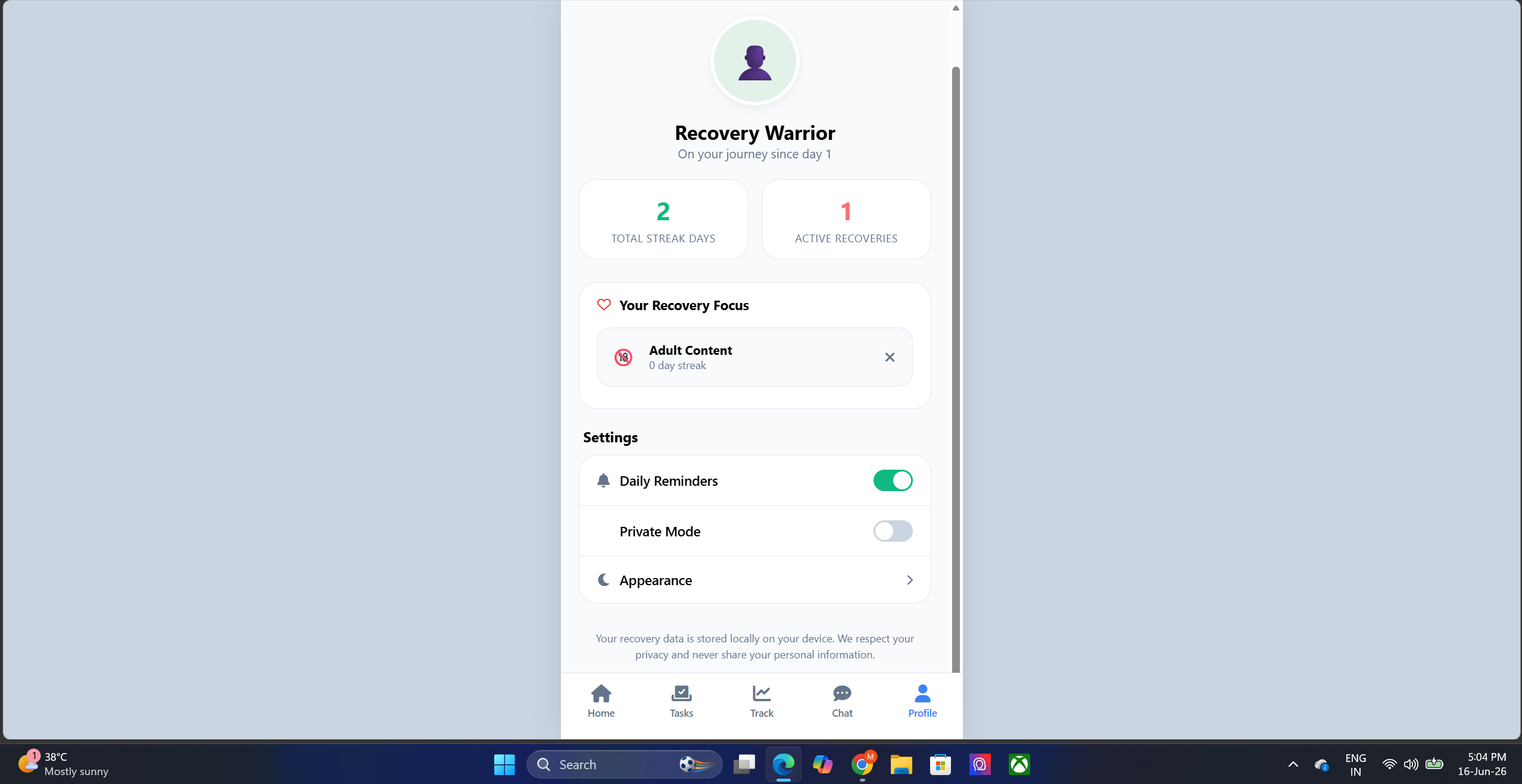
Profile Space: A control menu managing focus targets, current streak metrics, and critical local data privacy toggles
Inspiration
Modern productivity platforms rely heavily on isolated dashboards, treating habit tracking as a clinical numbers game. When an individual is left entirely to self-discipline within a sterile UI, the abandonment rate is staggering. We noticed that people trying to manage digital wellness, break negative behavioral loops, or stay consistent with daily routines don't need colder automation—they need human empathy and mutual social stakes. We built PeerCare to transform recovery and habit consistency from a lonely, internal struggle into a shared, anonymous, peer-driven journey.
What it does
PeerCare is an open-ended, empathetic behavioral change network that pairs individuals sharing identical wellness milestones into tight, anonymous accountability duos. The platform allows users to:
Onboard securely based on their distinct path, whether managing active recoveries or acting as a dedicated supporter.
Target distinct behavioral loops categorized neatly under Substance Use or Behavioral/Digital Addictions.
Commit to realistic, multi-step behavioral frameworks that break large mental barriers down into actionable milestones.
Execute structured daily task checklists tailored to their specific recovery goals.
Track performance seamlessly using gamified metrics, including consistency percentages, streak counts, and total active days.
Communicate instantly via a real-time message interface to exchange mutual support and maintain accountability milestones.
How we built it
We structured PeerCare using a modern, rapid-deployment stack optimized for responsive performance:
Frontend Architecture: Built with Next.js and React, styled beautifully using Tailwind CSS and shadcn/ui primitives to create a professional, calming dark-mode aesthetic.
Backend & Real-Time Engine: Powered by Supabase. We leveraged PostgreSQL to handle relational user profiles and track consistent streaks, while utilizing Supabase Realtime to power the live companion chat networks instantly.
Deployment: Hosted seamlessly on Vercel for optimal global delivery and performance testing.
Challenges we ran into
Managing complex state orchestration under a tight 3-day hackathon deadline was our biggest hurdle. Specifically, building the pairing logic to seamlessly map anonymous users with similar behavioral goals required precision in our relational database design. Additionally, ensuring that real-time message indicators updated instantly across paired accountability buddies without creating unnecessary re-renders required fine-tuning our React hooks and Supabase broadcast listeners.
Accomplishments that we're proud of
We are incredibly proud of crafting an interface that feels genuinely calming, intuitive, and production-ready in such a short timeframe. Moving away from standard, dry data grids allowed us to design a mobile-first application layout that looks elegant on any display. Effectively implementing a structured breakdown system that splits daunting lifestyle changes into bite-sized, non-judgmental interactive checklists is an accomplishment we believe can make a real-world difference.
What we learned
This sprint taught us the power of scoping down to a Minimum Viable Product (MVP). We learned that a clean, highly intuitive user experience beats a feature-bloated application every time. More importantly, we discovered how seamlessly backend-as-a-service platforms like Supabase can accelerate development, allowing us to focus entirely on crafting a meaningful user workflow for social good.
What's next for Peer Care
The roadmap for PeerCare focuses on scaling peer interaction and expanding privacy frameworks:
Automated Matching Pipelines: Upgrading our system to seamlessly pair anonymous profiles based on shared habit targets automatically.
Encrypted Communication Layers: Moving our peer messaging channels onto end-to-end encrypted sockets to ensure total user confidentiality.
Localized Resource Vaults: Integrating geo-targeted, professional support links and hotline directories for users who need assistance beyond peer-to-peer accountability.
Built With
- bun
- css
- html5
- javascript
- react
- tailwind
- typescript
- vite


Log in or sign up for Devpost to join the conversation.