-
-
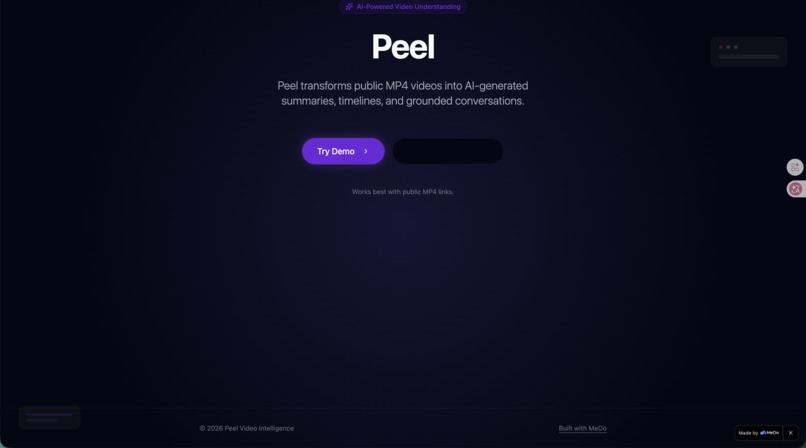
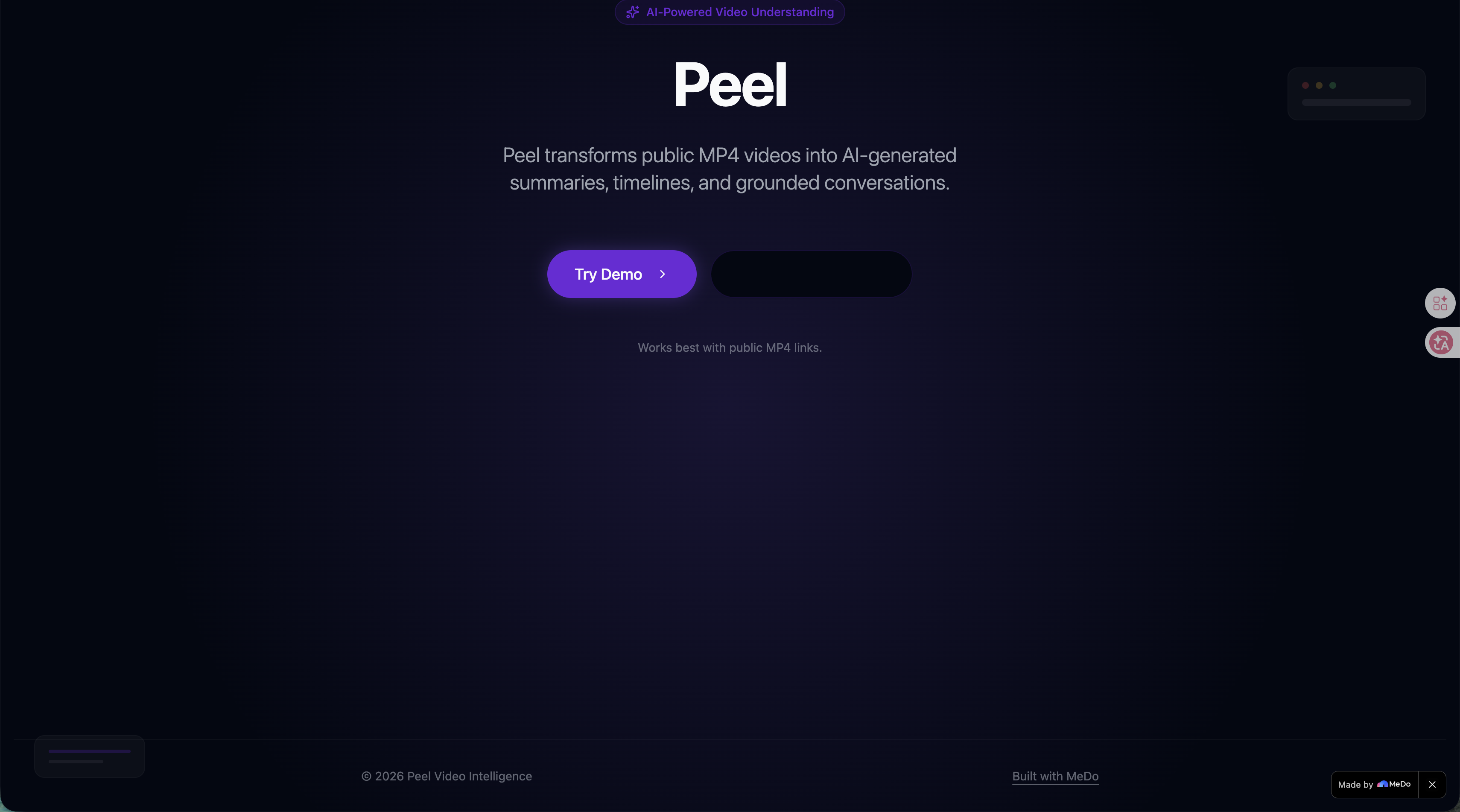
Landing Page
-
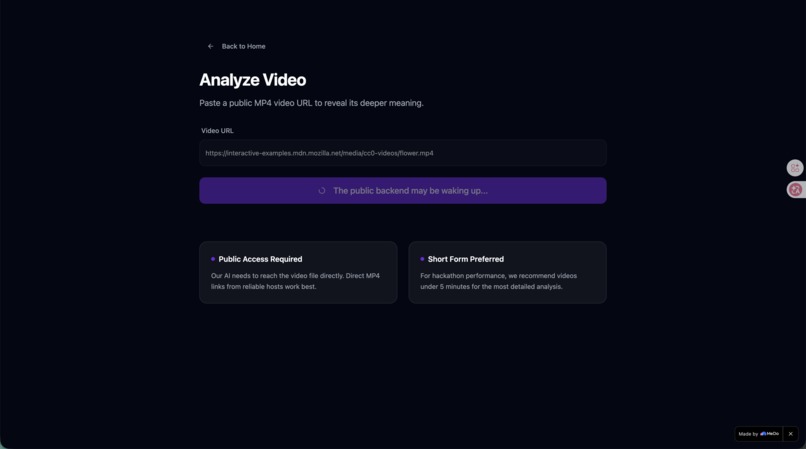
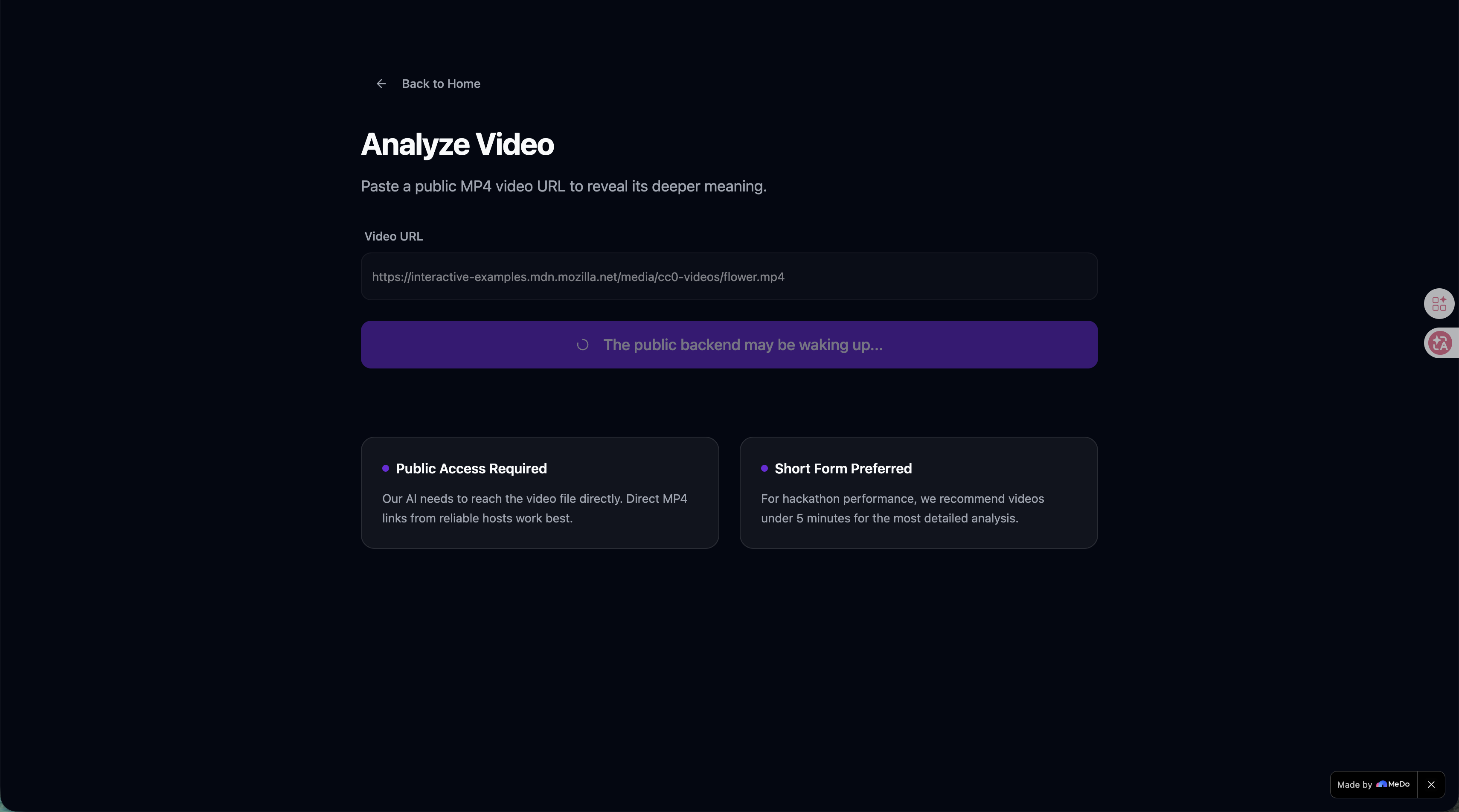
Video Upload Page
-
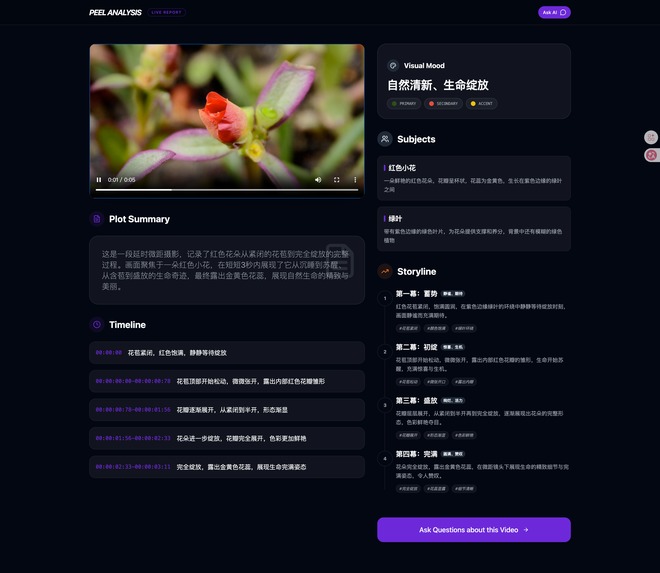
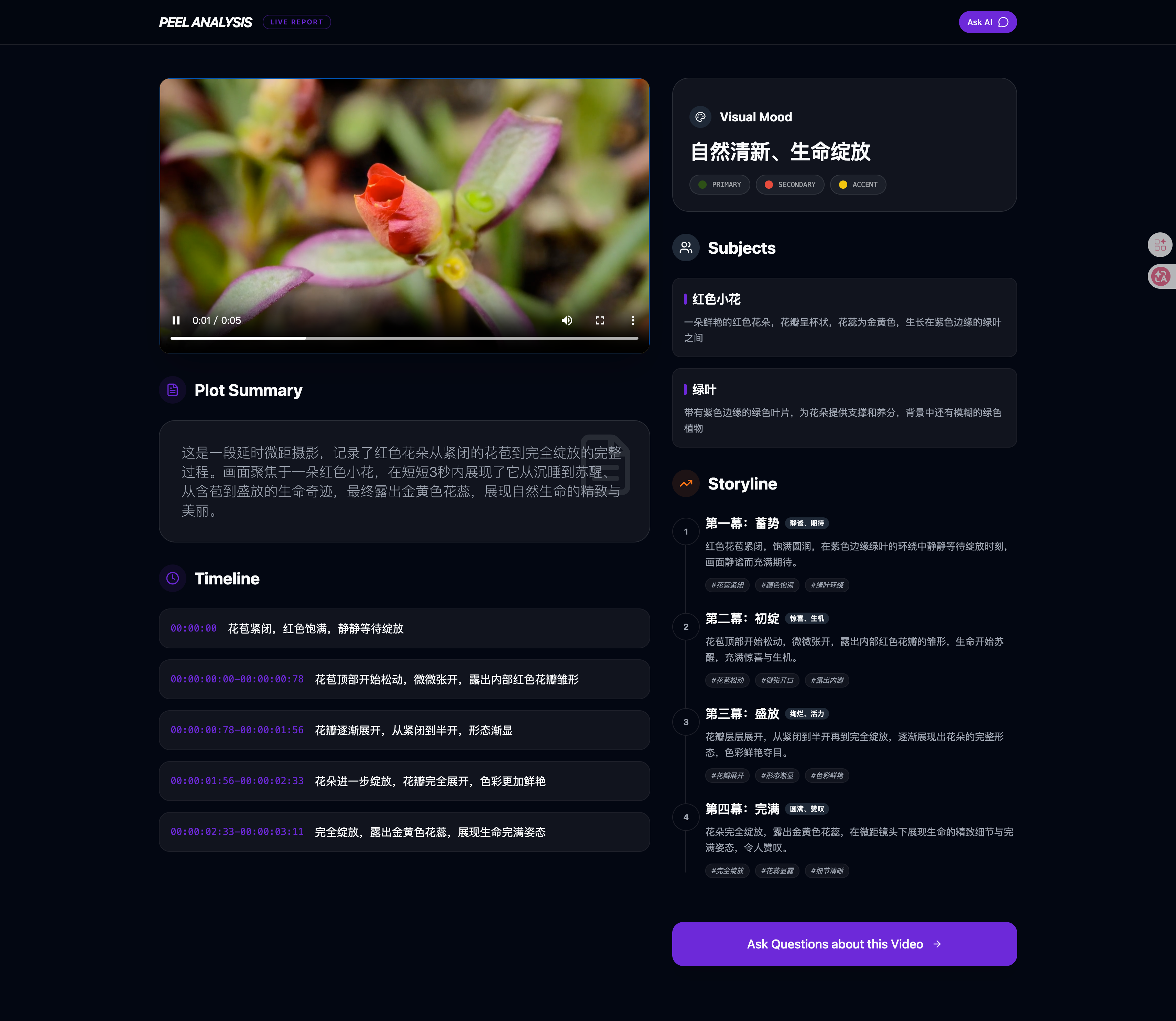
Analysis Dashboard
-
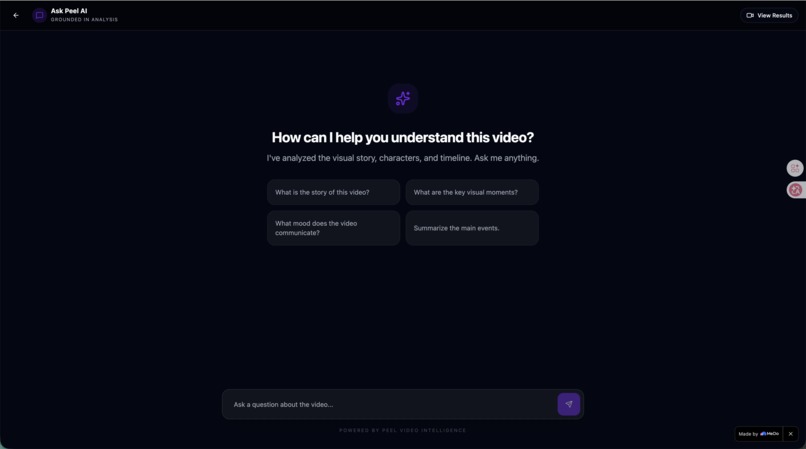
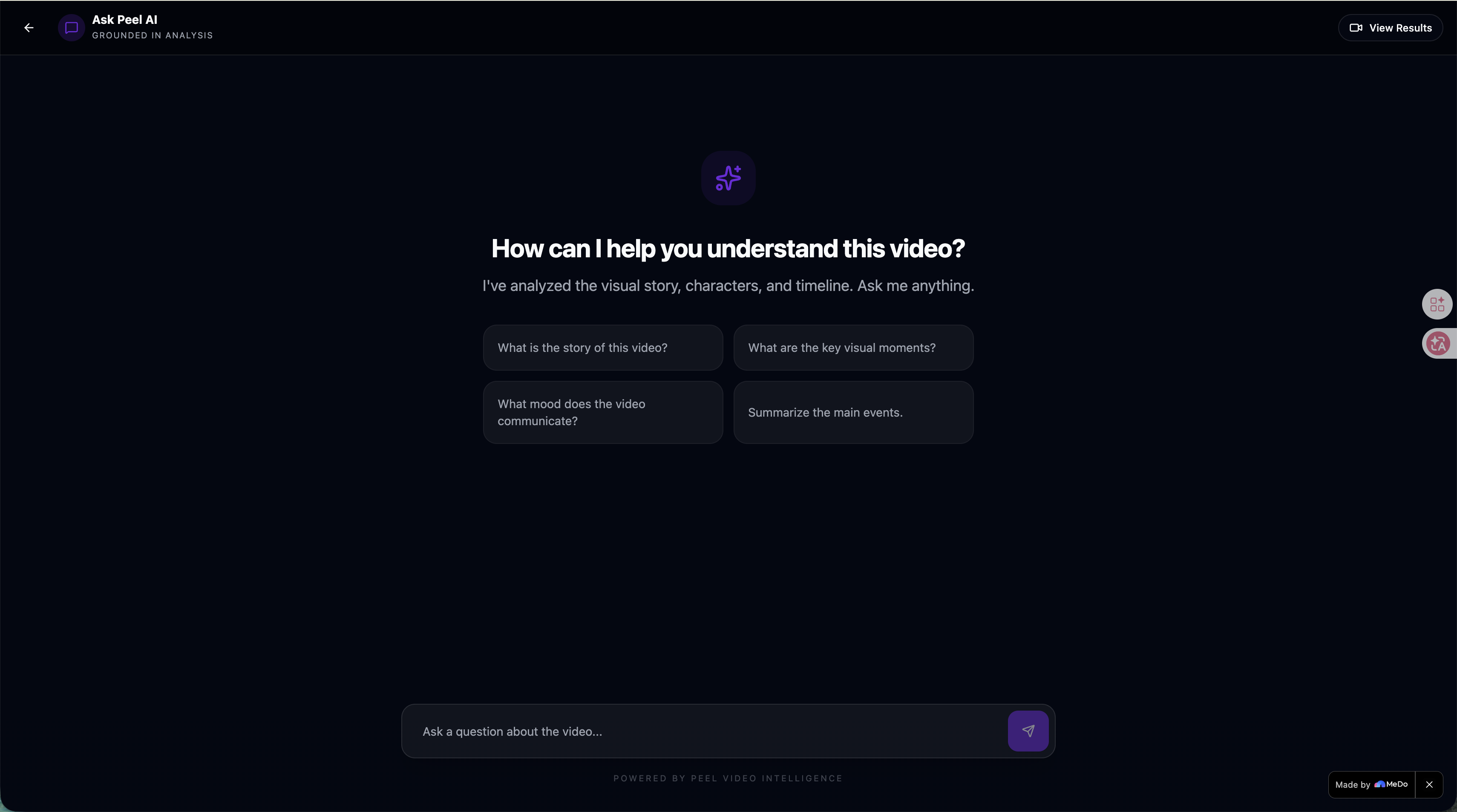
AI Chat Page 1
-
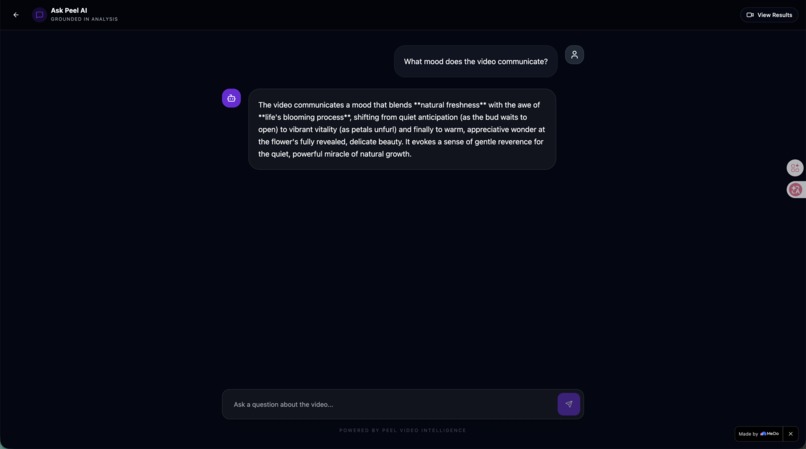
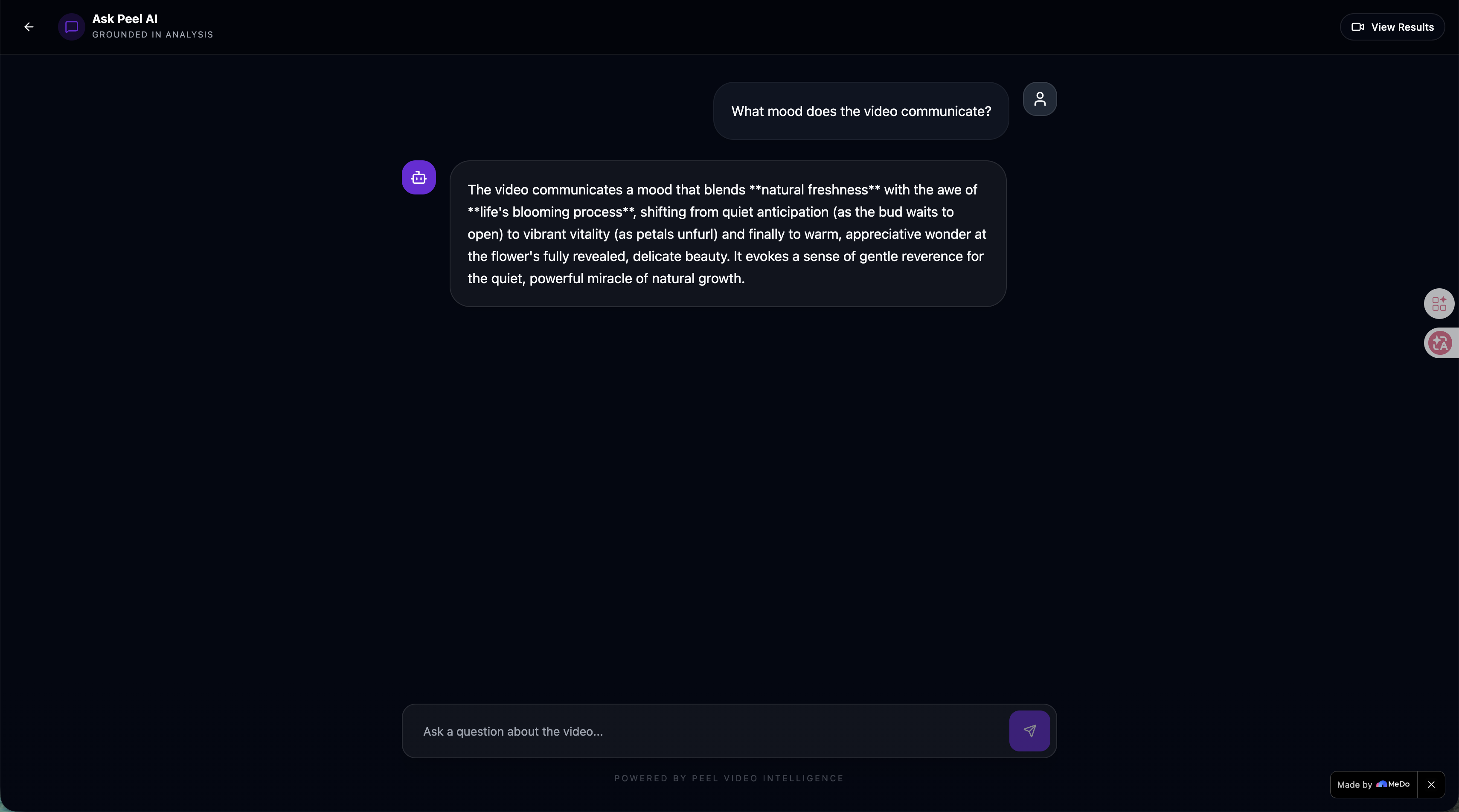
AI Chat Page 2
Inspiration
Short videos are easy to watch, but surprisingly hard to review, explain, search, or discuss. Peel started from a simple question: what if a video could be “peeled open” into its story, timeline, visible subjects, mood, and follow-up questions?
Peel originally existed as an Android prototype from an earlier hackathon project. For the MeDo Hackathon, we wanted to take that idea further and turn it into a public, judge-friendly web demo that anyone can open without Android Studio, local setup, or private API keys.
At a high level, Peel transforms:
$$ \text{public MP4 video} \rightarrow {\text{summary}, \text{subjects}, \text{timeline}, \text{storyline}, \text{mood}, \text{Q&A}} $$
What it does
Peel is an AI video understanding assistant.
Users paste a public MP4 video URL, and Peel analyzes the video through our backend API. It then generates:
- A plot summary
- Visible subjects or characters
- A timestamped timeline
- A storyline broken into narrative phases
- A visual mood and theme
- A grounded AI chat experience for follow-up questions
After the analysis is complete, users can ask questions such as “What is the story of this video?”, “What are the key visual moments?”, or “What mood does the video communicate?” The AI assistant answers using the latest analysis as context, instead of responding as a generic chatbot.
How we built it
Peel combines a MeDo-built public web app with our existing Peel backend.
The original project was a React, TypeScript, and Capacitor Android prototype. During this hackathon, we stabilized the core video analysis flow, fixed Android networking issues, improved error handling, deployed the backend publicly, and used MeDo to create a polished browser-based demo experience.
The public MeDo app provides the user-facing product flow:
- Home page
- Video URL analysis page
- Results dashboard
- AI Q&A page
- Built with MeDo explanation
The backend is an Express-based proxy service deployed on Render. It protects the AI API key, handles video analysis requests, normalizes model responses into structured JSON, and powers the chat endpoint.
MeDo helped us turn a local Android prototype into a shareable public web app that judges can test immediately.
Challenges we ran into
The biggest challenge was moving from a local prototype to a public demo.
Our early version depended on local network URLs and Android emulator behavior, which worked on our own machine but would not work for judges. We had to separate local development from public deployment, make sure the backend was reachable over HTTPS, and ensure API keys stayed safely on the server.
Another challenge was making the AI output reliable enough for a product demo. Video understanding responses can be messy, so we added normalization and clearer failure states. We also had to make the chat feature reuse the latest video analysis, so the assistant would answer from the actual analyzed content rather than hallucinating.
Accomplishments that we're proud of
We are proud that Peel now has a complete end-to-end public demo:
- A judge can open the web app with no setup
- Paste or use a demo MP4 URL
- Generate a structured video analysis
- Review the timeline, storyline, subjects, and mood
- Ask grounded follow-up questions about the video
We are also proud of turning a rough Android prototype into something closer to a real product experience. The hackathon version is not just a visual redesign; it includes backend deployment, API integration, better error handling, and a clearer product story.
What we learned
We learned that making a hackathon project “work” is different from making it “judge-ready.”
A local demo can be impressive, but a public demo needs deployment, stable URLs, clear onboarding, readable errors, protected secrets, and a simple story that someone can understand in less than a minute.
We also learned how useful MeDo can be as a productization layer. Instead of rebuilding all of Peel from scratch, we used MeDo to quickly create the public-facing web experience around our existing backend intelligence.
What's next for Peel
Next, we want to expand Peel from a demo into a more complete video intelligence product.
Possible next steps include:
- Supporting more video sources beyond direct MP4 links
- Adding exportable study notes and creator briefs
- Improving long-video segmentation
- Saving analysis history
- Building richer mobile experiences
- Returning to iOS and Android packaging after the web demo is stable
Our long-term vision is for Peel to become a lightweight AI companion for understanding videos, whether for learning, content review, storytelling, or creative analysis.
Built With
- android-studio
- capacitor
- css
- express.js
- html
- javascript
- medo
- node.js
- react
- render
- rest-apis
- stepfun-api
- typescript
- vite


Log in or sign up for Devpost to join the conversation.