-
-
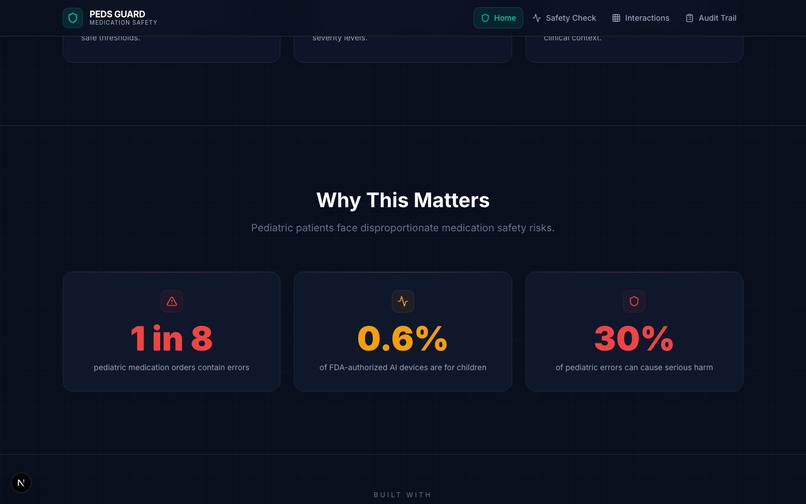
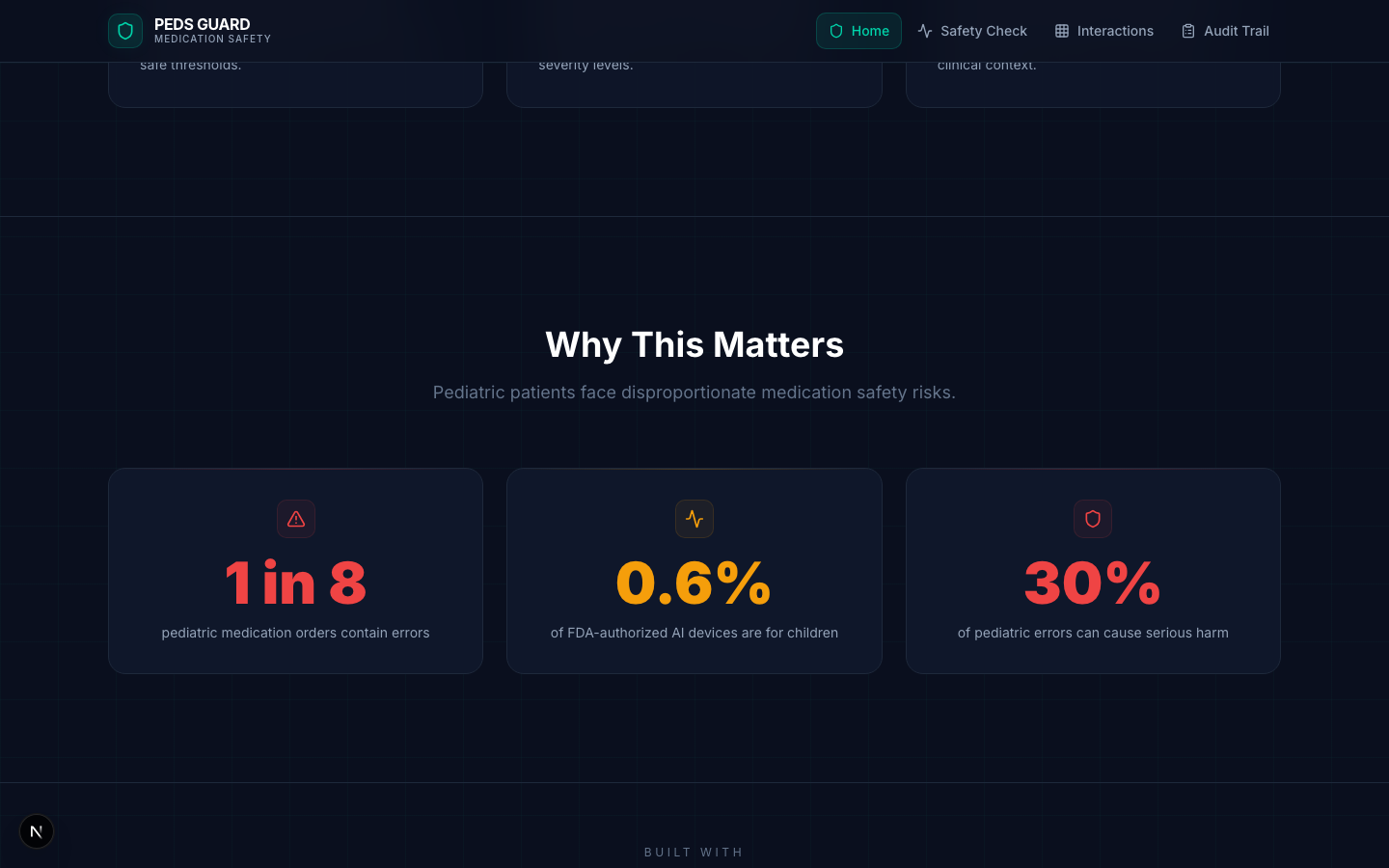
Stats section
-
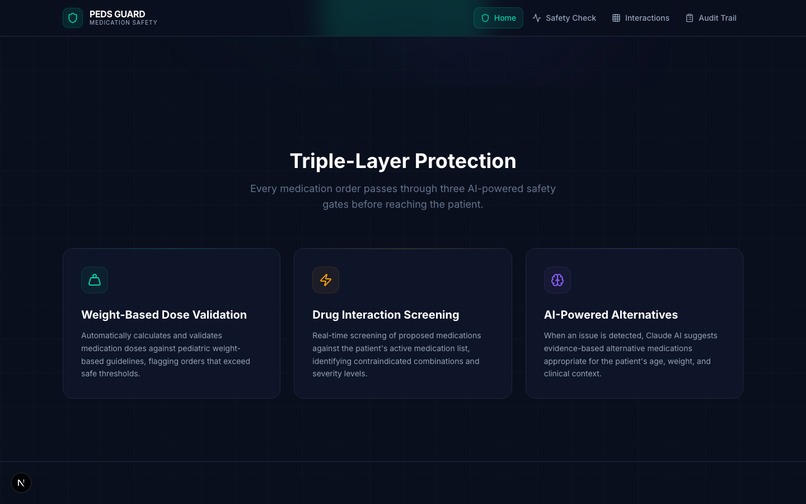
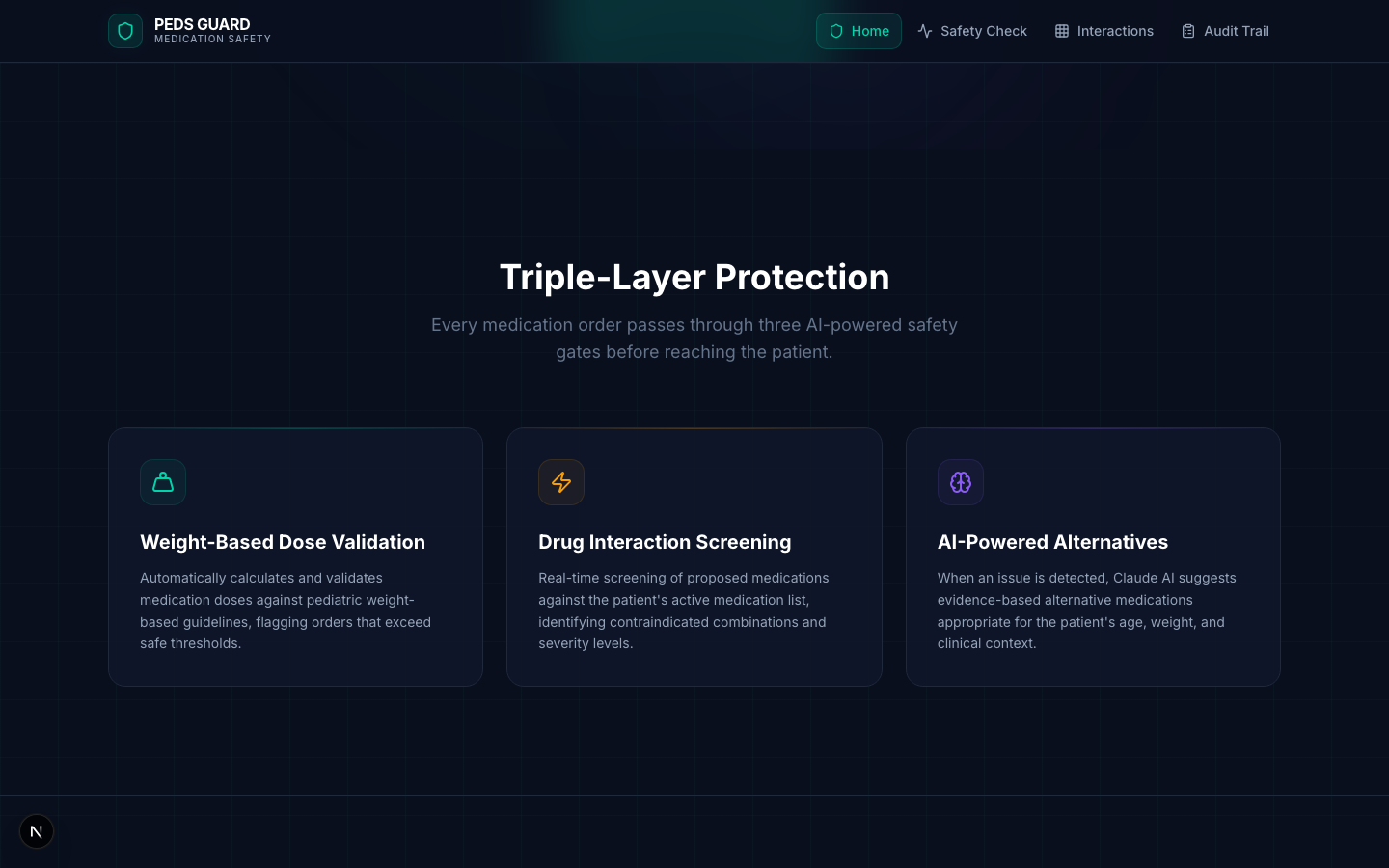
Features section
-
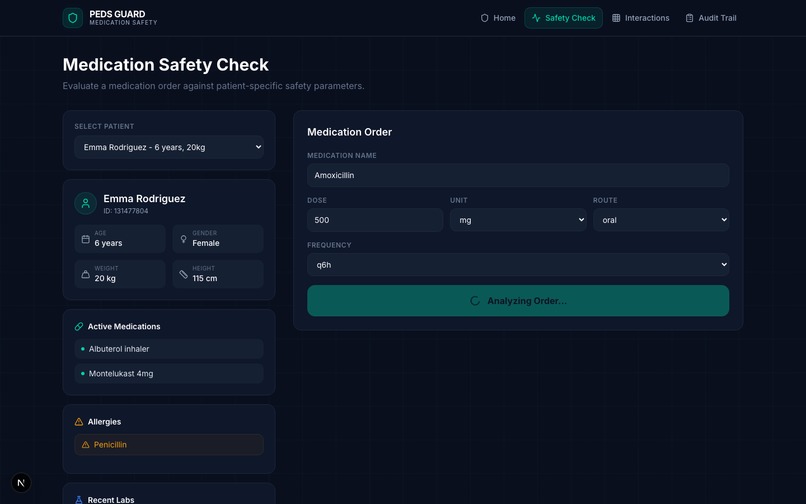
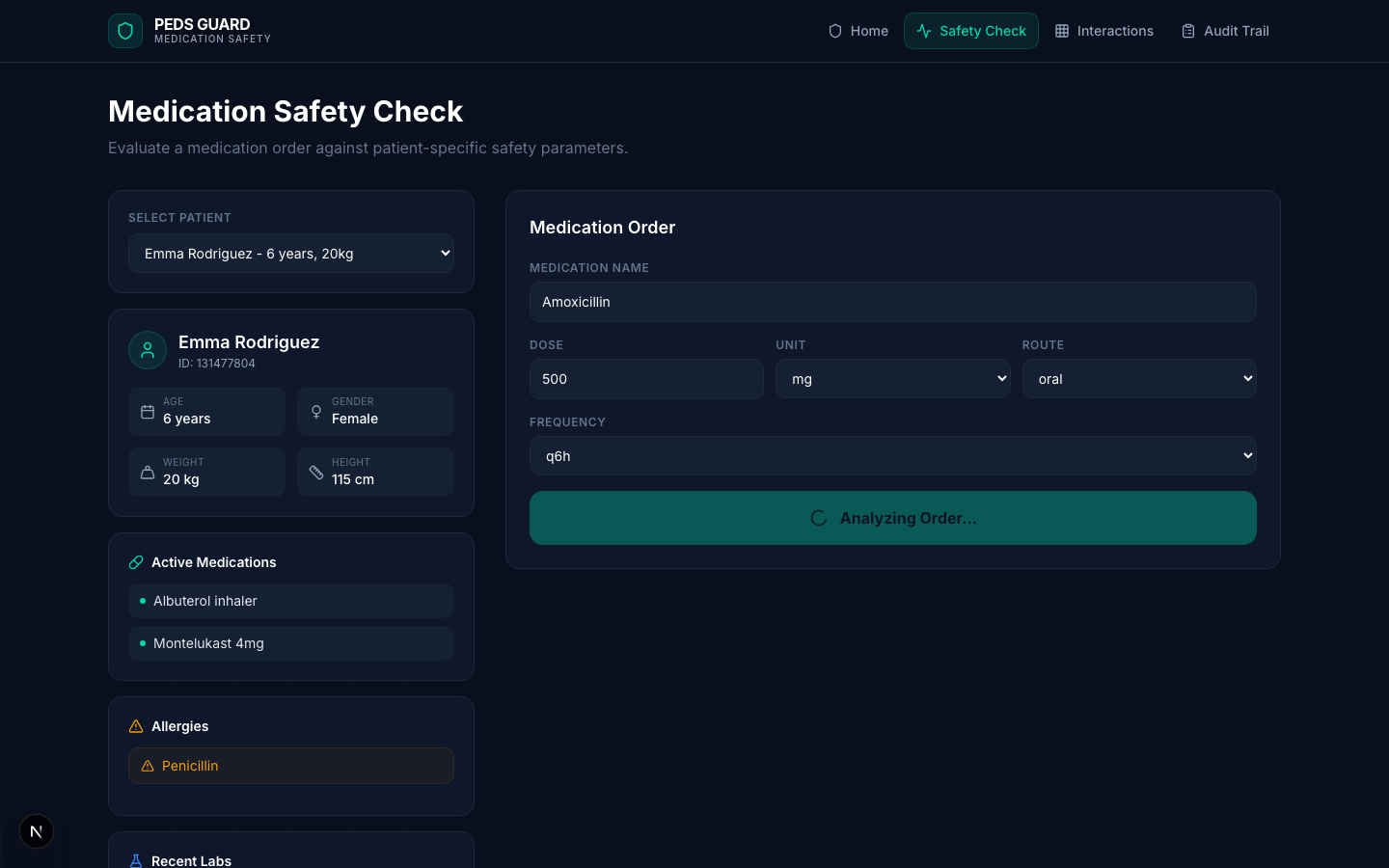
Safety check result
-
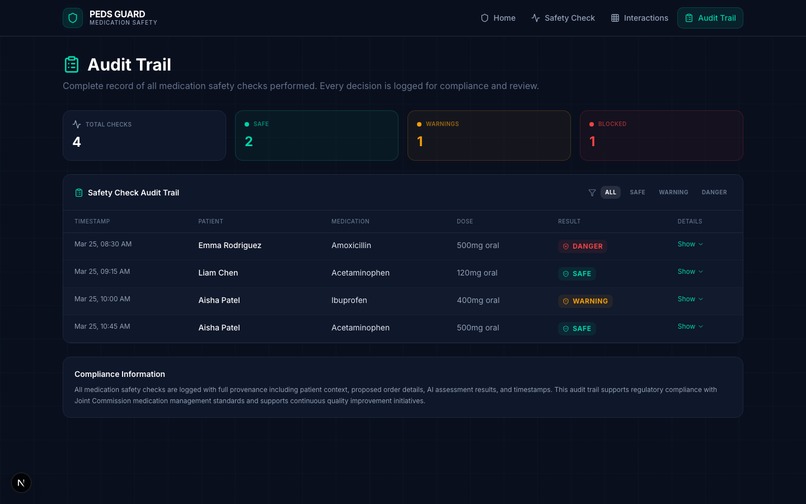
Audit trail
-
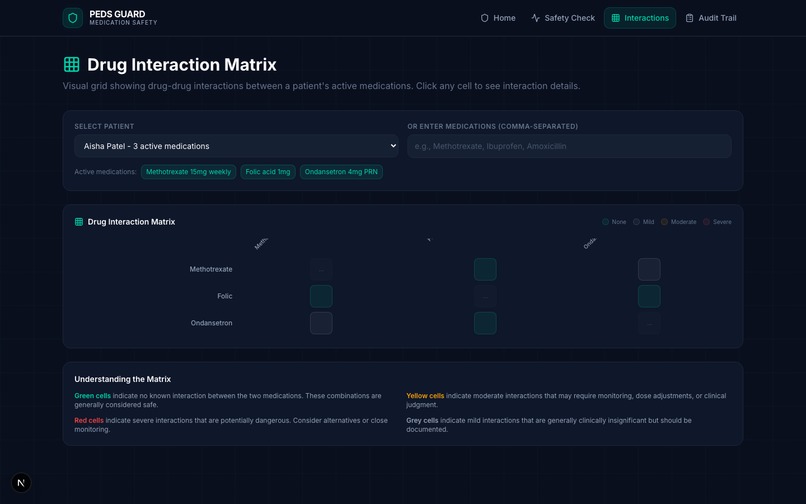
Drug interaction matrix
-

Landing page hero

Inspiration
Medication errors are the #1 cause of preventable harm in hospitalized children. Every pediatric dose must be weight-adjusted, and a misplaced decimal point can be fatal - a 10x dosing error happens more often than any parent should know.
The statistics are alarming:
- 1 in 8 pediatric medication orders contain an error
- 30% of those errors can cause serious harm
- Only 0.6% of FDA-authorized AI/ML devices were built for pediatric patients
Children are being left behind by healthcare AI. We built PEDS GUARD because the most vulnerable patients deserve the strongest safeguards - and the healthcare ecosystem needs composable, interoperable tools that any agent can pick up and use.
What it does
PEDS GUARD is a pediatric medication safety system built as both an MCP Server (Superpower) and an A2A Agent. It exposes 7 reusable MCP tools that any agent on the Prompt Opinion platform can invoke:
| Tool | What it does |
|---|---|
get_patient_demographics |
Fetches age, weight, height, calculates BSA from FHIR |
get_active_medications |
Retrieves all active medication orders from FHIR |
check_pediatric_dose |
Validates doses against weight-based ranges for 25+ drugs |
screen_drug_interactions |
Screens against active meds via RxNorm API |
get_relevant_labs |
Pulls renal/hepatic function labs for dose adjustment |
get_allergy_alerts |
Detects allergies AND cross-sensitivities across 13 drug classes |
suggest_alternative |
Claude AI recommends safer alternatives based on full clinical context |
Demo Scenarios
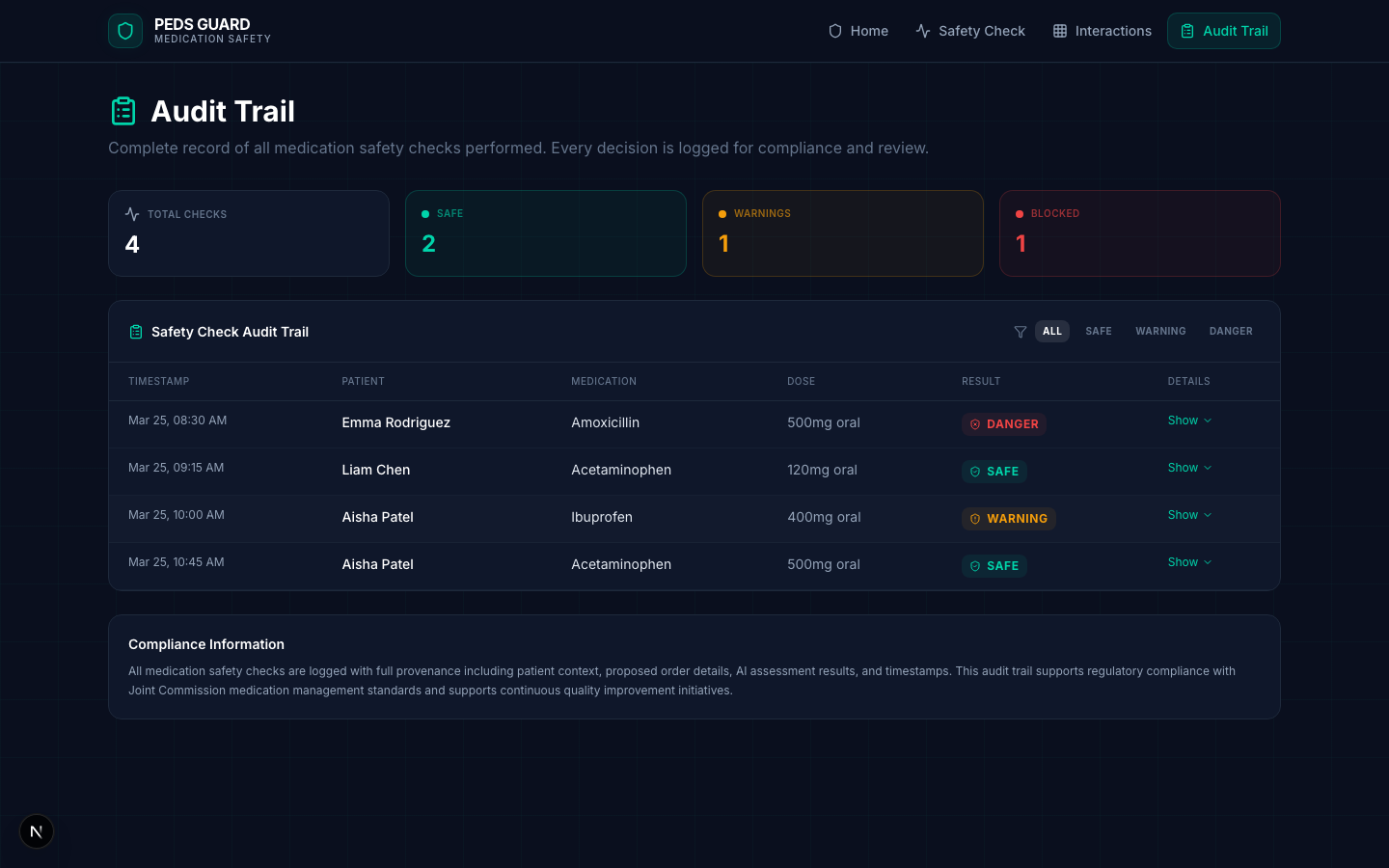
Scenario 1 — Penicillin Allergy Detection: Emma Rodriguez, 6 years old, 20kg. Documented penicillin allergy with anaphylaxis history. When Amoxicillin 500mg is ordered, PEDS GUARD immediately flags it as DANGER - Amoxicillin is a penicillin-type antibiotic. It recommends Azithromycin as a safe alternative.
Scenario 2 — 10x Dosing Overdose: Liam Chen, 2 years old, 12kg. Gentamicin 100mg IV is ordered. PEDS GUARD flags DANGER - the proposed dose of 8.33 mg/kg far exceeds the maximum of 2.5 mg/kg/dose. This is exactly the kind of decimal point error that harms children in real hospitals.
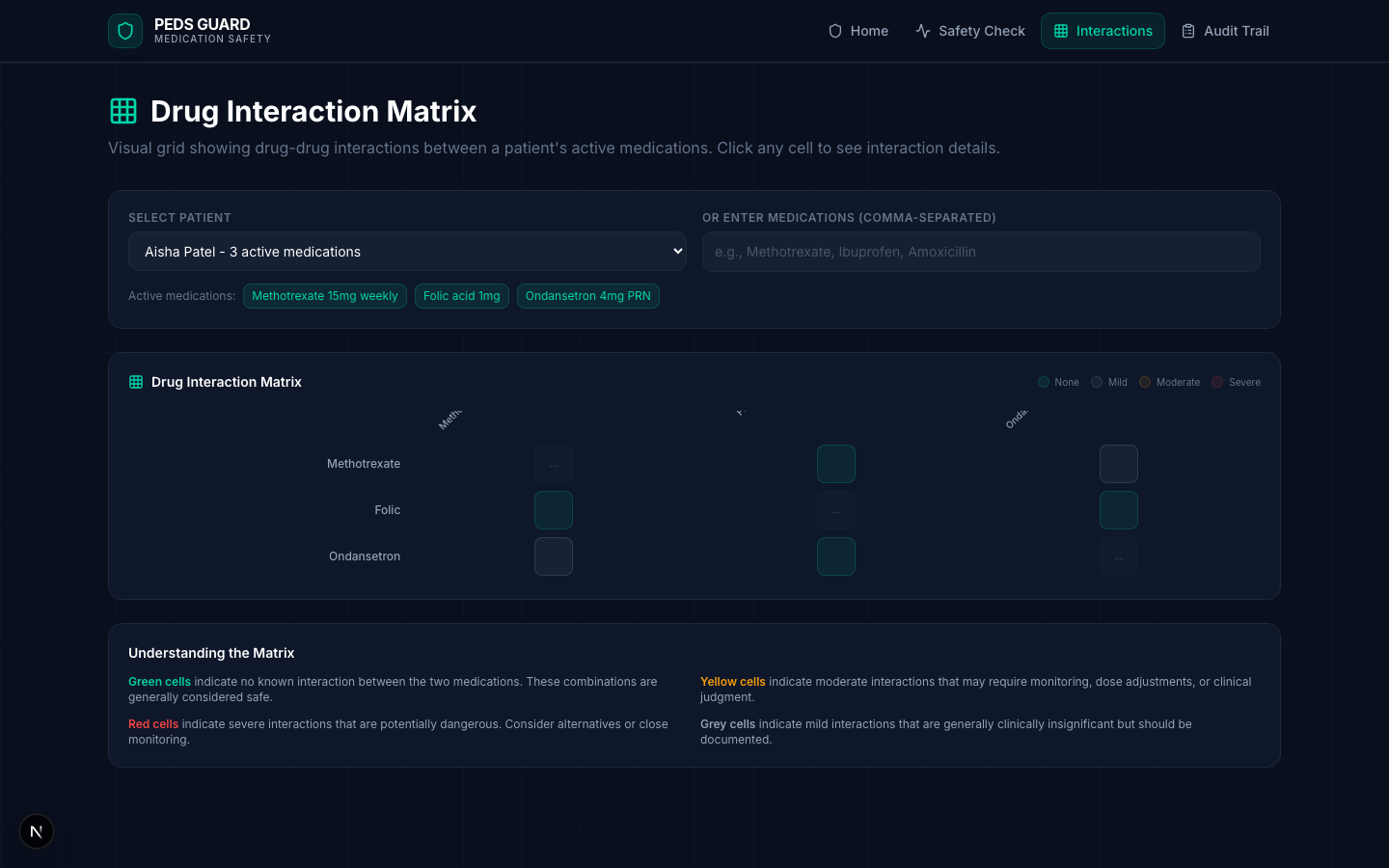
Scenario 3 — Drug Interaction + Allergy: Aisha Patel, 12 years old, on Methotrexate. TMP-SMX is ordered - PEDS GUARD catches both the sulfa drug allergy AND the dangerous methotrexate interaction.
How we built it
MCP Server (TypeScript/Express)
Built on @modelcontextprotocol/sdk following the SHARP-on-MCP specification from Darena Health's reference implementation. The server creates a per-request McpServer instance with StreamableHTTPServerTransport, registers all 7 tools via an initializer pattern, and extracts FHIR context from SHARP headers (x-fhir-server-url, x-fhir-access-token, x-patient-id).
Key technical details:
- Patient ID extraction from JWT claims with header fallback
- Built-in pediatric dosing reference database covering 25 common medications
- Drug interaction screening via RxNorm API with fallback to embedded interaction pairs
- Cross-sensitivity detection across 13 drug class families
fhir_context_required: truecapability flag per SHARP spec
FHIR Integration
Connected to HAPI FHIR R4 server with 3 test pediatric patients. Queries 7 FHIR resource types: Patient, Observation, MedicationRequest, MedicationStatement, AllergyIntolerance, Condition, and DiagnosticReport. Uses proper LOINC codes for lab queries (creatinine: 2160-0, ALT: 1742-6, body weight: 29463-7).
Dashboard (Next.js 16)
Clinical dark theme with color-coded severity (green/amber/red). Features a safety check page with patient context panel, drug interaction matrix visualization, and audit trail. Built with Tailwind CSS, shadcn/ui, and Framer Motion animations.
AI Layer
Claude API powers the suggest_alternative tool, providing evidence-based medication recommendations considering the patient's age, weight, current medications, labs, and allergies.
Challenges we faced
MCP Streaming Transport on Serverless: The Streamable HTTP transport requires specific Accept headers and per-request server instantiation - took debugging to deploy correctly on Vercel serverless functions.
Pediatric Dosing Data Curation: Building accurate weight-based dosing ranges for 25+ medications required cross-referencing pharmacology sources (Lexicomp, Harriet Lane, DailyMed). Pediatric dosing is not standardized in a single database.
Cross-Sensitivity Detection: Mapping drug class families for allergy cross-reactivity (e.g., penicillin → cephalosporin ~2% cross-reactivity) required clinical pharmacology knowledge beyond what's in standard drug databases.
FHIR Data Handling: Gracefully handling missing data in FHIR bundles - not every patient has all observations, and search results can be empty.
Accomplishments we're proud of
- Catches a 10x gentamicin overdose in a 12kg toddler (8.33 mg/kg vs. max 2.5 mg/kg)
- Detects penicillin → amoxicillin cross-sensitivity with anaphylaxis history
- 7 composable MCP tools published to the Prompt Opinion Marketplace — any agent can use them
- All 5Ts covered: Talk, Template, Table, Transaction, Task outputs
- Both MCP Server AND A2A Agent published and discoverable on the platform
What we learned
- SHARP extension specs are elegantly simple - just 3 HTTP headers propagating clinical context through multi-agent chains
- MCP's per-request server pattern enables stateless deployment on serverless platforms
- Pediatric medication safety is a massively underserved gap where AI can have huge impact
- The composability thesis of MCP really shines when you build tools other agents can reuse
What's next for PEDS GUARD
- Integration with real EHR systems via SMART on FHIR launch
- Expanded drug database covering the full pediatric formulary
- Neonatal dosing support (gestational age-adjusted)
- Real-time monitoring of medication order streams
- Multi-language support for global deployment
Built With
- anthropic-sdk
- claude-ai
- express.js
- framer-motion
- hapi-fhir-server
- hl7-fhir-r4
- model-context-protocol-(mcp)
- next.js
- openai-tts
- rxnorm-api
- shadcn/ui
- sharp-on-mcp
- tailwind-css
- typescript
- vercel
- zod

Log in or sign up for Devpost to join the conversation.