-
-
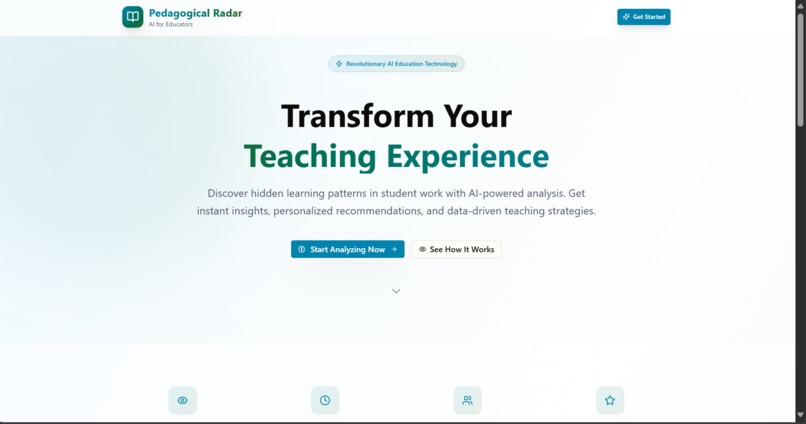
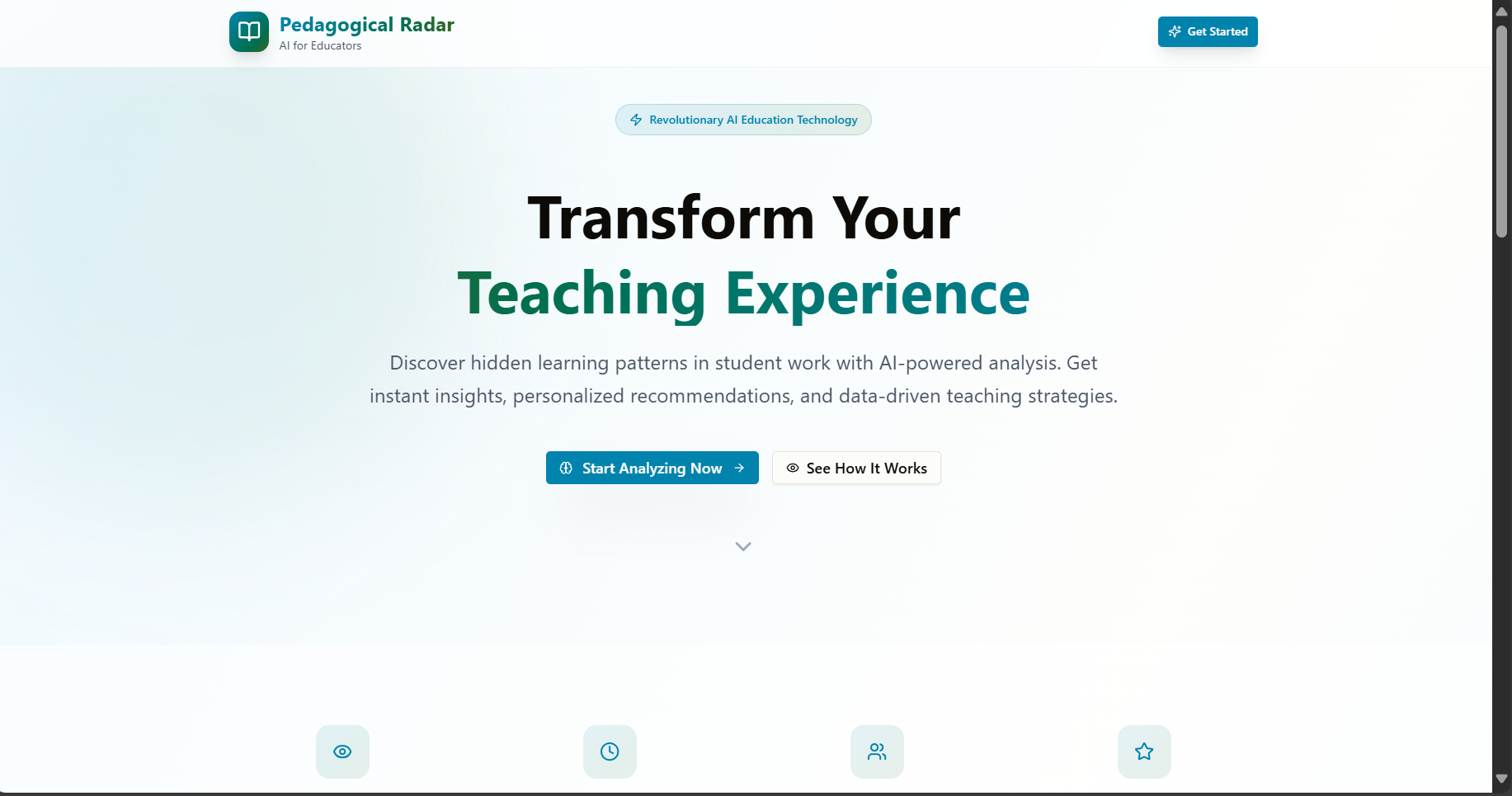
Pagina de boas-vindas
-
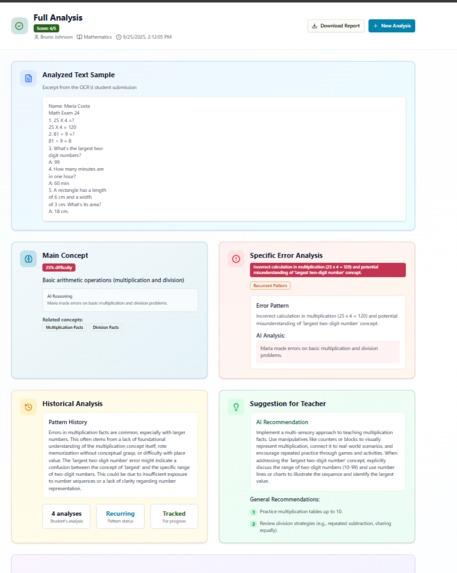
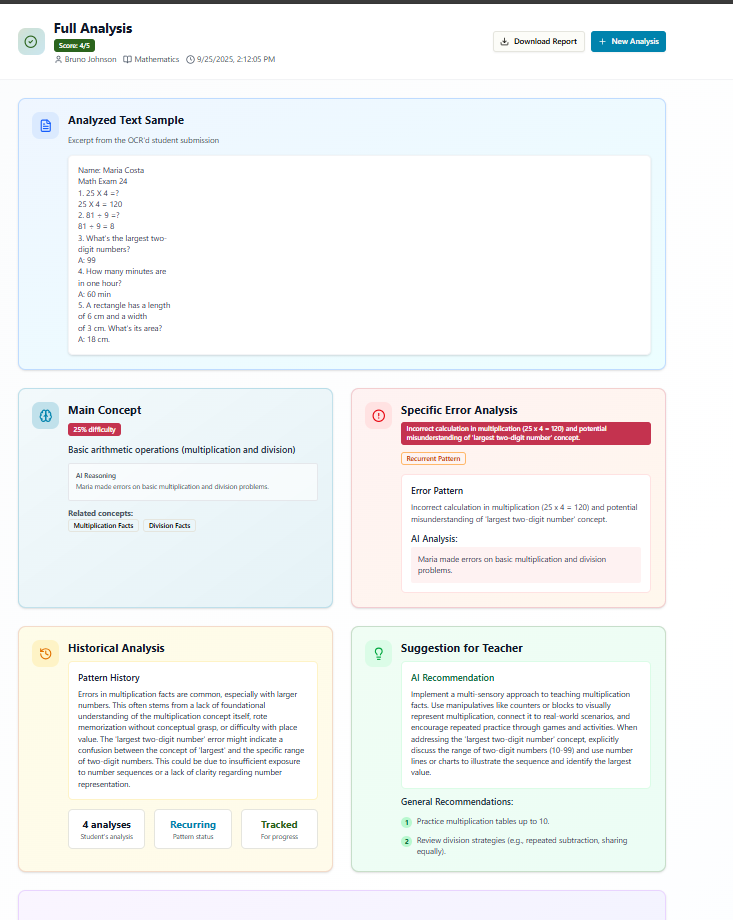
Analise do exame de um estudante |
-
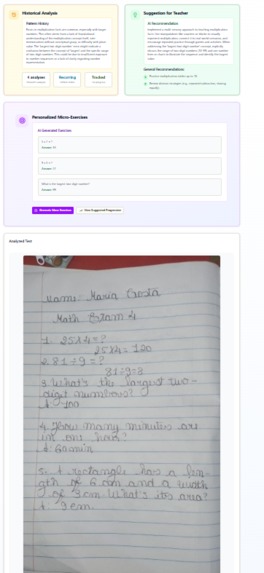
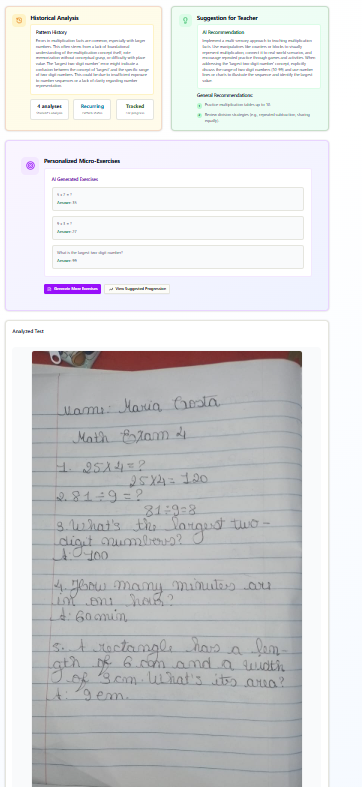
Analise do exame de um estudante ||
-
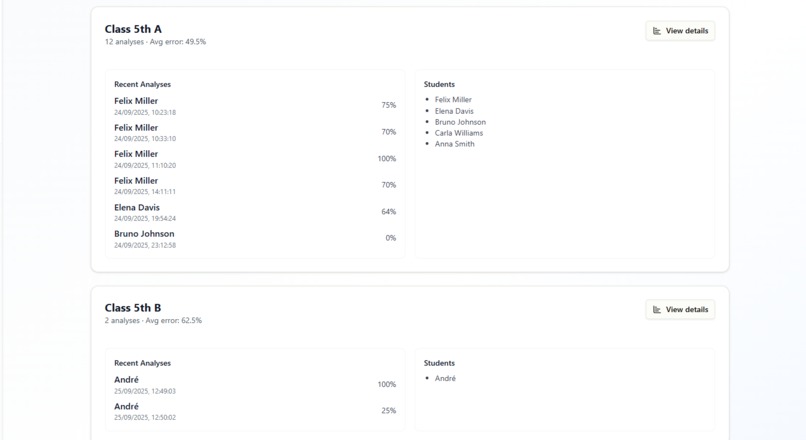
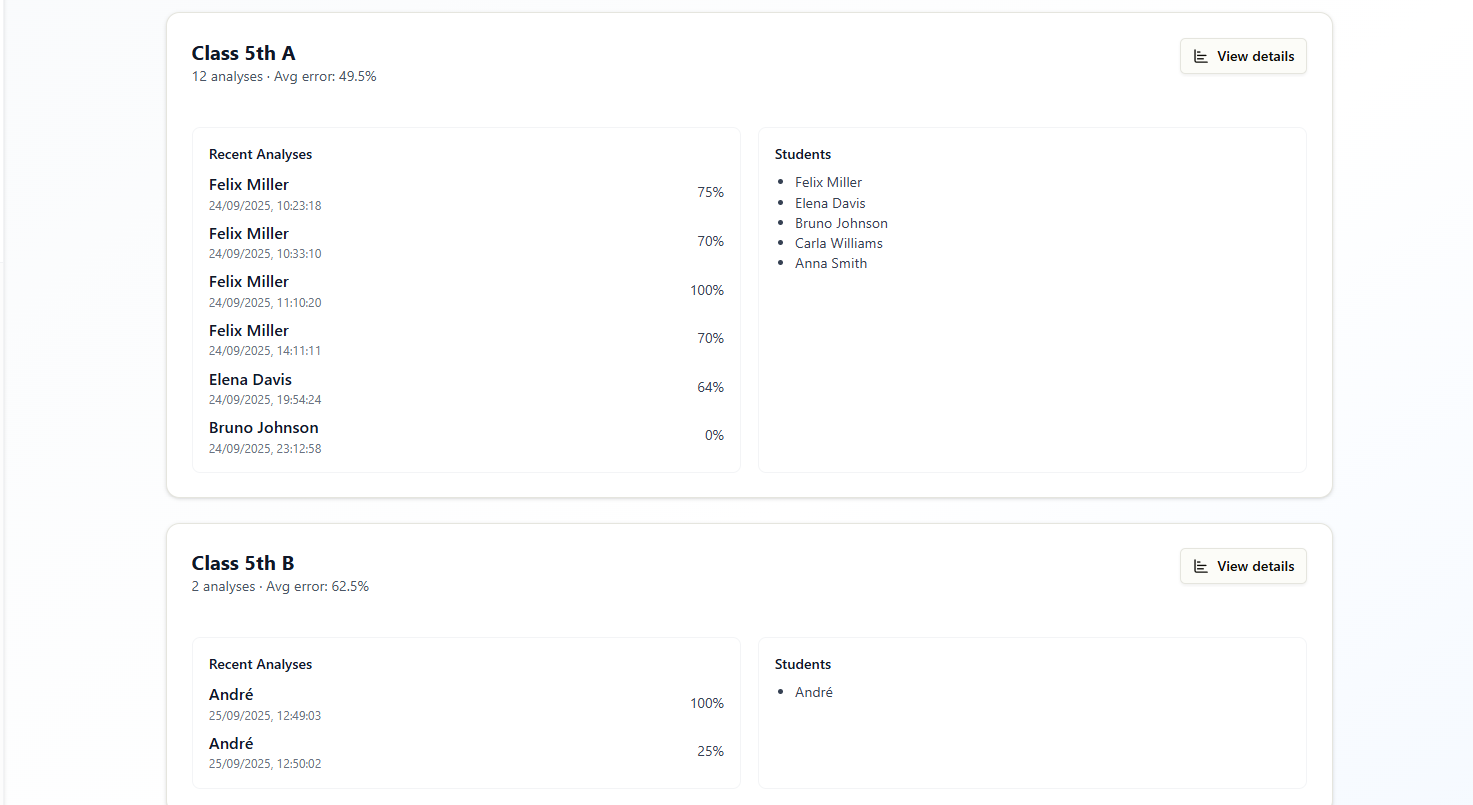
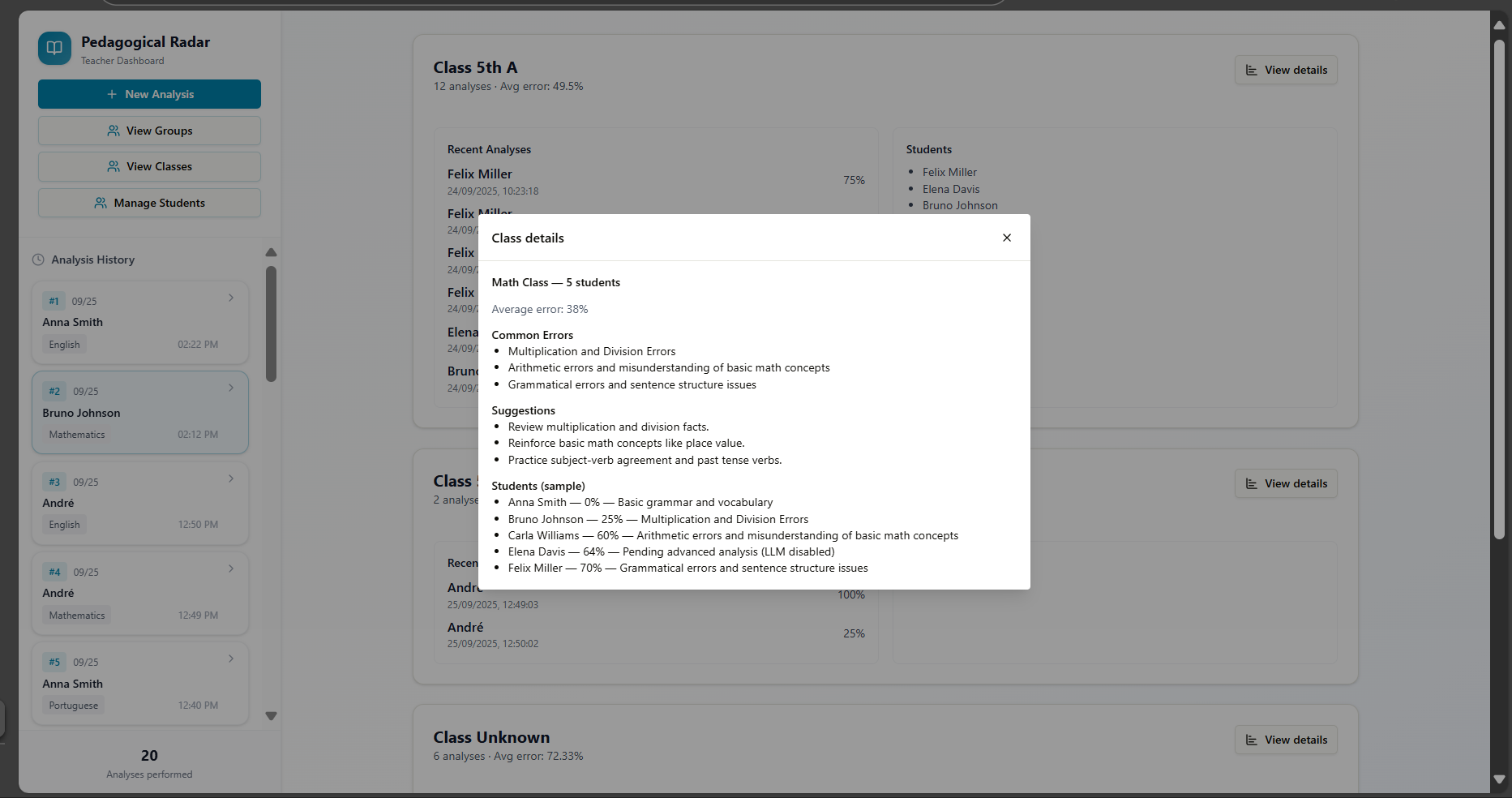
Analise da turma |
-
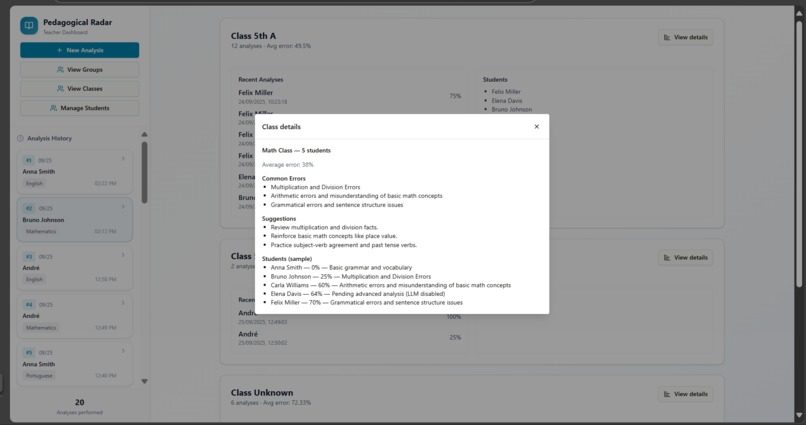
Analise da turma ||
About the Project: Pedagogical Radar Inspiration: The Reality of the Classroom The idea for "Pedagogical Radar" was born from the direct observation of a persistent and often invisible problem: teacher burnout. Many of us remember our teachers as tireless figures, but we rarely consider the countless hours they spend grading assignments, diagnosing errors, and trying to personalize learning for dozens of students. This time, spent on repetitive and manual tasks, diverts them from their most inspiring role: fostering human connection and providing individualized support.
We saw an opportunity to use Artificial Intelligence not to replace the teacher, but to amplify their capabilities, giving them back the time and energy to focus on what truly matters. We wanted to create a tool that acts as a true pedagogical diagnostic agent, focusing on the area where the impact is most critical: primary education.
What We Learned & Our Differentiator While developing Pedagogical Radar, we learned that the EdTech AI market is filled with tools that generate content (lesson plans, quizzes). However, the real gap and the biggest time-sink for teachers lies in the accurate analysis and diagnosis of student work.
Our differentiator is clear: Pedagogical Radar is not another content generator. It is an AI agent focused on student data analysis. It transforms unstructured data (a photo of an assignment) into structured, actionable insights. By focusing on primary education, we intervene where the impact is most significant, solidifying learning foundations and preventing future difficulties.
How We Built Pedagogical Radar The architecture of Pedagogical Radar was designed to be powerful and intuitive:
Backend (FastAPI & Python): Built on FastAPI, our backend ensures a robust and scalable API, processing requests efficiently.
Analysis Engine (Google Gemini 1.5 Flash): The heart of our solution is the Gemini 1.5 Flash multimodal model. We replaced traditional OCR methods (like TrOCR) with a single call to the Gemini API, which performs both the transcription of handwritten text from the image and the deep pedagogical analysis in a single step. This ensures:
Incredible Speed: Responses in seconds, not minutes. Superior Accuracy: The ability to "see" and interpret the image and text with high fidelity.
Intelligent Contextualization: The capability to infer the subject, identify specific errors, and suggest interventions.
Agent Memory (JSON Database): To go beyond a single analysis, Pedagogical Radar stores a concise history of each student's errors. This allows the agent to identify recurrent errors and provide a historical analysis, making the feedback even more personalized.
Intelligent Class Grouping: Using Gemini's reasoning capabilities, the system can synthesize the errors of an entire class and automatically group students by similar conceptual weaknesses, offering teachers a holistic view and an immediate action plan for group interventions.
Frontend (Simple HTML/CSS/JavaScript): A clean and intuitive user interface was created to allow teachers to upload assignments and view the analyses and class reports without any friction.
Challenges Faced & Lessons Learned The journey to build Pedagogical Radar was not without its challenges:
OCR Speed vs. Accuracy: Initially, latency in handwriting transcription was a significant bottleneck. The transition to the Gemini 1.5 Flash multimodal API was a crucial decision that solved this problem, proving that choosing the right tool for the job is vital.
Multimodal Prompt Engineering: Developing prompts that could instruct Gemini to perform both OCR and pedagogical analysis, and to return the results in a consistent JSON format, required careful iteration and refinement.
Managing Student History: Structuring the history database to be lightweight, efficient, and useful for the AI agent was an important design challenge.
These challenges were not only overcome but also taught us valuable lessons in optimizing AI systems, the importance of architecture, and the art of guiding complex models for specific tasks. Pedagogical Radar is proof that with focus and the right tools, we can build solutions that make a real difference in the lives of educators and students.

Log in or sign up for Devpost to join the conversation.