Inspiration
Privacy should not be a premium feature in social apps. We wanted to build something fun like daily social sharing, but without giving up control of personal data.
PeaReal was inspired by a simple idea: real moments with real friends, protected by design.
What it does
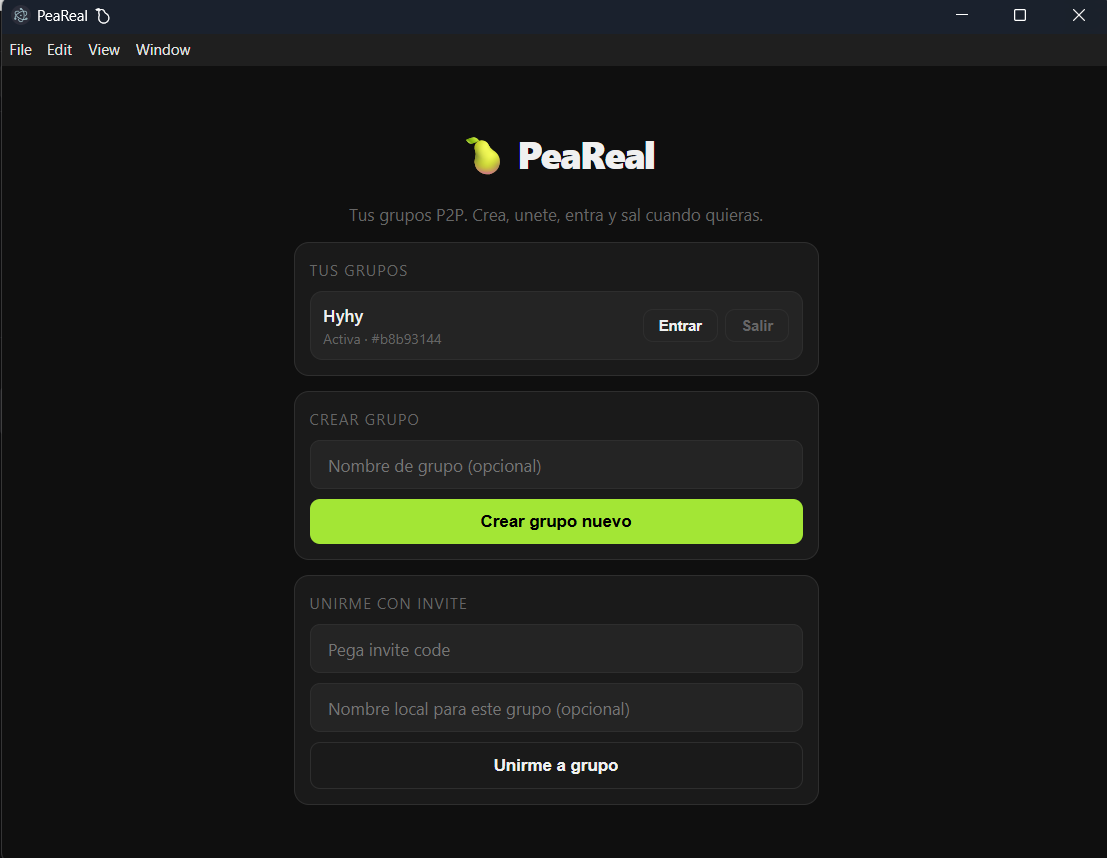
PeaReal is a private, BeReal-style social app where people share one authentic photo per day in invite-only groups.
- Users receive a daily trigger at a random time.
- They post one photo from that moment.
- After posting, they can view friends’ posts in the same round.
- Content is shared in a peer-to-peer environment with encrypted media and private group access.
How we built it
BeRealPeer is built as an Electron desktop app with mobile web access through WebSockets.
Stack
- Frontend: HTML, CSS, JavaScript (Electron renderer + mobile web UI)
- Backend: Node.js (Electron main process)
- Networking: Holepunch ecosystem (P2P primitives)
- Security: encrypted payload flow using modern cryptography
- Sync/API: WebSocket channel for status, rooms, feed, reactions, and comments
System design
- Room-based social graph with invite codes.
- Daily feed round logic and post submission flow.
- Encrypted image transport and controlled feed unlock behavior.
- Real-time interactions: comments, reactions, and presence updates.
Challenges we ran into
- Learning P2P architecture from scratch was the hardest part.
- Understanding peer discovery, connectivity, and reliability in real conditions took significant experimentation.
- Designing encryption and key handling without breaking usability was difficult.
- Coordinating real-time feed updates across desktop and mobile clients required careful state management.
Accomplishments that we’re proud of
- We built a working end-to-end prototype with daily posting, groups, reactions, and comments.
- We successfully moved from an initial encrypted messaging experiment to a complete social sharing experience.
- We integrated privacy-first ideas into core product behavior instead of adding them later.
What we learned
- P2P systems require a different mindset than centralized apps.
- Security is not only cryptography; it is also UX, error handling, and defaults.
- Real-time product features depend heavily on clean state transitions and resilient sync loops.
- Team velocity improved once we aligned architecture decisions with user flows first.
What’s next for PeaReal
- Improve onboarding so non-technical users can join rooms instantly.
- Add stronger trust and moderation controls for group admins.
- Enhance reliability under poor networks and intermittent peers.
- Expand notifications and round mechanics for better daily engagement.
- Run usability tests and iterate toward a production-ready privacy-first social app.

Log in or sign up for Devpost to join the conversation.