Inspiration
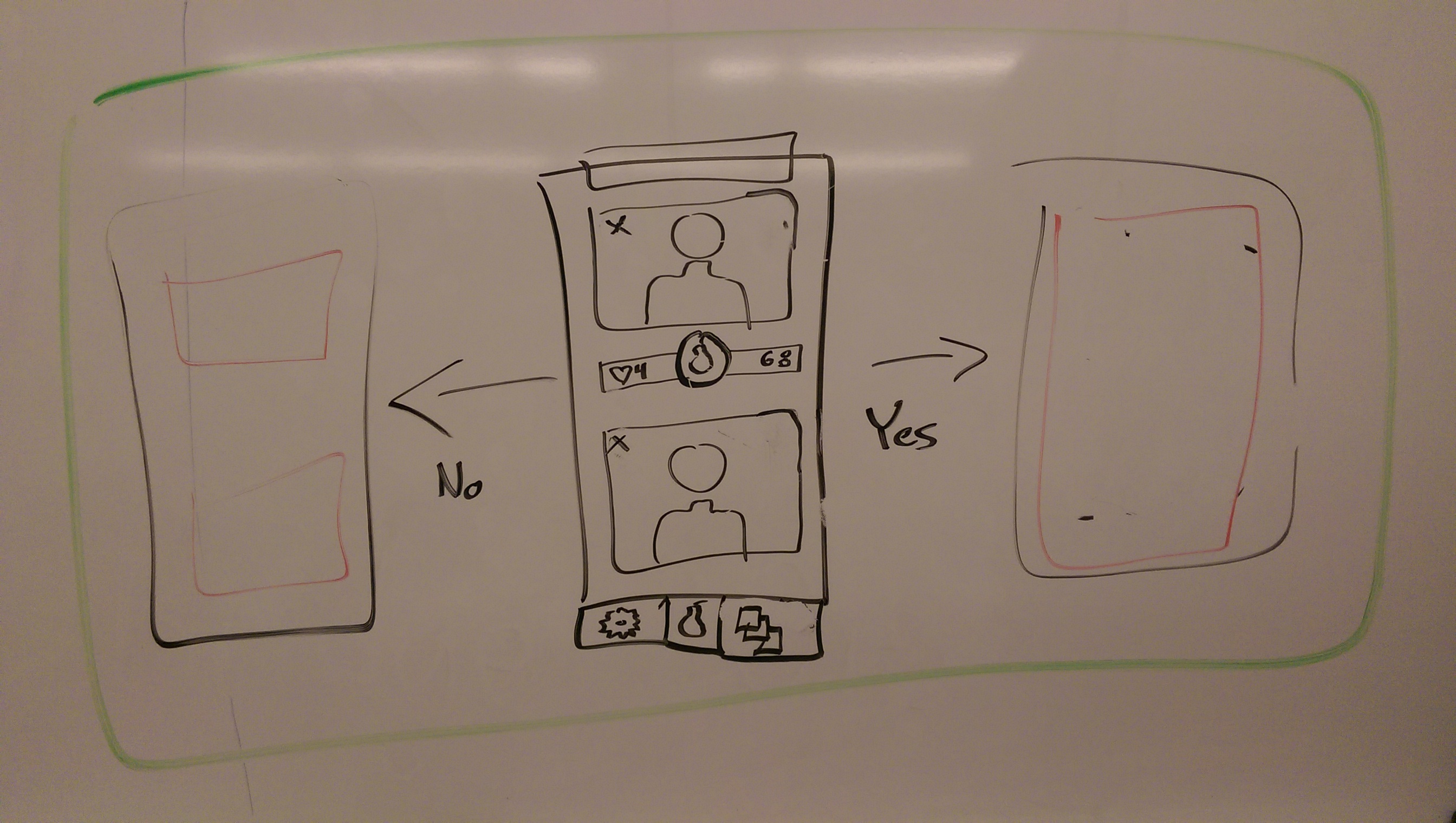
Mobile dating apps have gained massive popularity in the recent years, but not everyone is looking for a blind hookup. Some people people want a more wholesome relationship, and some people want to set up those people. This is where Pear comes in. Pear allows users to suggest whether they think two of their Facebook friends would make a good couple. If this couple gets a minimum number of approvals, the two people involved get notified and can suggest a date! Since your friends suggested the date you'll feel more comfortable meeting up with them since your friends are going to look out for you. This helps you avoid all the creeps! Or look for more than just a hookup.
What it does
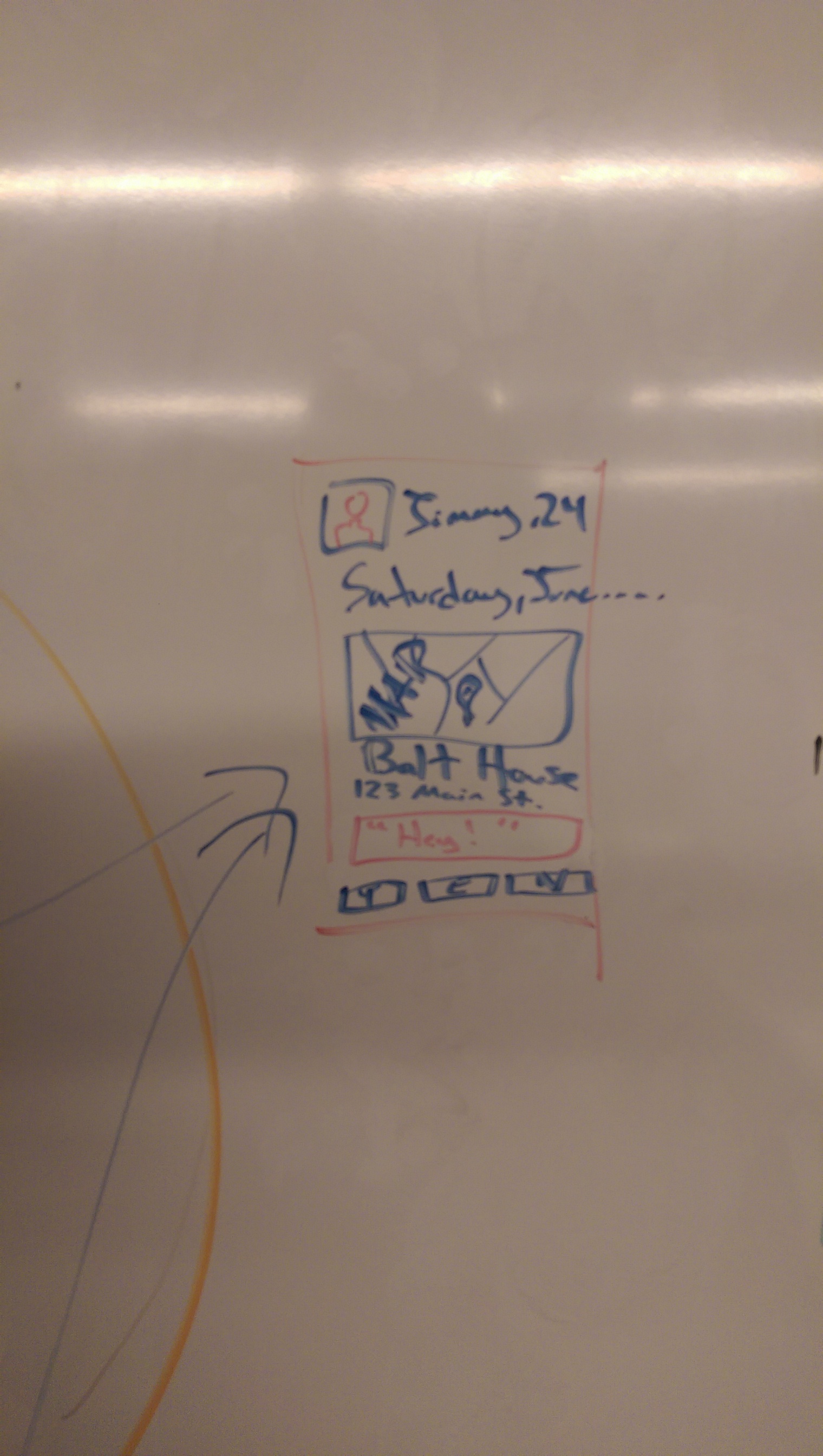
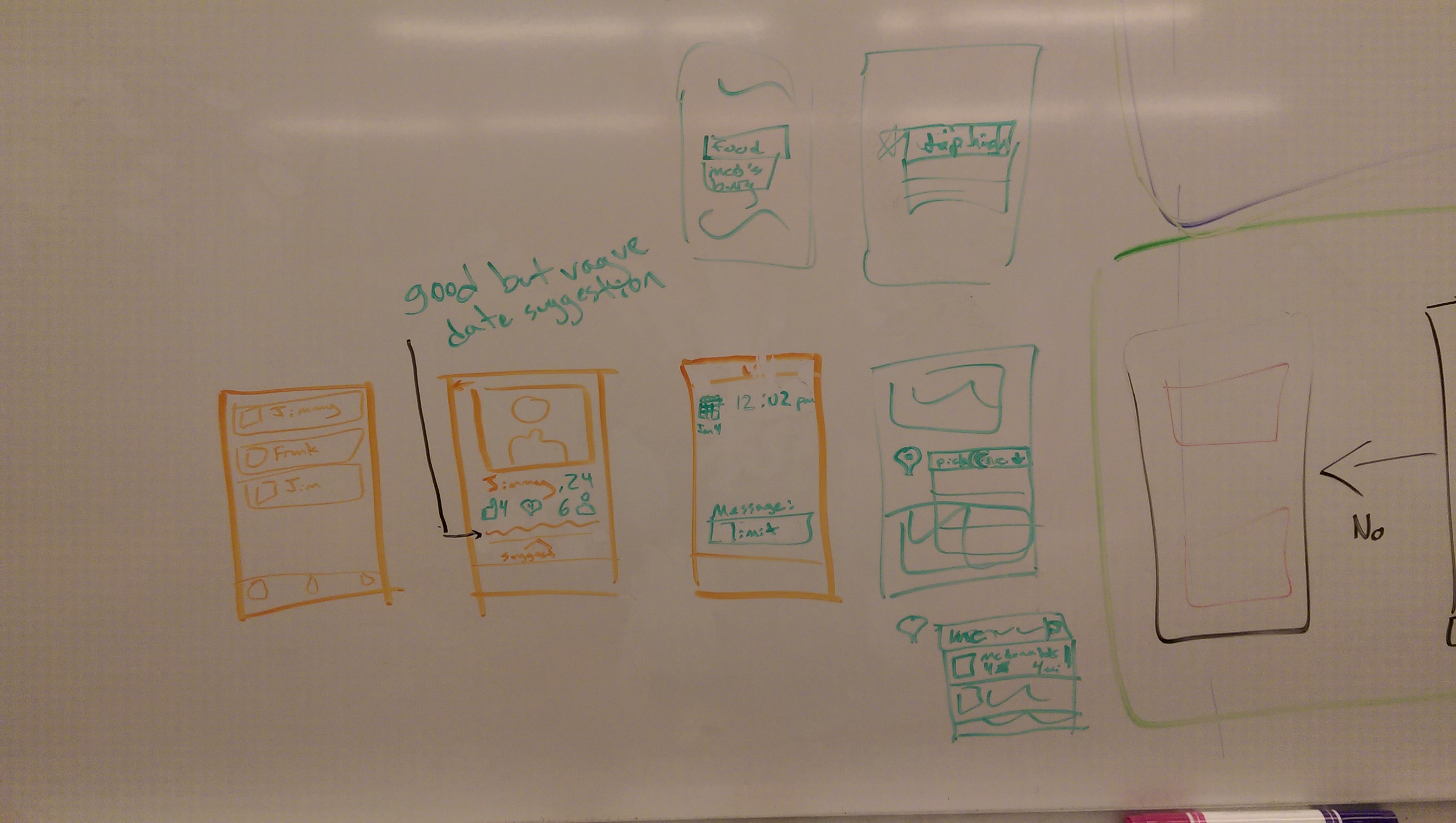
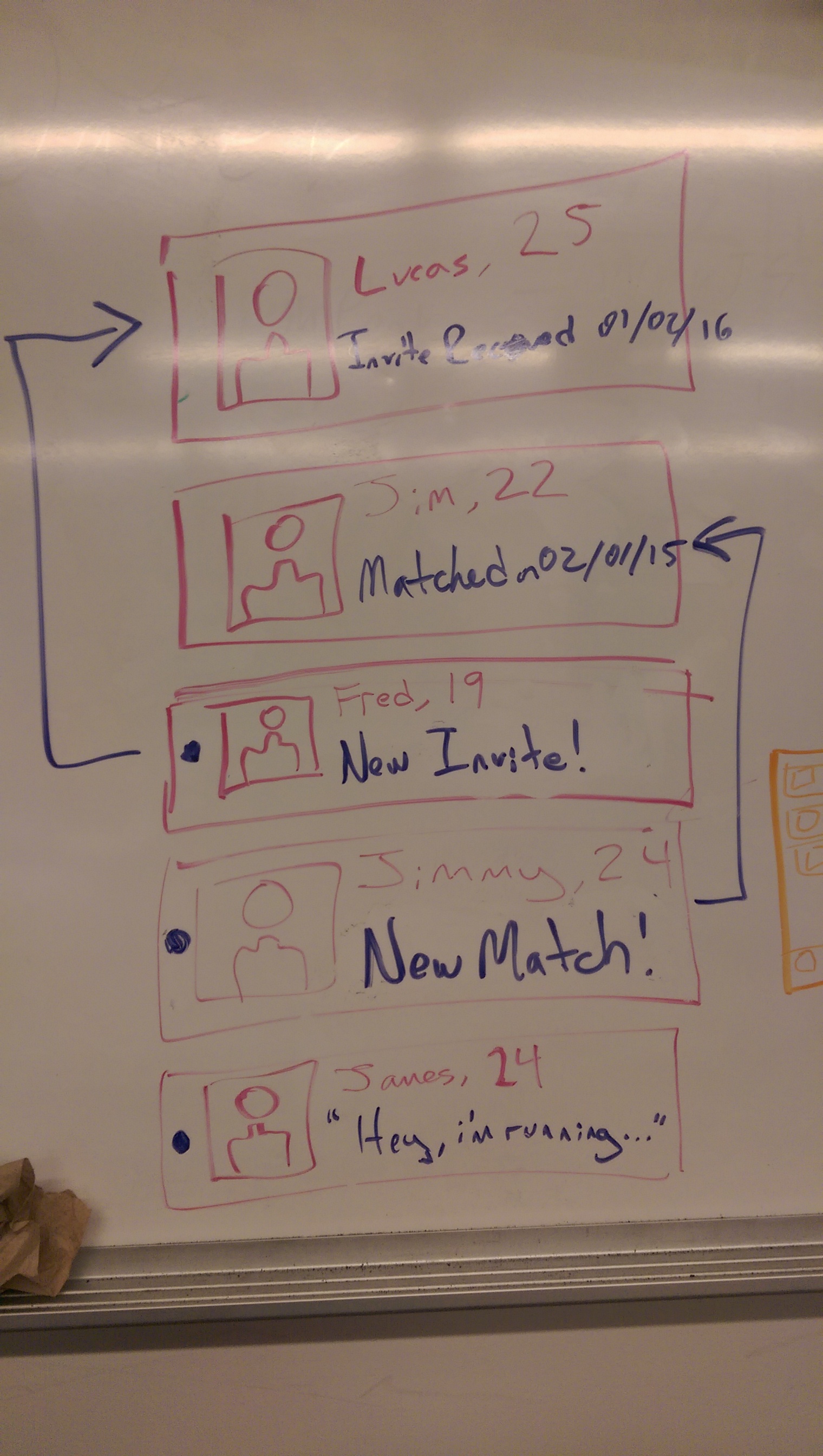
Pear is an app that allows users to match their friends together in a safe and fun environment. Once paired, users have the option of suggesting a date, time, and location to meet. If accepted, a chatbox opens between the users, which allows them to chat until their date. This system accelerates the decision process and encourages users to take it a step beyond _ just a match _. We hope this will help people who may not normally be forward with others in fear of rejection. But by creating a supportive environment, we hope to help bring those people _ out of their shells _ and try something new.
How we built it
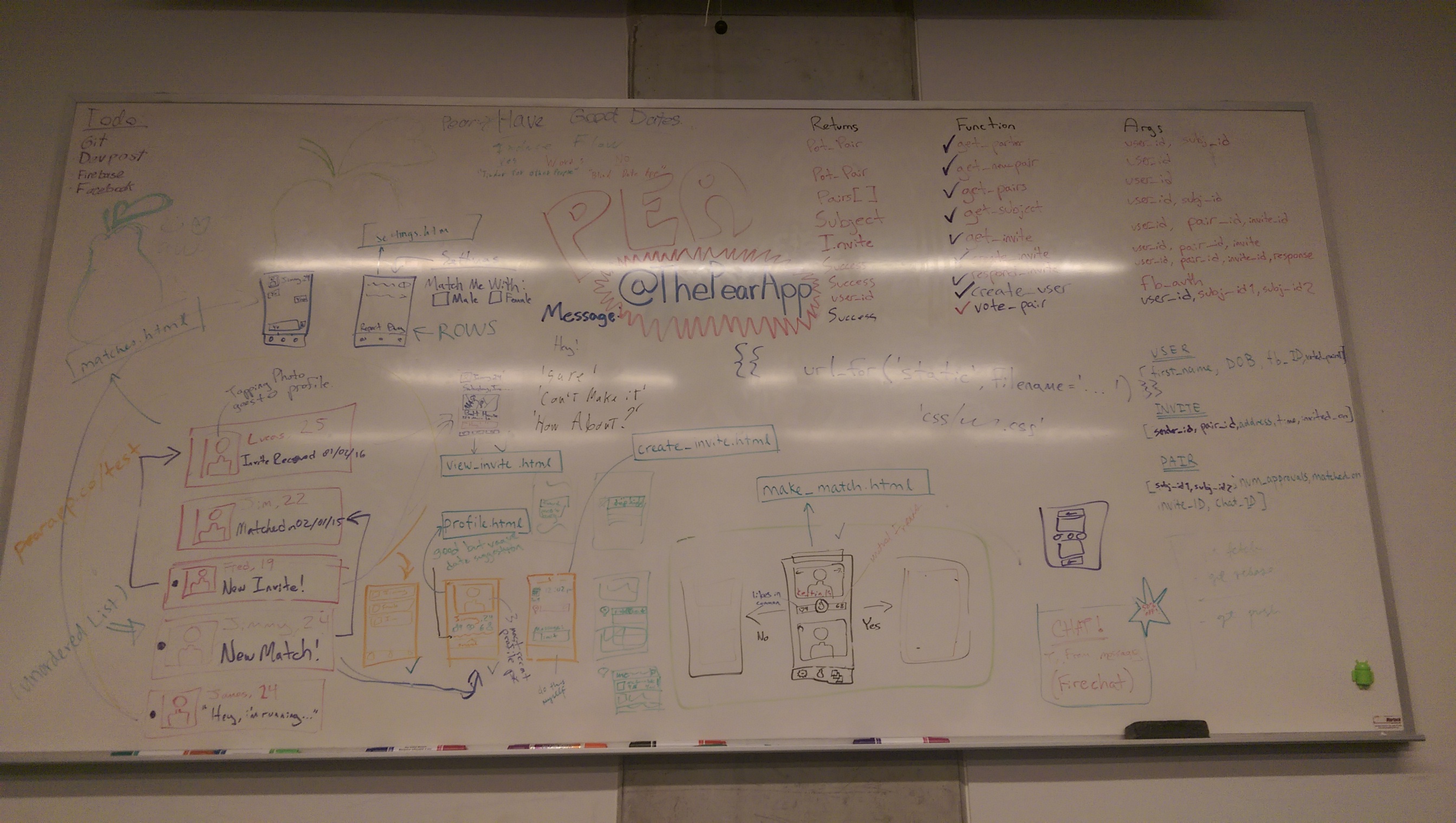
We used Flask and Python to run a backend-heavy app in order to minimize the amount of load on the client's side. By using Jinja and Javascript to format the client's interface we easily interfaced with our database to provide a seamless user experience. We used APIs such as Facebook, Firebase, and Google Maps in order to better serve our users in convenience as well as features.
Challenges we ran into
As you may be able to tell from looking at our app, we aren't very good at front-end design, but we are very experienced with back-end development. After spending 6 hours developing the UI/UX we wanted for the app we immediately began working to provide something as similar as possible to our goals. Although it might not have blown away our expectation, we think it definitely meets our minimum standards.
Our other main challenge was being able to test. Since apps like ours are built on the _ network effect _, running with a small number of users can be tricky. Especially when you have to work through Facebook's approval system in order to get full functionality of the app. However, by persevering and working along side mentors we were able to get everything running despite these setbacks.
Accomplishments that we're proud of
We are very proud of our ability to meet our goals in the front-end design space. Since we didn't have much experience here we were worried heading into something as ambitious as this. However, by spending our first 6 hours figuring out how we wanted people to interact and the feeling they get from the environment, we were able to use our limited knowledge to it's full potential.
What we learned
Our main goal was to learn some front-end design as well as getting comfortable with the APIs we chose. Front-end design is something that we all want to learn how to do in the near future, but never had a good place to start until now. Similarly, we chose powerful APIs that work across a very wide variety of app ideas and by getting comfortable with then now will certainly put us ahead in the future.
What's next for Pear
The next step for Pear is to launch native iOS and Android apps in order to maximize our user base. We chose to launch as a mobile-web app in order to save development time and prove our concept. However, we see a place for Pear in the world and we don't want to stop here. We already have an exit strategy coming out of Hack the North in order to further design and development as quickly as possible.

Log in or sign up for Devpost to join the conversation.