-
-
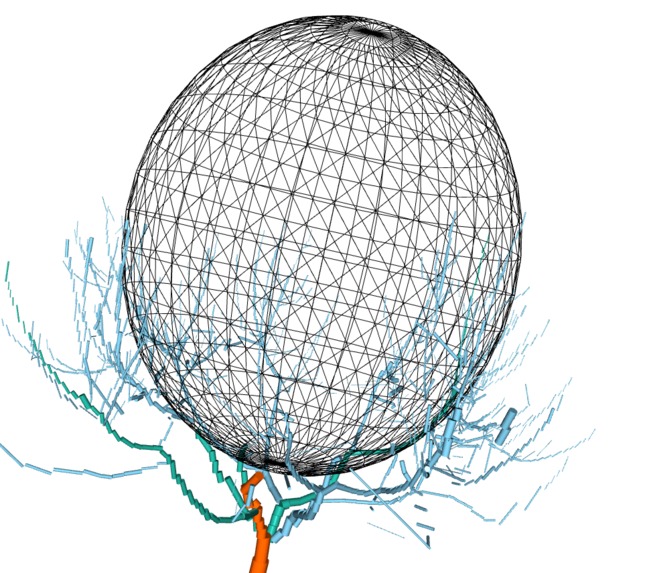
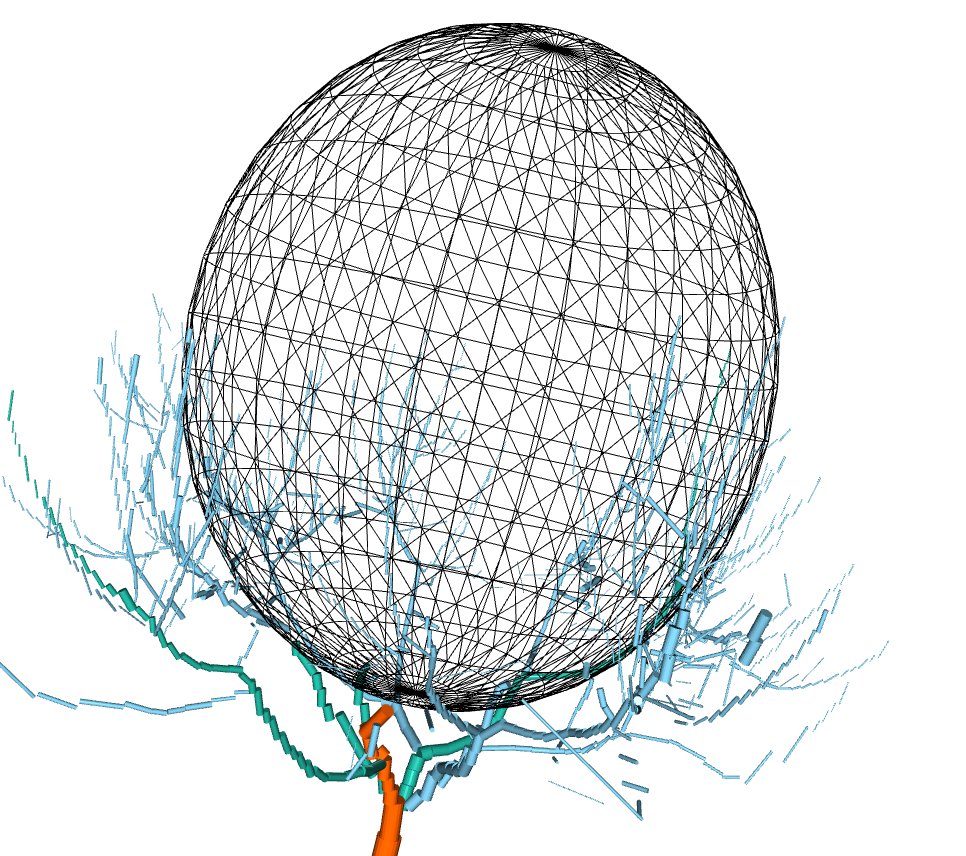
Prune Tree with Geometry Representation
-
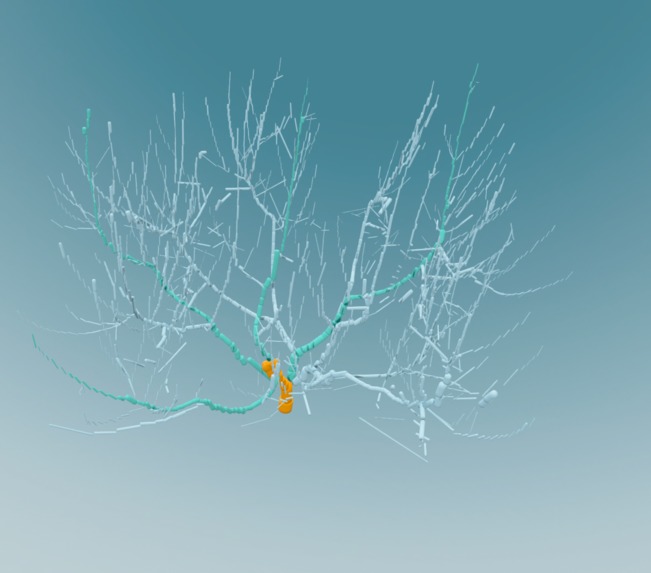
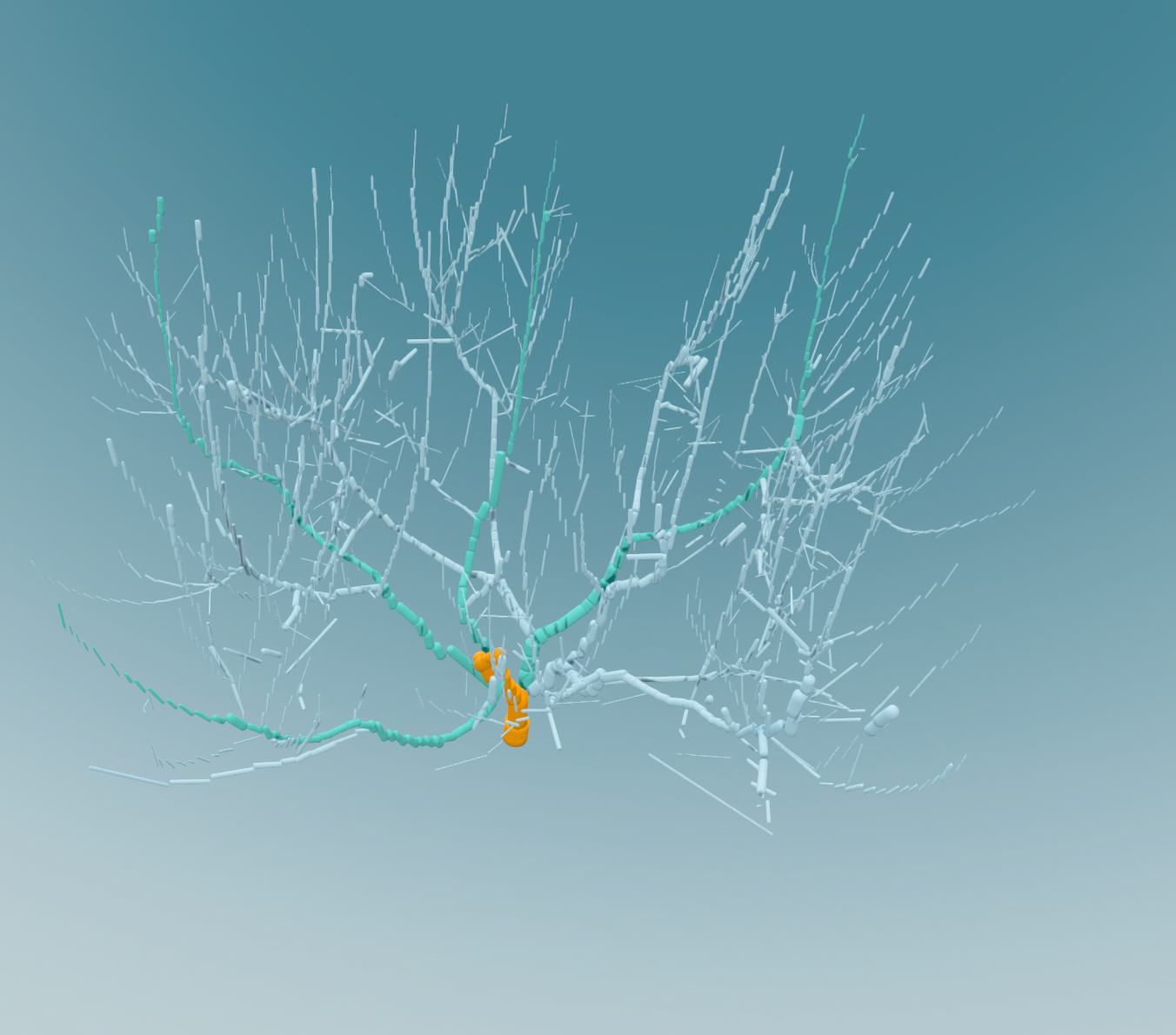
This is the tree before being pruned
-
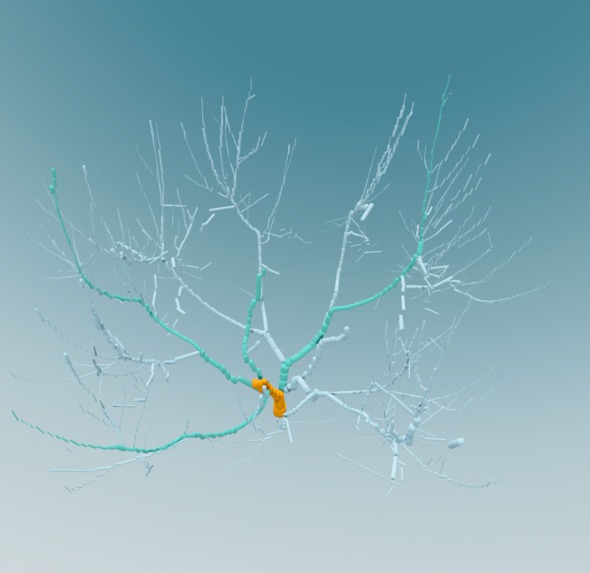
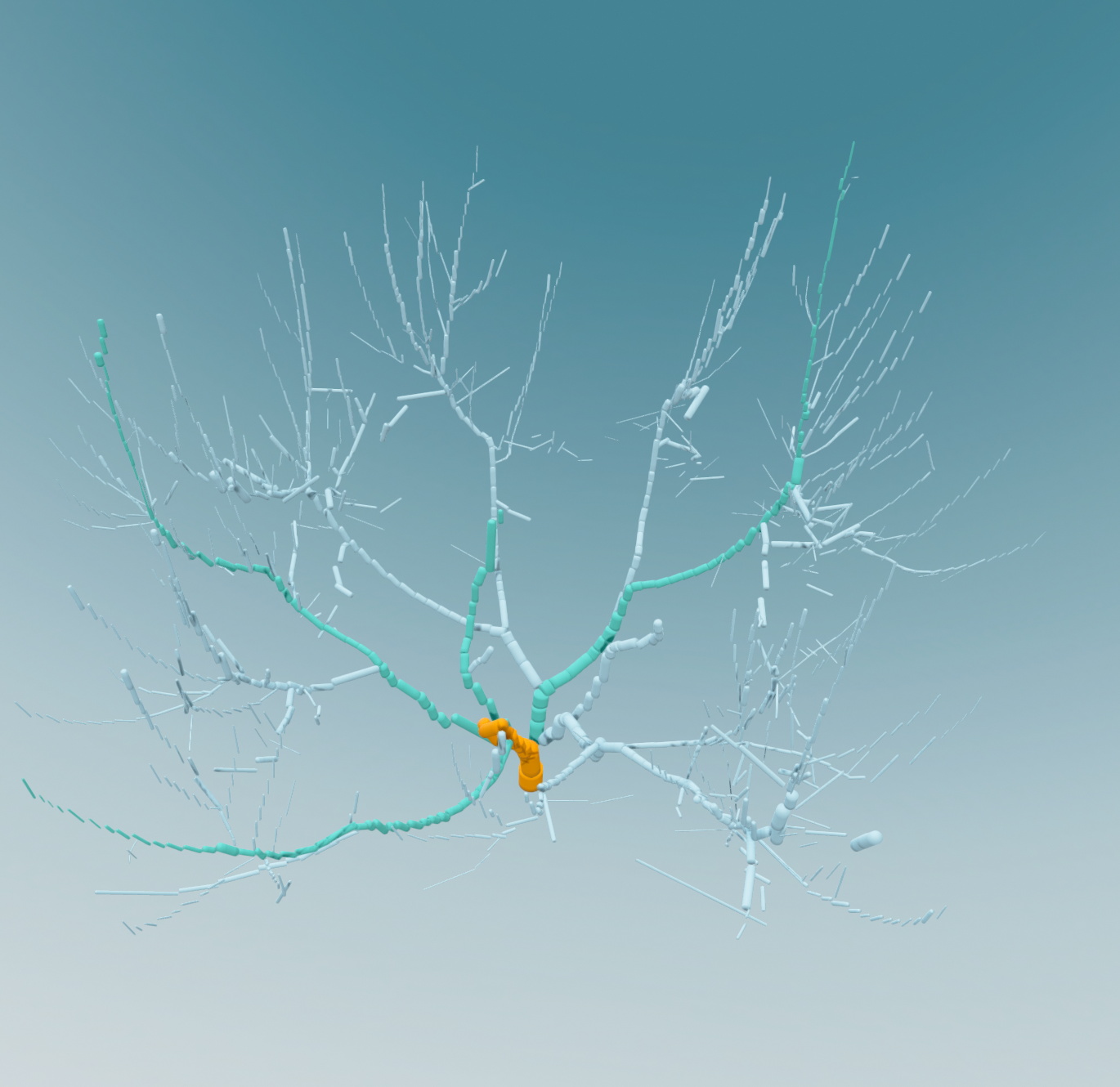
This is what the tree will look like after being pruned
-
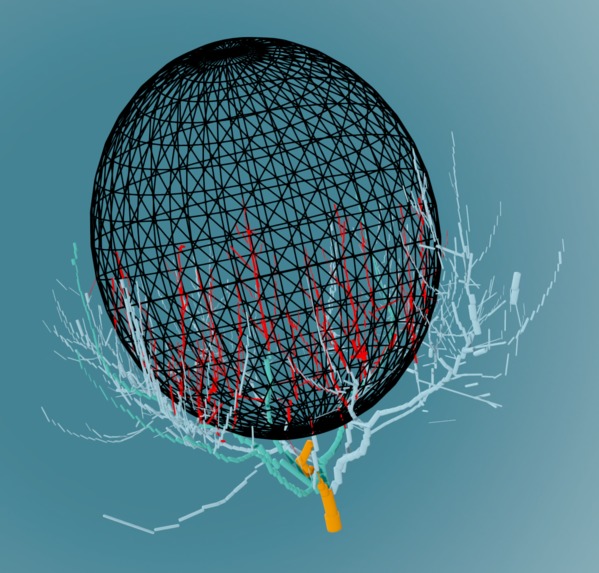
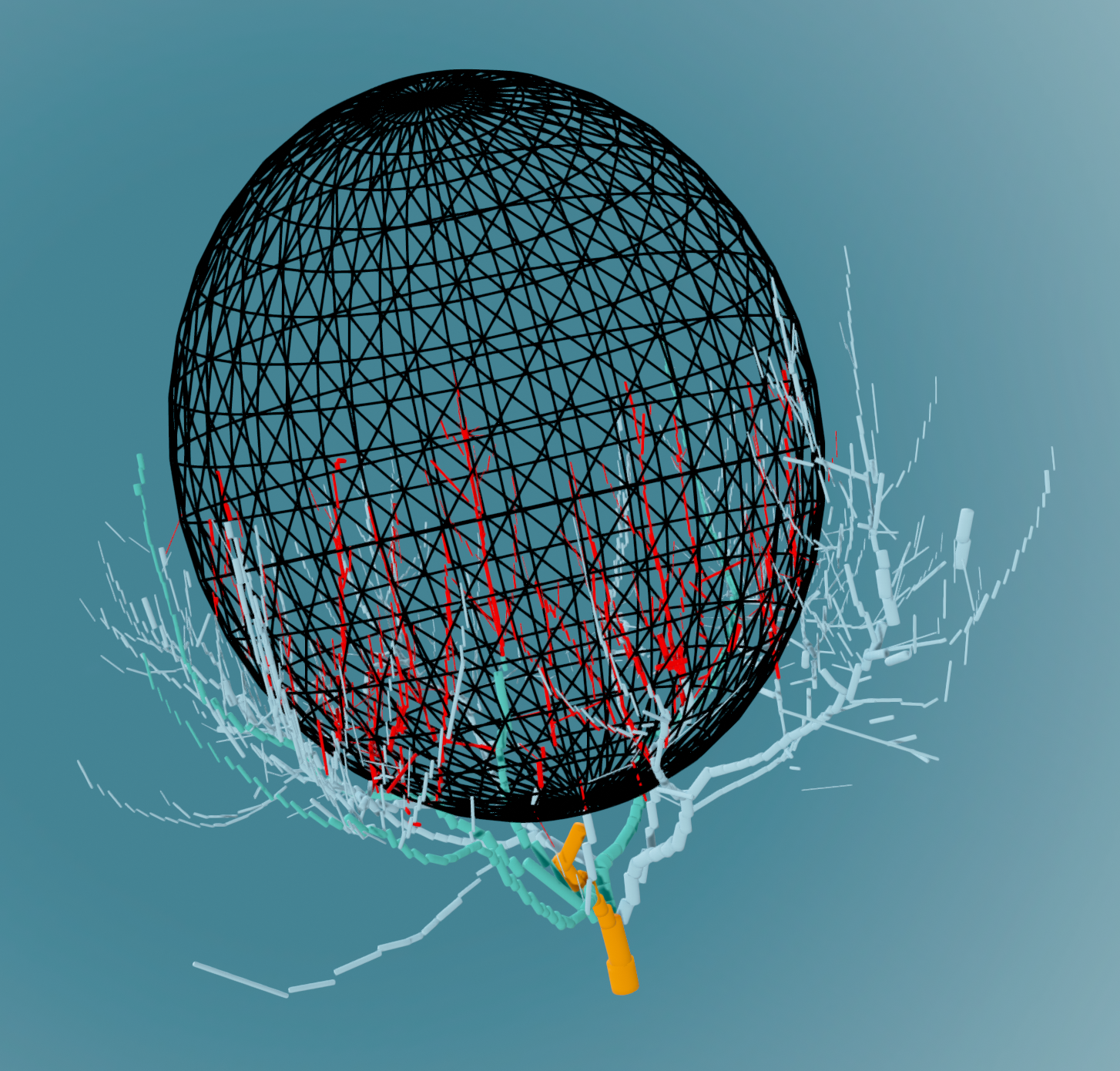
Algorithm applied to tree, red highlights are branches that will be cut
Inspiration
In the future, we can see that as the population grows food becomes a more and more common issue. Many processes have been automated within agriculture, for example, the watering of plants is completely automated. But one process in agriculture that has seen no automation is harvesting fruit from trees. Thus we wish to take the first step in automating this process by designing a way to automate the upkeep and yield of these trees.
Why automate tree pruning?:
Every year the population grows larger by exponential amounts thus creating more demand for crop yield. As of 2021 currently, over 40% of the Earth's inhabitable land is dedicated to agriculture. Pruning of trees is extremely important in making the amount of space the tree take up optimal all while bearing the most fruit. Pruning also encourages healthy growth and structure all while increasing quality of fruit and the lifespan of the tree. Having extra space on farmland is an artifact of pruning. With this extra space, farmers have more room to grow more crops in order to meet the demands of the growing population.
Pruning trees is a very tedious, time-consuming, dangerous, and tiring process. Many farmers do not like this process. Farmers will dedicate months of their time just to prune trees. This automated process will assist farmers in the labor-intensive process all while making it safer for them.
The automation of tree pruning will allow for a greater yield when harvesting. Not only that but it will actually increase the quality of fruit being yielded, whether it is bigger and/or sweeter fruit. Greater volumes of higher-quality fruit will also leave an everlasting impact on our world economy. Crops will be more affordable to everyone as automating this process will save time and money.
What it does
By using lidar scans and a Matlab library called TreeQSM, we can transfer lidar scans into a point cloud and then contextualize them into cylinders representing a tree. Following that we have automated the process to identify what branches to remove and in turn how to prune the tree.
How we built it
Utilizing lidar scans we collected from a lab at UGA we constructed an algorithm in order to execute an open-center prune. We did this by researching the ways people currently prune trees and found the one that was most common and easily implementable. We then used Matlab to translate the point cloud from the lidar scans into cylinders representing a tree and ported those over to python using Open3D. Following that we could finally prune the tree, which we did by using a geometrical and mathematical mixture for our algorithm. We applied an ellipse as a basic way to cut down the center of the tree then calculated for branches that needed removal and took them out. By using these methods we have found a way to automatically calculate how we should prune trees, this will allow us to now program robots to automate the process of pruning trees.
Challenges we ran into
A major challenge was transporting the data from the TreeQSM model we found in the Matlab model back to python. The majority of the issue we ran into was the fact that we received Euclidean vectors as an output from the produced cylinders in Matlab. But we required rotational matrices in order to place rotate the cylinders after translating them. But after a lot of linear algebra review, we were able to create a method to translate our euclidean vectors back into a rotational matrix.
Accomplishments that we're proud of
We're proud of the speed with which we were able to design a rough algorithm to prune peach trees. Not only that but when viewing it with only our eye we can easily see a strong resemblance to images of pruned peach trees. But we wish to cross-reference these images with those who are experienced in agriculture in the future.
What we learned
During this process, we were able to apply our knowledge of computer science and mathematics to a topic that was challenging. This was a topic rarely ever explored so it felt good being able to accomplish a great deal from uncharted territory. We believe this has never been done before and we are the first to do it. We learned not only about a plethora of peachtree pruning techniques but also tons of new API's and frameworks such as TreeQSM, PyQT5, and Open3D.
What's next for Peach Tree Pruner
Our next goals are to achieve not only a more efficient peach tree pruning method but to also build a model that can accurately predict peach tree growth. By doing this we can optimize the space we place peach trees in and perfectly prune them relative to that space in order to maximize our yield on peachtree farms.
Credits
Special thanks the UGA Griffin and their researchers for their LIDAR scans of the peach trees


Log in or sign up for Devpost to join the conversation.