-
-
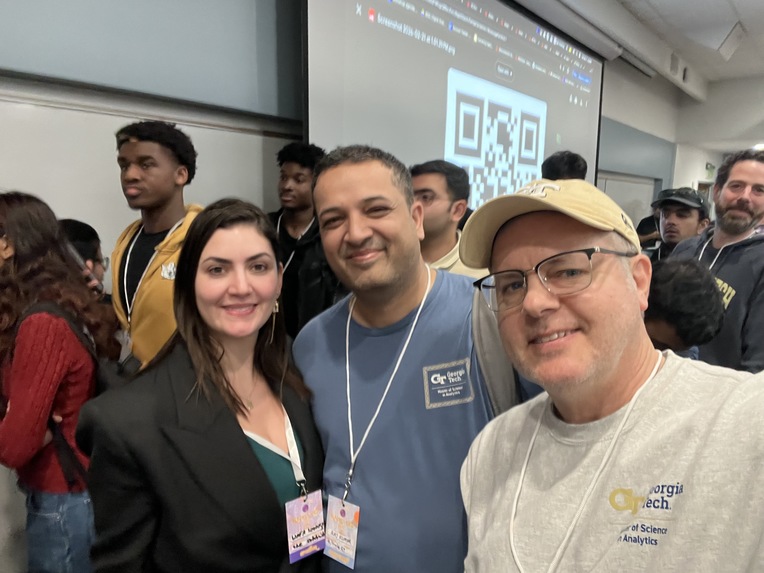
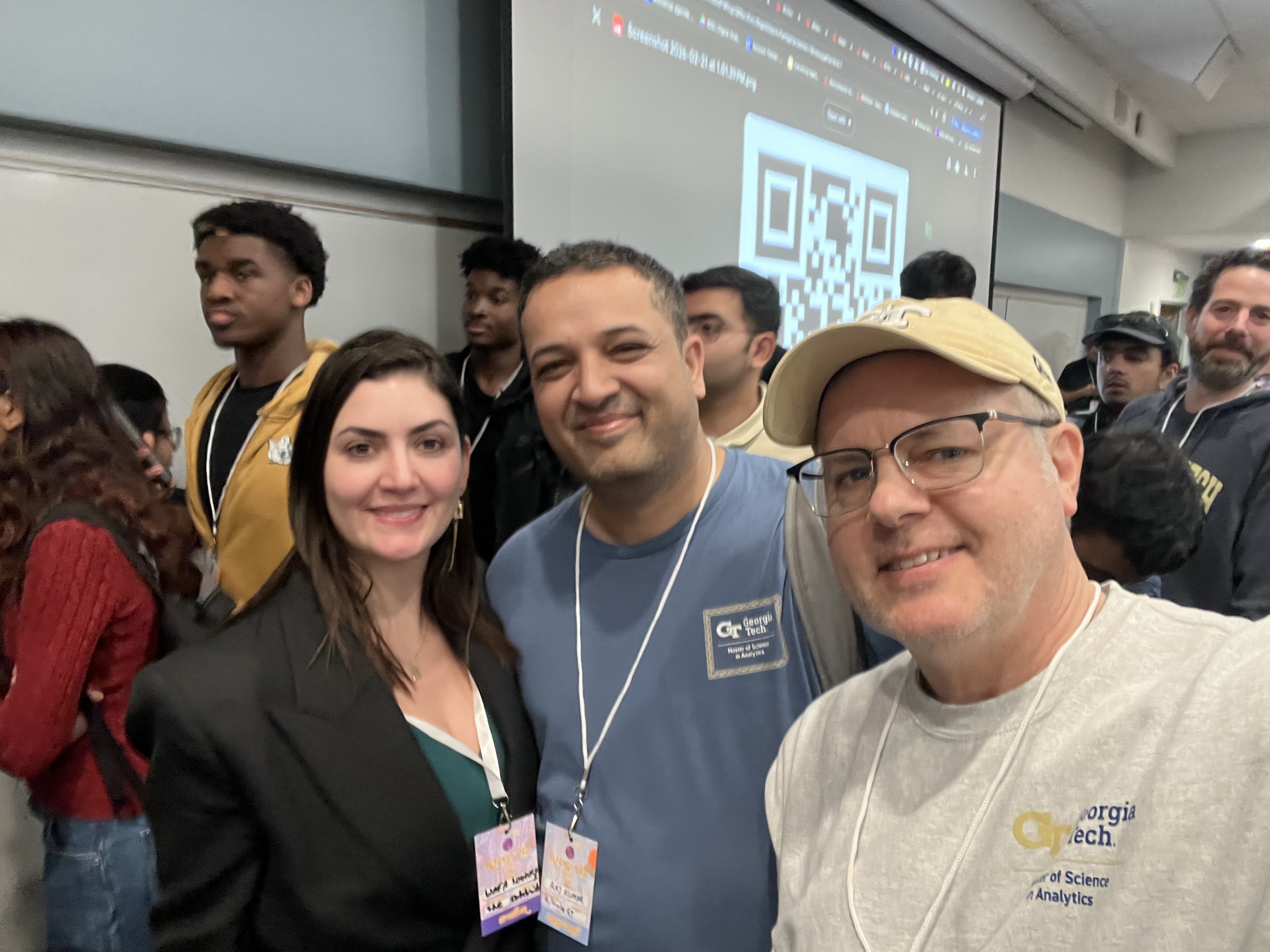
Wafa, Raj, and Joe at the Databricks workshop
-
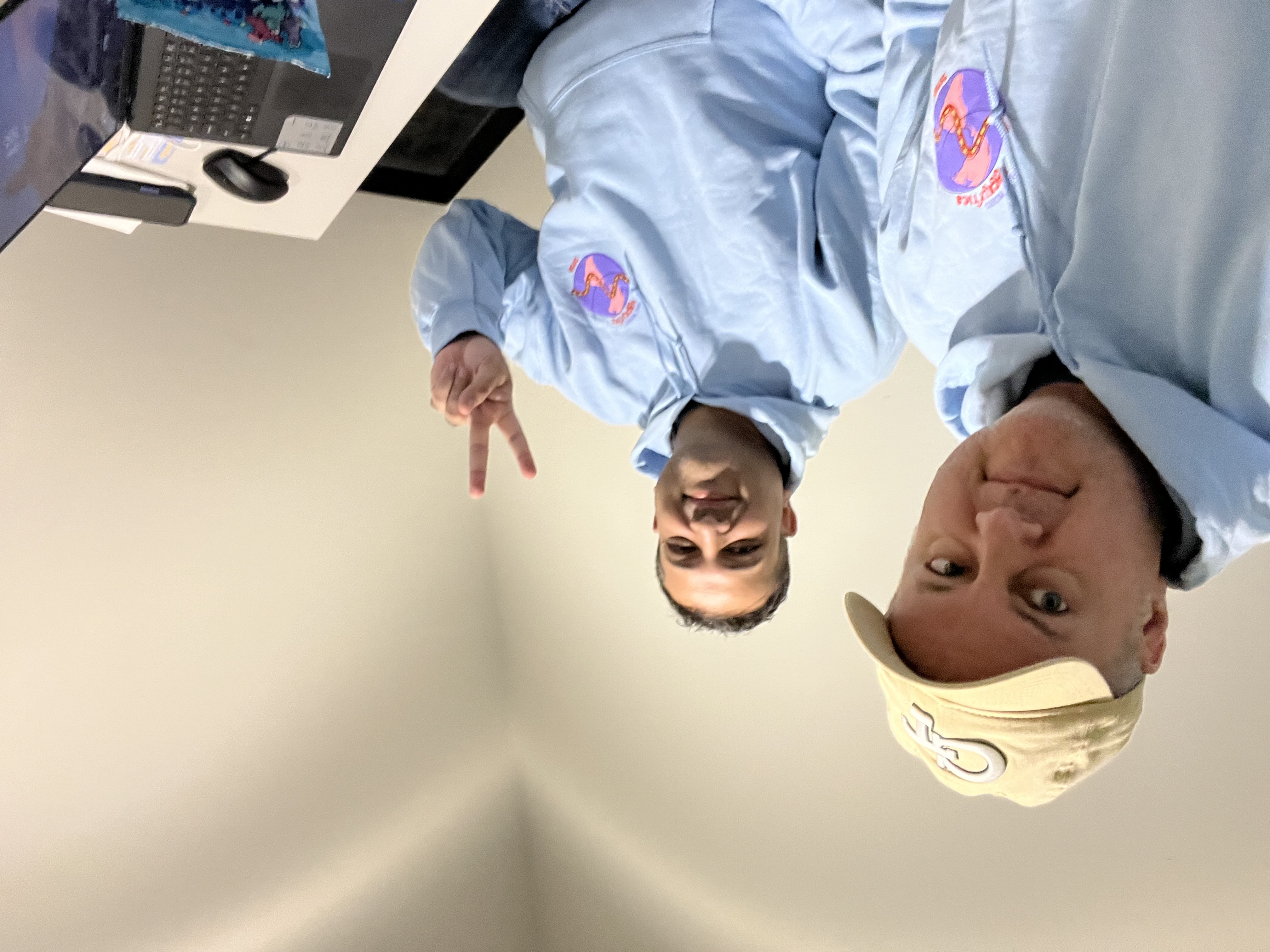
Joe and Raj sporting new Hacklytics hoodies
-

Joe, Vinay, Raj, and Jason
-

Jason, Raj, and Joe working late into the night.
-

Raj, Jason, Joe at the opening keynote
-

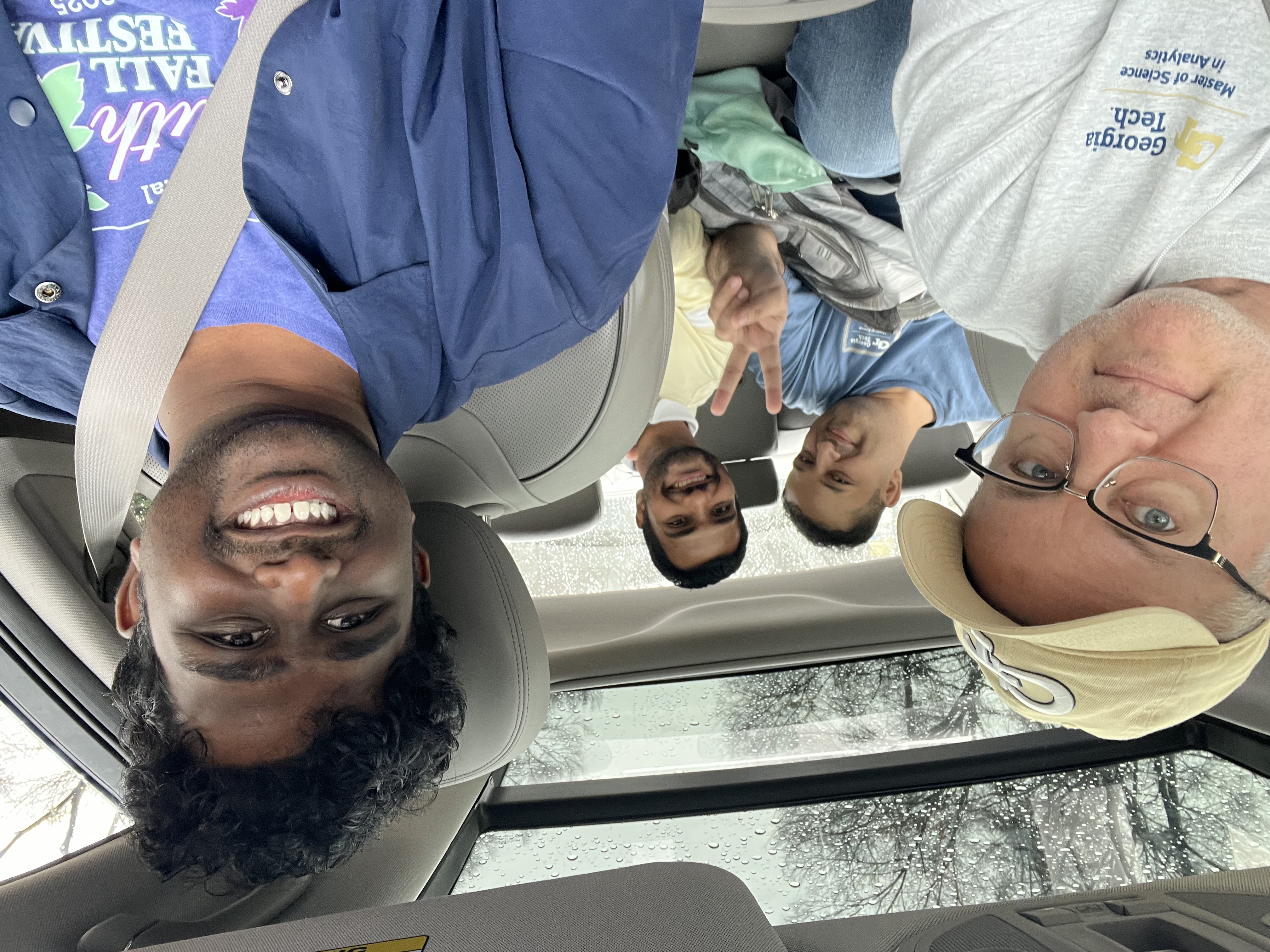
Lunch roadtrip with Joe, Vinay, Raj, and Vignesh
-
Joe working hard coding the web app
-
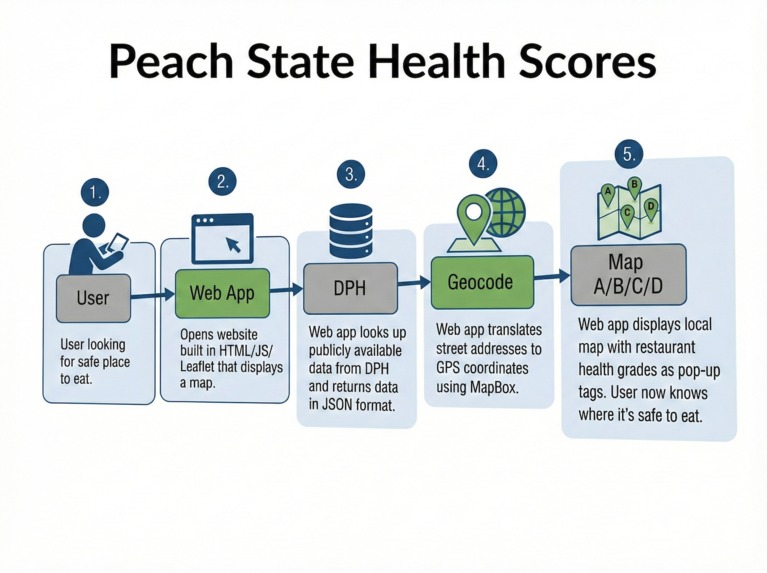
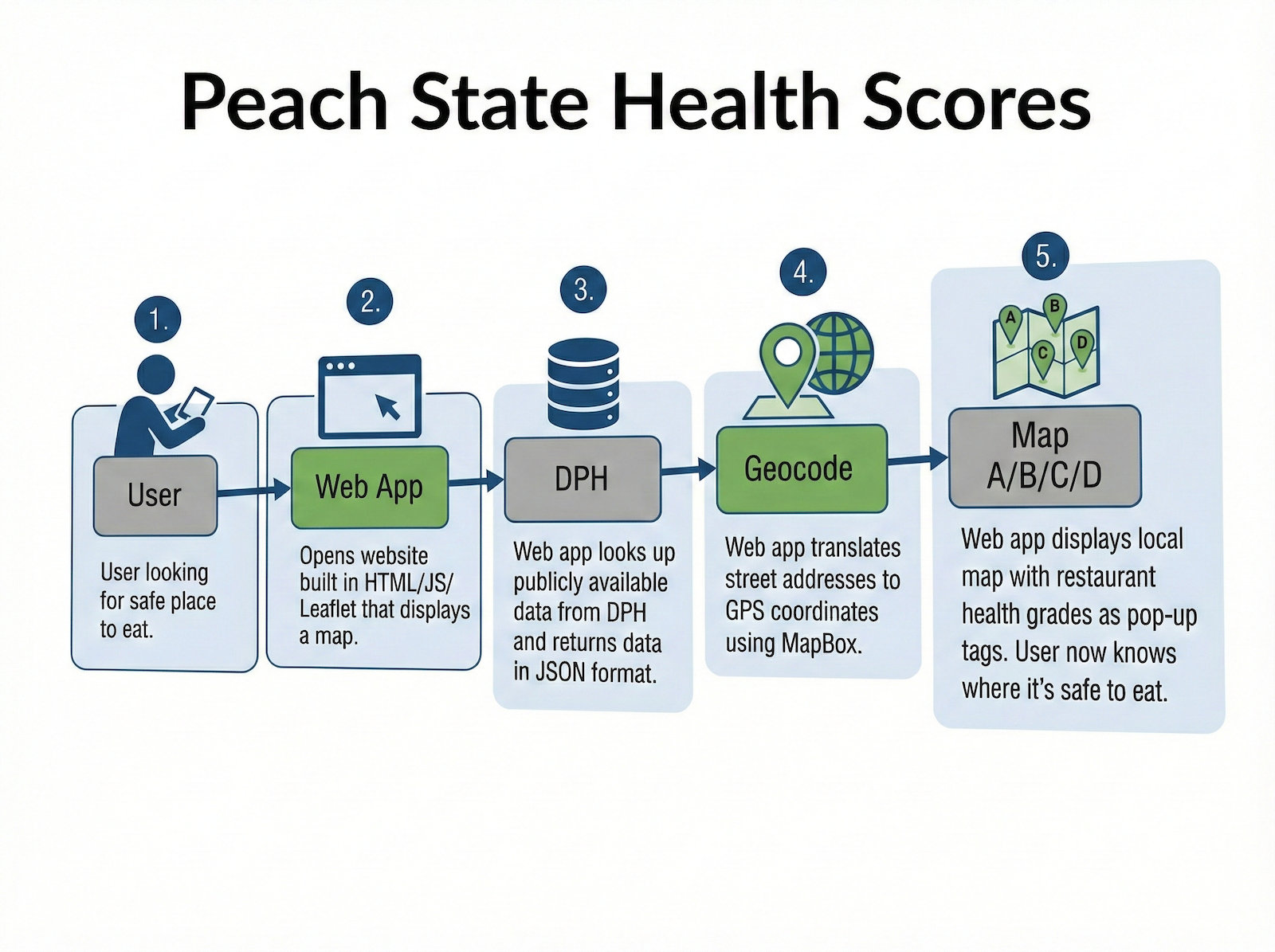
System overview




Inspiration
We wanted an easier way to answer a simple question: “Is this restaurant clean and safe?”
Georgia publishes restaurant health inspection data, but the official lookup tool is slow, hard to navigate, and not very map-friendly. The information is public, but not especially usable. This project started as an effort to make that data easier to access, starting around Georgia Tech and metro Atlanta, without hiding where it comes from. Joe's wife Mary Catherine was the original inspiration for the project. She asked, "why isn't there a simple app to find out restaurant health scores?"
What it does
Peach State Health Scores is an interactive map that shows Georgia restaurant health inspection scores in a clear, easy-to-understand way.
Users can:
- View nearby restaurants on a map with color-coded inspection grades
- Filter results by restaurant name or inspection grade
- See inspection scores and dates at a glance
- Jump directly to the official Georgia DPH inspection report for full details
The app works instantly using preloaded data and can fetch live inspection results as users explore new areas.
How we built it
The project is a lightweight, single-page web app focused on speed and transparency.
- Frontend: Plain HTML, CSS, and JavaScript with Leaflet for mapping
- Data source: Georgia Department of Public Health restaurant inspection data
- API access: The official DPH site uses undocumented ColdFusion REST endpoints. We identified the same read-only endpoints by inspecting publicly served JavaScript files.
- Data handling: Inspection scores and dates are parsed from display text, deduplicated, and geocoded so results can be mapped.
- Performance: Restaurants near Georgia Tech are preloaded so the app works immediately. Live data is fetched only when users pan or zoom the map.
- CORS handling: Because the API blocks cross-origin requests, a small server-side proxy is used. Only public, read-only data is accessed.
Challenges we ran into
Some of the main challenges included:
- No public API documentation for the inspection system
- Strict browser CORS restrictions
- Inspection details embedded in human-readable strings instead of structured fields
- No latitude/longitude data provided by the source system
- Balancing live data access with performance and rate limits
Accomplishments that we're proud of
- Making public health inspection data genuinely easy to use
- Building a fast, map-first interface that works instantly
- Responsibly working with undocumented but public data
- Linking every result back to the official DPH report for transparency
- Delivering a useful, complete project without overengineering
What we learned
This project reinforced that public data isn’t truly public unless people can actually use it.
From a technical standpoint, we learned how to reverse-engineer a production web app responsibly, work with undocumented APIs, and design a client-side app that balances performance, usability, and data freshness.
What's next for Peach State Health Scores
Future improvements could include:
- Caching geocoded results to reduce repeat lookups
- Adding filters for recent or low-scoring inspections
- Expanding coverage statewide
- Improving the mobile experience
At its core, Peach State Health Scores is about making public health information easier to find, easier to understand, and easier to trust—so people can see inspection scores before they take a bite.


Log in or sign up for Devpost to join the conversation.