-
-
PeaceLens AI
-
PEACELENS AI
-

PeaceLens AI Logo
-
PEACELENS AI
-
PEACELENS AI
-
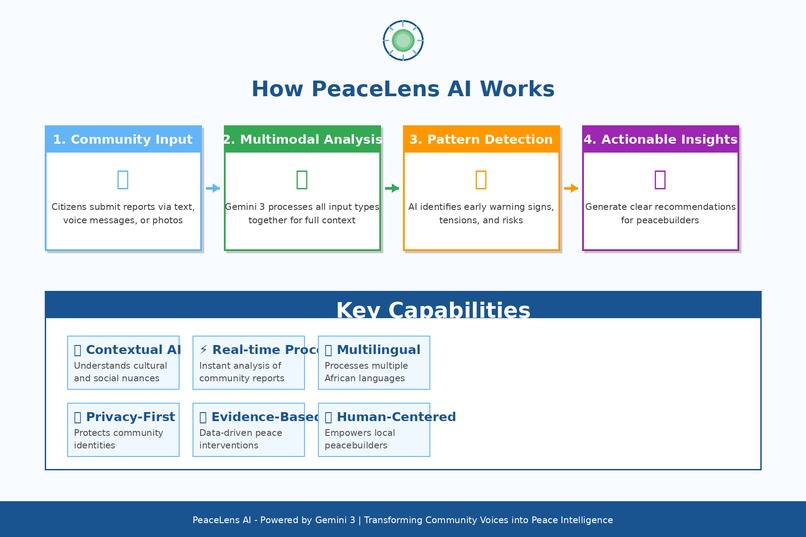
PeaceLens AI How It Works
-
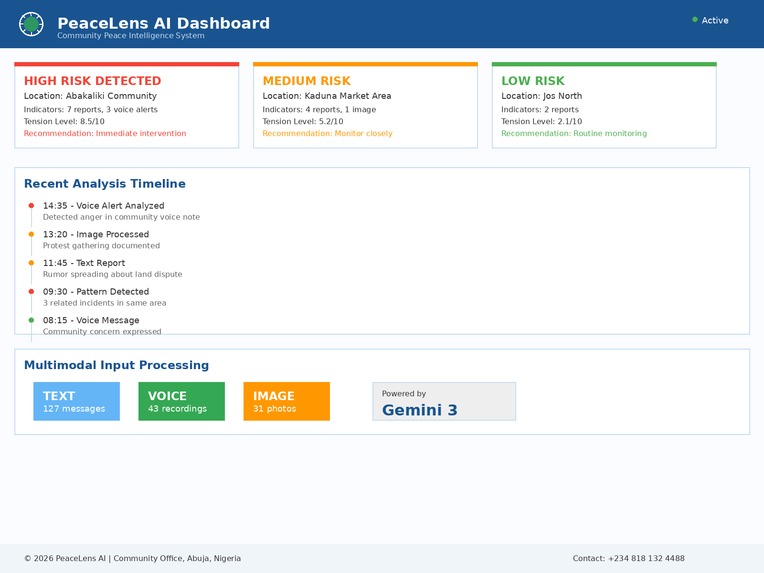
PeaceLens AI Dashboard
-
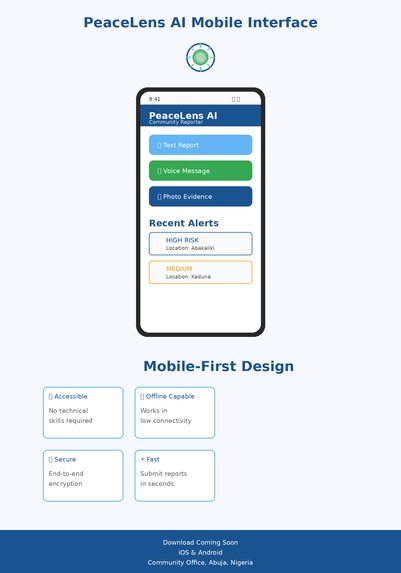
PeaceLens AI Mobile Interface
-
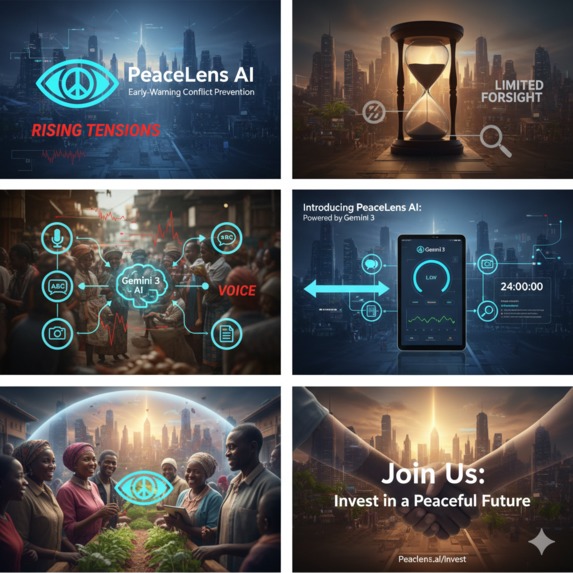
PEACELENS AI
-
PeaceLens AI Early Warning
-
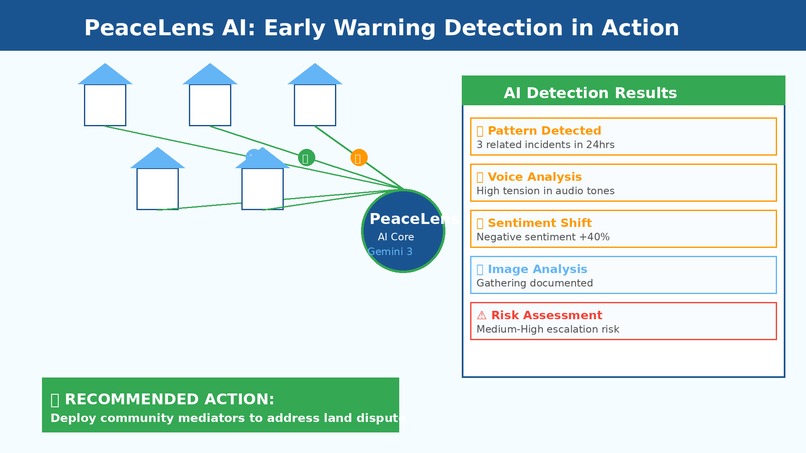
PeaceLens Detection Early Warning
-
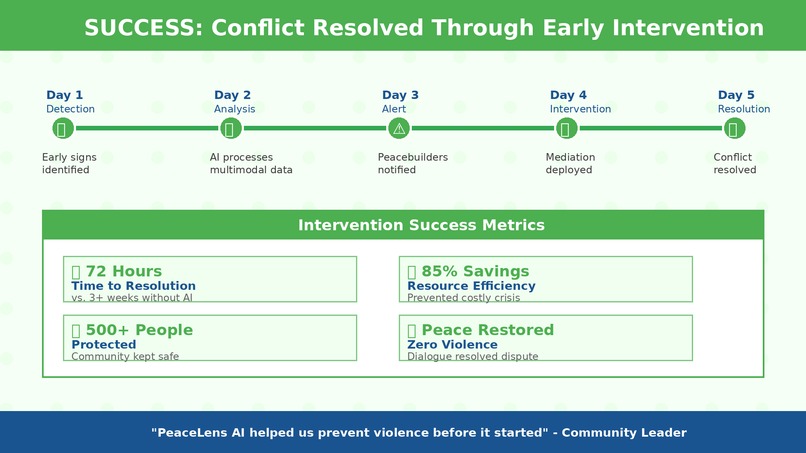
PeaceLens Resolution
-
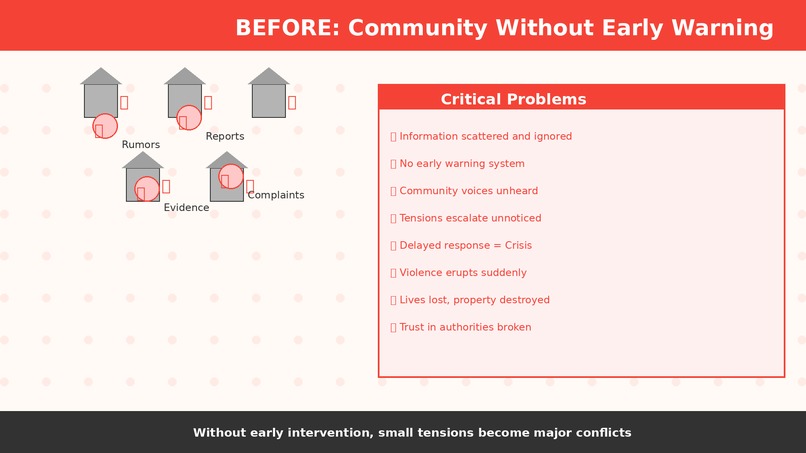
Before: Community Without Early Warning
-
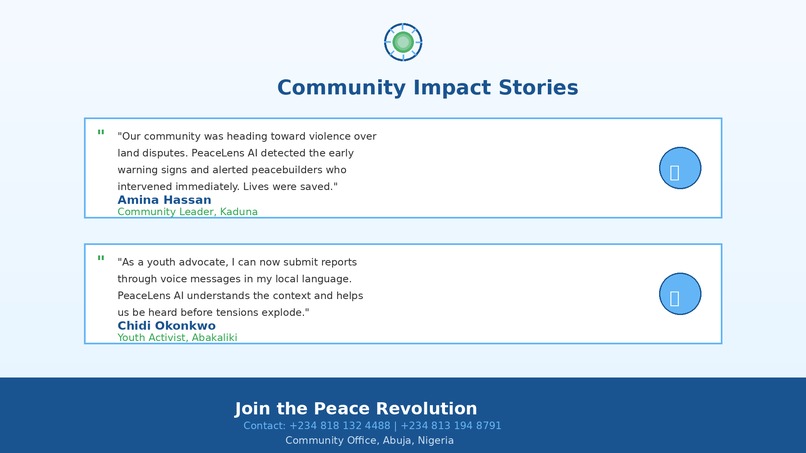
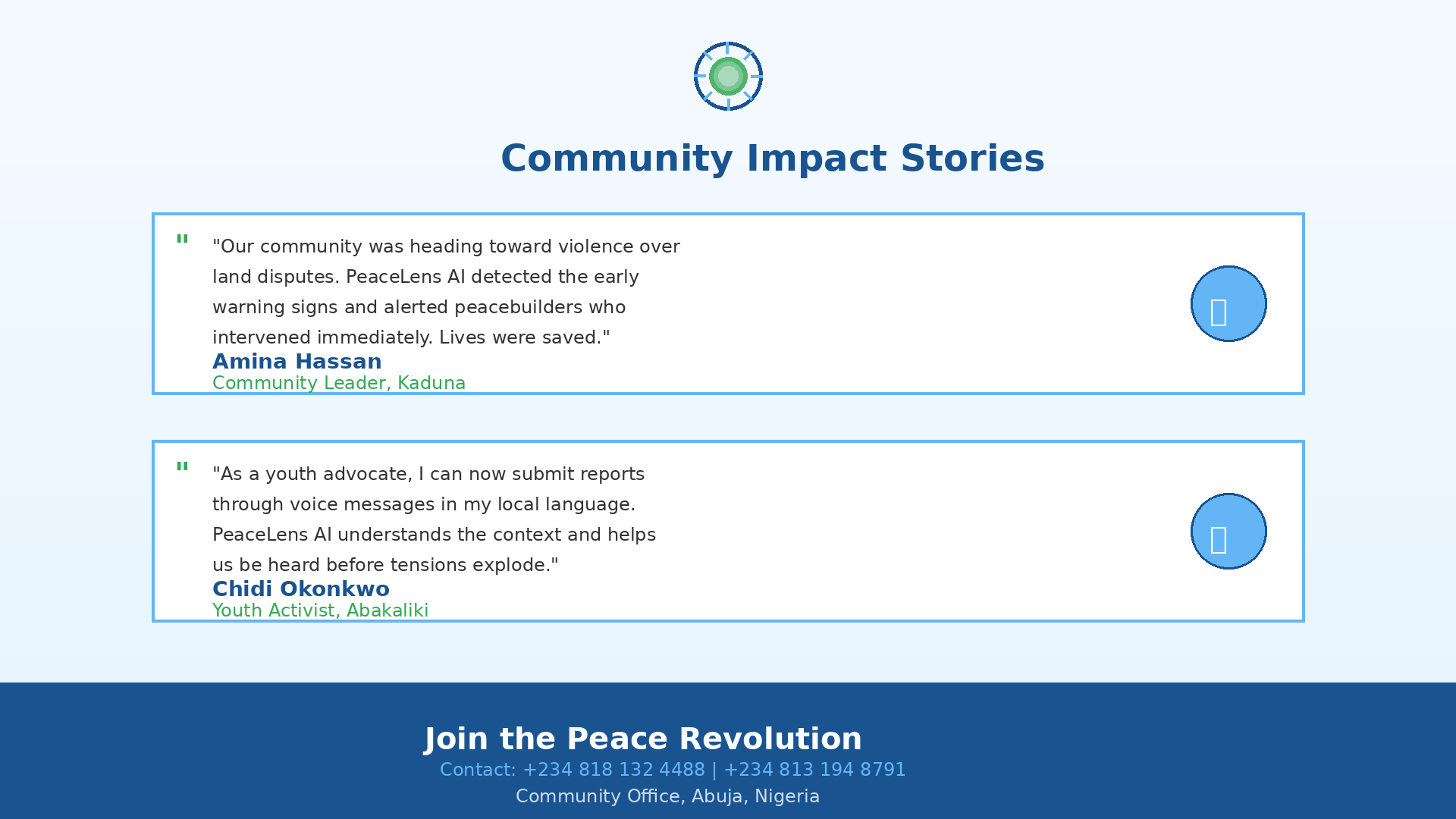
Community Impact Stories
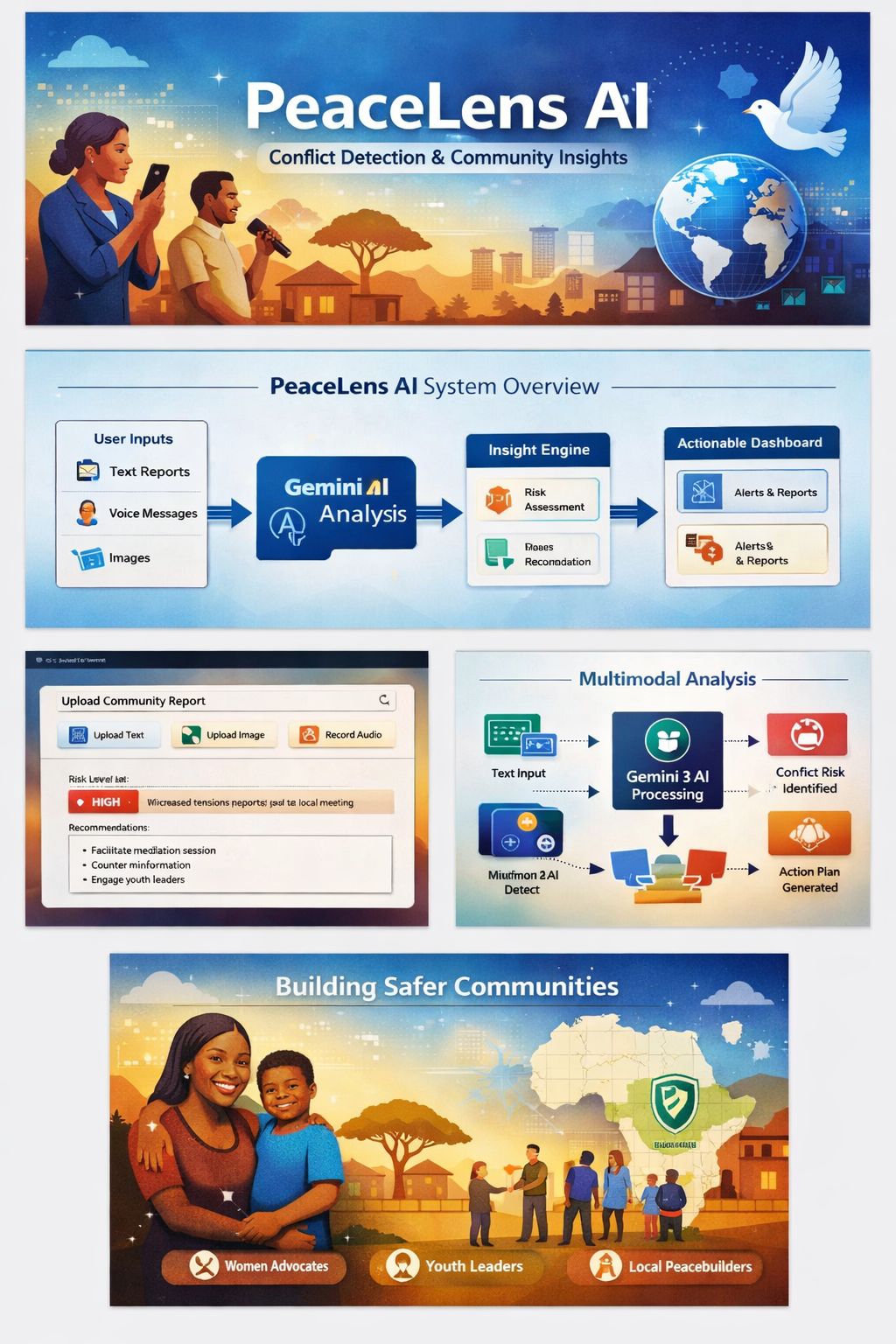
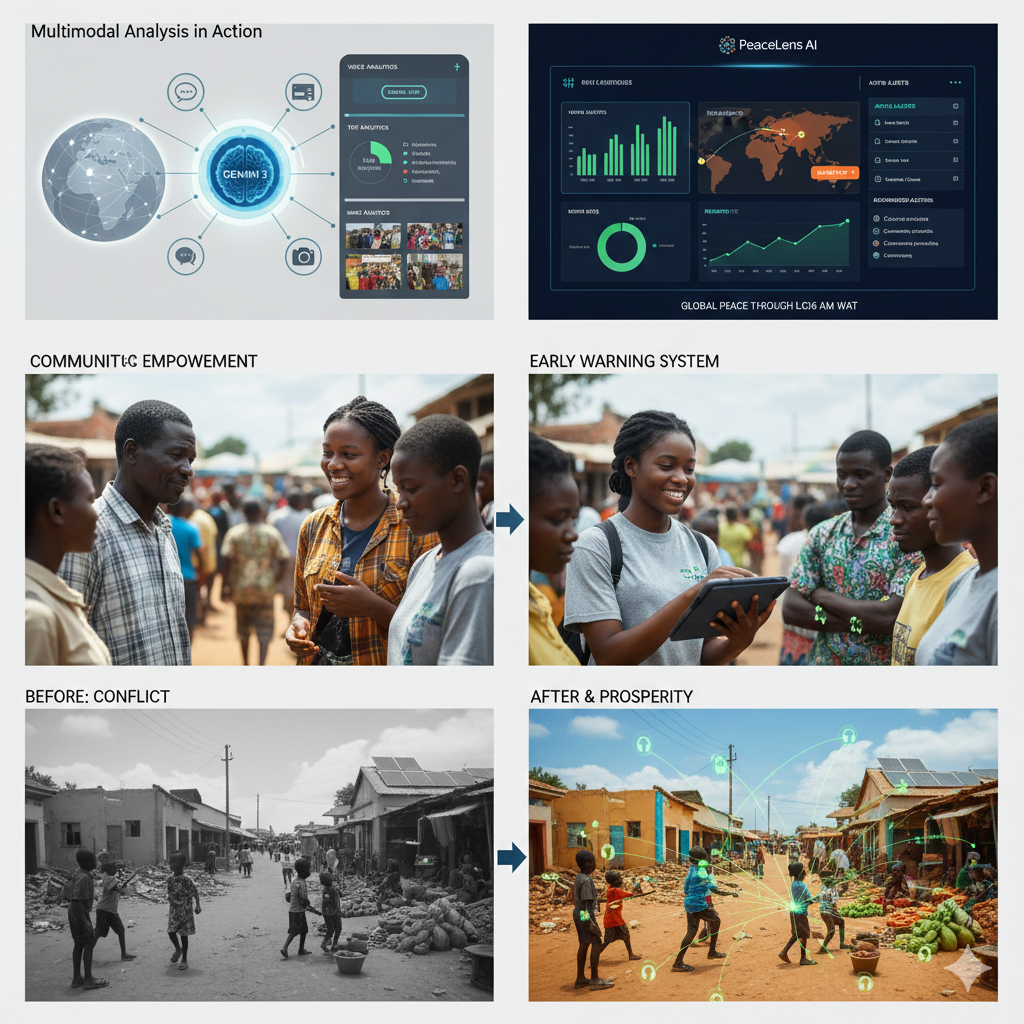

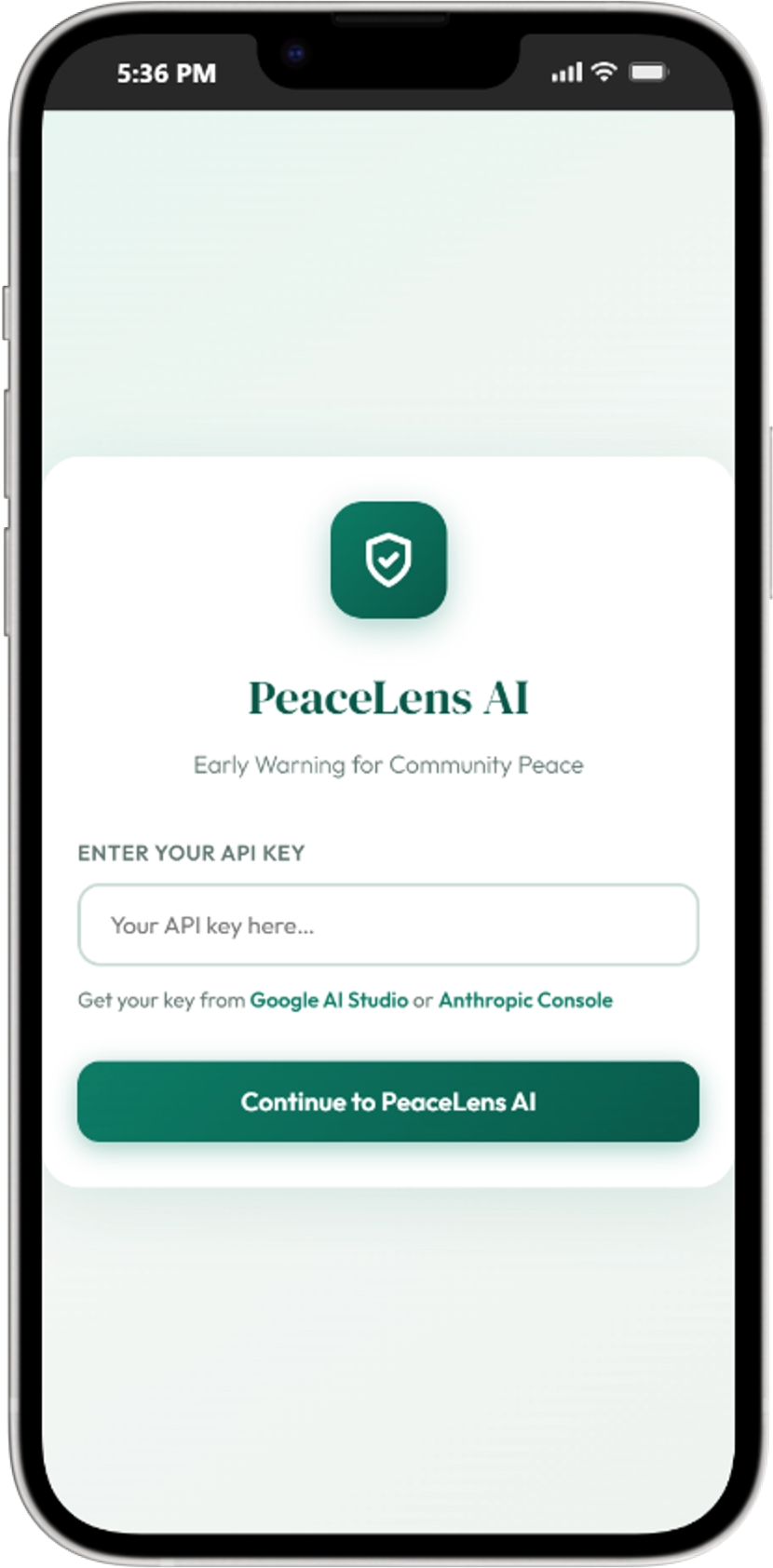
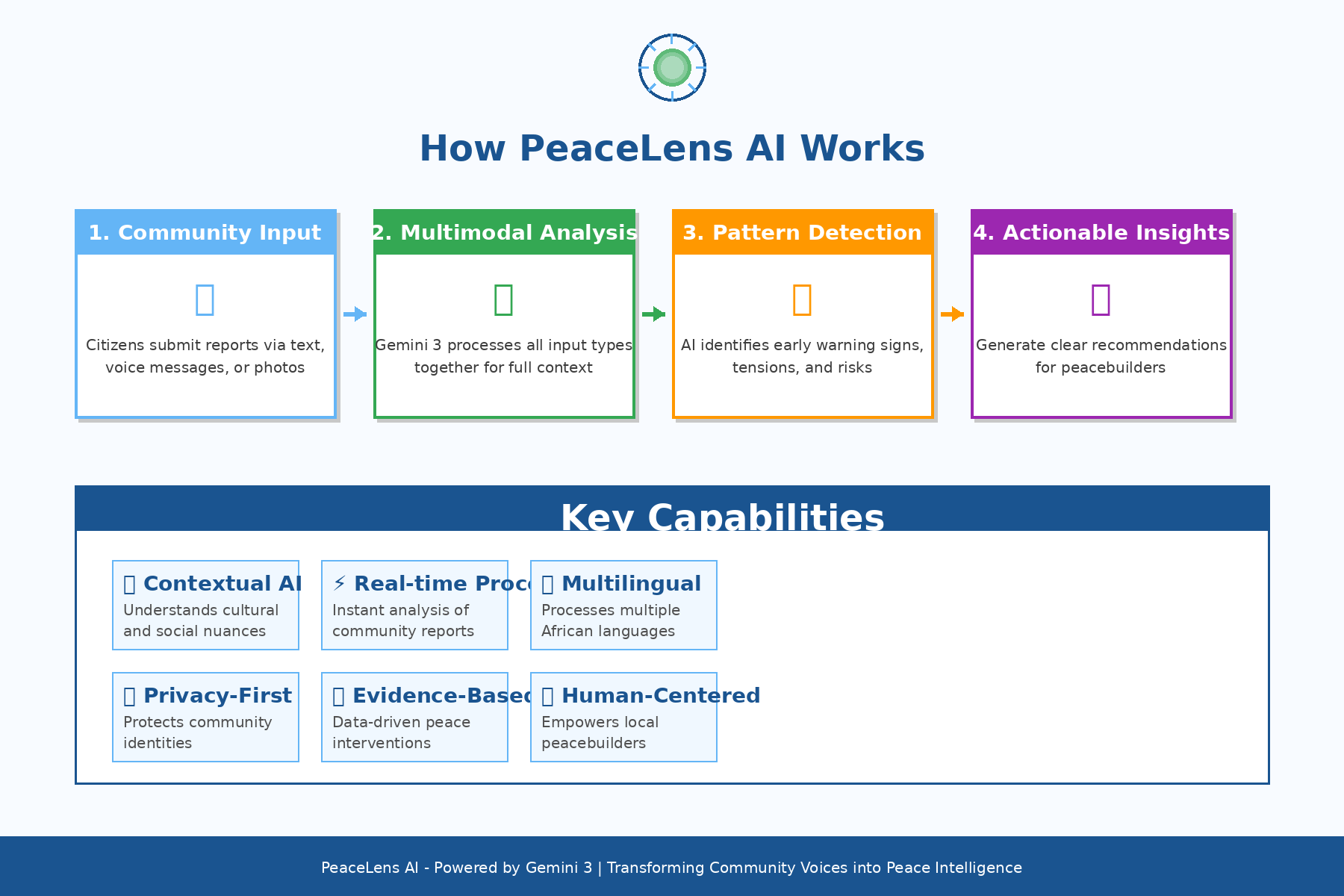
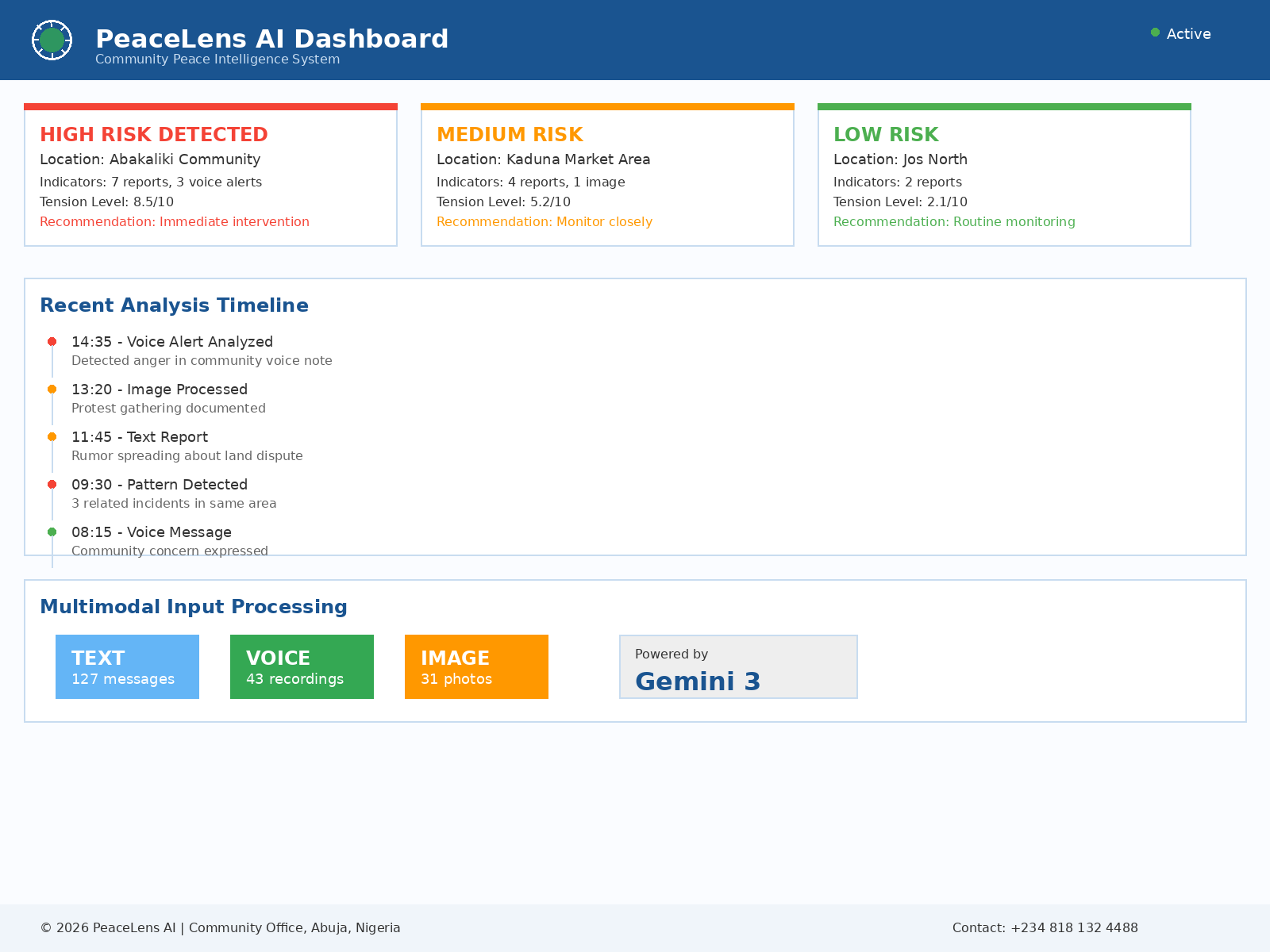
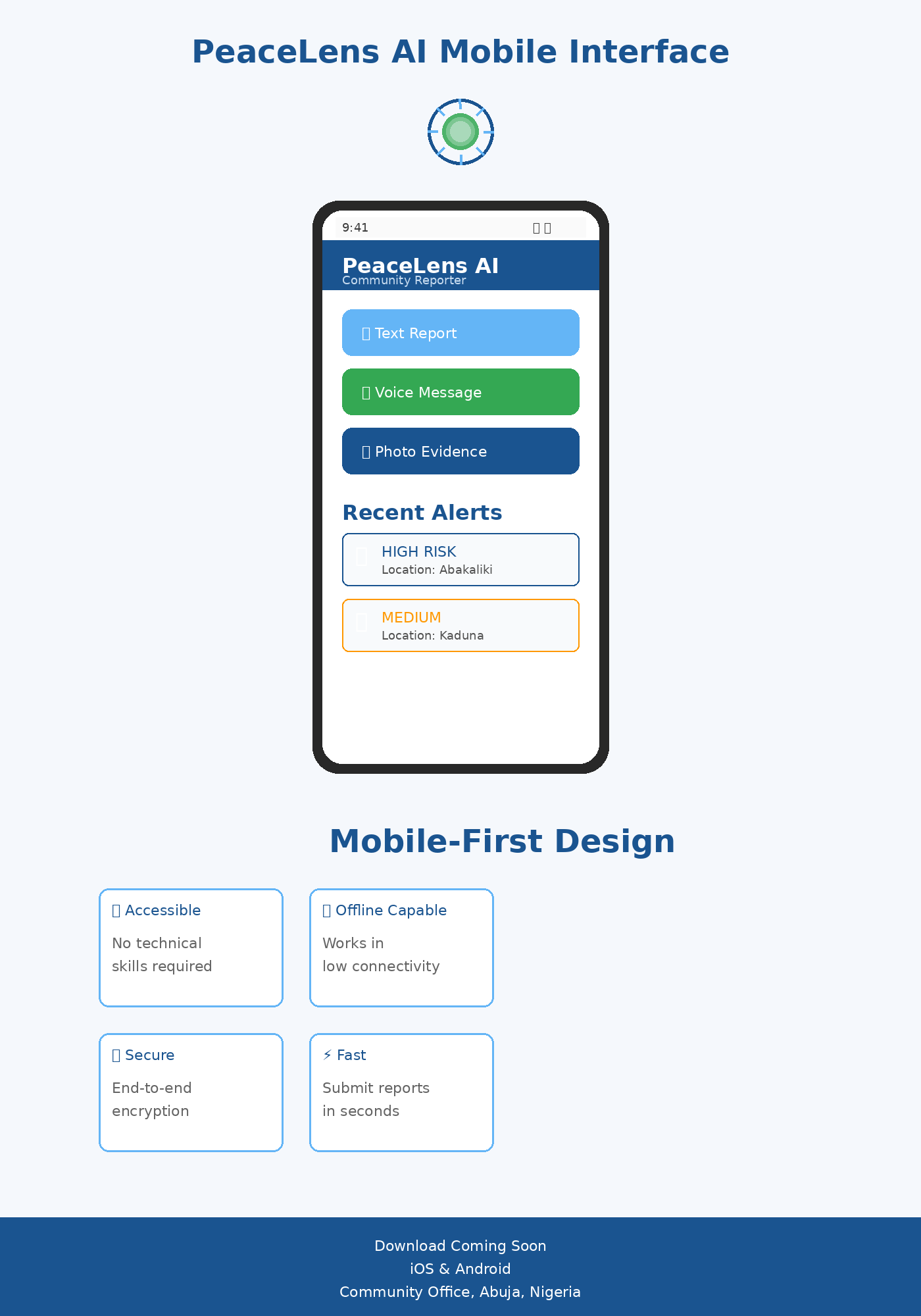
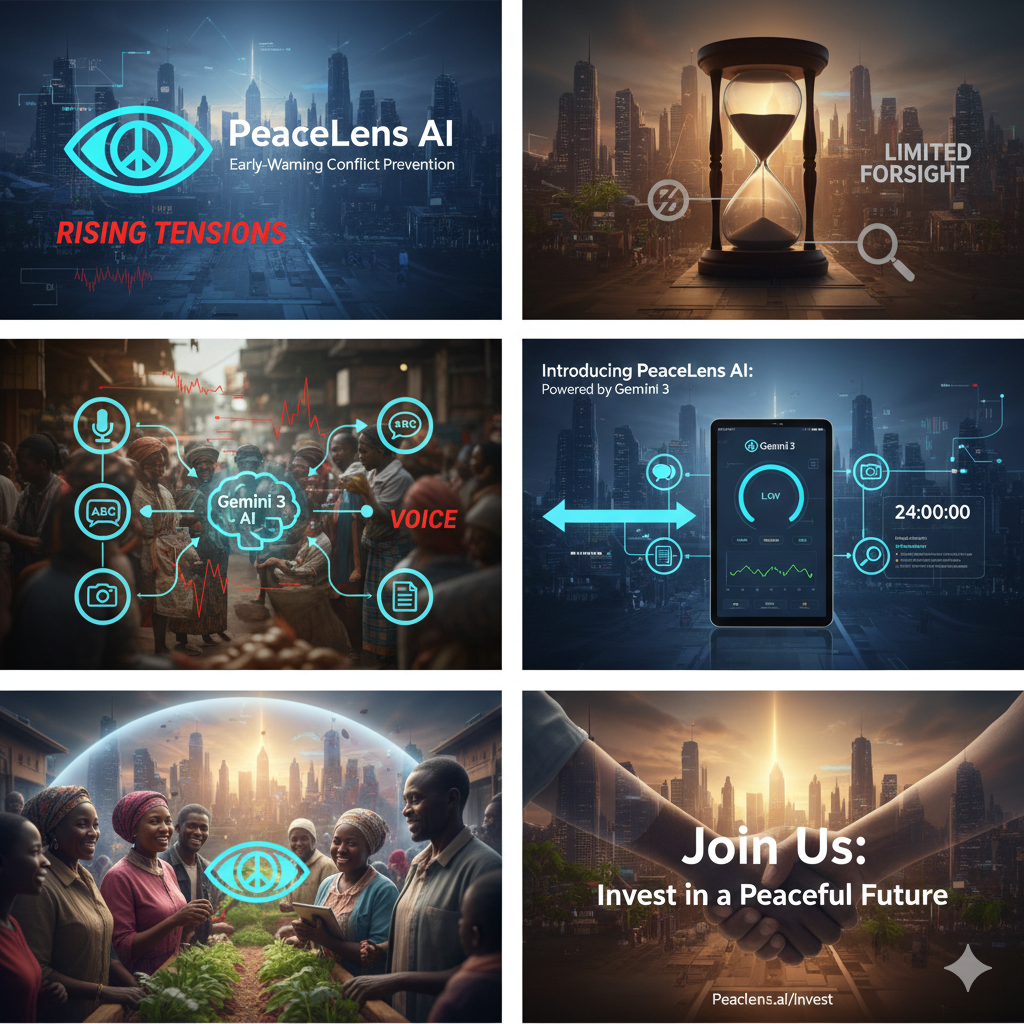
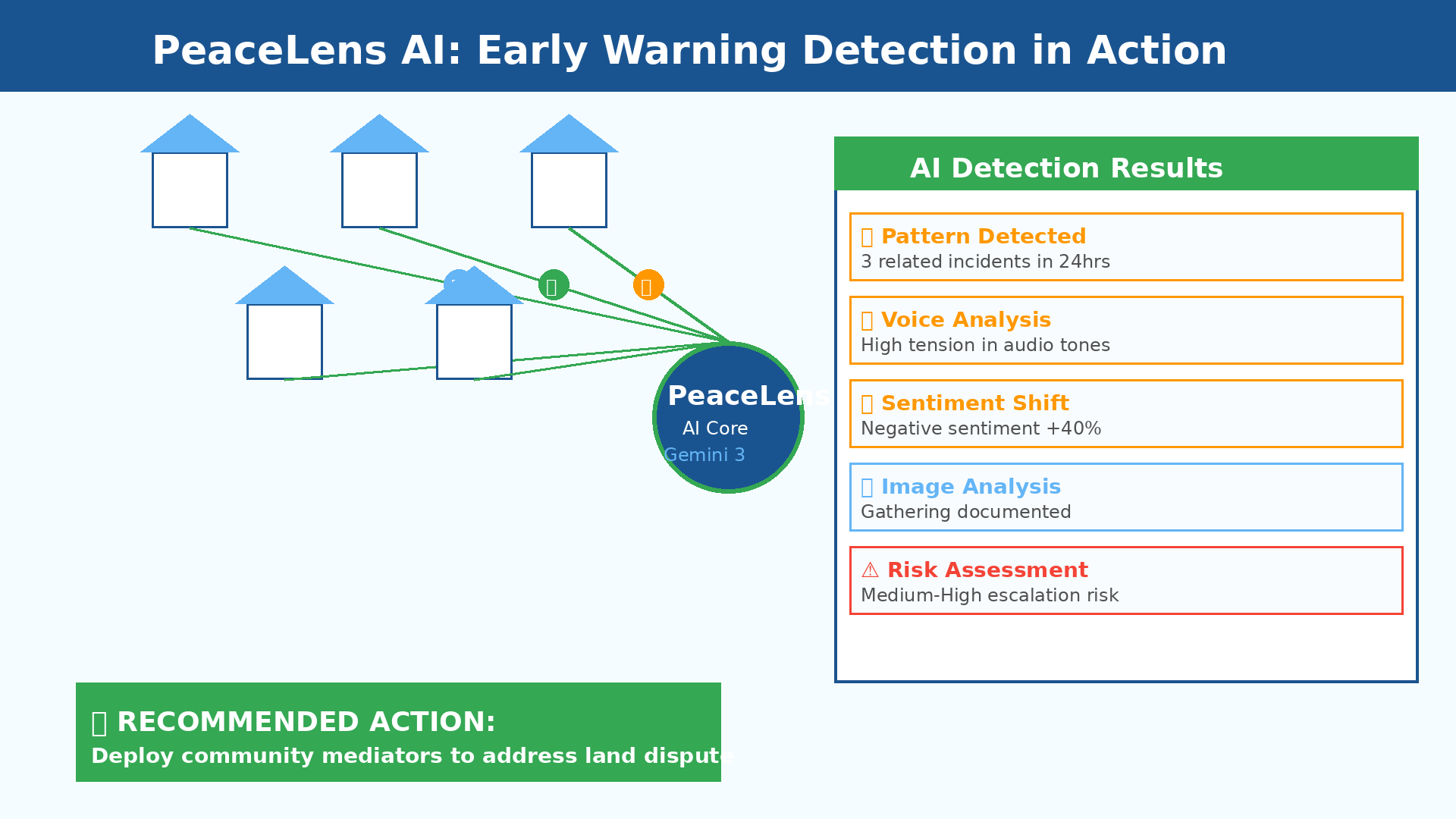
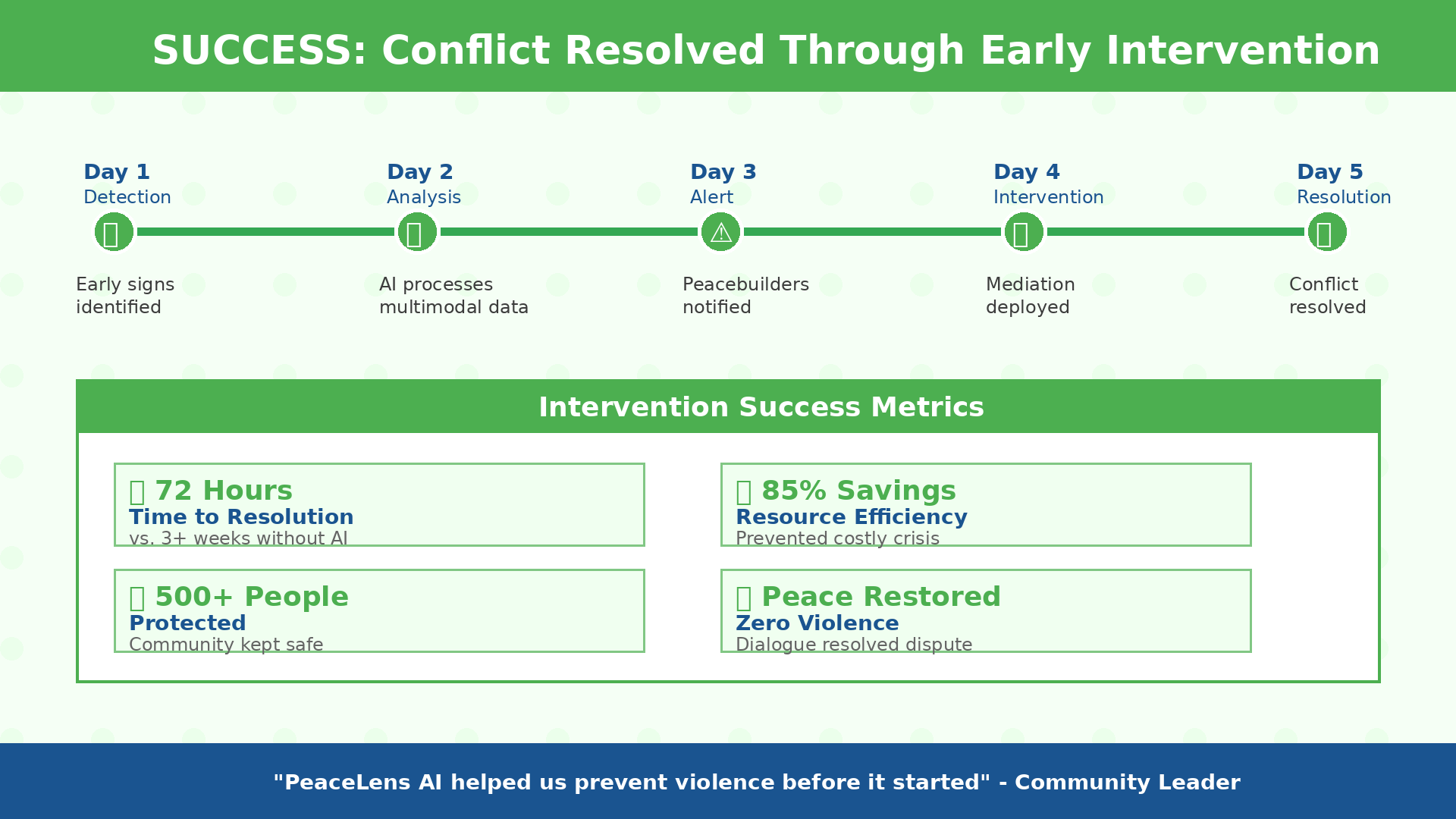
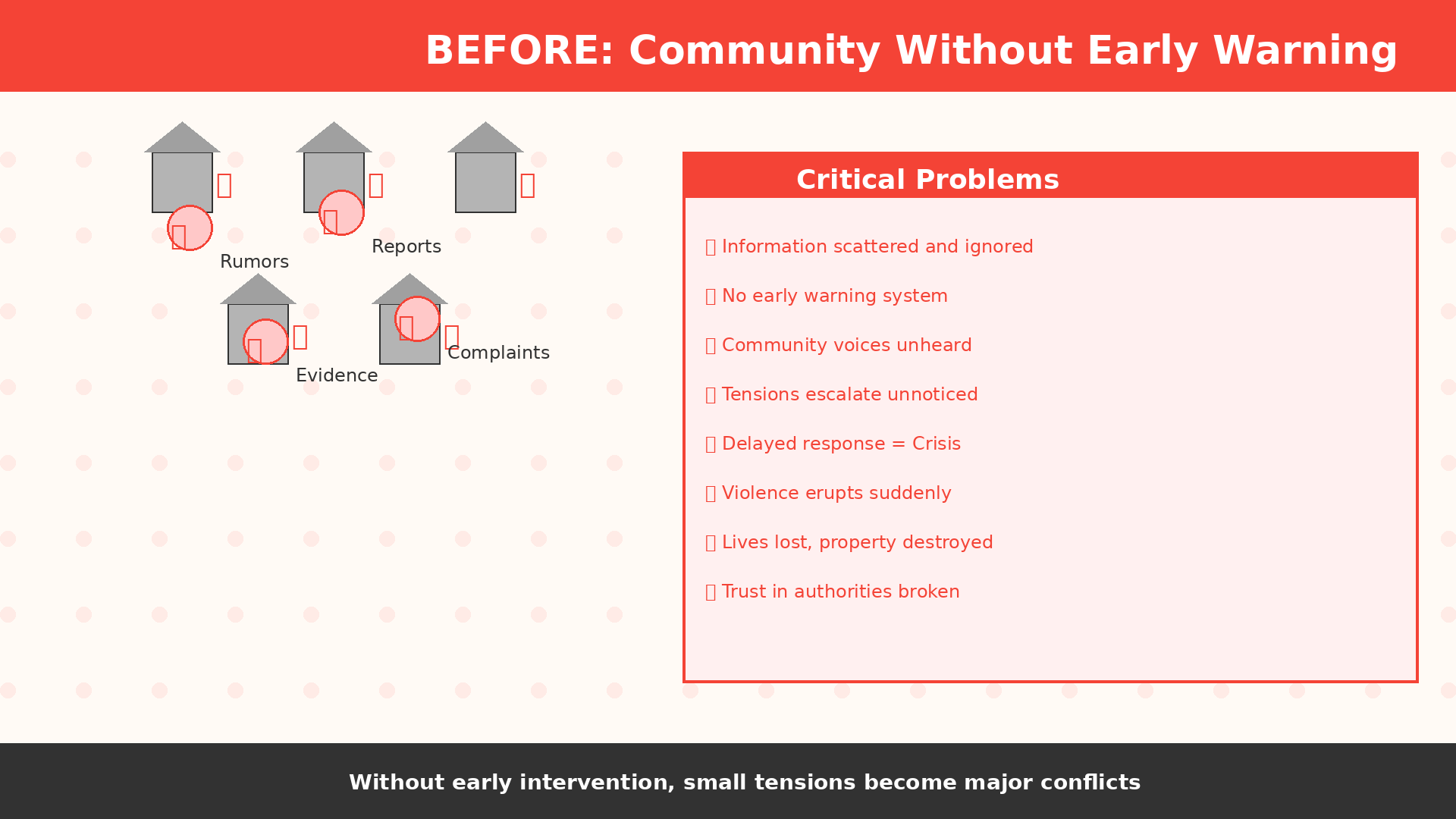
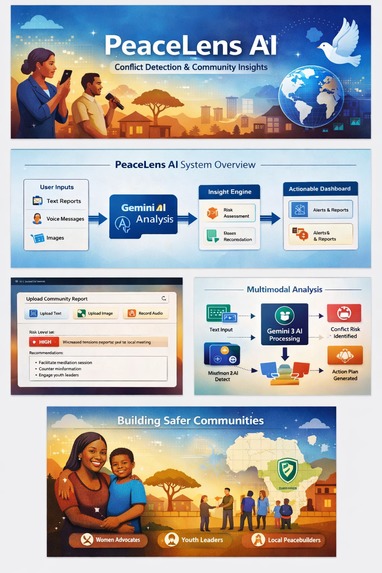
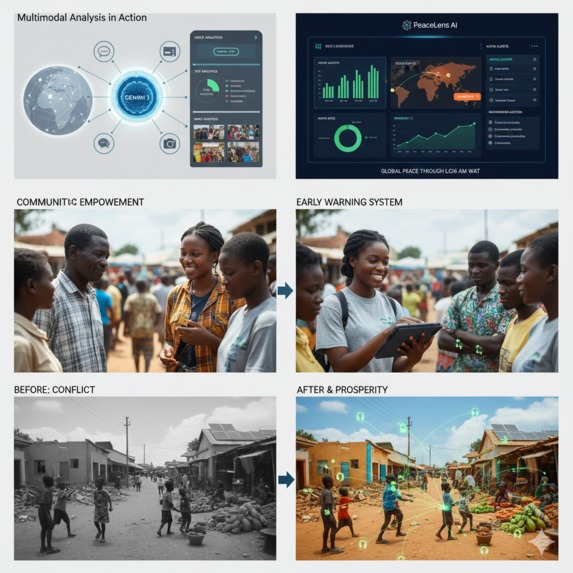
PeaceLens AI was inspired by a simple but urgent reality: many conflicts and social crises do not start suddenly — they grow quietly through unresolved grievances, misinformation, fear, and unheard community voices. In many communities across Africa, especially in underserved and conflict-prone areas, early warning signs exist in messages, voice notes, photos, and reports shared by everyday people. Unfortunately, these signals are often scattered, unstructured, and ignored until it is too late. PeaceLens AI was created to change that. The project uses Gemini 3’s multimodal reasoning capabilities to transform raw community inputs into actionable peacebuilding intelligence. By analyzing text, voice, and image data, PeaceLens AI helps identify early indicators of tension, misinformation, or risk, and generates clear, context-aware insights that community leaders, peacebuilders, and organizations can act on. What We Learned Building PeaceLens AI taught us that: Multimodal AI is far more powerful than text-only systems for real-world social challenges. Context matters — especially in peace and conflict scenarios where nuance is critical. AI should support human decision-making, not replace it. We also learned how to design AI workflows that are ethical, explainable, and sensitive to community realities. How We Built It PeaceLens AI is built as a lightweight web platform with a modular AI backend. User Input Layer Users submit community reports as: Text descriptions Voice messages Images (e.g. scenes, posters, incidents) AI Intelligence Layer (Gemini 3) Gemini 3 is used to: Interpret multimodal inputs Detect patterns and early warning signals Reason over social and contextual factors Generate peacebuilding recommendations and risk summaries Insight & Recommendation Engine The system structures Gemini’s output into: Risk levels Key indicators Suggested intervention actions Community-friendly explanations Frontend Interface A simple, accessible interface presents insights clearly for non-technical users. Challenges We Faced Designing prompts that balance sensitivity and accuracy in conflict-related analysis Structuring multimodal inputs into consistent AI workflows Avoiding oversimplification of complex social issues Ensuring the system supports ethical and responsible AI use Each challenge strengthened the final solution and improved how Gemini 3 was integrated meaningfully into the product. Impact & Vision PeaceLens AI is designed to support: Peacebuilders and NGOs Women and youth advocacy groups Community leaders and local organizations Our long-term vision is to scale PeaceLens AI into a trusted early warning and peace intelligence tool across Africa and beyond, helping communities move from reaction to prevention.
Built With
- claude-api-(anthropic)
- css3
- google-fonts
- html5
- javascript
- svg

Log in or sign up for Devpost to join the conversation.