-
-
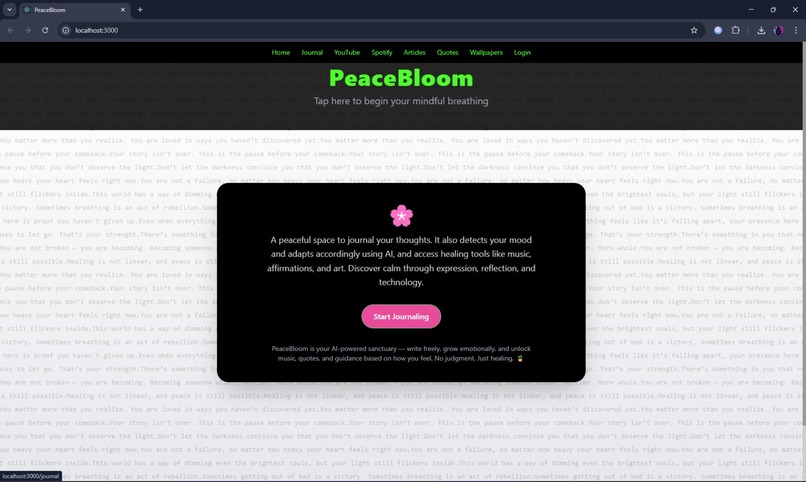
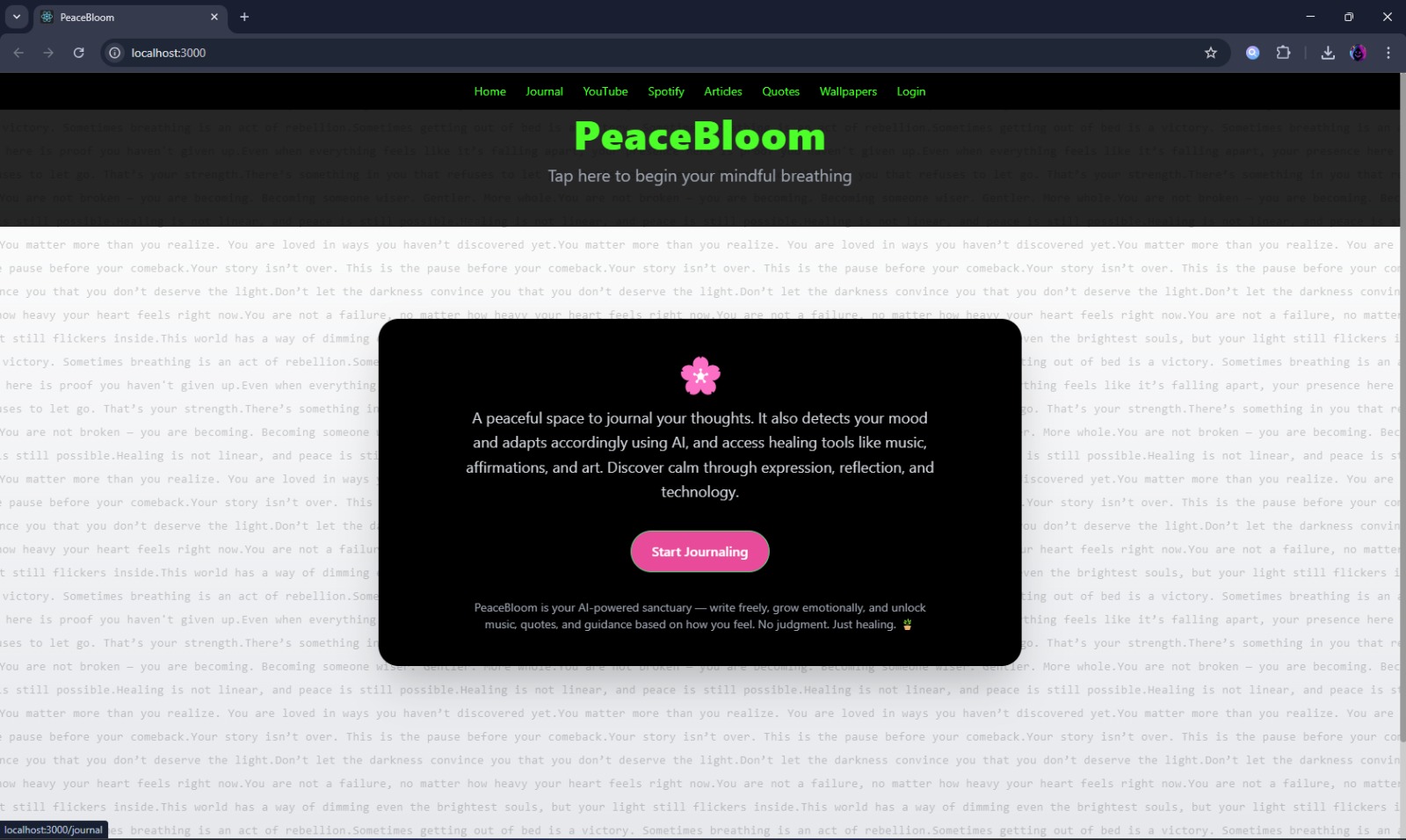
Home Page
-
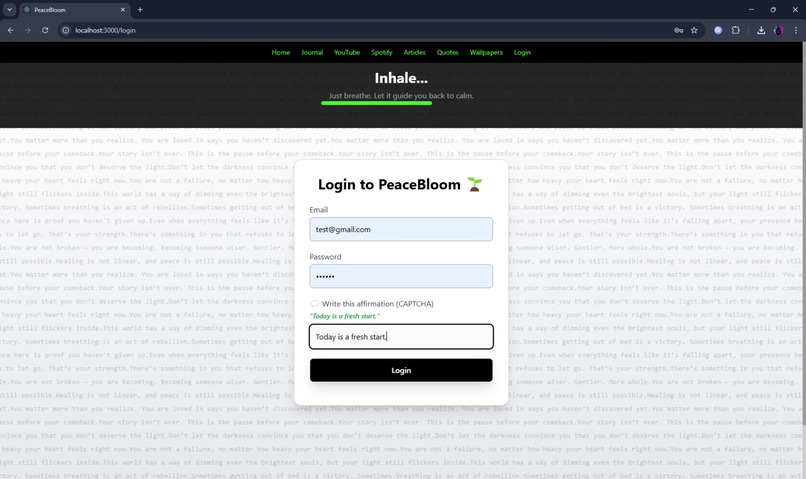
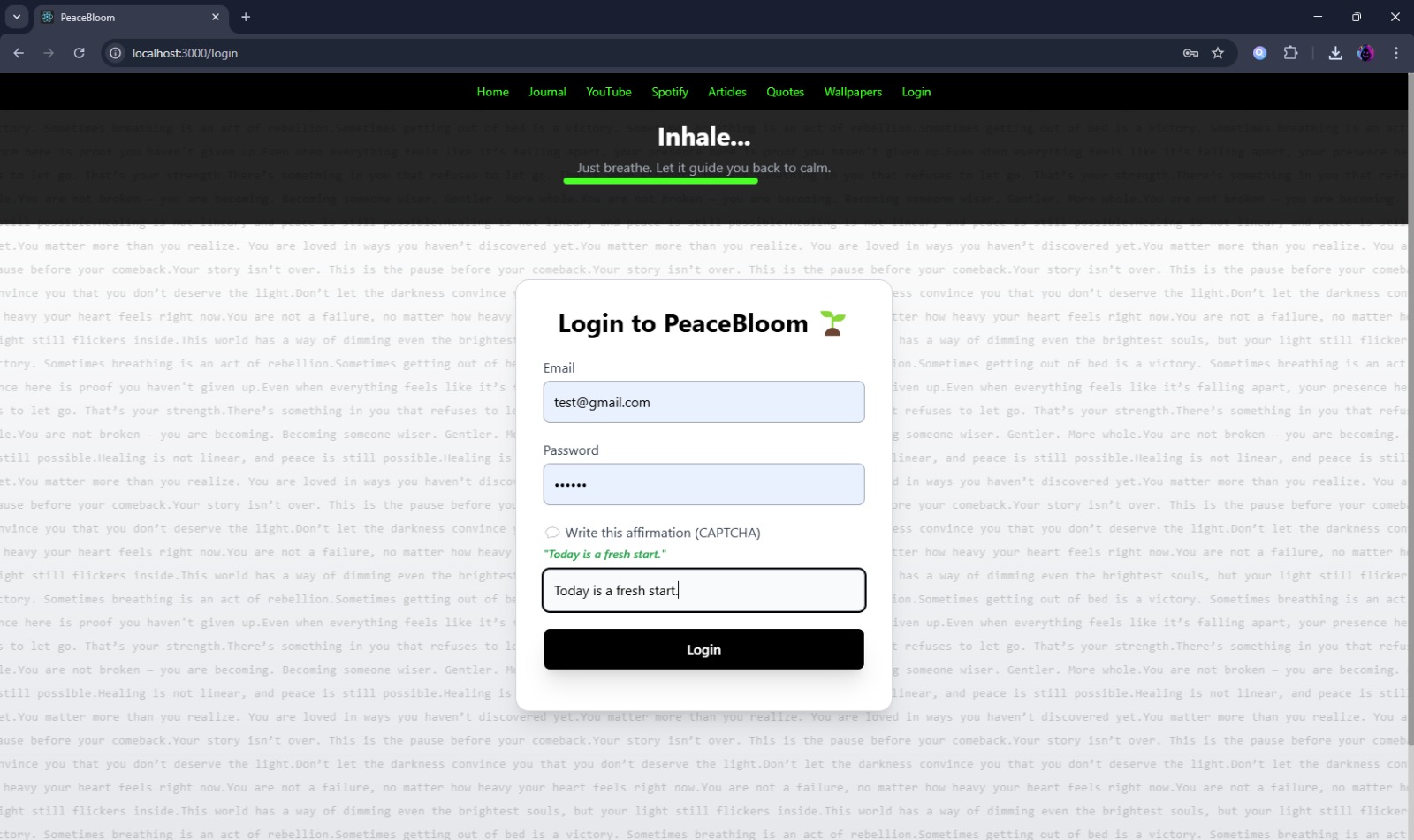
Login Page with Positive Affirmation CAPTCHA
-
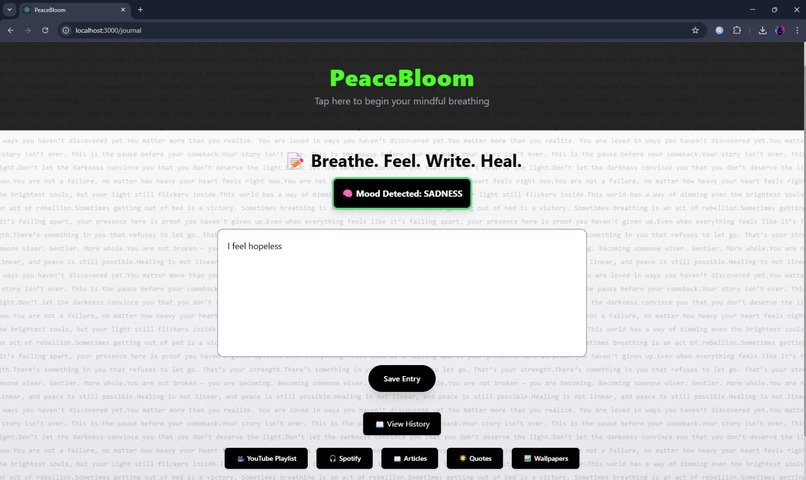
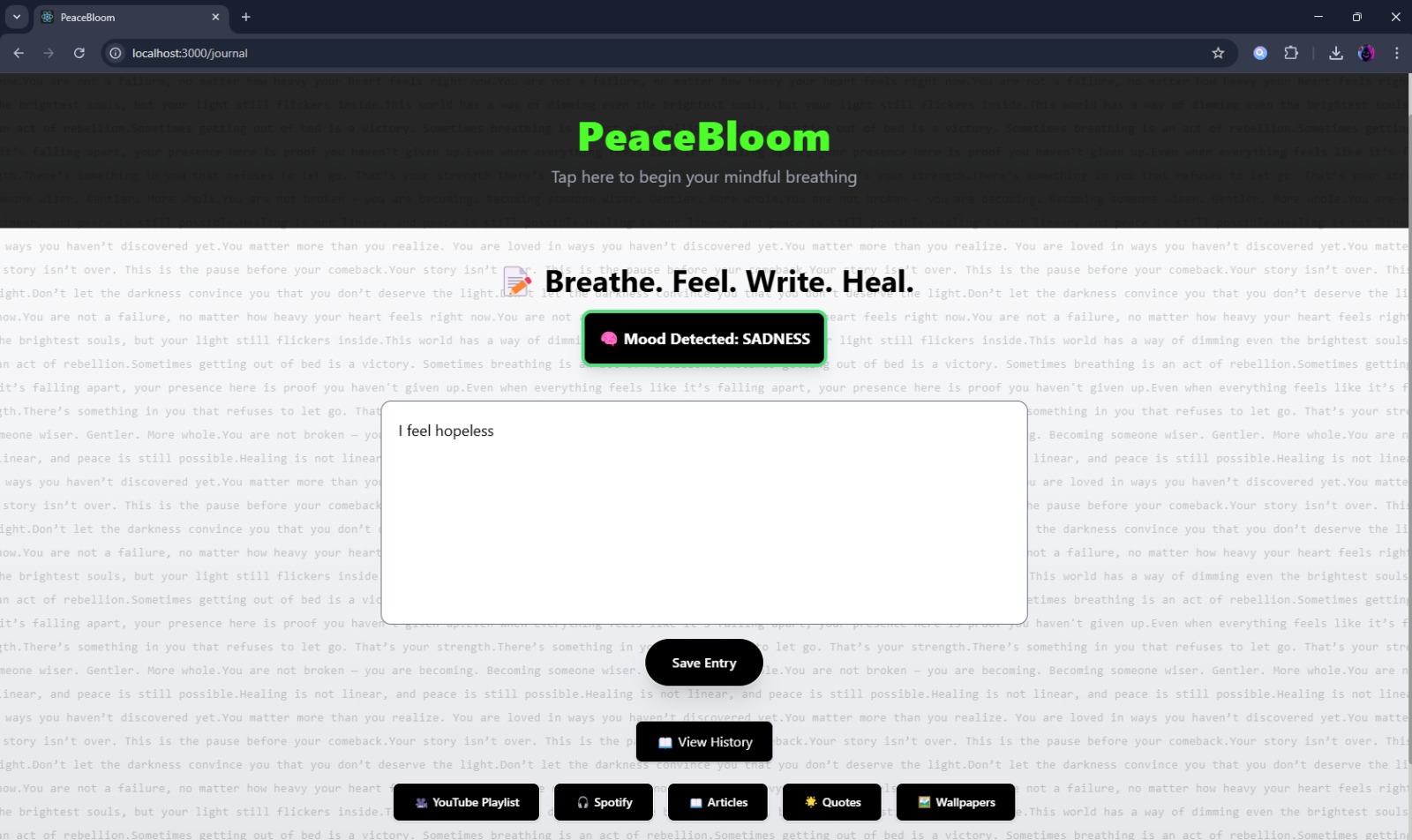
Journaling Page
-
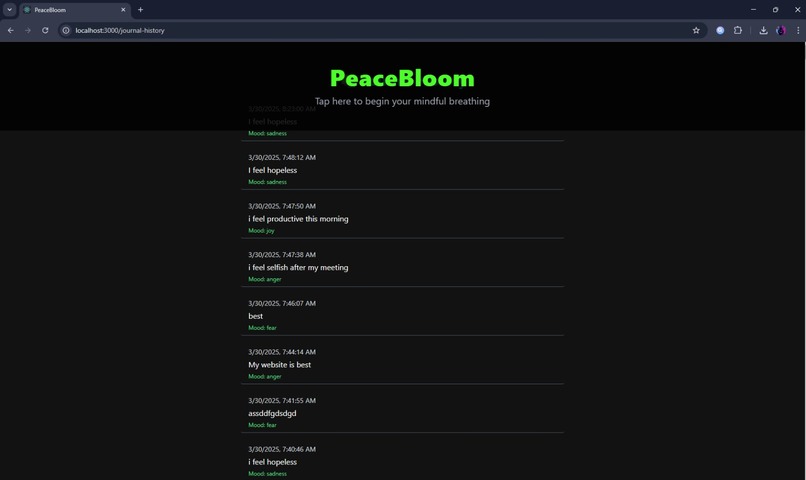
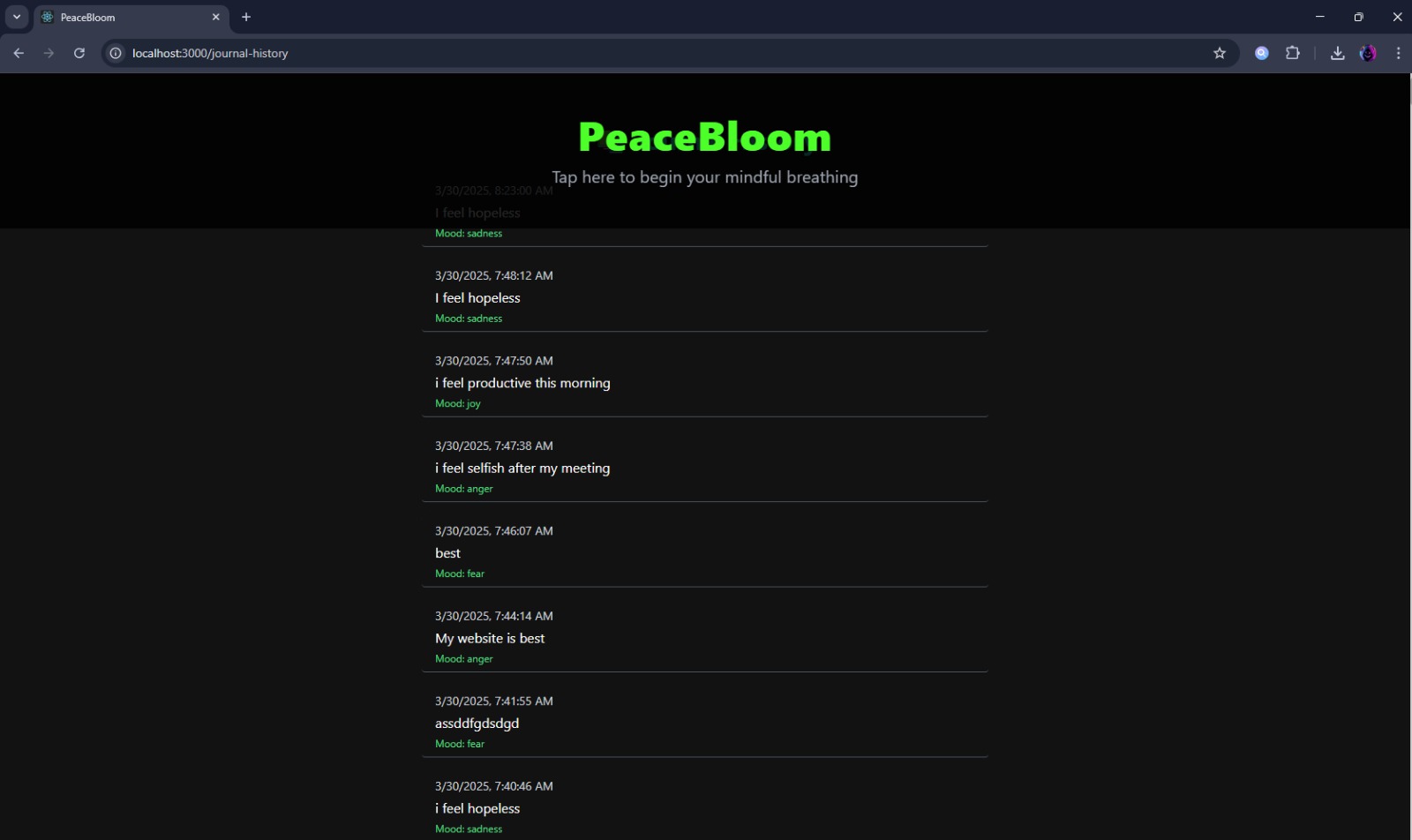
Journal History
-
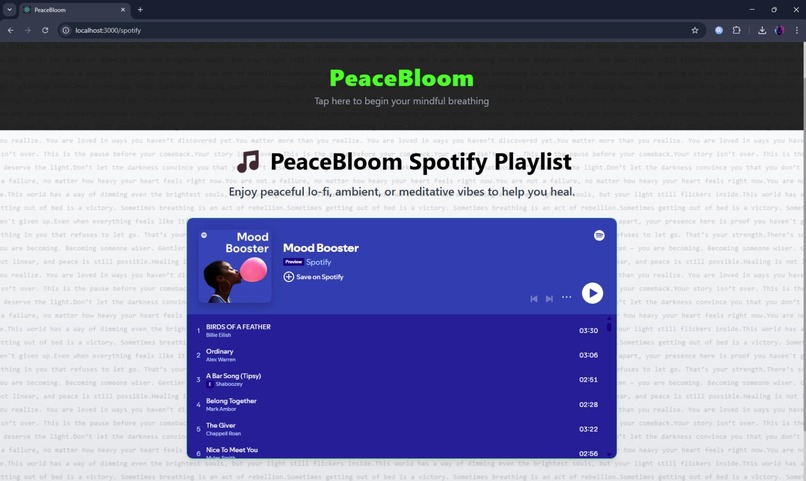
Personalised Spotify Page
-
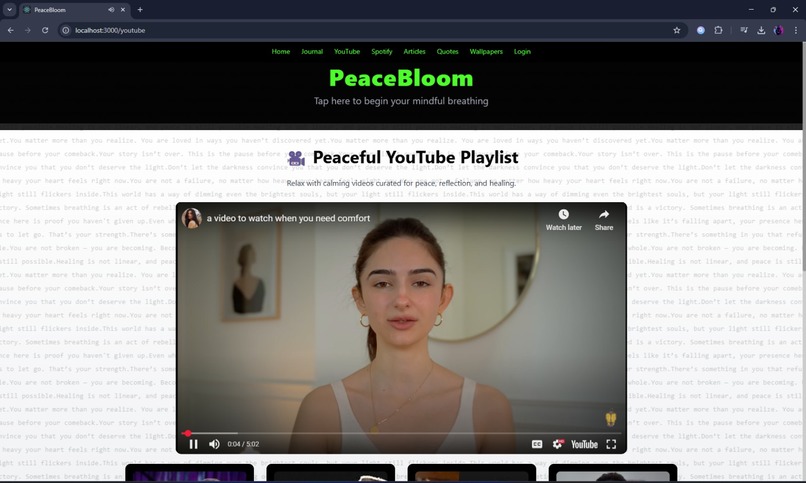
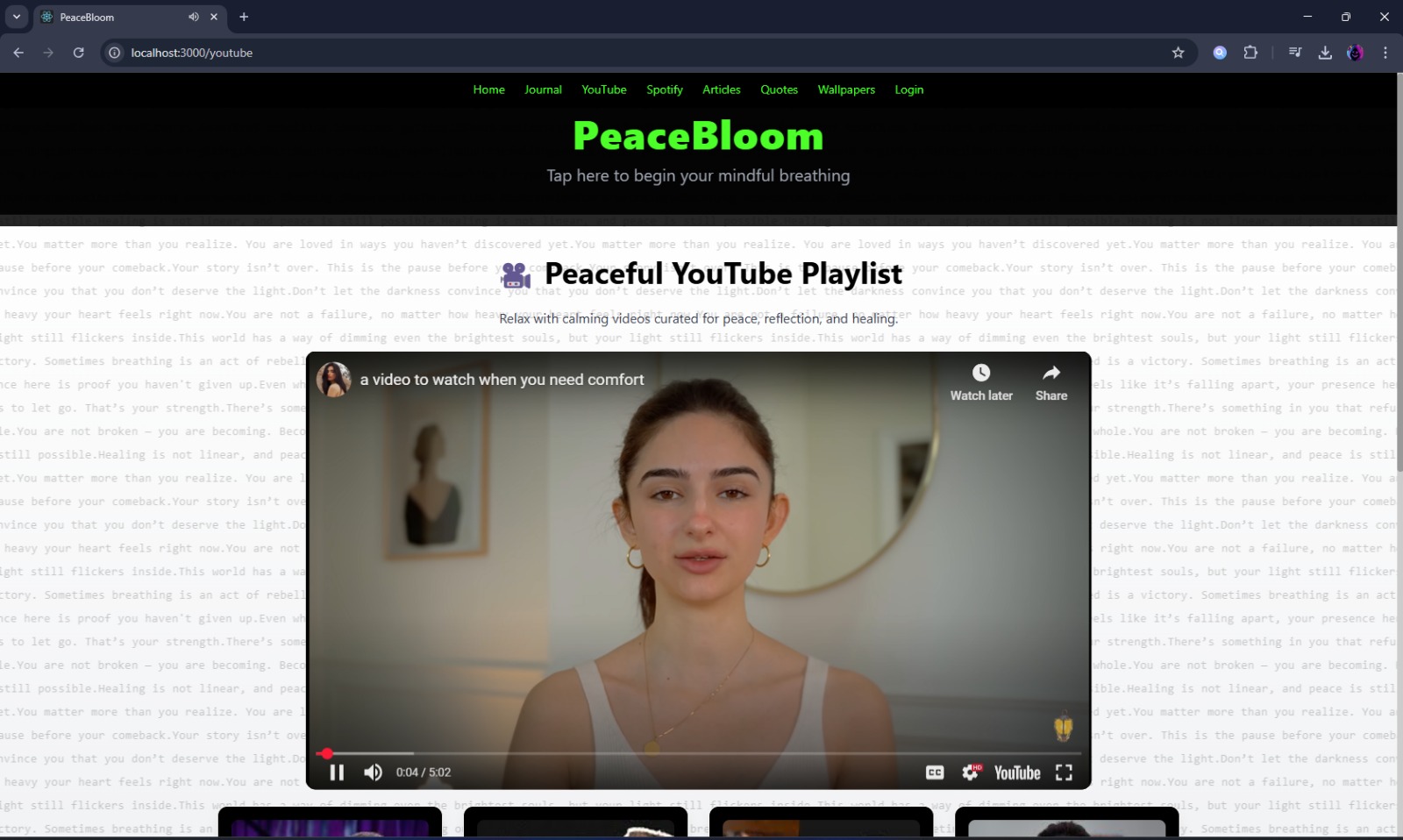
Personalised YouTube Video
-
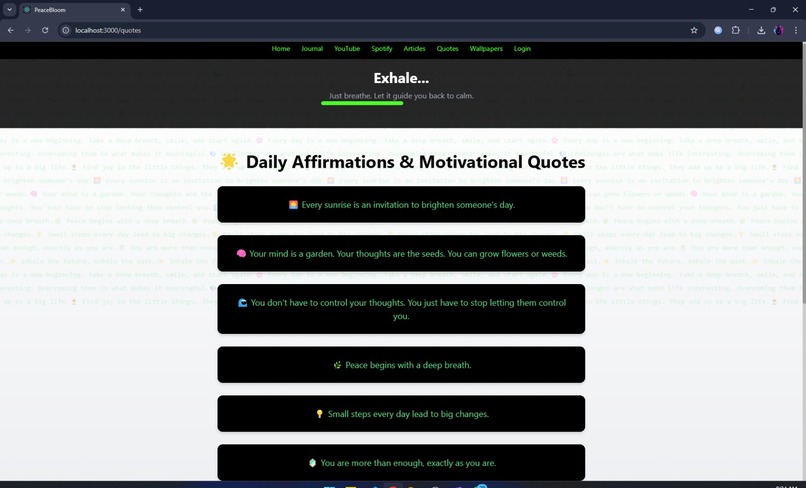
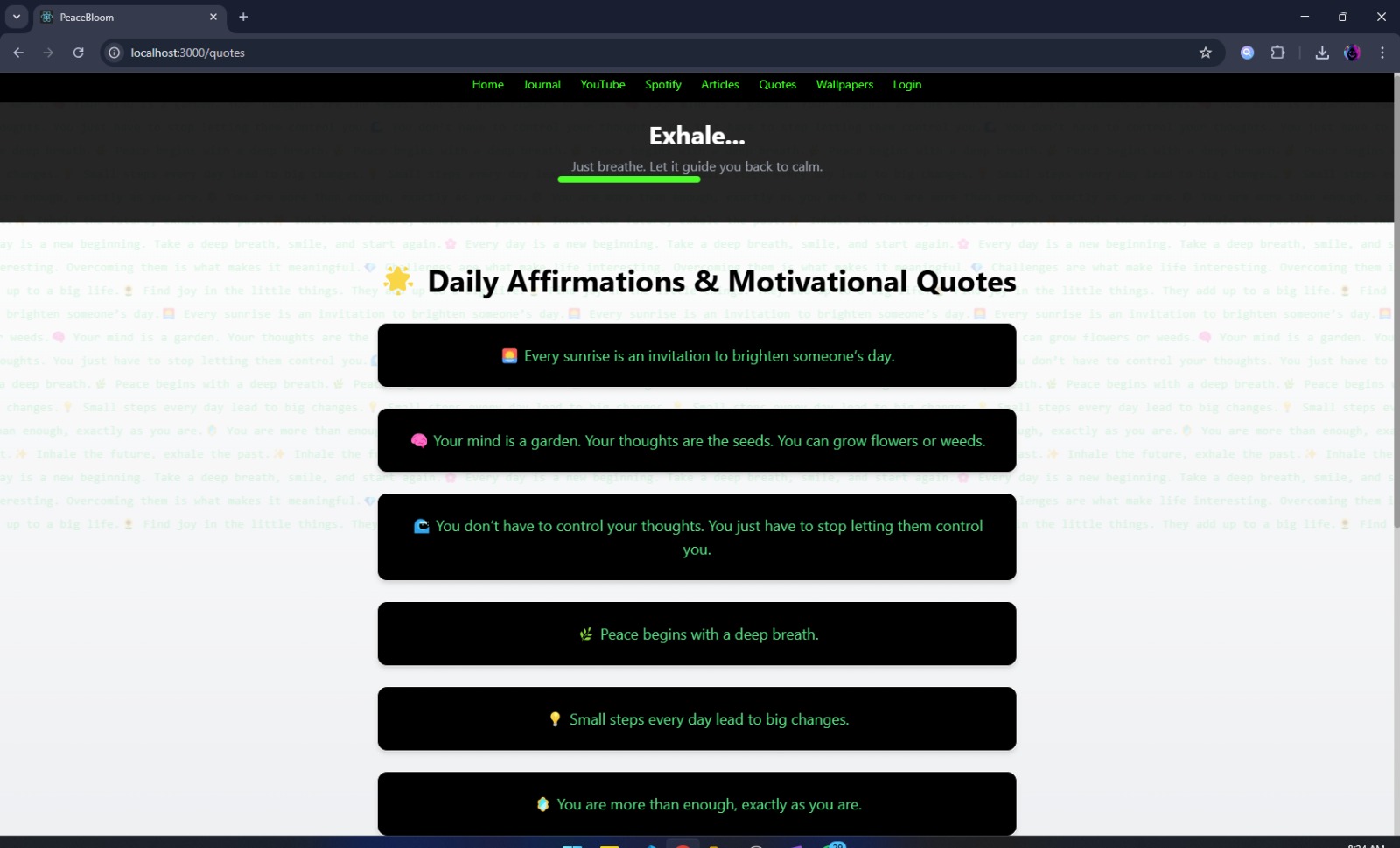
Quotes
-
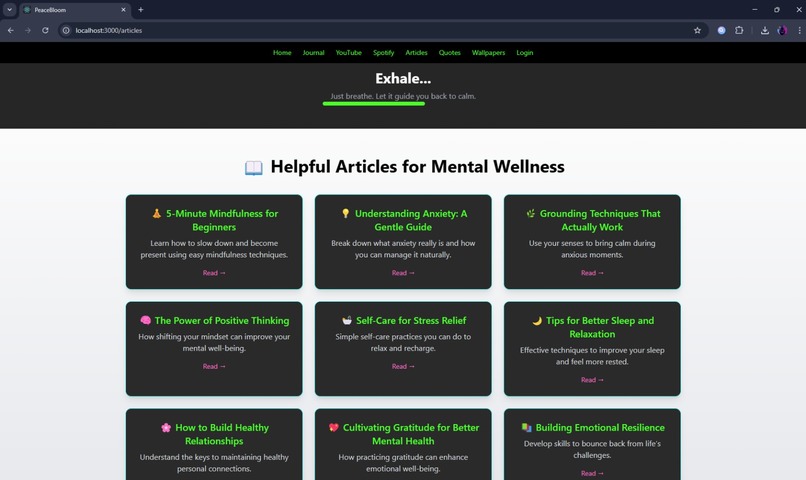
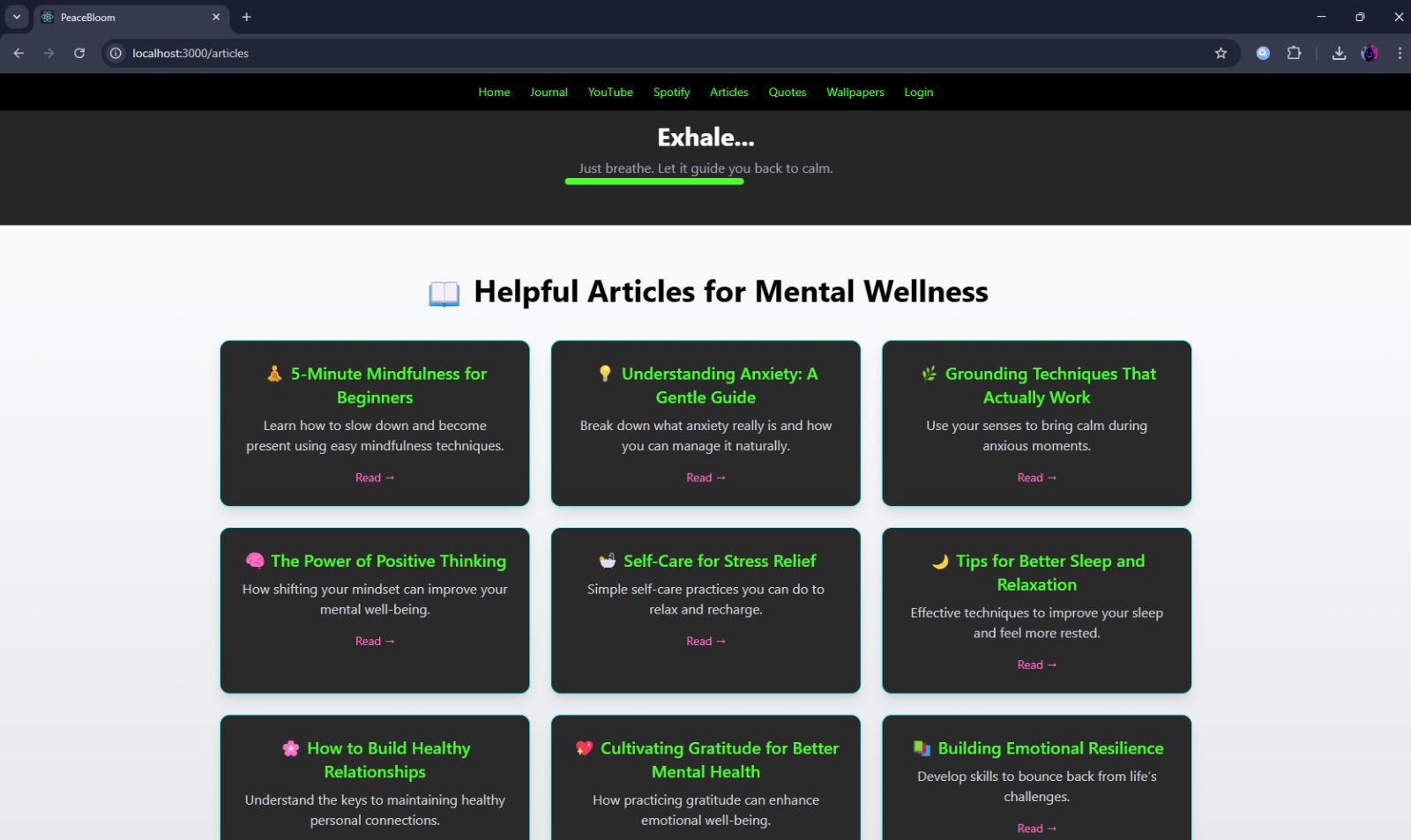
Helpful Articles for Mental Wellness
-
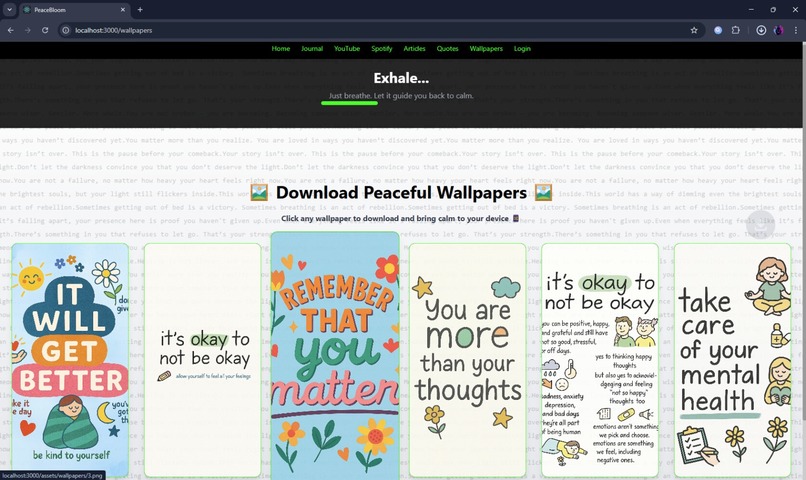
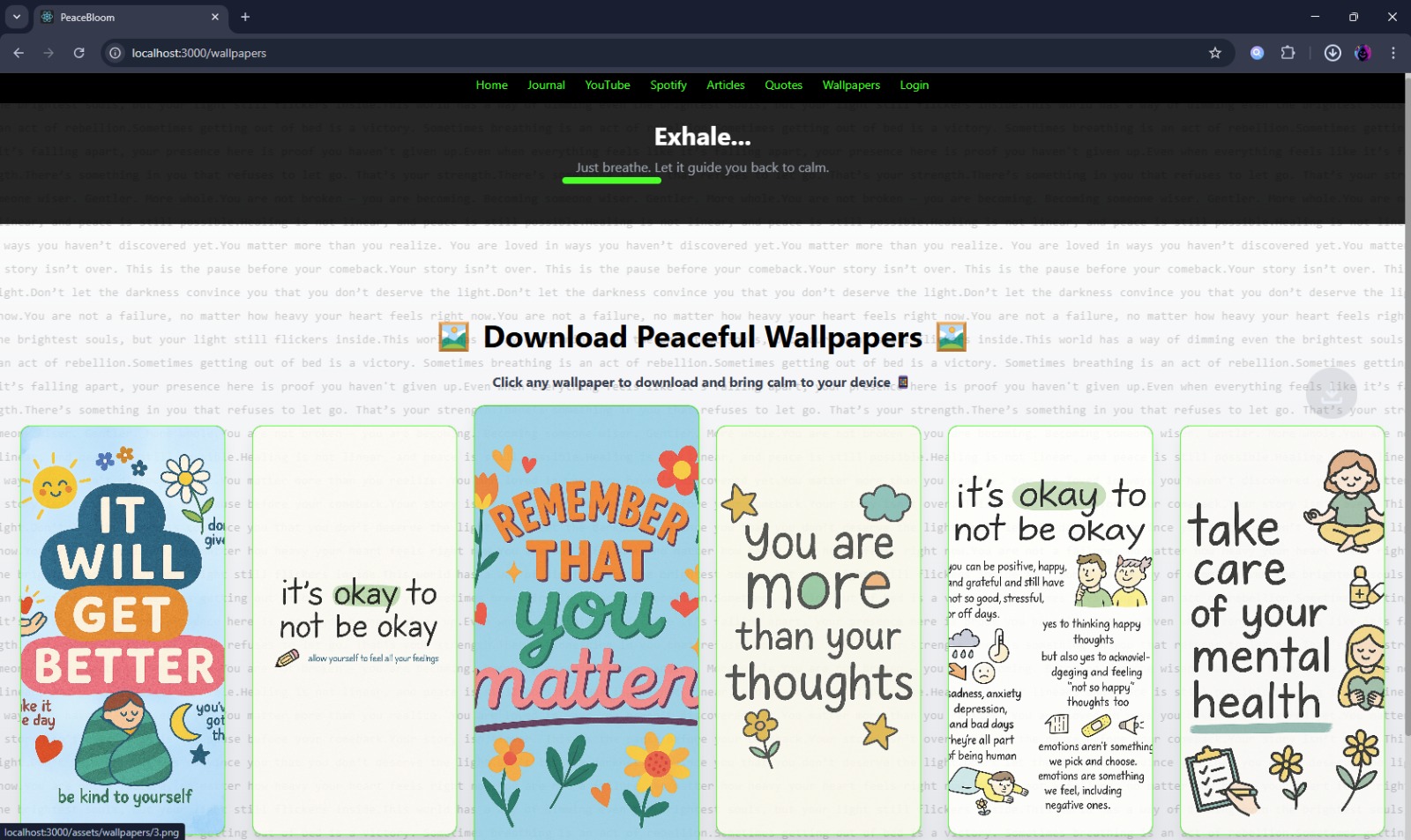
Wallpaper Recommendations

PeaceBloom: Companion for Emotional Well-being
Inspiration
The inspiration behind PeaceBloom came from a desire to help people better understand their emotions and promote mindfulness in their daily lives. With mental health becoming an increasingly important focus, we wanted to create a tool that could offer users real-time insights into their emotional states and encourage self-awareness. AI and machine learning offer powerful ways to analyze emotional tones, and that’s how PeaceBloom was born.
What I Learned
Building PeaceBloom taught me valuable lessons in AI, machine learning, and frontend development. From fine-tuning neural networks with TensorFlow and Keras to handling backend services with Flask, the project deepened my understanding of how different technologies can be integrated. On the frontend, I honed my skills with React and Tailwind CSS, ensuring a smooth and intuitive user experience.
How I Built It
- Backend: I used Flask for routing and server-side logic, and TensorFlow with Keras to build the text emotion classifier model. The model was trained on labeled emotional datasets, allowing it to predict the emotional tone of text input.
- Frontend: The user interface was built with React and styled using Tailwind CSS, ensuring a modern, responsive, and user-friendly experience. The React app communicates with the Flask backend via API calls, allowing users to input text and receive emotion-based feedback in real-time.
- Integration: The classifier was deployed using Flask APIs, allowing the React frontend to interact with the machine learning model efficiently.
Challenges I Faced
- Model Accuracy: One of the main challenges was improving the accuracy of the emotion classifier. Finding the right dataset and fine-tuning the model to recognize nuanced emotions took considerable effort.
- Frontend-Backend Integration: Ensuring smooth communication between the React frontend and Flask backend posed some challenges, especially when dealing with asynchronous requests and responses.
- Performance Optimization: Managing the performance of the machine learning model, especially when scaling to multiple users, was a learning curve. Balancing responsiveness with processing time was crucial to maintain a good user experience.
Conclusion
PeaceBloom is a step toward integrating AI into mental health tools, offering users a way to better understand and reflect on their emotions. While challenges like model accuracy and optimization remain, the project represents a powerful fusion of technology and mindfulness.


Log in or sign up for Devpost to join the conversation.