Inspiration
The seed for Peace Piece was planted from a deep belief in the transformative power of art and the urgent need for greater empathy in our world. We observed how easily divisions form and how often marginalized voices are unheard. Simultaneously, we saw the incredible potential of digital tools to connect people globally. We were particularly inspired by the collaborative spirit of community murals and the profound emotional resonance of personal narratives. We asked: What if we could combine these forces, allowing diverse individuals to collectively express shared human experiences and bridge understanding, piece by piece? The idea of creating "digital mosaics" of empathy, where every stroke contributes to a larger, more harmonious picture, became our driving force.
What it does
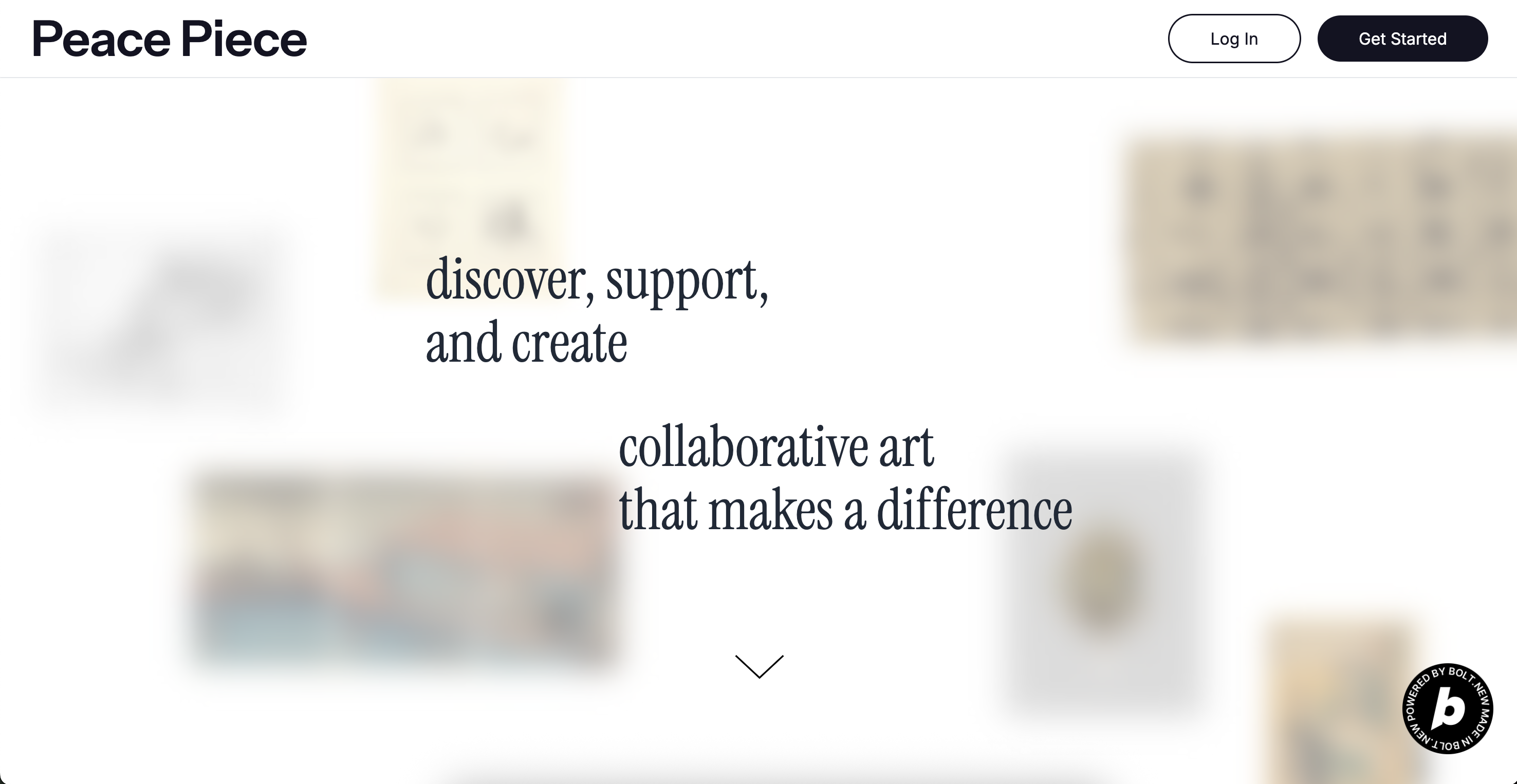
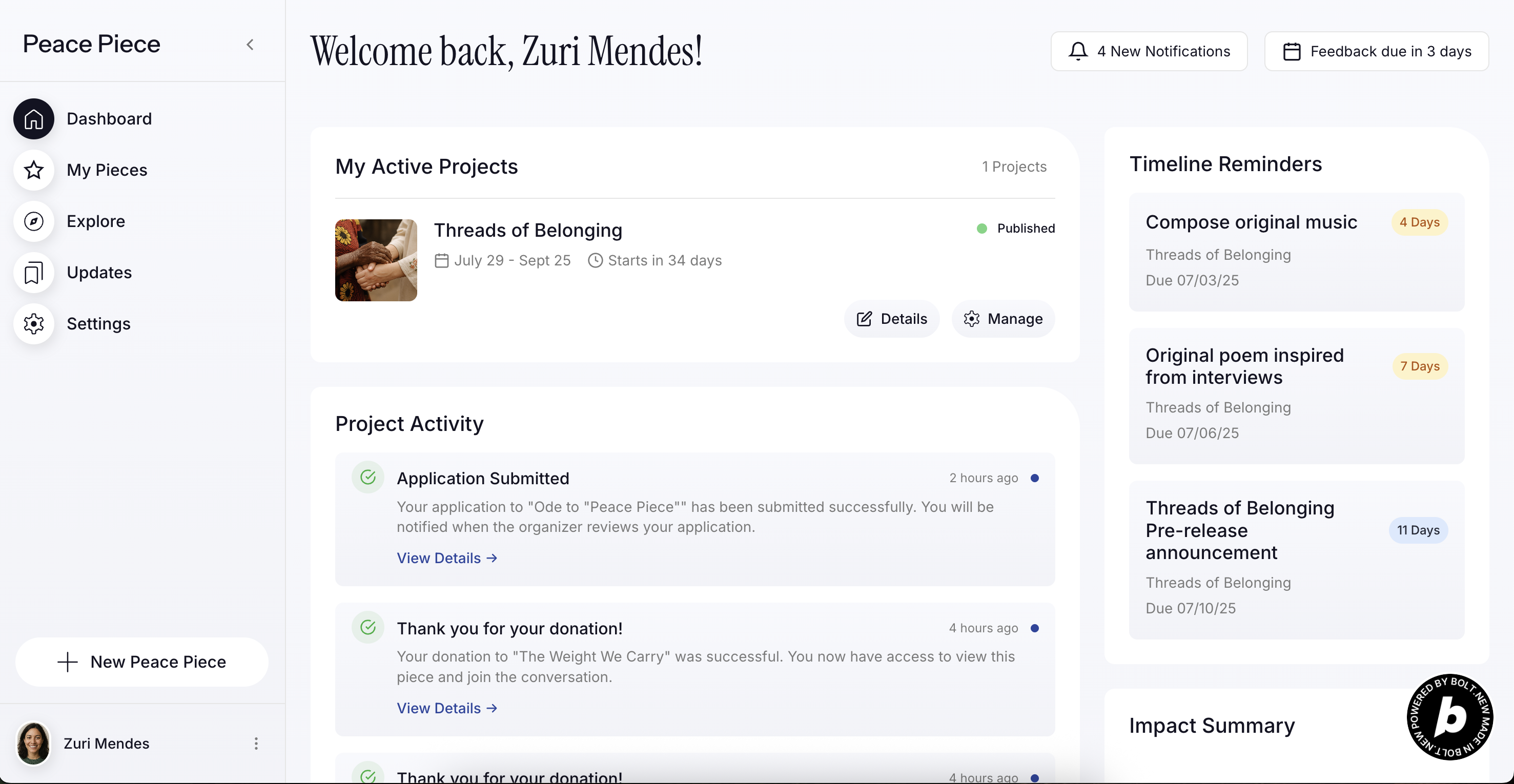
Peace Piece is a collaborative web application designed to foster empathy and social change through collective digital art creation. It connects "Organizers" who initiate projects focused on specific social causes with "Contributing Artists" from diverse backgrounds. Organizers define a project's theme, artistic vision, and structure. Artists apply or are invited to contribute their unique "pieces" – be it a digital painting, a photograph, a piece of poetry, or a soundscape – all guided by the project's overall vision. The app provides dedicated workspaces for communication, resource sharing, and submission management, culminating in a public "Peace Piece Gallery" showcasing the completed, impactful artworks and crediting every contributor.
How we built it
We built Peace Piece as a modern web application, prioritizing a responsive and intuitive user interface. The frontend was developed using Svelte, leveraging its component-based architecture for a dynamic and interactive experience. For backend functionality and payments functionality, we integrated Supabase and Stripe. This allowed us to manage user profiles, project data, applications, submissions, and facilitate collaboration and fundraising within project workspaces. We focused on clear data structures to handle the complexities of collaborative art, including version control for submissions and robust notification systems.
Challenges we ran into
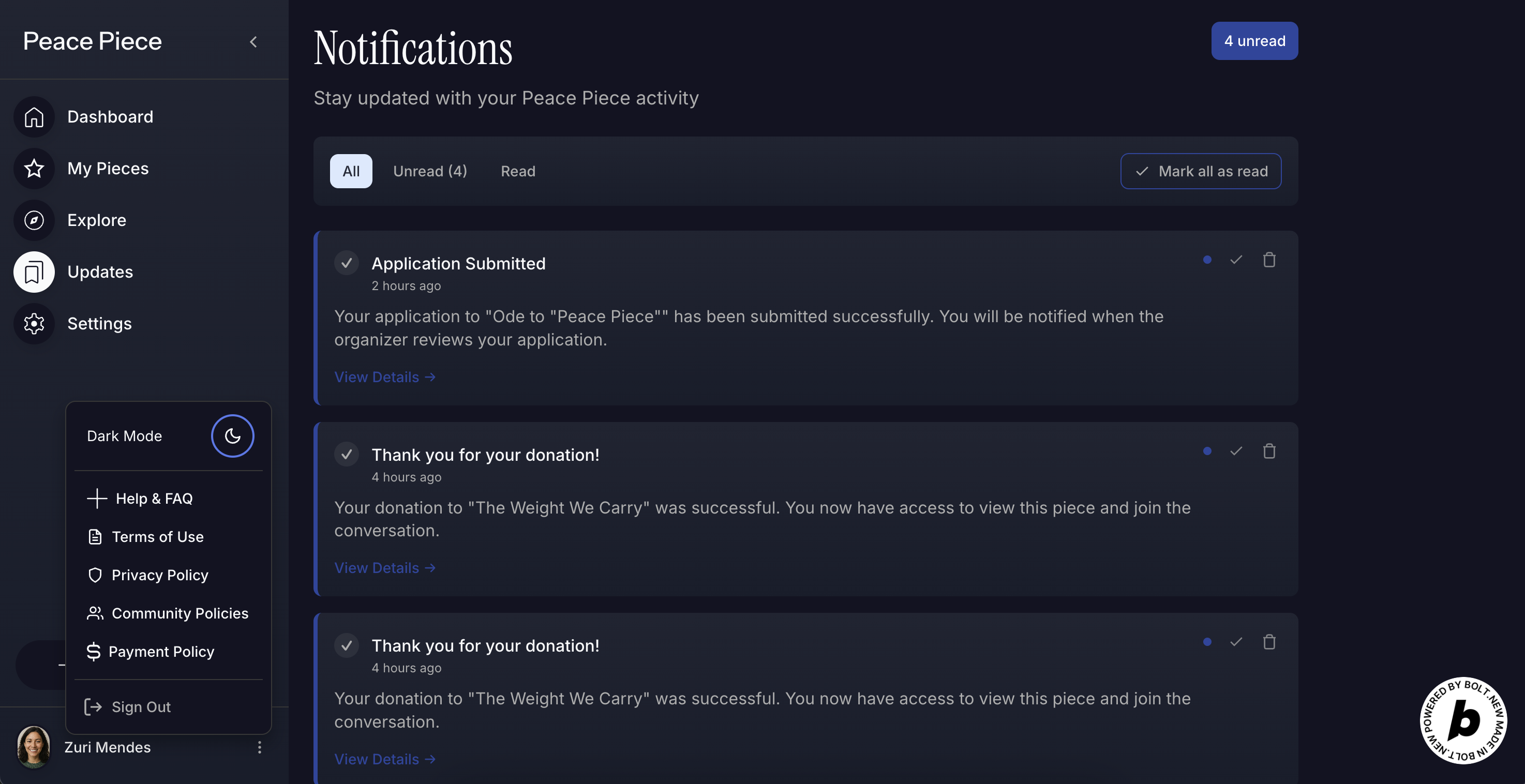
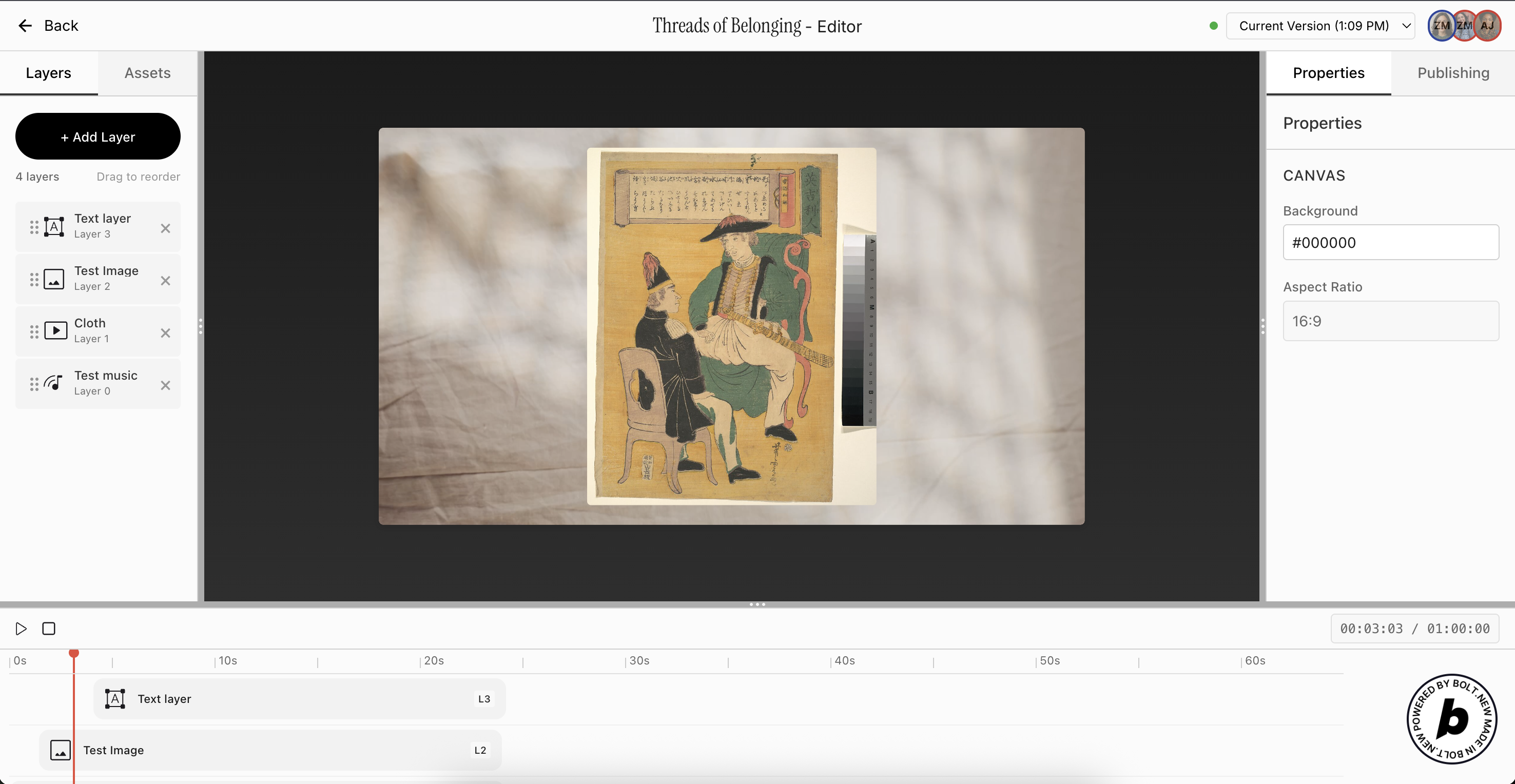
One of the primary challenges was designing a flexible yet structured collaboration workflow that could accommodate various artistic mediums and project types. Balancing creative freedom for artists with the need for a cohesive final "Peace Piece" required careful thought in defining project guidelines and feedback mechanisms. Ensuring seamless real-time updates, notifications, and video export generation were also technical hurdles. Furthermore, creating an intuitive portfolio system for artists and an effective discovery mechanism for organizers to find the right talent proved to be a complex UX design task.
Accomplishments that we're proud of
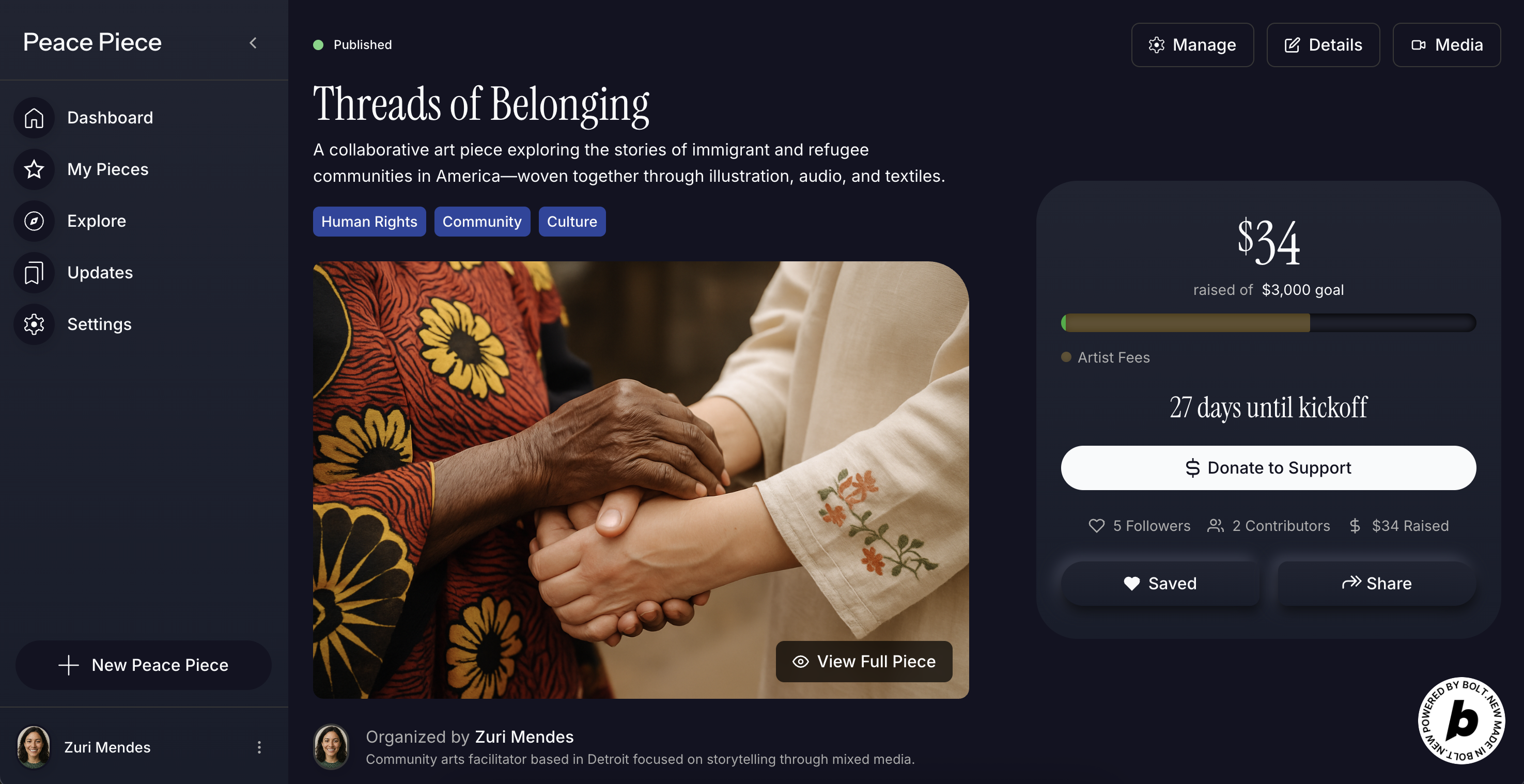
We are incredibly proud of the core collaborative workspace, which successfully brings organizers and artists together in a structured yet creative environment. The ability for organizers to clearly define their vision and for artists to easily submit their work and collaborate with others. We're also proud of the initial "Peace Piece Detail View," which beautifully showcases the prospective work, inspiring supporters to donate, and prominently credits all collaborators, giving their collective voice a platform. Seeing the first few simulated "Peace Pieces" come together, even in our development environment, has become a powerful moment of imagining the potential for good.
What we learned
We learned the critical importance of clear communication and robust moderation tools in any collaborative social platform. While fostering empathy is the goal, providing clear guidelines and mechanisms for conflict resolution or clarifying artistic direction is essential. We also gained deeper insights into the diverse needs of artists from different disciplines and how to best support their creative process within a structured framework. Finally, the iterative design process, constantly refining user flows based on testing, and refactoring to smaller chunks of code that the generative AI can continue to manage proved invaluable in learning how to build with Bolt.
What's next for Peace Piece
Our immediate next steps for Peace Piece include completing the membership and payout settings, video export capabilities, and building a "Recommendation Engine" to more intelligently match organizers with suitable artists, potentially incorporating AI for stylistic analysis. We also plan to develop more advanced in-app tools for artistic collaboration, such as shared digital canvases or integrated sketching functionalities. Expanding the "Peace Piece Gallery" with more interactive elements and potentially offering print-on-demand services for completed artworks are also on the roadmap. Long-term, we envision partnerships with non-profit organizations and educational institutions as verified sponsors to bring Peace Piece to a wider audience and amplify its social impact.
Built With
- astro
- figma
- stripe
- supabase
- svelte


Log in or sign up for Devpost to join the conversation.