-
-
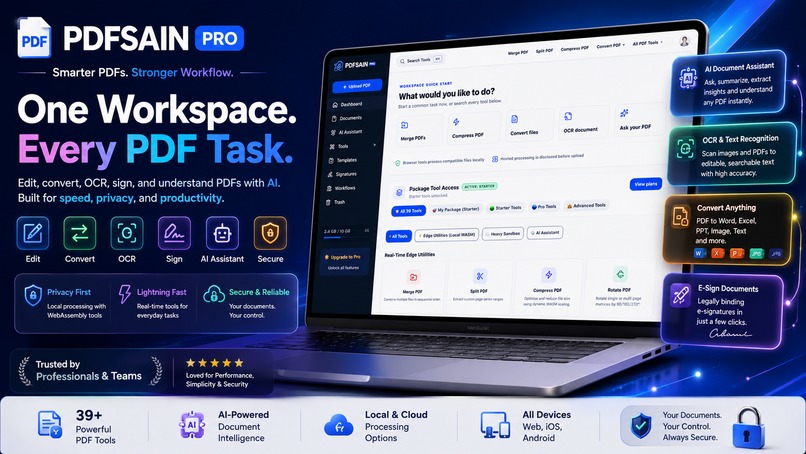
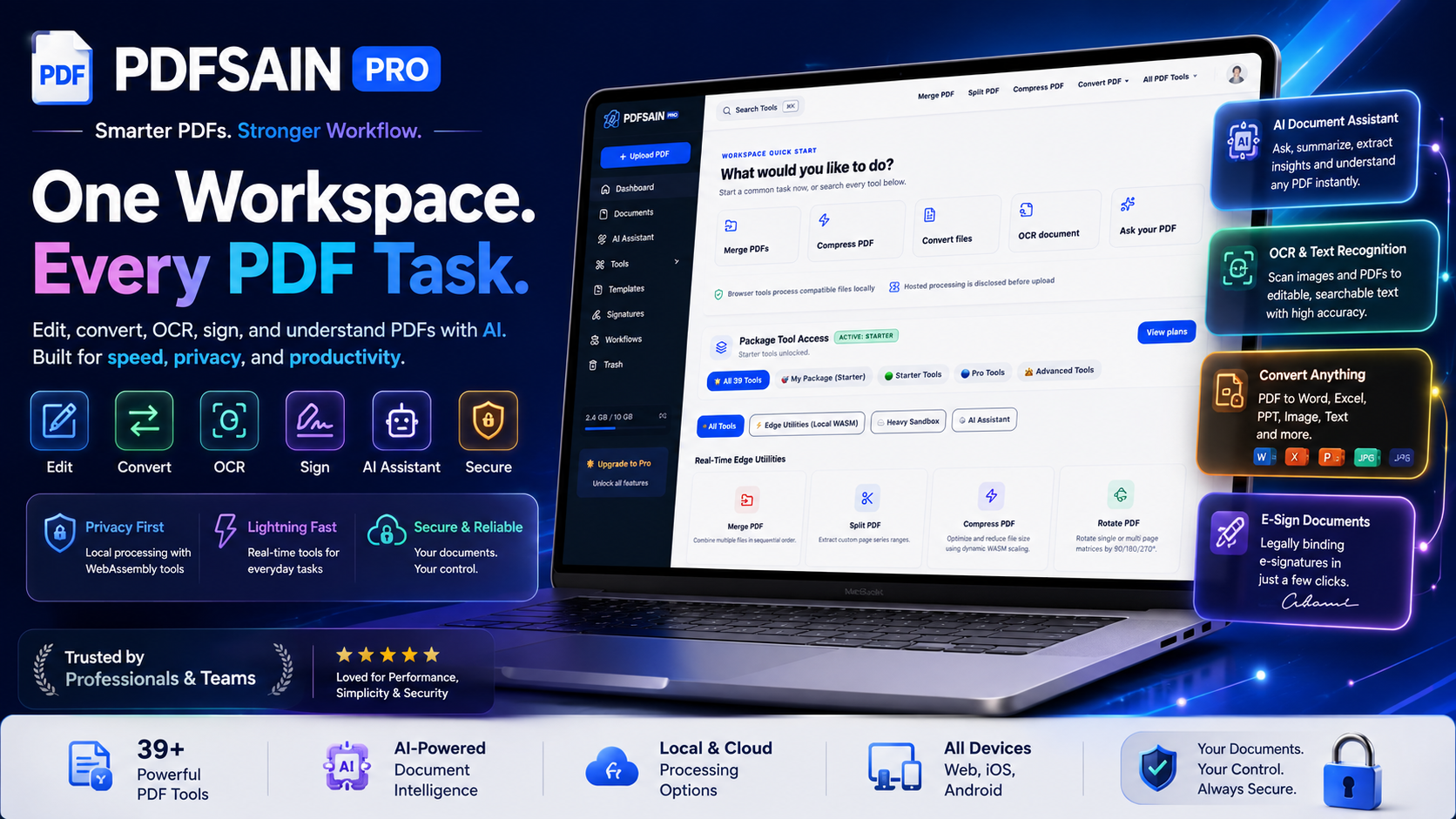
PDFSAIN Every PDF Task One Workspace
-
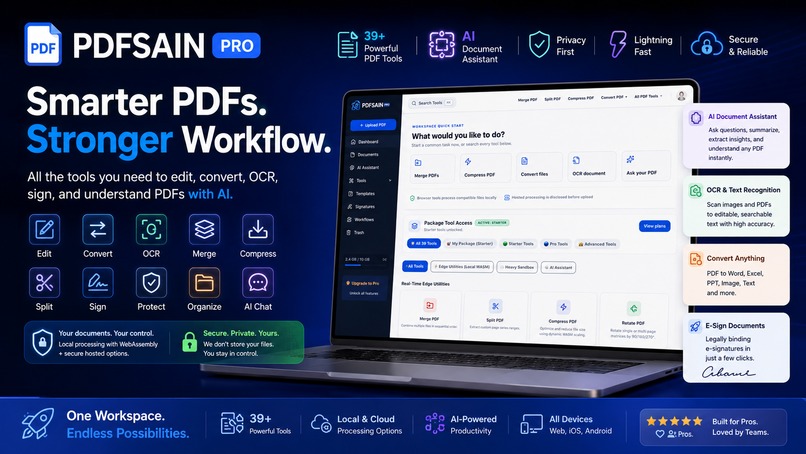
PDFSAIN Smarter PDF-Stronger Workflows
-
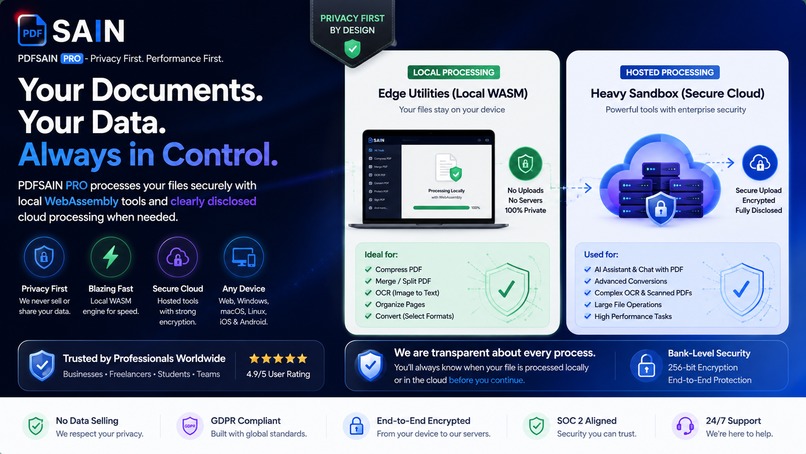
Privacy-First PDF Processing Hero Banner
-
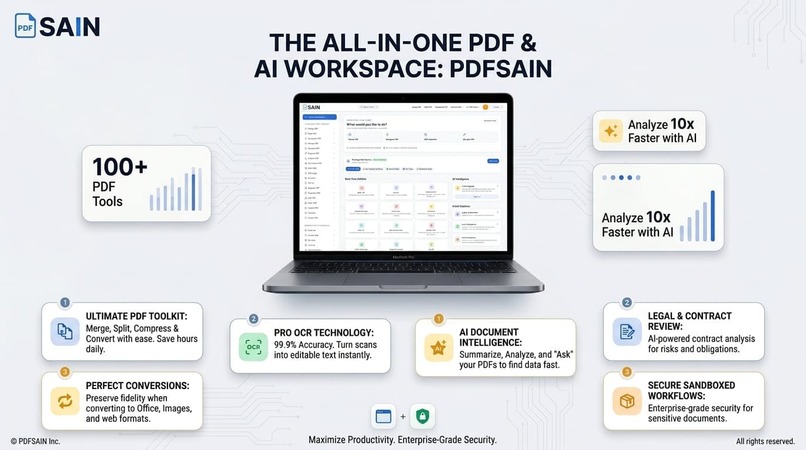
ALL IN ONE
-
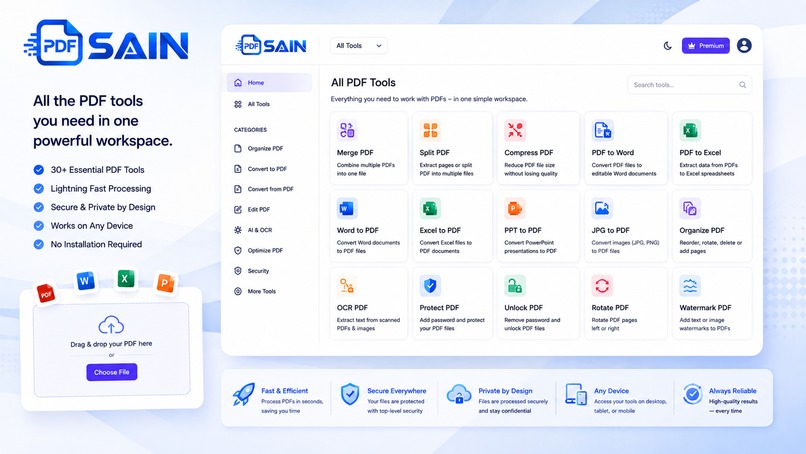
PDFSAIN SECURE AND RELIABLE
-
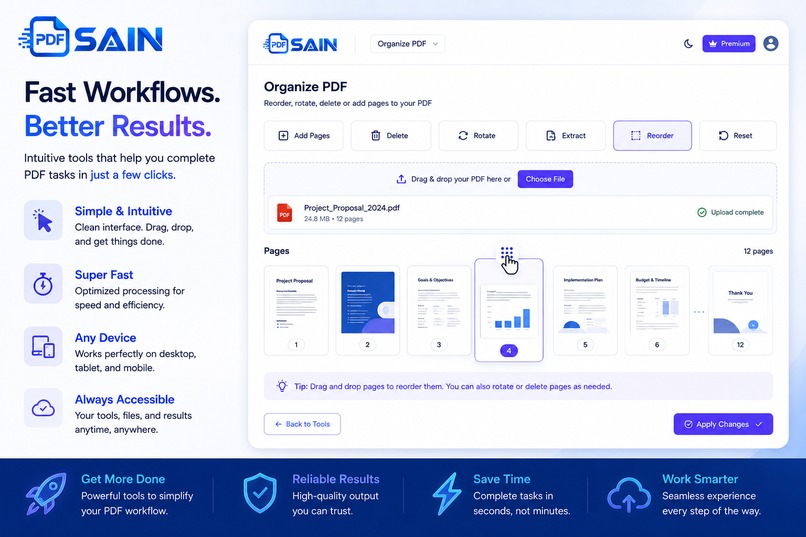
PDFSAIN ALL EASY TO USE
-
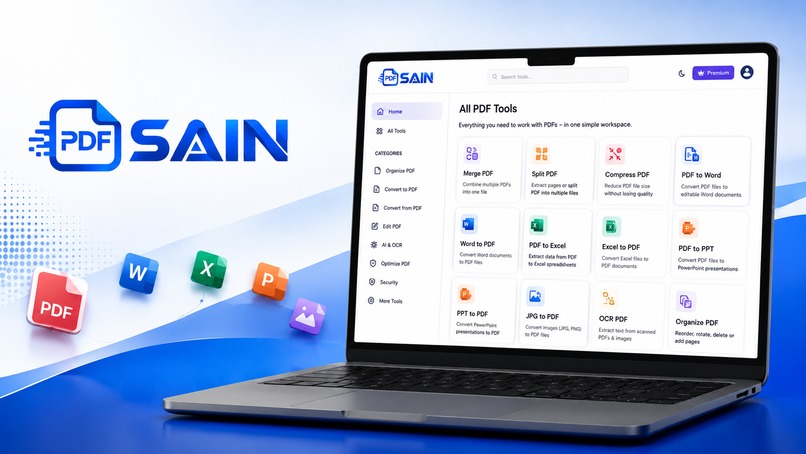
PDFSAIN ALL PDF TOOLS TO GATHER
-

PDFSAIN ALL LOGO

Inspiration
Documents often contain some of our most sensitive information, yet many everyday PDF workflows require users to upload files to multiple third-party services just to merge, convert, compress, sign, extract, or analyze them.
We built PDFSAIN around a simple idea: document productivity should not require sacrificing privacy.
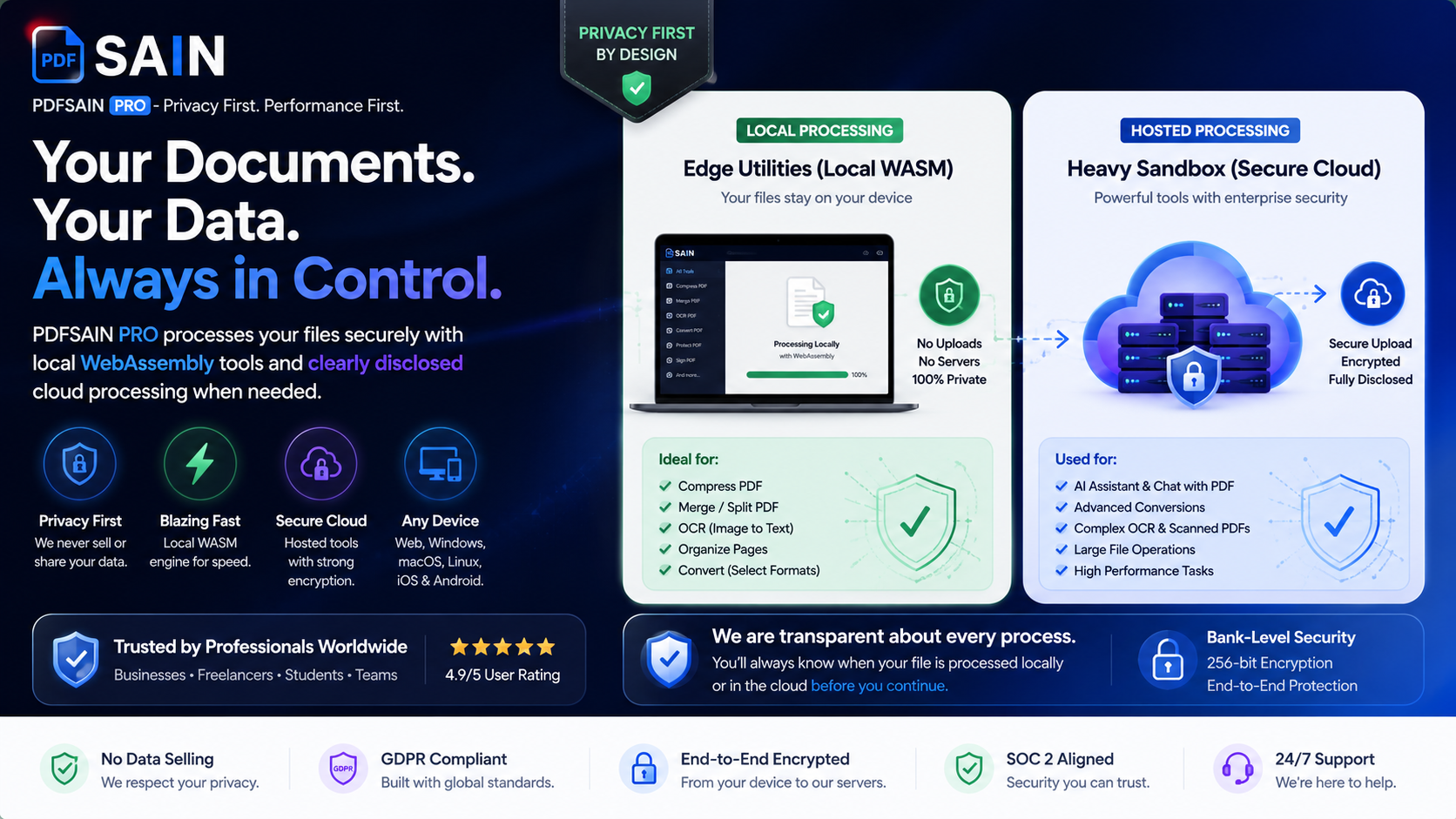
Our goal was to create a unified, privacy-first workspace where individuals, professionals, and organizations can perform everyday document tasks quickly while keeping processing on the user's device whenever technically possible. For workloads that require server-side capabilities, PDFSAIN uses controlled and isolated processing rather than treating every document as a permanent cloud asset.
What it does
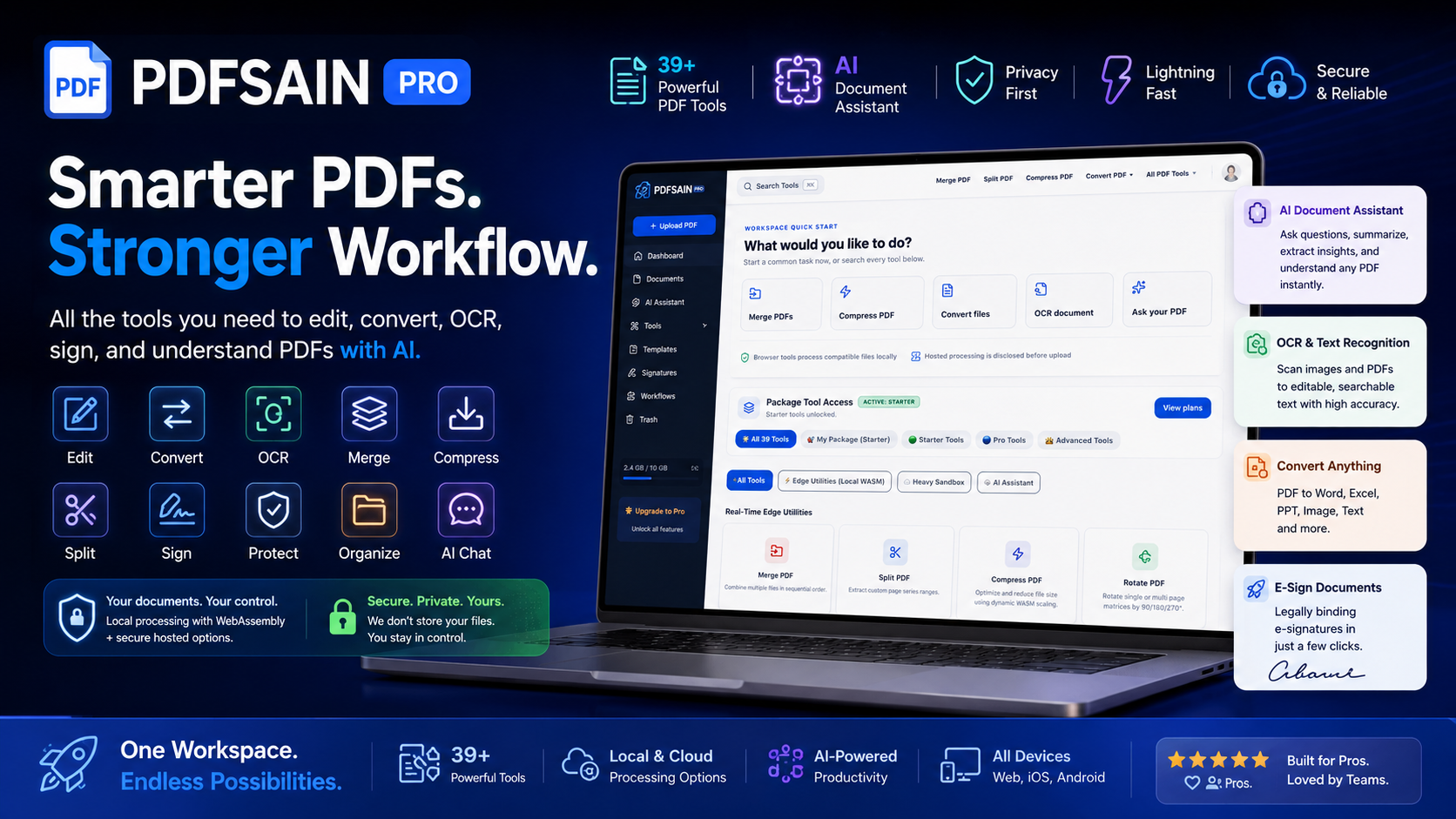
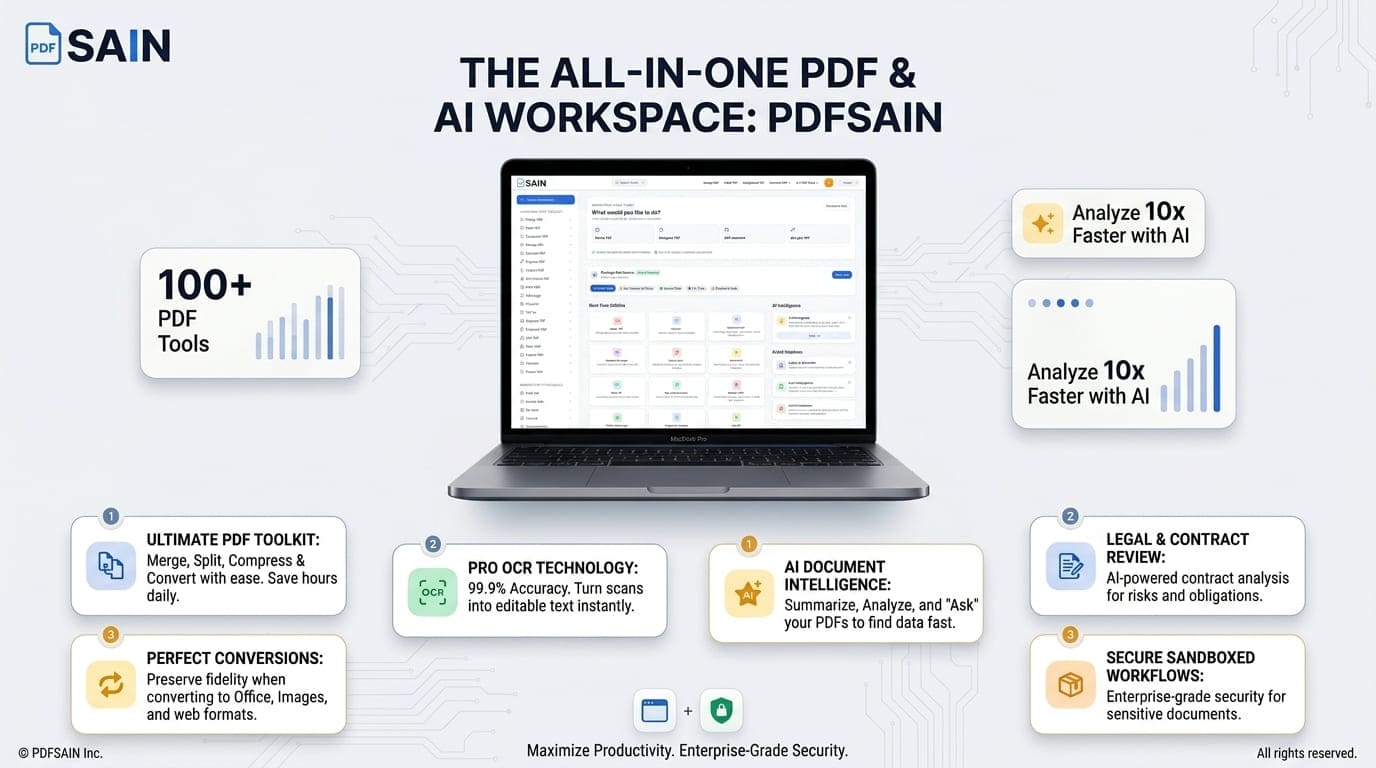
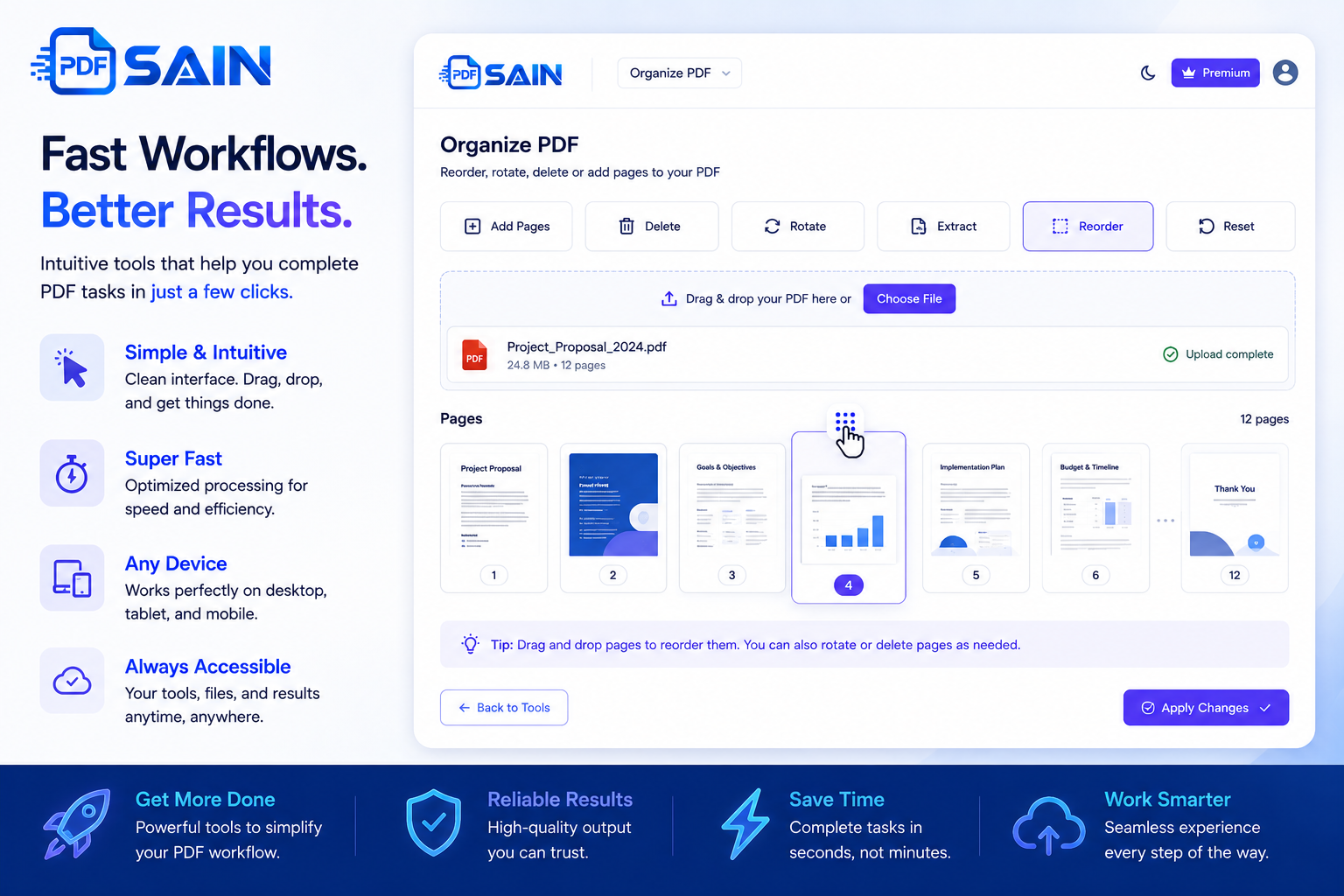
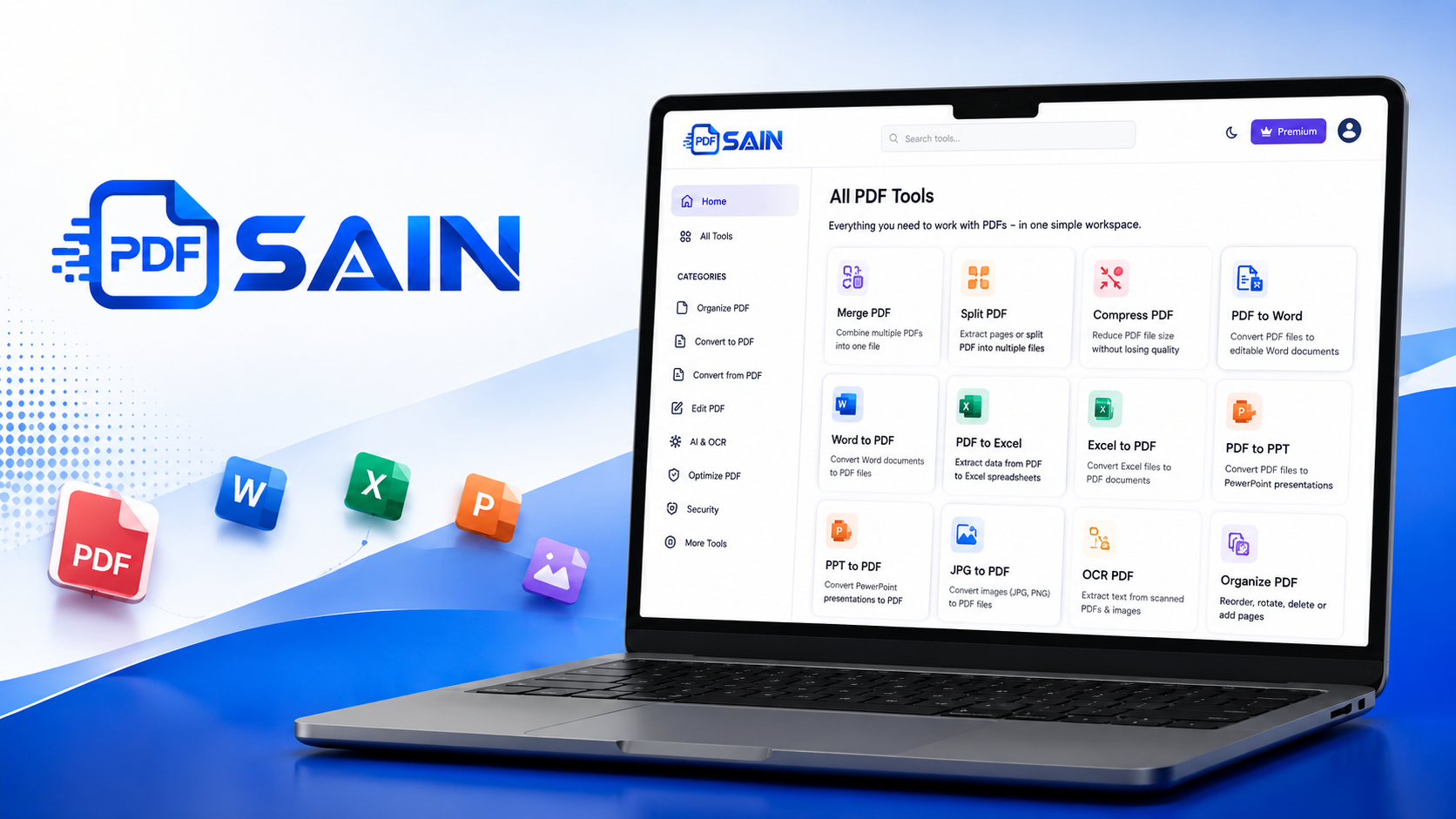
PDFSAIN is a privacy-first document productivity platform that brings PDF utilities, OCR, and intelligent document capabilities into one streamlined workspace.
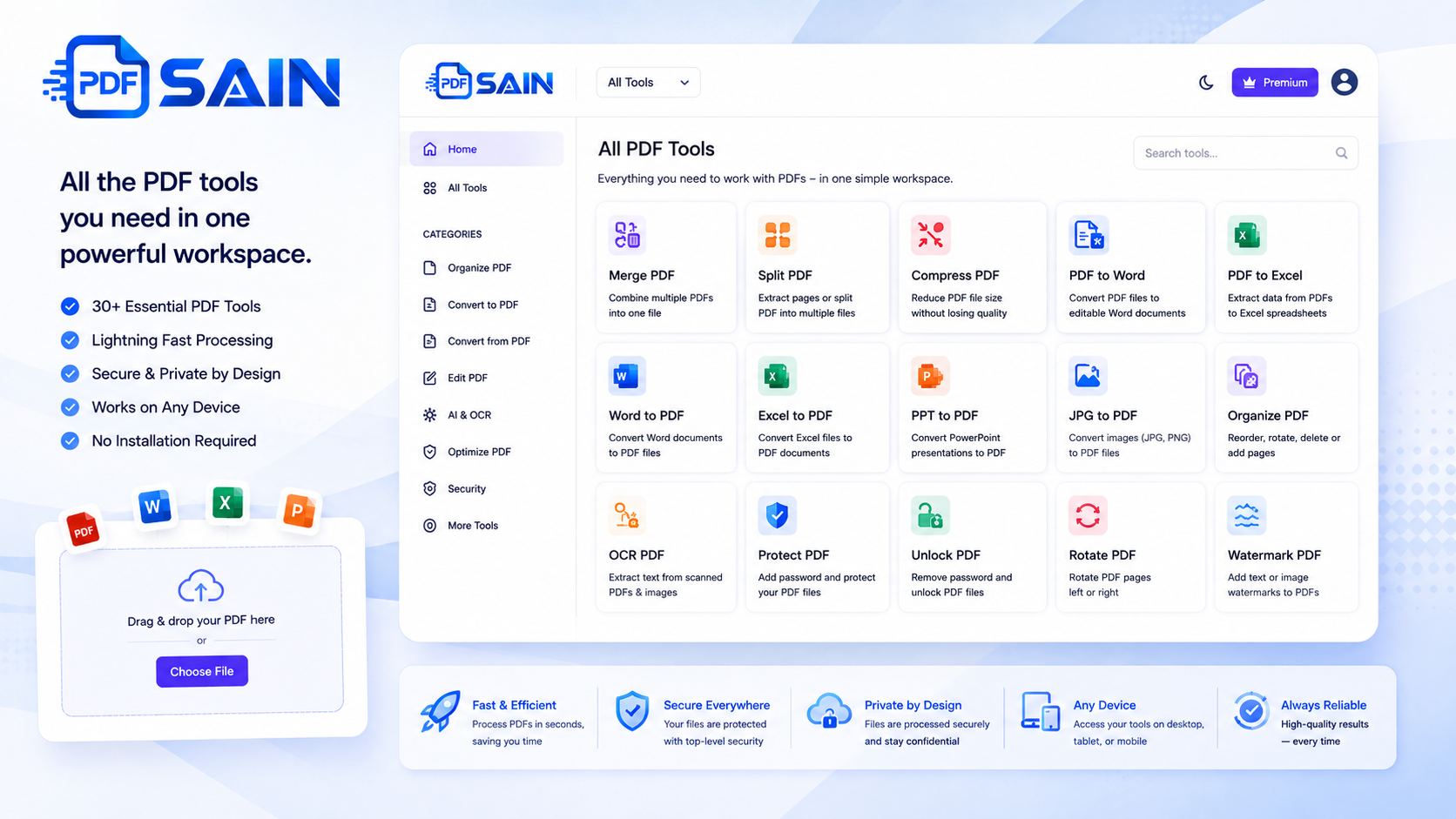
Instead of relying on multiple disconnected services, users can access 30+ document tools from a single interface for workflows such as merging, splitting, organizing, converting, compressing, editing, signing, extracting, and analyzing documents.
A key part of PDFSAIN's architecture is client-side WebAssembly (Wasm) processing. Where technically practical, supported document operations execute directly inside the browser, reducing unnecessary uploads and improving both privacy and responsiveness.
For more computationally intensive features—including selected OCR, conversion, and AI-assisted workflows—the platform can use isolated server-side processing with controlled file handling.
The result is a hybrid architecture designed around three principles:
Privacy. Performance. Simplicity.
How we built it
PDFSAIN was engineered using a modern web architecture designed for performance, scalability, security, and maintainability.
Client-Side Processing
We use WebAssembly (Wasm) to move supported PDF-processing workloads into the browser.
Rather than automatically uploading every document to a remote server, eligible operations can be performed locally on the user's device. Web Workers and asynchronous processing help keep the interface responsive during computationally intensive operations.
Application Experience
The application is built using TypeScript, React, Next.js, and Tailwind CSS, providing a fast, responsive, mobile-friendly interface with reusable components and a consistent design system.
The UI follows a modern enterprise aesthetic with strong visual hierarchy, accessible interactions, dark-mode support, and clear separation between document tools and intelligent features.
Server-Side Processing
Operations that cannot reasonably or reliably execute inside the browser can be routed through backend services.
Node.js, Python, and Docker-based workloads provide an architecture for heavier document conversion, OCR, automation, and intelligent processing while keeping these responsibilities separated from the primary application.
OCR & Intelligent Documents
PDFSAIN extends beyond traditional PDF manipulation with OCR and AI-assisted document workflows.
These capabilities are designed to transform static documents into more useful information by supporting text recognition, extraction, analysis, summarization, and other intelligent document operations.
Data & Infrastructure
The platform uses technologies including PostgreSQL and Redis to support application data, job coordination, caching, and scalable backend workflows.
The architecture separates application state from document-processing workloads so individual services can scale independently as usage increases.
Monetization & Access
PDFSAIN supports a tiered SaaS model, with subscription and entitlement management designed to distinguish free and premium capabilities.
RevenueCat provides subscription infrastructure where applicable, including support for cross-platform entitlement and purchase-management workflows.
Challenges we ran into Bringing Heavy PDF Processing to the Browser
PDF manipulation can be computationally expensive. Moving substantial workloads into WebAssembly while maintaining a responsive web interface required careful consideration of memory usage, asynchronous execution, Web Workers, file size limits, and browser capabilities.
Balancing Privacy with AI
One of our biggest architectural challenges was balancing local-first document processing with features that may require server-side AI or OCR infrastructure.
Rather than forcing every feature through the same processing pipeline, we designed PDFSAIN around a hybrid processing model: keep operations local when practical and use controlled server-side processing only when the capability requires it.
Creating One Experience from Many Tools
Combining more than 30 document operations into one application created another challenge: complexity.
We focused heavily on navigation, consistent workflows, reusable components, clear processing states, and a unified interface so users do not feel like they are navigating dozens of unrelated mini-applications.
Performance Across Devices
A document tool must work beyond high-end desktop computers. Designing processing flows that remain usable across different browsers, screen sizes, and hardware capabilities required performance-conscious architecture and graceful handling of resource-intensive operations.
Accomplishments that we're proud of
We are especially proud that PDFSAIN brings together 30+ document capabilities without turning the product into a fragmented collection of utilities.
We built a platform architecture where supported operations can execute locally through WebAssembly, reducing unnecessary document transfers while delivering a fast user experience.
We also established a hybrid foundation capable of supporting browser processing, isolated backend workloads, OCR, AI-assisted document features, subscription access, and future enterprise capabilities within one cohesive product.
Most importantly, privacy is not simply presented as a marketing feature—it influenced how we designed the processing architecture itself.
What we learned
Building PDFSAIN reinforced an important lesson:
Privacy and convenience do not have to be competing product decisions.
Modern browser technologies such as WebAssembly make it possible to move workloads that traditionally required backend infrastructure much closer to the user.
We also learned that building a successful document platform is not simply about adding more tools. Users need predictable workflows, clear information about how their documents are being processed, responsive performance, and an interface that makes complex operations feel simple.
Working with WebAssembly, browser workers, document-processing pipelines, OCR, AI workflows, and isolated backend services significantly expanded our understanding of modern client-side computing and privacy-conscious application architecture.
What's next for PDFSAIN
Our next goal is to evolve PDFSAIN from a collection of powerful document utilities into an increasingly intelligent document workspace.
We plan to expand intelligent document capabilities with advanced OCR, multilingual document understanding, structured information extraction, document summarization, question answering, and workflow-focused AI agents.
We also plan to continue moving eligible workloads toward local processing as browser and WebAssembly capabilities improve.
For organizations, our roadmap includes stronger administrative controls, team workspaces, document workflows, usage management, and integrations designed for privacy-conscious and compliance-driven environments.
Our long-term vision is simple:
Make PDFSAIN a fast, intelligent, privacy-first workspace where people can process and understand documents without needing a different service for every task.
Built With
- ai/ml
- android
- css
- docker
- ios
- next.js
- node.js
- postgresql
- python
- react
- redis
- revenuecat
- tailwind
- typescript
- wasm
- webassembly


Log in or sign up for Devpost to join the conversation.