-
-
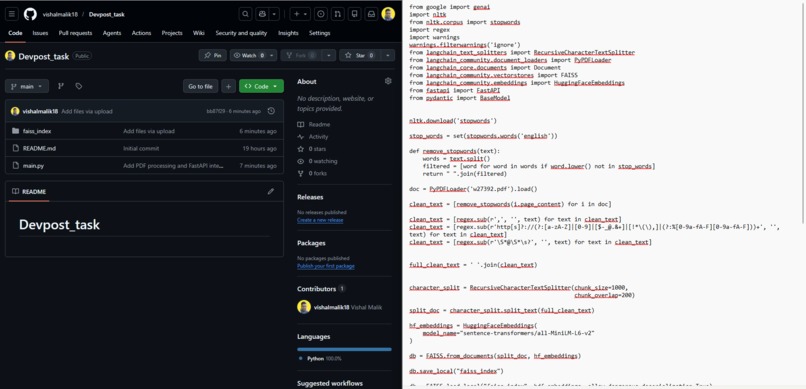
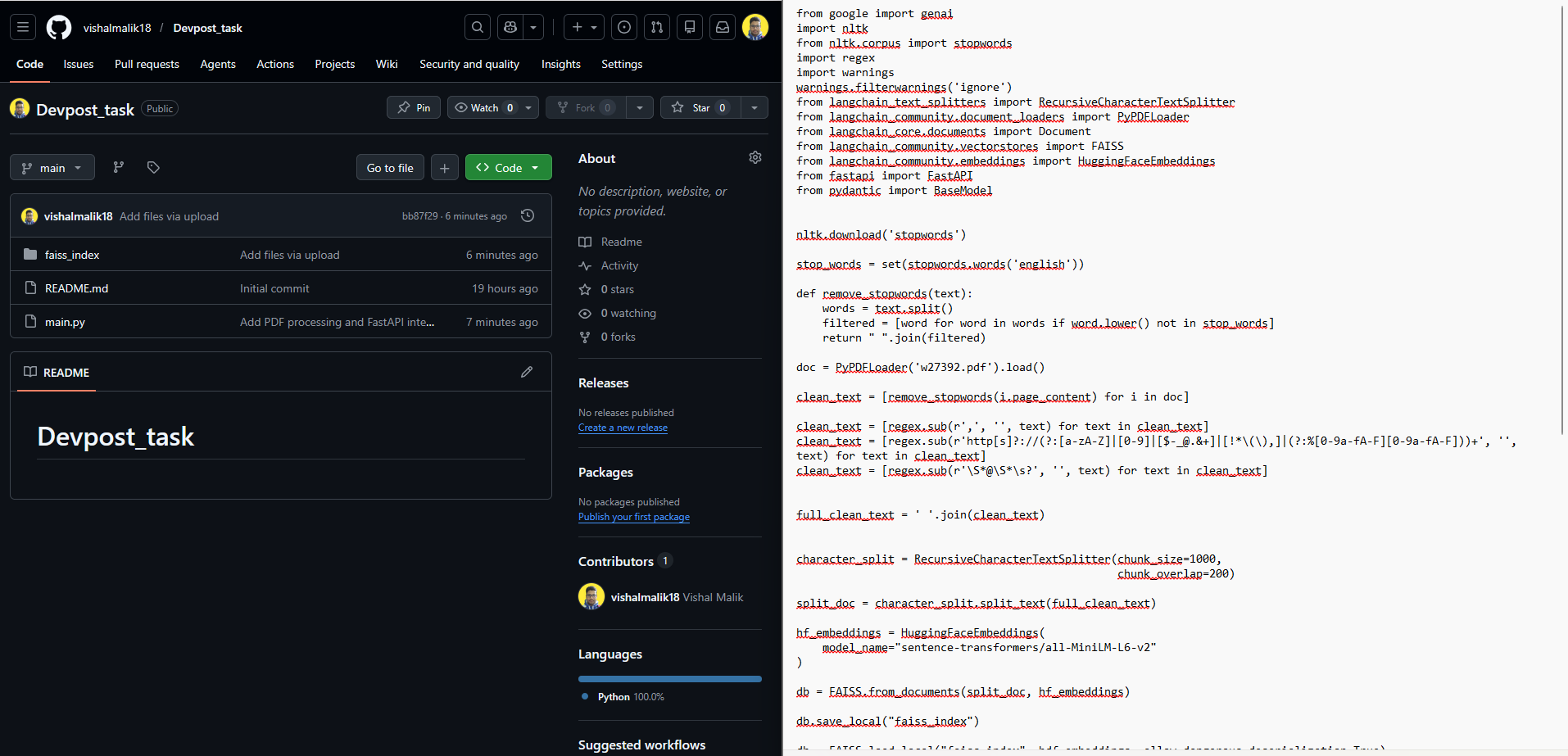
github & code screenshot
-
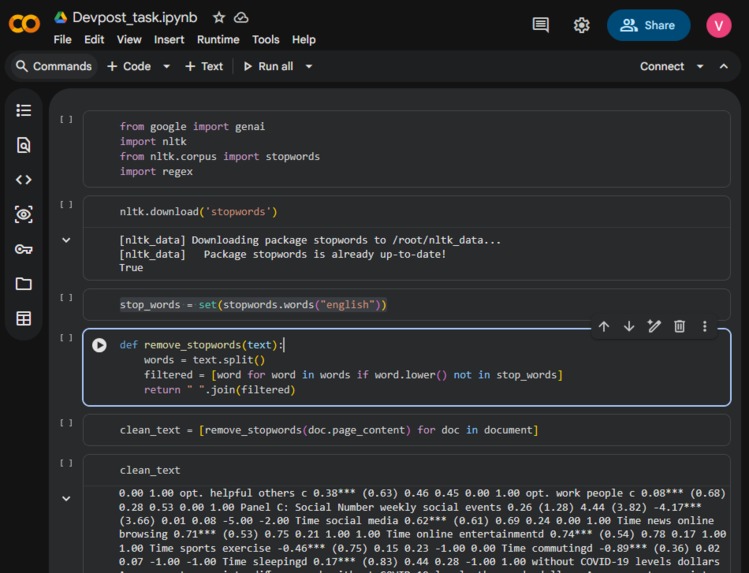
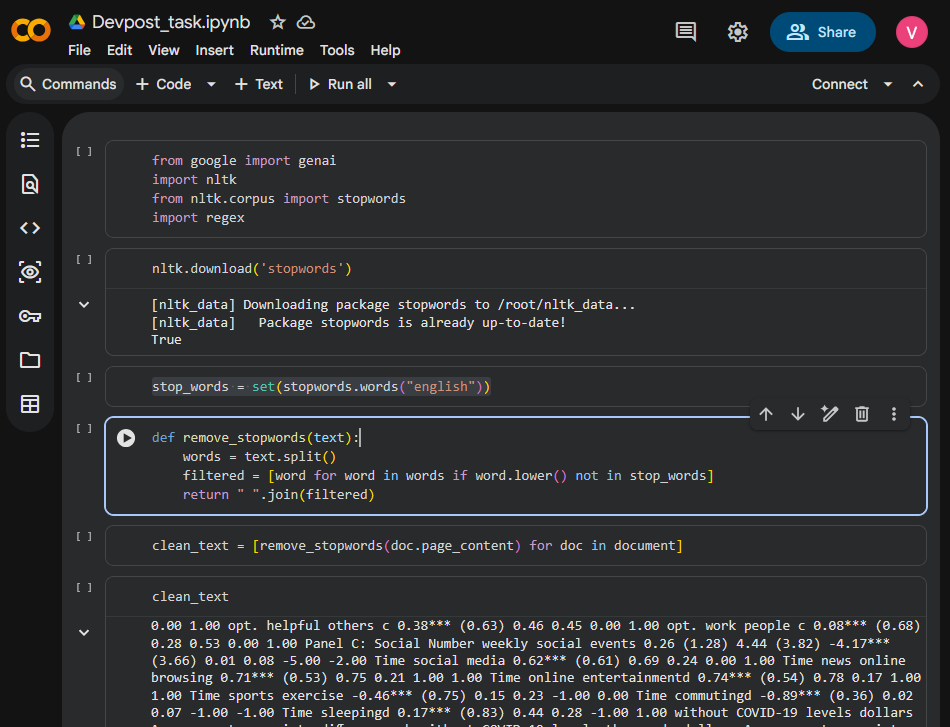
testing in colab screenshot
-
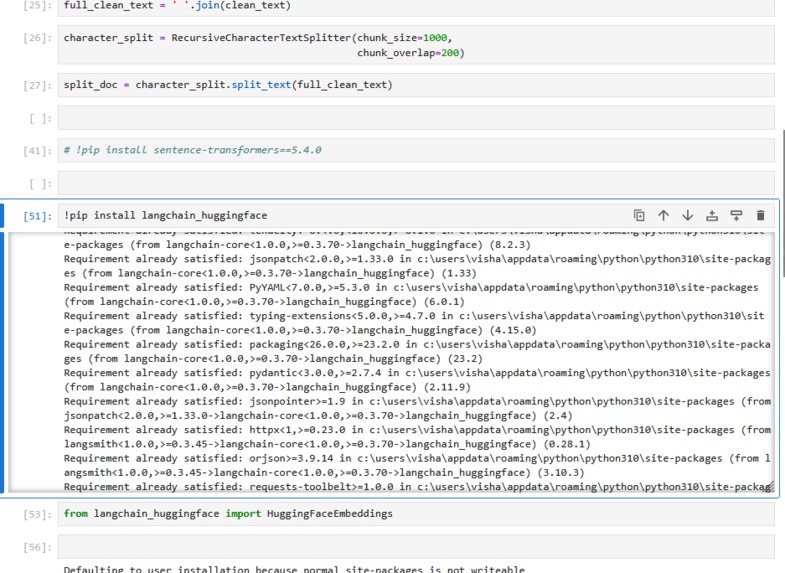
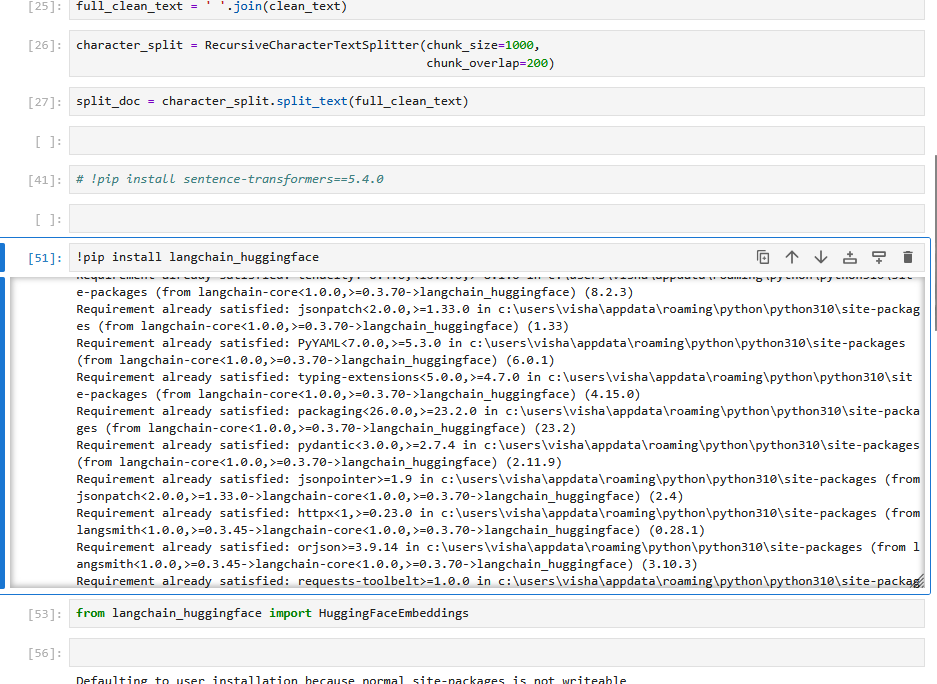
testing jupyter notebook
-
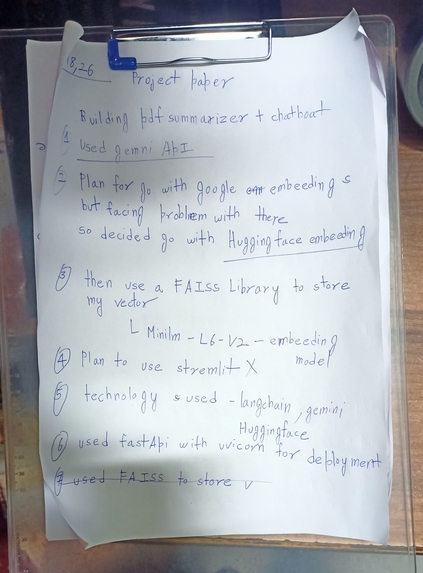
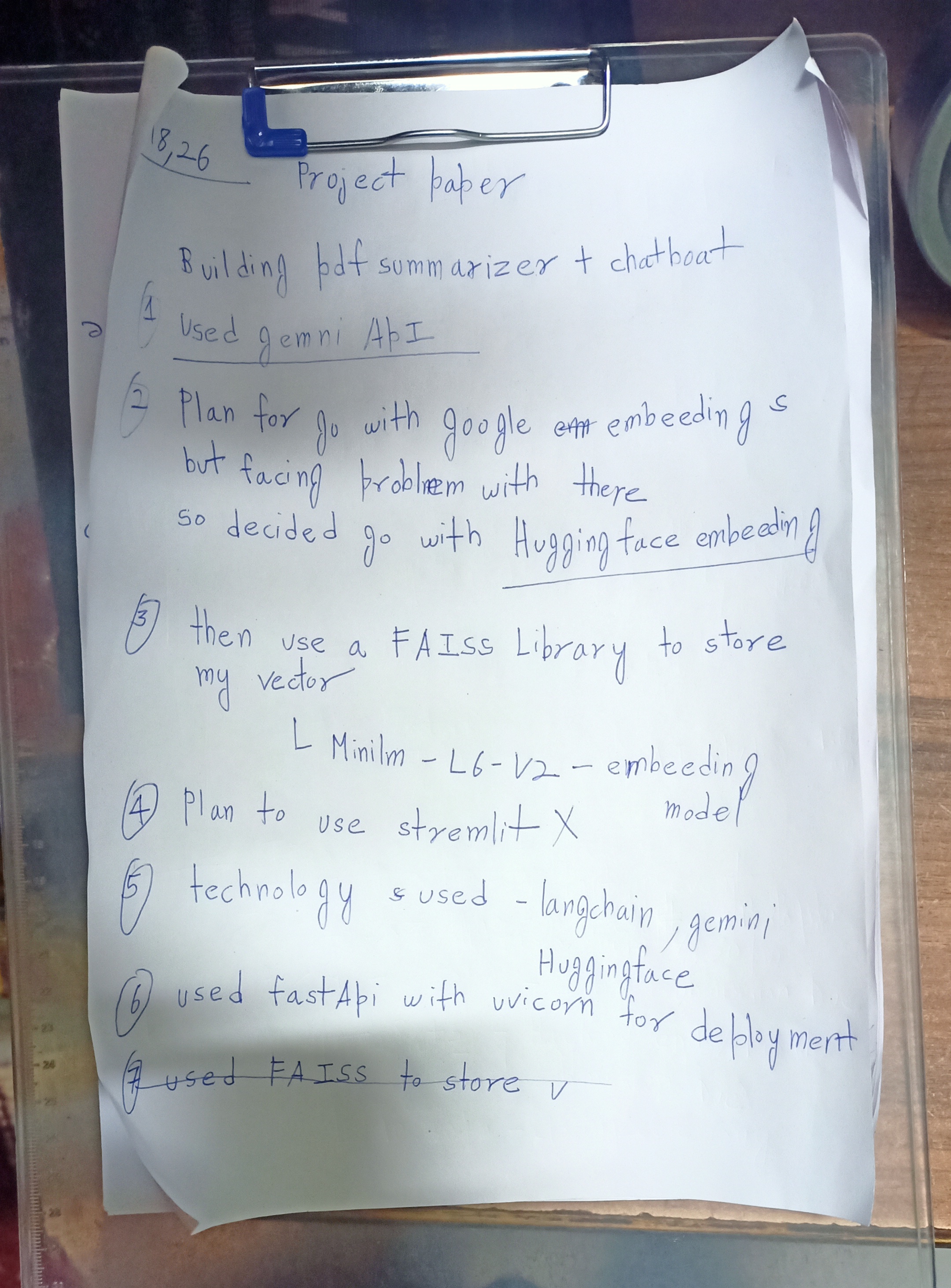
project paper
Inspiration
With the increasing use of PDFs for research, reports, and documentation, finding specific information quickly becomes difficult and time-consuming. I wanted to build a system that allows users to interact with PDFs in a smarter way—by simply asking questions and getting direct answers.
What it does
This project is an AI-powered PDF assistant that enables users to ask questions and receive accurate answers directly from PDF documents. It uses a RAG approach to fetch relevant content and generate context-aware responses.
How I built it
Extracted PDF content using PyPDFLoader Cleaned and preprocessed text using NLTK and regex Split text into chunks using RecursiveCharacterTextSplitter Generated embeddings using Hugging Face (MiniLM model) Stored embeddings in FAISS vector database Built backend API using FastAPI Integrated Gemini API to generate answers based on retrieved context
Challenges we ran into
Handling noisy and unstructured PDF text Choosing optimal chunk size for better retrieval Debugging embedding and dependency issues Integrating multiple tools (FAISS, Gemini, FastAPI) smoothly
Accomplishments that I're proud of
Successfully built a complete RAG-based system Achieved accurate question-answering from PDFs Built a scalable backend using FastAPI
What we learned
Working with vector databases like FAISS Integrating LLMs (Gemini) with backend systems
What's next for PDF AI Assistant using Gemini + FAISS
Improve response accuracy with better prompt engineering


Log in or sign up for Devpost to join the conversation.