-
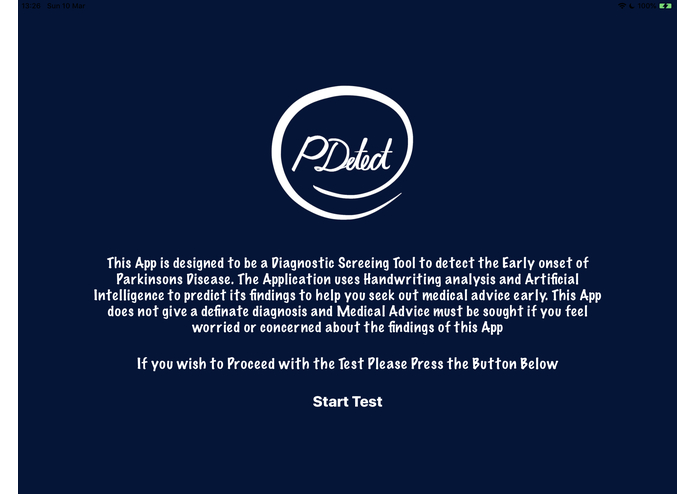
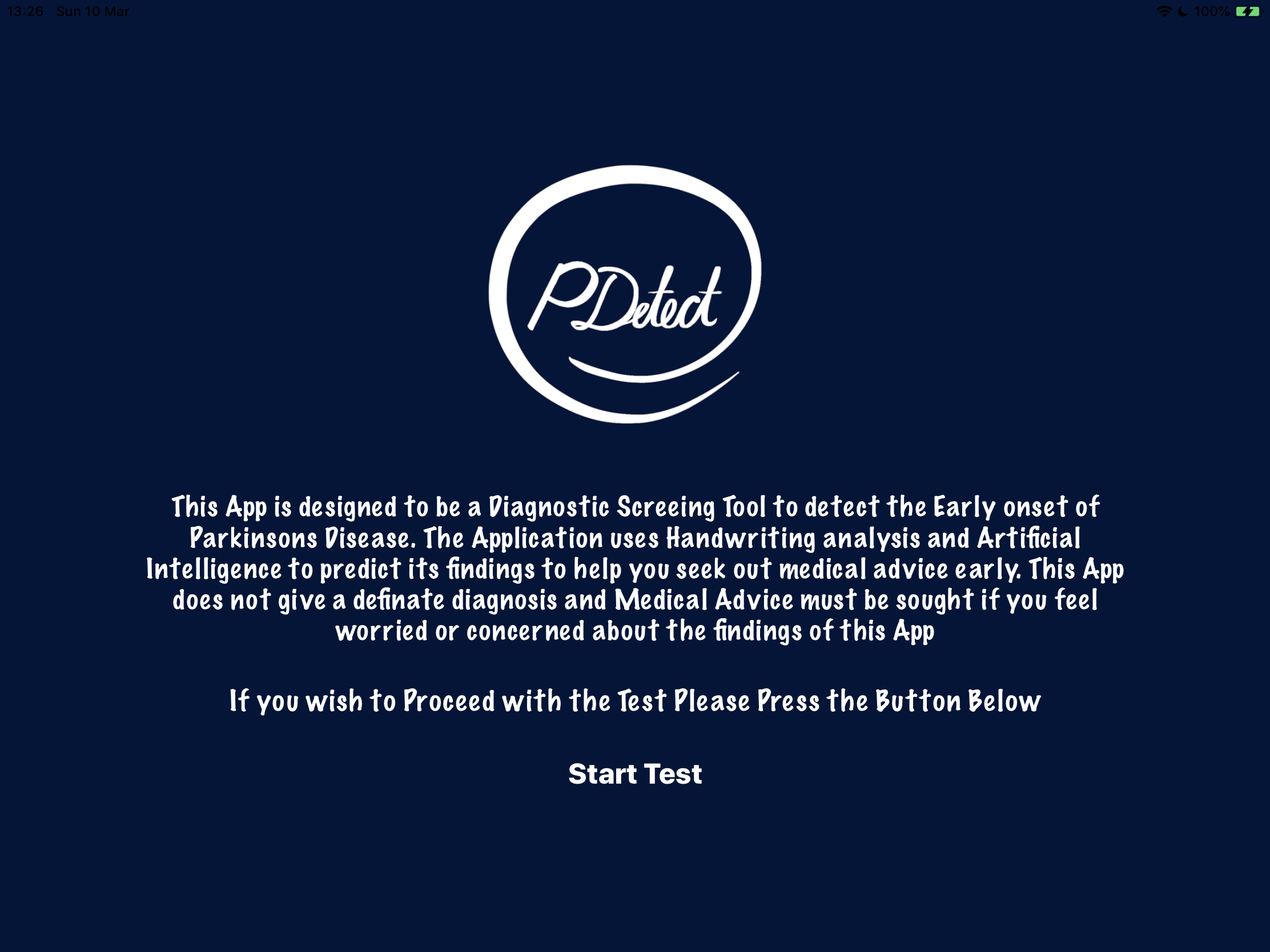
First Screen
-
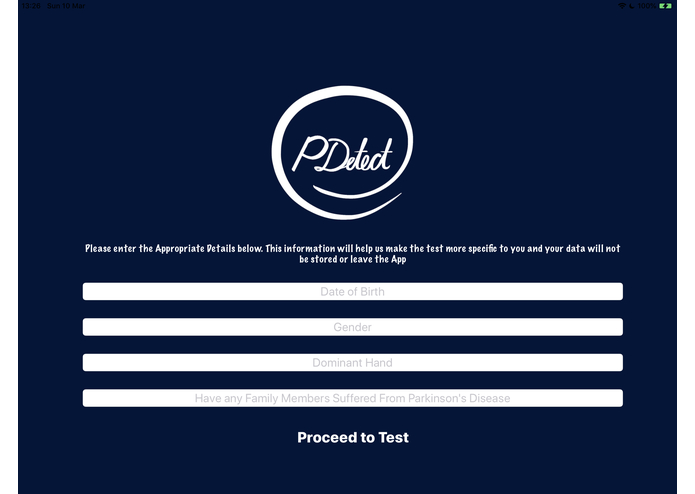
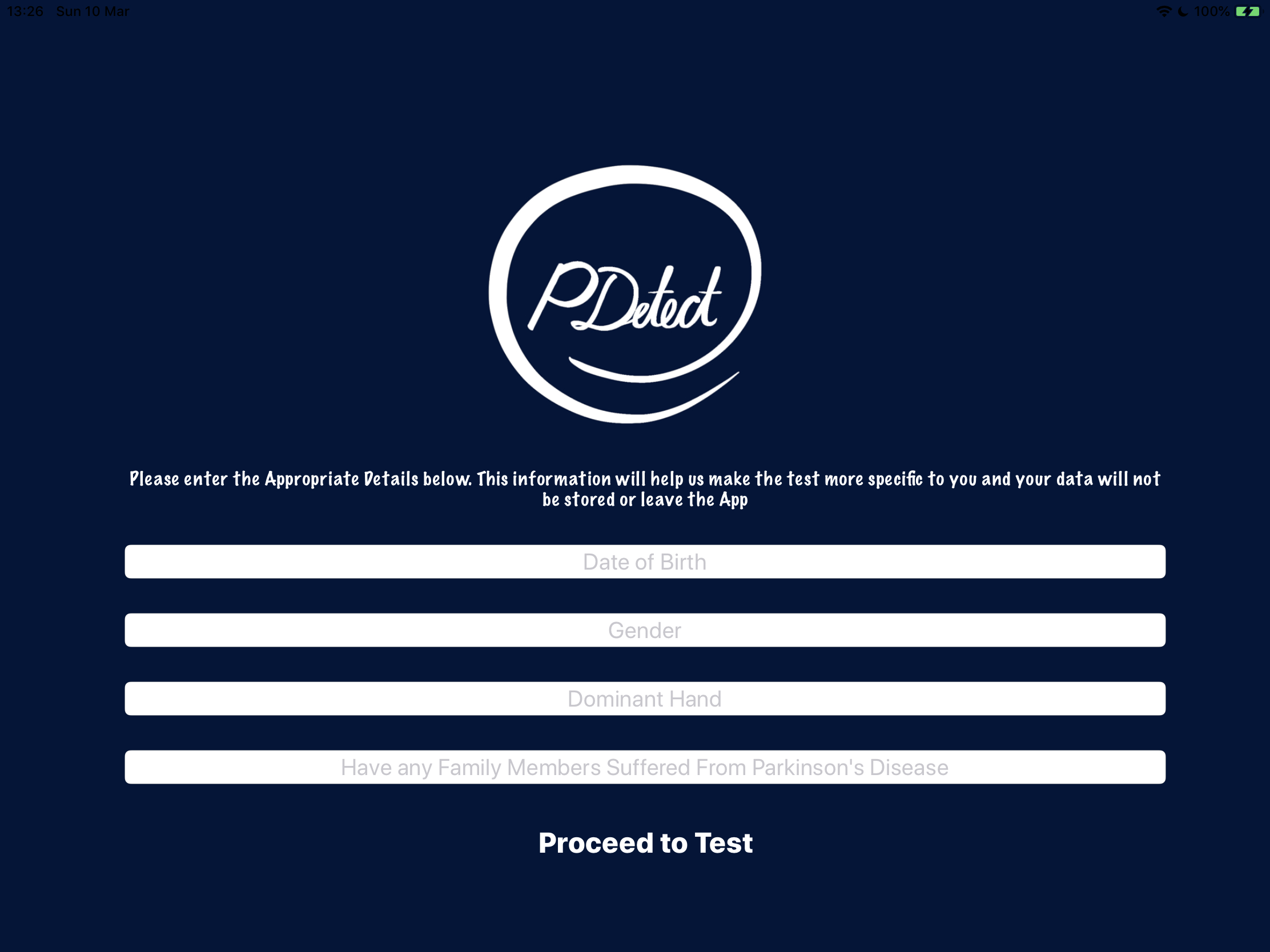
General information to be used in analysis
-
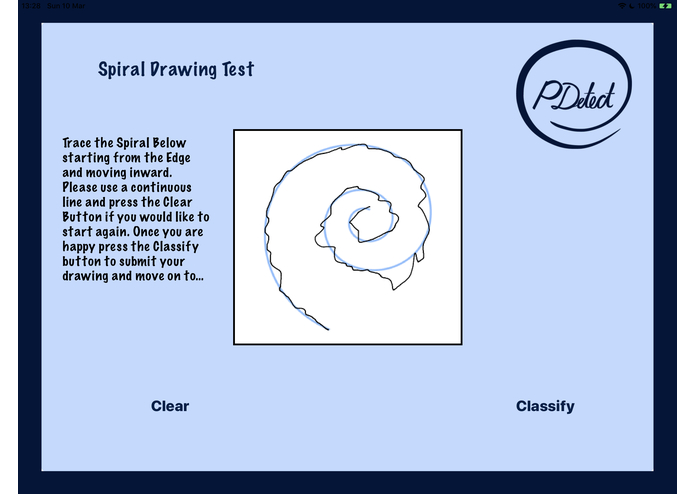
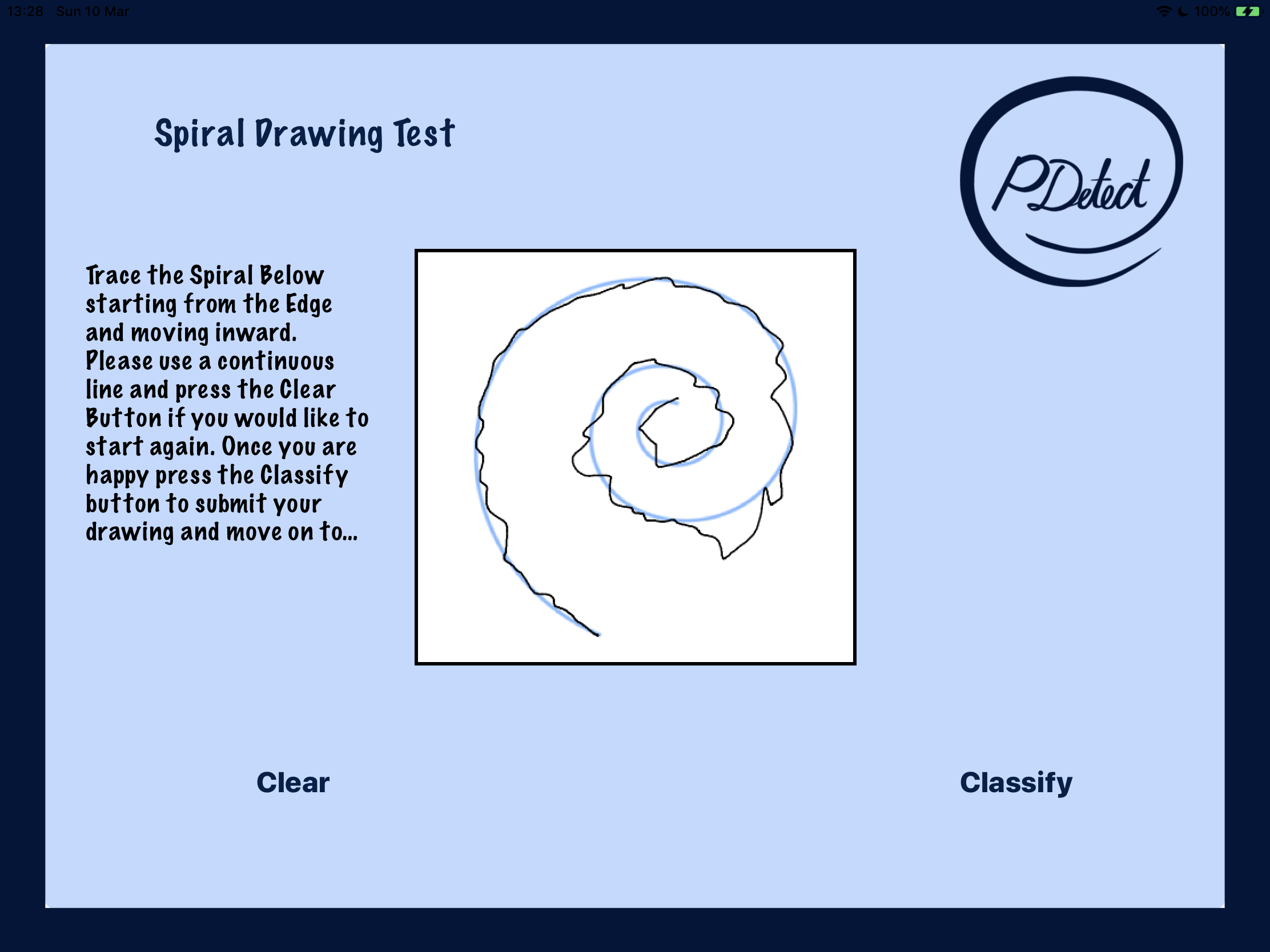
Spiral Drawing to be analysed by ML
-
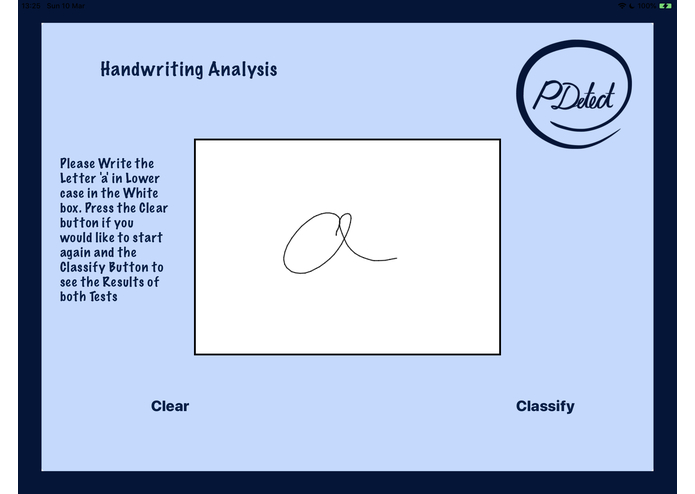
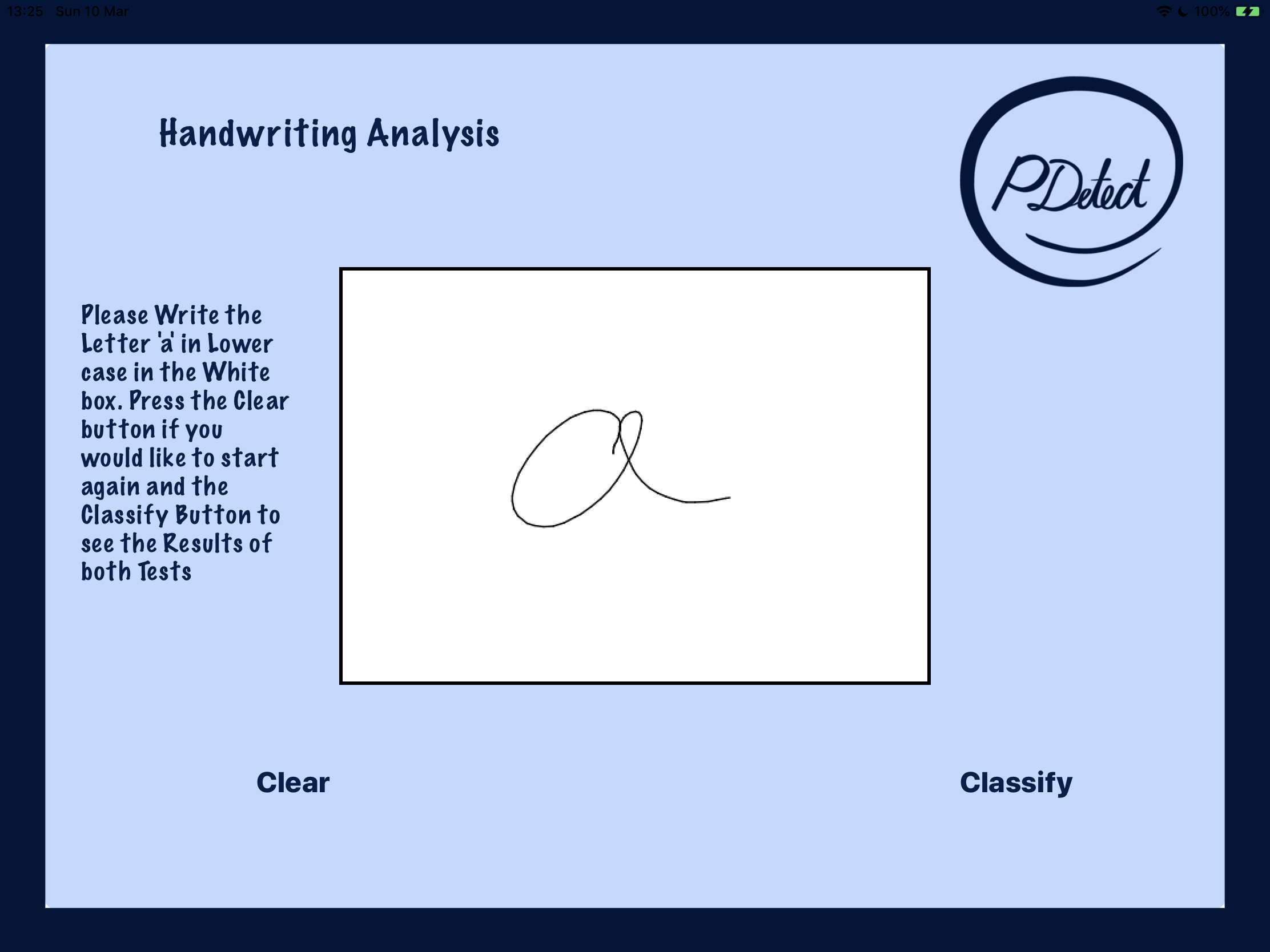
Letter drawing for micrographia
PDetect
The Problem
Early and accurate diagnosis of Parkinson's is an unmet clinical need. The prevalence of Parkinson's is set to double in the future, particularly in the developing world.
Total cost of Parkinson’s in Europe is ~13.9 billion Euros annually and increasing.
Our Solution
We created PDetect, an app that asks our users to draw on an iPad using an Apple Pencil. We trained a model to analyse the data from their drawing/writing and classify them either healthy or unhealthy with a certain probability. The following tasks are included:
We built it using Swift and Python.
For the machine learning model, an image classifier was realised which is based on a neural network capable of classifying objects within a given frame. We used 70% of the data for training the model and the 30% remaining for testing. The accuracy of the model classifying the spiral images was over 90%.
Proposed use:
The intended use is for the early diagnosis in the clinical setting, as an aid to doctors. Patients with suspected movement disorder can use PDetect to screen for Parkinson’s disease.
This is primarily useful for doctors in a primary care setting or without the required expertise but we expect PDetect to outperform even human experts. In these situations, the app can help improve the shockingly poor diagnosis.
With the projected increase of prevalence in developing countries, we also expect this to be relevant in countries were the healthcare system is underdeveloped.
The app works without internet so can be used in areas of poor coverage.
Future uses would be for disease monitoring, which can be done by patients themselves in the comfort of their home.
PDetect can also be used to improve handwriting and general dexterity by providing patient’s with biofeedback on their performance.

Log in or sign up for Devpost to join the conversation.