-
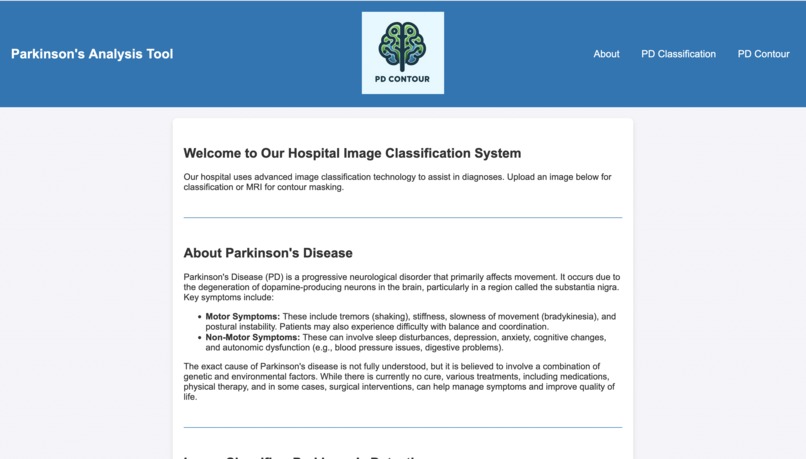
Main Page
-
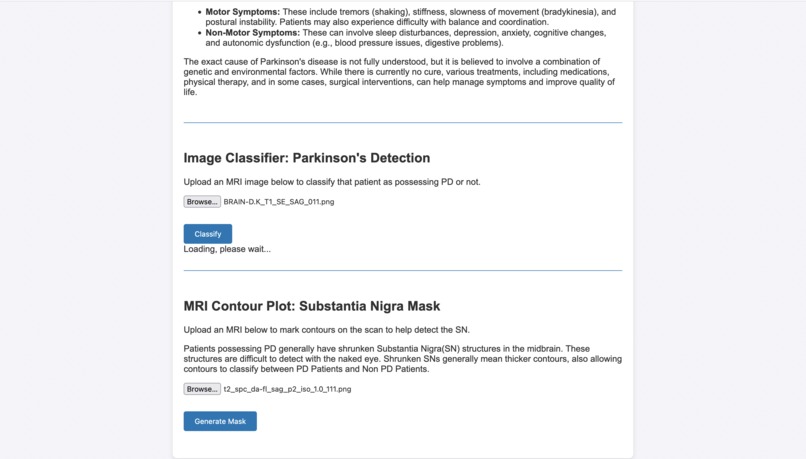
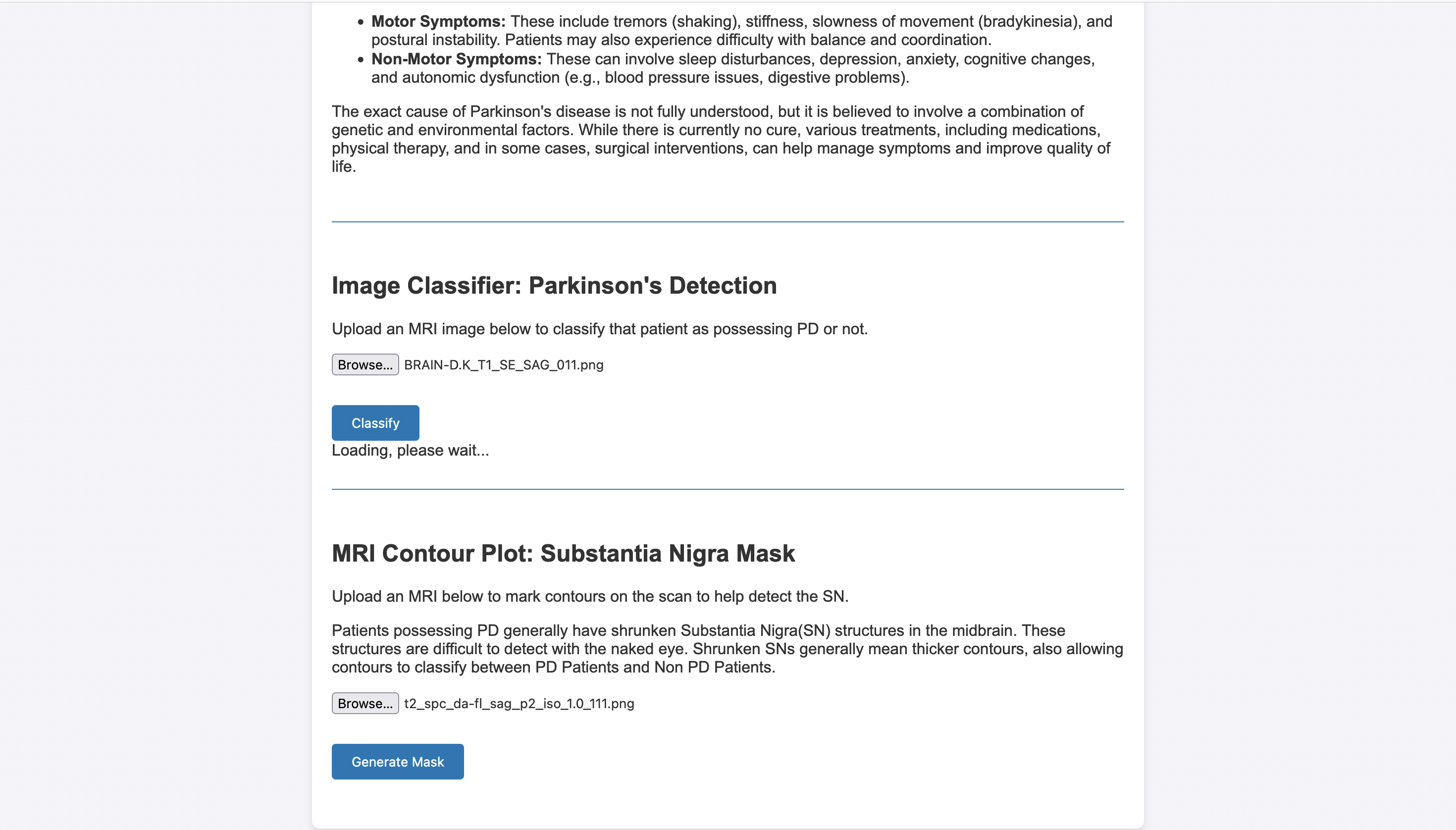
Classifying
-
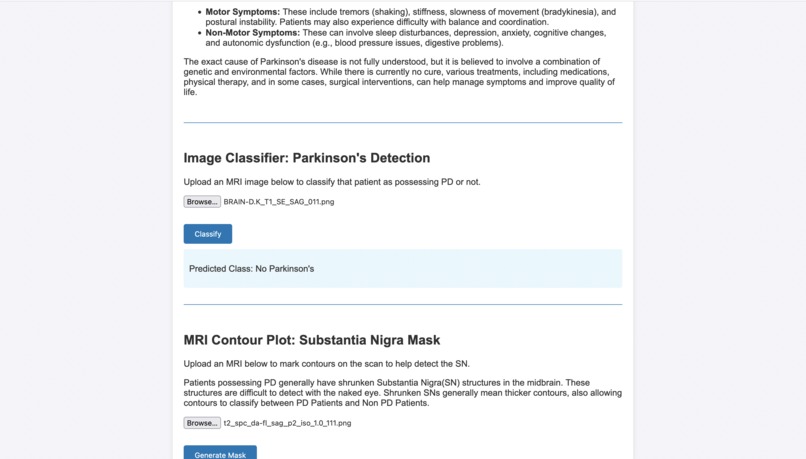
Classified
-
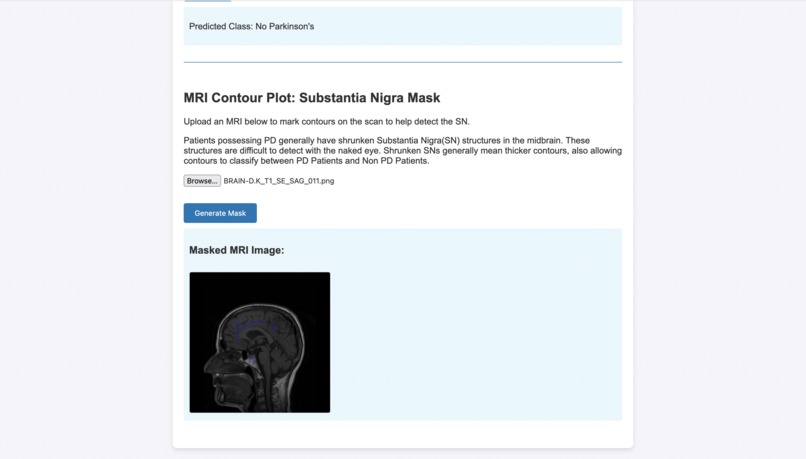
Substantia Nigra Identified
-
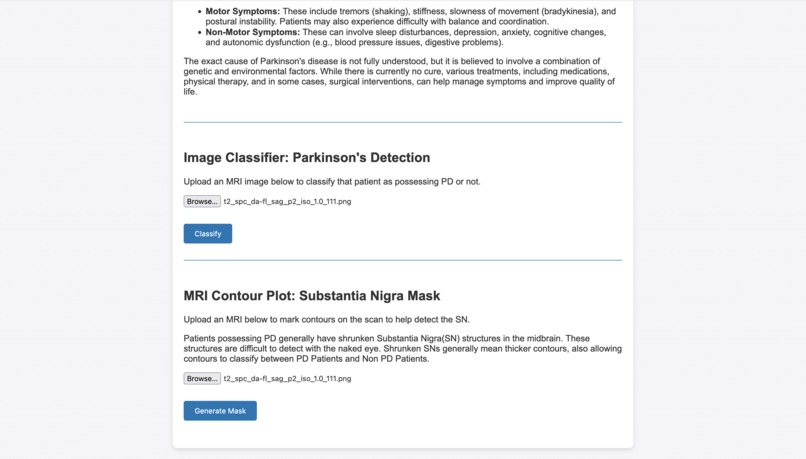
Upload Locations
-
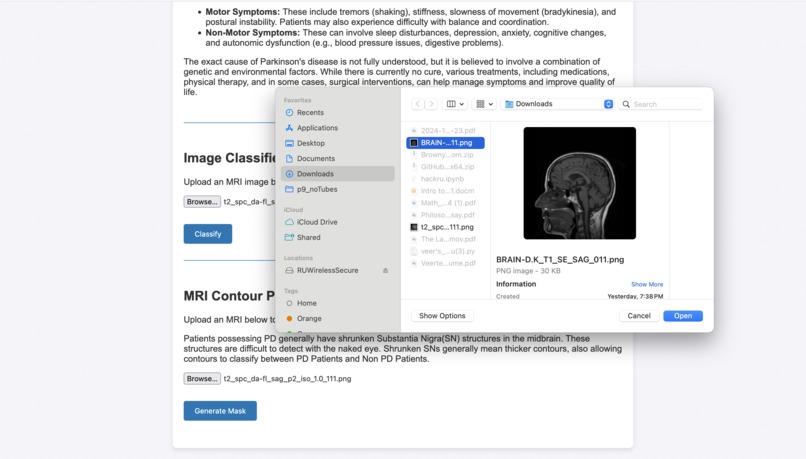
Upload Image
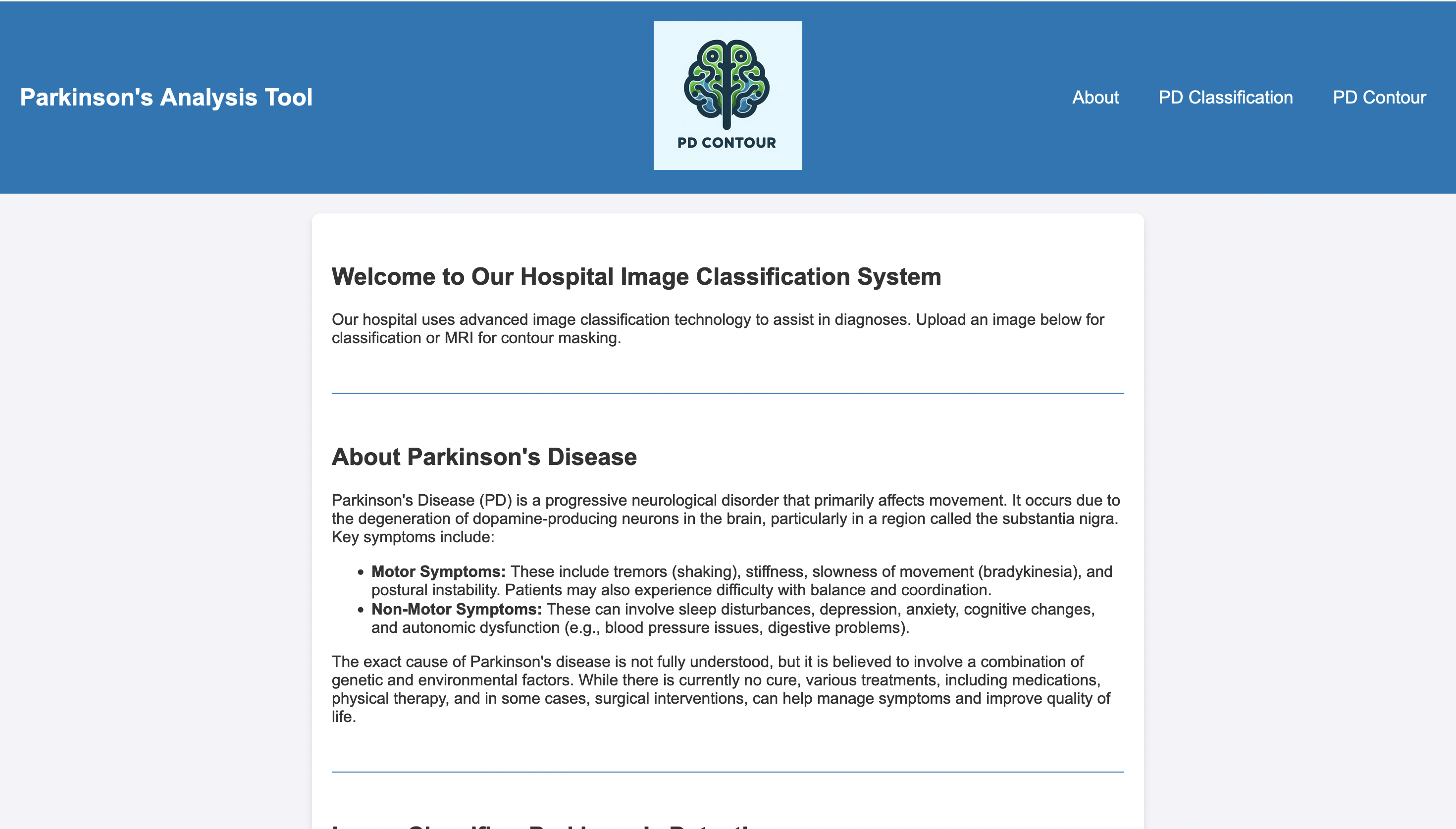
Inspiration
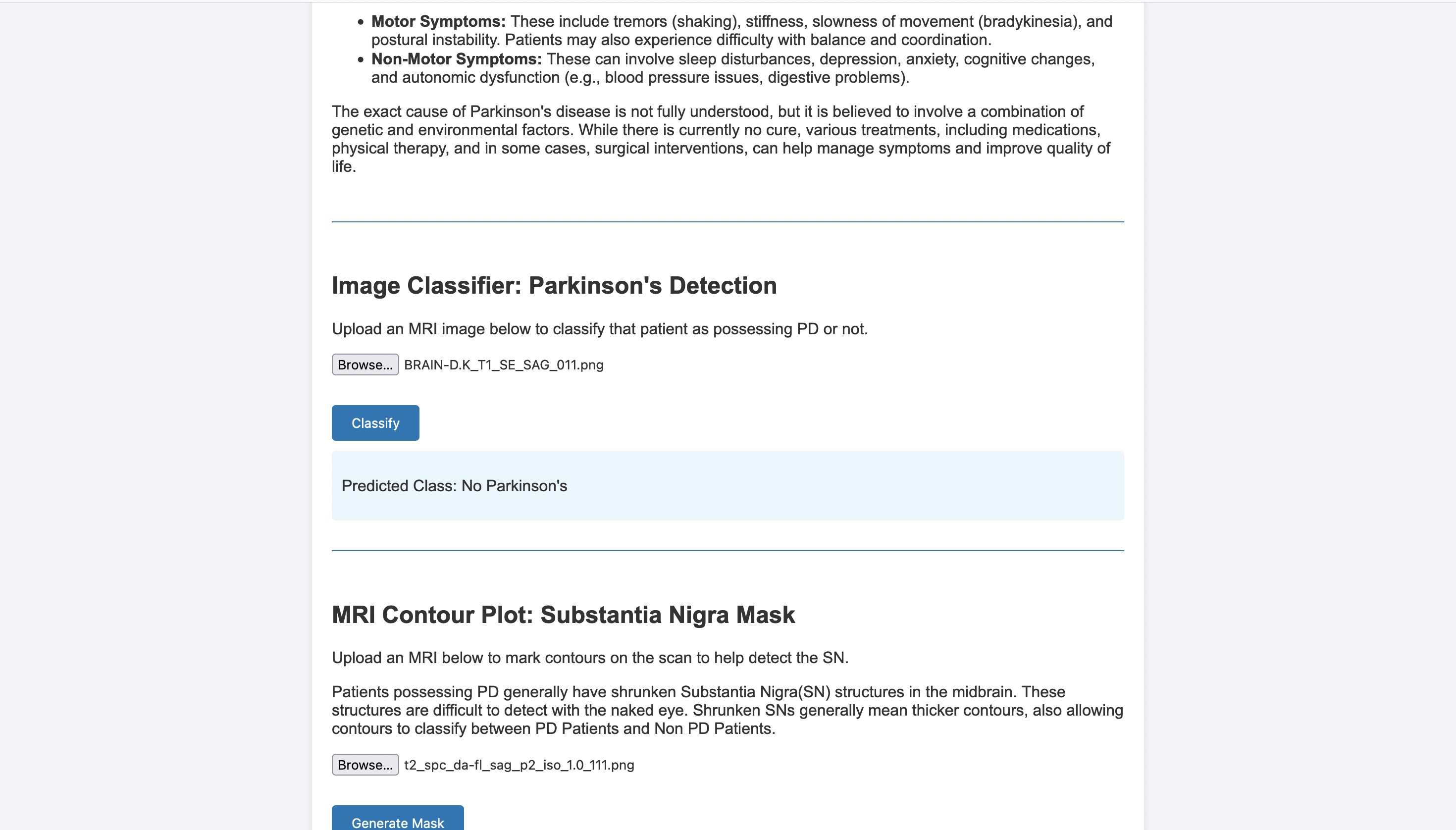
Parkinson's Disease is a serious neurological disorder that primarily impacts motor skills and movement. We learned through our research that the cause of Parkinson's Disease is not fully understood, and the MRI scans are not primarily used to detect it due to the difficulty of spotting shrunken brain structures by eye. Everyone on the team is knowledgeable in Machine Learning and we felt we could progress the classification of Parkinson's Disease on MRIs using image classification techniques, as this is not a mature application for Machine Learning.
What it does
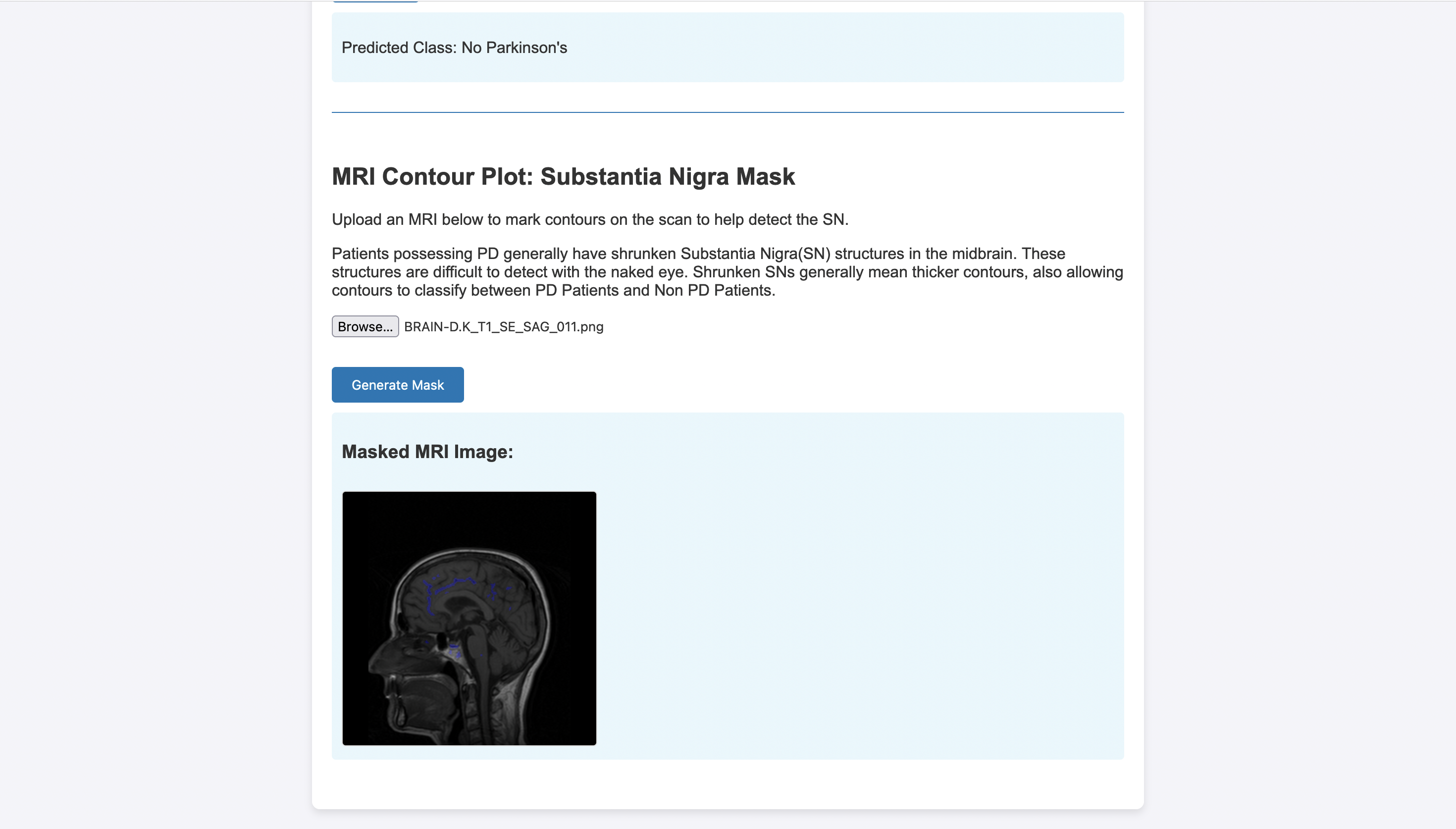
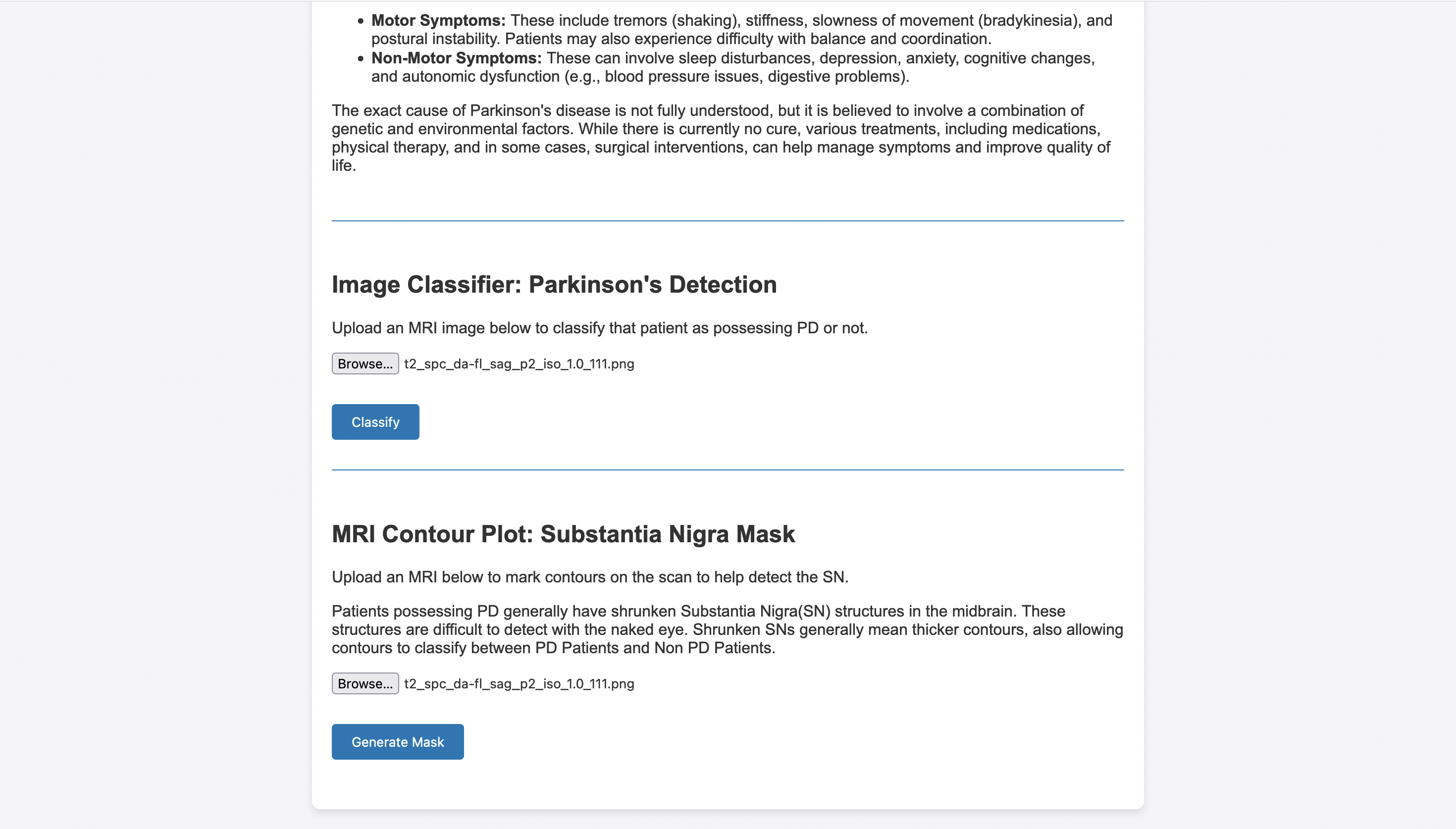
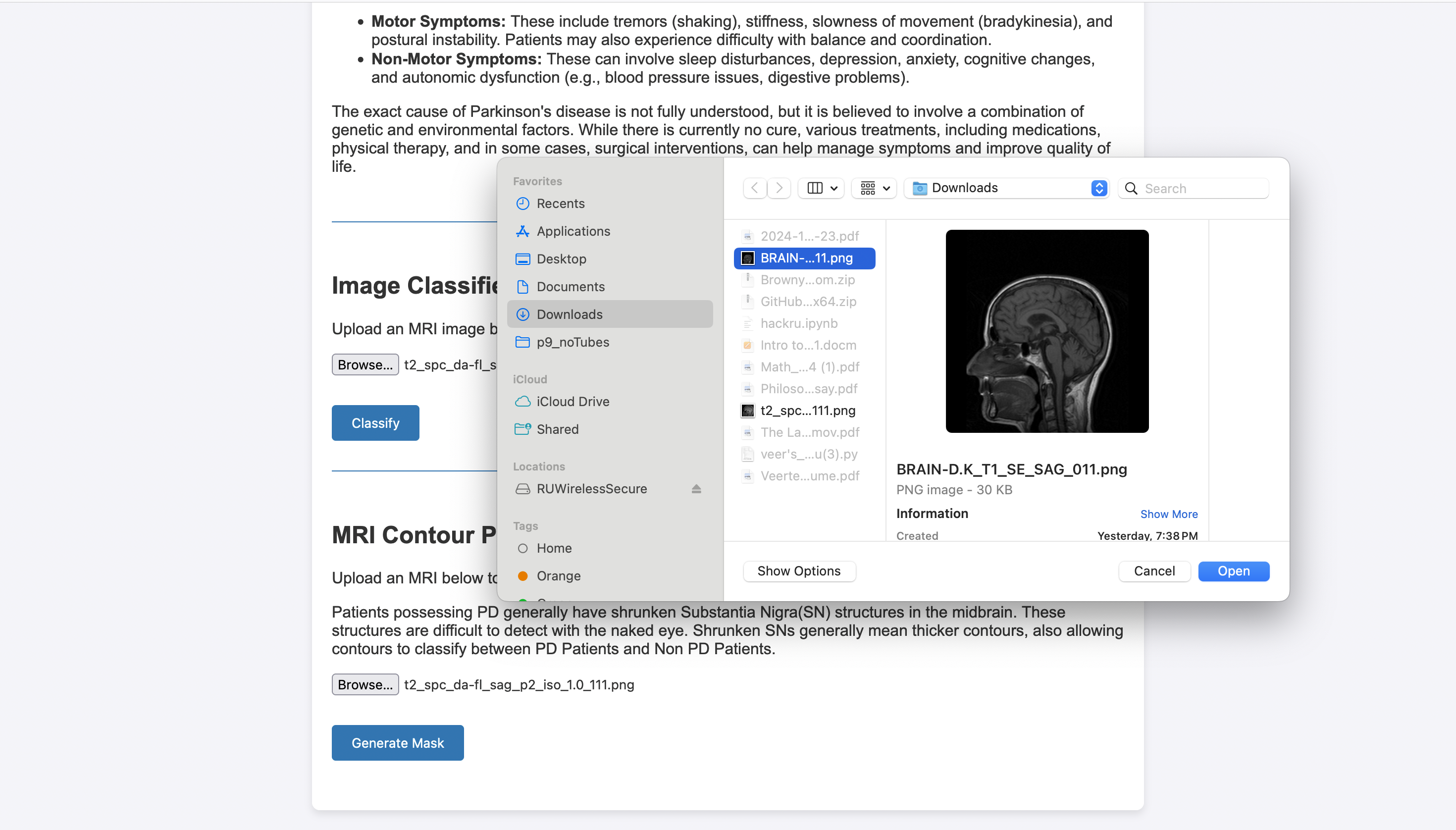
Our website is primarily designed for hospital workers. Users can upload MRI scans to the website and our image analysis models will classify them as Parkinson's patients or non Parkinson's patients. Additionally, masks will be drawn over the MRIs to indicate the location of the miniscule Substantia Nigra brain structure, which plays a critical role in motor movement.
How we built it
Our backend is built utilizing a Flask server in python. The frontend is built using HTML, CSS, as well as JavaScript for some basic functionality. Under the hood, the server contains a PyTorch Convolutional Neural Network model trained using Transfer Learning on MRI images. In addition, for our Substantia Nigra identification, we used the OpenCV library in Python to isolate contours and generate masks that can be overlayed on top of the original MRIs.
Accomplishments that we're proud of
We are proud of our Substantia Nigra identification using contours as this is a novel idea that to our knowledge has not been done before.
What we learned
We learned about how to design frontend websites as well as utilization of Machine Learning models such as Variational Autoencoders.
Challenges we faced
Originally, we wanted to identify the Substantia Nigra using Unsupervised Image Segmentation. The idea was sound but our model wasn't complex enough to reconstruct the images accurately. Thus, the masks were not accurate.
What's next for PD Contour
We can look at more research papers regarding Unsupervised Image Segmentation and apply Transfer Learning using U-Net which is an image analysis model often used for Biomedical data. This may draw more accurate masks.


Log in or sign up for Devpost to join the conversation.