- What Inspired Me
I have PCOS. At my worst, I would go 2 to 3 months without a period — one of the most severe presentations of the condition. I felt exhausted, defeated, and completely alone. The brain fog, the weight gain, the anxiety — it wasn't just physical. I genuinely believed I would never get better.
In April 2024, I decided to fight for my health no matter what. I started going to the gym every day, even if just for 30 minutes. I cut out junk food and sugar. One year later, I lost 16 kg — going from 70 kg to 54 kg. My periods, which used to disappear for months, now come every 45 days. My mental health improved dramatically too. I'm not fully cured — but I am proof that consistency changes everything.
I built PCOS Compass because I wish something like this had existed when I was at my lowest. Not a doctor's appointment I couldn't afford — just something that could explain what was happening in my body and tell me what I could actually do.
- How I Built It
- Designed and built a fully client-side HTML/CSS/JS web app — no backend, no database
- Used Claude (Anthropic AI) as the core development tool for code generation, medical content research, UX design, and symptom scoring logic
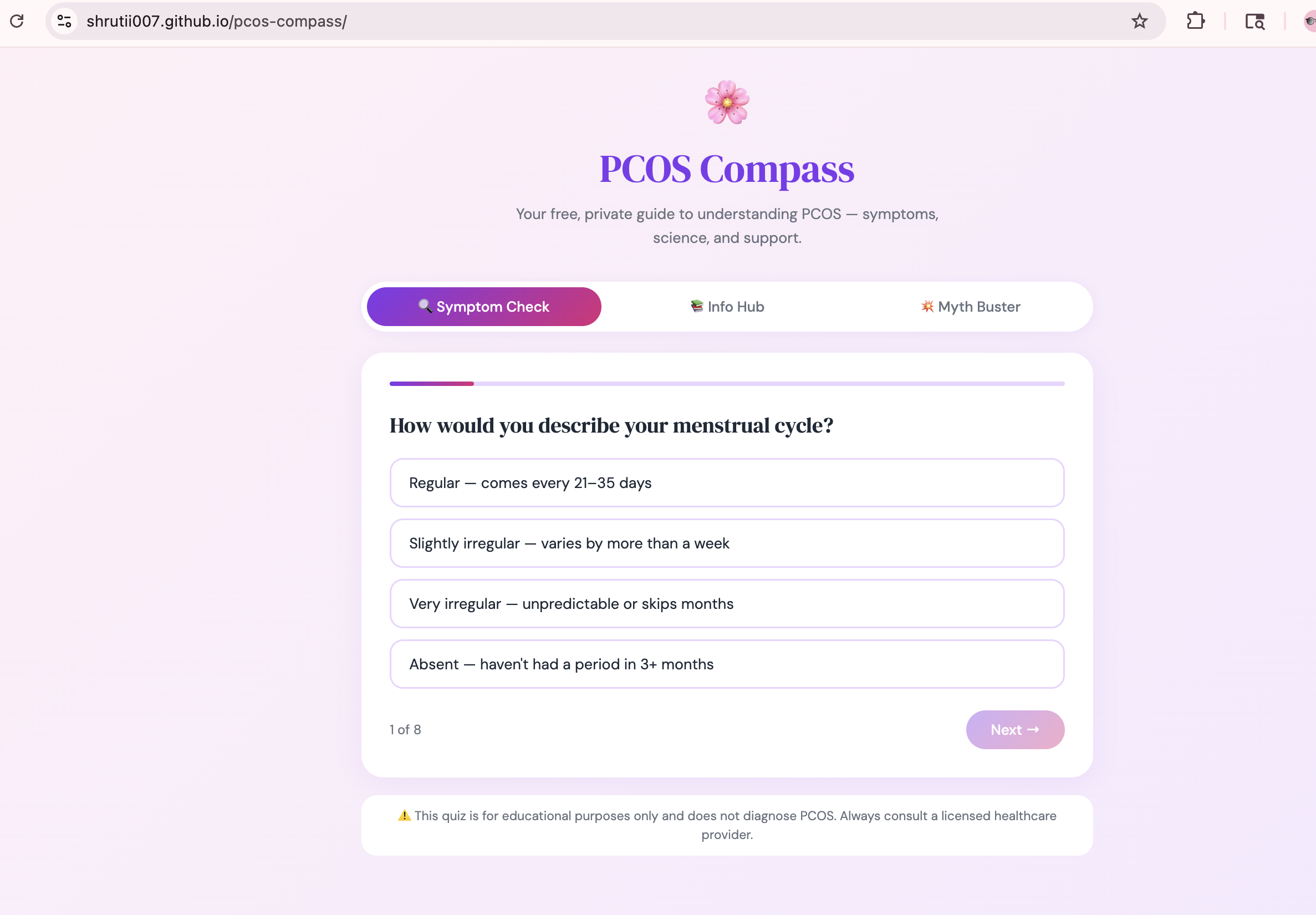
- Built an 8-question symptom checker with a weighted scoring algorithm that outputs Low / Moderate / High PCOS likelihood with personalized next steps
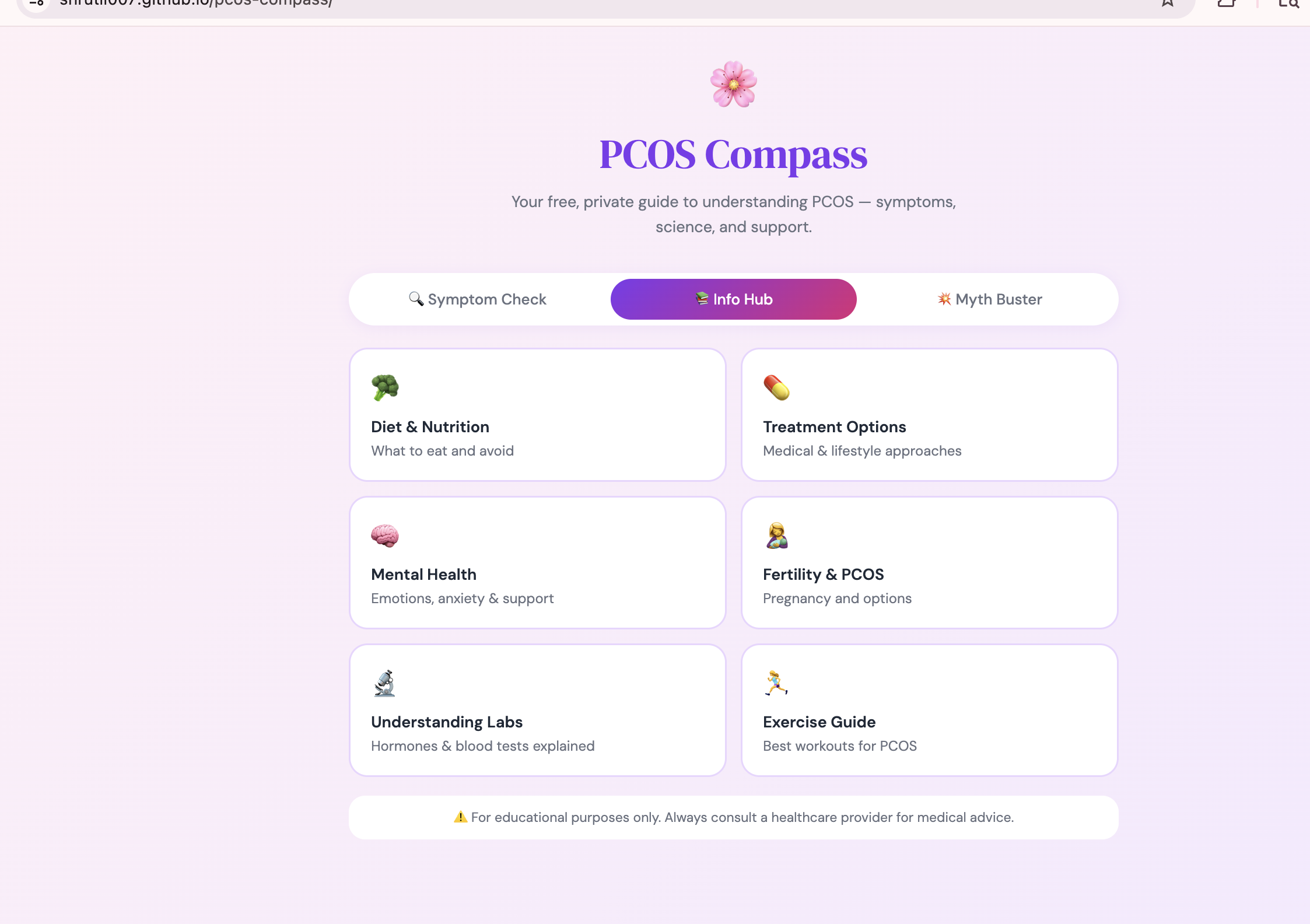
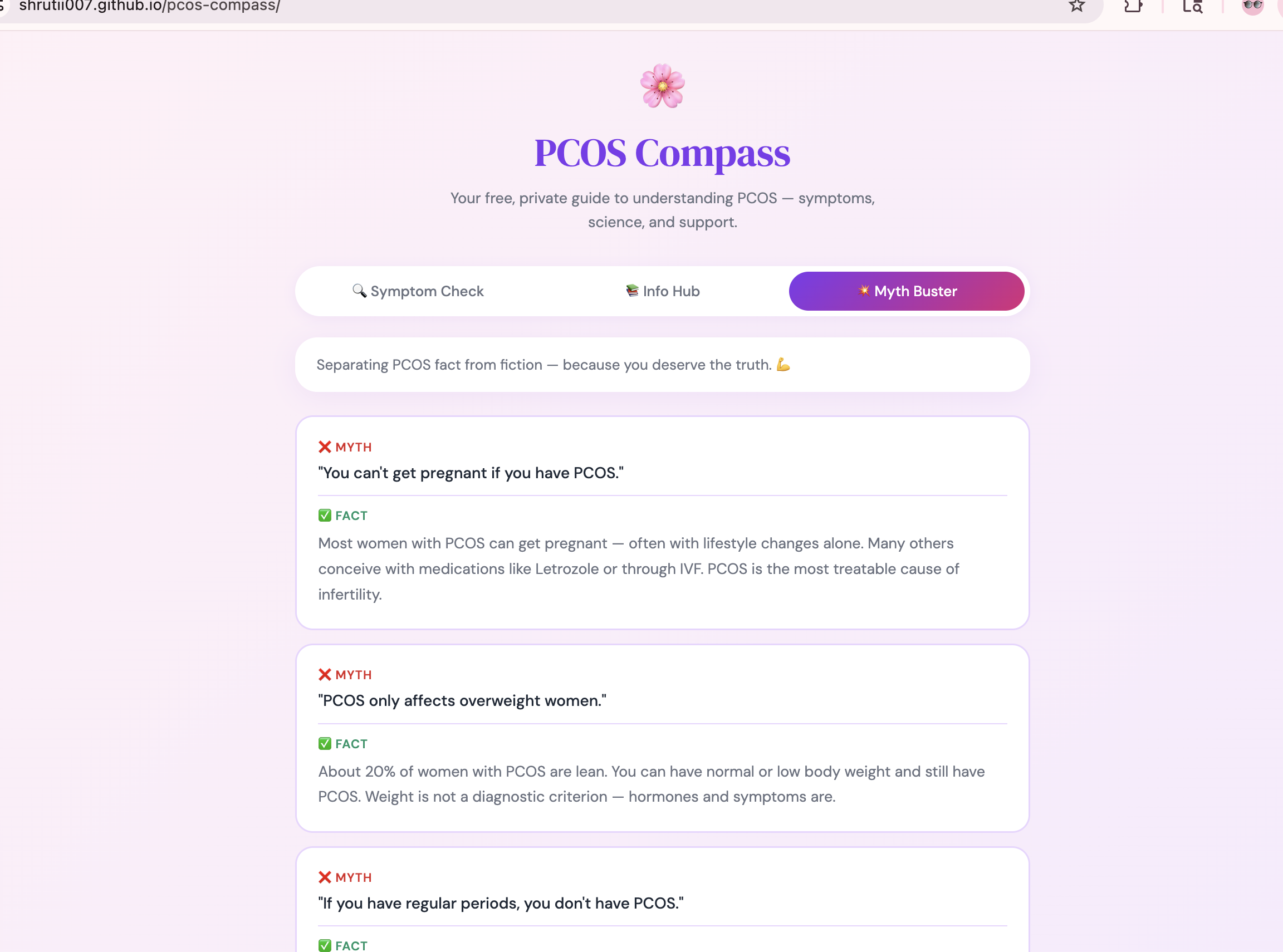
- Created an Info Hub with 6 evidence-based sections and a Myth Buster with the most harmful PCOS misconceptions debunked
- Challenges I Faced
- Designing a symptom scoring system that feels personal without being misleading or alarmist
- Writing medical content that is accurate but also warm, human, and empowering — not clinical and cold
- Making sure every screen has clear disclaimers so no one mistakes it for a diagnostic tool
- Building something fully functional with zero cost and zero barriers to access
- What I Learned
- How deeply PCOS affects mental health — and how little that is talked about
- That the biggest barrier for most women isn't treatment, it's understanding what is happening to their body
- That lived experience makes you build differently — with more empathy, more urgency, and more care
Built With
- ai
- claude
- css
- html
- javascript

Log in or sign up for Devpost to join the conversation.