-
-
SANITIZATION SYSTEM: WE PRODUCE HYGIENE, WE REDUCE INFECTIONS
-
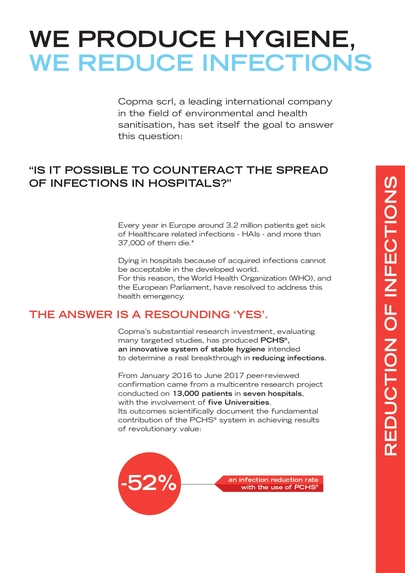
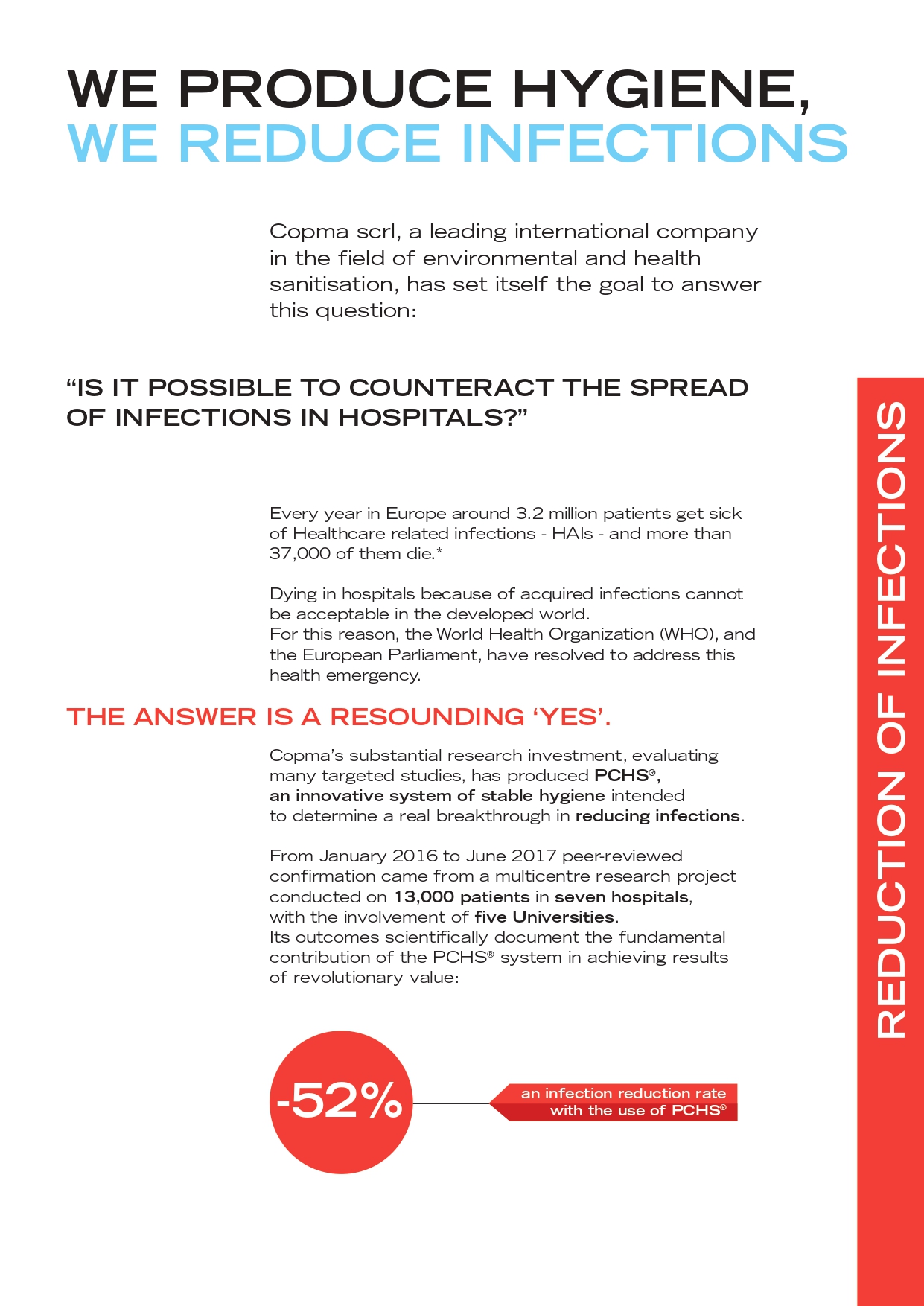
Every year in Europe around 3.2 million patients get sick of Healthcare related infections - HAIs - and more than 37,000 of them die
-
Plos One, July 2018
-
Plos One, July 2018
-
Plos One, July 2018
-
Infection and Drug Resistance, March 2019
Inspiration
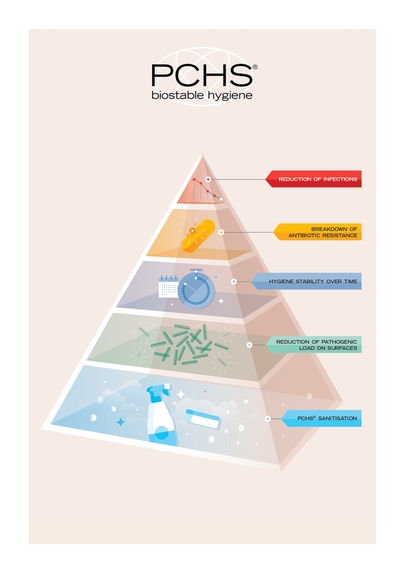
The current health emergency has further underlined the value of the prevention of infectious risk in social and health environments, also starting from the correct hygiene of the structures themselves. Now, more than ever, a profound and radical cultural change in the concept of hospital hygiene is also needed, because it is no longer simply a question of cleaning the rooms, but of producing stable hygiene, that is, of maintaining over time low and stable levels of potentially pathogenic microorganisms.
The approach to sanitization must be modified, in search of alternative, effective and sustainable solutions capable of stably reducing potentially pathogenic bacterial contamination, guaranteeing its safety of use, a low environmental impact and finally avoiding the induction of resistances. COPMA responds to this need for change by continuing to invest in research and innovation, always maintaining an approach based on third-party scientific evidence, that is, by independent institutional researchers.
In this regard, with reference to the current Coronavirus emergency, we can say that some positive preliminary data are currently available, which suggest that the PCHS® sanitization system, in addition to greatly reducing potentially pathogenic contamination (bacteria and fungi) through the biological competition, as already widely demonstrated, is also capable of performing an inactivating action on various viruses with pericapsidic envelopes (such as animal and human influenza viruses). These studies have been started by CIAS of the University of Ferrara in collaboration with prestigious external institutes and we hope that the complete results can be published by the research team as soon as the study is completed.
What it does
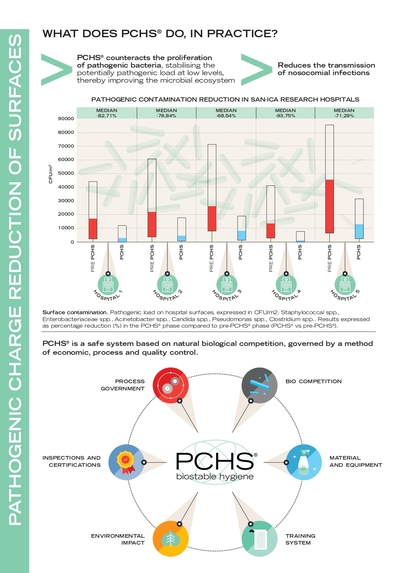
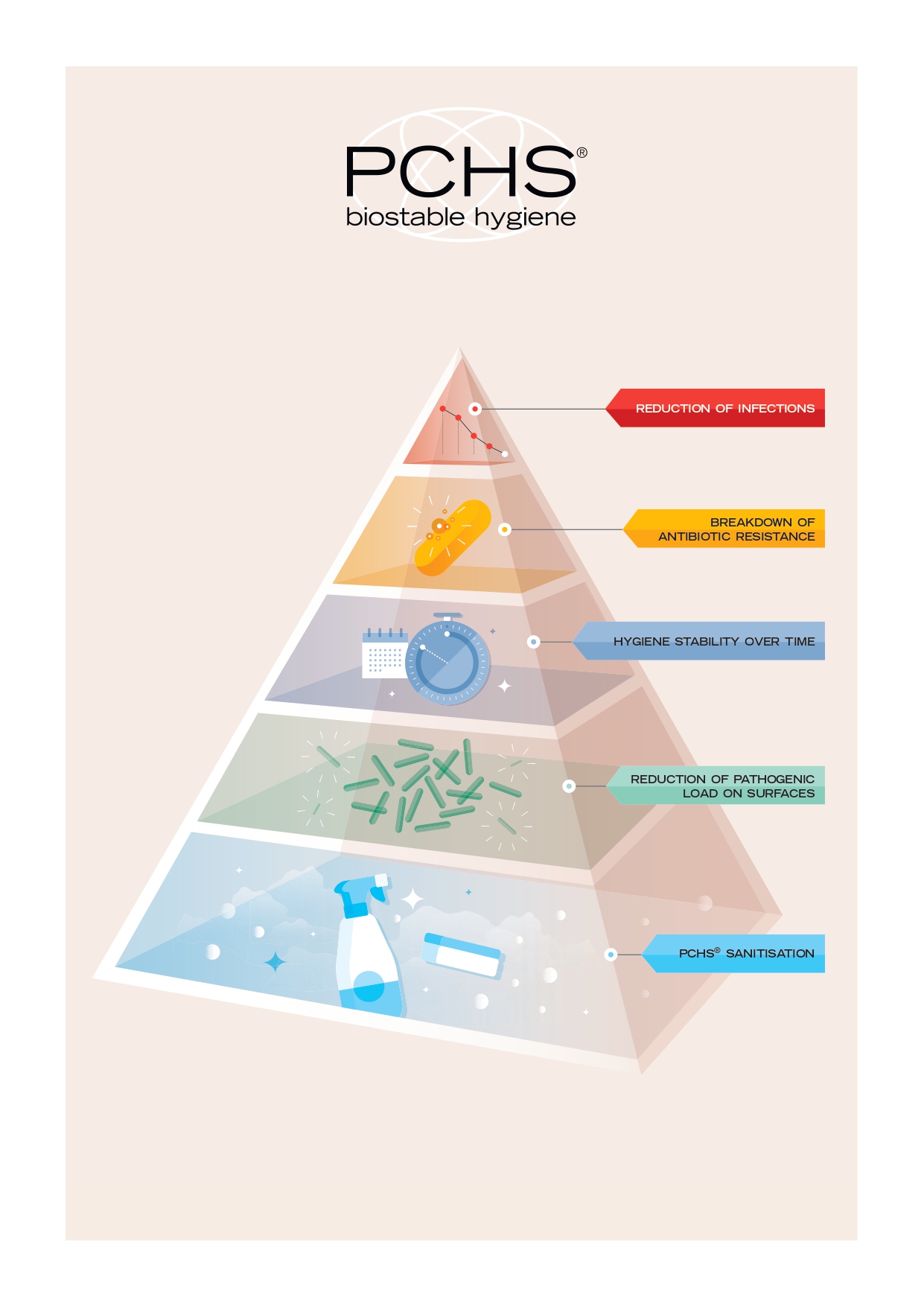
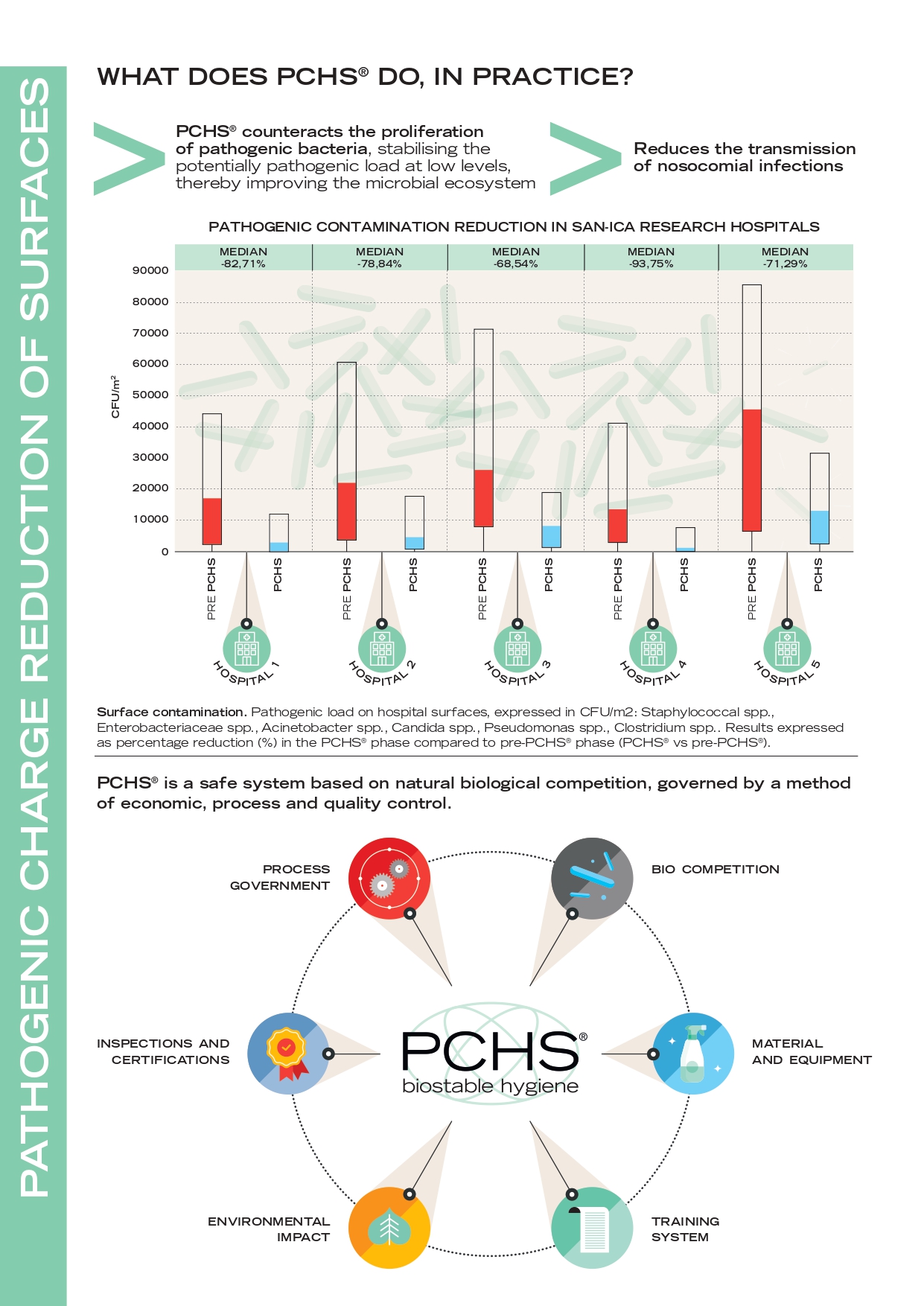
In the health chain, use of PCHS® contributes with great evidence to the reduction of nosocomial infections. We have overcome the concept of temporary hygiene creating a bio-stabilisation technique of a superior standard and an unprecedented operational method.
The PCHS® sanitization system is an innovative complex of interacting factors ranging from the specific activation technique of biological competition through safe and genetically stable microorganisms such as probiotics and in particular bacillus, to the use of special and exclusive microfibre cloths, to a microbiological control to guarantee the PCHS® Standard. With the PCHS® system, an innovative technique was born that guarantees the maintenance of the potentially pathogenic microbial load at low and stable levels over time.
How we built it
Collaborations with research Centres and Universities supports the natural orientation of the company towards innovation, the use of new technologies and the desire to run ahead of time. The main objective is to offer effective and new solutions to a heterogeneous and demanding market.
Challenges we ran into
• Promoting community awareness and public opinion on infections reduction and the use of safe resources available in nature, effectively support prevention activities
• Developing a hygiene culture, in hospitals this is accomplished with the adoption of a system that simplifies the entire process of sanitisation, a process able to maintain full control over the hygiene management and, therefore, on sanitation results
Accomplishments that we're proud of
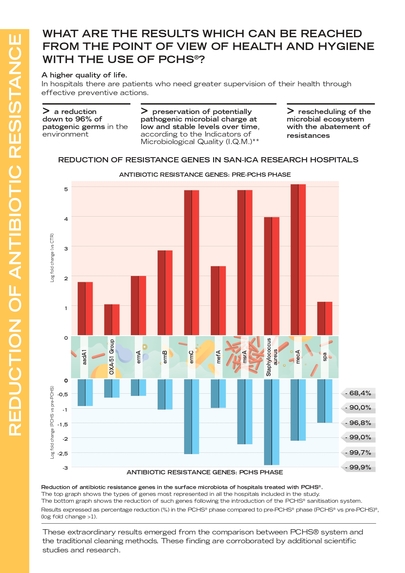
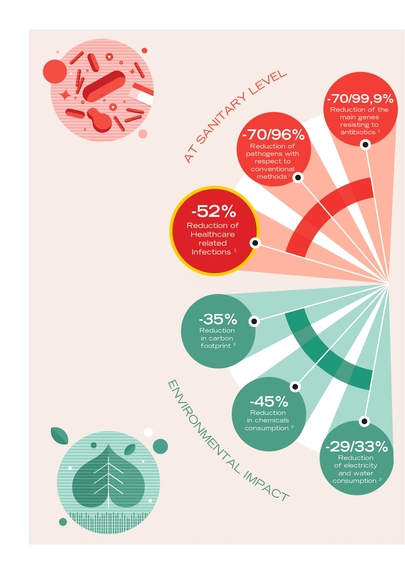
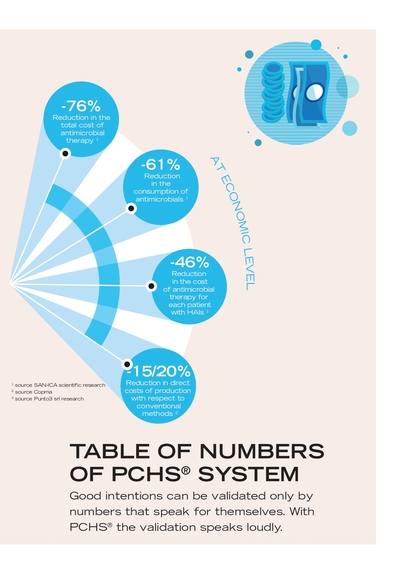
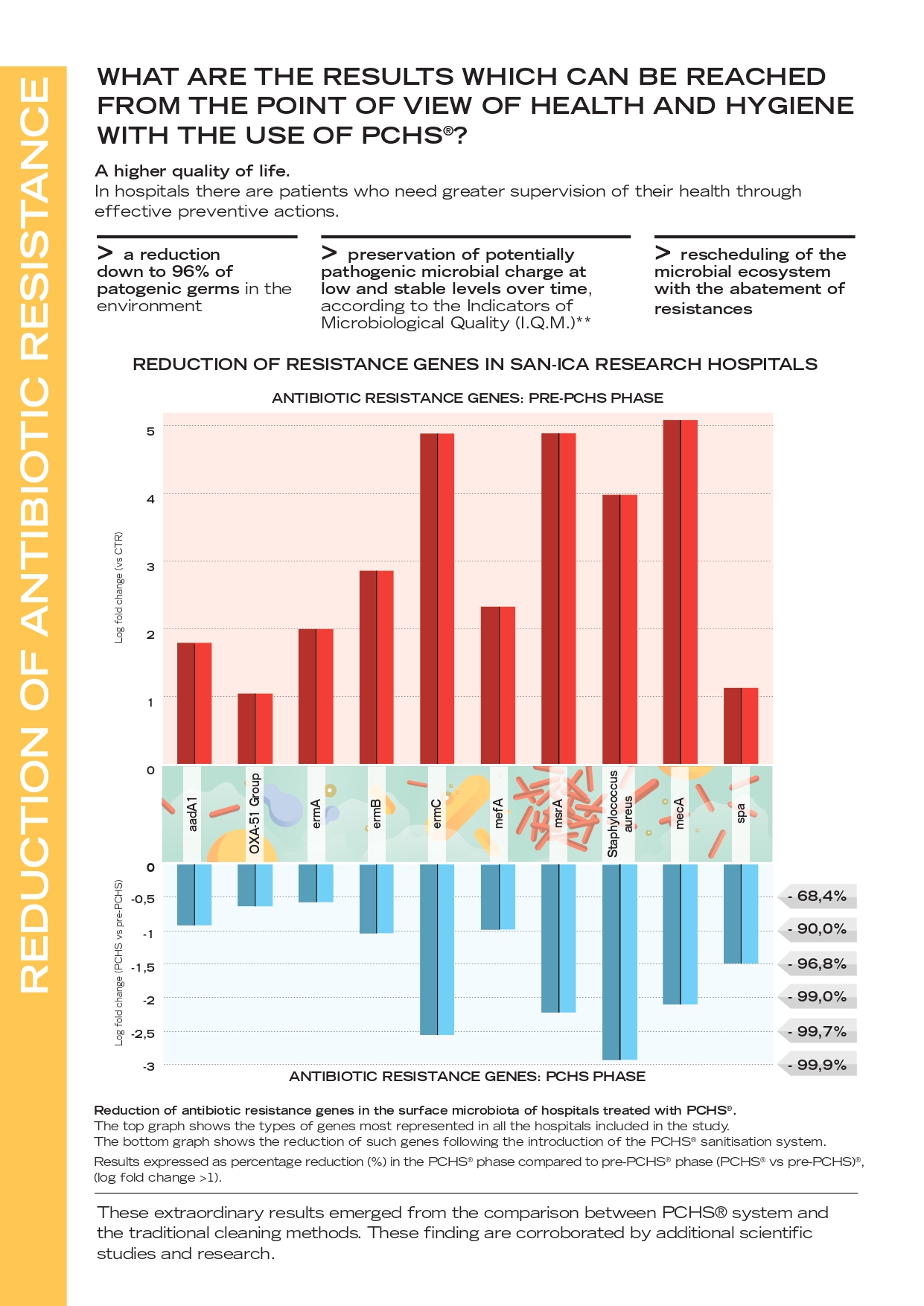
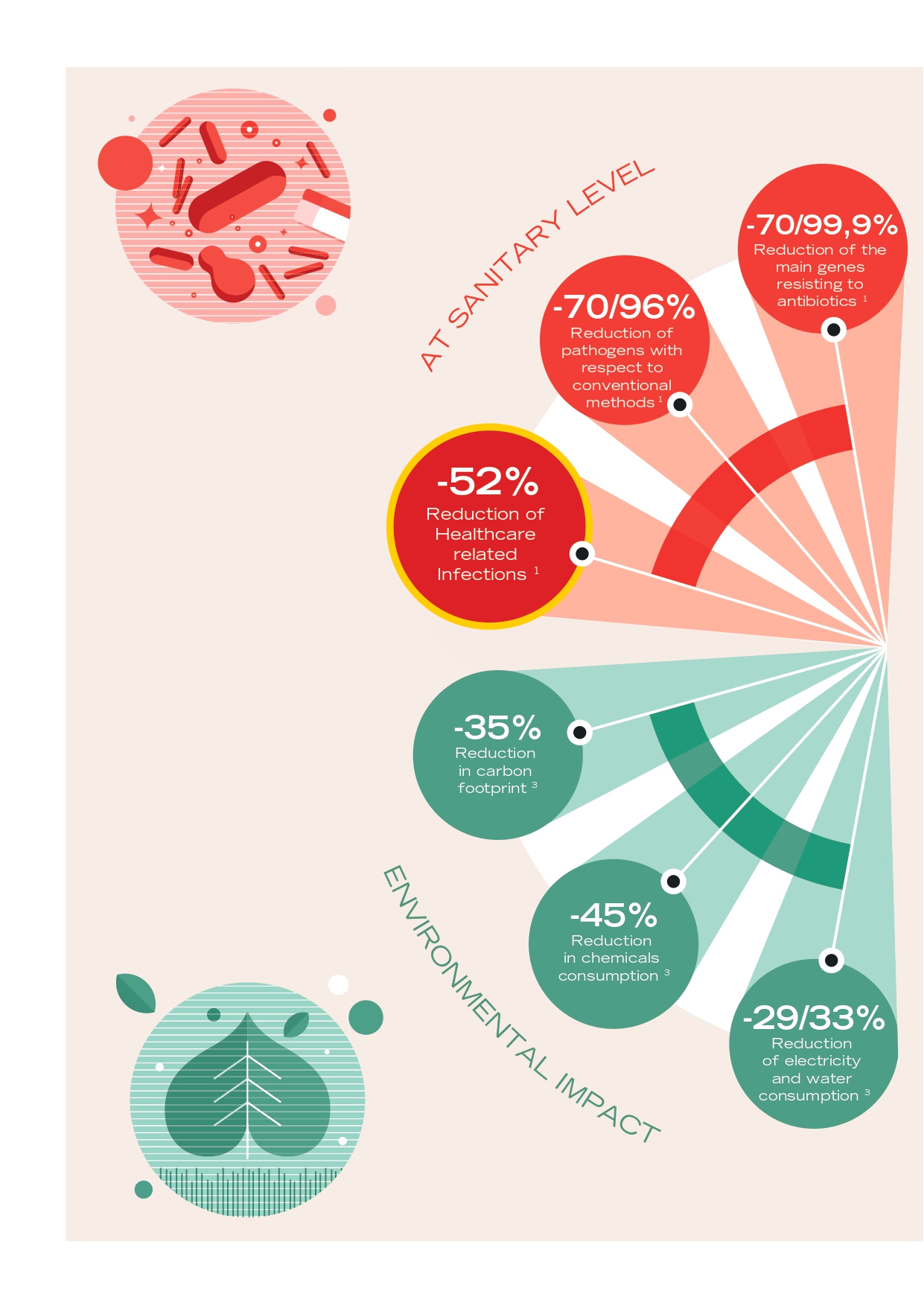
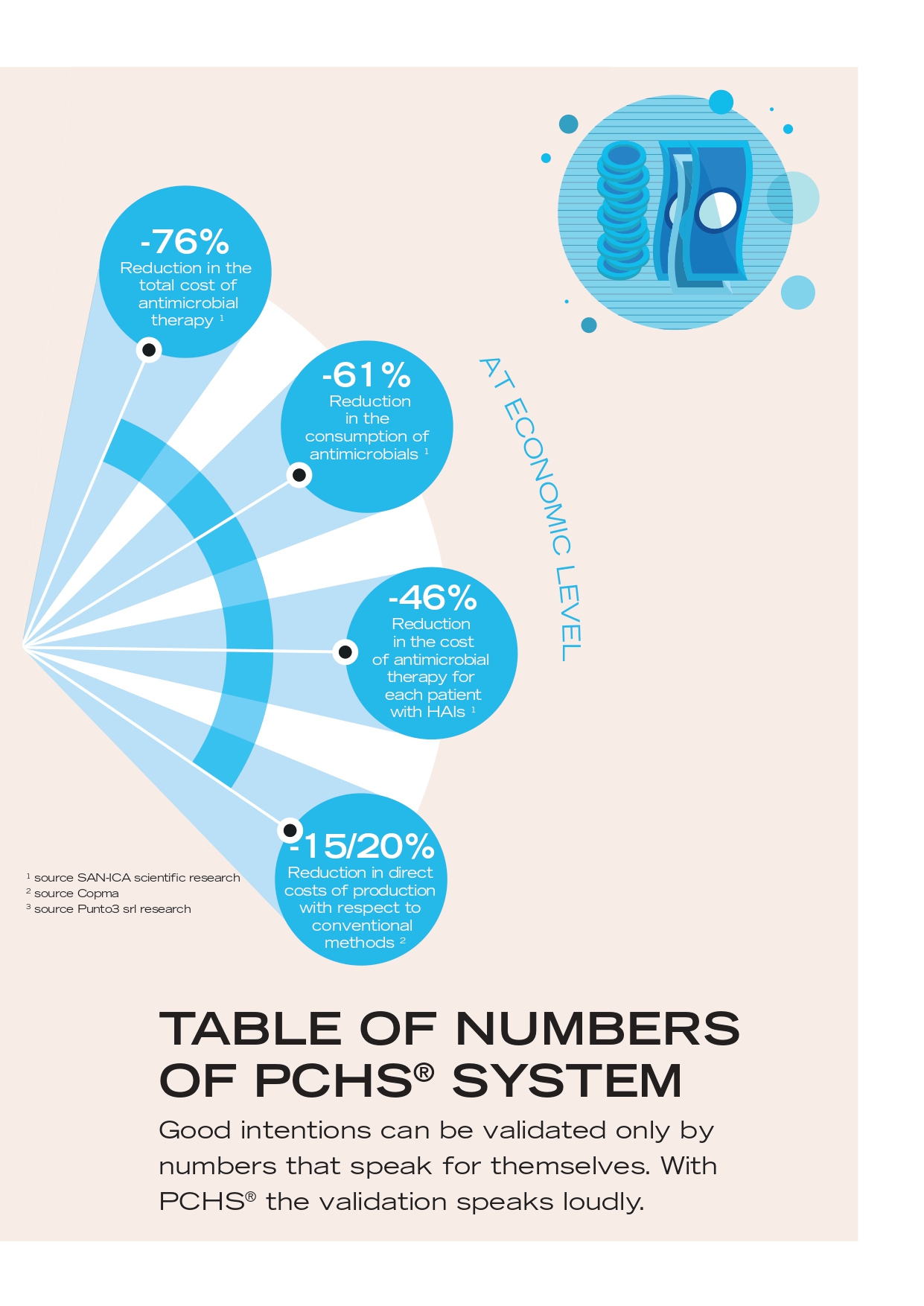
The recent multicenter study SanIca (from January 2016 to June 2017 peer-reviewed, conducted on 13,000 patients in seven hospitals, with the involvement of five Universities) confirmed the effectiveness of the PCHS® already demonstrated in previous studies. The extremely encouraging results showed that by introducing the Pchs® system compared to traditional sanitization methods, a 52% reduction in nosocomial infections was achieved, a 99% reduction in resistance genes, a 60% reduction in the consumption of antimicrobial drugs resulting in a 75% reduction in costs.
(Infection and Drug Resistance, March 2019)
IMPACT OF PROBIOTIC-BASED HOSPITAL SANITATION ON ANTIMICROBIAL RESISTANCE AND HAI-ASSOCIATED ANTIMICROBIAL CONSUMPTION AND COST: A MULTICENTER STUDY
(Plos One, July 2018)
REDUCING HEALTHCARE-ASSOCIATED INFECTIONS INCIDENCE BY A PROBIOTIC-BASED SANITATION SYSTEM: A MULTICENTRE PROSPECTIVE,INTERVENTION STUDY
What we learned
Environments are the people who inhabit them. And our job is to be a strategic part in the health sector. Let's be clear, preventing the risk of infection in this case, is not just about improving sanitisation but also reducing the number of preventable deaths.
What's next for PCHS® (Probiotic Cleaning Hygiene System)
The PCHS® system has been further developed with the combined use of probiotics and bacteriophages, simultaneously obtaining both the remodulation of the environmental microbiota and the targeted action of antagonist bacteriophages on residual potentially pathogenic microorganisms.
Built With
- cleaning
- hospitalsanitization
- research


Log in or sign up for Devpost to join the conversation.