-
-
PCDDE
-
project map
-


Inspiration
Currently, our preparedness for future pandemics is hindered by insufficient data availability and a limited statistical grasp of recent events such as the COVID pandemic. Traditional methods, where doctors assess risks based on the severity of symptoms at the time of a patient's hospital admission, are often inadequate due to evolving conditions. Moreover, the specific impacts of risk factors like age and comorbidities, as well as the precise efficacy of vaccine doses across various age groups and over time, are poorly understood. The existing data from sources like Israel and the UK, while valuable, remains incomplete.
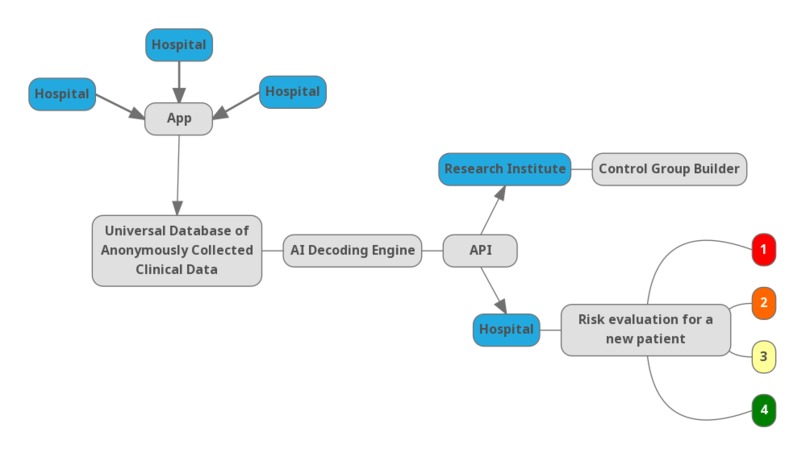
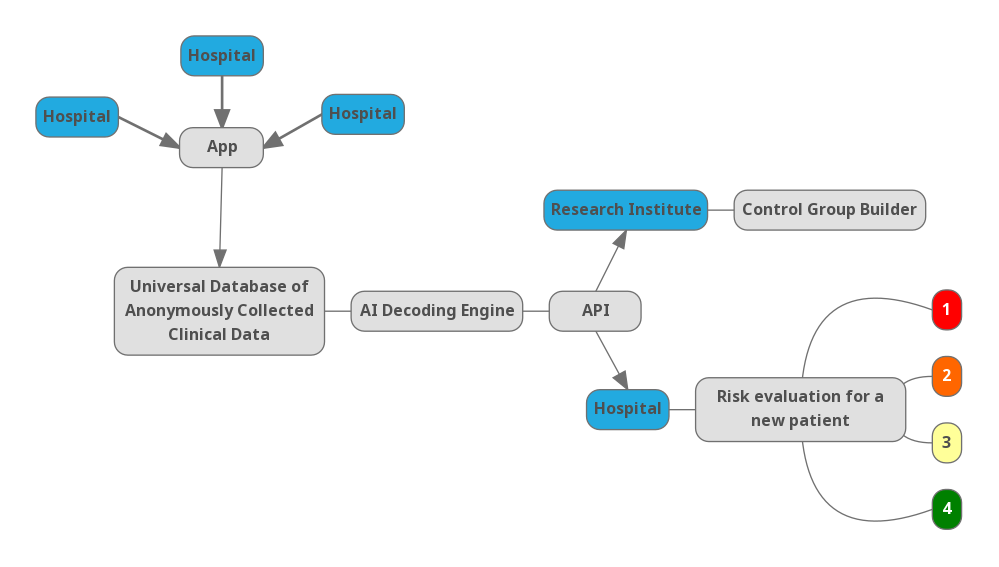
PCDDE addresses these gaps through advanced data collection most of which would be remote. By leveraging real-time data from patients not present in hospitals, PCDDE allows for accurate risk assessment. This system enhances our understanding of risk factors and vaccine efficacy by aggregating comprehensive data across diverse populations, far beyond the limited scope of single-hospital studies.
What it does
Precisely determine the risk for any new patient at the time of the remote survey. Understand the additional risk posed by each variable. Provide researchers with tools to build control groups that accurately mirror their target groups.
How we built it
So far we've built a demo. We plan to build PCDDE using a combination of secure data collection methods, advanced data analytics, and machine learning algorithms. Our first step is to establish a protocol for anonymizing data to ensure privacy and compliance with global data protection regulations. We then will develop a robust database structure to handle large volumes of clinical data from pandemic cases.
Challenges we ran into
The main challenge is to design a learning engine that could accurately weigh the impact of multiple variables on patient outcomes.
Accomplishments that we're proud of
So far we've built a demo.
What we learned
So far we improved our skills in machine learning and predictive analytics, particularly in the context of healthcare data, which poses unique challenges due to its complexity and sensitivity.
What's next for PCDDE - Pandemic Clinical Data Decoding Engine
As we continue to develop the Pandemic Clinical Data Decoding Engine, our next steps are focused on expanding from a promising demo to a robust, full-scale application. Key priorities include:
Enhancing Data Integration: We plan to incorporate additional data sources to enrich the database, ensuring a more comprehensive coverage of pandemic-related variables. This will improve the engine's ability to make accurate predictions and assessments.
Developing Advanced Analytics Features: Building on the initial demo, we aim to introduce more sophisticated analytics capabilities. This includes refining our algorithms for better risk assessment and control group formation based on a wider array of clinical variables.
Testing and Validation: Extensive testing with real-world data will be crucial. We intend to collaborate with medical institutions to test the engine under practical conditions and adjust our models based on feedback and observed performance.
Securing Partnerships and Funding: To support our development goals, we will seek partnerships with healthcare organizations and pursue funding opportunities. These collaborations will provide both the financial resources and the clinical expertise necessary to advance the project. User Interface Improvements: Enhancing the user experience will be a continuous effort. We plan to develop a more intuitive interface that allows users to easily navigate, input data, and understand outputs, making the tool accessible to a wider range of healthcare professionals.
Scalability and Security Enhancements: As we prepare for wider deployment, ensuring that our system can handle large-scale data securely and efficiently will be paramount. We will focus on enhancing data security measures and scalability to accommodate growing user numbers and data volume. These steps are designed to bridge the gap between a functional demo and a deployable, impactful tool that can aid in managing current and future pandemics effectively.


Log in or sign up for Devpost to join the conversation.